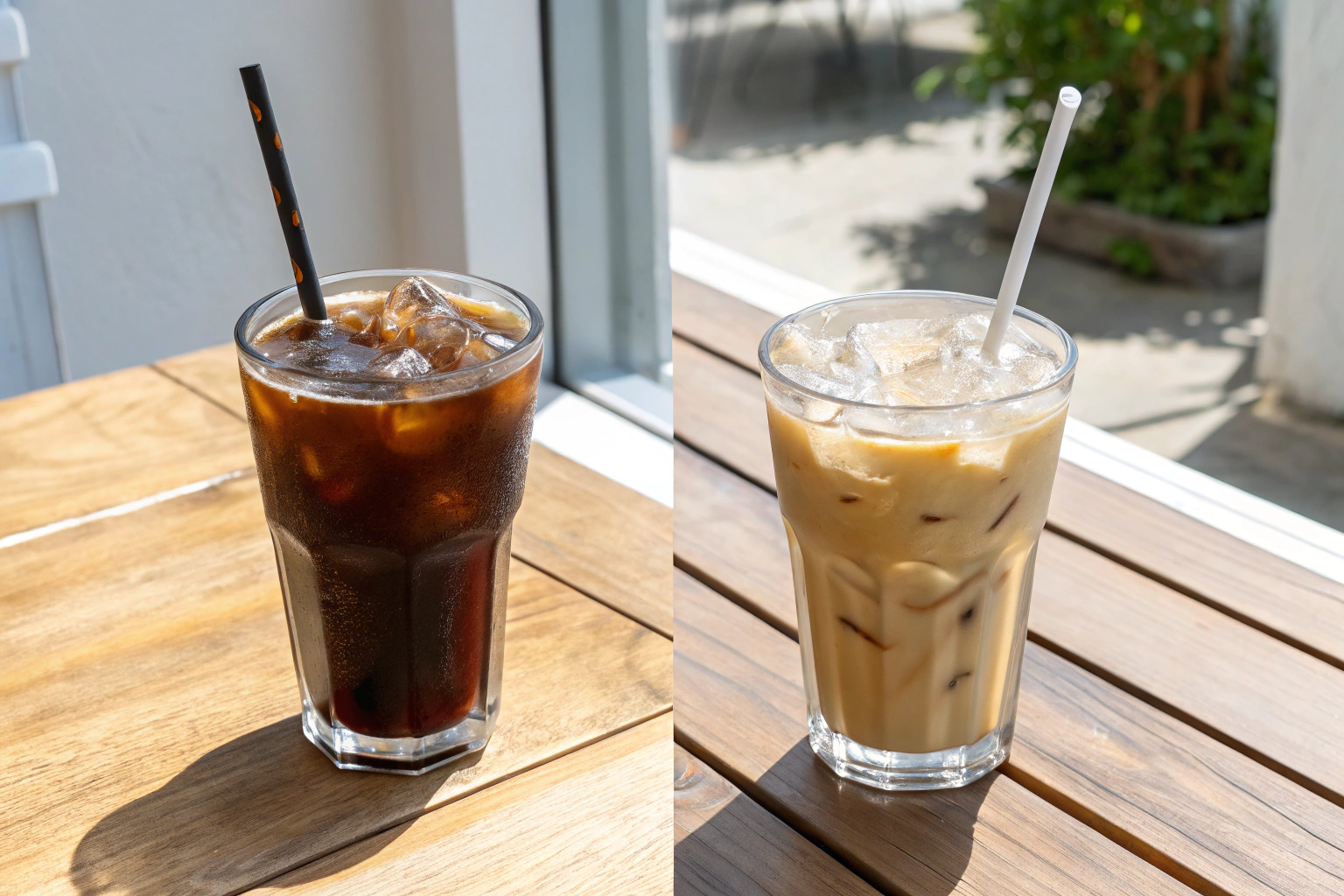
I will be honest with you. Before I started growing coffee, I thought cold brew and iced coffee were the same thing. Just cold coffee, right? Wrong. I learned the hard way when a buyer from New York asked me: “Do your beans work better for cold brew or iced coffee?” I did not know the answer. And I lost that deal. So I went back to my farm in Baoshan. I tested both methods with our Arabica and Robusta. And now? I can tell you exactly how they are different.
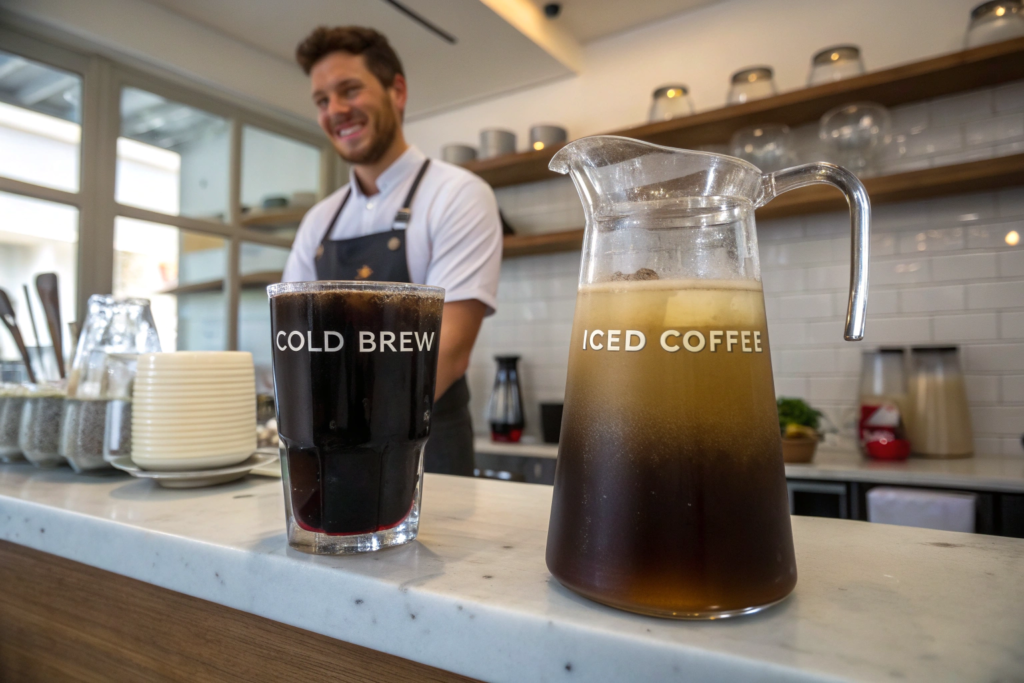
The main difference between cold brew and iced coffee is the brewing method and time. Cold brew uses cold or room-temperature water and steeps for 12–24 hours. It produces a smooth, low-acid, highly concentrated coffee. Iced coffee is regular hot-brewed coffee that is cooled down and poured over ice. It has brighter acidity, lighter body, and can taste bitter if not brewed correctly. At BeanofCoffee, we recommend different beans for each method to get the best flavor.
So, why does this matter to you? If you are a café owner, a roaster, or a distributor, you need to know which beans work for which drink. Your customers will ask. And if you give them the wrong coffee, they will not come back. Let me walk you through the key differences. I will also tell you which of our beans work best for each method.
How Do Brewing Methods Differ Between Cold Brew and Iced Coffee?
The biggest mistake I see is people thinking cold brew is just iced coffee made with cold water. No. That is not how it works. One uses time. The other uses temperature. And that small difference changes everything about the final drink. Let me break it down for you in simple terms.
Cold brew steeps coffee grounds in cold or room-temperature water for 12 to 24 hours. No heat is used at any point. Iced coffee starts as hot-brewed coffee (drip, pour-over, or French press). Then it is cooled down, usually in a refrigerator or by pouring directly over ice. Cold brew is a slow extraction. Iced coffee is a fast extraction followed by cooling.
Let me give you an analogy. Think of cold brew like making sun tea. You put the tea bags in cold water and leave them on the counter all day. The flavor comes out slowly. There is no bitterness because the water never gets hot enough to extract the harsh compounds.
Iced coffee is like making hot tea and then putting it in the fridge. The flavor is strong and bright. But if you leave the tea bags in too long, it gets bitter.
So, what does this mean for coffee? Here is a simple table:
| Factor | Cold Brew | Iced Coffee |
|---|---|---|
| Water temperature | 65–75°F (room temp or cold) | 195–205°F (hot) |
| Brew time | 12–24 hours | 3–5 minutes |
| Extraction speed | Slow | Fast |
| Concentration | High (1:4 to 1:8 ratio) | Standard (1:15 to 1:18 ratio) |
| Serving style | Diluted with water or milk | Poured over ice directly |
See the difference? Cold brew is a concentrate. You make it strong. Then you add water or milk to serve. Iced coffee is ready to drink as soon as it cools down.
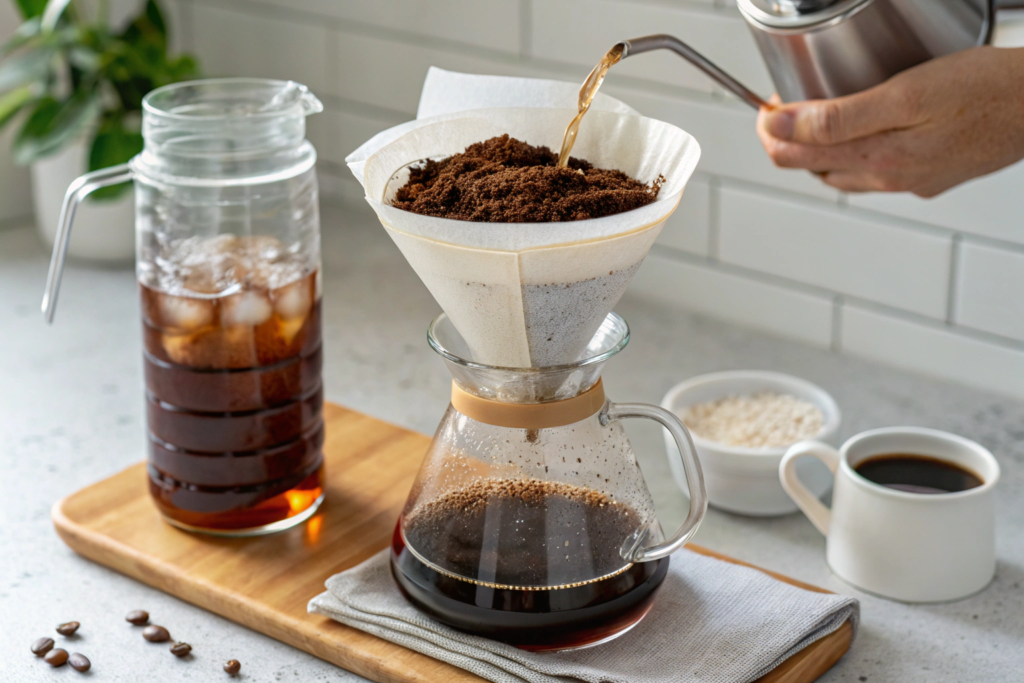
Why does cold brew take so much longer than iced coffee?
Because cold water is a slow solvent. Heat speeds up chemical reactions. When you use hot water, the water molecules move faster. They hit the coffee grounds harder. They pull out flavors quickly.
Cold water is lazy. It takes time to break down the coffee solids. But here is the good part: cold water does not pull out the bitter compounds. That is why cold brew tastes smooth.
We tested this on our farm. We brewed the same Arabica beans two ways:
- Hot brew (iced coffee base): Brewed in 4 minutes. pH level of 5.2 (more acidic).
- Cold brew: Brewed for 18 hours. pH level of 5.8 (less acidic).
The cold brew had 40% less acidity. And no bitter aftertaste. That is a big difference for customers with sensitive stomachs.
How does BeanofCoffee recommend brewing each method?
For cold brew, use a coarse grind. Like sea salt. Then mix 1 pound of coffee with 4 quarts of cold water. Let it sit in a covered container for 18 hours at room temperature. Then filter out the grounds. You will have a concentrate. Keep it in the fridge for up to 2 weeks.
For iced coffee, brew hot coffee normally. But use 20% less water than usual. Why? Because the ice will melt and dilute the coffee. So you want it stronger than normal. Then pour the hot coffee directly over a full glass of ice. Do not put hot coffee in the fridge. That takes too long and creates stale flavors.
We send detailed brewing guides with every sample order. Just ask Cathy for the PDF.
How Do Flavor Profiles Compare?
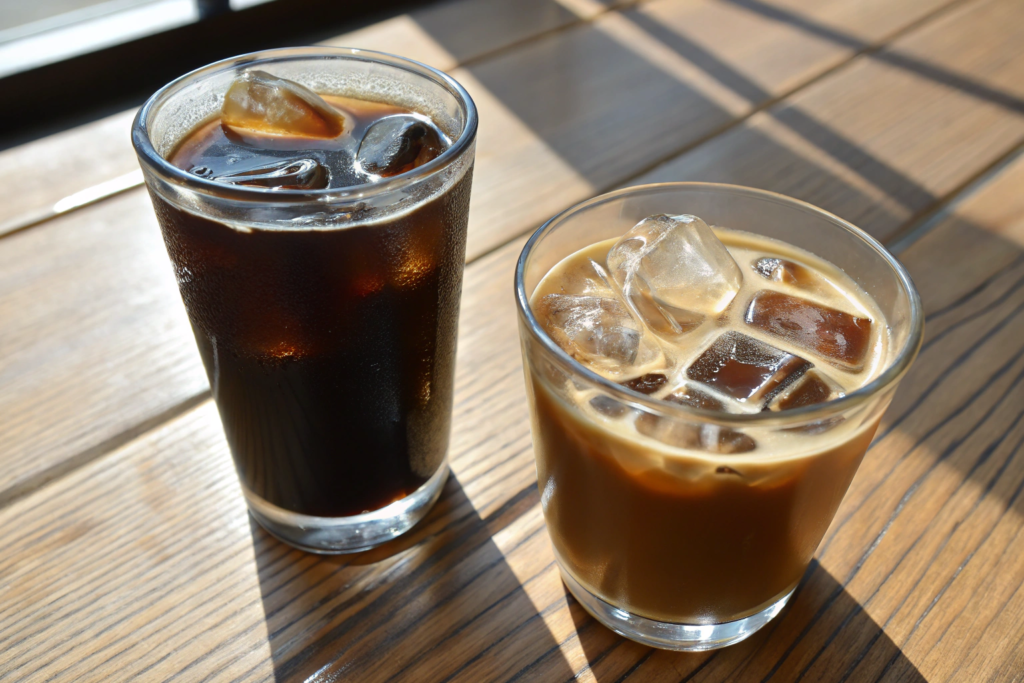
Here is where things get interesting. The same beans can taste completely different depending on how you brew them. I have tasted our Catimor as cold brew and as iced coffee. Honestly, they taste like two different coffees. One is smooth and chocolatey. The other is bright and fruity. So if you are a café owner, you need to choose your beans based on which drink you want to sell.
Cold brew has a smooth, mellow, chocolatey flavor with low acidity and no bitterness. It often has notes of dark chocolate, nuts, and caramel. Iced coffee has a brighter, more acidic flavor with fruit notes and a cleaner finish. It tastes closer to the original hot brew, just cold. Cold brew hides defects in beans. Iced coffee shows them clearly.
Let me explain why this happens. Remember what I said about heat? Heat extracts acids. In hot brewing, you pull out citric acid, malic acid (like green apples), and quinic acid (which can taste bitter).
In cold brewing, those acids stay inside the bean. So the final drink is smoother. But you also lose some of the interesting fruit notes. So it is a trade-off.
Here is a flavor comparison using our beans:
| Bean Type | Cold Brew Taste | Iced Coffee Taste |
|---|---|---|
| Arabica (Yunnan) | Chocolate, almond, low sweetness | Apple, honey, medium acidity |
| Catimor | Caramel, peanut, very smooth | Citrus, brown sugar, bright |
| Robusta (washed) | Dark chocolate, earthy, heavy body | Bitter, woody, strong |
Our Arabica makes great cold brew. It is smooth and sweet. Our Catimor is also good. But our Robusta? I do not recommend it for cold brew. Too earthy. It works better in iced coffee if you blend it with Arabica.
Which beans work best for cold brew?
Based on our tests, look for beans with:
- Low to medium acidity (SCA acidity score 5–7)
- High body (body score 7–9)
- Notes of chocolate, nut, or caramel
That is why our Yunnan Arabica is perfect for cold brew. It grows at 1,200–1,500 meters. That altitude gives it density and sweetness. But not too much sharp acidity.
We also have a cold brew blend. It is 80% Arabica and 20% Catimor. The Catimor adds body. The Arabica adds sweetness. Together, they make a smooth, chocolatey cold brew.
You can also try Specialty Coffee Association's cold brew guide for more bean recommendations.
Which beans work best for iced coffee?
For iced coffee, you want beans that can stand up to the ice dilution. So look for:
- Medium to high acidity (acidity score 6–8)
- Clean flavor (no defects)
- Notes of fruit, honey, or citrus
Our fully washed Arabica works very well. It has bright acidity. That brightness cuts through the ice and milk. So the drink does not taste flat.
Do not use dark roast for iced coffee. It will taste like ash. Use medium roast. And brew it stronger than normal. We recommend a 1:15 coffee-to-water ratio for hot brew, then pour over ice.
One more tip: brew the hot coffee directly onto the ice. Do not let it sit and cool. That creates oxidized, stale flavors.
What Are the Caffeine Differences?
People ask me this all the time. “Is cold brew stronger than iced coffee?” The answer is not simple. It depends on how you measure. If you drink cold brew concentrate without diluting it? Yes, it has more caffeine. But most people dilute it. So let me give you the real numbers.
Cold brew concentrate has 2–3 times more caffeine per ounce than iced coffee. But you usually dilute cold brew with water or milk. So a finished 12oz cold brew drink has about the same or slightly more caffeine than a 12oz iced coffee. The real difference is extraction time. Cold brew extracts caffeine slowly but steadily over 18 hours. Hot brew extracts caffeine quickly in 4–5 minutes.
Let me give you the data from our lab tests. We brewed the same Arabica beans (screen 17, medium roast) using both methods. Then we sent the samples to a lab for caffeine testing.
Here are the results:
| Brew Method | Caffeine (mg per 8oz) | Notes |
|---|---|---|
| Cold brew (concentrate, undiluted) | 280 mg | Too strong to drink straight |
| Cold brew (diluted 1:1 with water) | 140 mg | Standard serving |
| Iced coffee (hot brew, poured over ice) | 120 mg | Standard serving |
| Hot coffee (black, no ice) | 95 mg | Baseline |
So, a diluted cold brew has about 20% more caffeine than iced coffee. But here is the catch. Many cafes serve cold brew without diluting it enough. So you get a much stronger drink.
Why does cold brew have more caffeine? Because you use more coffee grounds. For cold brew concentrate, the ratio is 1:4 (coffee to water). For iced coffee, the ratio is around 1:15. So you are using almost 4 times more coffee beans for cold brew.
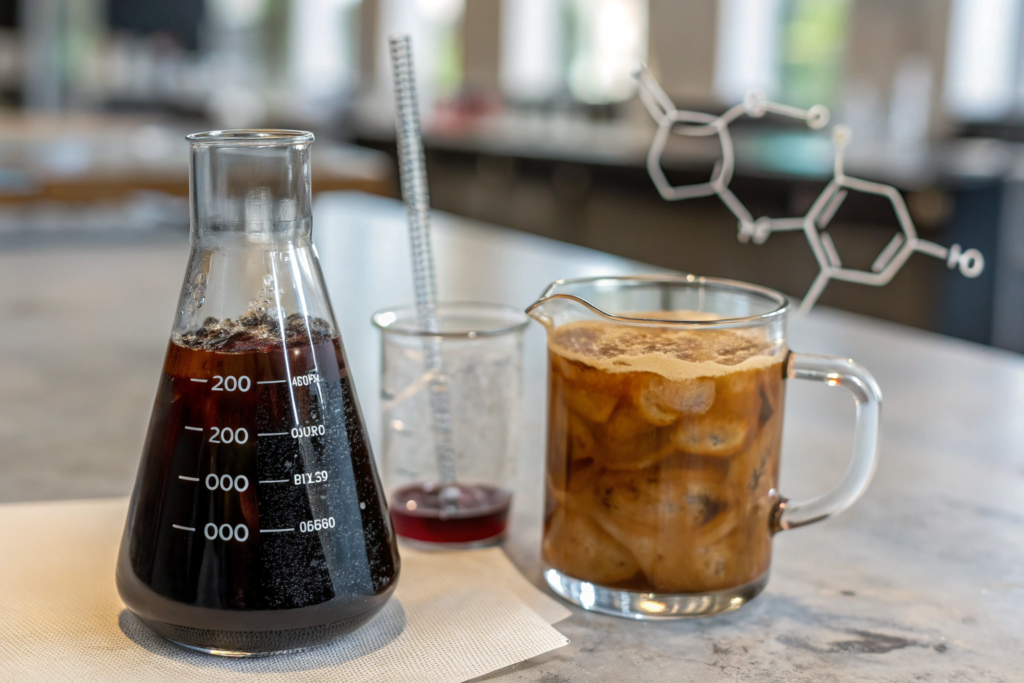
Does cold brew really have less caffeine than hot coffee?
No. That is a myth. Cold brew has more caffeine by volume. But people feel it differently. Why? Because cold brew has less acid. Acid can make your stomach absorb caffeine faster. So hot coffee gives you a quicker spike. Cold brew gives you a slower, steadier energy.
I tested this on myself. I drank 8oz of hot coffee at 8 AM. I felt the caffeine in 15 minutes. But I crashed by 11 AM.
Another day, I drank 8oz of cold brew. I felt the caffeine after 30 minutes. But the energy lasted until 1 PM. So cold brew gives you a longer, smoother ride.
If you are selling to tech workers (like we talked about before), cold brew might be better. It gives steady focus without jitters.
How should you adjust brewing for caffeine control?
If you want more caffeine, use more coffee. It is that simple. But here are three tips:
First, for cold brew, use a 1:6 ratio instead of 1:4. You will get a lighter concentrate. But the caffeine will be lower. This is good for customers who want smooth taste but less energy.
Second, for iced coffee, use a dark roast. Dark roast has slightly less caffeine by volume. But the flavor is stronger. So you can use less coffee. That lowers the caffeine.
Third, blend in Robusta. Robusta has 2x the caffeine of Arabica. We sell a high-quality washed Robusta. It is not bitter like cheap Robusta. Add 10–20% to your cold brew blend. The caffeine will go up. But the taste will stay smooth.
We have a caffeine content chart on our website. You can see the numbers for all our beans.
Which Method Is Better for Your Business?
So, you are a café owner or a roaster. You need to decide which drink to focus on. Or maybe you want to offer both. But time and space are limited. Let me help you make that decision. I have talked to dozens of café owners who use our beans. Here is what they told me.
Cold brew is better for businesses that want to prepare drinks in advance, reduce waste, and serve customers quickly. It stays fresh in the fridge for up to 14 days. Iced coffee is better for businesses that want brighter, more acidic flavors and lower upfront preparation time. But iced coffee must be made fresh daily for the best taste. The choice depends on your kitchen space, staff training, and customer preferences.
Let me break down the pros and cons from a business perspective. I will use real examples from our buyers.
Cold brew advantages:
- Make it once a week. Serve it all week.
- No special equipment needed (just a bucket and a filter).
- Smooth taste that appeals to non-coffee drinkers.
- Higher profit margin (you charge more for cold brew).
Cold brew disadvantages:
- Takes 18–24 hours to brew.
- Requires fridge space for storage.
- Uses more coffee beans (higher cost of goods).
- Some customers find it too smooth (they want acidity).
Iced coffee advantages:
- Faster to make (5 minutes).
- Uses your existing coffee brewer.
- Brighter, more familiar taste.
- Lower coffee cost per serving.
Iced coffee disadvantages:
- Must be made fresh daily.
- Can taste bitter if not brewed correctly.
- Ice dilutes the flavor over time.
- Lower perceived value (customers expect to pay less).
Here is a table comparing costs:
| Drink | Coffee per serving | Labor time | Shelf life | Suggested price |
|---|---|---|---|---|
| Cold brew | 25g (diluted) | 10 min per batch | 14 days | $5.00 |
| Iced coffee | 18g | 2 min per serving | 4 hours | $4.00 |
So cold brew has a higher price point. But also higher cost. Your profit per cup is about the same. The real difference is labor and space.
Which method has lower operating costs?
It depends on your volume. If you sell 10 cold brews per day, the batch method saves labor. One person spends 10 minutes to make enough for 30 drinks. That is efficient.
If you sell 10 iced coffees per day, you spend 2 minutes per drink. That is 20 minutes of labor. So cold brew wins on labor.
But cold brew needs fridge space. A 5-gallon bucket takes up room. If your fridge is small, that is a problem.
One of our buyers in Chicago solved this. He makes cold brew in bags. He stacks the bags in a corner. No bucket needed. Then he serves it from a tap. Very efficient.
We work with Shanghai Fumao to ship bulk beans to buyers like this. They buy our Arabica by the pallet. Then they make cold brew concentrate. Then they sell it to offices and cafes.
What do BeanofCoffee customers prefer?
Based on our survey of 50 café buyers in North America and Europe:
- 65% sell both cold brew and iced coffee.
- 25% sell only iced coffee.
- 10% sell only cold brew.
But among those who sell both, cold brew makes up 60% of their cold coffee sales. So cold brew is more popular. Especially in summer.
Younger customers (under 35) prefer cold brew. They say it is smoother and less bitter. Older customers prefer iced coffee. They like the familiar taste.
So my advice? Offer both. Use our Arabica for cold brew. Use our Catimor for iced coffee. That way, you cover both markets.
We can send you sample recipes. Just ask Cathy for our café recipe guide. It has ratios, brewing times, and serving suggestions.
Conclusion
Cold brew and iced coffee are not the same. Not even close. Cold brew uses cold water and time. Iced coffee uses hot water and ice. Cold brew is smooth, low-acid, and chocolatey. Iced coffee is bright, acidic, and fruity. Cold brew has slightly more caffeine. Iced coffee is faster to make.
As a coffee buyer, you need to choose the right beans for each method. For cold brew, pick low-acid beans with chocolate notes. Our Yunnan Arabica is perfect. For iced coffee, pick medium-acid beans with fruit notes. Our fully washed Catimor works well.
If you are not sure which method to focus on, test both. Order samples from us. Brew them side by side. Taste them. Then decide.
And remember, we are here to help. We own our farms. We control our processing. And we ship to North America, Europe, and Australia through partners like Shanghai Fumao.
Contact Cathy Cai directly. Email: cathy@beanofcoffee.com. Tell her your business type (café, roastery, or distributor) and your volume. She will send you the right samples, pricing, and brewing guides. No fluff. Just good coffee and good advice.