Let's talk about a hidden threat in the coffee supply chain. You've sourced what looks like perfect green beans. The price is right, the color is good. But there's an invisible risk you can't see, taste, or smell: Ochratoxin A (OTA). This toxic mold byproduct is a serious contaminant, strictly regulated in the European Union, North America, and other major markets. For you, the importer, a single failed test at customs can mean a rejected shipment, massive financial loss, and irreparable damage to your brand's reputation. The risk is silent, but the consequences are loud. Have you ever wondered what truly happens to your beans between the tree and the shipping container?
The assurance doesn't come from a single magic step. It comes from a rigorous, controlled system that starts at the farm and never stops. Ensuring OTA-free coffee is about controlling moisture at every single stage—during growth, processing, drying, storage, and transportation. As a plantation owner and exporter with control over our entire 10,000-acre operation in Yunnan, we treat OTA prevention not as an afterthought, but as the fundamental cornerstone of our food safety protocol. It's a non-negotiable part of being a "safe, reliable, and trustworthy" supplier.
So, if you're relying on a certificate alone, you're only seeing the tip of the iceberg. The real work happens long before the sample is sent to the lab. Let's dive into the concrete, actionable practices that guarantee the coffee you import is clean, compliant, and safe.
Why Is Controlled On-Farm Drying the First Critical Barrier?
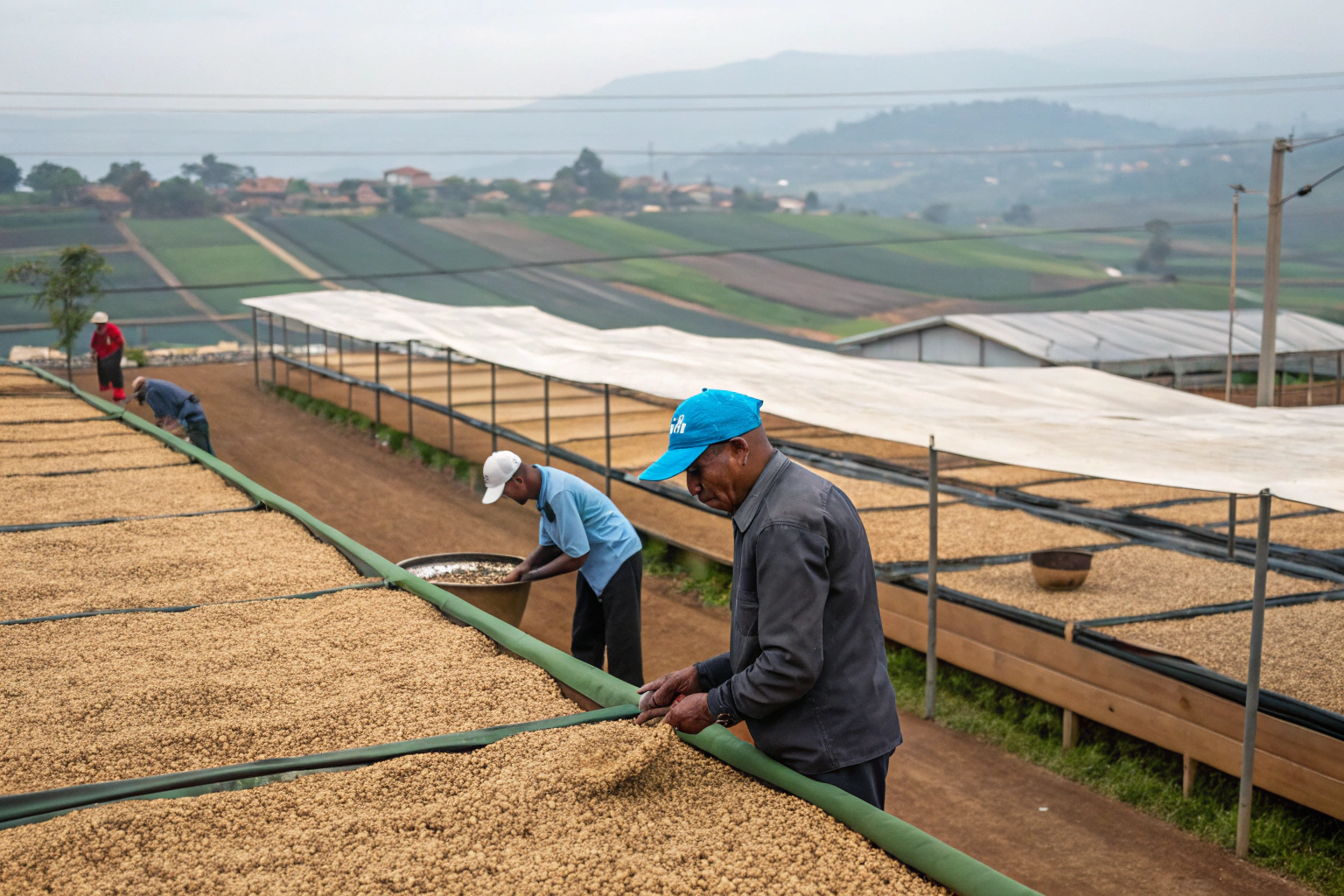
Picture the moment the coffee cherry is picked. From that second, the clock starts ticking against mold. The single most important factor in preventing OTA formation is rapidly and uniformly reducing the bean's moisture content to a safe level. This must happen immediately after picking. In many supply chains, this is the weakest link—beans are left in piles, dried on muddy ground, or exposed to rain. This is where contamination begins. For a buyer like you, the supplier's drying methodology is your first line of defense.
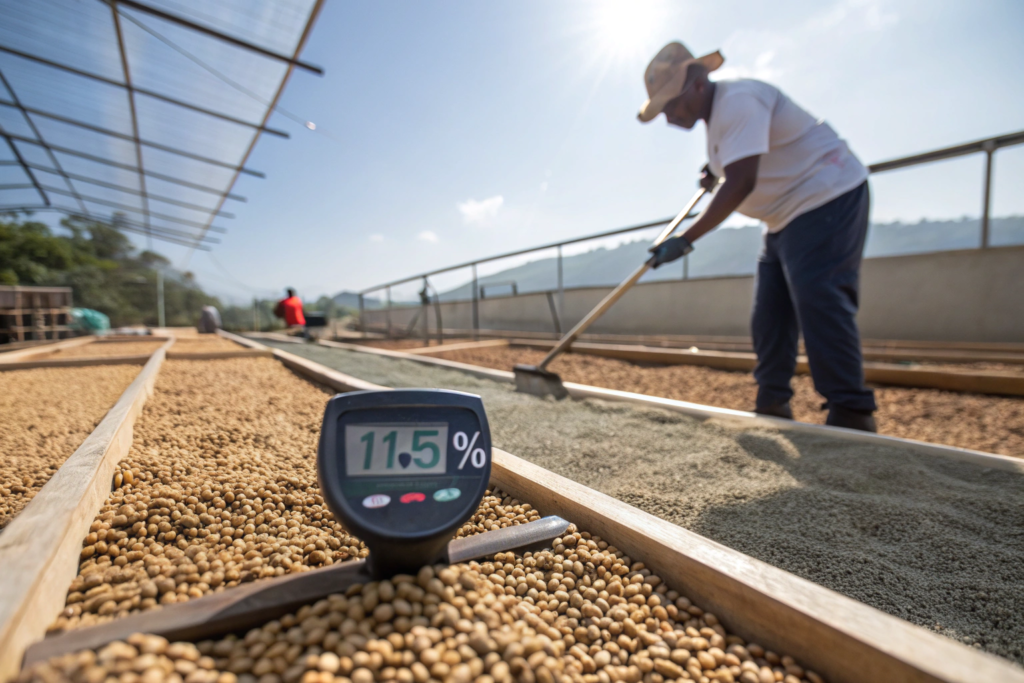
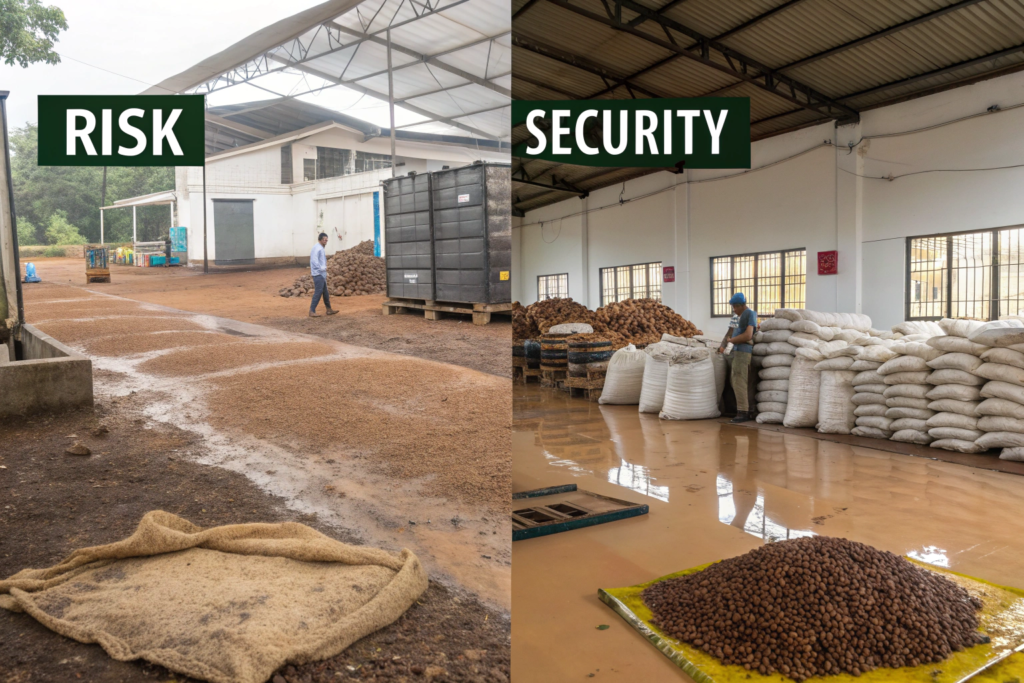
On our farms in Baoshan, we've eliminated sun-drying on bare earth. Instead, we use raised African drying beds and parabolic solar dryers. These methods allow perfect air circulation underneath and around the beans, drying them evenly. The beans are never in contact with soil or moisture. We turn them frequently. Most importantly, we monitor moisture content daily with precision meters. The target is to bring the parchment coffee from about 60% moisture at harvest down to a stable 10-12% as quickly and evenly as possible. This controlled environment denies mold the warm, damp conditions it needs to produce toxins. It's a simple principle: fast, even drying equals safety. This initial investment in infrastructure is what separates a professional plantation from a collection of smallholdings with inconsistent practices.
What is the safe moisture content for green coffee beans before storage?
This number is non-negotiable: 10-12%. Once coffee is dried and milled (the green bean stage), its moisture must be in this range before it goes into storage. Beans above 12% are at high risk of mold growth during storage or shipping. Beans below 10% can become brittle and lose quality. We use calibrated moisture meters on every batch before bagging. We don't guess. We measure. This precise control is your guarantee that the beans entering the bag are microbiologically stable. Many quality disputes and contamination issues trace back to improper drying and failure to verify this critical parameter. It's the bedrock of our quality control protocol.
How does mechanical drying compare to traditional sun drying for OTA prevention?
While sun drying can be done well on raised beds, it's highly weather-dependent. A sudden rain shower can re-wet beans, creating a mold hotspot. Mechanical dryers (with controlled temperature and airflow) remove this risk entirely. They provide a consistent environment regardless of weather. In our processing, we often use a hybrid approach: starting on solar dryers and finishing with gentle mechanical drying to "lock in" the perfect moisture level. This combination gives us ultimate control and eliminates one of the biggest variables in coffee production—the weather. For you, this means consistency and security, shipment after shipment, regardless of the harvest season's conditions.
What Role Does Modern Storage and Milling Play in Prevention?
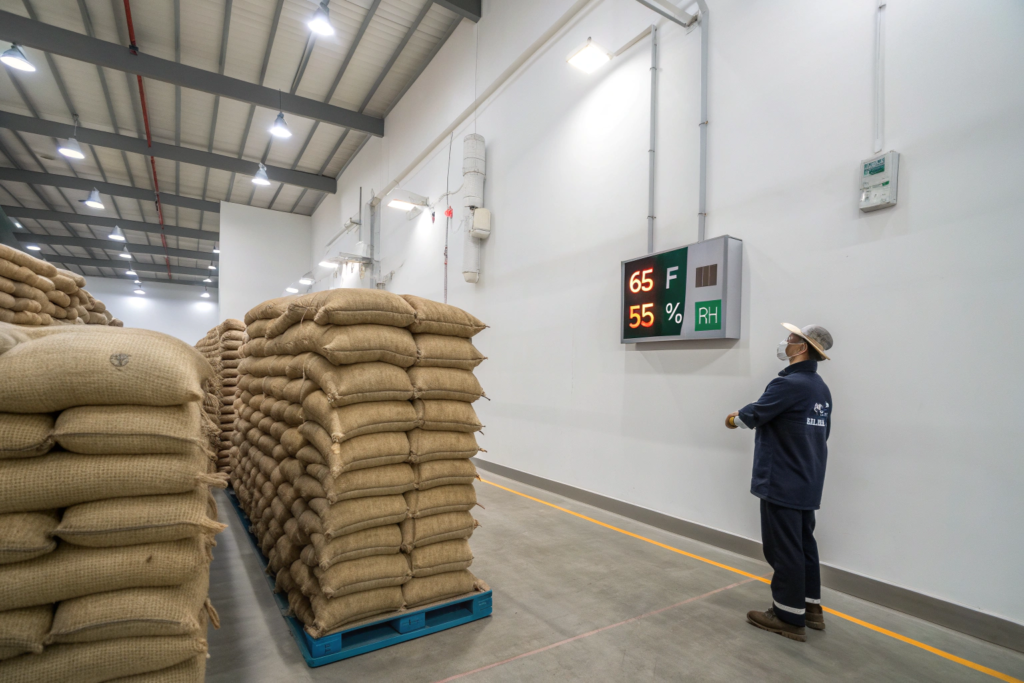
Drying the beans correctly is only half the battle. If you then store them in a damp, warm warehouse, you've lost. The storage and milling environment is the second critical control point. OTA can form during storage if beans are exposed to high humidity or re-absorb moisture. The goal is to maintain that hard-won 10-12% moisture level from the moment the beans are bagged until they are loaded onto your container.
Our warehouses in Yunnan are specifically designed for coffee. They are clean, ventilated, and most importantly, climate-controlled. We monitor ambient temperature and humidity. Bags are stored on pallets, never directly on the floor, to allow air circulation and prevent moisture ingress. The milling process itself is also a key moment. Modern, clean equipment prevents cross-contamination from old, possibly moldy, residue. We schedule regular deep cleaning of all our milling machinery. Furthermore, we use high-quality, multilayered hermetic bags for our export lots. These bags have a polyethylene liner that acts as a barrier against external humidity during ocean transit, which can last for weeks in a humid container. This end-to-end protection is what we mean by a "controlled supply chain."
Why is hermetic (GrainPro-style) bagging essential for long ocean voyages?
The journey from China to North America or Europe takes weeks. Inside a shipping container, temperatures can swing, and humidity can be very high—a condition called "container rain" or cargo sweat. Standard jute bags offer no protection; beans can absorb this moisture and become a mold breeding ground. Hermetic bags, like those from GrainPro, create a nearly oxygen-free and moisture-proof micro-environment around the beans. Once sealed, the internal moisture content cannot rise, and external molds cannot penetrate. For us at Shanghai Fumao, using these bags for all our exports is a standard cost of doing business. It's a direct investment in your shipment's safety and our reputation. It's the final, physical barrier protecting your investment across the ocean.
How does a supplier's in-house lab provide an early warning system?
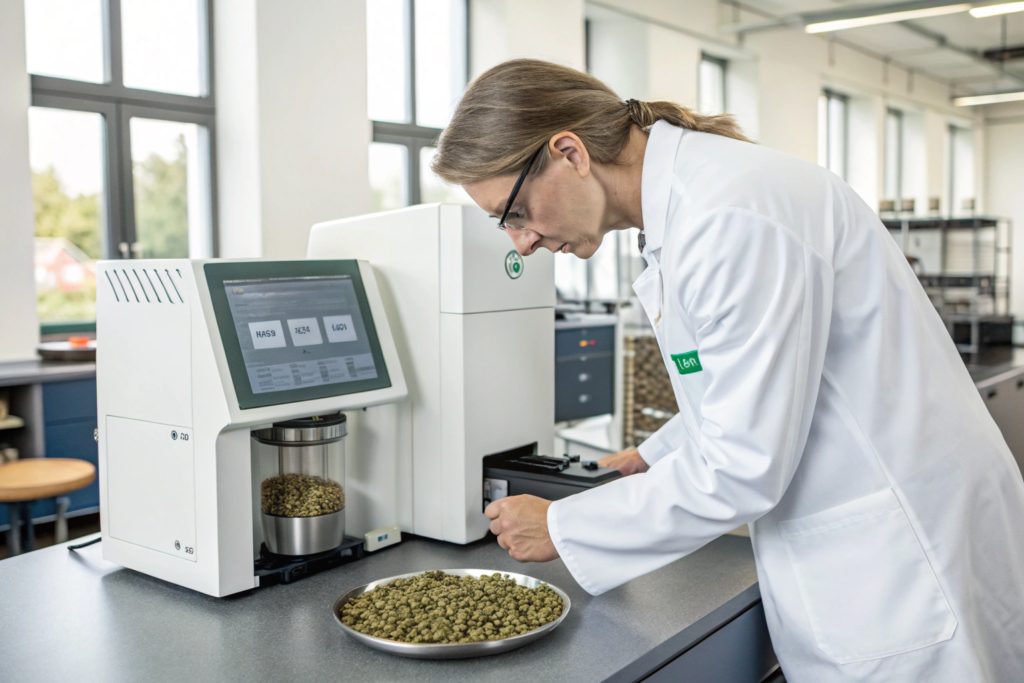
Waiting for the final pre-shipment inspection report is too late. Proactive suppliers test early and often. We run periodic OTA screening tests in our own on-site lab using ELISA test kits. These are not the final, legally binding tests (those are done by accredited third parties like SGS), but they are a powerful internal control. If a batch from a specific drying lot shows any elevated reading, we can segregate it immediately for further analysis or reject it entirely. This internal monitoring acts as an early warning system, catching potential issues long before the beans are ever offered or blended into an export lot. It's the difference between being reactive and being preventive.
How to Verify Safety with Third-Party Testing and Certificates?
You have the right to demand proof. Certificates of Analysis (CoA) from accredited third-party labs are your legal and commercial proof of compliance. They are the final, objective checkpoint before shipment. A reputable supplier will not only agree to testing but will proactively facilitate it and make the process transparent for you. This is where trust is verified by science.
Our standard practice is to arrange for a pre-shipment inspection that includes OTA testing. Agencies like SGS, Eurofins, or Bureau Veritas are internationally recognized. The inspector, hired by you or us (as per your instruction), will visit our warehouse, take a representative sample from the actual batch meant for you, seal it, and send it to their lab. The test uses sophisticated methods like HPLC-MS to detect OTA at levels as low as parts per billion (ppb), far below the EU's strict limit of 5 ppb for roasted coffee and 10 ppb for green. The resulting CoA is your passport for customs clearance. We provide this documentation seamlessly as part of our export service. For a buyer concerned about security, insisting on a tested lot is the ultimate due diligence.
What are the global legal limits for OTA in coffee, and how do you read a lab report?
The limits vary, but the strictest are your guide. The European Union sets the benchmark: maximum 5 µg/kg (ppb) for roasted coffee beans and ground coffee, and 10 µg/kg for soluble (instant) coffee. Other markets like the US FDA have advisory levels, but the EU standard is often used globally for trade. When you read a CoA, look for three things: 1) The Test Method (e.g., HPLC-MS), 2) The Result (should be "Not Detected" or a numerical value well below the limit), and 3) The Limit of Detection (LOD) – a lower LOD means a more sensitive and reliable test. A report stating "<0.5 µg/kg" is more reassuring than one stating "<5 µg/kg". We always aim for tests with the lowest possible LOD to provide the highest confidence.
Can you trust an OTA certificate from the supplier, or must you commission your own?
For a new supplier or a critical shipment, commissioning your own test is the gold standard of risk management. You hire and pay the inspector directly, which guarantees the chain of custody and complete impartiality. As we grow our relationship and trust builds, you may accept tests we arrange, but you must always verify the certificate's authenticity by checking the lab's accreditation and even contacting them to confirm the report number. At BeanofCoffee, we have nothing to hide. We encourage our clients to appoint their own inspector. This transparency is what makes a partnership truly "trustworthy." It aligns our interests perfectly: we both want the same clean result.
What Are the Red Flags in a Supply Chain for OTA Risk?
Not all supply chains are created equal. Some practices are giant red flags for OTA risk. As a buyer, knowing what to ask and what to look for can save you from a catastrophic partnership. The biggest risks come from aggregation, lack of traceability, and poor post-harvest handling. If a supplier cannot tell you exactly where and how their coffee was dried and stored, your risk increases exponentially.
Here are key red flags: 1. Unknown Aggregation: The supplier is a trader buying from countless small farms with no uniform drying standards. 2. No On-Farm Controls: They cannot describe or show you their drying infrastructure. 3. Improper Storage: Bags stored directly on concrete floors in non-climate-controlled sheds. 4. Resistance to Testing: Hesitation or extra charges for third-party OTA testing. 5. Vague Traceability: Coffee is sold as a generic "Yunnan Arabica" with no lot number or harvest date. In contrast, our model of direct plantation ownership eliminates most of these risks. We have one standardized protocol across thousands of acres. Every bag can be traced back to a specific harvest period and drying lot. This control is your best insurance.
Why is single-origin, estate-grown coffee lower risk than blended lots?
Think of it like this: a blended lot from 100 small farms is only as safe as the least careful farmer in that group. One bad batch can contaminate the entire blend. Single-origin, estate-grown coffee from a single management entity, like ours, applies one rigorous standard to the entire crop. There is no blending of safe and unsafe lots. The risk is contained and managed uniformly. When you buy from Shanghai Fumao, you are buying a product from a single, auditable source. This dramatically simplifies risk assessment and gives you a direct line of responsibility. It's a fundamentally safer model for contaminants like OTA.
How do you audit a potential supplier for OTA control before ordering?
Ask direct questions. Request: 1) Photos/videos of their drying facilities and storage warehouses. 2) Their standard operating procedure (SOP) for post-harvest processing. 3) A sample Certificate of Analysis from a recent shipment. 4) Information on their bagging type for export. 5) Permission for an unannounced pre-shipment inspection. Their willingness and speed in providing this information is a telling sign. A professional supplier will have this documentation ready and will see your diligence as a mark of a serious partner. We welcome these audits because they demonstrate our competitive advantage.
Conclusion
Ensuring your coffee is free from Ochratoxin A is not a matter of luck or a single test. It is the result of a meticulous, controlled process that governs every step from the drying bed to the shipping container. It requires a supplier who invests in infrastructure, embraces transparency, and partners with you on verification. The cost of prevention is built into professional operations; the cost of failure is borne by you, the importer.
Your safest path is to partner with a vertically integrated source that owns the risk from seed to ship. A supplier whose business depends on consistent, safe delivery has every incentive to get it right, every single time.
Don't leave the safety of your coffee supply chain to chance. Partner with a source that builds OTA prevention into its core operations. Contact Cathy Cai at BeanofCoffee to receive our detailed food safety protocol and arrange for sample testing: cathy@beanofcoffee.com. Let's ensure your next shipment is not only high-quality but also guaranteed safe.