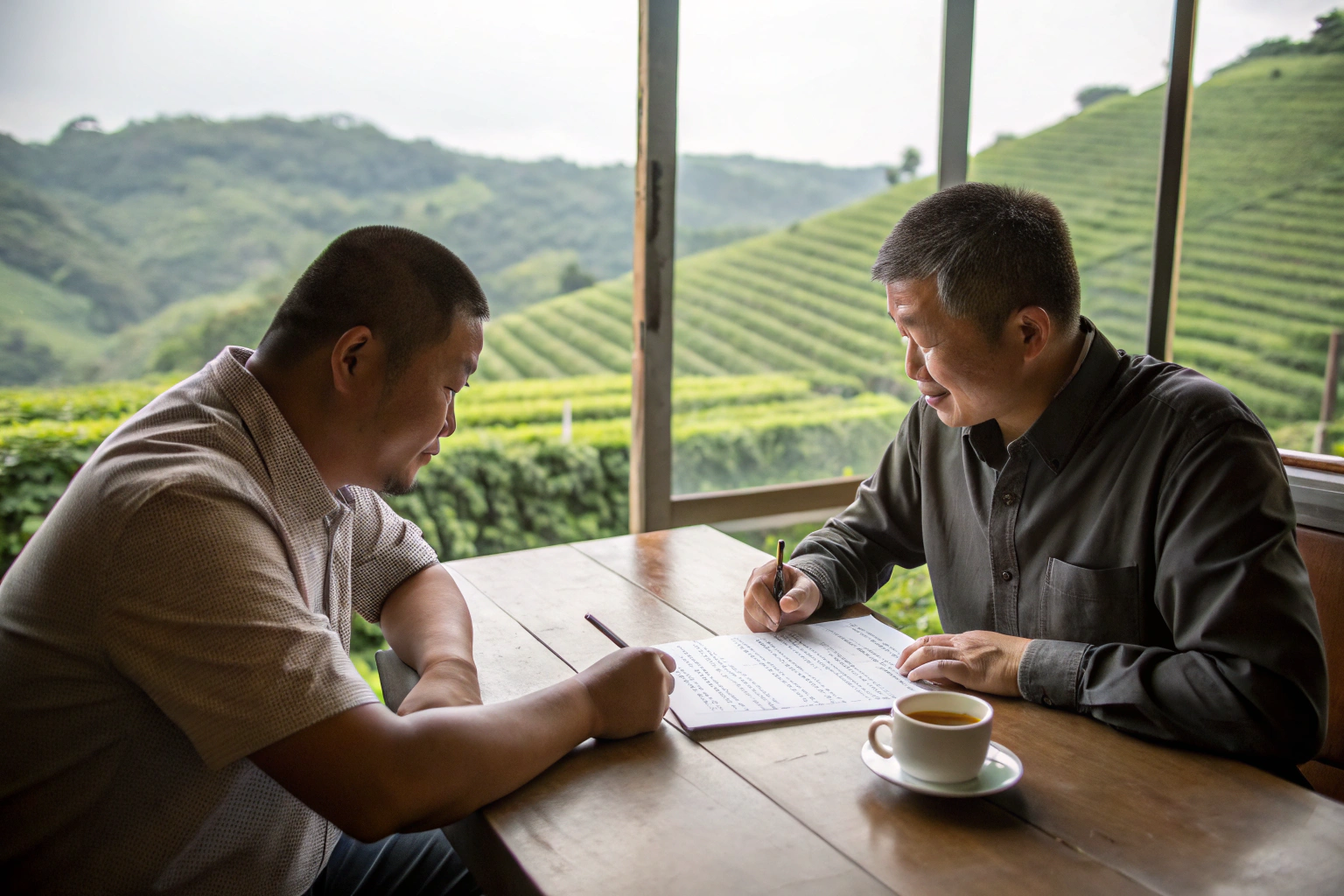
I remember a conversation I had with a roaster from Texas at a trade show in Seattle about three years ago. He was direct, almost blunt. "I want to lock in a price for two years," he said, "but every supplier I have talked to in Asia goes silent the moment I mention a contract longer than six months. They want spot deals. They want flexibility. I want stability. Are you going to ghost me too?" I did not ghost him. We signed an 18-month contract four weeks later, and we have renewed it twice since then. But his frustration was real, and I hear versions of it all the time from buyers looking at the Chinese coffee origin. Many Chinese coffee exporters operate on a spot-sale mentality. They watch the C-market, they adjust prices weekly, and they hesitate to commit to a fixed schedule because they are afraid of getting caught on the wrong side of a price swing. I understand that fear. I just choose to manage it differently.
A Chinese coffee supplier willing to sign a long-term contract is one who owns their own plantation assets—giving them cost certainty that a trader lacks—operates with a transparent pricing formula tied to a mutually agreed reference index, and has enough export volume history to absorb a single bad season without breaking the commitment to the buyer.
Long-term contracts in the coffee industry are not just about price. They are about supply security, quality consistency, and the slow, valuable process of a supplier learning exactly how a buyer likes their beans prepared. A spot supplier never learns your cupping preferences deeply. A contract supplier adjusts their fermentation protocols because they know your roastery's flavor target. Finding the right Chinese partner for that kind of relationship requires looking past the Alibaba storefront and into the fundamentals of the operation. In this article, I want to share what I believe truly indicates a Chinese coffee supplier is ready for a long-term deal, and how you can identify one.
What Operational Signs Indicate a Chinese Coffee Supplier Is Ready for Long-Term Deals?
The first thing I tell a buyer who asks me about long-term contracts is this: look at what the supplier owns, not what they say they can source. A trading company with a laptop and a WeChat account can offer you a great price on a single container. They buy from a farmer, add a margin, and ship it. But when the market price spikes $0.40 per pound, that farmer sells to a higher bidder, and the trading company calls you with an apology and a force majeure excuse. A plantation owner cannot do that. The coffee is on the trees. The processing equipment is in the mill. The fixed costs are already sunk, and the variable costs are predictable. Ownership of the asset creates an entirely different risk profile.
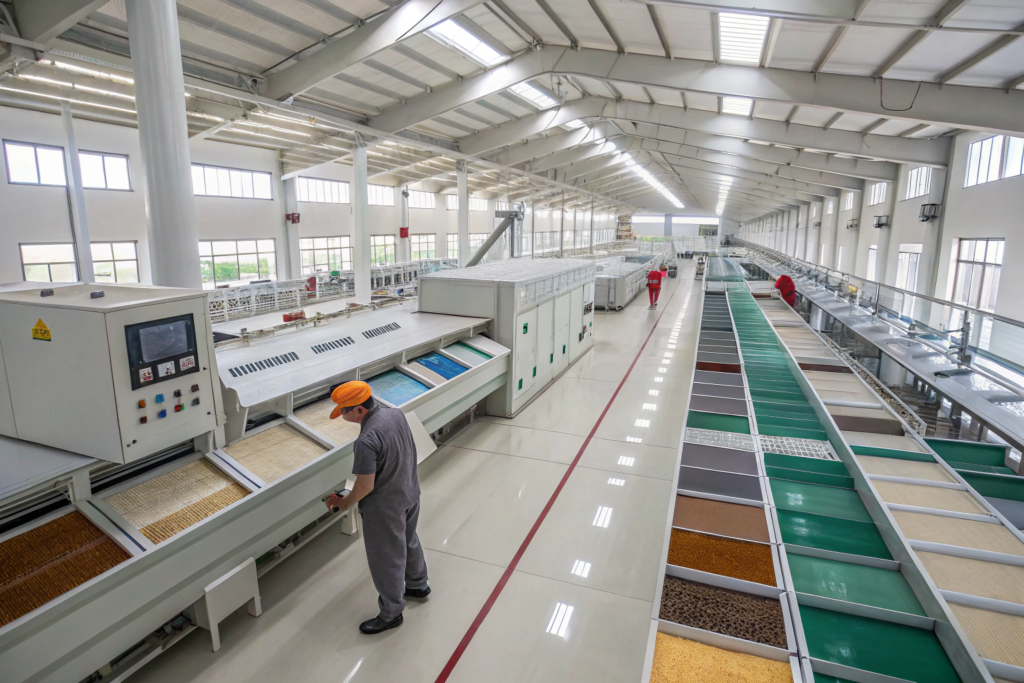
The most reliable indicators of long-term readiness are direct plantation ownership of at least several hundred hectares, an in-house dry mill with documented processing capacity, a multi-year track record of consistent export volumes, and a dedicated logistics desk that understands the specific documentation rhythm of contract shipping—not just spot booking.
When I walk a visiting buyer through our Baoshan operation, I show them the nursery first. Not the cupping lab, not the sample room. The nursery. Because the nursery tells you what the farm will produce in three years. If a supplier has invested in a nursery producing 2 million plantlets annually, that is a long-term capital decision. They are not planning to exit the market next season. They are planning to still be harvesting when the contract you sign today enters its renewal period. Another sign is the dry mill's throughput capacity. A mill built to process 5,000 tons of green coffee annually is a statement of intent. It means the supplier has invested in the infrastructure to handle multi-container, consistent-quality contracts, not just a single pallet of micro-lot here and there. I also look at the variety mix. A farm growing both Catimor for commercial blends and premium Arabica for specialty is signalling an understanding of market segmentation and volume management, both of which are essential for a long-term partner who can deliver both base-load and high-tier product.
Why does direct plantation ownership matter more than a trading license?
Let me explain this from the inside. A trading license in China allows a company to export. That is it. It does not give the company any control over the agricultural process. A trader with only a license is completely dependent on the spot cherry market. In a bad harvest year, when yields are low, cherry prices in the local market can jump quickly. The trader who promised you a fixed price for container loads now faces a choice: buy the cherry from farmers at a loss and honor the contract, or breach the contract and blame the weather. Most traders, rationally, choose to protect their own survival and breach.
A plantation owner like myself is in a fundamentally different position. I know my production cost per kilogram of green bean down to the last yuan. I know my fertilizer input cost, my labor cost for picking and sorting, my electricity cost for running the dry mill, and my freight amortization. When I sit down to negotiate an annual or multi-year fixed-price contract with a buyer, I am comparing their offered price against my internal cost structure, not against the volatile open market cherry price. If the margin is reasonable and stable, I can commit. The long-term contract locks in a predictable return on my agricultural asset, and I can plan my agronomy budget according to that known revenue stream. This is the mindset of a farmer, not a trader. A buyer looking for a long-term partner should ask the direct question: "Do you own the plantation, and if so, how many hectares?" A supplier who hesitates or gives a vague answer about "partner farms" without specifics is likely a trading intermediary. A supplier who sends you a GPS pin of their farm boundary and a photo of their land-use certificate is a different conversation entirely. This distinction between an asset-owning producer and a market-making trader is the single most predictive factor in long-term contract performance.
How can a buyer verify a supplier's multi-year export track record?
Verification is about third-party data and physical evidence. The simplest method is to request the supplier's export customs declaration records for the previous three years. Every legal Chinese exporter has these records, filed through the customs electronic system. They show the commodity, the volume, the destination country, and the declared value. A supplier who can share redacted versions of these declarations is showing you their actual shipping history, not a marketing narrative. If they cannot or will not share them, that is a red flag.
Another method is to check the supplier's presence on verified B2B platforms like Alibaba with a Gold Supplier badge that has been active for multiple years, or better yet, their physical exhibition track record. Ask which international trade shows they have attended in the last three years. A supplier who has had a booth at the Specialty Coffee Expo in the United States or the World of Coffee in Europe has invested significant money in long-term market presence. These exhibition investments are not made by spot traders hopping from one season to another. A physical visit to the supplier's facility remains the gold standard of verification. I have had buyers visit our Baoshan mill unannounced—they were already in Yunnan on another business trip—and I welcomed them in. A genuine long-term supplier has nothing to hide. The processing floor is clean, the warehouse has clearly labeled lots, and the cupping lab has a sample library going back several harvests. If a supplier makes excuses about why a visit is not possible, the buyer should treat that with extreme caution. Verification builds the trust that allows a long-term coffee contract to move from a wish into a signed document.
How Can a Pricing Formula Create Trust for a Multi-Year Coffee Agreement?
The biggest fear a buyer has when signing a long-term contract with a supplier from an emerging origin is that they will overpay when the market drops. The biggest fear the supplier has is that they will lose money when the market spikes. A flat fixed price for two years does not solve this problem. It just shifts the risk entirely onto one party, and eventually, that party will break the agreement. What works far better, in my experience, is a pricing formula that both parties understand, that references a neutral third-party index, and that includes protective boundaries on both the high and low ends.
A sustainable long-term coffee pricing formula ties the base price to the ICE Arabica futures contract for a specific delivery month, adds a fixed quality differential that reflects the cup score and certification premiums, and optionally includes a price floor and ceiling mechanism that protects the buyer from catastrophic market spikes and protects the seller from below-cost-of-production slumps.
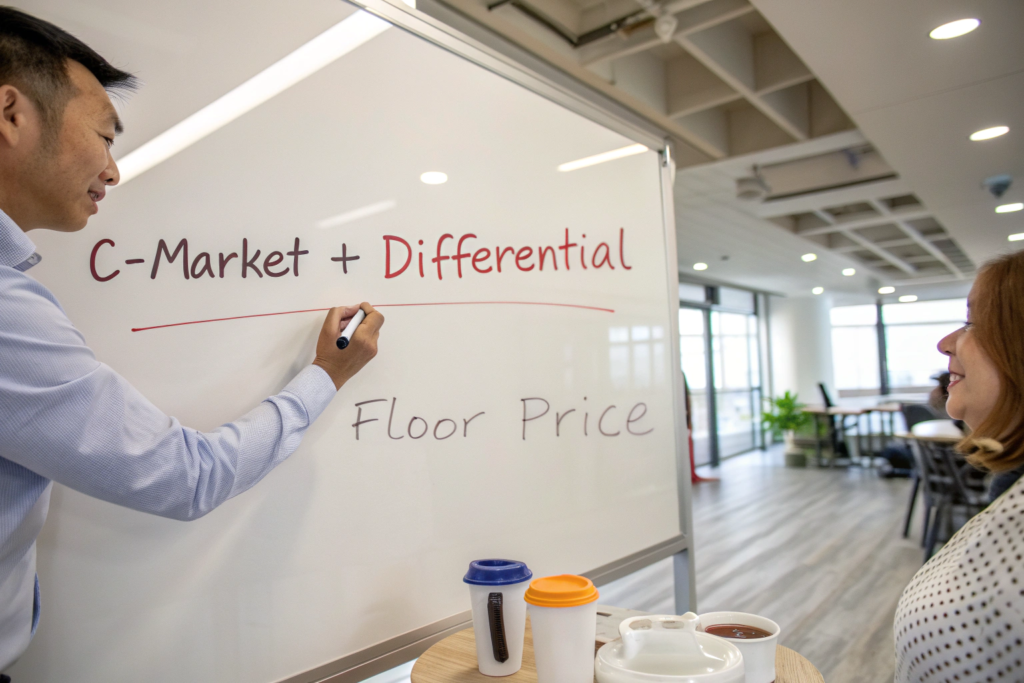
The formula I use with several of our contract customers works like this: the base price per pound is the daily settlement price of the nearby ICE Arabica futures contract, averaged over the five trading days before the shipment date. Then, we add a fixed differential—say, $0.45 per pound—that reflects the specialty grade quality, the organic certification if applicable, and the specific processing requirements we have agreed upon. This differential remains constant for the life of the contract. The ICE price moves, and the differential anchors the quality premium. This structure means the buyer knows they are always paying a transparent market-referenced price, and I know I am always receiving a consistent premium for my quality. If the market crashes to $1.20, the buyer does not feel cheated because they are paying market plus differential. If the market rallies to $3.00, I do not feel cheated because I am still receiving the same differential on top. The formula aligns incentives.
What is a "floor and ceiling" price mechanism and how is it negotiated?
A floor and ceiling mechanism adds an extra layer of security for both sides and is negotiated at the start of the contract. Let us say the long-term contract is for 18 months. Both sides look at the current ICE Arabica price, which might be, for illustration, $2.20 per pound. The buyer worries that a drought in Brazil could push the C-market to $3.50, making the coffee unaffordable. I, as the seller, worry that a global recession could push the C-market down to $1.10, below my cost of production. To manage these tail risks, we agree on a price floor and a price ceiling.
For example, we might set a floor at $1.60 and a ceiling at $2.90. If the five-day average ICE price falls below $1.60, the contract price automatically adjusts to $1.60 plus the differential. My production cost is protected. If the five-day average rises above $2.90, the price adjusts down to $2.90 plus the differential. The buyer's budget is protected. In the wide range between $1.60 and $2.90, the market price prevails. This mechanism essentially chops off the extreme ends of the price distribution curve, which is where the contractual relationship is most at risk of breaking. I have found that negotiating these specific numeric boundaries requires both parties to be honest about their internal economics. The buyer needs to share their maximum viable landed cost for the product to remain profitable. I need to share my certified cost of production. When that data is on the table, the negotiation is not adversarial; it is about finding a corridor where both businesses survive and the contract endures. This level of transparency distinguishes a long-term partnership from a transactional spot deal.
How can a contract address currency fluctuation risk between CNY and USD?
This is a detail that many first-time contract buyers overlook, and it can quietly erode margins for the Chinese supplier. Our internal costs—worker wages, fertilizer, electricity, local transport—are all paid in Chinese Renminbi. The coffee contract, almost invariably, is priced in U.S. dollars. The exchange rate between CNY and USD is not fixed. If the dollar weakens significantly against the Renminbi, the dollar revenue from the contract converts into fewer yuan, potentially pushing our real income below the sustainable threshold.
I address this with a simple contract clause. The clause states: "Should the CNY/USD exchange rate, as published by the People's Bank of China on the date of invoice, fall outside a band of plus or minus 5% of the contract benchmark rate of X.XX, the parties shall meet to review and adjust the fixed differential component of the price formula to compensate for the currency impact, such adjustment not to affect the ICE-linked base price." This clause does not trigger often. Most years, the exchange rate stays within a moderate range. But in a year of sharp currency movement, the clause provides a structured conversation rather than a crisis call. The buyer does not want to hear that their supplier is losing money on every bag because of a currency swing the supplier cannot control. The clause acknowledges that the viability of the long-term supply chain requires a stable income in the producer's local currency. For an American buyer, the dollar equivalent impact of a small differential adjustment is usually marginal. For me, it is the difference between a motivated harvest crew and a labor shortage the following season. A good contract protects the supply chain ecosystem, and currency is part of that ecosystem.
What Legal Safeguards Should a Long-Term Coffee Contract Include?
The trust between a buyer and a seller is essential, but trust alone does not survive a truly unexpected event. A contract is the document you turn to when circumstances go sideways. I had a contract once, early in my export career, that was written on two pages of a Word document. It mentioned the price, the volume, and the shipment schedule. It did not mention what would happen if a landslide blocked the road from our mill to the port for two weeks. When exactly that scenario occurred, the buyer and I had no legal framework for the delay. We sorted it out amicably, but the stress was avoidable. Since then, I have insisted on a contract structure that is thorough enough to be enforceable but practical enough that both sides can understand it without a team of lawyers.
A robust long-term coffee contract must contain a detailed quality specification with objective grading parameters, a force majeure clause that specifically enumerates agricultural and logistical events, a dispute resolution mechanism favoring arbitration in a neutral venue, and a shipment schedule with defined tolerance bands for volume and timing that acknowledges the agricultural reality of harvest fluctuations.
The quality specification section is the backbone. I define the maximum defect count per 350-gram sample according to the Specialty Coffee Association grading protocols. I define the moisture content range—10.5% to 12.0% in our case. I define the screen size distribution, the acceptable number of broken beans, and the cupping score floor. This is not about mistrust. It is about objective reference points that a third-party surveyor can verify if a dispute arises. The force majeure clause is equally critical. A standard clause that says "acts of God" is far too vague. I include specific examples: extreme drought in Baoshan exceeding a 30% precipitation deficit according to the local meteorological bureau, government-mandated road closures, port strikes at Shanghai, or a pandemic event that restricts the movement of container trucks. By enumerating these scenarios, both parties understand exactly what qualifies as a force majeure event and what is simply a production shortfall that must be compensated through alternative supply or price adjustment.

Why is a neutral arbitration clause important in cross-border agreements?
In a cross-border contract, the legal systems of the two countries are different. As a Chinese company, if I sign a contract that says "all disputes shall be resolved in the courts of the State of Texas," I am at a significant disadvantage. I do not know Texas law. I would need to hire an American attorney. Any legal proceeding would be distant, expensive, and slow. The reverse is true for an American buyer facing a clause specifying Chinese courts. The solution that has become standard in international commodity trade is neutral arbitration.
The three most commonly named arbitration bodies in coffee contracts are the International Chamber of Commerce in Paris, the London Court of International Arbitration, and the Singapore International Arbitration Centre. I prefer Singapore, personally. It is geographically neutral between China and the U.S., the proceedings are conducted in English, and the SIAC has specific experience with agricultural commodity disputes. The contract clause I use states: "Any dispute arising out of or in connection with this contract shall be referred to and finally resolved by arbitration administered by the Singapore International Arbitration Centre in accordance with the Arbitration Rules of the SIAC for the time being in force, the seat of arbitration shall be Singapore, and the language of the arbitration shall be English." This clause costs nothing to include. Its value is that it removes the fear of a biased court system from both sides' risk calculations. Knowing that a neutral, expert panel would decide any dispute makes both parties more willing to sign a long-term commitment in the first place.
How can a quality rejection procedure protect both buyer and seller?
No exporter wants to ship a defective lot. But in the real world, a batch can occasionally fall out of spec. The question is not whether it will ever happen, but whether the contract has a fair, efficient process for handling it when it does. A poorly drafted quality rejection clause allows the buyer to reject the entire container and demand a full refund while the coffee is still on the water, costing the seller the freight, the insurance, and the lost product. A well-drafted clause provides a structured sequence of inspection, expert sampling, and remediation options.
The clause I use works as follows. First, the buyer must notify me in writing of any quality complaint within seven calendar days of container delivery, and the notification must include the specific parameter that is out of spec, supported by an SCA-standard cupping report or a physical grading analysis from an independent lab. Second, a retained sample from the shipment—which I keep for every export lot—is sent to a mutually agreed third-party cupping lab for a binding analysis. If the third-party analysis confirms the beans are out of spec, the buyer has two options: they can return the lot at my expense and receive a full refund, or they can keep the lot and accept a negotiated discount against future shipments. This second option is the one that almost always gets chosen, because it keeps the buyer's production pipeline full and avoids the waste of shipping coffee back across the ocean. The existence of this structured process means that a quality issue, however rare, is a manageable business event rather than a relationship-ending crisis. For the buyer, the retained sample system and third-party arbitration guarantee they will not be stuck with defective beans. For me, the procedure protects against casual or unfounded complaints that have no objective evidence. A balanced quality clause is one of the clearest signs that a long-term contract supplier is thinking about the partnership across years, not just about the next invoice.
How Does a Supplier Manage Crop Variability While Honoring Volume Commitments?
Coffee is not a widget. It is a seasonal crop, and no two harvests are identical. I have stood in my fields during a drought year and watched the cherries shrivel on the branch. I have stood in the same fields during an unusually wet year and watched fungal pressure spike. A buyer who signs a contract for three containers per quarter for two years has a right to ask: "What happens if your farm cannot produce the volume you promised?" It is a fair question, and a long-term supplier must have an honest, operational answer, not just a contractual one.
A responsible Chinese supplier manages crop variability by maintaining a buffer stock of processed green beans from the previous harvest, diversifying growing areas across different micro-climates within the plantation to spread weather risk, and inserting a volume tolerance clause in the contract—typically plus or minus 10% to 15%—that allows modest fluctuations without breaching the agreement.
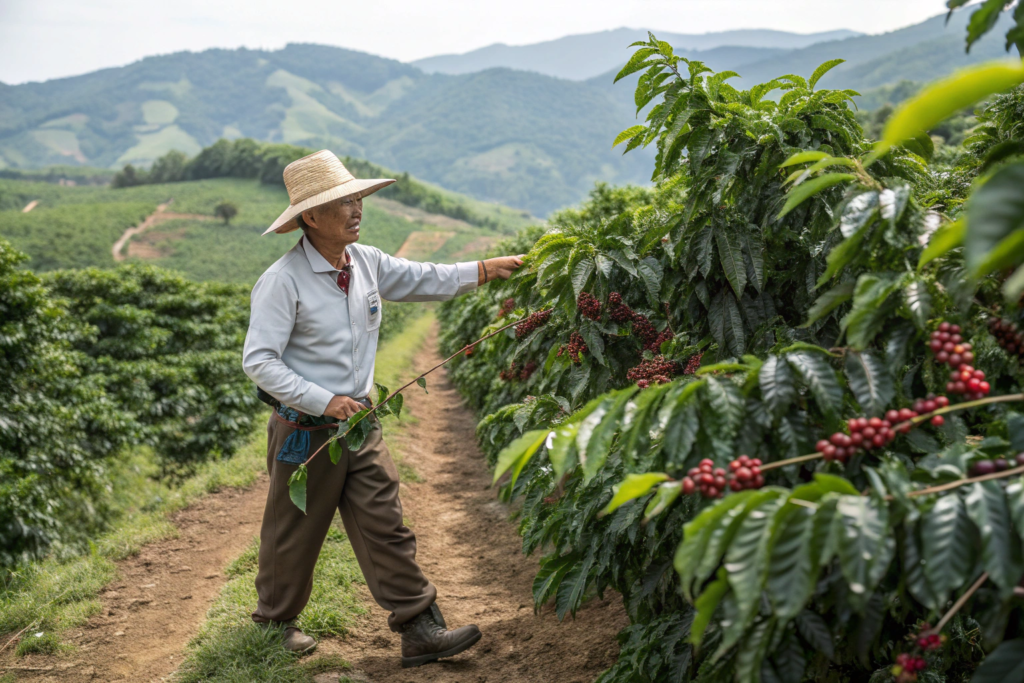
On our Baoshan estate, the 10,000 acres are not a single, uniform block. The eastern slopes receive different rainfall patterns from the western slopes. The higher altitude sections ripen later than the lower sections. This internal diversity is a natural hedge. If a dry spell hits one area, another area usually fares better. The aggregate production tends to be more stable than any single block's output. This is not an accident. It is a result of land use planning that considers production stability as a goal, not just maximum yield. For the buyer, this means I can look at the flowering reports in April and make a reasonably accurate volume forecast for the October harvest. I share these flowering reports with my contract buyers. It gives them early visibility into whether the season is trending toward the upper or lower end of the contracted volume band.
What role does buffer stock play in fulfilling contracts during lean harvests?
Buffer stock is the insurance policy I maintain within my own warehouse. At the end of each harvest season, I set aside a percentage of the processed green beans—usually around 20% of the annual contracted volume—into a dedicated buffer inventory. This coffee is stored in GrainPro bags in a temperature-controlled section of the dry mill warehouse. It is not sold on the spot market, no matter how attractive the price. It is reserved exclusively for contract fulfillment in the event that the following harvest underperforms.
Let me give you a concrete example. In the 2022/23 harvest season, our production was about 8% below the forecast because of an unseasonably cool flowering period. My contract commitments for the first quarter of 2024 represented a volume that exceeded the new crop's available export-grade output by about 5%. Because I had the buffer stock from the previous year, I was able to blend the new crop with the carefully stored older crop lot to meet the exact contracted volume. The quality did not degrade because the buffer stock had been stored under optimal conditions and cupped regularly to monitor its profile. The buyer received their full container load on time. Without the buffer stock, I would have had to request a volume reduction under the tolerance clause or, worse, default on the contract. The buffer stock is a working capital investment—it ties up beans that could otherwise be sold for immediate cash—but it is an investment that pays its return in contract renewals. Buyers ask me sometimes, "What happens if you have a bad year?" I tell them to walk with me to the buffer storage section of the warehouse and see the rows of bags with "CONTRACT RESERVE" tags. That visual demonstration builds more confidence than any verbal promise.
How can a volume tolerance band protect both parties from unrealistic expectations?
The volume tolerance band is a simple but powerful contract mechanism. It acknowledges the biological reality of coffee production and sets a range within which the supplier can deliver without penalty. A typical tolerance clause might read: "The Seller shall deliver a volume of between 85% and 115% of the contracted quantity for each shipment period, with the exact volume to be notified to the Buyer no later than 30 days prior to the scheduled vessel departure." The lower bound—85%—protects the seller if the harvest is genuinely short. The upper bound—115%—protects the buyer from being forced to accept more coffee than their warehouse capacity or cash flow can handle.
The key to making this clause work is early notification. If I know in September that the October shipment will only reach 90% of the contract volume, I tell the buyer in September, not in October when the container is already short-loaded. That 30-day window gives the buyer time to source a top-up from another supplier if necessary, or to adjust their own production schedule. The tolerance band is not an excuse to under-deliver secretly. It is a structured communication tool that aligns expectations with agricultural reality. I have found that buyers who have experience with other agricultural commodities—grain, cocoa, even wine grapes—readily accept a volume tolerance clause because they understand that no farm produces an exact, predetermined tonnage every season. Buyers new to direct sourcing sometimes push back against the tolerance band initially, preferring a fixed volume with penalties for shortfalls. I explain that a penalty clause creates a strong incentive for the supplier to over-commit and then quietly substitute lower-quality beans from the open market to meet the volume, a practice that damages quality and breaks trust. The tolerance band, combined with the buffer stock commitment, produces a more honest and higher-quality outcome over the contract's life than a rigid fixed-volume penalty structure ever could.
Conclusion
Finding a Chinese coffee supplier willing to sign a long-term contract is not about searching for the lowest price on an Alibaba listing. It is about identifying a supplier whose business structure, pricing philosophy, legal framework, and agricultural management practices are built for sustained partnership rather than transactional spot trading. We have explored the operational sign that matters most—direct plantation ownership and the mill infrastructure that supports consistent contract volumes. We have looked at the pricing formula mechanics, including floor and ceiling protections and currency clauses, that keep the commercial relationship balanced across market cycles. We have reviewed the legal safeguards—arbitration, force majeure, and quality rejection procedures—that keep a bad season from becoming a legal battle. And we have discussed the buffer stock and volume tolerance strategies that acknowledge coffee's agricultural reality without breaking contract promises.
The suppliers who meet these criteria exist. They are not the majority in the Chinese coffee export sector, but they are the ones building the long-term reputation that will define the next decade of Yunnan coffee on the world stage. The search for such a partner requires more initial due diligence than a spot purchase, but the reward is a supply line that grows more reliable, more attuned to your quality needs, and more strategically valuable with each passing harvest.
If you are a roaster or importer looking for exactly this kind of structured, transparent, long-term supply relationship with a Chinese coffee origin that controls its own production, I invite you to open a dialogue with us at BeanofCoffee. Our export director, Cathy Cai, can share a sample long-term contract template, our latest harvest forecast data, and a pricing simulation tailored to your volume needs and delivery schedule. Reach Cathy directly at cathy@beanofcoffee.com. Let us build a coffee partnership that plans in years, not in spot-market moments.