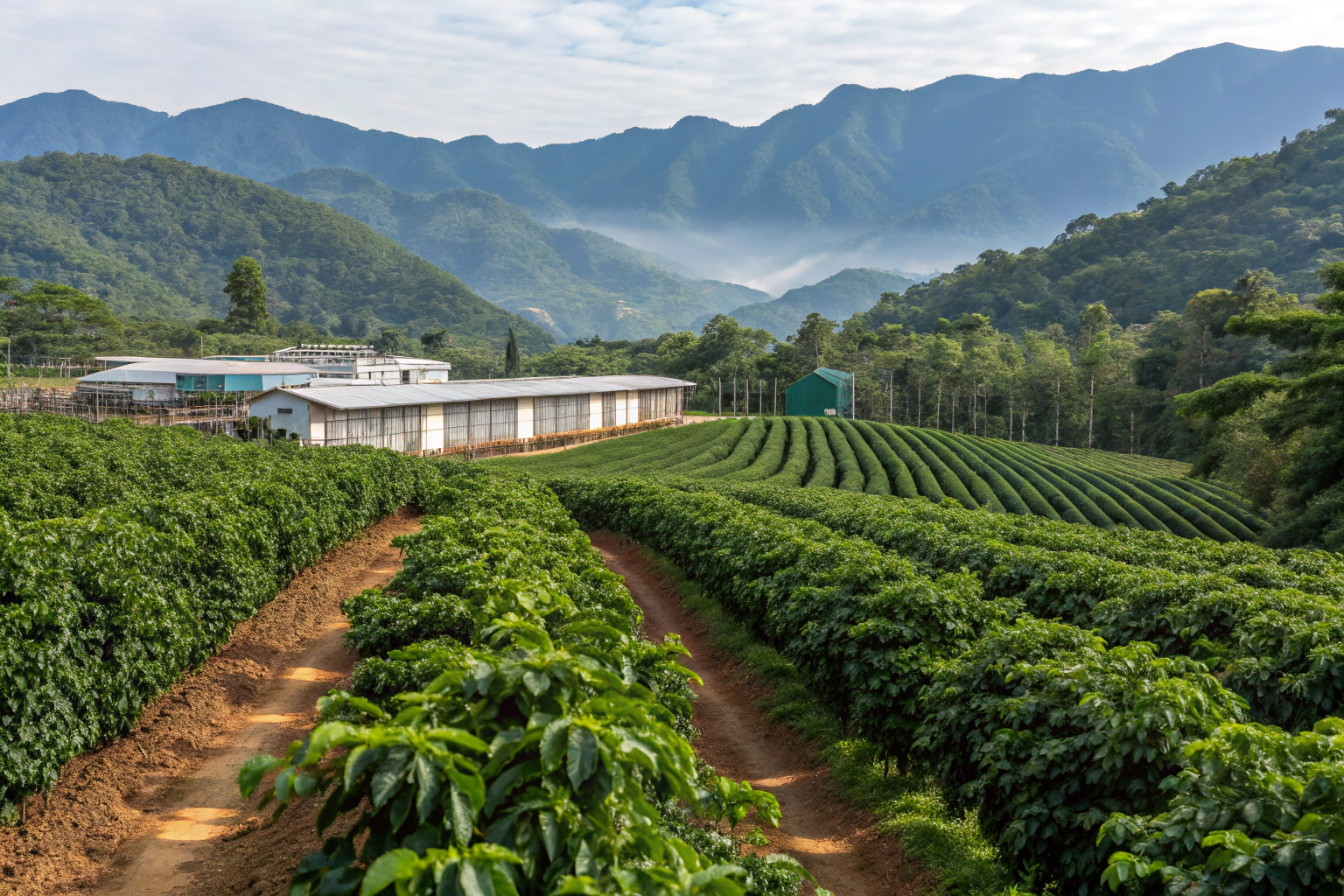
A competitor from Colombia once asked me, at an SCA expo in Seattle, "How did China suddenly appear on every cupping table?" He was half-joking, half-worried. I told him the truth. It was not sudden. We have been planting coffee in Yunnan since the late 1980s. For thirty years, nobody cared. Then three things happened at once. The domestic market exploded. The government got serious about agricultural modernization. And a generation of young farmers decided they did not want to grow rice. They wanted to grow specialty coffee. What you are seeing now is not a miracle. It is a thirty-year overnight success.
Chinese coffee exports are growing fast because of a perfect convergence of massive government investment in coffee-growing regions, a shift from low-grade bulk production to specialty-quality processing, a strategic geographical position with efficient export logistics, and a booming domestic cafe culture that funds the learning curve. Production volume alone has nearly doubled in the last decade. But the real story is the quality leap. A Yunnan Arabica that used to score 78 points now routinely scores 84 and above.
At BeanofCoffee, we have a front-row seat to this transformation. Our 10,000 acres in Baoshan City are both a witness and an engine of this growth. I want to take you behind the export numbers and show you the real engines driving this expansion. No propaganda. Just what I see on the ground every day.
How Has Government Support Accelerated Yunnan Coffee Production?
My father grew coffee in Baoshan in the 1990s. Back then, it was hard. Roads were mud tracks. Fertilizer was whatever you could find. If the harvest failed, you swallowed the loss. There was no safety net. Today, a young farmer in the next village can apply for a subsidized loan to build a modern raised-bed drying system. The government will co-fund it. The local agricultural bureau sends agronomists to test his soil for free. The transformation in infrastructure and support is the single biggest reason our export volumes are climbing.
Government support in Yunnan has systematically removed the three biggest barriers for smallholder coffee farmers: poor infrastructure, lack of technical training, and no access to quality seedlings. Provincial and national programs have built highways, funded cooperative washing stations, and distributed disease-resistant Catimor and new Arabica varieties like Typica and Bourbon. This has professionalized an industry that was previously informal and low-yield.
The numbers back this up. Yunnan Province accounts for over 98% of China's coffee output. And the provincial government has explicitly named coffee a "key poverty-alleviation industry." That label unlocks serious funding. This is not subtle encouragement. This is a strategic economic plan.
What Specific Policies Have Driven the Quality Shift?
Around 2018, I noticed a change. The local government stopped just counting tons. They started counting cupping scores. Officials began visiting specialty coffee competitions. They asked questions about fermentation protocols. It felt surreal. But the policy had shifted from volume targets to value targets.
The Yunnan Provincial Department of Agriculture launched a program called "Specialty Coffee Transformation." It offered direct subsidies to cooperatives that achieved SCA cupping scores above 80. We are talking about cash payments. If your lot scored 83, you got a bonus. If it scored 85, you got a bigger bonus. This instantly aligned economic incentives with quality. Farmers who previously sold mixed-quality cherries to a local middleman for a flat price now had a reason to sort, to pick ripe, to process carefully.
Another critical policy was the "Seedling Replacement Subsidy." Many old farms were planted with low-yield, disease-susceptible Catimor strains from the 1990s. The government subsidized up to 70% of the cost to replace these old trees with new, rust-resistant, high-quality Catimor selections and even Bourbon and Typica. This was a long-term play. A coffee tree takes three to four years to produce a commercial crop. The fact that farmers and the government were willing to wait shows how serious the commitment was. This directly raised the quality ceiling of the entire region's exportable volume. Data from the Yunnan Coffee Industry Development Report documents this policy-driven yield and quality improvement.
How Has Infrastructure Investment Unlocked Export Capacity?
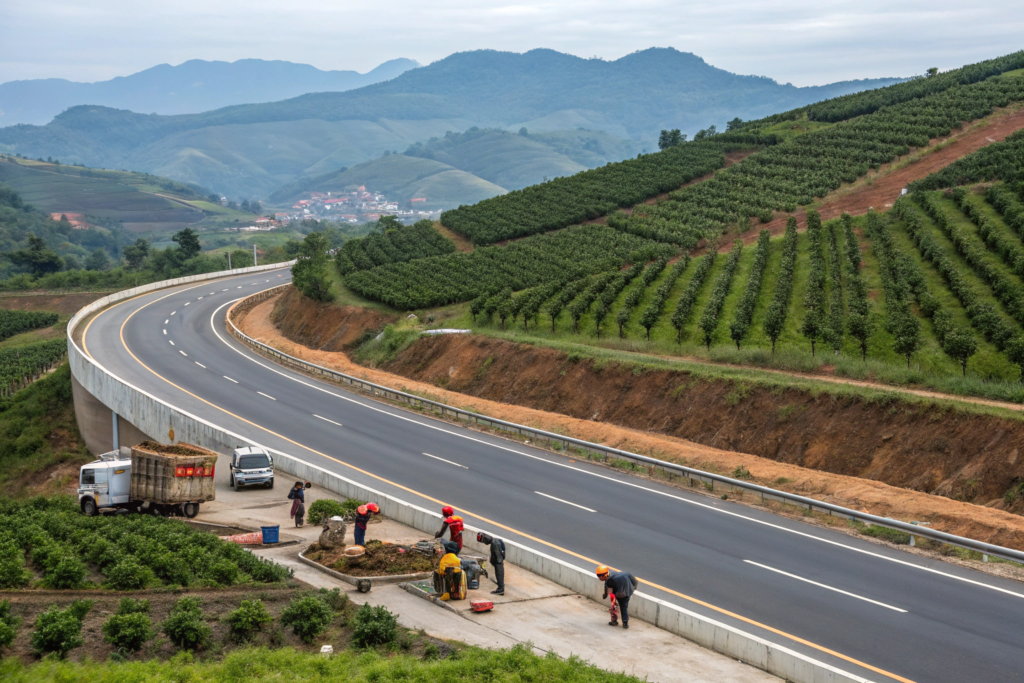
I remember when a truck from our farm to Kunming, the provincial capital, took 12 hours. Now it takes 5. The new expressways and bridges are engineering marvels. They cut through mountains that used to be impassable. This is not just convenient. It is an economic revolution for an export product like coffee.
Better roads mean the coffee cherry gets to the processing station faster. That means less chance of unwanted fermentation in a plastic sack on a bumpy truck bed. It means our dried parchment arrives at the dry mill in Kunming without being crushed or exposed to rain. This infrastructure investment has directly reduced post-harvest loss and quality degradation.
Then there is the port infrastructure. Shanghai and Shenzhen are two of the most efficient container ports on the planet. But the connection from the farm to the port is what matters. The new logistics parks and rail connections in Yunnan mean a container loaded in Baoshan can be railed directly to a Shanghai terminal. The inland transit is now predictable to the hour. This reliability is what international buyers demand. It was simply not possible 15 years ago. The Asian Development Bank's infrastructure reports highlight how such projects in southwest China have directly catalyzed agricultural trade growth.
What Role Does Domestic Coffee Culture Play in Export Growth?
A roaster from Copenhagen visited our farm in 2023. He was shocked to find a specialty cafe in Baoshan city center that served a better flat white than half the cafes in his own city. He thought he was coming to a remote, frontier coffee region. He found a market that was already deeply sophisticated. This is a crucial part of the export story that outsiders often miss. The domestic market is our quality laboratory.
China's explosive domestic coffee culture provides a massive, high-feedback testing ground for quality improvement. With thousands of specialty cafes in cities like Shanghai, Beijing, and Chengdu demanding better beans, local roasters and producers are locked in a rapid cycle of competition, feedback, and innovation. This internal market funds the experimentation that eventually produces export-grade specialty lots.
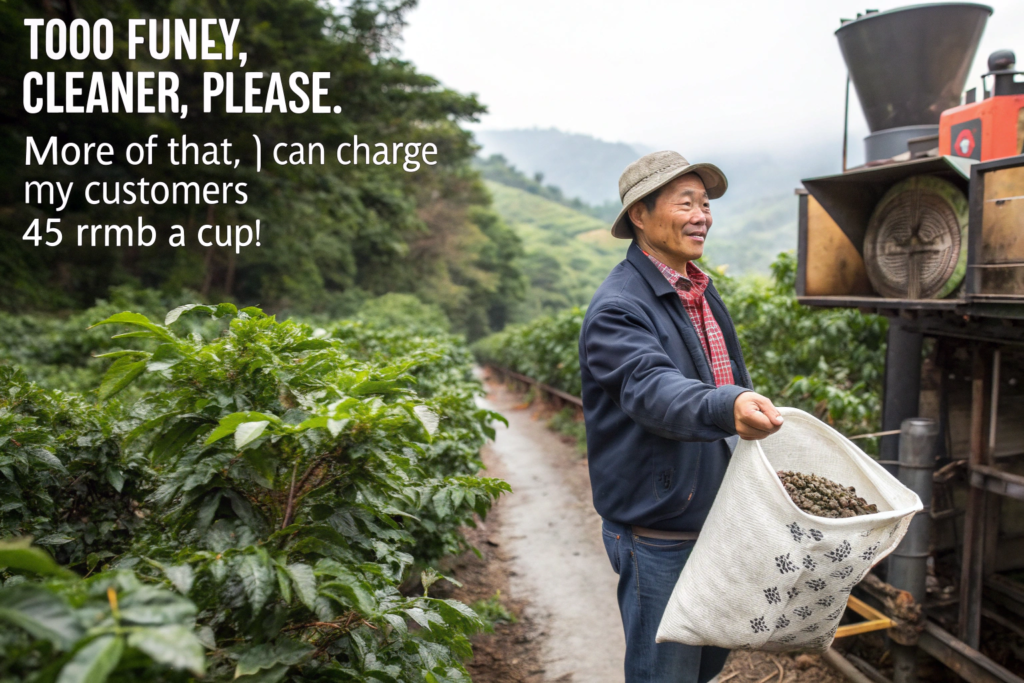
Think of it this way. Twenty years ago, a Yunnan farmer only knew if his coffee was good when a foreign buyer said yes or no. That feedback loop was slow and demoralizing. Now, that same farmer can sell micro-lots to a roaster in Kunming. He gets direct feedback. "Too funky. Cleaner, please." Or, "More of that, I can charge my customers 45 RMB a cup!" This local demand fuels a premiumization engine that raises the bar for everyone.
How Does the "Third Wave" in China Fuel Export-Quality Standards?
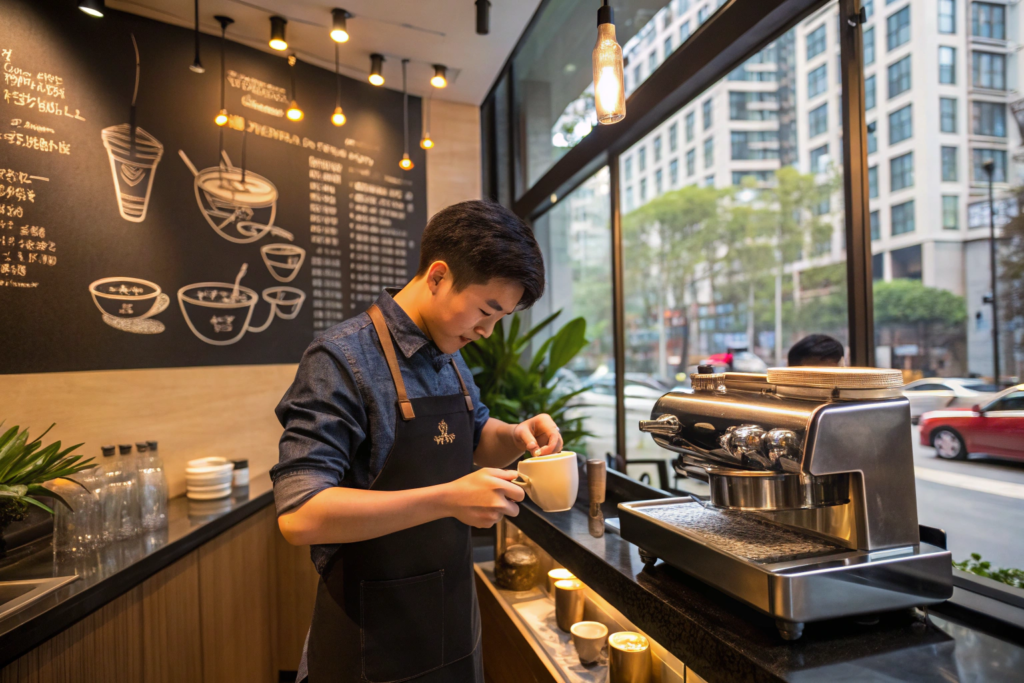
The third wave in China is not a copy of Portland or Melbourne. It has its own flavor. Chinese baristas are obsessed with technique. They dominate world brewing championships. They bring that obsessive precision back to the supply chain. A third-wave roaster in Shenzhen does not just want "Yunnan coffee." They want a specific farm, a specific altitude, a specific anaerobic fermentation process with a documented yeast strain.
This intense granular demand has trained us, the producers, to think at a specialty level. We learned to separate micro-lots. We learned to track fermentation temperature logs. We learned to create the detailed documentation that a specialty buyer expects. These are the exact same documents and quality protocols that a buyer from Berlin or Melbourne expects.
The domestic third wave also pays well. A specialty roaster in Shanghai might pay twice the commodity price for an 85-point lot. This premium profitability makes it possible for us to invest in expensive optical sorters and barista training for our processing station staff. The domestic market finances the capital equipment that lifts our entire export quality grade. When international buyers arrive, they are seeing the finished product of an industry already tuned to high standards.
Why Is China Becoming a Coffee Innovation Hub?
This part genuinely excites me. We are not just copying processing methods from Costa Rica anymore. We are innovating. A young processor in Pu'er, a friend of mine, experimented with using Pu'er tea fermentation techniques on coffee cherries. The result was a wildly complex, earthy-sweet cup that won a national competition. Another farmer is aging green coffee in Chinese baijiu barrels. Sounds crazy. But a Japanese buyer bought the entire lot at a record price.
Innovation happens where there is a mix of demand, capital, and cultural fearlessness. China right now is fearless about coffee. We do not have a 200-year tradition of how coffee "should" taste. So, we try things. Some experiments fail. Some create entirely new flavor categories that the global market has never tasted.
This innovation attracts global media attention. It attracts curious buyers. It creates a brand for "Chinese specialty coffee" that is distinct from being just a cheaper alternative to Colombia. The World Coffee Events competitions increasingly feature Chinese competitors using experimental Chinese coffees. This visibility is free global marketing. It pulls export demand. Buyers want the unique thing. And right now, the most unique processing experiments are happening in Yunnan.
How Has the Shift from Commodity to Specialty Changed Export Dynamics?
I have a clear memory from 2012. A European commodity broker visited our farm. He chewed a cherry. Spat it out. Said, "Fine. I'll take 5 containers at the C-price minus 15." That was our reality. We were price-takers in a brutal commodity market, competing against Vietnam's Robusta on price alone. Ten years later, a specialty buyer from Japan cupped our lot, put down his spoon, and said, "I will pay $4.20 per pound FOB." He did not mention the C-market once. That single moment encapsulates the shift that has changed everything for us.
The deliberate shift from undifferentiated commodity production to specialty-grade production has changed Chinese coffee's export dynamic from a price-based commodity to a value-based origin. This means we now negotiate on flavor, not just on discount to the C-market. It has also stabilized our export revenues, because specialty contracts are less volatile and less directly linked to the daily swings of the New York futures market.
This strategic pivot was existential. We could not win a commodity war against Vietnam or Brazil. Their scale and mechanization were unbeatable. But we could win a quality war. Yunnan has altitude, micro-climates, and a labor force skilled enough to hand-pick and sort. Specialty plays to our strengths.
How Does Specialty Grading Protect Exporters from C-Market Volatility?
The C-market is a stormy sea. In commodity coffee, your price is the C-market price plus or minus a differential. If the C-market crashes, your revenue crashes, even if your coffee is great. The differential might keep you slightly above water, but you are still tied to a global commodity index that does not care about your specific farm.
Specialty coffee sold on a fixed-price contract decouples your revenue from the C-market entirely. When a roaster agrees to pay $3.80 per pound for an 85-point Yunnan lot, that price is based on the cup quality and the relationship. It is not $2.50 plus a differential. It is a flat, agreed value. This makes our revenue predictable. We can budget for the next harvest. We can pay our pickers fairly, even if the C-market has a random 10% drop.
This stability has attracted more farmers to the specialty model. They see their neighbor getting a fixed, premium price while they gamble on the commodity auction. The choice becomes obvious. The SCA's market analysis demonstrates this value-based pricing model. Specialty is not just a nice label. It is a financial safety net for producers. And a more stable producer base means more consistent, growing export volumes.
What New Export Markets Has Specialty Chinese Coffee Opened?
Commodity Yunnan coffee used to go to one place. Germany. Maybe some to Japan for canned coffee. It was anonymous. It disappeared into massive industrial blends. Nobody knew it was Chinese. Nobody cared. Specialty Chinese coffee now goes to boutique roasters in South Korea, Australia, the United Kingdom, and even Costa Rica. Yes, Costa Rica. A famous origin buys our experimental lots for their own local specialty market. That is like selling ice to a penguin.
The specialty designation has opened doors that were completely closed to us before. High-end roasters in Scandinavia, known for being fiercely selective about quality, are now placing annual contracts. They have a section on their menu for "Yunnan Single Origin." This geographical recognition is priceless. It shifts our national coffee brand from "cheap filler" to "curious origin."
These new markets are also premium markets. They pay more. They order smaller, more frequent shipments. They build direct relationships. This diversified, high-value customer base makes the entire export sector more resilient. If one market slows down, we have five others. Commodity coffee only ever had one or two buyers for massive, homogeneous lots. Specialty has given us a portfolio of clients.
Does Chinese Export Logistics Give It a Competitive Edge?
I was on a call with a buyer in Los Angeles. He was comparing us to a supplier in Brazil. The Brazilian coffee was slightly cheaper on FOB. But the transit time from Santos to LA was 25 days, with frequent port congestion adding another week. Our transit from Shanghai to LA? 12 days. Predictable. Reliable. He did the math on inventory carrying cost and freshness. We won the contract. Not on bean price. On logistics.
Chinese coffee export logistics offer a significant competitive advantage in speed, reliability, and container availability. World-class deep-water ports, frequent sailings on major trade lanes, and a massive trade surplus that generates a constant supply of empty containers all combine to make shipping coffee from China faster and often cheaper than from traditional origins.
Speed is not just about convenience. For a coffee roaster, speed to market means fresher coffee on the shelf. It means less capital tied up in ocean freight. It means the ability to re-order and receive stock within a single quarter, rather than planning six months ahead.
How Do Shanghai and Shenzhen Ports Outperform Traditional Coffee Ports?
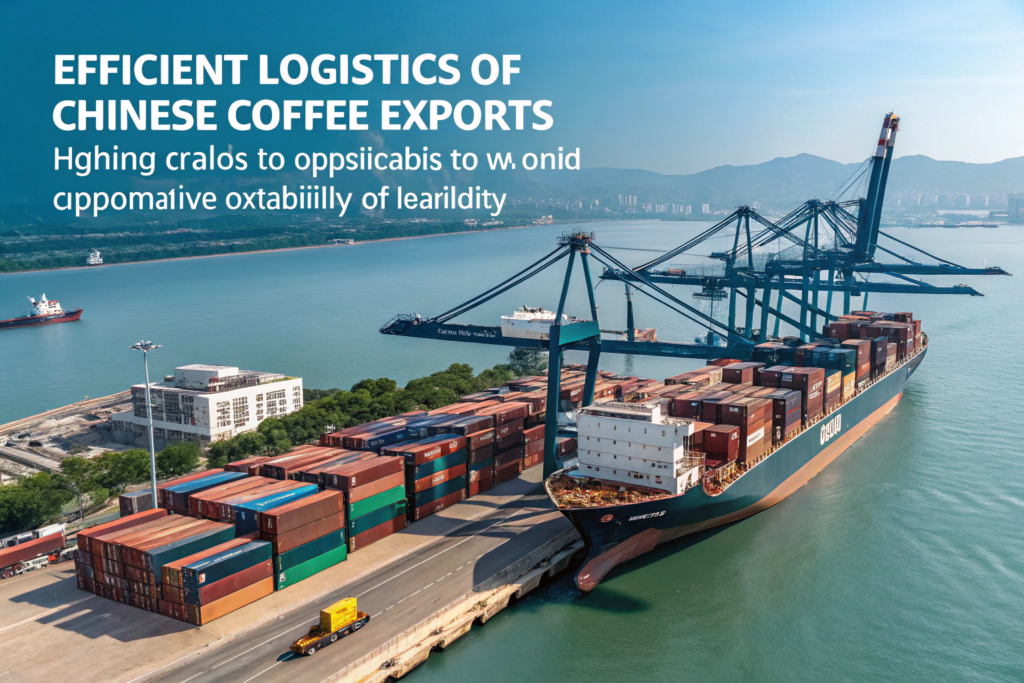
The Port of Shanghai handles over 47 million TEUs a year. The Port of Santos in Brazil handles about 4.8 million. The scale difference is a factor of ten. What does that scale mean for a coffee container? It means a vessel is departing for almost every major global destination every single day. You do not wait a week for a sailing. You roll the container into the yard, and it is on a ship within 48 hours.
This speed eliminates a hidden cost called "dwell time." In congested ports, containers sit in the yard for days or weeks. That waiting time exposes the coffee to heat and humidity inside the metal box. It also adds demurrage fees. Shanghai's average dwell time is among the lowest in the world, frequently under 3 days. Compare that to some Latin American ports where dwell can exceed 10 days.
Then there is the customs efficiency. China's paperless customs clearance system is remarkably fast for agricultural exports. The documentation is digitized. Inspections are scheduled with minimal delay. This is not a romantic part of the coffee story. But it is the part that ensures your pre-shipment sample actually matches the coffee that arrives, because the coffee did not spend an extra week baking in a port queue.
Why Is Empty Container Availability a Hidden Advantage?
This is an often-overlooked detail. China exports far more manufactured goods than it imports. Vessels arrive in Shanghai full of containers from the U.S. and Europe. They unload. They desperately need to reload with export cargo for the return voyage. Empty containers pile up in Chinese ports.
This container surplus gives coffee exporters massive leverage. We can usually get a container when we need one, at a competitive price. In contrast, a coffee exporter in Colombia or Honduras often faces a container shortage. They must wait for empty boxes to be repositioned, paying a premium for the privilege. During the global supply chain crisis of 2021-2022, this difference was stark. Our shipments were delayed by days. Some Latin American origins were delayed by months, simply because they could not get a box.
This reliable container supply means we can offer shorter lead times and more flexible shipping schedules. This directly addresses the pain point of roasters who want Just-In-Time delivery. They can trust that when we book a vessel, the container will be there. The Journal of Commerce shipping data regularly reports on container imbalance indexes that confirm this structural advantage for Chinese exports.
Conclusion
Chinese coffee exports are growing fast for real, structural reasons. The government poured concrete and policy support into Yunnan. The domestic specialty coffee market created a quality-obsessed, well-funded testing ground for innovation. Producers made the hard, deliberate choice to climb the value ladder from commodity to specialty, escaping the C-market's volatility. And the export logistics infrastructure—the ports, the containers, the highways—gives us a speed and reliability edge that traditional origins find hard to match. None of this was an accident. It was thirty years of foundation building, followed by a decade of explosive execution.
At BeanofCoffee, we are proud to be part of this movement. Our farm in Baoshan was here during the lean years. Now we are here for the exciting years. We ship specialty lots that cupping labs in Hamburg and Portland genuinely admire. We are not just riding the wave. We helped build it. And the wave is still rising.
If this story makes you curious, if you want to taste what all this investment and passion actually tastes like in the cup, reach out to us. We will send you a sample box of our current export lots. Compare them to your current origins. See if Yunnan can find a place in your menu. Contact Cathy Cai at cathy@beanofcoffee.com. She will arrange a sample shipment and a call to discuss your sourcing needs. Come taste why Chinese coffee is not just growing. It is winning.