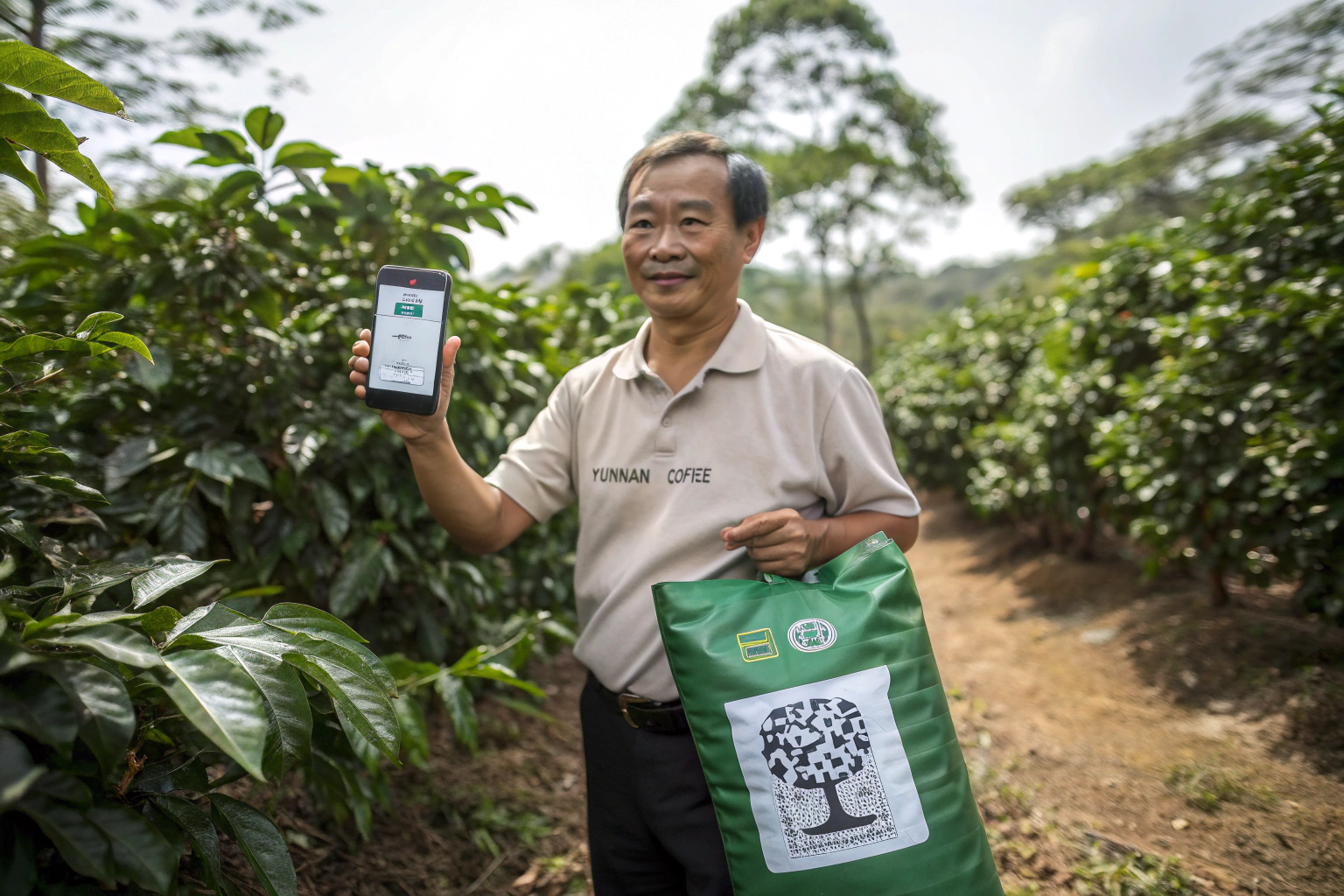
I once lost a deal because I could not answer a simple question. It was 2020, and a specialty roaster from Oslo had flown all the way to our Baoshan plantation. We walked the fields, he cupped our washed Arabica, and he nodded approvingly. Then, as we stood in the dry mill, he pointed at a pallet of bags and asked, "These beans. Which specific hillside block did they come from? And who picked them?" I froze. I could tell him the general area. I could tell him the harvest month. But I could not trace those bags back to the exact GPS coordinates of the specific rows of trees, the precise picking date, or the names of the workers whose hands had touched the cherries. I lost that contract. The roaster shook my hand politely and went on to source from a farm in Colombia that had full digital traceability. That moment stung deeply, but it also reshaped my entire business philosophy. I realized that traceability was not a marketing gimmick. It was a hard, competitive differentiator that separated commodity suppliers from origin partners.
Farm-level traceability in coffee creates a competitive advantage because it transforms a bulk commodity into a verifiable story, allows roasters to market with specific provenance claims that consumers increasingly demand, enables faster root-cause analysis of quality issues, and builds a defensive mechanism against supply chain fraud that protects brand integrity for the buyer.
Traceability is not just about knowing where the coffee came from. It is about building a chain of evidence that gives the final buyer—whether a roaster, a retailer, or a café customer—complete confidence in the product's authenticity and ethical integrity. In a global market where coffee is traded in millions of anonymous bags, a fully traceable lot stands out like a signed painting in a room full of prints. In this article, I want to share what traceability really means at the farm level, how we built our system on 10,000 acres in Yunnan, and why it now helps us win contracts that would have been out of reach just a few years ago.
What Does True Farm-Level Traceability Actually Encompass in Coffee?
A lot of people in this industry use the word "traceability" loosely. They might mean they know the coffee came from Yunnan Province, or from a particular cooperative. That is not farm-level traceability. That is regional sourcing. True farm-level traceability means you can take a single retail bag of roasted coffee from a shelf in London or Los Angeles and follow a digital or paper trail back to the specific plot of land where the coffee cherry was grown. You can identify the harvest date, the processing method, the drying bed number, the milling batch, the container number, and every intermediary step.
True farm-level traceability encompasses the GPS coordinates of the specific growing block, the harvest date and picker crew identification, the fermentation tank and drying bed numbers used in processing, the milling and sorting batch codes, the export container seal number, and a digital platform that links all these data points into a single, consumer-accessible record that is auditable at any point in the chain.
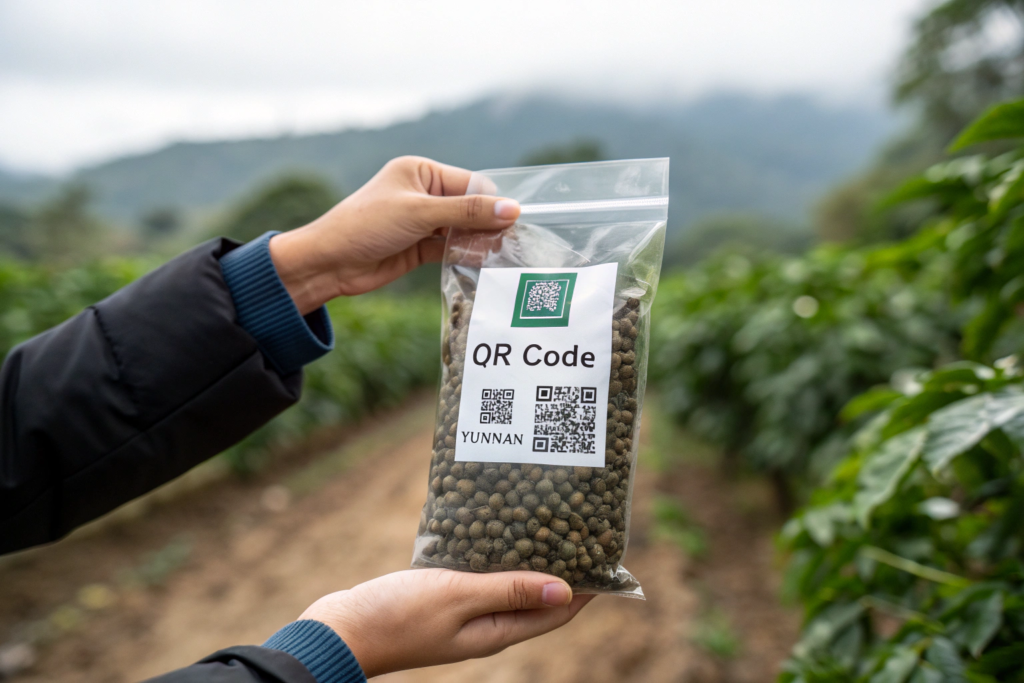
I think of traceability as a spine that runs through the entire operation. At the top, you have the growing block. On our farm, we have divided the 10,000 acres into numbered blocks, each with defined boundaries and recorded altitude ranges. When cherries are picked, they go into a bag with a pre-printed tag showing the block number and the date. That tag stays with the cherries through the wet mill process—fermentation, washing, and drying. At the dry mill, the dried parchment from each block is processed separately and assigned a lot code. The lot code follows the green beans into the GrainPro bag, the container, and onto the vessel. When a buyer scans the QR code on the bag, they see a webpage with all of that lot's information: block location on a satellite map, harvest date, processing details, cupping score, and even the name of the farmer who manages that block. This is not theoretical. It is the system we run daily now. And it cost less to implement than I initially feared.
How can GPS block mapping turn a coffee lot into a marketable origin story?
When I first heard about GPS block mapping, I thought it was overkill. Why would a roaster care about the latitude and longitude of the exact hillside? Then I started listening to how specialty roasters talk to their café customers. They do not say, "This coffee is from China." They say, "This single-origin lot is from a family farm at 1,400 meters on the eastern slope of the Gaoligong Mountain range in Baoshan, planted with a Catimor variety selected for its stone-fruit complexity." That level of geographic specificity tells a story that a country-level label cannot.
The GPS data makes the story verifiable. A roaster can pull up Google Earth, type in the coordinates I provide, and see the actual coffee trees on the satellite image. They can see the elevation profile. They can show their own wholesale customers a map with our farm boundary outlined. This is the kind of detail that wins shelf space in a competitive specialty market. For example, one of our European buyers created a "Baoshan Block 14" micro-lot series. On the back of the bag, they printed the exact coordinates of Block 14, a narrative about the picking crew, and a cupping note referencing the specific microclimate of that slope. The coffee sold out within three weeks of launch. The buyer told me afterward that the GPS traceability was the deciding factor in their marketing campaign. Without it, the coffee would have been sold as a generic "Yunnan Arabica," which commands a lower price and inspires less consumer loyalty. The mapping investment paid for itself through a higher FOB differential on that single contract.
What digital tools do small and large farms use to log harvest data?
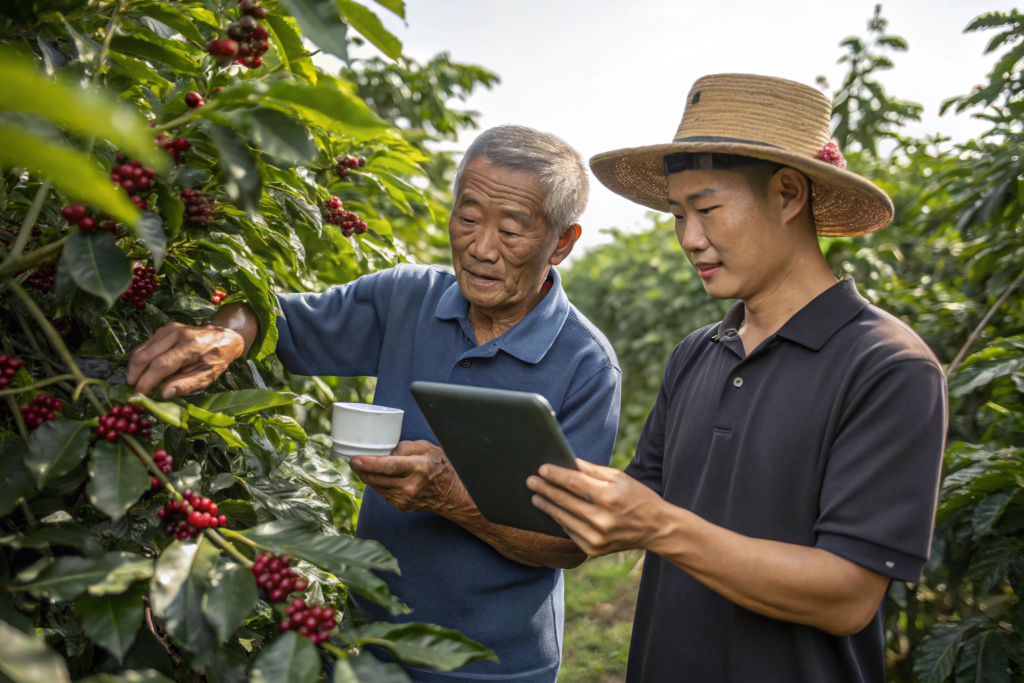
You do not need a million-dollar ERP system to start logging harvest data. We began with laminated paper tags and a shared Excel spreadsheet. That system worked for about two harvest cycles, then the volume outgrew it. Now, we use a cloud-based farm management platform called Cropin, which is designed for plantation-scale agriculture. The platform has a mobile app that our block supervisors use in the field. When a picking crew arrives at a block, the supervisor opens the app, selects the block number, enters the number of pickers, and starts a harvest session. The app timestamps the entry and geotags it automatically using the phone's GPS.
Smaller farms often use simpler tools. I have seen neighboring smallholder cooperatives in Yunnan using a combination of WhatsApp and Google Forms to log daily cherry weights by farmer, or using an open-source tool called FarmTrace that is specifically designed for smallholder coffee traceability. The principle is the same regardless of the tool: capture the data at the point of harvest, link it to a unique lot identifier, and do not break the link through the processing chain. The tool choice matters less than the discipline of data entry. For a large farm like ours, the digital platform also integrates with our inventory management system, so when a buyer places an order, we can query the database and instantly identify which specific block lots are available to fill that order with full traceability. For a buyer concerned about supply chain visibility, this kind of instant lot-level inventory query capability is a clear competitive signal that the supplier operates with professional-grade systems.
Why Do Roasters Pay a Premium for Transparent Supply Chains?
The premium for transparency is not theoretical. I see it on our invoices every quarter. Last year, a fully traceable micro-lot from Block 7 on our plantation sold for a $0.62 per pound premium over a comparable-quality lot from the same farm that was sold as a blended, non-segregated regional lot. Same beans. Same harvest. Same processing. The only difference was the traceability documentation attached to the first lot. That $0.62 is the market value of verified information.
Roasters pay a premium for transparent supply chains because traceability gives them a unique selling proposition in a crowded market, reduces the reputational risk of selling a product with an unknown production history, satisfies corporate ESG reporting requirements with verified data rather than assumptions, and allows them to build a direct relationship narrative with the producer that deepens consumer trust and justifies a higher retail price point.
A roaster I work with in Portland explained his economics plainly. He sells a 12-ounce bag of single-origin roasted coffee at $22 retail. His customers ask questions. They want to know if the farmers were paid fairly. They want to know if the land is deforested. They want to know the specific variety and why it tastes like dried apricot. If his answer is, "I bought this from an importer who bought it from an exporter in China," he loses the sale to the roaster across the street who can pull up a farm GPS map and a farmer interview on an iPad. Traceability is the evidence behind the story. And the story is what commands the premium at the final point of sale. The roaster is willing to share a portion of that retail premium back up the supply chain to the supplier who makes the story possible and verifiable. It is a value-add that flows in both directions.
How does traceability data feed into a roaster's sustainability marketing claims?
Modern specialty coffee marketing is built on sustainability narratives. Carbon-neutral claims, fair labor practices, biodiversity conservation—these are the messages that convince ethically minded consumers to choose a $20 bag over an $8 supermarket blend. But the European Union and the U.S. Federal Trade Commission are increasingly scrutinizing these marketing claims. A roaster cannot simply print "ethically sourced" on a bag and hope for the best. They need substantiation. Farm-level traceability provides that substantiation.
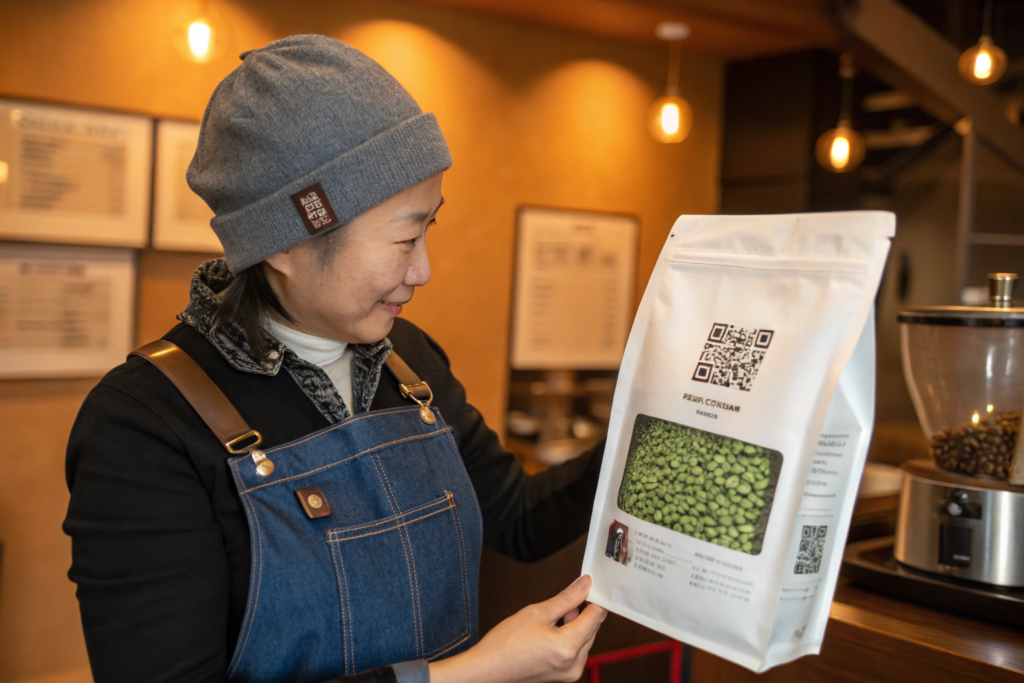
When a roaster claims their coffee is "grown without deforestation," the traceability data I provide—satellite imagery of the block boundaries, dated, with geolocation—is the evidence. When they claim the coffee was "produced using organic methods," the digital lot record showing the compost application dates, the pest control logs, and the organic certification number is the evidence. The QR code on the retail bag closes the loop. A consumer can scan it, see a simplified version of the farm data, and know the claim is backed by a specific, identifiable lot, not a generic sourcing statement. This verifiability protects the roaster against accusations of greenwashing and strengthens the marketing claim. A roaster who has been burned by a vague supplier claim in the past is especially motivated to pay for a supply chain that provides documented transparency. The traceability data is an insurance policy against reputational damage.
Can verified origin data reduce the costs of third-party auditing for a roaster?
Auditing is expensive. A roaster pursuing a certification like Rainforest Alliance or Fair Trade, or a corporate roaster undergoing an annual ESG audit, must demonstrate supply chain due diligence. The auditor asks for evidence of the product's journey from origin to the roastery. If the roaster sources from a non-traceable supply chain, the audit becomes a forensic exercise. They must chase the importer, who chases the exporter, who calls the farmer. Information arrives late, incomplete, and often inconclusive. The audit drags on, and the auditor's billable hours mount.
With a fully traceable supply chain, the audit process is dramatically streamlined. When the auditor requests the provenance of a specific lot, the roaster pulls up the digital lot file I have already provided, which contains the block GPS, the harvest logs, the processing data, and the chain of custody documents—all in a single, organized package. The auditor can review the file in an hour rather than spending weeks tracking down fragmented information. This efficiency translates directly into lower audit costs and a faster certification cycle. For a roaster considering multiple certifications or facing a mandatory corporate ESG review, the time savings from a traceable supplier relationship can be substantial enough to justify a higher green coffee purchase price. The buyer is not just buying beans; they are buying audit readiness. And from my side as the exporter, providing that level of documentation is a service that I can credibly include in the value proposition of our long-term supply agreements.
How Does Digital Traceability Technology Actually Work in the Yunnan Coffee Fields?
I will be honest. When I first proposed introducing digital traceability to my farm managers, they were skeptical. They had been growing coffee for decades without ever touching a tablet. The fear was that the technology would slow down the harvest, complicate simple processes, and confuse the workers. That fear proved unfounded, but only because we implemented the system gradually and focused on making the data collection as invisible as possible to the pickers themselves.
Digital traceability in the Yunnan coffee fields operates through a combination of QR-coded harvest bags that are scanned at collection points, mobile apps that capture GPS-tagged harvest sessions at the block level, and a cloud database that links each lot's journey through the wet mill, drying beds, and dry mill, with the final lot certificate being a automatically generated summary of all captured data points accessible via a simple QR code on the export bag.
Here is how it works on a typical harvest day. At 7 a.m., the block supervisor arrives at Block 14. She opens the Cropin app on her smartphone and starts a harvest session. The app records the start time and the GPS coordinates automatically. As the pickers bring their full baskets to the collection point, the supervisor weighs each basket, records the weight against the picker's ID number, and prints a small QR-code sticker from a portable Bluetooth thermal printer she carries in her vest pocket. The sticker is attached to the harvest bag. That bag now carries a unique digital ID that links it to Block 14, the specific date, and the specific picking crew. When the bag arrives at the wet mill later that day, a worker scans the QR code with a fixed scanner at the intake station. The system logs the bag's arrival time and links it to a specific fermentation tank. The tank is emptied into a numbered drying bed, and that bed number is recorded. By the time the dried parchment reaches the dry mill, the software has assembled a complete digital history for that lot without anyone having to manually transcribe a single record.
What role do QR codes on export bags play in end-consumer engagement?
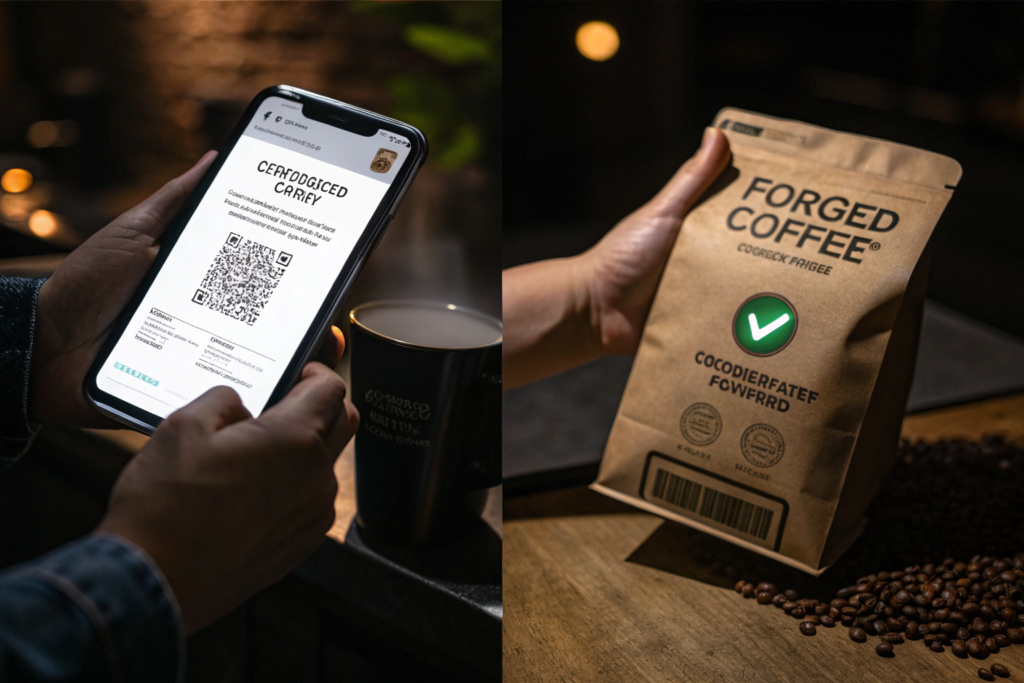
The QR code on the export bag is the bridge between the farm in Yunnan and the consumer in a café in Chicago. When a roaster buys a traceable lot from us, they receive a digital link that corresponds to that lot's unique profile page on our traceability platform. The roaster can embed that link into a QR code printed on their retail packaging. The consumer, curious about where their morning coffee comes from, scans the code with their phone. They land on a mobile-optimized page that tells the story of that specific lot—a satellite map of the block, a profile of the farmer who manages that section, a description of the processing method, cupping notes, and a harvest date.
This engagement creates a moment of connection that generic coffee cannot match. I have seen café owners in Australia use the QR code as a conversation starter with their customers, pulling up the farm's block map on a tablet and walking the customer through the coffee's origin while the barista pulls their shot. That kind of experience is priceless for building customer loyalty. From the roaster's perspective, the QR code turns a passive product into an interactive branding tool. The consumer is not just drinking a beverage; they are participating in a story. And when that story is backed by verifiable data—not just marketing copy—the consumer's trust in the roaster's brand deepens. This consumer engagement loop is the final link in the traceability chain, and it is the one that justifies the premiums paid at every stage upstream.
How can a supplier ensure data integrity when multiple lots are blended?
Blending is a reality in the coffee trade. Not every container is a single micro-lot. Some of our contracts are for container-load quantities of a consistent, high-quality but blended export grade. The traceability challenge with a blend is maintaining data integrity without creating confusion. The solution we use is to create a "virtual blend lot" in our traceability system. When a buyer orders a blended container, we select the specific micro-lots that will comprise the blend—say, 40% from Block 14, 35% from Block 22, and 25% from Block 31. Each micro-lot retains its individual digital record. The virtual blend lot is created as a new entry in the database that references the child lots.
The QR code on the blended container bag points to a page that shows the blend composition—the percentage from each block, with the block details summarized. The full individual micro-lot records are available to the buyer as a data pack for their own internal records. The key principle is that blending does not erase origin. The data remains, and the blend is transparent about its components. This approach maintains integrity while acknowledging the practical reality that not all roasting businesses need or want to buy single-block micro-lots. A buyer who orders a blended container still receives more origin transparency than most commodity traders provide, and they can still make substantiated claims about the regional origin and the specific farms involved. The traceability system is built to serve the business, not to force an artificial purity standard that does not match market demand.
Can Traceability Serve as a Shield Against Coffee Supply Chain Fraud?
Coffee fraud is not a hypothetical problem. It happens when a supplier sells conventionally grown beans as organic, or misrepresents a lower-grade Robusta as premium Arabica, or relabels beans from a different country to avoid tariffs and certifications. These frauds erode trust in the entire supply chain and can expose roasters to legal liability if they unknowingly make false claims to their customers. Traceability, properly implemented, is a powerful defensive tool against this kind of fraud.
Farm-level traceability protects against supply chain fraud by creating a continuous, auditable chain of custody from the specific growing block to the export container, making it extremely difficult to substitute unauthorized beans without breaking the data record, and by enabling random verification audits where a third party can match a physical bag sample to its digital lot record using DNA fingerprinting or isotope testing if required.
The core anti-fraud mechanism is simple: the data record must match the physical product. If a fraudster tries to introduce non-organic beans into an organic-certified lot, the weights in the traceability system will not reconcile. The organic lot's harvest records will show a certain volume of organic cherry, but the milled green bean output will be higher than expected. A mass balance audit, which any serious traceability system supports, will flag the discrepancy. The fraudster would have to falsify not just one document, but an entire chain of interrelated digital records—weight logs, scanning timestamps, GPS data, and lab test results. That level of falsification is far more difficult and detectable than simply swapping a paper certificate. The digital trail makes fraud operationally harder and forensically easier to uncover.
How does mass balance auditing catch unauthorized bean substitution?
Mass balance is an accounting concept applied to physical goods. It means that the total quantity of output from a process must equal the total quantity of input, minus any documented processing losses. In coffee, if 10,000 kilograms of cherry are harvested from an organic block, and the typical cherry-to-green-bean conversion ratio on our farm is about 5.5 to 1, then we should expect roughly 1,818 kilograms of dried green coffee from that block, minus documented shrinkage from moisture loss, defect removal, and sample retention. If the organic warehouse shows 2,500 kilograms of green coffee attributed to that block, something is wrong. Either beans from a non-organic block were mixed in, or the harvest log was falsified.
Our traceability software automatically calculates expected output based on input and conversion ratios, and it flags any lot where the actual output deviates by more than a set percentage—we use 3% as the tolerance threshold. When a flag appears, we do not ignore it. We physically audit that lot, check the bag tags, and review the milling batch records. Most often, the discrepancy is a data entry error, a misplaced decimal point on a weighbridge slip. But the system catches it. Had it been a deliberate substitution, the mass balance alert would have triggered the investigation. For a buyer, this means the traceable lot they purchase has passed an internal integrity check that a non-traceable lot never undergoes. The buyer can also request a third-party mass balance verification as part of their own audit process, using the digital records as the baseline. This audit capability transforms traceability from a marketing feature into a compliance tool that protects the buyer's own certifications and brand claims.
What role does retained sample archiving play in authenticity verification?
Every export lot we ship is accompanied by a retained sample that stays in our custody in Baoshan. This sample is a sealed, tamper-evident bag containing about 350 grams of green coffee, drawn from the exact same batch that went into the container. The bag is labeled with the lot code, the sampling date, and the container number. We store these retained samples in a locked, climate-controlled archive room for a minimum of three years, which matches the typical statute of limitations period for commercial disputes as well as the shelf life of green coffee documentation.
The retained sample is the ultimate reference point if a question of authenticity arises. Suppose a buyer in Europe tests the beans they received and suspects they are not the same quality or variety as the pre-shipment sample they approved. They can request that the retained sample be sent to an independent third-party lab for comparison against the beans in their possession. The lab can perform physical grading, cupping, and even chemical analysis to determine if the two samples match. This capability deters fraud because the fraudster knows that a sealed, independent reference sample exists and can be used to prove the substitution. For the buyer, the retained sample archive is a guarantee that the supplier is confident enough in their own product to keep evidence of it for years, accessible to a third party if needed. It also supports insurance claims, as I discussed in a previous article, by providing pre-shipment evidence of the bean condition.
Conclusion
Traceability back to the coffee farm level is no longer a premium add-on for the most demanding specialty buyers. It is rapidly becoming the baseline expectation for any coffee roaster who wants to build a brand based on trust, sustainability, and verifiable quality. We have looked at what true traceability encompasses—from GPS block mapping to picker-level harvest logs—and how it converts a bulk commodity into a marketable origin story. We have examined why roasters pay a premium for transparency, both for marketing power and for audit efficiency. We have explored how the digital tools work on the ground in Yunnan, and how they bridge the gap between a farmer's hands and a café customer's smartphone. And we have considered traceability's role as a fraud deterrent, through mass balance checks and retained sample archives.
The farm that invests in traceability is not just installing software. It is building a reputation that is visible, auditable, and durable. In a competitive global market, this reputation translates into higher contract premiums, stronger buyer loyalty, and a pipeline of inbound inquiry from roasters who are tired of opaque, generic supply chains.
If you are a roaster or importer looking for a Chinese coffee partner who can deliver full farm-level traceability—from block coordinates to cupping notes, with QR-coded bag-level documentation—we at BeanofCoffee are ready to share our system with you. Our export traceability lead, Cathy Cai, can provide sample digital lot files, a demonstration of our consumer-facing QR engagement page, and a transparent landed cost breakdown for a traceable micro-lot or blended container. Contact Cathy directly at cathy@beanofcoffee.com. Let us build a coffee supply line where every bean has a known, documented, and honest origin.