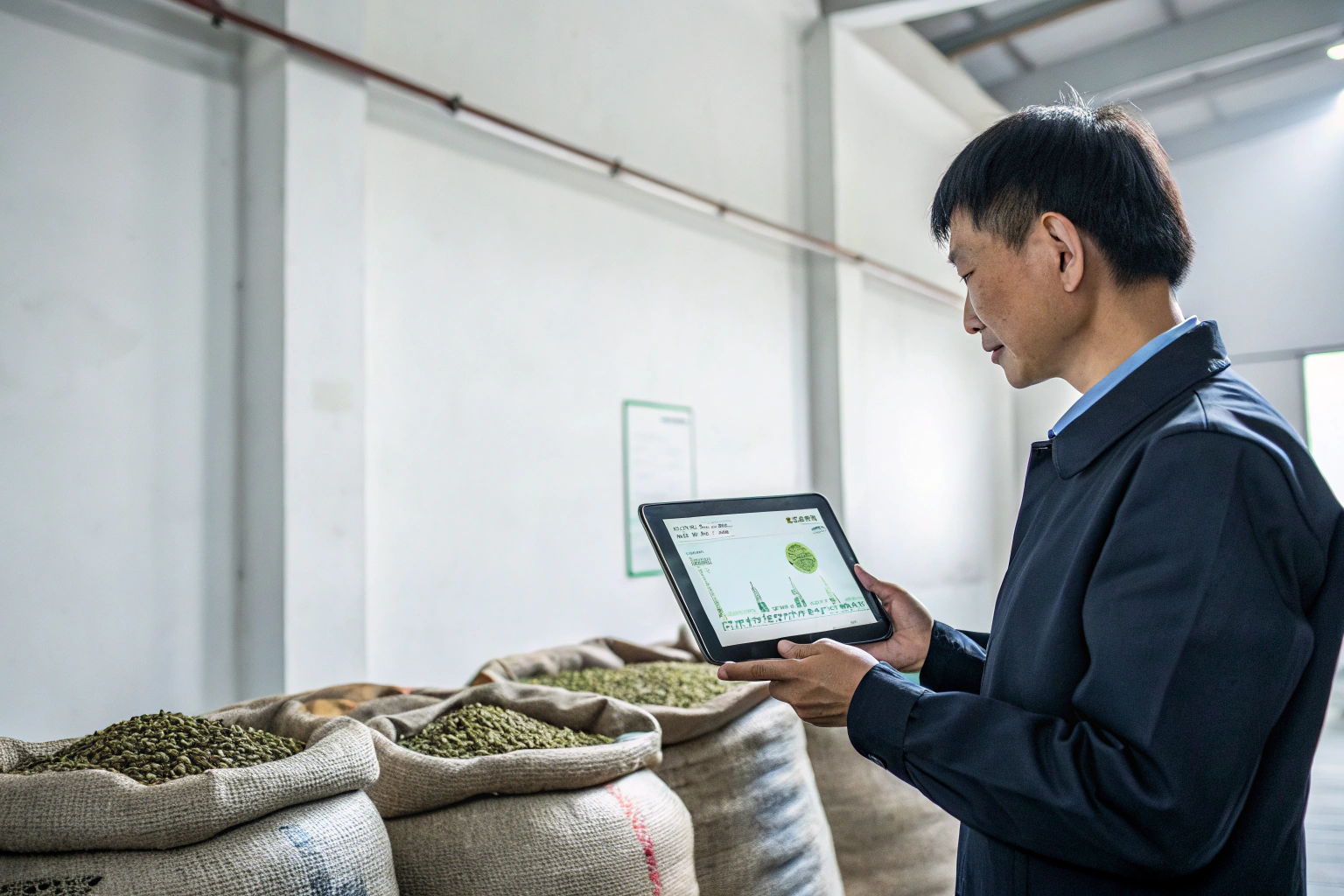
You buy coffee from Yunnan. You get a container. The coffee looks fine. Then you roast it. And something is off. The acidity is flatter than the sample. The body is thinner. You call me. I call the farm. Nobody knows what happened. That uncertainty costs you money. It costs you customers. And it makes you afraid to commit to a bigger order next season.
Ron, I know this feeling. I have lived it from the export side. A buyer in Ohio once rejected an entire container because the cup score came in two points below the pre-shipment sample. We lost the sale. The farm lost the income. And honestly, neither of us was sure the rejection was correct. Human cupping is good. It is also expensive, slow, and — let us be honest — sometimes inconsistent. So what is the solution? AI is becoming a real part of the answer. Not as a replacement for Q Graders. As a tool that catches problems before they become disputes.
So, can AI actually grade coffee quality and predict flavor? The short answer is yes, for specific tasks. AI models can detect physical defects with over 98% accuracy. They can predict SCA cupping scores with an R² above 0.96. And they can classify flavor quality of green beans with 97% to 99% accuracy in validated studies. But the longer answer is more useful. AI works best when you match the right tool to the right problem, and when you understand what it cannot do. Let me walk you through how this works, what it costs, and how a buyer like you can use it without becoming a data scientist.
How Does AI Detect Coffee Bean Defects?
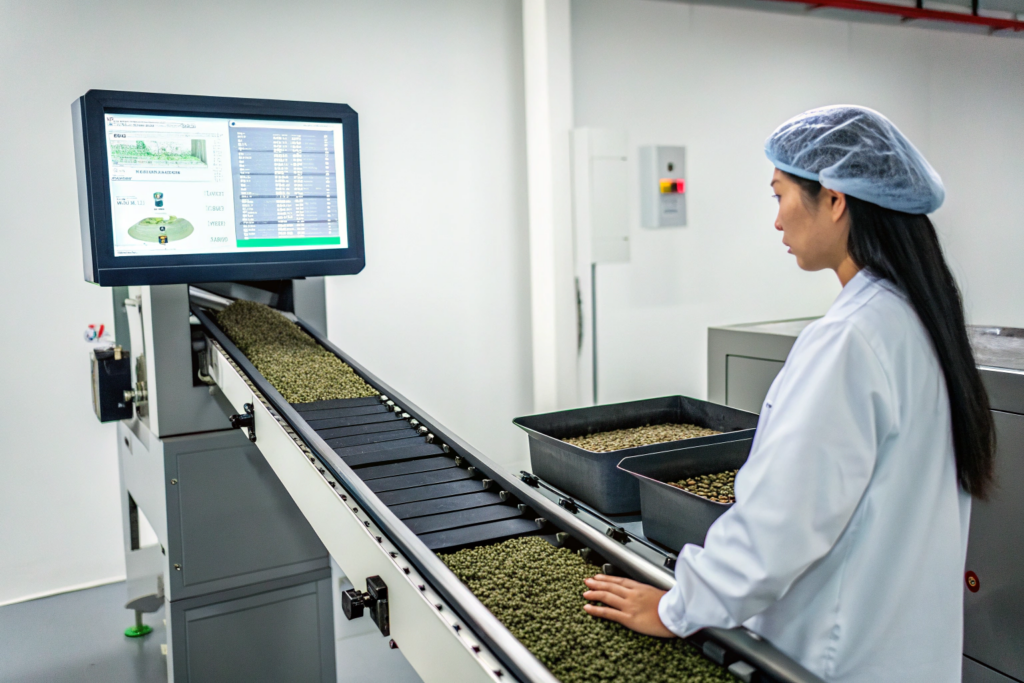
Defect detection is the most mature AI application in coffee. It is also the easiest to understand. You take a photo of beans on a belt. A computer vision model identifies black beans, sour beans, broken beans, and foreign objects. Then an air jet removes them. That is it. The technology works because defects have visual signatures. A black bean looks black. A sour bean has a distinct color and texture. AI is very good at recognizing visual patterns.
The numbers back this up. A 2026 study benchmarked four deep learning models for real-time coffee bean grading. YOLOv8 achieved 98.86% mAP@50 — that is a measure of detection accuracy — with the fastest inference time among the models tested. Another study used a Siamese neural network for few-shot defect detection and achieved over 92% accuracy with a small training dataset. For Robusta beans, a label-efficient vision transformer pipeline hit 97% accuracy using only 850 labeled images. These are not theoretical results. They are published benchmarks.
So what does this mean for you? It means a sorting machine can remove defects that your eyes might miss. It means the defect count on your spec sheet is more reliable. And it means disputes over “visible defects” become less common.
How Accurate Is AI Defect Detection Compared to Human Sorters?
Human sorters are skilled. A woman who has sorted coffee for fifteen years can spot a defective bean by touch. But humans get tired. Humans get distracted. Humans have bad days. AI does not. A machine vision system runs at the same accuracy at 8 AM and at 8 PM.
The published numbers show AI matching or exceeding human accuracy for specific defect categories. One 2026 study on green coffee bean grading and defect detection used YOLO with a slicing technique for small object detection. The system processed multiple beans per image and maintained high accuracy across defect classes. Another study using an improved YOLOv10 framework reported precision above 99% for detecting sour beans.
But here is the catch. AI is trained on specific defect types. If a new defect appears — a mold type it has never seen, a foreign object from a new packaging material — it may miss it. Human sorters can adapt. AI needs retraining. So the best systems combine both. AI does the fast, repetitive screening. Humans do the final check and handle anything unusual.
For a buyer, this means your supplier should be transparent about what their AI system is trained to catch. Ask them. If they cannot answer, they are probably using the machine as a marketing claim, not a quality tool.
What Is the Cost of an AI Bean Sorter?
This is where it gets practical. AI bean sorters are not cheap. But they are also not out of reach. The global AI coffee bean sorter market was valued at $236 million in 2025. The average price per unit was around $28,000. That is for a commercial-scale machine. For smaller operations, there are compact options. Avercasso launched a green coffee sorter called the CS Lite for home roasters and low-volume commercial roasters, priced at $10,000.
But you do not need to buy a sorter. You are a buyer, not a processor. What matters for you is whether your exporter uses one. And if they do, you should ask for the data. A modern sorter can log defect counts by batch. That log is evidence. It shows you what was removed. It shows you the defect rate before and after. That is useful for your own quality records.
If you are sourcing from a smaller cooperative that cannot afford a $28,000 machine, there are alternatives. Some service providers offer sorting as a toll service. You pay per kilogram. That keeps the capital cost off the farm. I have seen this model work well in Yunnan. A shared sorting facility serves five or six cooperatives. The cost per pound is low. The quality gain is real.
Can AI Predict Coffee Flavor and Cupping Scores?
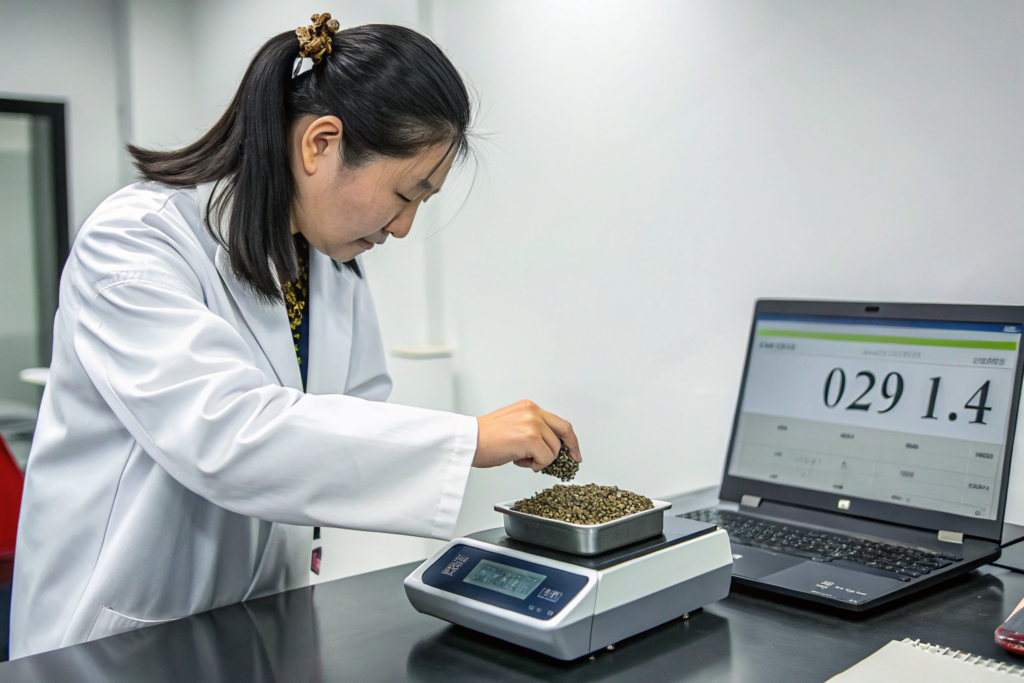
This is the harder problem. Defects are visible. Flavor is chemical. You cannot see a flavor compound with a camera. But you can measure it with spectroscopy. Near-infrared spectroscopy shines light on a bean. The light reflects back differently depending on the chemical composition. A machine learning model then maps those reflectance patterns to flavor outcomes.
The results are surprisingly strong. A 2025 study used visible and near-infrared hyperspectral imaging to predict the flavor potential of green coffee beans. The internal validation accuracy for pass/fail flavor grading was 99%. External validation was 97%. Another study predicted Total Cup Points for Arabica coffee using a LightGBM algorithm and achieved an R² of 0.9634. That means the model explained over 96% of the variance in cupping scores.
There is also a commercial product doing this at scale. ProfilePrint, a Singapore-based company, has built a system that creates a digital “molecular fingerprint” of a coffee sample. The system compares that fingerprint to a database of over 30,000 specialty coffee samples assessed by human Q Graders. It then predicts SCA cupping scores and flavor notes. The Mini Beluga analyzer weighs 1.3 kilograms and is available from $300 per month.
So yes, AI can predict flavor. But there is a caveat. It predicts based on patterns it has seen before. If your coffee has a flavor profile that is genuinely novel — a new processing method, a new terroir — the model may not have training data for it. Human Q Graders still matter for those cases. AI is a screening tool, not a final judgment.
How Does Near-Infrared Spectroscopy Work for Coffee?
Near-infrared spectroscopy works because different chemical bonds absorb light at different wavelengths. Water absorbs at one wavelength. Proteins absorb at another. Lipids, sugars, and organic acids each have their own signatures. When you shine near-infrared light on a coffee bean, the reflected light carries information about all of these compounds.
The challenge is that the signal is complex. Thousands of wavelengths overlap. That is where machine learning comes in. A model is trained on samples where the chemical composition is already known — from traditional lab analysis. The model learns the relationship between the spectral pattern and the chemical content. Then it can predict the composition of new samples.
A 2025 study on Robusta coffee used near-infrared spectroscopy with an artificial neural network to predict moisture, protein, fat, ash, and carbohydrate content. The best models achieved correlation coefficients (r) between 0.92 and 0.95. Consistency values ranged from 80% to nearly 109% depending on the compound. Moisture prediction is particularly important. Moisture content affects shelf life, roast behavior, and weight loss. A fast, non-destructive moisture reading is useful for both exporters and importers.
For you as a buyer, this technology matters because it can catch quality drift. If the moisture content of a shipment is 1% higher than the approved sample, the AI can flag it before you sign off. That is a small difference. But it can change how the coffee roasts. It can change the final cup.
What Are the Limits of AI Cupping Score Prediction?
AI cupping prediction has three main limits. First, it is trained on historical data. If the coffee industry changes — new varieties, new processing methods, new climate patterns — the model may become less accurate over time. Second, it cannot explain why a coffee scores the way it does. It gives you a number. It does not give you the sensory experience. Third, it cannot replace the legal and commercial function of cupping. In a contract dispute, a certified Q Grader's score carries weight. An AI prediction is useful evidence. It is not a substitute for the agreed-upon quality determination process.
ProfilePrint addresses this by letting cuppers layer their own assessments alongside the AI predictions. The system produces a single shareable report that combines human expertise with AI insight. That is the right model. AI accelerates and standardizes. Humans judge and decide.
For a buyer like you, the practical takeaway is this. Ask your supplier if they use AI cupping prediction. If they do, ask to see the predicted scores alongside the human cupping scores for a few recent shipments. Compare them. Over time, you will learn how much to trust the AI for that specific origin and that specific supplier. Trust is built on data.
How Does AI Reduce Quality Risk for Coffee Buyers?
Ron, this is the part that matters most for you. You do not care about the technology for its own sake. You care about risk. Your pain points are quality control, certification, logistics, payment methods, and timeliness. AI touches three of those directly: quality control, dispute resolution, and supplier verification.
The biggest risk in coffee importing is the sample-to-shipment gap. The sample you approve is not always the coffee you receive. This gap causes disputes. It causes rejected containers. It causes lost time and lost money. AI tools are starting to close this gap. ProfilePrint's Compare feature performs a side-by-side molecular analysis of two digital lots. You can verify whether an arrived shipment matches the approved sample. The system catches quality drift before it reaches your customers.
That is a direct answer to one of your core pain points. It gives you an objective, repeatable check that does not depend on a subjective cupping session that happens days or weeks after the container arrives.

How Can AI Help Resolve Quality Disputes?
Quality disputes are expensive. They cost legal fees. They cost relationship capital. They cost time. The traditional resolution is a third-party cupping by a certified lab. That works. But it is slow and costly.
An AI system that has recorded the molecular fingerprint of both the approved sample and the delivered shipment provides a neutral, data-driven comparison. Csmart's Digit, an AI-based green grading machine, is explicitly described as a tool that can “arbitrate quality disputes between two parties as a neutral third party, mitigating the cost risk of disputes”. That language comes from Sucafina, a major coffee trading company. They are not selling hype. They are describing a real operational benefit.
For you, this means a dispute that might have taken weeks and thousands of dollars to resolve can potentially be settled in days with a shared data report. You and your supplier look at the same numbers. You agree on what the numbers mean. You move on.
What Does AI Quality Verification Cost for Importers?
The cost depends on the model. ProfilePrint's Mini Beluga and Lite platform start at $300 per month. For that, you get a compact analyzer and cloud-based AI reports. If you do not want to buy hardware, ProfilePrint offers a remote scanning service through its network of scanning centers. You send a sample. They scan it. You get a report.
For a larger operation, there are enterprise machines. The Beluga and Orca models are more expensive. But the per-pound cost of quality verification drops as volume increases. If you are importing 40,000 pounds per month, a $300 monthly subscription adds less than one cent per pound to your cost. That is cheap insurance against a rejected container.
There is also the DIY route. The academic models are published. The datasets are sometimes public. A technically inclined person could build a simple defect detection model with a camera and an open-source framework. But that is not practical for most importers. You are a buyer, not a machine learning engineer. The commercial tools are designed for you. Use them.
Why Does AI Matter for Yunnan Coffee Quality?
I have to bring this back to Yunnan, because that is where I operate. The province has been investing in AI for coffee quality. In May 2026, the Pu'er Inspection and Testing Institute released an AI quality identification device for specialty coffee. It uses infrared spectroscopy and AI recognition. It can test multiple indicators of green coffee beans in three minutes without destroying the sample. That is a direct response to the problem I described at the beginning. Farmers and exporters used to depend on experience and were sometimes underpaid because their coffee was judged subjectively. Now there is an objective, fast quality check.
The processing side is also changing. A 2025 study applied hyperspectral imaging with an ECA-MobileNetV3 model to identify five different processing methods of Yunnan coffee beans. The model achieved 98.40% accuracy. It is lightweight — 3.36 MB model size, 4 minutes training time — and suitable for real-time quality control. This matters because processing method has a huge impact on flavor. If a lot is labeled “washed” but was actually processed differently, the AI can catch it. That protects buyers from mislabeling.
In Nujiang, a “5G + Industrial Internet” project uses machine vision and AI algorithms to identify coffee bean color, size, and subtle defects in real time. The reported sorting precision is 99.8%. The deep processing rate has increased from 35% to 80%. These are operational numbers from a real production environment. They are not lab results.
For you, this means Yunnan coffee is becoming more standardized. The quality data is more reliable. The supply chain is more transparent. That makes it easier for you to commit to larger volumes and longer contracts.
How Is AI Improving Yunnan Coffee Consistency?
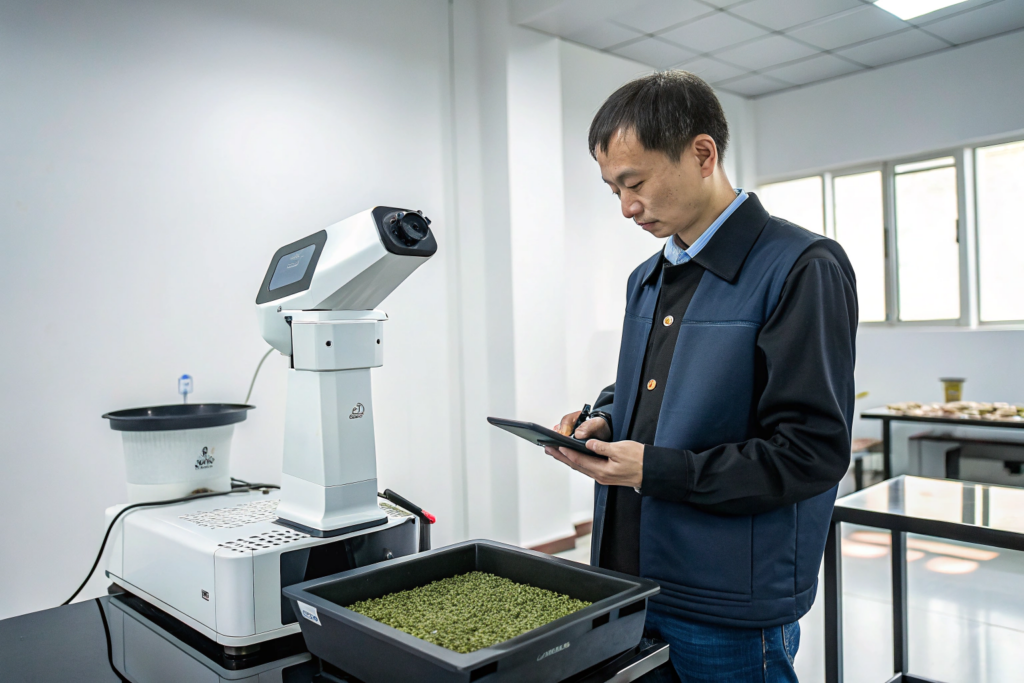
Consistency is the hardest thing to guarantee in coffee. One harvest is different from the next. One processing batch is different from the one before. An AI flavor calibration system used by a Yunnan coffee company tracks acidity, bitterness, and body across batches. The reported error between batches is less than 3%. That is a tight tolerance. For a roaster, that means less adjustment between lots. Less waste. More predictable results.
This consistency comes from data. The AI compares each new batch to a reference profile. If the new batch drifts, the system flags it. The operator can then decide whether to adjust the processing or divert the batch to a different product line. That kind of decision-making used to happen only after cupping, which happens after processing is finished. By then, it is too late to fix. AI moves the decision point earlier.
What Should Buyers Ask Yunnan Suppliers About AI?
Ask four questions. First, do you use AI for defect detection or grading? If yes, what system? Second, can you share the quality data for my specific lot? Third, how do you verify that the shipped coffee matches the approved sample? Fourth, what happens if there is a quality dispute — what evidence will you provide?
A supplier who uses AI well will answer these questions easily. They will have reports. They will have data. A supplier who is just using AI as a marketing word will struggle. They will give vague answers. They will change the subject.
I will tell you what we do at BeanofCoffee. We use AI-assisted sorting and moisture measurement on our export lots. We keep the data logs. When a buyer asks, we share them. We are not perfect. But we are honest about what the data shows. That is the baseline you should expect from any supplier in 2026.
Conclusion
AI is not magic. It does not replace Q Graders. It does not replace your own judgment. But it does three things that matter for a buyer like you. It detects defects faster and more consistently than human eyes. It predicts flavor quality from chemical data with validated accuracy. And it creates a shared, objective record that reduces disputes between buyers and sellers.
The technology is ready. The costs are coming down. ProfilePrint's $300 per month entry point makes AI quality verification accessible to mid-sized importers. The academic research shows 97% to 99% accuracy for specific grading tasks. The Yunnan supply chain is adopting these tools at the processing and export levels.
If you are not asking your suppliers about AI quality data yet, start now. Ask for the defect logs. Ask for the moisture readings. Ask for the comparison between the pre-shipment sample and the arrived container. If they cannot provide that data, ask why. The suppliers who can provide it are the ones who will still be competitive in five years.
If you want to see what AI-assisted quality data looks like for Yunnan coffee, contact our export manager Cathy Cai at cathy@beanofcoffee.com. We own over 10,000 acres of coffee plantations in Baoshan City, Yunnan Province. We export raw beans and packaged products to North America, Europe, and Australia. You can learn more at BeanofCoffee. Let us show you the data. Then you can decide for yourself.