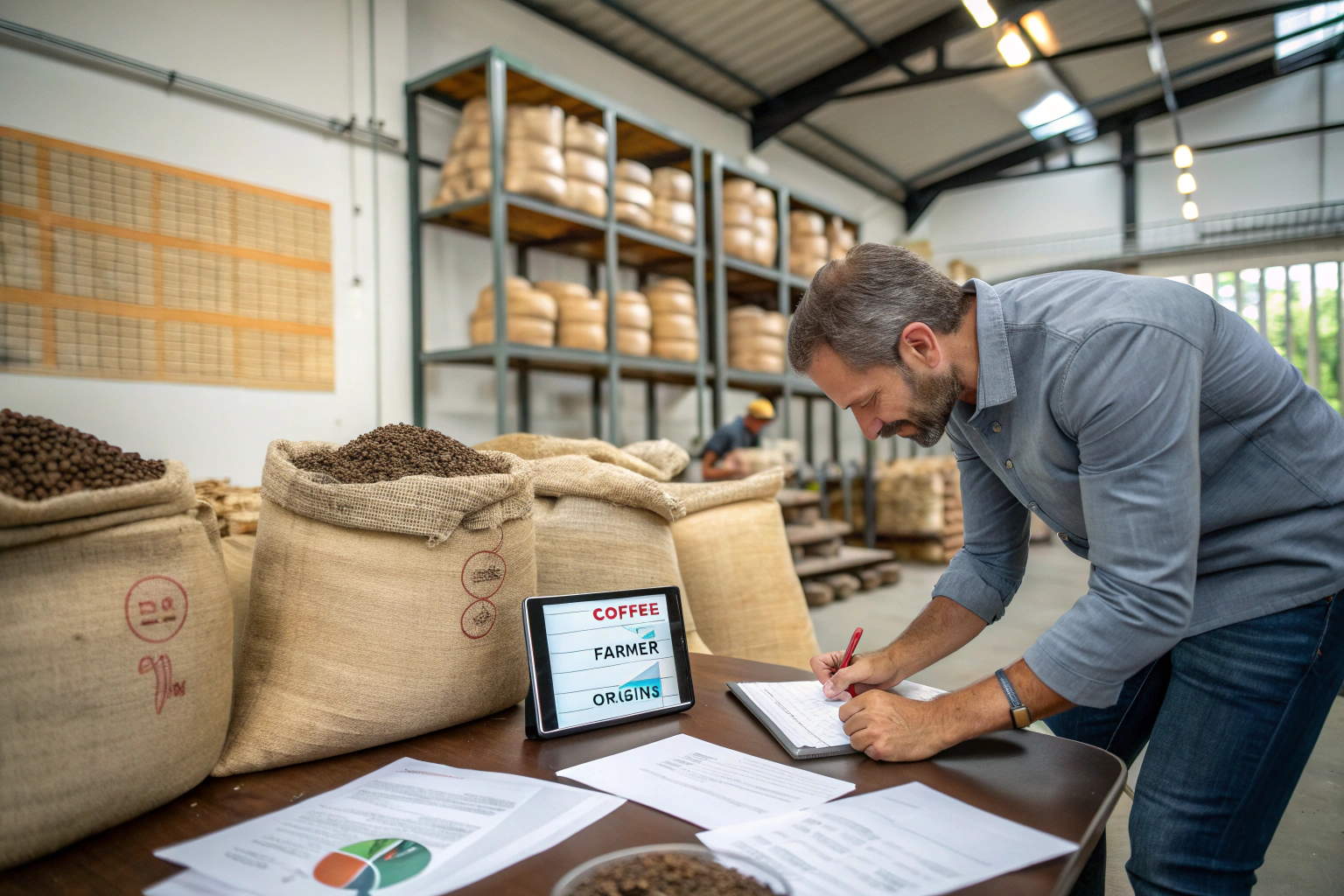
Your green coffee costs jumped 40% last year. Your customers want the same price. Your margin is gone. You raise prices a little. You lose a few accounts. You raise them again. You lose more. This is the squeeze. It is happening to roasters and importers around the world. Coffee hit record highs above 440 cents per pound in early 2025. Then it bounced around. Then El Niño threats pushed prices up again in mid-2026. The World Bank projects Arabica prices will fall 14% in 2026, but the forecast carries real risks from weather and tariffs. So you cannot just wait for lower prices. You need a plan.
You can future-proof your coffee business against price hikes by understanding the C-market, using hedging tools like fixed-price forward contracts and call options, diversifying your origins, managing inventory strategically, and adjusting your pricing model before costs force you to. At BeanofCoffee, we help our buyers in North America, Europe, and Australia plan their coffee costs months ahead. We own over 10,000 acres in Baoshan, Yunnan, and we see how price volatility affects every step of the supply chain.
So, what does a real plan look like? And how do you build one without becoming a commodity trader? Let me walk you through the steps. I have seen buyers survive price spikes. I have also seen them fail. The difference is preparation.
How Volatile Is the Coffee Market Really?
You may think coffee prices are stable. They are not. Coffee is one of the most volatile agricultural commodities on earth. The C-price traded around 110 cents per pound in 2019. It topped 330 cents in 2022. It reached above 440 cents in early 2025. That is a fourfold swing in six years. If you cannot handle that kind of volatility, you cannot plan your business.
The ICE Coffee C futures contract is the global benchmark for Arabica prices. It trades on the Intercontinental Exchange in New York. Each contract covers 37,500 pounds of green coffee. Prices are quoted in US cents per pound. The C-market is not a simple price. It is a system of futures contracts for different delivery months. Importers and roasters use it to lock in buy prices for future purchases. The difference between the futures price and the physical price is called the basis.
Let me put the volatility in simple terms. A 20-foot container holds about 275 bags of 60 kg coffee. That is 16,500 kg of green coffee. A 20 cent per pound move in the C-price changes the value of that container by roughly $7,000. At current price levels, that is 15% to 20% of the total cargo value. One weather event in Brazil can trigger that move in a week. So, what does this mean? It means you cannot treat coffee price risk as background noise. It is a direct threat to your margin.
| Price Level | When | Key Driver |
|---|---|---|
| ~110 cents/lb | 2019 | Normal market |
| 330+ cents/lb | 2022 | Frost in Brazil |
| 440+ cents/lb | Early 2025 | Drought in Brazil and Vietnam |
| 280-320 cents/lb | 2026 range | Supply recovery, El Niño risk |
Why Are Coffee Prices Still Elevated?
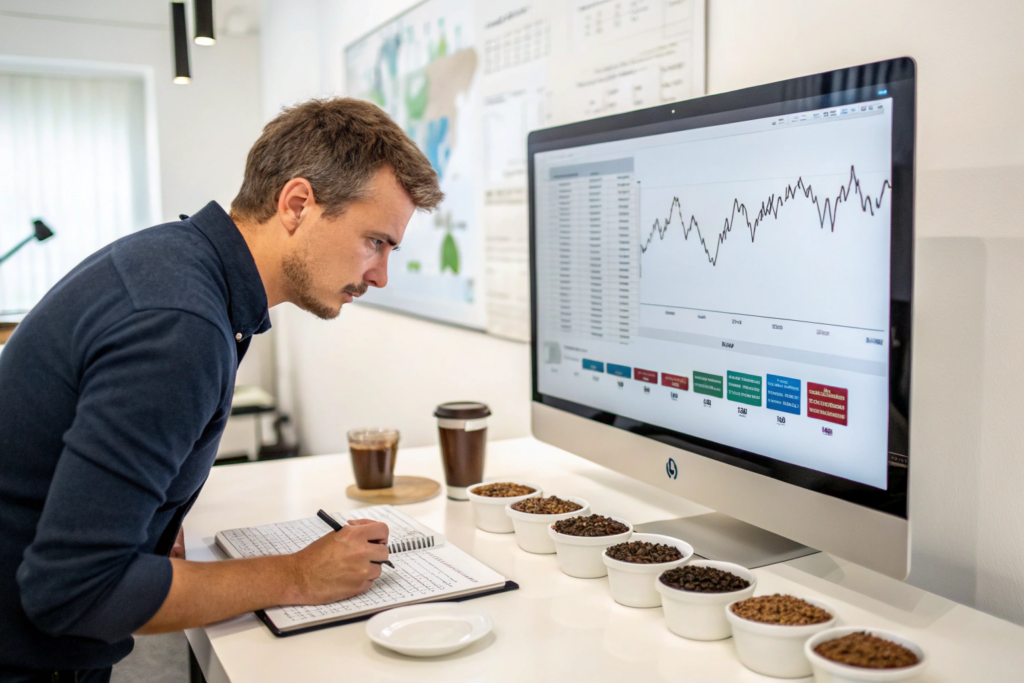
Even with the C-price easing from record highs, your actual costs may not drop much. The C-price is only one part of the picture. The Allpress analysis explains that labor costs, energy, freight, insurance, and domestic distribution all remain elevated or unpredictable. Green coffee cost surged 180% over five years. Structural costs will not return to pre-2022 levels. So, what does this mean? It means the C-price falling does not automatically mean your costs fall. You need to manage the whole cost base, not just the bean price.
What Is the El Niño Risk for 2026?
El Niño is a real threat. The Economic Times report states that coffee prices are expected to remain unstable for at least two years. El Niño brings unseasonable changes to temperature and precipitation. Those changes hurt crops. Prices surged about 30% since forecasters declared El Niño in mid-2026. The World Bank also warns that a stronger-than-expected El Niño could disrupt production and tighten markets again. So, do not assume prices will keep falling. Prepare for both directions.
How Do You Hedge Coffee Price Risk?
You may think hedging is for big traders. It is not. Small and medium importers can hedge too. The tools exist. You just need to know which one fits your business. Let me show you the three main options.
The three core hedging tools for coffee importers are fixed-price forward contracts, price-to-be-fixed contracts, and call options. A fixed-price forward contract locks in your purchase price today. A price-to-be-fixed contract lets you set the C-price later within a window. A call option gives you the right, but not the obligation, to buy at a set price. Each tool suits a different risk tolerance and cash flow situation.
I use all three with different buyers. A roaster with steady sales uses fixed-price contracts. A trader who wants flexibility uses price-to-be-fixed. A buyer who fears a price spike uses call options. So, what does this mean? It means you do not need a finance degree to manage price risk. You need a broker who understands coffee and a plan that matches your cash flow.
| Hedging Tool | How It Works | Best For |
|---|---|---|
| Fixed-price forward | Lock price now for future delivery | Stable cash flow buyers |
| Price-to-be-fixed | Set C-price later within a window | Flexible traders |
| Call option | Right to buy at set price | Fear of price spikes |
| Futures contract | Buy or sell on ICE | Larger operations |

How Do Fixed-Price Forward Contracts Work?
A fixed-price forward contract is the simplest tool. You agree on a price today for coffee delivered in three to six months. The price does not change. If the market goes up, you are protected. If the market goes down, you paid more than spot. But you had certainty. The Ethio Coffee hedging guide explains that these contracts suit buyers who need cost certainty for pricing their own products. I use forward contracts for my regular buyers. They tell me their volume in advance. We agree on a price. Then they can price their roasted coffee with confidence. So, what does this mean? It means you trade the chance of a lower price for the certainty of a known price. For most small businesses, that is a good trade.
When Should You Use Call Options?
Call options are different. They give you the right to buy coffee at a set price, but you do not have to. You pay a premium for that right. If prices rise above your strike price, you exercise the option. If prices fall, you let it expire and buy at the lower market price. The International Trade Centre explains that traders purchase call options assuming the futures market price will rise. I use call options when a buyer is worried about a price spike but does not want to lock in a high price today. The premium is a small cost for peace of mind. So, if you fear El Niño or a Brazil frost, a call option may be your best tool.
How Do You Choose a Hedging Broker?
Not every broker understands coffee. You need one who knows the C-market, the basis, and the physical trade. The StoneX coffee team provides hedging strategies for producers, importers, roasters, and traders. They offer futures, OTC trading, and options. I also check the CFTC for regulated brokers. So, ask your broker about their coffee experience. Ask about their basis desk. Ask about their margin requirements. A good broker will educate you, not just sell you a contract.
How Does Origin Diversity Protect You?
You may buy from one origin because it is easy. But one origin means one risk. A drought in Brazil. A frost in Colombia. A typhoon in Vietnam. One event can cut your supply and spike your cost. Diversity protects you.
Diversifying your coffee origins protects you because different regions have different harvest calendars, different weather risks, and different price movements. When Brazil has a drought, Vietnam may have a good crop. When Colombia has too much rain, Ethiopia may be dry. A multi-origin sourcing model lets you shift volume to the origin that offers the best quality and price at any given time. The Grocery Business Magazine reports that roasters are actively avoiding reliance on a single origin because factors can greatly affect a specific region.
I work with buyers who source from three or four origins. They use Brazil for base, Yunnan for clean acidity, Vietnam for body, and Ethiopia for fruit. When one origin has a problem, they adjust the blend. The Royal Coffee analysis recommends diversifying sourcing beyond Brazil and securing contracts early. So, what does this mean? It means you should not put all your volume in one place. Add one new origin this year. Test it. Then add another next year.
| Origin | Main Risk | Hedge Value |
|---|---|---|
| Brazil | Frost, drought, tariffs | Largest producer, but volatile |
| Vietnam | Typhoon, logistics | Strong Robusta supply |
| Colombia | Excess rain, landslides | High-quality Arabica |
| Yunnan, China | Limited international awareness | Stable supply, growing quality |
| Ethiopia | Political instability, drought | Unique flavor profiles |
Why Does a Different Harvest Calendar Help?
A different harvest calendar is a natural hedge. Brazil harvests from May to September. Colombia harvests from October to February. Ethiopia harvests from October to January. Yunnan harvests from November to April. When one origin is in off-season, another is in peak harvest. That means you can buy fresh coffee from at least one origin almost every month of the year. The International Coffee Organization tracks harvest calendars by origin. So, what does this mean? It means you can plan your purchases around harvest seasons. You buy when supply is fresh and prices are usually more competitive. That is a simple but powerful strategy.
How Do You Add a New Origin Safely?
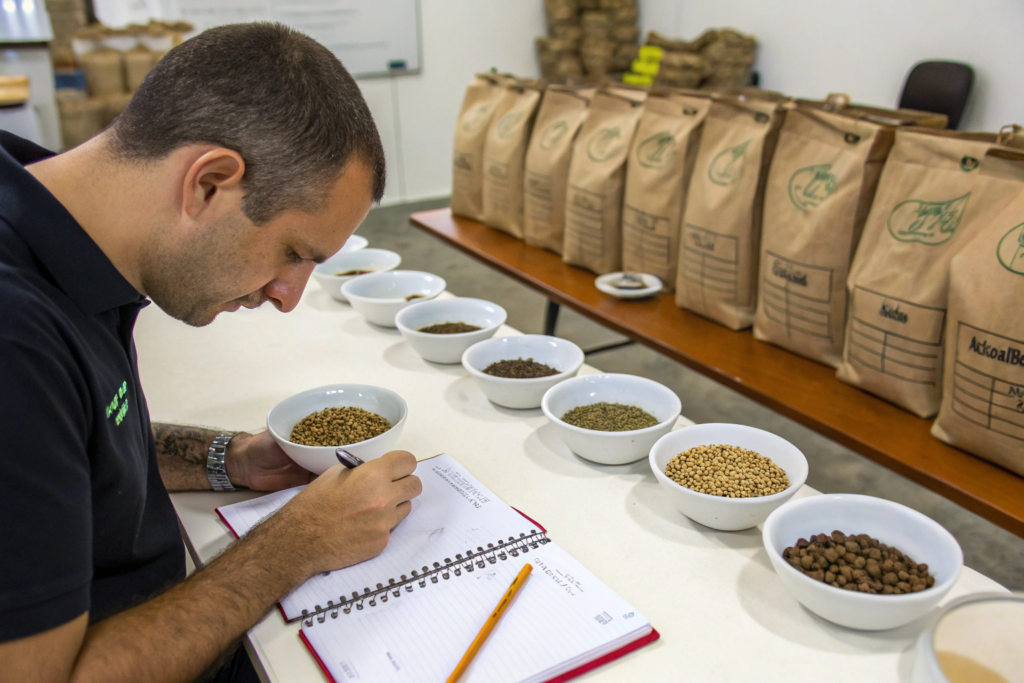
Adding a new origin takes planning. Start with a sample. Cup it. Check the moisture, density, and defect count. Then place a small trial order. Test the shipping. Test the communication. The SCA offers green coffee grading standards. I use a simple scorecard. If the trial lot meets specs, I scale up. If it does not, I try another supplier. So, do not rush. Add one origin per year. Build the relationship. Then you have a real backup.
How Do You Manage Inventory and Costs?
You may buy coffee when you need it. That is hand-to-mouth buying. It works when prices are stable. It fails when prices spike. Inventory is a tool. Used well, it protects you. Used poorly, it ties up cash. Let me show you the balance.
You manage inventory and costs by building a strategic buffer, using FIFO rotation, and tracking your cost of time. Most importers let a single-origin lot sit in a warehouse for 6 to 12 months before it is fully sold and paid for. That time costs money. A multi-year pricing mindset helps. The most resilient roasters have stopped trying to time the market and moved toward a multi-year curve. They treat pricing as a long-term plan, not a monthly gamble.
The SCA roaster guide explains that volatility creates an impossible situation for business planning. A roaster cannot budget or offer stable long-term contracts when their primary cost factor is a moving target. So, what does this mean? It means you need to plan your inventory like you plan your roast profiles. Deliberately. With data. Not by guessing.
| Inventory Strategy | Benefit | Risk |
|---|---|---|
| Hand-to-mouth | Low storage cost | No buffer against spikes |
| 30-60 day buffer | Covers short delays | Moderate storage cost |
| 90-180 day buffer | Covers major disruptions | Higher cash lock-up |
| Forward contracts | Locks price | Opportunity cost if prices fall |

How Much Buffer Stock Do You Need?
Buffer stock is your insurance. The right level depends on your lead time and your risk. If your coffee takes 45 days to arrive, you need at least 45 days of buffer. If your main origin has high risk, you need more. I keep 60 days of buffer for my main origins. For backups, I keep 30 days. The Cropster guide recommends staying informed about prices, tariffs, and trading options for various origins. So, calculate your buffer before you need it. Do not guess. Count your days. Then stock accordingly.
How Do You Track the Cost of Time?
The cost of time is the invisible tax on your inventory. A lot that sits for six months ties up cash. That cash could be earning interest. It could be buying more coffee. The Coffee Fest report explains that this cost eats margins quietly. It recommends a “Backbone” strategy for price stability. I track the days from purchase to sale for every lot. If a lot sits too long, I discount it or blend it. So, do not let inventory sit. Move it. Sell it. Rotate it. That keeps your cash flowing.
How Do You Adjust Your Pricing and Communicate?
You may be afraid to raise prices. Most roasters are. In a recent survey, only one in 15 roasters said they were increasing prices in step with rising costs. That is a dangerous pattern. If you do not raise prices, you do not have a business. Let me show you how to do it well.
You adjust pricing by recalculating your margins, setting a minimum net profit target, and communicating increases clearly to your accounts. Luke Waite of Pomelo Coffee Consulting says if you are below 10% net profit as a roastery, it is time to reevaluate your pricing, your wholesale structure, and how you communicate with your accounts. Price increases are usually less painful than roasters expect. Customers understand that costs are rising.
The Fresh Cup survey found that the core strategies roasters have leaned on are delaying increases, absorbing costs, and communicating openly. But delaying too long is dangerous. A Communicaffe report on Andrea Illy shows that a gradual and disciplined price pass-through preserved sales volumes and avoided demand loss. So, what does this mean? It means you should raise prices gradually, not all at once. Explain why. Show the data. Your good customers will stay.
| Pricing Strategy | When to Use | Risk |
|---|---|---|
| Absorb costs | Short-term spike | Margin erosion |
| Gradual increases | Sustained cost rise | Customer attrition |
| Full pass-through | High-value accounts | Volume loss |
| Menu engineering | Cafes and retail | Complexity |
How Do You Communicate a Price Increase?
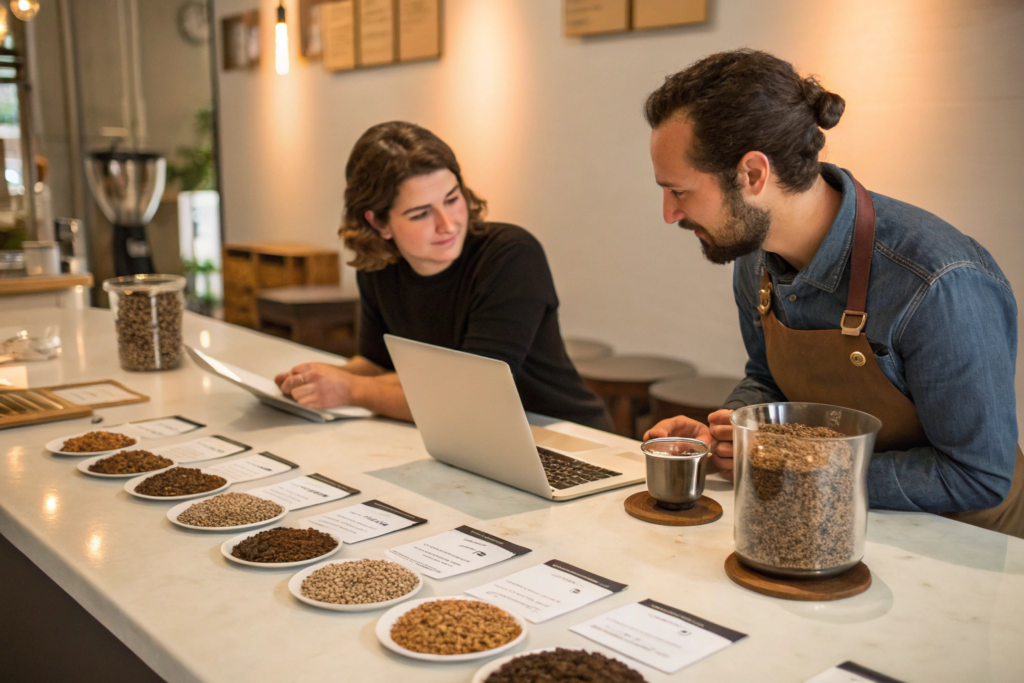
Call your accounts. Do not send an email. Explain what is happening in the market. Walk them through how to adjust their own pricing. Luke Waite recommends being transparent about the situation. I have seen buyers keep accounts by being honest. They say: “This is what is happening in the industry. This is what we have to do to stay alive so we can keep selling you coffee.” That honesty works. So, do not hide the increase. Explain it. Then help your buyer adjust.
What Is the Minimum Net Profit You Should Target?
Waite recommends a minimum of 10% net profit. If you are below that, you are in the danger zone. The Eightx pricing guide recommends a 45-55% fully-loaded gross-margin floor for coffee brands. DTC pricing should be 20-40% above grocery and 30-60% above wholesale. I use these benchmarks. If my margin drops below 15%, I review my pricing. If it drops below 10%, I act immediately. So, set your floor. Write it down. Then hold the line.
Conclusion
Future-proofing your coffee business against price hikes takes more than hoping for lower prices. You need to understand the C-market and its volatility. You need to use hedging tools that match your cash flow. You need to diversify your origins. You need to manage inventory deliberately. You need to adjust your pricing before costs force you to. These steps are not easy. But they are simpler than watching your margin disappear.
If you want a supplier who understands price volatility and helps you plan your costs, contact us. BeanofCoffee owns over 10,000 acres in Baoshan, Yunnan. We export Catimor, Arabica, and Robusta to North America, Europe, and Australia. We offer fixed-price forward contracts, flexible payment terms, and multi-origin sourcing support. For orders or questions, email Cathy Cai at cathy@beanofcoffee.com. She will help you build a supply plan that protects your margin.