
I run BeanofCoffee, a coffee exporter in Yunnan, China. We own more than 10,000 acres in Baoshan City. We sell Catimor, Arabica, and Robusta. We ship to North America, Europe, and Australia. Buyers like Ron ask me about price, quality, and shipping. But one topic comes up less often. It is foreign exchange. Ron is 44. He owns a company in America. He cares about price and timeliness. He buys coffee in U.S. dollars. I sell coffee in U.S. dollars. So where is the currency risk? It is still there. It hides in the exchange rate between the dollar and the yuan. It hides in the timing between the contract and the payment. It hides in the spread between the rate you see and the rate you get. If you ignore it, it can eat your margin. So let me explain how to manage it.
Foreign exchange exposure in coffee contracts comes from the gap between the currency you price in and the currency you pay in, and the time between the contract date and the payment date. You manage it with clear currency clauses, forward contracts, currency options, natural hedging, payment timing, and simple monitoring habits. The goal is not to make money on currency. The goal is to protect your margin from currency moves. A small roaster can use simple tools. A large buyer can use advanced tools. Both should start with a written contract that names the currency, the rate basis, and the payment date.
So, what does this mean for you? It means you should not treat currency as someone else's problem. You should understand it. You should plan for it. You should write it into your contract. At BeanofCoffee, we talk about currency before we talk about price. That order matters. If the currency is wrong, the price is wrong. So let me walk you through the main risks and the main tools.
Why Does Currency Risk Matter in Coffee Trade?
Currency risk matters because coffee is a global business. A farmer in Yunnan pays costs in yuan. A buyer in America pays in dollars. A roaster in Europe pays in euros. A shipping line may charge in dollars. An insurer may charge in dollars. A customs broker may charge in local currency. So a single container can touch several currencies. Each one moves. Each one adds risk. If the moves are small, no one notices. If the moves are large, the margin disappears. I have seen it happen. A buyer signed a contract in dollars. The dollar fell against the yuan. The supplier's cost rose. The supplier asked for a higher price. The buyer refused. The shipment was delayed. Both sides lost. That is currency risk.
Currency risk matters in coffee trade because exchange rate moves can change the cost of goods, the cost of freight, the cost of insurance, and the final margin. A 3% move in the dollar-yuan rate can wipe out a 3% margin. A 5% move can turn a profit into a loss. The risk is bigger when the contract is long, the payment is slow, or the currency is volatile. So you must identify your exposure, measure it, and decide how to manage it. Ignoring it is not a plan. It is a bet.
Another way to look at this is to compare it to a floating price. If you sign a contract without a fixed price, you are gambling. If you sign a contract without a currency plan, you are also gambling. The only difference is that the currency gamble is quieter. It does not show up until the payment clears. So pay attention. Then plan.
How Do Exchange Rate Moves Change Your Coffee Margin?
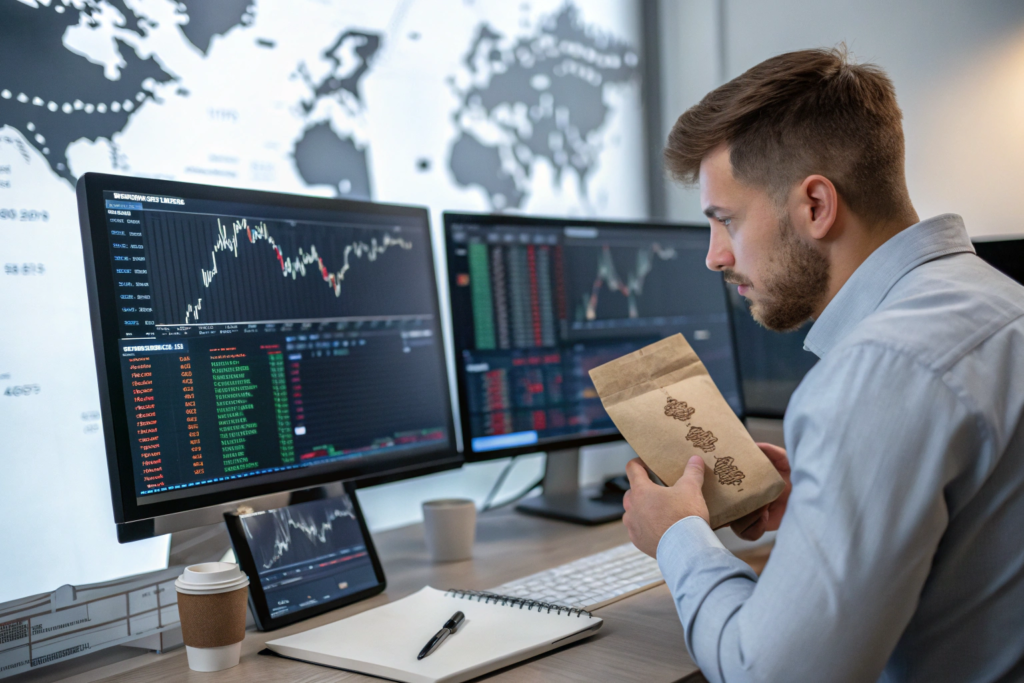
Exchange rate moves change your margin in two ways. First, they change the cost side. If you are a Chinese exporter, your costs are mostly in yuan. Your revenue is in dollars. If the dollar falls against the yuan, your revenue buys fewer yuan. Your margin shrinks. Second, they change the price side. If you are an American buyer, your revenue is in dollars. Your cost may be in dollars. But if your supplier raises the dollar price to cover a currency move, your cost rises. The Federal Reserve explains how exchange rates work and how they affect trade. The European Central Bank shares similar information for the euro area. I use these when I explain currency to buyers. A small move can have a big effect. So measure it. Then decide.
I also tell buyers to calculate their exposure. Add up all the payments in a foreign currency. Multiply by the amount. That is your exposure. Then check how much a 1% move would cost. If the number is small, you may not need a hedge. If the number is large, you should hedge. That simple math is the first step.
Which Currencies Are Most Volatile for Coffee?
The most volatile currencies for coffee depend on your origin and your market. The U.S. dollar is the main coffee currency. The Brazilian real, the Colombian peso, the Vietnamese dong, and the Chinese yuan all matter. The euro matters for European buyers. The Japanese yen matters for Japanese buyers. The Bank for International Settlements studies currency markets and volatility. The International Monetary Fund shares exchange rate data and country reports. I use these when we plan our own currency exposure. Some currencies move slowly. Some move fast. Some are tightly managed. Some float freely. So know your currency. Then know your risk. That is how you start.
For coffee, the dollar is the anchor. Most green coffee is priced in dollars. So if you are a buyer in Europe or Asia, you already have currency risk. Your local currency may move against the dollar. That changes your landed cost. So you should plan for it. Do not assume the dollar price is your final cost. It is only the start.
What Tools Can Reduce FX Risk in Coffee Contracts?
You have several tools. Some are simple. Some are complex. Some are cheap. Some cost money. The right tool depends on your size, your risk, and your market. I use different tools for different deals. For a small sample order, I do not hedge. The amount is too small. For a full container, I may use a forward contract. For a large annual contract, I may use a mix of forwards and options. So let me explain the main tools. Then you can choose.
The main tools to reduce FX risk in coffee contracts are forward contracts, currency options, natural hedging, currency clauses, payment timing, and multi-currency accounts. A forward contract locks in an exchange rate for a future date. A currency option gives you the right, but not the obligation, to exchange at a set rate. Natural hedging matches your revenue currency with your cost currency. A currency clause puts the risk on one side or shares it. Payment timing reduces the window of exposure. A multi-currency account lets you hold and pay in different currencies. Each tool has a cost and a benefit. So match the tool to the deal.
So, what should you do? Start with the simplest tool. That is a clear currency clause. Then add a forward contract for large orders. Then consider options for long contracts. Do not jump to complex tools before you understand the simple ones. That is the safe path.

How Do Forward Contracts Lock in Exchange Rates?
A forward contract locks in an exchange rate for a future date. You agree with your bank to buy or sell a currency at a set rate on a set date. That removes the uncertainty. If the rate moves against you, you are protected. If the rate moves in your favor, you miss the gain. But you gain certainty. For coffee, certainty is often worth more than a possible gain. The CME Group offers currency futures and options. The OANDA site explains forward contracts and currency risk. I use these when I explain forwards to buyers. A forward is simple. You know the rate. You know the cost. Then you can price your coffee with confidence.
I also tell buyers to match the forward date with the payment date. A forward that expires before the payment is useless. A forward that expires after the payment costs extra. So match the dates. Then check the rate. Then sign.
Are Currency Options Worth the Cost for Coffee Buyers?
Currency options can be worth the cost if the contract is long or the currency is volatile. An option gives you the right to exchange at a set rate. You pay a premium for that right. If the rate moves against you, you use the option. If the rate moves in your favor, you let the option expire and use the market rate. So you get protection and flexibility. The Investopedia site explains options in plain language. The Reuters site covers currency market news. I use these when I compare options with forwards. An option costs more than a forward. But it gives you more freedom. So compare the cost with the benefit. Then decide.
For Ron, this matters because he wants flexibility. He does not want to lock in a rate and then miss a better one. So he uses options for his largest contracts. He uses forwards for his smaller ones. That mix works for him. It may work for you. So try it. Then measure it. Then adjust.
How Do You Write FX Terms into a Coffee Contract?
The contract is where you prevent arguments. If the currency clause is clear, both sides know what to expect. If the clause is vague, both sides may argue. I have seen buyers and sellers fight over a 2% currency move. That is a waste of time. A clear clause avoids that. So write it down. Put it in the contract. Then follow it. That is how you build trust.
A coffee contract should include the pricing currency, the payment currency, the exchange rate basis, the rate date, the payment date, the fee allocation, and a currency adjustment clause. The exchange rate basis should name the source, like the central bank rate or a market rate. The rate date should be clear, like the contract date or the invoice date. The currency adjustment clause should say what happens if the rate moves beyond a certain band. A clear clause protects both sides. It also makes the price transparent.
So, what should you do? Ask your supplier for a draft clause. Ask your bank to review it. Ask your lawyer if the amount is large. Then sign it. Do not rely on a chat message. Do not rely on a verbal promise. A written clause is your protection. So take it seriously.

What Currency Clause Should a Coffee Contract Include?
A currency clause should include six things. First, the pricing currency. Second, the payment currency. Third, the exchange rate source. Fourth, the rate date. Fifth, the payment date. Sixth, the adjustment rule. The International Chamber of Commerce publishes trade rules and model contracts. The Trade.gov site offers export and import guidance. I use these when we draft our contracts. A simple clause is better than a complex one. A simple clause is easier to follow. So keep it simple. Then use it.
I also tell buyers to name the rate source. If the clause says "market rate," that is vague. If it says "the central bank rate on the invoice date," that is clear. So be specific. Then check the rate. Then pay.
How Do You Handle Currency Changes Between Order and Payment?
You handle currency changes with a clear rule. The rule can say the buyer pays the difference. The rule can say the seller absorbs the difference. The rule can say both sides share the difference. The rule can also set a band. If the rate moves less than 2%, no adjustment. If it moves more than 2%, both sides share the change. The World Bank shares commodity price and market data. The USITC provides tariff and trade data. I use these when we review contract terms. A band is fair. It protects both sides from small moves. It also shares the risk of large moves. So use a band. Then follow it.
For Ron, this means he should ask for a currency band in every contract. If the rate moves a little, he does not worry. If the rate moves a lot, he knows the rule. That clarity saves time and trust. So ask for it. Then agree. Then sign.
How Can Small Coffee Businesses Manage FX Without a Treasury Team?
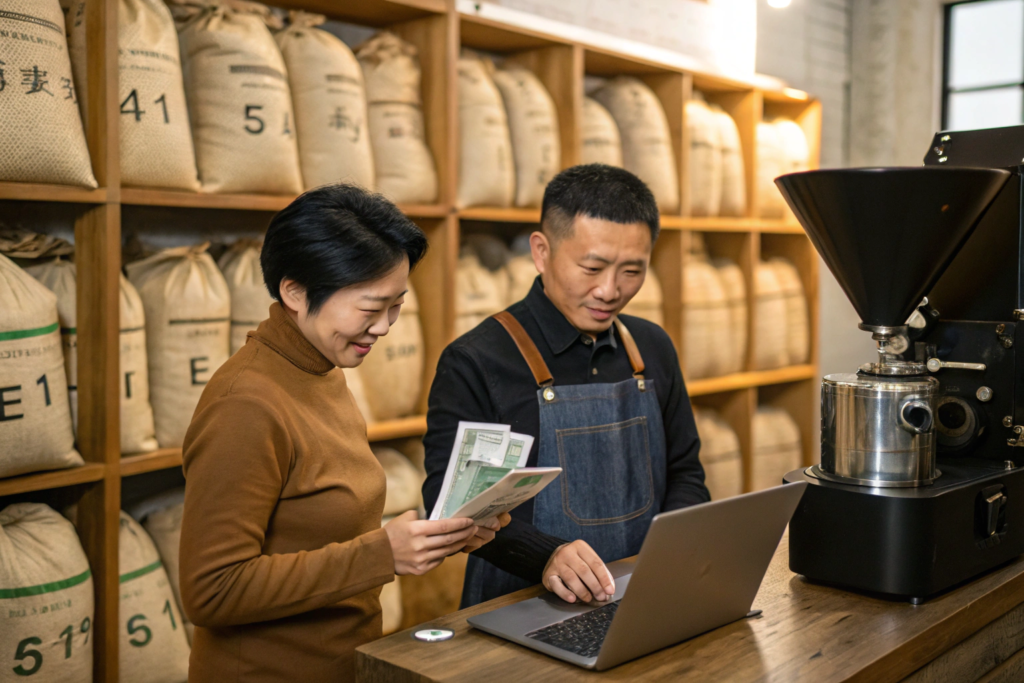
Most coffee businesses are small. They do not have a treasury team. They do not have a currency desk. They have a laptop and a bank account. That is fine. You do not need a big team to manage currency. You need simple habits. I have seen small roasters manage currency better than large companies. Why? Because they keep it simple. They check the rate. They plan the payment. They use one or two tools. That is enough. So let me share the simple habits.
Small coffee businesses can manage FX without a treasury team by using simple habits: check the rate weekly, set a target rate, use a forward contract for large orders, keep a small buffer, pay on time, and review the results every quarter. You do not need complex software. You need a calendar, a notebook, and a relationship with your bank. A simple habit beats a complex system that no one uses. So start simple. Then build.
So, what should you do? Start with a weekly check. Write down the rate. Then compare it with your target. If the rate is good, act. If the rate is bad, wait. That simple habit gives you control. It also gives you confidence. So start today.
What Simple Habits Reduce FX Exposure?
Five habits reduce FX exposure. First, check the rate every week. Second, set a target rate for each currency. Third, use a forward for any payment above a certain size. Fourth, keep a small buffer in your price for currency moves. Fifth, review your results every quarter. The XE site offers currency converters and rate data. The Wise site explains multi-currency accounts and transfer costs. I use these when I advise small buyers. A weekly check takes five minutes. A forward contract takes one call. A buffer takes one line in your price sheet. These habits are small. But they add up. So build them. Then keep them.
I also tell buyers to write down the rate they used. Then compare it with the rate they got. That comparison shows the cost of the transfer. It also shows the benefit of the hedge. So track it. Then learn. Then improve.
When Should You Hedge and When Should You Wait?
You should hedge when the amount is large, the payment date is far, and the currency is volatile. You should wait when the amount is small, the payment date is near, and the currency is stable. The Bloomberg site covers currency market news and data. The Daily Coffee News covers coffee market trends that affect currency demand. I use these when I plan our own hedges. A hedge costs money. So use it when the risk is worth the cost. Do not hedge everything. Do not hedge nothing. Hedge the big ones. Then relax. That is the balance.
For Ron, this means he should hedge his full container orders. He should not hedge his sample orders. The samples are too small. The containers are large. So match the tool to the size. Then act. That is how you manage currency without a team.
Conclusion
Foreign exchange exposure is a real risk in coffee contracts. It comes from the gap between currencies and the gap between dates. You can manage it with clear contracts, forward contracts, currency options, natural hedging, payment timing, and simple habits. You do not need a big team. You need a clear plan. You need to know your exposure. You need to write the currency clause. You need to check the rate. You need to hedge the big orders. You need to review the results. If you do these things, you can protect your margin. You can sleep better at night. And you can focus on what matters most. That is the coffee.
At BeanofCoffee, we take currency risk seriously. We own more than 10,000 acres in Baoshan City, Yunnan. We export Catimor, Arabica, and Robusta. We work with large buyers, brand owners, distributors, and trading companies. We can discuss currency clauses, payment terms, and hedging options. If you want to manage your FX exposure better, please contact Cathy Cai at cathy@beanofcoffee.com. She will help you with samples, pricing, specifications, and contract terms. You can also visit BeanofCoffee to learn more. Let us build a stable coffee supply together.