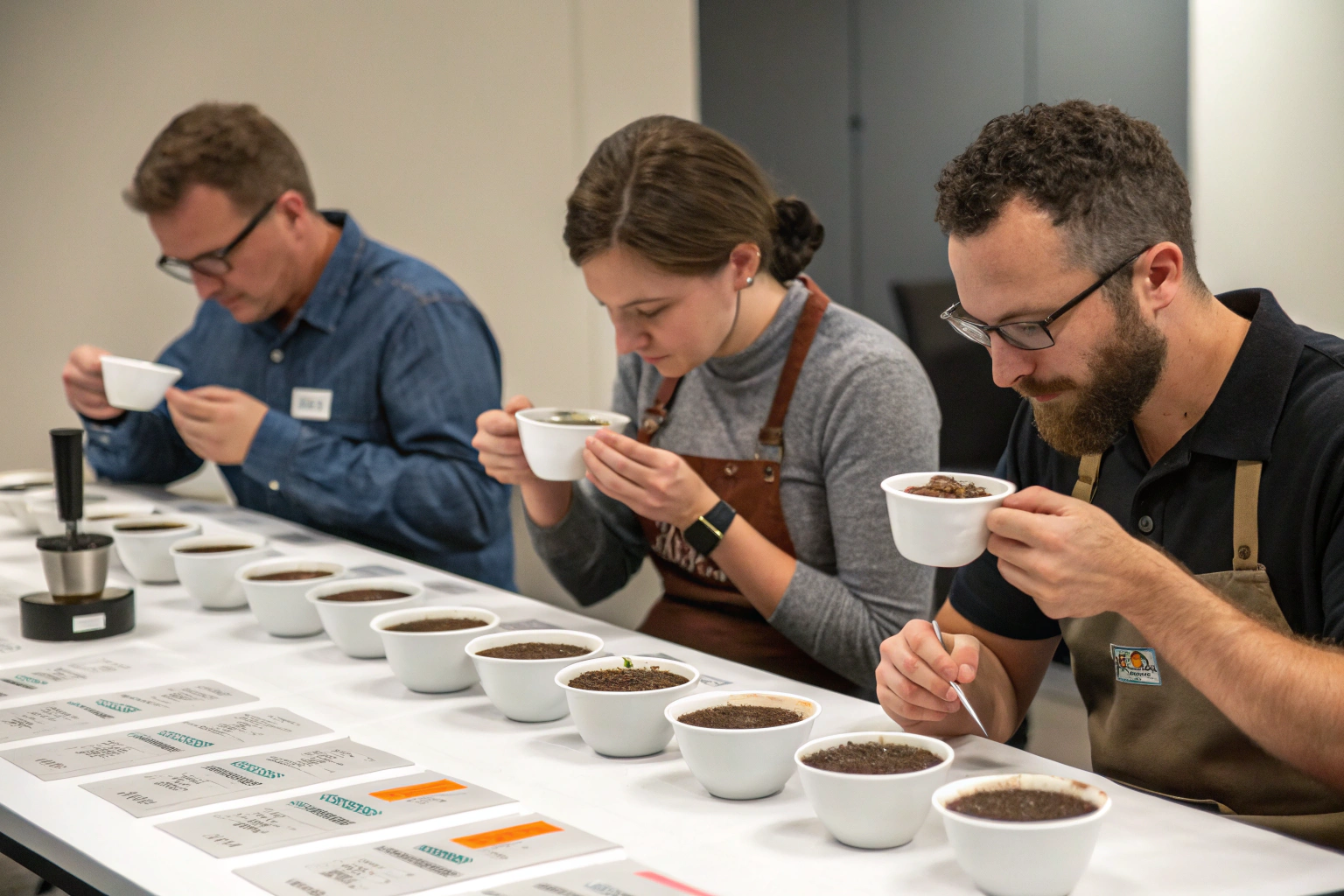
I run BeanofCoffee, a coffee exporter in Yunnan, China. We own more than 10,000 acres in Baoshan City. We sell Catimor, Arabica, and Robusta. We ship to North America, Europe, and Australia. Buyers like Ron ask me how to choose between suppliers. Ron is 44. He owns a company in America. He cares about price and timeliness. He is confident and likes to lead the conversation. But when he cups coffee, he wants the truth. He does not want a sales pitch. He wants a fair test. That is why I told him to build a blind tasting panel. It is the only way to compare suppliers without fooling yourself.
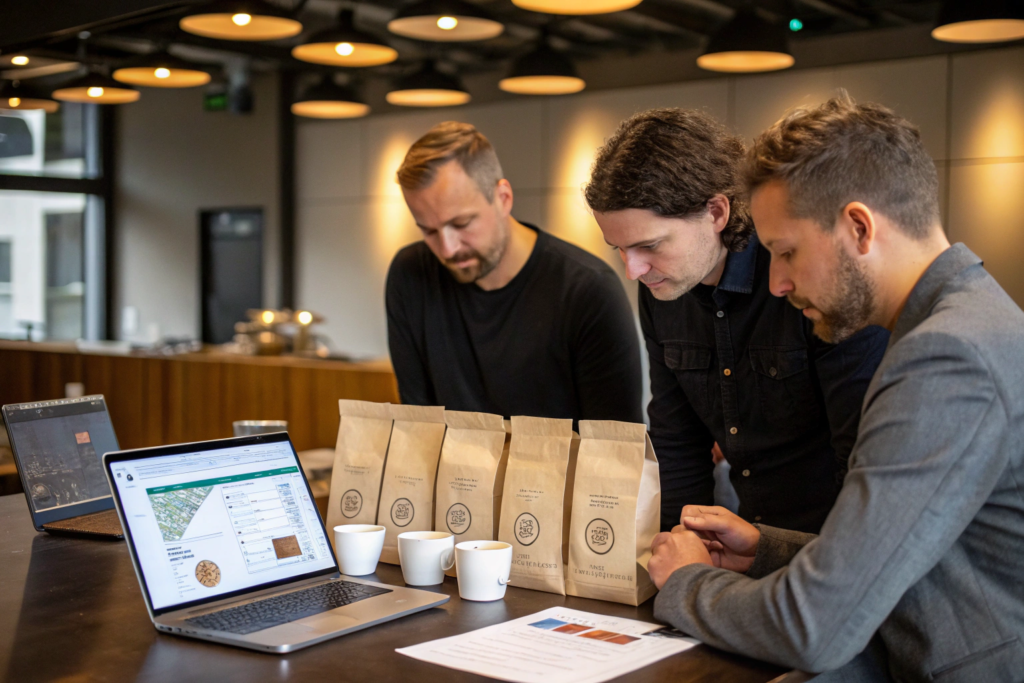
A blind tasting panel for supplier selection is a cupping session where the tasters do not know which coffee comes from which supplier. You prepare samples with random codes. You use the same roast, water, grinder, and bowl for every sample. You score each cup on a standard form. Then you compare the scores and discuss the results. The goal is simple. Remove names. Remove price. Remove stories. Then judge the coffee on what it actually tastes like. A panel of three to five trained tasters works best. You should repeat the test at least twice before you decide.
So, what does this mean for you? It means you should not choose a supplier because the salesman is friendly. You should not choose a supplier because the label looks nice. You should not choose a supplier because the price is low. You should cup the coffee blind. Then you will know the truth. At BeanofCoffee, we welcome blind panels. We want buyers to test our coffee fairly. If our coffee wins, we earn the order. If it loses, we learn. That is how we improve. Let me show you how to build a blind panel step by step.
Why Use a Blind Tasting Panel for Supplier Selection?
Names change everything. I have seen it many times. When a taster knows the coffee is from a famous farm, the score goes up. When the taster knows the coffee is cheap, the score goes down. That is human nature. It is not dishonesty. It is bias. And bias ruins supplier selection. Ron told me once that he bought a coffee because the farm had a great story. The cup was average. He paid too much. He learned the hard way. So now he cups blind. That one change saved him money.
A blind tasting panel is better than an open cupping because it removes brand bias, price bias, origin bias, and personal bias. When tasters do not know the source, they score what they taste. That gives you real data. It also gives you a fair way to compare suppliers. A famous supplier may win. A new supplier may win. The coffee decides. That is how you find hidden value. That is how you avoid overpaying for a name.
Another way to look at this is to compare it to a job interview where the candidate's name is hidden. You judge the answers, not the resume. The same rule works for coffee. Hide the name. Judge the cup. Then decide.
What Makes Blind Tasting Better Than Open Cupping?
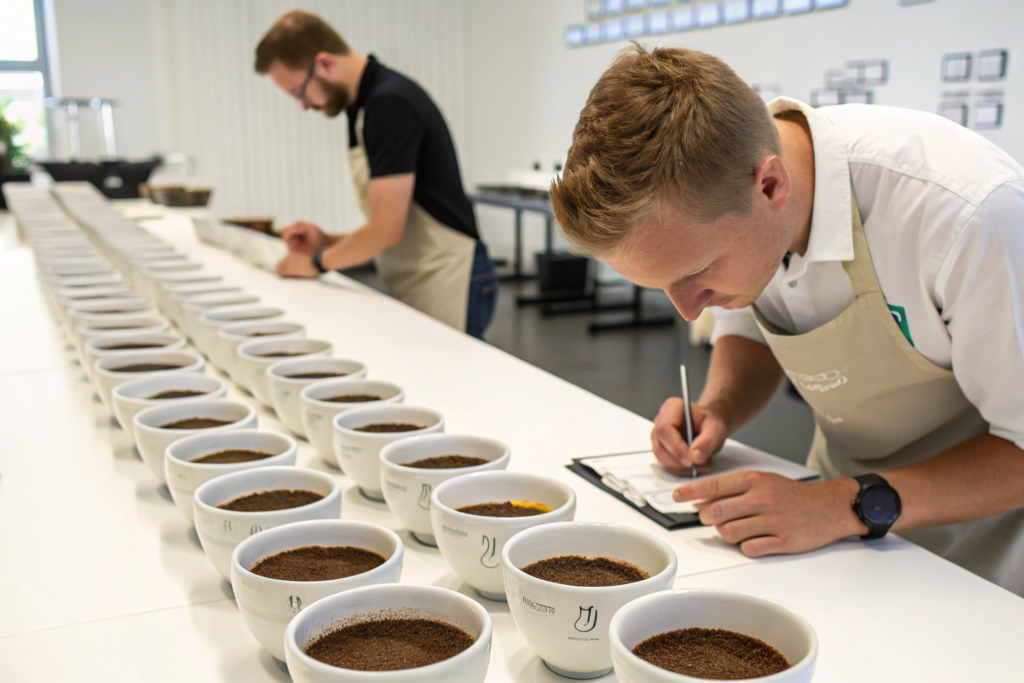
Blind tasting is better because it separates flavor from story. An open cupping lets the taster see the bag, the label, and the price. That information changes the score. Research shows this effect in wine, coffee, and many other products. The Specialty Coffee Association explains cupping standards and protocols. The Coffee Quality Institute shares quality evaluation training. I use these when we train our own panel. A blind setup is simple. You cover the labels. You use codes. You keep the price hidden. Then you score. It is not complicated. But it is powerful. So use it. Then trust the result.
I also tell buyers to keep the supplier names in a sealed envelope. Open it only after the scores are locked. That prevents accidental bias. It also prevents arguments. So seal the names. Then cup. Then compare.
How Do You Remove Bias from Supplier Samples?
You remove bias by controlling five things. First, use the same roast level for every sample. Second, use the same water and grinder. Third, use the same bowl and spoon. Fourth, use random codes instead of names. Fifth, keep the price hidden. The Perfect Daily Grind shares practical cupping guides. The Roast Magazine covers roasting and quality control. I use these when we plan our sessions. A fair test needs fair conditions. If one sample is roasted darker, it will taste different. That is not a fair comparison. So control the variables. Then compare. That is how you get real data.
I also tell buyers to use a silent scoring period. Let each taster score alone. Then discuss as a group. Group discussion before scoring can sway opinions. A strong personality can dominate. So score first. Talk later. That order protects the truth.
How Do You Set Up a Blind Tasting Panel?
Setup is where most panels fail. I have seen buyers try to run a blind panel with different bowls, different water, and different roast levels. The results were useless. So I learned to build a simple protocol. It does not need to be fancy. It needs to be consistent. That is the key word. Consistent. Same everything. Only the coffee changes. Then the scores mean something.
You set up a blind tasting panel by preparing identical samples, coding them randomly, using standard equipment, and training your tasters. You need a clean room, good light, fresh water, a burr grinder, a scale, a kettle, identical cupping bowls, spoons, and score sheets. You need three to five tasters. You need a silent scoring period. You need a facilitator who does not taste. The facilitator prepares the samples and keeps the codes secret. This structure removes bias and keeps the session organized.
So, what should you do? Write the protocol down. Then follow it every time. A written protocol prevents shortcuts. Shortcuts ruin the data. So write it. Then use it. That is how you build a reliable panel.
What Equipment and Space Do You Need?
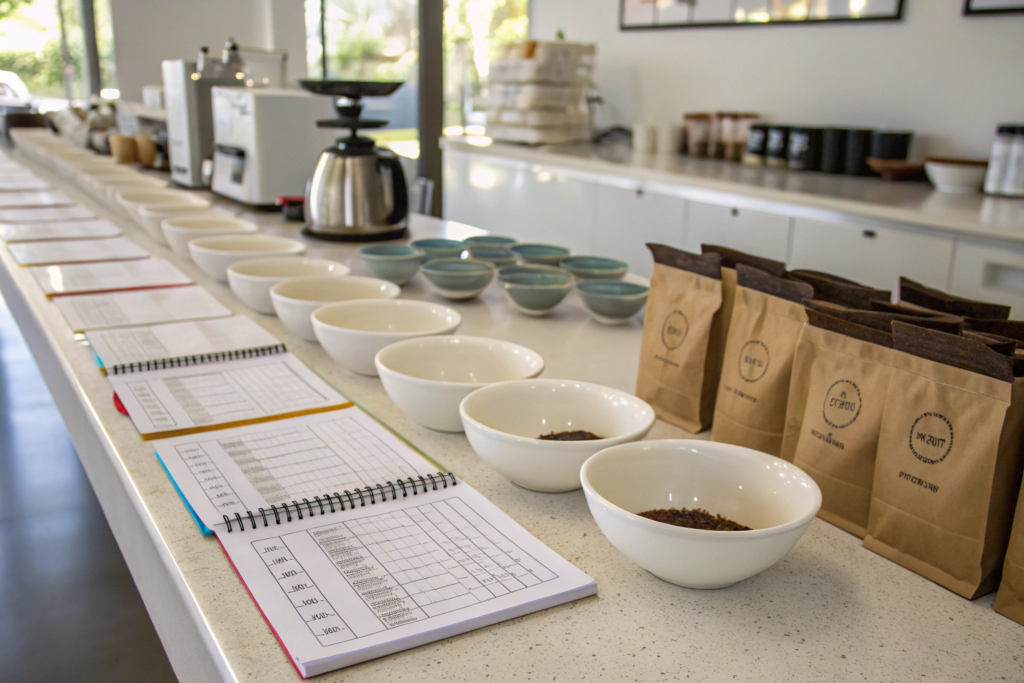
You need a clean room with good light. You need a burr grinder. You need a scale that reads to 0.1 gram. You need a kettle with temperature control. You need identical cupping bowls. You need cupping spoons. You need score sheets. You need water that tastes clean. The SGS coffee inspection page shows how professional labs are set up. The Intertek coffee page shows testing services that support cupping. I use these when we set up our own lab. A simple setup is enough. You do not need a expensive lab. You need consistency. So invest in the basics. Then keep them clean.
I also tell buyers to avoid strong smells in the room. No perfume. No food. No cleaning chemicals. Coffee absorbs smells. A smelly room can change the cup. So keep the room neutral. Then cup.
How Do You Code and Randomize Samples?
You code samples with random numbers or letters. Do not use the supplier name. Do not use the origin. Do not use the price. Use a random code. The facilitator keeps the key. The tasters see only the code. The International Coffee Organization tracks quality and trade standards. The Barista Hustle shares practical coffee testing guides. I use these when we prepare our sessions. A random code removes the name. It does not remove the flavor. That is the point. So code carefully. Then keep the key secret until the end.
I also tell buyers to randomize the order. Do not put all the good samples first. Do not put all the cheap samples last. Random order reduces order bias. Order bias is real. The first cup can taste different from the last. So randomize. Then score.
How Do You Score and Compare Suppliers Fairly?
Scoring is the heart of the panel. If the score sheet is vague, the data is vague. If the score sheet is clear, the data is clear. I have seen buyers use a simple score sheet. It works. I have seen buyers use a complex score sheet. It also works. The key is to use the same sheet every time. Then you can compare across sessions. That comparison is where the value lives.
You score and compare suppliers fairly by using a standard cupping form, scoring each attribute separately, and averaging the scores across tasters. The SCA cupping form is a good starting point. It covers fragrance, flavor, acidity, body, sweetness, aftertaste, balance, and overall. You should also record defects. Then you rank the samples by total score. You should repeat the session at least twice. A single session can be noisy. Two or three sessions give you a stable result. Then you compare. Then you decide.
So, what should you do? Build a score sheet. Train your tasters. Then run the session. Do not rush. A careful session gives better data than a fast one. So take your time. Then review.
What Scoring System Should You Use?
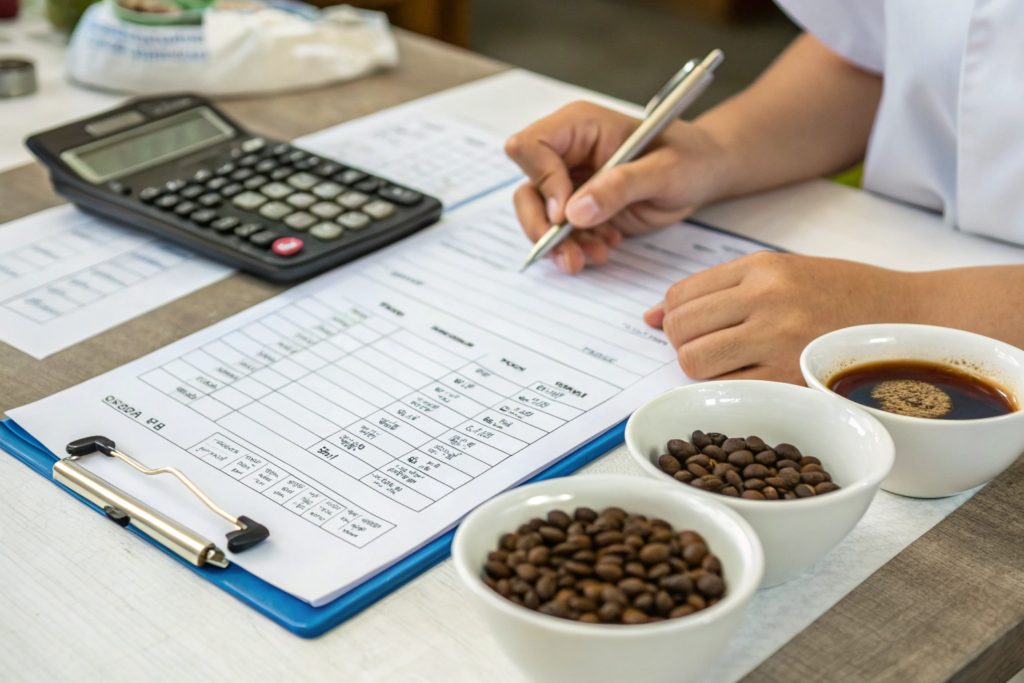
You should use a standard system. The SCA cupping form is common. It uses a 100-point scale. It scores fragrance, flavor, acidity, body, sweetness, aftertaste, balance, and overall. It also deducts points for defects. The Specialty Coffee Association publishes the form and the protocol. The Coffee Quality Institute offers training on scoring. I use these when we train our panel. A standard form helps you compare with other buyers. It also helps you compare over time. So use a standard form. Then adapt it if needed. But keep it consistent. That is the key.
I also tell buyers to record defects separately. A defect is not just a lower score. It is a warning. A musty defect is different from a sour defect. Each one points to a different cause. So record the defect. Then investigate. That is how you improve your supply.
How Do You Compare Multiple Origins Fairly?
You compare multiple origins fairly by using the same roast, the same water, the same grinder, and the same bowls. You also use the same tasters. Different tasters have different palates. So keep the panel consistent. The Daily Coffee News covers origin and market trends. The Global Coffee Platform shares sustainable sourcing practices. I use these when we compare our Yunnan coffee with other origins. A fair comparison is the only useful comparison. So control the variables. Then compare. Then decide.
| Attribute | What It Measures | Why It Matters |
|---|---|---|
| Fragrance | Dry and wet aroma | First impression |
| Flavor | Main taste profile | Core quality |
| Acidity | Brightness and liveliness | Origin character |
| Body | Mouthfeel and weight | Blend function |
| Sweetness | Natural sugar perception | Ripeness and care |
| Aftertaste | Finish length and quality | Cleanliness |
| Balance | How parts work together | Overall harmony |
| Overall | Taster's final judgment | Holistic score |
| Defects | Off-flavors and faults | Risk indicator |
This table is simple. But it covers the basics. Use it. Then build your own version.
How Do You Turn Panel Results into Buying Decisions?
Data is only useful if it changes a decision. I have seen buyers run a great panel. Then they ignore the results. They buy from the supplier with the best price. That defeats the purpose. The panel is not a game. It is a tool. Use it. Then decide. Ron likes this approach. He wants proof. He wants a fair comparison. Then he wants a clear decision. So let me show you how to turn scores into orders.
You turn panel results into buying decisions by setting minimum quality thresholds, ranking suppliers by score, and matching the results with price, lead time, and risk. A supplier with a high score and a fair price is a strong candidate. A supplier with a low score and a low price may still work for a commodity blend. A supplier with a high score and a high price may work for a premium lot. The key is to match the coffee to the product. Do not buy a premium lot for a grocery blend. Do not buy a commodity lot for a specialty cafe. Match the quality to the market. Then decide.
So, what should you do? Set your thresholds first. Then score the samples. Then rank them. Then look at the price. Then look at the lead time. Then decide. That order keeps you honest. It keeps you focused on quality. Then you can negotiate from a position of knowledge.
How Do You Set Minimum Quality Thresholds?
You set minimum quality thresholds by deciding what your product needs. A specialty cafe may need a score of 84 or higher. A grocery blend may need 80 or higher. A commodity blend may need 78 or higher. The National Coffee Association shares market and consumption data. The Trade.gov site offers import and export guidance. I use these when I help buyers set thresholds. Your threshold should match your customer. A high threshold is not always better. It depends on the product. So set the threshold. Then test against it. Then decide.
I also tell buyers to set a defect threshold. A coffee with a musty defect should be rejected even if the score is high. A defect is a risk. It can grow in storage. It can hurt your brand. So set the defect rule. Then follow it. That rule protects you.
How Do You Handle Ties and Close Scores?
You handle ties and close scores by running a second session. A close score may be noise. A second session gives you a clearer picture. You can also compare the price, the lead time, and the risk. If two coffees score the same, the cheaper one may win. If the prices are the same, the faster one may win. If everything is equal, the relationship may decide. The CBP page explains U.S. customs entry. The FDA prior notice page explains food import rules. I use these when we compare suppliers. A tie is not a problem. It is a chance to look deeper. So look deeper. Then decide.
I also tell buyers to keep a backup supplier. A close second is a valuable asset. It gives you options. If your main supplier fails, you have a plan. So do not throw away the second place. Keep it warm. Then use it when needed.
Conclusion
A blind tasting panel is the fairest way to select a coffee supplier. It removes bias. It gives you real data. It helps you compare quality, price, and risk. You should set up a simple protocol. You should use standard equipment. You should code the samples. You should score them honestly. You should run the session twice. Then you should match the results to your product. A high score is not always the answer. The right score for your market is the answer. So build your panel. Then trust the data. Then make your decision. That is how you find the best supplier. That is how you protect your brand.
At BeanofCoffee, we welcome blind tasting panels. We own more than 10,000 acres in Baoshan City, Yunnan. We export Catimor, Arabica, and Robusta. We work with large buyers, brand owners, distributors, and trading companies. We can share samples, moisture data, and cupping notes. If you want to test our coffee blind, please contact Cathy Cai at cathy@beanofcoffee.com. She will help you with samples, pricing, specifications, and shipping plans. You can also visit BeanofCoffee to learn more. Let us earn your order with a fair cup.