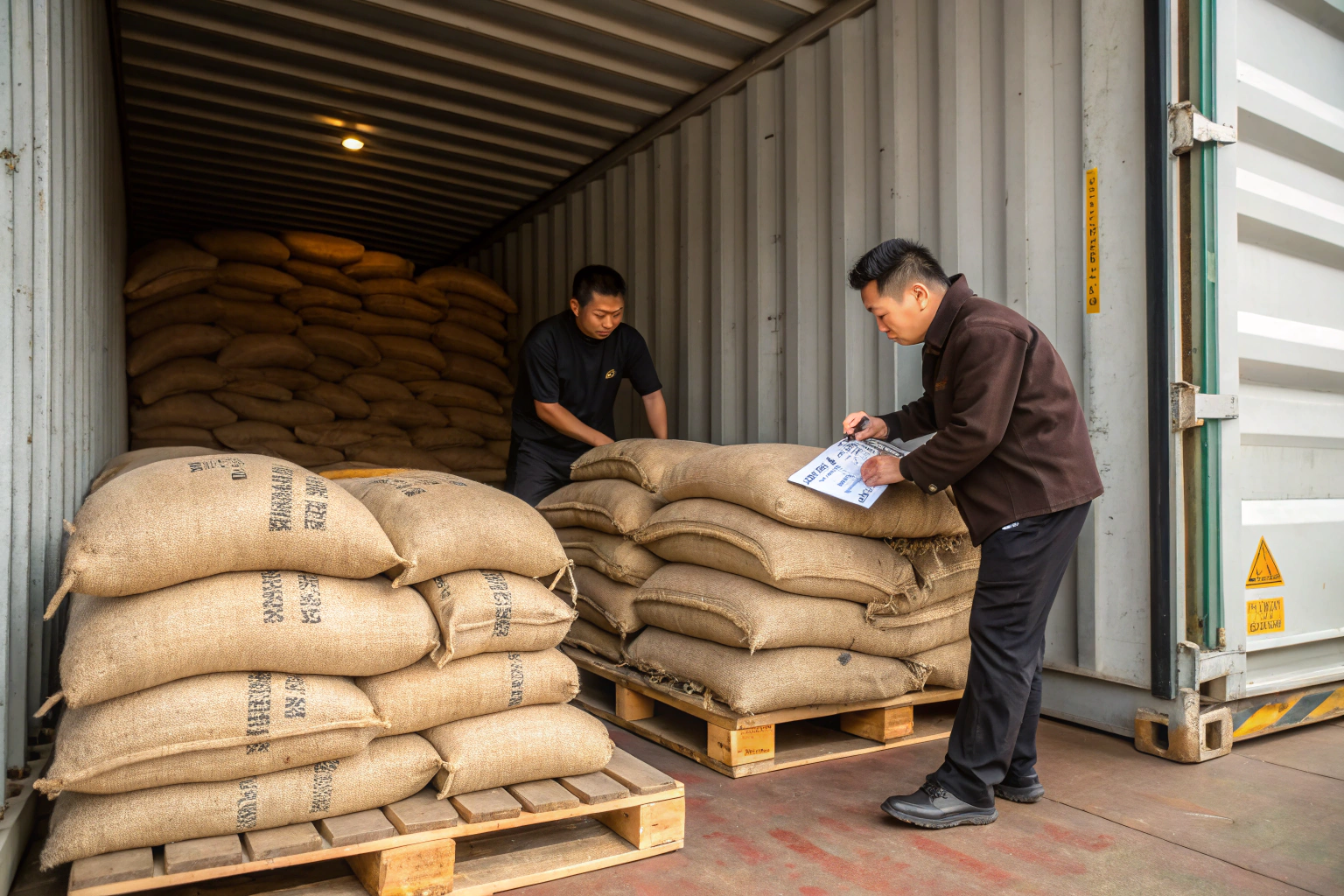
I run BeanofCoffee, a coffee exporter in Yunnan, China. We own more than 10,000 acres in Baoshan City. We sell Catimor, Arabica, and Robusta. We ship to North America, Europe, and Australia. Buyers like Ron ask me about price, quality, and shipping. But one topic gets ignored. That topic is pallet configuration. It sounds boring. It is not. A bad pallet plan wastes space. It damages bags. It raises freight cost per pound. It can even cause a customs problem if the load shifts. A good pallet plan saves money. It protects the coffee. It makes the buyer happy. Ron cares about price and timeliness. So he cares about pallets, even if he does not say it.
To optimize pallet configuration for coffee container loading, you should match the pallet size to the container, choose a stable stacking pattern, keep bags dry, use liners when needed, and train the loading team. A standard 20-foot container holds 10 to 11 pallets. A 40-foot container holds 20 to 21 pallets. A 60 kg bag is heavy, so stack height matters. A stable pattern prevents shifting. A clean, dry container prevents mold. The goal is simple: fit more coffee, protect the quality, and avoid damage. That is how you lower the landed cost per pound.
So, what should you do? Start with a plan. Do not let the crew guess. A written loading plan saves time and money. At BeanofCoffee, we use a simple pallet plan for every shipment. We check it before the truck arrives. That habit prevents most problems. Let me show you how to build a plan that works.
What Pallet Patterns Work Best for Coffee Bags?
A pallet pattern is not a small detail. It decides how many bags fit, how stable the load is, and how much air you ship. I have seen a crew stack bags in a loose pattern. The container was only 80% full. The buyer paid for air. I have also seen a tight pattern that damaged the bottom bags. So the best pattern balances space and safety. It is not the tightest. It is the smartest.
The best pallet patterns for coffee bags are column stacking, interlocking, and pinwheel. Column stacking is simple and strong for uniform bags. Interlocking adds stability by turning bags 90 degrees. Pinwheel works well for square or rectangular bags. For 60 kg jute bags, a column stack with a slip sheet or a light interlock is often best. The pattern should match the bag size, the pallet size, and the container width. You should test the pattern with empty bags before you load the real coffee.
Another way to look at this is to compare a pallet to a brick wall. A brick wall is strong because the bricks overlap. A stack of bags is strong when the layers lock together. So choose a pattern that locks. Then check the height. Then check the weight. That is how you build a safe load.
| Pattern | Best For | Strength | Air Space |
|---|---|---|---|
| Column | Uniform bags | High | Low |
| Interlock | Mixed bags | High | Medium |
| Pinwheel | Square bags | Medium | Low |
| Random | Fast loading | Low | High |
This table is simple. But it helps. Use it. Then adjust to your bag and pallet.
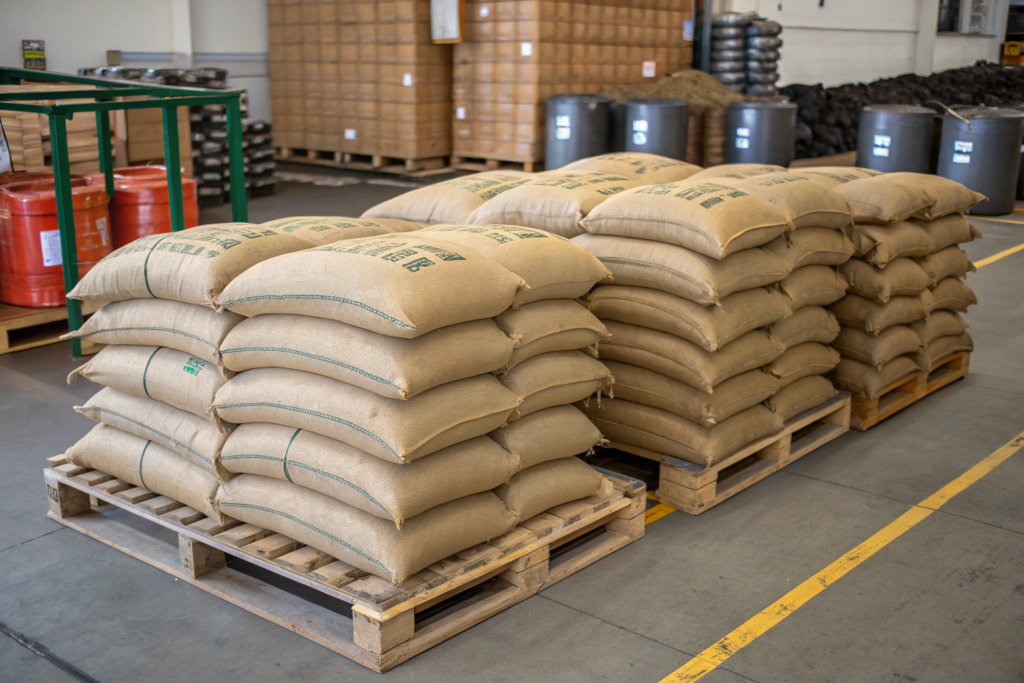
What Is the Best Pallet Size for Coffee Bags?
The best pallet size for coffee bags is usually 1,100 mm by 1,100 mm or 1,200 mm by 1,000 mm. A 1,100 mm pallet fits well in a standard container. A 1,200 mm by 1,000 mm pallet uses the container width better. The choice depends on your bag size and your market. The container loading guidelines page explains basic pallet and container fit. The GrainPro site explains storage and liner options. I use these when we plan our loads. A pallet that is too wide wastes space. A pallet that is too narrow is unstable. So measure the container. Measure the pallet. Then choose.
I also tell buyers to ask for the pallet size in the quote. A supplier who does not know the pallet size may not know the real load. So ask. Then check. That small question saves money.
How Do You Stack 60 kg Bags on Pallets?
You stack 60 kg bags on pallets in layers. Keep the layers flat. Keep the weight even. Do not stack too high. A common rule is 10 to 12 bags per layer, depending on bag size. Then stack 5 to 7 layers. That gives 50 to 84 bags per pallet. But you must check the pallet strength and the container height. The SGS coffee inspection page shows how quality checks work. The Intertek coffee page shows testing services. I use these when we prepare our export files. A 60 kg bag is heavy. A tall stack can crush the bottom bag. So limit the height. Then wrap the pallet. Then load it. That is how you protect the coffee.
I also tell the team to use a slip sheet between layers if the bags are slippery. A slip sheet adds stability. It also reduces shifting. So use it. Then check the load. That small step prevents a big problem.
How Do You Calculate Container Load Capacity?
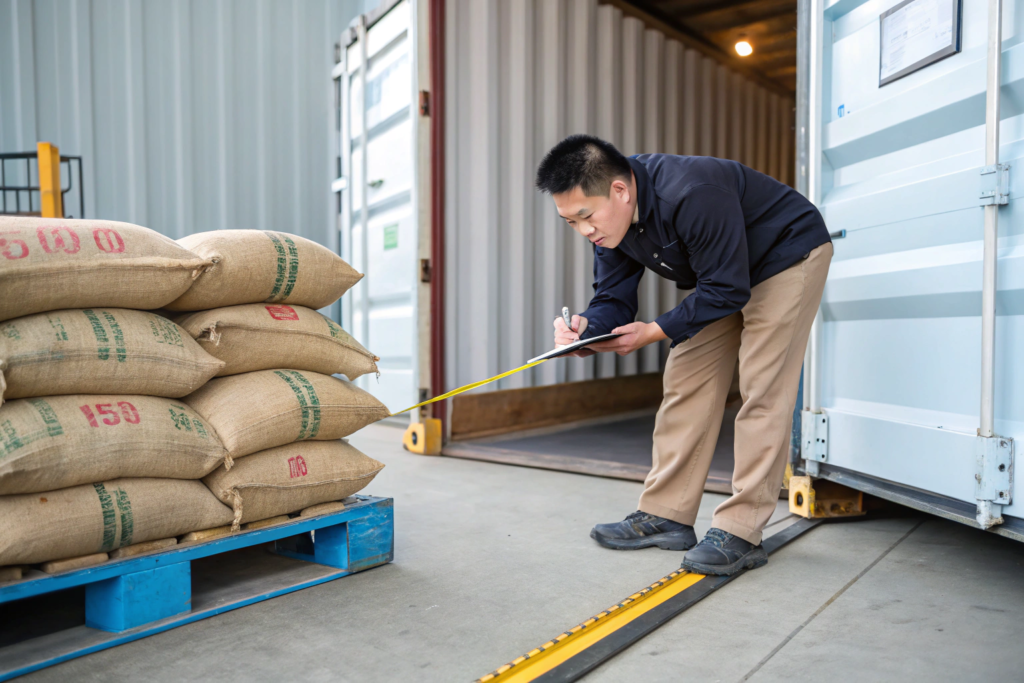
Capacity is not a guess. It is a calculation. You need the container internal dimensions. You need the pallet dimensions. You need the bag weight. You need the weight limit. Then you can calculate the number of pallets and the number of bags. I have seen sellers guess the capacity. They quoted a full container. Then they could not fit the coffee. They had to leave bags behind. The buyer was upset. The seller lost money. So do the math. Then quote.
You calculate container load capacity by dividing the container floor area by the pallet footprint, then checking the height and weight limits. A 20-foot container has about 33 cubic meters of space and a payload of about 28 tons. A 40-foot container has about 67 cubic meters and a payload of about 26 to 28 tons. The weight limit often matters more than the volume for coffee. So calculate both. Then choose the container that fits your load. Do not assume a 40-foot container always holds more weight. It may not.
So, what should you do? Build a simple sheet. List the container type. List the pallet count. List the bags per pallet. List the total weight. Then check the limit. That sheet prevents surprises. It also helps the buyer plan. So build it. Then share it.
How Many Bags Fit in a 20-Foot Container?
A 20-foot container usually fits 10 to 11 pallets. If each pallet holds 60 bags of 60 kg, that is 600 to 660 bags. The total weight is 36 to 39.6 tons. That is too heavy for most roads. So the real limit is the payload. A 20-foot container can carry about 28 tons. So the real load is about 466 bags of 60 kg. That is about 28 tons. The Maersk supply chain page explains container weight and loading rules. The Hapag-Lloyd services page shares service and equipment details. I use these when we plan a load. Weight is the limit. Not volume. So check the payload. Then load.
I also tell buyers to check the road rules at the destination. Some countries have strict truck weight limits. A heavy container may need a special permit. That adds cost. So plan for it. Then avoid a delay.
When Should You Use a 40-Foot Container?
You should use a 40-foot container when your volume is high and your weight is low. For coffee, weight is often high. So a 40-foot container may not hold twice the coffee of a 20-foot container. It may hold only 10% to 20% more. The MSC solutions page shares container and service information. The Freightos index shows freight rate trends. I use these when we compare costs. A 40-foot container may have a lower freight rate per cubic meter. But if you cannot fill it with weight, the saving is small. So compare the cost per ton. Then choose. Do not choose based on size alone.
I also tell buyers to ask about the route. Some ports handle 40-foot containers better. Some routes have more 20-foot capacity. So check the route. Then choose. That is how you optimize the load.
What Prevents Moisture and Damage During Loading?
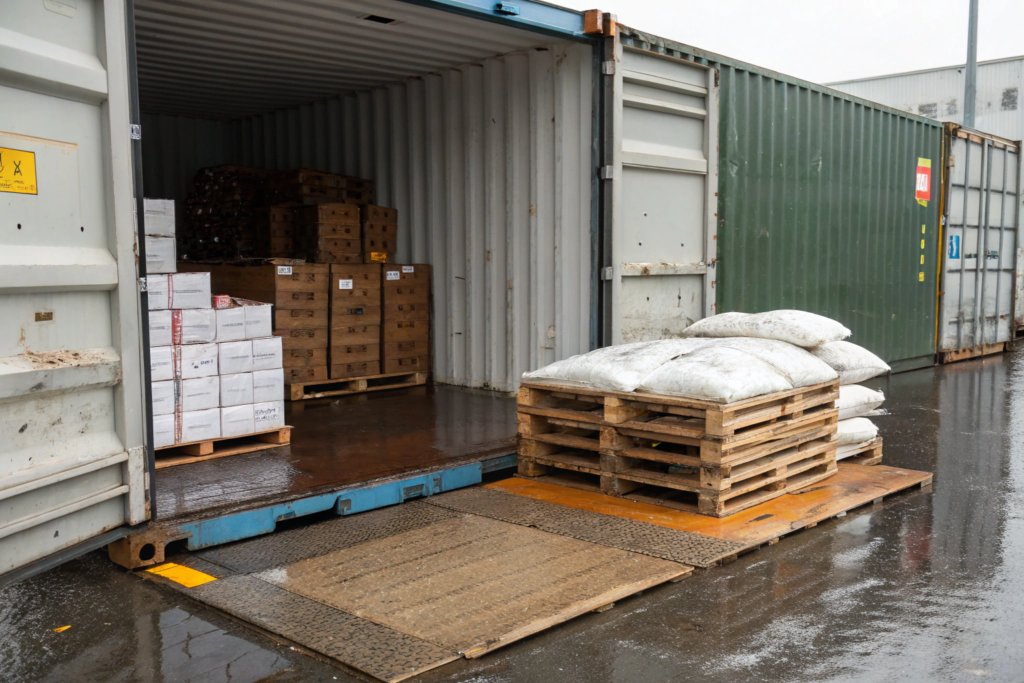
Moisture and damage are the two big risks in container loading. Moisture causes mold. Damage causes weight loss and claims. Both are preventable. I have seen a wet pallet ruin a whole layer. I have seen a shifted load break bags at the door. Both problems cost money. So the loading plan must include moisture control and damage control. Not just space.
You prevent moisture and damage by loading dry coffee, using a clean and dry container, adding a liner when needed, using desiccants, avoiding rain during loading, stacking to a safe height, and bracing the load. You should also check the container floor for wet spots and the roof for leaks. A small leak can drip on the top layer. A wet floor can soak the bottom layer. So inspect the container before loading. Then protect the coffee.
So, what should you do? Make a checklist. Check the container. Check the coffee. Check the liner. Check the seal. Then load. A checklist prevents mistakes. So use it. Then sign it.
How Do Liners and Desiccants Fit into Pallet Plans?
Liners and desiccants fit into the pallet plan by adding a protective layer. A liner goes on the container walls and floor before the pallets. A desiccant goes between the pallets or on top of the load. The liner blocks outside moisture. The desiccant absorbs moisture inside. The Drewry shipping research tracks port and schedule reliability. The World Bank logistics data shows logistics performance by country. I use these when we plan a route. A long route with many handoffs needs more protection. A short direct route needs less. So match the protection to the route. Then load. That is how you keep the coffee dry.
I also tell buyers to ask for the liner type. A cheap liner may not seal. A good liner costs more. But it works. So do not buy the cheapest option. Buy the right option. Then use it well.
How Do You Prevent Bag Damage at the Door?
You prevent bag damage at the door by bracing the load and leaving a small gap. Do not push the pallets hard against the door. Use air bags or wood braces to stop movement. Check the door gaskets. Check the seal. The CBP page explains U.S. customs entry and container rules. The FDA prior notice page explains food import rules. I use these when we prepare our export files. A load that shifts can break bags. A broken bag loses weight. It also creates a mess. So brace the load. Then seal the door. That is how you protect the coffee.
I also tell the team to take photos before sealing. A photo of the braced load. A photo of the seal. These photos are proof. They help the buyer. They help the broker. So take them. Then keep them.
How Do You Train a Loading Team for Consistency?
Training is the difference between a good load and a bad load. I have seen the same container, the same coffee, and the same pallets produce different results. Why? The team. A trained team loads fast and safe. An untrained team loads slow and risky. So training is not a cost. It is an investment. Ron likes this because he wants consistency. Consistent loads mean consistent costs. Consistent costs mean better margins.
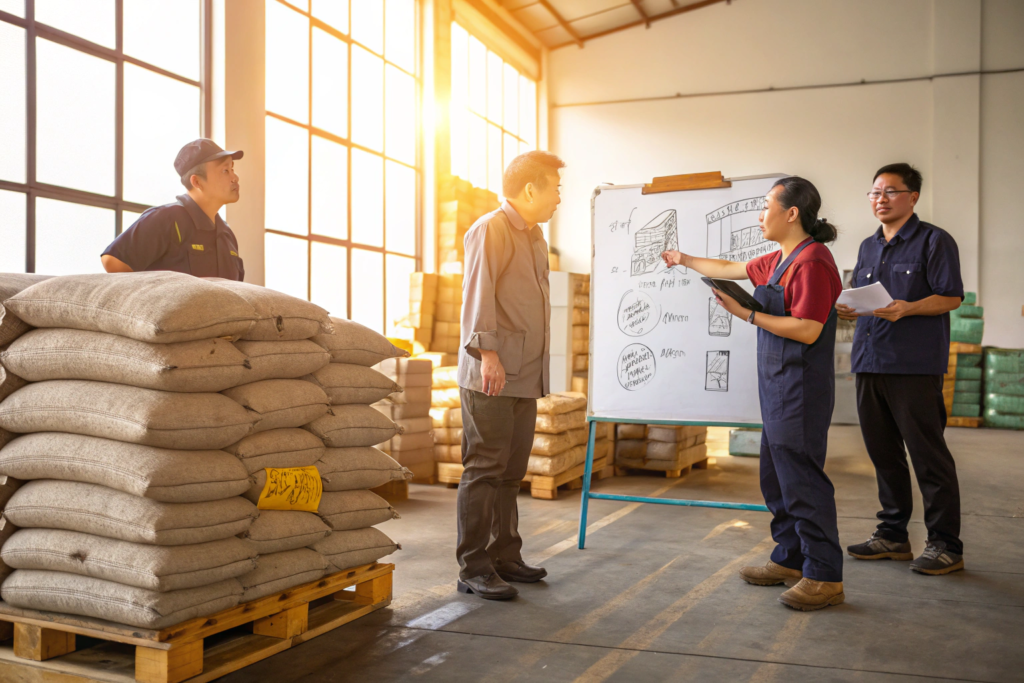
You train a loading team by using a written checklist, short practice sessions, real photos, and weekly reviews. Teach the team the pallet pattern, the stack height, the weight limit, the moisture check, the liner placement, and the seal check. Then let them practice. Then check their work. Then review the results. A simple checklist beats a long lecture. A photo of a good load beats a verbal description. So use simple tools. Then repeat the training every season.
So, what should you do? Start with one topic. Moisture. Then add stacking. Then add bracing. Do not teach everything at once. Slow and steady wins. Then measure the results. That is how you build a strong team.
What Loading Checklist Should Your Team Use?
A loading checklist should include the container number, the seal number, the pallet count, the bag count, the moisture reading, the container condition, the liner placement, the desiccant placement, the stack height, the brace check, and the final photo. The ISO publishes standards for quality and logistics. The WCO explains global customs standards. I use these when we build our own checklist. A checklist is simple. But it works. It prevents small mistakes. It also gives the buyer proof. So use it. Then sign it. Then file it.
I also tell buyers to ask for the checklist. A supplier who uses a checklist is a supplier who cares. A supplier who does not may miss a step. So ask. Then check.
How Do You Measure Loading Performance?
You measure loading performance with four numbers: loading time, pallet count, damage rate, and moisture compliance. Compare the numbers before and after training. If the numbers improve, the training worked. If they do not, change the method. The ICO tracks global coffee trade and quality data. The SCA shares coffee standards and education. I use these when we review our own performance. A scorecard keeps the team focused. It also helps the manager find problems. So build a scorecard. Then review it monthly. That is how you improve.
I also tell buyers to ask for the damage rate. A low damage rate means a good load. A high damage rate means a problem. So ask. Then use the number. That is how you choose a supplier. That is how you protect your coffee.
Conclusion
Optimizing pallet configuration for coffee container loading is not a small task. It affects cost, quality, and delivery. You should choose the right pallet size. You should choose a stable stacking pattern. You should calculate the container capacity by weight and volume. You should protect the coffee from moisture and damage. You should train your loading team. You should use a checklist. You should measure the results. If you do these things, you will fit more coffee, reduce claims, and lower the cost per pound. That is how you stay competitive. That is how you keep buyers like Ron happy.
At BeanofCoffee, we plan every load with care. We own more than 10,000 acres in Baoshan City, Yunnan. We export Catimor, Arabica, and Robusta. We work with large buyers, brand owners, distributors, and trading companies. We can share pallet plans, moisture data, container photos, and loading checklists. If you want a supplier who loads coffee the right way, please contact Cathy Cai at cathy@beanofcoffee.com. She will help you with samples, pricing, specifications, and shipping plans. You can also visit BeanofCoffee to learn more. Let us optimize your next coffee container together.