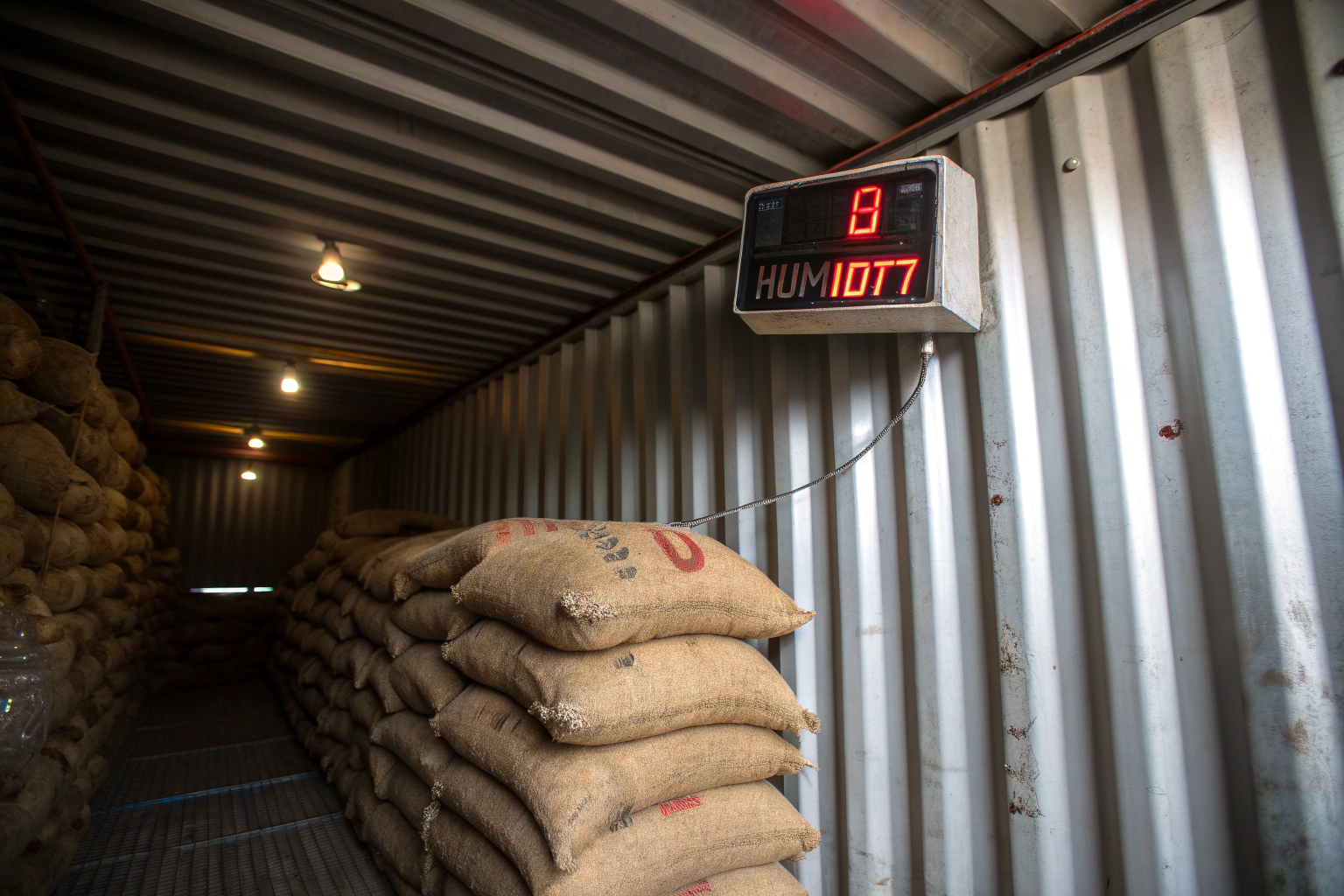
I'll never forget the call. A distributor in Hamburg had been buying from me for two years. Solid guy. Always paid on time. One day, he calls and his voice is different. Flat. He says, "The container arrived. We opened it. The top bags are fine. But the bags in the center? They're covered in white fuzz." He sent me photos. It was ugly. The whole pallet core was compromised. He lost 40% of his shipment. And the worst part? It wasn't his fault. It wasn't really mine either, in the sense that the coffee was perfect when we stuffed it. But it happened somewhere between Shanghai and Hamburg. That's the thing about mold. It's a thief that works in the dark, in the middle of the ocean, when nobody is watching.
You prevent mold growth during long-haul coffee shipments by controlling three variables before the container doors ever close: the initial moisture content of the bean, the water activity inside the packaging, and the ventilation inside the container. Mold requires four things to grow: spores, a food source, the right temperature, and water. You can't eliminate spores or the food source. You can't control the equatorial heat. The only weapon you have is water. Keep the water activity below 0.65, and mold simply cannot germinate.
It sounds simple when you put it like that. But the ocean is a brutal environment. A container leaving Shanghai in July crosses the equator. The external hull temperature can hit 70 degrees Celsius. Inside, it's an oven. If there is any free water in that container, it doesn't just sit there. It moves. It evaporates from the hot spots and condenses on the cold spots. This is called container rain. And it is the number one killer of green coffee quality. So, let me walk you through the protocols I've developed over years of trial and error. These aren't theories. These are the steps that have saved my customers tens of thousands of dollars.
What Is the Safe Moisture Content for Containerized Coffee?
Moisture content is the first domino. If it's wrong, everything else falls apart. You can buy the best GrainPro bags. You can use a container liner. You can add silica gel packs. But if your beans are already too wet when they leave the mill, none of that will save you. The rot starts from the inside.
The universally accepted safe moisture content for green coffee loaded into a sea container is between 10% and 12.5%. The International Coffee Organization sets 13% as the absolute maximum legal limit for export. However, for a long-haul voyage crossing multiple climate zones, you should aim for the lower end of that spectrum—ideally 10.5% to 11.5%. At this level, even if condensation occurs inside the bag, the bean's internal water activity remains low enough to resist fungal germination for the duration of a 30 to 45-day voyage.
What Happens When Coffee Is Above 12.5%?
Above 12.5%, you enter the danger zone. The water molecules inside the bean are no longer tightly bound to the cell walls. They are "free water," available for biological reactions.
When the container heats up in the Gulf of Aden or the Panama Canal, that free water migrates. It moves from the center of the bean to the surface. It creates a humid micro-layer around the seed coat. Mold spores, which are naturally present on all agricultural products, find that moisture. They germinate. They send out hyphae. They digest the bean.
The process generates heat. So the bag gets hotter. Which drives more moisture out. It's a feedback loop. I've measured the core temperature of a pallet that started at 13.5% moisture. After three weeks, it was 15 degrees Celsius hotter than the air around it. It was literally cooking itself. The cupping notes? Musty, sour, fermented. Unusable.
How Do You Measure Moisture Correctly Before Stuffing?
You can't guess. You can't trust a reading from last week. You measure the exact beans going into the container, on the day of stuffing.
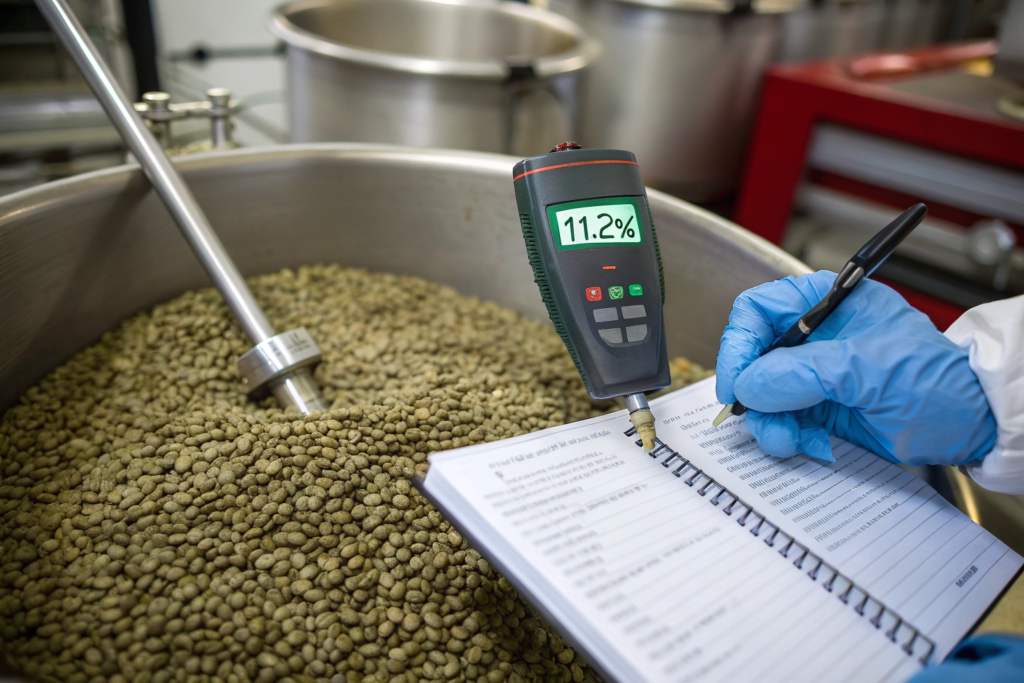
We use a calibrated halogen moisture analyzer. It's not the cheapest tool, but it's accurate to 0.1%. We pull samples from every 20th bag. We don't just take from the top. We use a trier to pull from the center of the bag.
The data is logged. The standard deviation is calculated. If the average is 11.2%, but one bag reads 13%, that bag is pulled. It's quarantined. It might be re-dried. One wet bag in the center of a pallet can wreck the whole stack. This is why we sample every single IBC tote and every single jute bag for our export lots. You can learn more about our specific quality parameters on our Arabica product page.
What Are the Best Packaging Materials to Block Moisture?
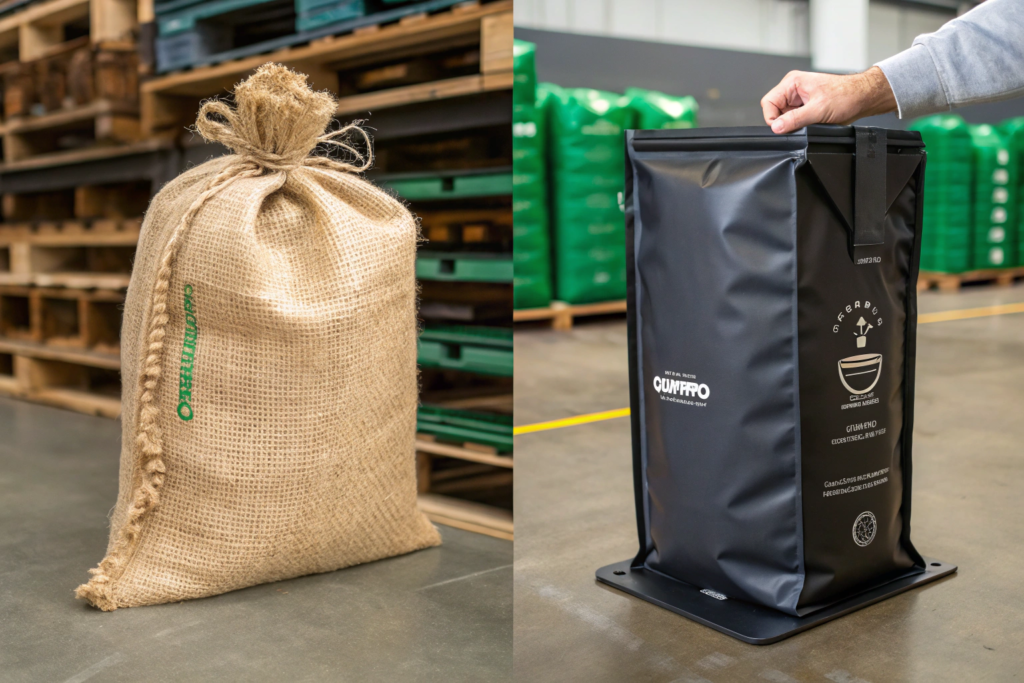
Jute is traditional. It looks romantic. It photographs well for Instagram. But for a long-haul voyage, jute alone is a liability. It breathes too much. It absorbs moisture from the air. It becomes a wet blanket wrapped around your coffee. If you're shipping premium Arabica to Europe or North America, the packaging needs to be a fortress.
The best packaging system for preventing mold is the hermetic GrainPro bag, or an equivalent multi-layer barrier bag, placed inside a standard jute sack. The GrainPro bag is a high-barrier, gas-tight liner that locks the internal atmosphere of the bag. Once sealed, the coffee inside is isolated from the container's humidity swings. It cannot absorb moisture from the air. Furthermore, the beans' natural respiration consumes the oxygen inside the bag, creating a modified atmosphere that is hostile to mold and insects.
How Does a GrainPro Bag Actually Work?
It's a multi-layer polymer. It's not just thick plastic. It's engineered. The inner layer is food-grade polyethylene. The middle layer is a barrier layer, often EVOH or aluminum-based, that blocks gas transfer. The outer layer is a puncture-resistant woven fabric.
When you fill the bag with dry coffee and seal it with a zip tie, the outside world is gone. The relative humidity outside the bag can spike to 90% during a tropical squall. It doesn't matter. The inside of the bag stays at whatever it was when you sealed it—ideally around 55% to 60% RH.
The beans respire. They consume oxygen and release carbon dioxide. After a few days, the atmosphere inside the bag is mostly CO2. Mold needs oxygen to grow. The GrainPro bag passively suffocates any potential mold spore. The GrainPro company has published extensive research on this hermetic effect.
Do You Still Need a Container Liner?
A container liner is an additional layer of defense. It's a giant plastic sheet that lines the entire inside of the steel container. It covers the floor, the walls, the ceiling. It creates a box within a box.
Even with GrainPro bags, I use a container liner for high-value, ocean-freight orders. Why? Because container condensation doesn't just soak the bags. It can rust the container ceiling. Rust flakes can fall onto the bags. Moisture can seep up from the wooden floor.
The liner prevents the bags from touching the cold steel walls. If the container sweats at night, the moisture runs down the liner, not onto the coffee. It's a small cost—maybe $50 to $80 per container—but it protects against the "container rain" phenomenon. For LCL shipments, where your pallets share space with other cargo that might be off-gassing moisture, a pallet cover is the equivalent. Never ship loose bags in a shared container.
Why Does Container Ventilation Matter for Humidity Control?
Ventilation is a double-edged sword. You want fresh air to stop heat buildup. But you don't want moist sea air pumping into the container. A lot of old-school shippers think you should just open the vents fully. That's a mistake. You need to manage ventilation based on the voyage route and the dew point.
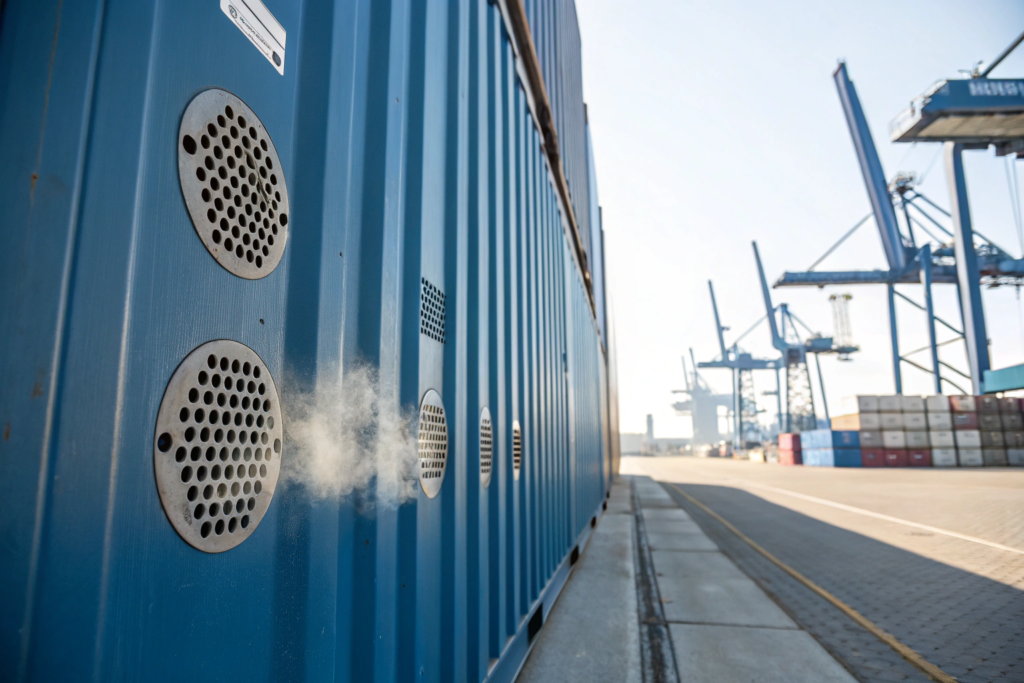
Proper container ventilation prevents the "greenhouse effect" inside the container, but only if the outside air is drier than the inside air. Many containers have small adjustable vents near the top corners. These allow hot, rising air to escape. But during a monsoon, these same vents can suck in salt-laden, humid ocean air. The smart move is to tape the vents shut for tropical crossings and only open them when the ship enters cooler latitudes, or to use a "dry box" container with a dehumidifier unit.
What Is the "Container Rain" Phenomenon?
Imagine a metal box sitting in the sun all day. The air inside heats up. Hot air can hold a lot of water vapor. That water vapor comes from the beans, the jute, the wood pallets, even the air itself.
Then the sun goes down. The steel walls cool rapidly. The air inside touches the cold walls. It reaches its dew point. The water vapor condenses into liquid droplets on the ceiling. It rains inside the container.
If the vents are open at night, this moist air is replaced with more moist air from outside. The cycle repeats. Every night, more water. If the vents are closed, the trapped air eventually reaches an equilibrium. The key is to avoid the daily breathing cycle. We advise our logistics partners to keep vents closed during tropical transit and to schedule stuffing during dry, cool morning hours when the ambient humidity is lowest.
Should You Use Desiccants Inside the Container?
Desiccants are absorbent materials that capture water vapor from the air. Silica gel, calcium chloride, clay. They're the little packets you find in shoe boxes. For a container, you use industrial-scale desiccant poles that hang from the ceiling.
I'm a fan of desiccants, but they are not a fix for wet beans. They are a safety net for a dry container. If you hang ten calcium chloride poles in a container, they can absorb several liters of water over a voyage. They reduce the absolute humidity of the trapped air.
We place them near the doors and along the ceiling, where condensation forms first. The Container Owners Association recommends desiccants as part of a multi-pronged moisture control strategy. Don't rely on them alone. They can become saturated and stop working.
How Do You Inspect a Coffee Shipment for Mold Upon Arrival?
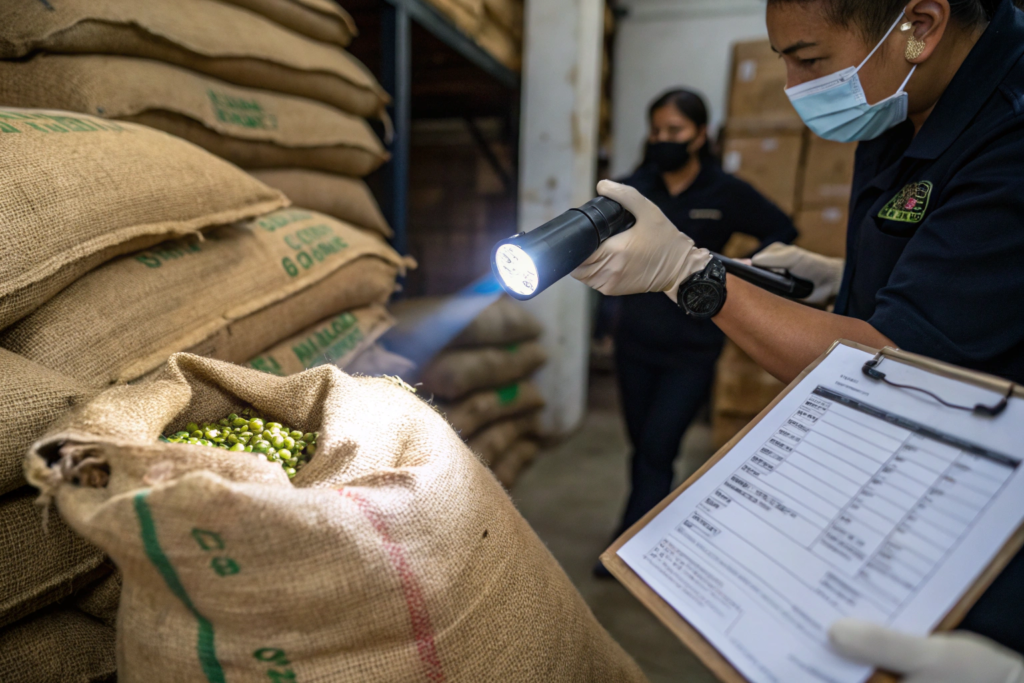
The coffee has arrived. The container doors swing open. Your first instinct is to look at the bags right in front of you. Don't. The bags by the door have been breathing the outside air for the last few days. They're usually fine. The problem is hiding in the dark, in the core.
A proper mold inspection begins with thermal profiling of the container walls before opening, followed by a core sampling of the center pallets. You are looking for three things: visible mycelium on the beans, a musty "basement" odor upon opening a bag, and a caked, clumpy texture in the beans that indicates past moisture. You must also probe the center of the pallet with a moisture meter. If the reading is more than 1% higher than the pre-shipment certificate, water migration has occurred.
What Are the First Signs of Mold Damage?
Sometimes you see it right away. A white or blue-green powder on the green beans. That's the fruiting body of the fungus. It's advanced.
But early damage is subtler. Open a sample bag from the center pallet. Stick your nose in. Do you smell a damp, earthy, mushroomy note? Fresh green coffee smells grassy and clean. Moldy coffee smells like a wet basement.
Another test: the squeeze. Take a handful of beans from the center. Squeeze them tight. Healthy beans are hard and separate when you open your hand. Wet, mold-damaged beans feel soft. They clump together. They might even feel warm. If they feel warm, that's biological activity. Reject the pallet immediately.
How Do You Handle a Rejection or Claim?
If you find mold, stop. Take photos. Take videos. Document the container number, the seal number, and the bag markings. Call your cargo surveyor immediately. Do not move the coffee until they arrive.
You need an independent survey report. This is the document that triggers the insurance claim. The surveyor will take samples, measure moisture, and determine the cause. Was it inherent vice? Or was it a shipping accident?
If the pre-shipment certificate showed 11% moisture and the arrival shows 15%, the water came from somewhere. Maybe the container leaked. Maybe the liner was torn. That's a shipping line liability. If the pre-shipment moisture was already 14%, that's the exporter's fault. The survey report decides who pays.
I've been through this process. It's painful. But if you've done the pre-shipment work correctly, the evidence is on your side. Always buy cargo insurance. The small premium is nothing compared to a total loss. Our logistics team works with experienced marine surveyors at all major ports. We can guide you through the claims process if the worst happens.
Conclusion
Mold on a long-haul voyage is not an act of God. It's a failure of preparation. It starts at the drying patio. It continues through the choice of packaging. It depends on ventilation management. And it ends with a careful inspection at the destination. Every step is controllable.
You need the beans at 10.5% to 11.5% moisture. You need a hermetic bag. You need a container liner. You need to think about dew points, not just temperatures. If you control the water, you control the mold. It's that straightforward.
At BeanofCoffee, I've made mold prevention a core part of our export service. It's not an afterthought. It's written into our Standard Operating Procedure. Because I never want to get another call from a friend in Hamburg telling me his shipment is ruined.
If you're bringing in a container and you're worried about the voyage conditions, let's talk. We can walk you through our packing list, our moisture logs, and our recommended container prep steps.
To get a pre-shipment moisture data sheet for our current lots or to discuss packaging options for your specific route, email Cathy Cai directly.
Email: cathy@beanofcoffee.com. Don't let your coffee sweat its way across the ocean.