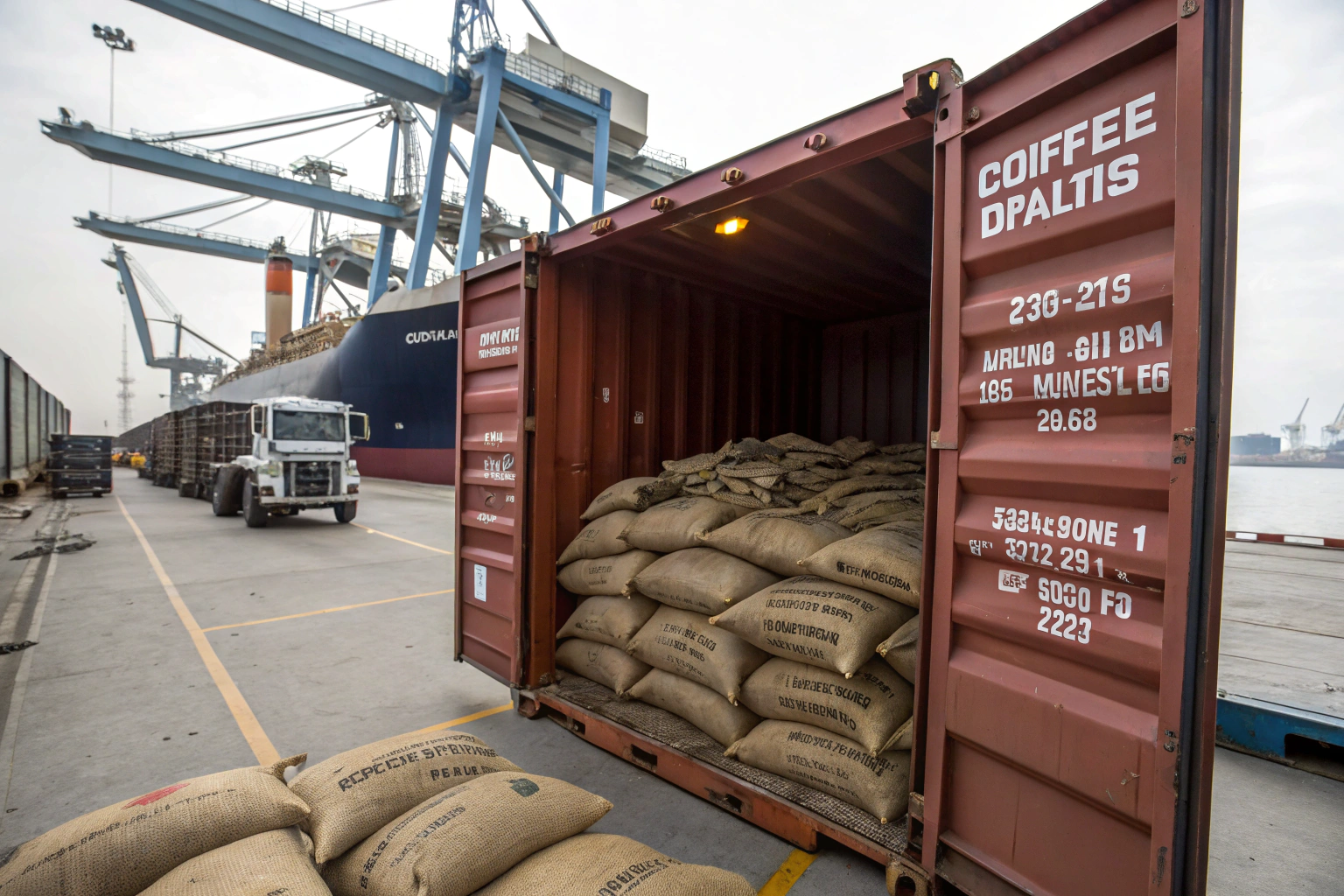
I almost signed a freight contract that would have cost me an extra $8,500. It was for a single container from Shanghai to Long Beach. The broker sounded confident. The rate looked "market standard." I asked for a breakdown. Buried in the fine print was a "congestion surcharge" for a port that had zero congestion that month. A ghost fee. I challenged it. They removed it. That one phone call saved me eight grand. Here is the thing about coffee logistics costs. Nobody will volunteer to lower them for you. You have to know where to look.
Reducing logistics costs for coffee imports comes down to four specific levers: optimizing container utilization through dense loading, locking in shipping rates during the off-peak season, restructuring your incoterms to control inland freight, and eliminating hidden accessorial charges. These are not vague suggestions. They are line-item strategies that can reduce your total landed cost by 15% to 25% per container.
I have shipped hundreds of containers from our 10,000-acre farm in Baoshan to the U.S. and Europe. I have lost money on logistics. I have learned hard lessons. The good news? Coffee is actually an easy product to ship cheaply. It is dense. It is shelf-stable. It does not need refrigeration. That gives you a lot of room to negotiate and optimize. Let me show you exactly how I think about these costs now, using real examples from BeanofCoffee.
How Can You Maximize Container Utilization for Green Coffee?
Last year, one of our long-term buyers in Texas asked me to switch from bulk bags to vacuum-packed boxes. I was puzzled. He said, "I can fit 20% more coffee in the same container this way." He was right. The standard GrainPro bulk liner is easy. You just pour the beans in. But it wastes space. The liner bulges. There is dead air at the top. With vacuum-packed, flat-stacked boxes, you use every cubic inch. His per-pound freight cost dropped by almost eighteen cents. That adds up fast.
Maximizing container utilization means packing green coffee to achieve the highest possible net weight per cubic meter without damaging the beans or breaching weight limits. This reduces the freight cost allocated to each pound of coffee. The goal is to cross the threshold of 21 metric tons net in a 20-foot container for bulk, or 17 metric tons net in a 20-foot for palletized boxed goods.
A container does not care if it carries 15 tons or 21 tons. The ocean freight invoice is roughly the same. So, your mission is simple. Cram it safely. Fill it legally. Push the load to the limit. Let's break down the two main methods.
What Is the Real Cost Difference Between Bulk Bags and Vacuum Boxes?
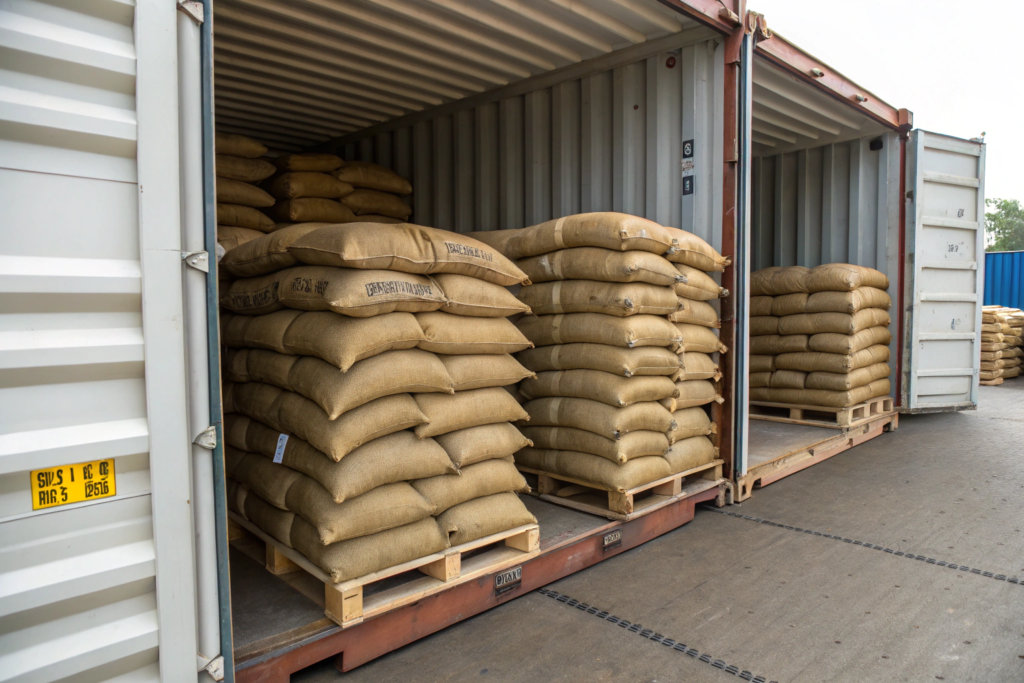
Let me give you a concrete comparison from our own export records at BeanofCoffee. A 20-foot container with a standard GrainPro bulk liner holds about 19 to 20 metric tons of green Arabica. That is roughly 42,000 pounds. With high-quality vacuum-packed boxes stacked on pallets, you can only fit around 16 to 17 metric tons. So, you lose about 3 tons of coffee space. That sounds terrible, right? Wrong.
You have to look at the final landed cost, not just the gross weight. Vacuum boxes eliminate the need for a grain liner. They speed up unloading at the destination warehouse. A bulk container takes 4 hours to unload. A palletized container takes 30 minutes. Warehousing labor in Rotterdam or Los Angeles is expensive. The cost of four hours of labor often exceeds the freight cost of the "lost" 3 tons. Plus, vacuum boxes preserve freshness better for long-term storage. The buyer can stack them directly on their shelf.
Run a simple math. If ocean freight is $3,500 for the container, and you ship 20 tons bulk, the freight cost is $0.175 per pound. If you ship 17 tons boxed, the freight cost is $0.206 per pound. You paid 3.1 cents more. But you saved $500 in warehouse labor and reduced moisture re-absorption risk. For a specialty roaster, the box is usually the smarter overall value.
How Do Pallet Stacking Patterns Affect Your Shipping Invoice?
This is a detail that is incredibly boring. And incredibly profitable. A standard pallet is 1.2 meters by 1.0 meter. If you stack your boxes sloppily, with overhang, you reduce the number of pallets that fit in the container width. Two sloppy pallets cannot sit side by side. You lose an entire row of pallets. That is a 10% loss right there.
We use a "pinwheel" stacking pattern at our Baoshan packing facility. It interlocks the boxes. It prevents overhang. It maximizes floor space. We also use slightly shorter pallets for the top tier, allowing the final boxes to slide under the curved roof of the container. This is not just theory. Research on unit load optimization shows that proper pallet configuration can reduce freight costs by 5-7%.
Also, look at your box specs. A box that is 1 cm too tall might mean you can only stack 5 layers instead of 6. That 1 cm just cost you a sixth of your container capacity. Standardize your packaging to the container's internal dimensions. The internal height of a dry container is 2.39 meters. Subtract the pallet height. Divide by the box height. Make sure it divides evenly. Fractions are your enemy. Fractions are wasted air space.
When Is the Best Time to Negotiate Shipping Contracts for Coffee?
A friend who imports Brazilian coffee always books his annual shipping contract in December. He thinks he is being smart, locking in next year's rate early. Last year, I waited until late February. I got a rate $800 lower than his for the same Shanghai-to-Hamburg route. He was furious. Not at me. At himself. The reason is simple. After Chinese New Year, export volumes crash. Factories are idle. Carriers are desperate for cargo. That is when you strike.
The best time to negotiate long-term coffee shipping contracts is during the demand troughs. The two biggest global windows are just after Chinese New Year in February, and during the European summer lull in August. During these periods, spot rates drop, and carriers are willing to lock in more favorable fixed terms to fill their vessel allocations.
Shipping is a game of psychology and cycles. The carrier knows you need to move your coffee. But they also have a physical, giant metal box that must move across the ocean. An empty slot on a vessel is lost revenue forever. Find the moment when they fear that empty slot. That is your leverage point.
How Do Post-Holiday Demand Slumps Create Your Negotiation Window?
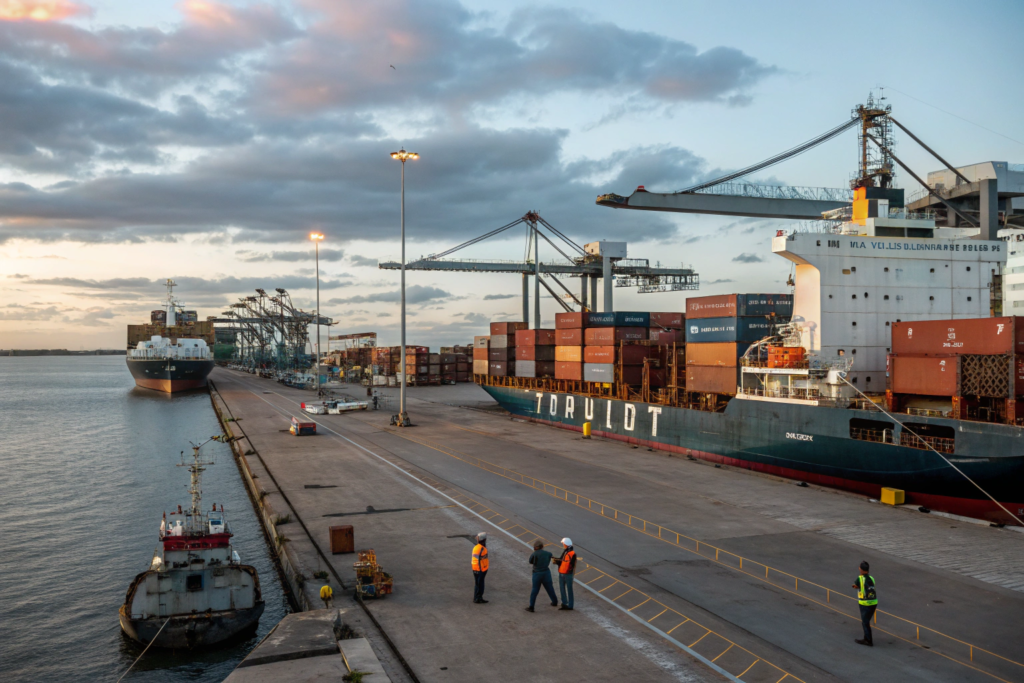
Factories in China shut down for two to three weeks during the Lunar New Year. Nothing moves. Export bookings fall off a cliff. When the factories re-open, it takes a week or two to ramp up. Vessels still sail, though. They sail half-empty. A half-empty ship is a nightmare for a shipping line. They start cutting rates just to get some money on the books.
I always set a calendar reminder for the 15th of February. That is the day I email my freight forwarders and ask for a "Q2 fixed rate agreement." The carriers call these "NAC" contracts, which stands for Non-Adjustable Contract. They lock in the base ocean freight for three months. In late February, carriers are humbler. They know the pre-Chinese New Year rush is over. They accept lower NAC rates. The Freightos Baltic Index usually confirms this seasonal dip.
A similar window opens in Europe in August. Everyone is on holiday. Nobody is ordering coffee aggressively. If you can send an email in the first week of August, you can secure spot rates that are extremely competitive. It requires discipline. You need to plan your purchasing calendar around these windows. But the savings are worth the slight schedule adjustment.
Should You Use a Freight Forwarder or a Direct Carrier Contract?
I used to think direct carrier contracts were the holy grail. Cut out the middleman. Pay less. I was naive. A direct carrier like Maersk or CMA CGM wants volume commitments. They want you to promise 50 containers a year. If you ship 10 containers? You are a small fish. Their rates for small shippers are actually higher than what a good freight forwarder can get you.
A freight forwarder aggregates many small shippers. They combine our 10 containers with another company's 40 containers. Together, they approach the carrier with a 50-container commitment. They get the volume discount. They pass some of it to you. At BeanofCoffee, we use a hybrid model. For our regular Hamburg route, we use a dedicated forwarder who crushes the rate. For a complex route to a smaller Australian port, we sometimes go direct because the forwarder's network is weak there.
The key is to benchmark. Do not trust one forwarder. Blind copy three forwarders on the exact same rate request. Same container size. Same destination. Same dates. Watch their responses. The lowest bid might lack reliable vessel space. The highest bid might be a lazy quote. The middle bid is usually the realistic one. Use the competition to make them match the lowest realistic price. This simple practice saves us at least $200 per container, every single time.
How Can Incoterms Optimization Lower Your Hidden Import Fees?
An Italian buyer once asked me to ship under DDP (Delivered Duty Paid) terms. He wanted a single price. Door-to-door. Easy for him. I quoted a price that included a 12% buffer for unknown destination charges. He was shocked by the cost. I told him, "You are not paying for coffee. You are paying for my anxiety." He switched to FOB. He hired his own customs broker in Genoa. His final cost dropped by 9%. He had control again.
Optimizing incoterms lowers hidden import fees by clearly separating the supplier's responsibility from the buyer's control over destination handling. When a buyer takes over at FOB or FAS, they can choose a low-cost inland trucking company and a bonded warehouse they trust. This cuts out the opaque markups that an exporter typically adds to CIF or DDP quotes.
Incoterms are not just shipping jargon. They are a boundary of power and cost. The wrong term gives your supplier a blank check on destination charges. The right term gives you visibility and control.
Why Might FOB Be Cheaper Than CIF for an Experienced Importer?
I see this mistake constantly. New importers are scared of logistics. They demand CIF (Cost, Insurance, and Freight). They think the seller will handle everything smoothly. The seller buys insurance. The seller books the vessel. But the seller also buys insurance that benefits the seller, not you. And the seller books a vessel that departs a day later, saving them a few hundred bucks, but costing you a week in transit.
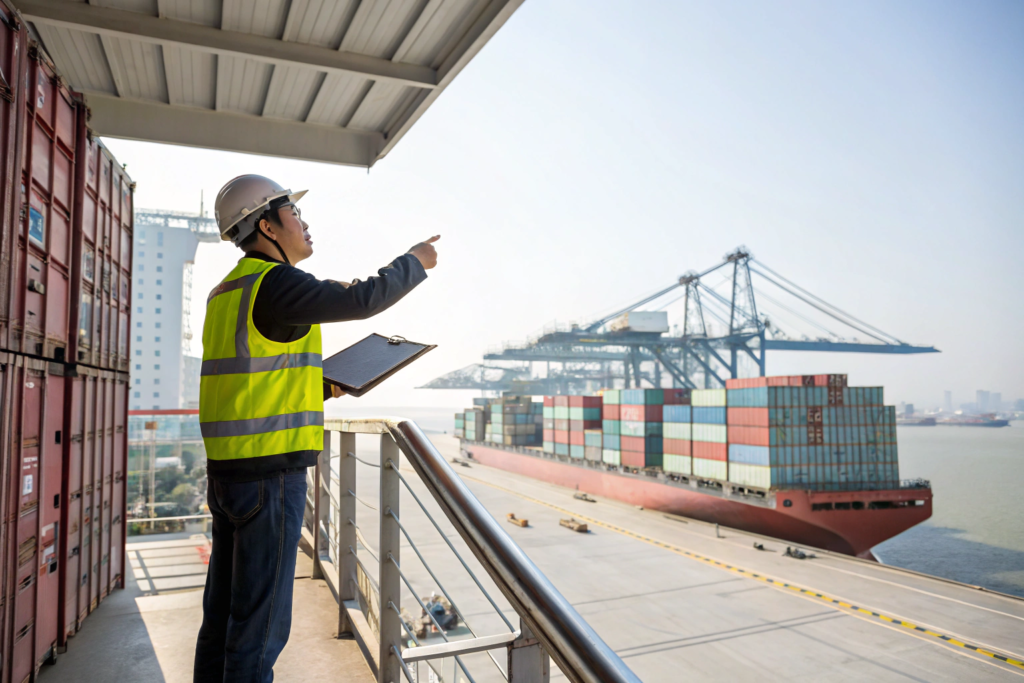
With FOB, the seller hands the container to the vessel at the port of Shanghai. Their job is done. Your job starts. You control the freight and insurance. You can buy comprehensive marine insurance from a broker in your own country for half the cost of the minimal policy the exporter would buy. You can choose the fastest vessel, not the cheapest. The International Chamber of Commerce guidelines on incoterms make this distinction clear.
For a coffee importer moving 5 to 10 containers a year, mastering FOB is the single biggest cost-saving skill. You need a trusted freight forwarder on your side. Once you have that, you remove the exporter's freight profit margin from your equation. That margin was always invisible, buried in the CIF price.
How Do You Minimize Destination Terminal Handling Charges (THC)?
Terminal Handling Charges are the ugliest surprise on a logistics invoice. The ship arrives. The port needs to lift the container off the vessel, move it to the stack, and then load it onto a truck. Each of those movements has a fee. In Los Angeles, THC can be $450. In Rotterdam, maybe $200. These fees are non-negotiable with the port itself. But they are absolutely negotiable in how you deal with them.
The secret is to consolidate your service providers. Use a freight forwarder who also offers destination customs clearance and trucking. They get volume discounts on THC that you cannot get as an occasional importer. Often, they will include THC in the door-delivery rate at a discounted, blended price.
Another tip is to check for "free time" at the destination port. Standard is 4 to 5 free days before storage fees kick in. If your delivery schedule is tight, negotiate for 7 or 10 free days upfront. The port will charge maybe $50 a day after that. If your trucker has a delay, those detention charges snowball. Pre-negotiated free time costs nothing but requires asking. Most importers just accept the default. Never accept the default. Ask for more free days. The worst they can say is no.
Which Quality-Related Logistics Decisions Prevent Costly Rejections?
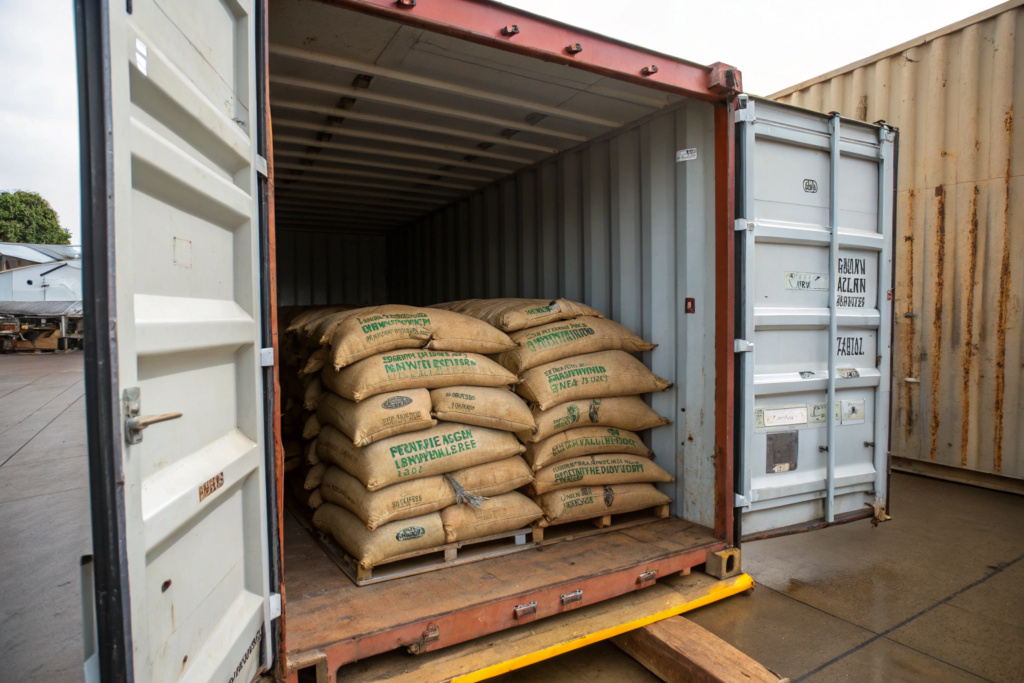
A container of our natural-processed Arabica arrived in Australia in February. The buyer opened the doors. The top layer of bags was sweating. Moisture rings on the kraft paper. The coffee had not been damaged by the ocean. It was damaged by the lack of a liner bag in a cold-to-hot climate shift. I had to pay for resorting and drying. It cost me $2,000. The next shipment, I used a GrainPro liner. Zero issues. A $150 liner saved me $2,000.
Quality-related logistics decisions reduce the probability of a cargo claim. Investing in barrier packaging, pre-cooling containers in hot seasons, and using liner bags for ocean freight directly eliminates the root causes of mold, moisture re-absorption, and taint. A rejected container erases your entire logistics budget. Prevention is a line item with a 1000% return on investment.
Do not think of liners and desiccants as costs. Think of them as insurance policies that actually work. Standard marine insurance covers total loss. It rarely covers "quality degradation due to moisture." That is your problem. So, you have to prevent it.
How Do Liner Bags and Desiccants Prevent Moisture Damage at Sea?
A shipping container is a metal box. It breathes. During a 30-day voyage from China to Europe, the temperature swings by 20 degrees Celsius. The air inside expands and contracts. The wood pallets release moisture. The green coffee beans, which are hygroscopic, soak up that damp air like a sponge. This is called container rain.
A GrainPro liner bag is physically sealed. It cuts off the coffee from the container's internal environment. It does not care if the walls of the box are dripping with sweat. The beans stay in their own dry, hermetically sealed bubble. But the liner itself can sweat on the outside. That is why we also hang desiccant poles inside the liner. They absorb any residual humidity.
The GrainPro company's documentation explains the science of this barrier technology. For our Robusta shipments, which are denser and a bit hardier, we sometimes skip the full liner to save cost. We use just the desiccant poles and a top cover. But for premium Arabica, the full liner is mandatory. The cost is about $150 for the liner and $60 for the desiccants. Total: $210. Losing a 20-ton container of $3.00/lb Arabica? That is $132,000. The math is not even close.
When Should You Use a Reefer Container Instead of a Dry Container?
Reefer containers are expensive. Sometimes double the cost of dry freight. I almost never recommend them for standard green coffee unless the transit crosses the equator during a heatwave. Green coffee is resilient. It does not need to be kept at 15 degrees Celsius like fresh fruit. But there is one specific scenario where a reefer makes sense.
If you are shipping a super-premium micro-lot, like a Geisha or an anaerobic natural scoring 90 points, the volatile aromatic compounds are extremely sensitive to heat spikes. A dry container sitting on the deck of a ship in the South China Sea can hit 50 degrees Celsius inside. That heat accelerates the aging process. The coffee can lose its bright, floral top notes in just two weeks.
For a 10-bag pallet of Geisha worth $15,000, paying an extra $2,000 for a reefer set to a stable 18 degrees Celsius is completely rational. The buyer gets a coffee that tastes like it just left the farm. Not like it spent a month in a sauna. However, for a standard 83-point Yunnan Catimor, the dry container is perfectly fine. The chocolate and nut notes are stable. Do not over-engineer your logistics. Save the reefer for the jewels, not the workhorses.
Conclusion
Reducing your coffee logistics costs is not about finding a magic freight rate. It is about a series of smart, specific decisions. Start with the container. Pack it so tightly that you are shipping coffee, not air. Choose your time. Negotiate when the carriers are hungry, right after the holidays, and use forwarders who fight for your business. Fix your terms. Move from CIF to FOB and take control of your own destination charges. Protect your cargo. Spend the small money on liners and desiccants so you never have to write off a full load.
These strategies come from real containers, real mistakes, and real money saved. Our farm at BeanofCoffee is not just a coffee producer. We are an export engine. We think about the container journey from the moment the cherry is picked. We have to. Our reputation arrives at your roastery with that coffee.
If you want a partner who actively works to keep your landed costs low, let us talk. We can build a shipping plan that fits your budget. For a direct quote on FOB Shanghai or a custom logistics plan for your next order, contact Cathy Cai at cathy@beanofcoffee.com. Give her your specs and your destination port. She will show you how we squeeze the waste out of the supply chain.