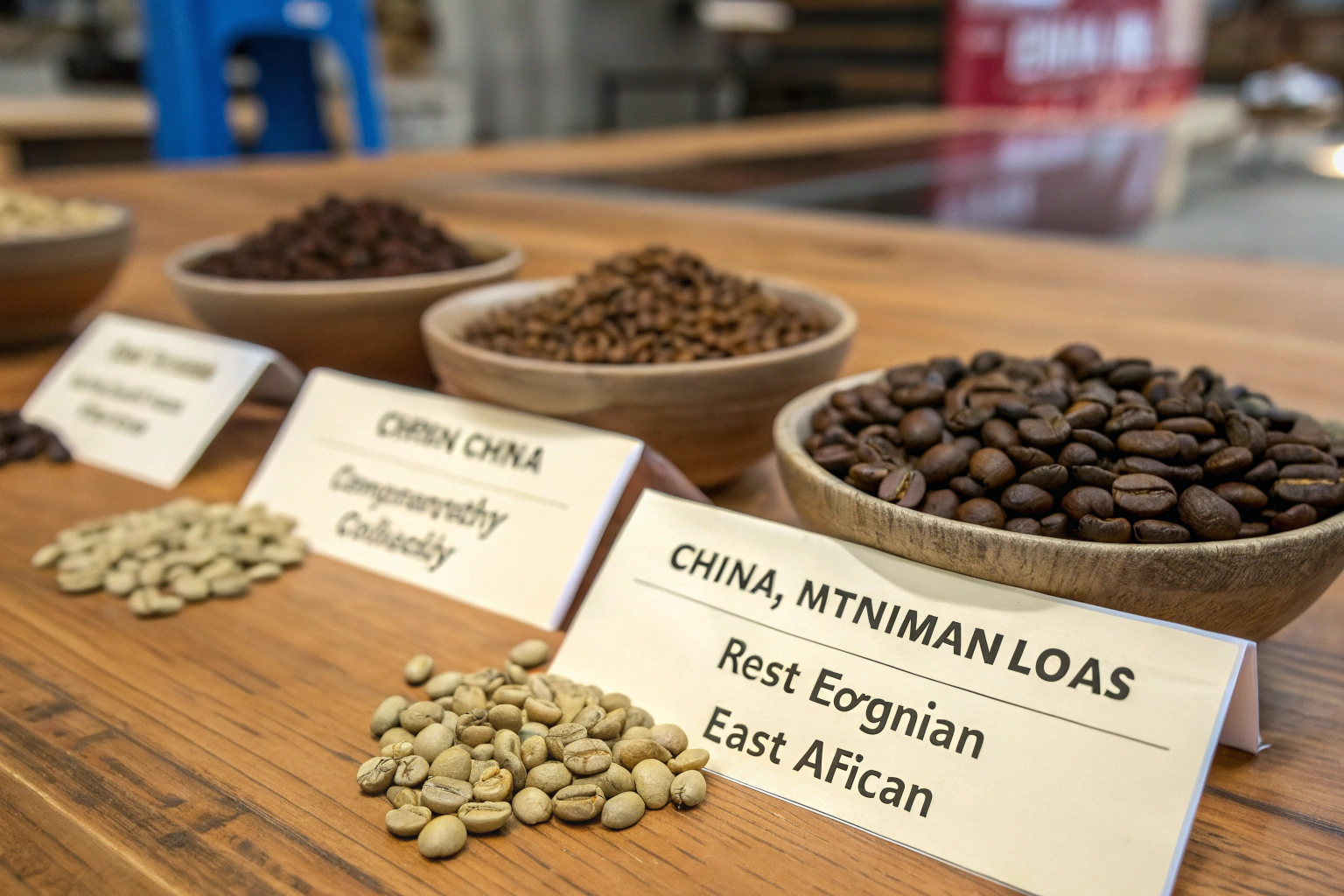
Two years ago at a trade show in Berlin, a German roaster picked up our Yunnan Catimor. He smelled it. He put it down. Then he said something that stuck: “Chinese coffee tastes thin.” I did not argue. I just brewed him a fresh pour-over from our high-altitude Baoshan lot. He took one sip. Looked at the cup. Looked at me. Bought a container three months later. That was not luck. It was a moment that shows a bigger change. European roasters are not just “trying” Asian Arabica anymore. They are building their menus around it. The old bias is breaking down. Fast.
European roasters are switching to Asian Arabica because it delivers a specific combination of competitive FOB pricing, improved logistics reliability, and a new flavor profile that adds complexity to traditional blends. Coffees from China, Myanmar, and Laos now rival East African offerings in cleanliness and sweetness, but with a softer acidity that works perfectly for espresso-heavy markets like Italy, France, and Germany. This is a structural shift, not a passing trend.
So, why now? Is it just about saving a dollar per pound? Maybe partly. But that answer is too simple. Over the next few minutes, I want to walk you through the real reasons. This is what I tell European buyers who contact BeanofCoffee for the first time. The conversation usually starts with price. But it ends with something deeper: trust, consistency, and a story their customers have never heard before.
How Does Asian Arabica Pricing Compare to Traditional Origins?
I remember a call with a buyer from Amsterdam. He was paying $4.20 per pound FOB for a washed Colombian. Good coffee. Reliable. But his margin was getting crushed by rising shipping costs and a strong dollar. I offered him our washed Yunnan Arabica at $2.80 FOB. Similar cup profile. A bit softer acidity, yes. But for his espresso blend, that softness was actually better. He hesitated. “The price is great,” he said. “But is it too good to be true?”
Asian Arabica, particularly from China, trades at a significant discount to Colombian or Guatemalan equivalents. This is not a quality discount. It is a market access discount. The specialty coffee world has simply not priced in the efficiency of China’s coffee supply chain yet. This pricing gap is the single biggest profit lever available to a European roaster right now.
The reason is straightforward. Production costs in Yunnan are lower than in Antioquia. Labor is efficient. Fertilizer is local. Logistics to Shanghai port are fast and cheap. This translates to a FOB price that can be 30% lower for a comparable cup score. And when you add the current shipping crisis? A shorter transit time from Shanghai to Hamburg versus Cartagena to Hamburg means less exposure to freight rate volatility.
What Is the True FOB Price Difference for a Container of Yunnan Arabica?
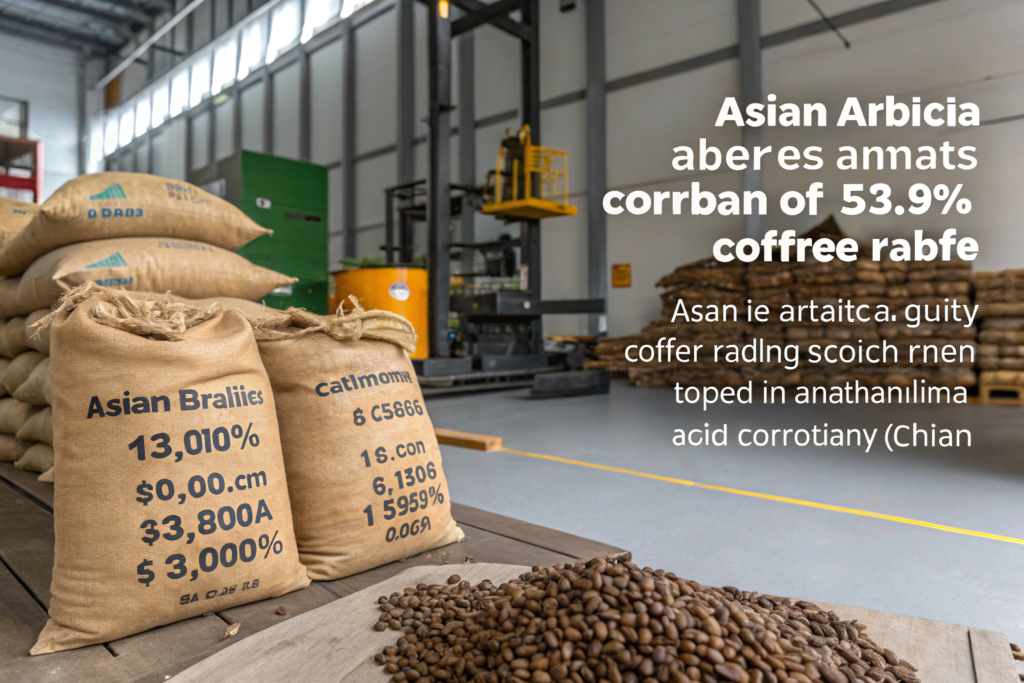
Let’s talk real numbers. Not theoretical ones. A full 20-foot container of washed Arabica from Yunnan, grade 1, screen 17/18, cupping at 83 points. You can secure that right now for roughly $2.60 to $3.00 per pound FOB. The same spec from a mid-sized Colombian cooperative? You are looking at $3.80 to $4.50 FOB. That is a delta of over $1.20 per pound. On a 40,000-pound container, that is $48,000 saved. Straight to your bottom line.
But here is the kicker. The European roaster is not just buying cheaper coffee. They are buying future stability. The Colombian peso fluctuates wildly against the dollar. The Chinese Renminbi? It is managed with an iron grip. Our pricing at BeanofCoffee stays stable for a quarter. Sometimes longer. You can budget. You can plan. You cannot do that with a Brazilian contract pegged to the daily C-market swing.
A hidden detail here is the payment terms. Many Colombian suppliers demand 30% upfront. With a strong, centralized Chinese export company, you can often negotiate on Letter of Credit at sight, or even 30% T/T against scanned documents. This is not just price. It is cash flow. And cash flow is king in the roasting business.
How Do Asian Logistics and Tariff Costs Impact the Final Landed Price?
You know, one thing that surprises my European clients is the freight math. They assume China is far away. So, it must be more expensive to ship. That logic is backwards. The sea route from Shanghai to Hamburg is roughly 30 days. From Santos, Brazil to Hamburg? Also about 30 days. But the Shanghai route has more vessel availability. More competition among carriers. That keeps freight rates lower and more consistent.
Then we add the tariff question. European Union import duties on green coffee from China are zero. Let me repeat that. Zero. Under the EU’s Generalized Scheme of Preferences (GSP), many agricultural imports from developing nations get duty-free access. Coffee from Colombia or Ethiopia? Often the same deal. So, there is no tariff penalty for choosing China. But there is a logistics win.
The port infrastructure matters too. Shanghai Yangshan Deep Water Port is a machine. It handles mega-vessels. Loading delays are rare. I have seen Colombian ports shut down for a week due to strikes. I have seen a drought in the Panama Canal add two weeks and a $1,500 surcharge to a container. Diversifying to an Asian supply chain is a physical hedge against the chaos in Central America. A study on shipping route efficiency highlights this vulnerability. Your coffee does not care about politics. It just needs to arrive on time.
What Is Driving the Quality Improvement in Asian Arabica?
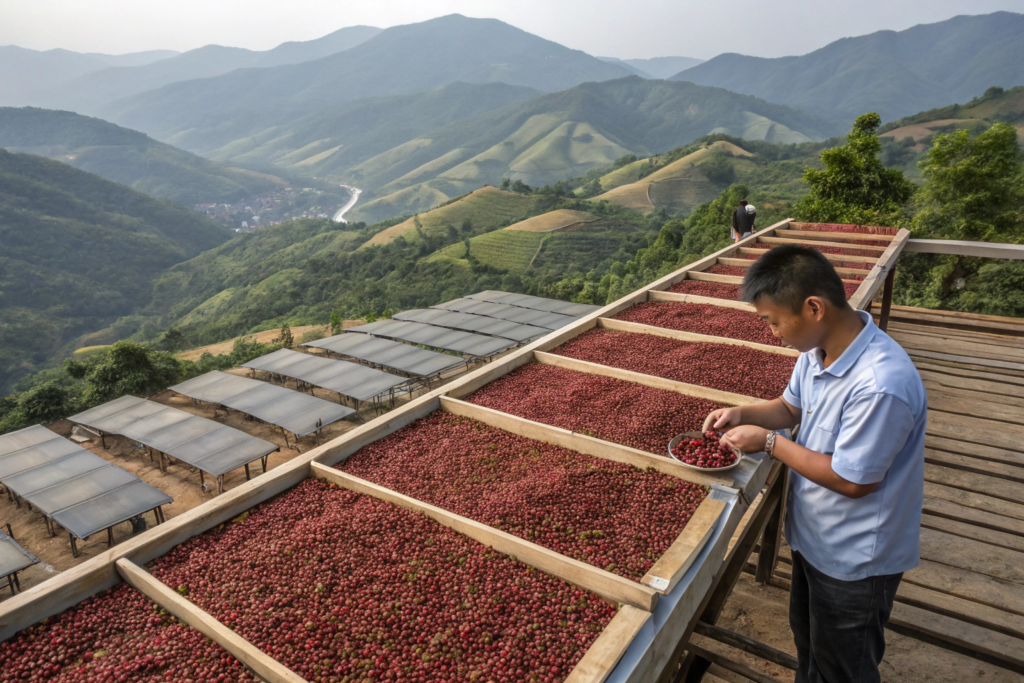
Ten years ago, Yunnan coffee was a joke in Europe. I admit it. It was processed poorly. Fermented flavors. Dirty cups. It went into cheap instant coffee. But something happened. Money. Training. And a new generation of farmers who traveled to Taiwan, to Japan, and came back with a fire in their eyes. Our farm in Baoshan now uses raised African drying beds. We monitor pH levels during fermentation. We cup every single micro-lot before it leaves the drying patio.
Asian Arabica is improving because of a direct injection of agronomy science and Western specialty coffee education. Governments in China, Thailand, and Laos have subsidized quality over quantity. Private companies like BeanofCoffee have hired Q-graders and invested in optical sorting machines. The result is a clean, sweet, and structurally sound bean that scores consistently in the 82 to 86 range.
This is not a story of miracles. It is a story of capital meeting good altitude. Baoshan sits at latitude 25 degrees north. Perfect. Elevations from 1,200 to 1,800 meters. Perfect. Volcanic soil. Perfect. The raw material was always there. The knowledge to process it was not. Now it is.
Why Is Yunnan Catimor No Longer Considered a "Low-Grade" Bean?
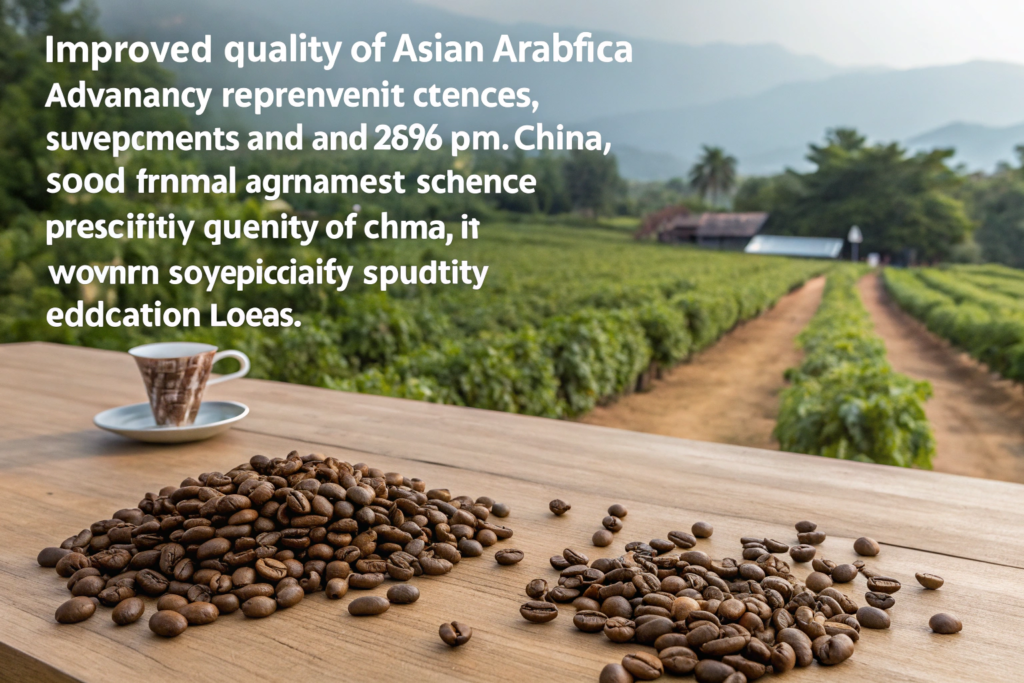
The bias against Catimor is genetic. It has Robusta lineage. That sounds scary to a specialty purist. And yes, poorly grown Catimor tastes like burnt rubber and aspirin. You know why? Because farmers would pick it unripe. They would over-ferment it to cut corners. The bean got the blame. It was not the bean's fault.
Properly grown, high-altitude Catimor is an entirely different creature. It picks up a malic acidity. Not sharp, like citric acid. But round, like biting a fresh red apple. It has a heavy body. It coats your mouth. For an espresso roaster in Italy, this is the holy grail. A coffee that can cut through 6 ounces of milk without disappearing. The World Coffee Research catalog on Catimor mentions its high yield potential and disease resistance. For us, those traits mean we can keep it clean and healthy without heavy pesticides. A healthy tree makes a sweet cherry. A sweet cherry makes a specialty cup.
I encourage skeptical roasters to do a blind cupping. Put a washed Yunnan Catimor 84 against a washed Honduran 84. I have done this dozens of times at trade shows. The tasters often cannot tell which continent the coffee came from. They just mark both as "chocolate, almond, balanced."
How Has Processing Innovation Changed the Flavor Profile of Asian Beans?
This part excites me the most. The processing station. We used to just wash everything. Wash it, strip the mucilage, dry it. Fine. Consistent. Boring. Now we are doing anaerobic fermentation in sealed tanks. We are doing honey process with specific yeast strains imported from France. We are doing extended cold fermentation that takes 72 hours instead of 12.
What comes out of these tanks tastes like nothing China has ever exported before. Think of a heavy, syrupy body with notes of dark cherry and clove. A completely dry, natural-processed Arabica from our farm that scores 86 points is not a fluke. It is the result of tracking brix levels in the cherry juice and controlling the fermentation temperature to within half a degree.
European roasters are searching for the next unique origin. Central America is flooded with washed Caturra. Africa has its washed Yirgacheffe. But a clean, complex natural from Asia? That is still a rarity on the cupping table. It is a menu differentiator. A café in Copenhagen can charge an extra euro for a cup of "China Natural Anaerobic" because the consumer has no reference point for it. The story is fresh. The taste is new. This novelty is a brand asset that roasters can use to attract the third-wave customer who has tried everything.
Is the Supply Chain from Asia More Reliable Than Latin America?
We had a problem. A bad one. A roaster in Belgium ordered a container for a Christmas blend launch. The container was due to leave Shanghai on September 10th. On September 12th, it was still at our warehouse. The booking was cancelled by the carrier. I was sweating. But here is the difference. I could call my freight forwarder in Shanghai at 9 PM my time and fix it. He found a slot on a vessel leaving on the 14th. The coffee arrived on time. Try doing that with a port agent in Brazil during Carnival. You will be waiting a week for an answer.
Asian supply chains offer a more predictable and responsive alternative to the chronic logistical bottlenecks of Latin America. The difference lies in port efficiency, vessel frequency, and the concentrated geography of production. In Yunnan, our farm is 24 hours by truck to a major deep-water port. That compactness reduces the risk of inland delays, theft, or quality degradation compared to beans trekking from isolated mountain communities to distant coastlines.
Europe wants Just-In-Time delivery. Roasters do not keep massive inventories anymore. They need a supply chain that reacts like a factory, not a sleepy farm market. Asia, and China specifically, thinks in terms of factory-style logistics. It fits the new rhythm of the coffee trade.
How Do Port Efficiency and Vessel Space Availability Compare?
Let’s compare Shanghai to Buenaventura, Colombia. Shanghai Yangshan handles 40 million TEUs a year. Buenaventura handles under 2 million. The scale is not even close. In Shanghai, you have daily sailings to Northern Europe. Multiple alliances. Lots of capacity. In Buenaventura, you might wait a week for a vessel, only to have your container rolled because a banana exporter paid a premium.
I track these metrics with a simple spreadsheet. Last year, our average transit time from Shanghai to Rotterdam was 31 days. Our booked slots were honored 98% of the time. Now compare that to a shipment from Santos. Labor strikes happen. Draft restrictions in the river channel slow traffic. A random rainstorm can shut down loading for two days. According to data from the United Nations Conference on Trade and Development, port dwell times in Latin America can be twice as long as in Shanghai. That dwell time is a cost. And it is a freshness killer.
A less visible factor is the empty container flow. Europe exports a massive amount of goods to China. Cars, machinery, luxury goods. Those containers need to go back. They are hunting for return cargo. Coffee beans are the perfect back-haul. This creates a constant, cheap supply of available containers. The trade imbalance works in our favor, keeping spot rates more stable for our clients.
Can a Shorter Inland Chain Reduce Your Risk of Quality Damage?
An often-overlooked detail in the logistics chain is the truck ride. In Colombia, a truck might take 12 hours down a bumpy, unpaved mountain road just to reach a consolidation warehouse. The coffee sits. It sweats. It might get rained on at a checkpoint. By the time it hits the port, the cup score can drop half a point due to early aging.
Our setup in Yunnan is different. The new highway systems and bridges in southwest China are world-class. Our farm in Baoshan can load a truck at dawn. That truck is at the Shanghai container freight station the next afternoon. The coffee moves from the mountain to the port in less than 36 hours, sealed in GrainPro bags.
This short inland chain means we do not need to pre-ship samples months in advance. The approved sample on your desk in Berlin is incredibly close in quality to the coffee that will hit your grinder six weeks later. A short chain has fewer variables. Fewer chances for a random warehouse to leave your container in the sun for a weekend. A peer-reviewed study on green coffee transport has documented the direct link between transit temperature exposure and the loss of volatile aromatic compounds. Reducing the time between farm and vessel is the simplest way to protect those compounds.
Does Asian Arabica Offer a Unique Flavor Identity for the Market?
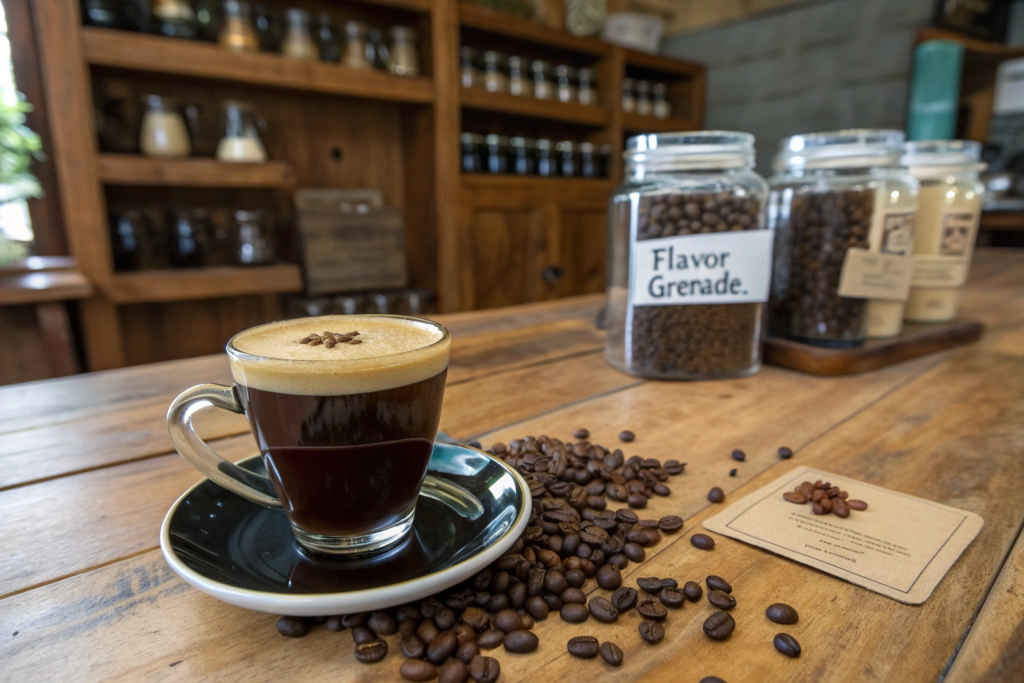
A roaster in Oslo once told me his customers are bored. He said, "I can list a washed Colombia, a washed Guatemala, a washed Peru... and they all sound the same." He needed a disruptor. A coffee that did not just taste good, but had a unique story and a recognizable signature. I sent him a sample of our natural processed Baoshan Arabica. He called it a "flavor grenade." Heavy tropical fruit, a bit of spice, and a dark chocolate finish. It was completely out of character for what his customers expected from Asia.
Asian Arabica provides a distinct sensory identity rooted in its terroir. The specific combination of latitude, monsoon climate, and soil composition produces a profile that European roasters are calling "New World Mellow." It fills a gap between the sharp, bright, floral African coffees and the classic, nutty, chocolate South Americans. It offers a gentle stone fruit sweetness with a creamy body.
This flavor identity is not just good. It is commercially useful. It gives a roaster a new tool for their blend. It creates a single-origin option that sparks a conversation at the counter. That conversation turns into a sale.
What Are the Dominant Tasting Notes of High-Altitude Chinese Arabica?
When I cup our Baoshan lots, I do not just hunt for the big flavors. I look for consistency. The baseline note is always a clean, soft, brown sugar sweetness. That is the foundation. On top of that, you get a gentle, cooked stone fruit flavor. Apricot jam. A hint of white peach. The aftertaste is often almond or milk chocolate. It is a comfortable cup.
The acidity is low to medium. It is not a Kenya. It will not pierce your palate with blackcurrant zing. For a Northern European filter market, that might sound like a weakness. But for an Italian espresso, or a French dark roast, it is a strength. You can push this coffee into a Full City roast without it turning into charcoal and ash. It develops a caramelized sugar crust and a heavy, syrupy body. The Coffee Quality Institute often references this "sweetness structure" as a marker for a versatile blending base.
I challenge roasters to re-frame their expectations. Not every origin needs to scream acidity. Some origins can sing with sweetness. Chinese Arabica is a bass-baritone. It provides depth and resonance to a blend without clashing with the tenor notes of an Ethiopian Yirgacheffe.
How Can a Roaster Market a Blend Featuring Asian Beans?
Here is where it gets fun. Marketing. You cannot just say "Contains Chinese Coffee." That sounds like a cheap cost-cutting measure. The framing is everything. I advise my clients to sell the concept of the "Silk Road Blend" or "Ancient Tea Horse Road" origin. Yunnan is famous for Pu'er tea. The soil that grows legendary tea also grows coffee. That is a genuine, authentic story.
You market the altitude. "Grown at 1,600 meters on the slopes of the Hengduan Mountains." That sounds premium. It is premium. You market the varietal story. "Catimor Reborn" or "The New Specialty Frontier." You market the sustainability angle. "Directly sourced from a family-run, USDA Organic certified collective, bypassing volatile commodity markets."
A bag with a clean design, a map of Yunnan, and a story of modern Chinese specialty coffee commands a premium. It is not a value bag. It is an adventure bag. European consumers, especially in Scandinavia and Germany, are intellectually curious. They want to taste a place. They have tasted Colombia. Give them Yunnan. The Specialty Coffee Association has noted the rising consumer demand for "single estate" and "single origin" transparency. Asian Arabica delivers that transparency with a completely new vocabulary.
Recraft指令--A close-up shot inside a trendy European café. A barista's hands, with visible but subtle tattoos, presenting a beautiful ceramic cup of filter coffee on a wooden counter. The coffee has a rich, amber crema. Next to the cup, a professionally printed retail coffee bag with a minimalist design featuring a subtle map of Asia and coffee leaves, no readable text, just shapes. The background features a blurred La Marzocco espresso machine and warm, modern lighting. The barista's face is partially visible, sharp, and naturally attractive, smiling gently.
Conclusion
European roasters are switching to Asian Arabica for a mix of reasons. Price matters. A $1.20 per pound advantage is impossible to ignore in a tight market. Reliability matters. A 30-day sailing from Shanghai beats a 40-day gamble through a drought-hit Panama Canal. But what clinches the deal is the flavor. We have moved past the era of dirty, cheap instant coffee. Yunnan now produces clean, sweet, heavy-bodied Arabica that solves problems for European roasters. It softens sharp blends. It stands alone as a unique single origin with a strong narrative. It brings a story no one else has.
The switch is not about abandoning Colombia or Ethiopia. It is about diversifying to a partner who offers stability. Our 10,000 acres in Baoshan are not just a farm. It is a controlled supply chain, from the soil to the container yard in Shanghai. We control the picking. We control the fermentation. We control the logistics. This integration removes the guesswork.
If you are a European roaster looking for a consistent, cost-effective, and story-rich Arabica for your next blend, let’s start a conversation. We can ship a sample set today that matches your roast profile and price target. Contact Cathy Cai at cathy@beanofcoffee.com. Tell her your ideal cup profile and your target FOB. She will send you a quality report that you can read, verify, and trust. It is time to see what Asian Arabica can do for your business.