
You have one good coffee supplier. The coffee arrives. The price works. The quality is stable. Then one day, the supplier has a crop problem. Or the port slows down. Or the freight space disappears. Your orders stop. Your customers wait. Your brand takes the hit. That is the moment most buyers start looking for a backup. But looking for a backup after a problem is too late. You need a backup plan before the problem starts.
The best way to select a backup coffee supplier without disruptions is to treat the backup as a real supplier, not a spare name on a list. You must check capacity, quality, documents, pricing, communication, and trial performance. You must also keep the relationship alive with small orders and regular updates. A backup supplier only works if it is ready before you need it.
So, where do you start? You start with clear rules. You decide what the backup must prove. You decide how you will test the backup. You decide how you will keep the backup warm. This is not a one-time task. It is a process. I run BeanofCoffee, a coffee exporter in Yunnan, China. We own more than 10,000 acres in Baoshan City. We ship Catimor, Arabica, and Robusta to North America, Europe, and Australia. I have seen buyers panic when their main supplier fails. I have also seen buyers stay calm because they built a second source early. The calm buyers win.
What Makes a Good Backup Coffee Supplier?
A good backup coffee supplier is not just a company that says yes. It is a company that can deliver when your main supplier cannot. Ron, a 44-year-old American company owner, once told me he keeps backup suppliers for everything. But he said most backups are useless. Why? Because he never tested them. He never gave them a small order. He never checked their documents. He never learned how they communicate. So when he needed them, they were strangers. That is a painful way to learn.
A good backup coffee supplier has four things: proven capacity, consistent quality, clear export documents, and fast communication. It should also offer fair pricing and a realistic shipping plan. You should not pick a backup only because the price is low. You should pick a backup because it can perform under pressure.
Another way to look at this is to compare a backup supplier to a fire exit. You do not wait for a fire to check if the door opens. You test it. You keep it clear. You know where it is. The same rule applies to coffee. A backup supplier must be tested. It must be kept clear of confusion. It must be easy to reach. At BeanofCoffee, we work with buyers who want a second source. We do not ask them to leave their main supplier. We ask them to run a small trial. That trial tells both sides the truth.
What Should a Backup Supplier Prove First?
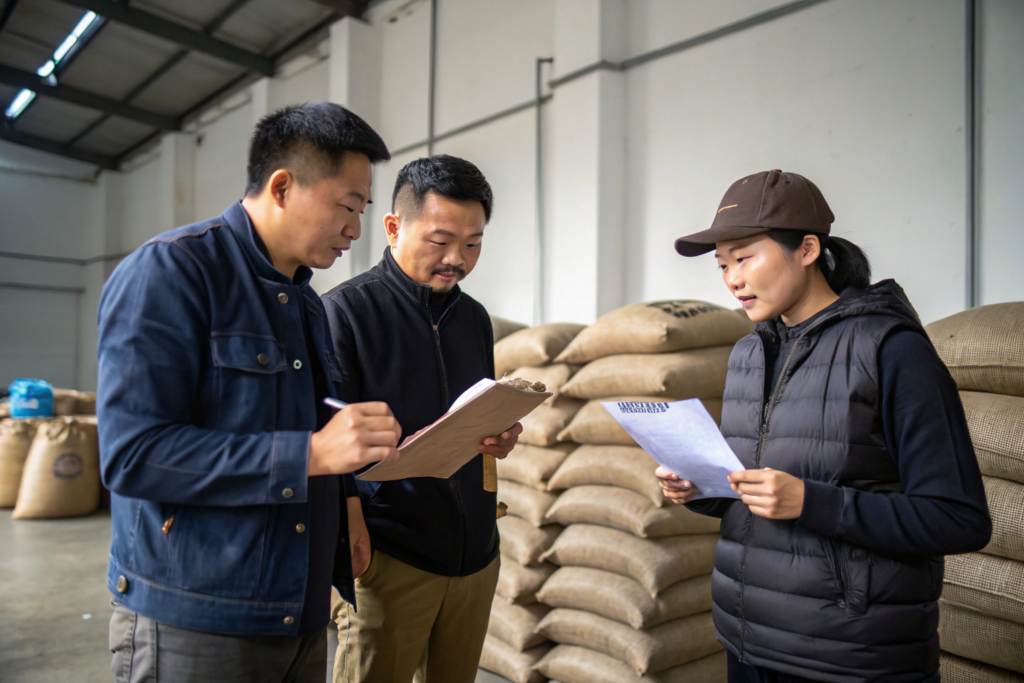
A backup supplier should prove three things first. It should prove that it has real coffee, not just a trading desk. It should prove that it can prepare export documents. It should prove that it can answer questions quickly. I ask for a farm video, a mill photo, a recent test report, and a sample. I also ask for a reference from another buyer. The SCA offers useful standards for coffee quality. The Coffee Institute also shares education and research. These are good places to learn what to ask.
Do not accept vague answers. If a supplier says, “We have many farms,” ask which ones. If a supplier says, “Quality is good,” ask for moisture and defect numbers. If a supplier says, “Shipping is fast,” ask for a sailing schedule. A real supplier will answer. A weak supplier will delay. You are not being rude. You are protecting your business. Ron likes this approach because he is direct. He wants facts. He wants proof. A backup supplier should welcome that.
How Do You Set Clear Backup Terms?
You set clear backup terms by writing them down. Put the product, price, payment method, Incoterms, packing, quality standard, and shipping window in a simple contract. Do not rely on chat messages. Do not rely on memory. The Trade.gov website offers basic export and import guidance. The WCO explains customs standards. These resources help you build a clear document.
Your backup terms should also include a trigger. What event makes you move volume to the backup? Is it a missed shipment? Is it a failed quality test? Is it a price change? Is it a port delay? Write the trigger down. Then both sides know what to expect. I like a simple rule: if the main supplier misses two confirmed dates, the buyer moves a small trial to the backup. This rule is fair. It is also clear. Clear terms stop arguments before they start.
How Do You Audit a Coffee Supplier?
An audit is not a test you do once. It is a habit. You audit a coffee supplier by checking its farm, mill, warehouse, documents, and quality control. You also check its financial health and its export history. Many buyers skip this step. They think an audit takes too much time. But a bad supplier costs more time. A failed shipment costs more money. A quality claim costs more trust. So the audit is not a cost. It is a saving.
You audit a coffee supplier by asking for proof, not promises. Ask for farm records, mill capacity, moisture tests, defect reports, export licenses, and bank details. Then verify the proof with a third party if the order is large. A good supplier will help you. A bad supplier will avoid you.
I have seen buyers audit a supplier in one afternoon. They ask for ten documents. They call two references. They review one sample. That is enough to remove most bad suppliers. You do not need a perfect audit. You need a practical audit. At BeanofCoffee, we keep our records ready. We know buyers like Ron care about quality control, certification, logistics, and payment methods. So we prepare those answers before the first call. That saves everyone time.
How Do You Check Farm and Mill Capacity?
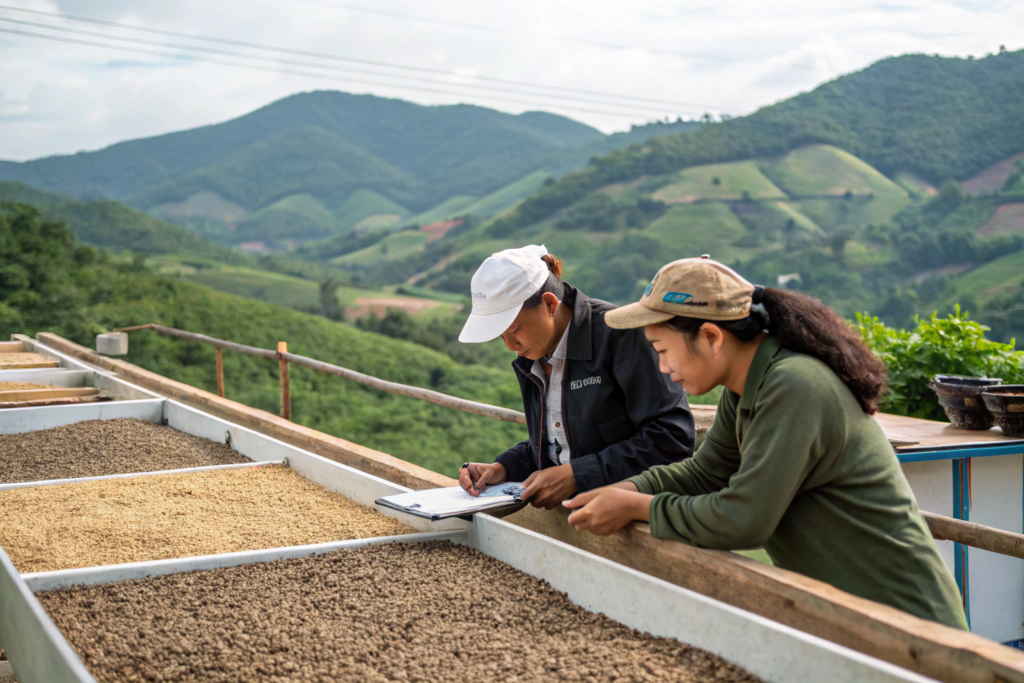
You check farm and mill capacity by asking for numbers. How many hectares? How many bags per harvest? How many tons per month? What is the milling capacity? What is the storage capacity? Ask for photos and videos. Ask for a harvest calendar. The Rainforest Alliance explains sustainable coffee farming. The Fairtrade website explains fair trade certification. These sources help you understand what a real farm should show.
Capacity is not just about size. It is about consistency. A farm may have 500 hectares. But if it cannot mill on time, the size does not matter. A mill may be modern. But if it mixes lots, the quality drops. I ask for lot separation records. I ask how they store green beans. I ask how they control moisture. These details tell me if the supplier can handle a repeat order. Ron cares about stable supply. So do I. A backup supplier must be able to repeat, not just impress.
What Certifications Should You Verify?
You should verify certifications that match your market. Common ones include organic, Fairtrade, Rainforest Alliance, UTZ, and 4C. You should also check food safety certificates. Ask for the certificate number. Then check it with the issuing body. Do not accept a PDF alone. The SGS website explains coffee inspection services. The Intertek website explains coffee testing. These are useful for third-party checks.
Certification is not the same as quality. A certified supplier can still ship bad coffee. So you must test the cup. You must test moisture. You must test defects. But certification helps with market access. If you sell to Europe, you may need certain sustainability proof. If you sell to the U.S., you may need FDA rules. Ask your buyer what they need. Then ask the supplier if they can provide it. A good backup supplier will tell you the truth. A weak one will say yes to everything.
How Can You Trial a Backup Supplier Safely?
A trial is the only real test. You can read websites. You can watch videos. You can talk on the phone. But until money and coffee move, you do not know. The problem is that a trial can disrupt your main supply. You may worry about quality. You may worry about delay. You may worry about payment. So you need a safe trial. A safe trial is small, clear, and measured. It does not replace your main supplier. It simply opens a second door.
You can trial a backup supplier safely by starting with a small order, a clear specification, a fixed price, and a short shipping window. You should also use a safe payment method and a third-party inspection. The goal is not to test everything. The goal is to test the key promises: quality, documents, communication, and delivery.
I tell buyers to start with one pallet or one small lot. Do not start with a full container. A full container is too much risk for a first trial. A small lot tells you how the supplier packs, labels, and ships. It tells you how they handle problems. It tells you if their coffee matches the sample. If the trial goes well, increase the volume. If it fails, you learned a cheap lesson. That is much better than learning an expensive lesson later.

How Do You Run a Small Trial Order?
You run a small trial order by defining the product, quantity, packing, price, and delivery date. Then you ask for a pre-shipment sample. You approve the sample. Then you pay a small deposit. You ask for photos before loading. You use a tracking method. The Alibaba platform offers trade protection tools. The FDA prior notice page explains U.S. food import rules. These can help you plan.
Do not skip the sample. Do not skip the photos. Do not skip the documents. A trial order is not just about coffee. It is about process. I want to see how fast the supplier replies. I want to see if the invoice matches the packing list. I want to see if the labels are correct. These small things show how the supplier works. Ron cares about timeliness. A slow trial is a warning. A fast trial is a good sign. But one fast trial is not enough. You need a pattern.
How Do You Compare Cup Quality Fairly?
You compare cup quality fairly by using blind cupping. You use the same roast level, the same water, the same grinder, and the same scoring method. You do not let the supplier’s story change your taste. The ICO shares global coffee information. The USDA AMS provides agricultural standards and data. These can help you build a fair comparison.
I like to cup the main supplier and the backup supplier side by side. I use a simple score sheet. I check fragrance, flavor, acidity, body, sweetness, and aftertaste. I also check defects. If the backup scores close to the main supplier, it is a real option. If it scores much lower, it is not ready. Price does not fix bad taste. A low price on bad coffee is not a good deal. It is a future claim. So cup first. Then talk price.
How Do You Keep a Backup Supplier Ready?
Finding a backup is one step. Keeping it ready is another. Many buyers find a backup, test it once, and then forget it. Six months later, they need help. But the backup has moved on. The prices have changed. The contact person has left. The coffee is sold to someone else. So the backup is no longer a backup. It is just an old name in a spreadsheet. That is a common mistake. I have seen it many times.
You keep a backup supplier ready by staying in contact, sharing small orders, updating specifications, and reviewing performance. You should treat the backup as a partner, not a spare tire. A monthly email, a quarterly sample, and a yearly review can keep the relationship alive. This small effort pays off when your main supply breaks.
So, what does this mean? It means you need a simple rhythm. You do not need a big contract every month. You need a real connection. You need to know that the supplier is still in business. You need to know that the quality is still stable. You need to know that the price is still fair. At BeanofCoffee, we like buyers who stay in touch. We like buyers who ask questions. We like buyers who plan ahead. That is how a backup becomes a true second source.
How Do You Keep Communication Active?
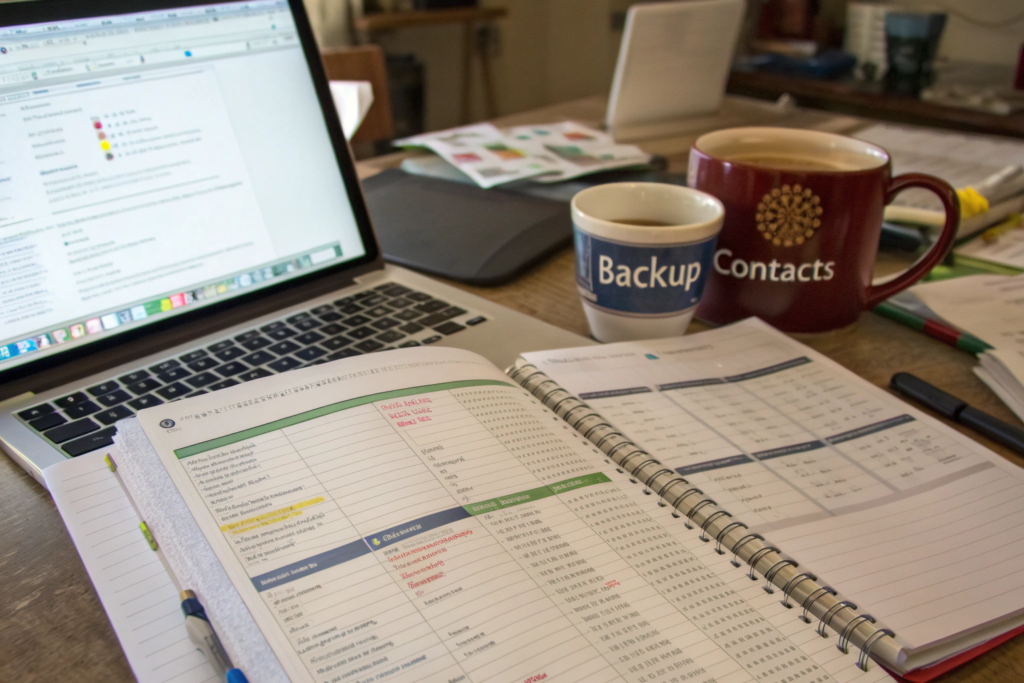
You keep communication active by setting a simple schedule. Send an email once a month. Ask about the harvest. Ask about prices. Ask about shipping. Share your sales forecast. The Daily Coffee News and Roast Magazine publish coffee industry updates. These give you easy topics to discuss.
Do not make every call about a problem. Sometimes just say hello. Ask how the farm is doing. Ask about the weather. Ask about new lots. This builds trust. Ron is confident and direct. He likes to lead. But even a direct buyer needs a real relationship. A supplier who knows you will answer faster. A supplier who trusts you will hold stock for you. That is the value of communication. It is not soft. It is practical.
How Do You Review Backup Performance?
You review backup performance by using the same scorecard as your main supplier. Check on-time delivery. Check quality claims. Check document accuracy. Check communication speed. Check price stability. The CBP website explains U.S. customs and trade rules. The USITC provides tariff and trade data. These help you see the full cost.
I use a simple review once a year. I give each supplier a score. If the backup scores well, I increase the trial volume. If it scores poorly, I look for another backup. This review keeps the backup honest. It also keeps me honest. I cannot expect a backup to be ready if I never test it. I cannot expect good service if I never communicate. A backup supplier is a relationship. Relationships need care.
Conclusion
A backup coffee supplier is not a luxury. It is insurance. You need it before the problem starts. You need to audit it. You need to trial it. You need to keep it warm. You need to review it. The best backup supplier has real capacity, stable quality, clear documents, fair pricing, and fast communication. It does not need to be perfect. It needs to be ready. That is the key. If you build a backup the right way, a disruption at your main supplier will not stop your business. It will only shift your orders.
At BeanofCoffee, we understand backup supply. We own more than 10,000 acres in Baoshan City, Yunnan. We export Catimor, Arabica, and Robusta. We work with large buyers, brand owners, distributors, and trading companies. We can support raw beans and packaged products. We can run a small trial. We can prepare documents. We can keep communication clear. If you want a second source that is ready, please contact Cathy Cai at cathy@beanofcoffee.com. She will help you with samples, pricing, specifications, and shipping plans. You can also visit BeanofCoffee to learn more. Let us build a backup plan before you need one.