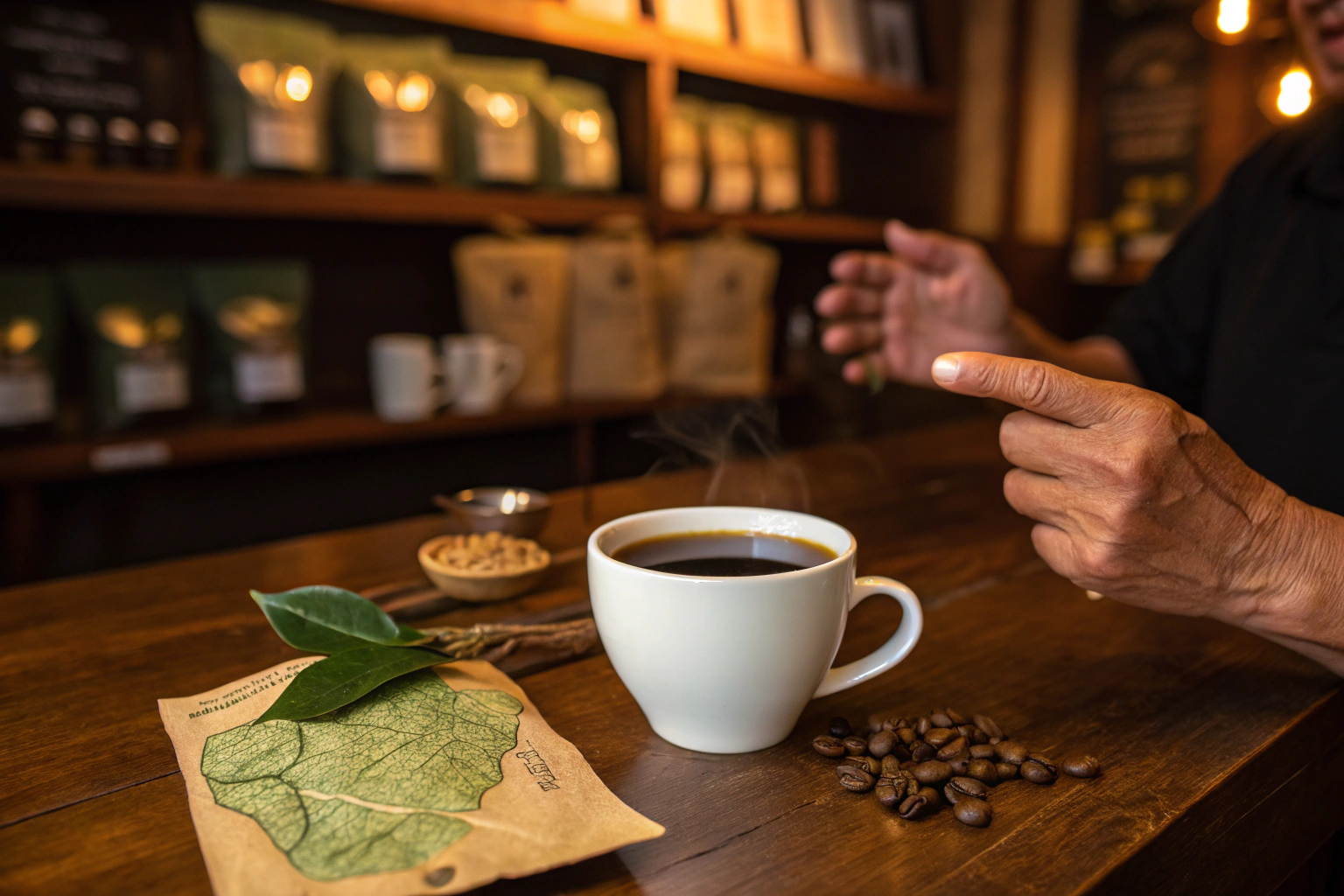
You have a problem. You're standing in front of a customer, or you're writing the product description for your website. You have this really good coffee from Yunnan. It cups well. It roasts beautifully. But when you open your mouth to tell the story, you freeze. What do you say? "It's from China." The customer looks at you. Their face is blank. Maybe skeptical. They're thinking of factories. They're thinking of tea. They are not thinking of specialty coffee. The silence is awkward. You've lost the sale before you even brewed a sample.
The issue is not the coffee. The coffee is a conversation starter waiting to happen. The issue is the frame. You're using the wrong story. You're starting from a defensive position, trying to justify the origin. Stop. Flip the script. This is not a story about a country. This is a story about a rediscovery. A hidden treasure. A place the ancient tea caravans passed through centuries ago, now quietly producing some of the most exciting specialty coffee in the world. You are not selling "Chinese coffee." You are offering a taste of the Gaoligong Mountains. You are pouring a cup from a single estate that most people don't even know exists. The story is not about overcoming a deficit. It's about sharing a secret.
At Shanghai Fumao, this is what we live every day. We don't start conversations with a map and a lecture. We start them with a spoon. We brew our washed Catimor. We let the chocolate and stone fruit notes do the talking. Then, we lean in and say, "Did you know this mountain range was part of the ancient Tea Horse Road?" That's the hook. Now the person is holding a cup of mystery and history. The flavor is no longer just taste. It's a time machine. That is compelling storytelling. Let me show you exactly how to build that narrative for your customers, step by step, so you never freeze again.
Why Is the Yunnan Origin Story Unique in the Coffee World?
Most coffee origins tell a similar story. The colonizer brought the plant. The farmers grew it. The industry developed. It's a solid story, but it's a well-worn path. Yunnan has something no other coffee origin on Earth can claim. It is the birthplace of tea. For over a thousand years, the people of these mountains cultivated Camellia sinensis. The Tea Horse Road snaked through these very valleys, carrying compressed bricks of Pu'erh tea to Tibet and beyond. The culture of agriculture here is not decades old. It's ancient.
So when you tell the story of Yunnan coffee, you don't start with a Portuguese missionary or a colonial trading company. You start with the soil itself. This soil knew how to grow a meticulous, high-value beverage crop long before coffee was a global commodity. The skills of selective hand-picking, of understanding micro-climates, of processing a leaf to perfection—these skills are in the DNA of the farmers. Coffee arrived in Yunnan in the late 19th century, brought by French missionaries. It was a quiet arrival. For a hundred years, it was a local curiosity. But the terroir and the agricultural wisdom were already there, waiting. The recent explosion of specialty quality is not an accident. It is the tea culture waking up to a new crop. That is a one-of-a-kind origin story. No other place can blend the narrative of ancient tea wisdom with modern specialty coffee science. It's a story of continuity, not a break. The UNESCO Silk Road Programme documents the deep cultural significance of these trade routes, lending historical weight to your narrative.
How Does the "Tea Horse Road" History Add Romance to Your Coffee?
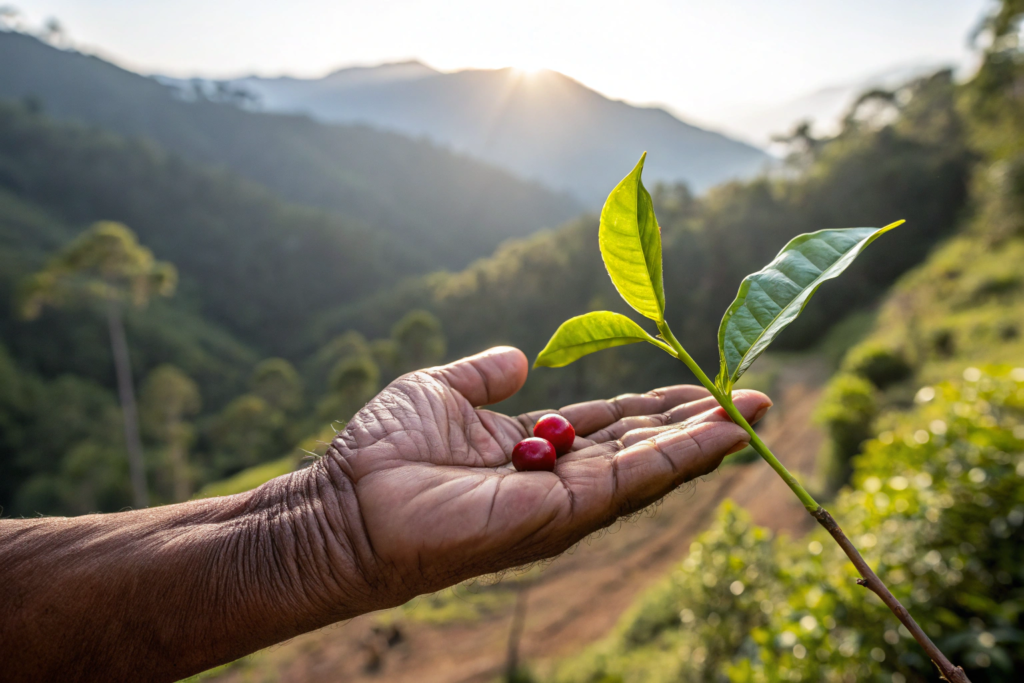
The Tea Horse Road is pure magic for storytelling. It evokes images of caravans, of misty passes, of mules carrying precious cargo across treacherous terrain. When you mention it, the listener's mind goes to a romantic, adventurous place. You then bridge that image to your coffee. "The same mountain paths that carried tea to emperors now carry our coffee cherries down to the washing station." You are not just selling a drink. You are selling a connection to a legendary chapter of human history.
This is a powerful psychological tool. It's called "narrative transportation." The listener is transported into the story. They become an explorer. Drinking the coffee becomes an act of vicarious adventure. You can use specific details. Mention the Nu River Valley. Mention the city of Lijiang, a UNESCO World Heritage site on the old route. Mention that some of our coffee trees are planted on terraces first carved for tea hundreds of years ago. These concrete details make the romance real. It's not generic "exoticism." It's documented geography and history. The customer tastes the coffee and feels a whisper of that ancient caravan wind. You have given them more than caffeine. You have given them a legend in a cup.
What Makes the French Missionary Introduction a "Discovery" Narrative?
Everyone loves a discovery story. Something hidden, then found. The French missionary introduction of coffee to Yunnan in the 1890s is exactly that. It's a small, quiet story against the grand sweep of coffee history. It's not the story of massive Brazilian plantations or Dutch trading monopolies. It's the story of a single priest, carrying seeds, trying to grow a taste of home in a remote mountain province. It's intimate. It's human. It's relatable.
This narrative frames the coffee as a forgotten heirloom that is now being rediscovered by the world. "These beans come from a lineage planted by French missionaries over a century ago. For decades, it was a local secret, enjoyed only by the villages in Baoshan. We are now bringing this hidden legacy to your cup." This taps into the "insider" psychology. The customer feels like they are being let in on a secret. They are not a mass consumer. They are a connoisseur who has discovered something rare. This is a much more emotionally engaging frame than "we produce a lot of coffee efficiently." The discovery narrative creates scarcity and value. It makes the coffee precious. You can source historical details for these stories from archives like the Royal Geographical Society which often holds accounts of early explorers and missionaries in the region.
How to Build a Tasting Experience Around Your China Coffee Narrative
The story is the setup. The tasting is the payoff. You cannot just talk about the Tea Horse Road and then serve a bad shot. The flavor must deliver on the narrative's promise. The tasting experience is the moment of truth. It is where the story becomes physical. You must guide this experience. Do not just hand them a cup and say, "Here." Prepare a script that connects the story's elements to the specific flavors in the coffee. The mountain altitude explains the density. The density explains the syrupy body. The ancient soil explains the complex sweetness.
Start the tasting by reminding them of the altitude. "This coffee grew slowly at 1,400 meters in thin, cool air." Then ask them to smell the dry grounds. Ask them what they smell. Guide them. "Do you get a hint of cacao? Maybe some toasted nuts?" When they nod, you connect it. "That's the slow maturation from the cool mountain nights." Then they sip. Ask them to notice the weight of the coffee on their tongue. "Feel how heavy and smooth it is? That's the density from the high-altitude stress." Finally, ask them to notice the finish. "It's clean, right? No bitter aftertaste. That's the mountain spring water we use in the washing process." You have just walked them through a sensory journey. The terroir is no longer an abstract word. It is a physical sensation in their mouth. You have proven the story. The coffee is the evidence. The Specialty Coffee Association's flavor wheel can help you find precise, accessible descriptors for these notes.
What Descriptive Words Connect the Terroir Directly to the Cup Profile?
Generic words fail here. "Smooth" and "strong" are meaningless. You need vocabulary that paints a picture of the farm. Use words that evoke the Yunnan landscape. The body is "mountain-heavy." The sweetness is "sun-drenched." The acidity is "spring-water bright." These are not just flavor notes. They are landscape paintings in words. They directly link the sensation to the place.
Build a small lexicon for your brand. Instead of "chocolate," say "dark cacao from highland shade trees." Instead of "nutty," say "toasted wild Yunnan walnut." The specificity makes it real. It also teaches the customer to taste like a pro. They learn that coffee can taste like a specific nut from a specific region. This elevates their experience from passive consumption to active appreciation. They become a co-explorer with you. Here is a simple table you can use to translate generic notes into terroir-driven descriptions:
| Generic Note | Terroir-Driven Description |
|---|---|
| Chocolate | Dark cacao grown in Gaoligong shade |
| Nutty | Toasted wild Yunnan walnut shell |
| Fruity | Sun-dried stone fruit from high-altitude orchards |
| Clean Finish | Polished by pure mountain spring water |
| Syrupy Body | Dense from slow, cool maturation at 1400m |
This table is your cheat sheet. Use it on your packaging and in your barista training.
How Can a Roaster Conduct a "Story-First" Cupping Session?
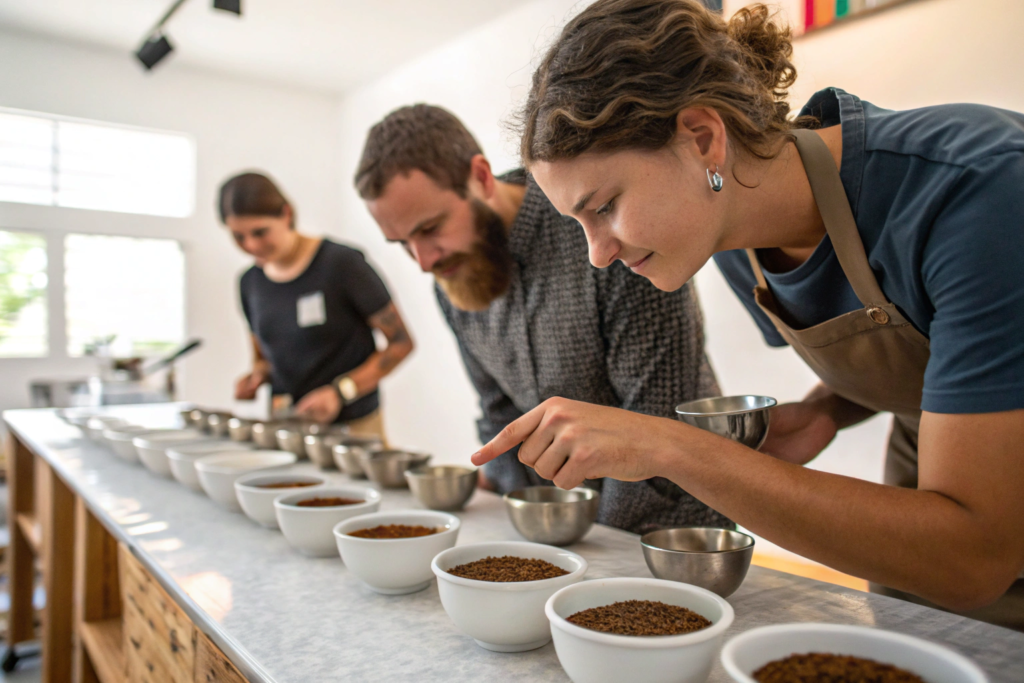
A standard cupping is technical. You slurp. You score. You spit. It's clinical. A story-first cupping is theatrical. You set the stage before the first spoon touches the water. You don't just plop five bowls on a table. You put a photo of Lao Li, the farm manager, on a stand. You put a small bowl of the red volcanic soil from Baoshan on the table. You put a dried tea leaf next to the coffee cherry. These are tactile, visual anchors for the story.
Then, before anyone smells the coffee, you tell a two-minute story. "This is Lao Li. He's 63. His family has farmed this mountain for six generations. They used to only grow tea. Twenty years ago, they planted these Catimor trees. Lao Li picks only the ripest cherries because he says the mountain gives you nothing for free, so you must honor it. The coffee you're about to taste is from his specific plot, number 4B, harvested last November." Now, the cupping begins. Every slurp is a connection to Lao Li. Every note on the scoring sheet is a conversation with his land. The scores are often higher. Not because the coffee is different, but because the perception is enhanced. The story has primed the brain to find quality. This is not a trick. It is honoring the full journey of the bean. You are finally treating the coffee as an agricultural product with a human face, not a commodity fluid.
Using Visual Storytelling to Overcome the "Made in China" Bias Online
The internet is a visual medium. The bias against Chinese products is often triggered by impersonal, stock-photo imagery of factories and smog. You combat this not with arguments, but with a flood of beautiful, authentic, human photography and video. You must visually prove that this is not a factory product. It is a farm product. Your Instagram, your website, your wholesale catalog—they all need to scream "pristine nature" and "human craft."
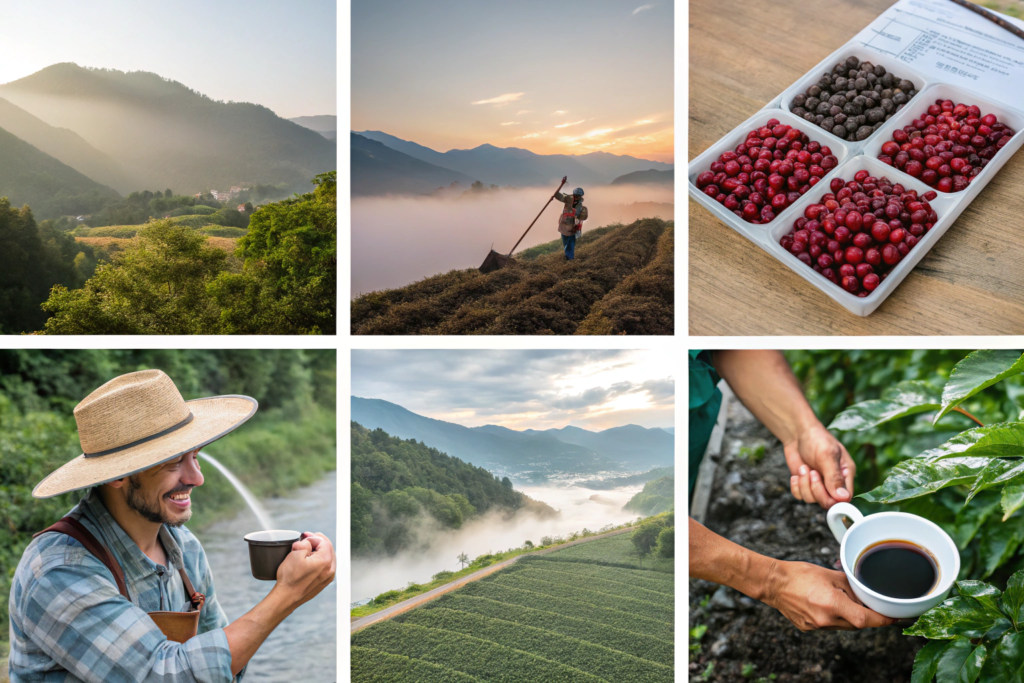
Show the mist rolling over the mountain at dawn. Show the red cherries in a bamboo basket, still wet with morning dew. Show a worker's hands, worn and experienced, carefully sorting beans. Show the raised African drying beds with neat rows of parchment. Show the crystal-clear mountain water flowing into the washing channel. Every image is a data point that deconstructs the industrial bias. The color palette matters. You want deep greens, rich reds, earthy browns, and crystal blues. Avoid grey, metallic, or sterile white backgrounds. Those colors trigger the factory association. Your visual identity is the first line of defense against the bias. It answers the doubt before the doubt is even consciously formed. At Shanghai Fumao, we invest heavily in providing this high-quality visual content to our wholesale partners. It is an essential branding tool, not a luxury.
What Behind-the-Scenes Content Humanizes a Chinese Coffee Farm?
The most powerful content is the moment of connection. A short, shaky iPhone video of the farm team eating lunch together. Laughing. Sharing a meal. It is not polished. It is real. It shows that this is a family business, a community, not a faceless industrial operation. This kind of content disarms cynicism. You cannot fake laughter. You cannot fake the sparkle in someone's eye when they talk about their coffee winning an award.
Feature specific workers. Do a "Farmer of the Month" post. Tell their story. Hobbies. Dreams. "Meet Auntie Zhang. She has worked our sorting tables for 15 years. She can spot a defect bean faster than our optical sorter. On weekends, she teaches her granddaughter to embroider." Suddenly, Auntie Zhang is part of your brand family. Your customers will ask about her. When they buy the coffee, they are supporting Auntie Zhang. This is the pinnacle of humanized marketing. It transforms a transaction into a relationship. The content is not a sales pitch. It is a human interest documentary. And it is infinitely shareable. Local news might even pick it up. Your customers become evangelists for the people behind the product.
How to Use a "Journey of the Bean" Graphic to Build Trust?
Trust needs transparency. A "Journey of the Bean" graphic is a step-by-step visual map of exactly what happens to the coffee from the tree to the truck. It is a promise of quality control. You place it on your website, on your wholesale sheets, and maybe printed as a small insert in your retail bags. Each step is a seal of approval. It tells the customer, "We have nothing to hide."
The graphic should be clean and simple. Step 1: Hand-Picking at the Farm. Step 2: Floating and Sorting at the Washing Station. Step 3: Controlled Fermentation for 24 Hours. Step 4: Washing in Spring Water. Step 5: Sun-Drying on Raised Beds for 12 Days. Step 6: Hulling and Density Sorting at the Dry Mill. Step 7: Hand-Sorting on the Final Belt. Step 8: Vacuum Packing in GrainPro. Step 9: Container Stuffing and Shipping. Each step has a small photo and a one-sentence description. This visual list does two things. It educates the consumer on why specialty coffee costs more. It also proves that your Chinese coffee follows the most rigorous global specialty standards. The proof is in the documented process. It overwhelms the vague bias with concrete facts. You can find examples of effective supply chain visuals on platforms like the Fairtrade International website, which often uses journey graphics to illustrate producer stories.
What Are the Key Elements of a Roaster's "China Coffee" Sales Pitch?
You are not just selling coffee. You are selling a new category to your wholesale accounts. A cafe owner is risk-averse. Their customers are their lifeblood. Pitching them a coffee from China requires a specific structure. You need to address the risk, pivot the narrative, and give them the tools to sell it themselves. It is a three-act play in five minutes. Act One: Acknowledge and Defuse. Act Two: Re-frame and Elevate. Act Three: Prove and Empower.
Act One starts with honesty. "I know what you might be thinking. Chinese coffee? I thought the same thing until I cupped this. But this is not a commodity buy. This is a single estate from a very special mountain range." You have named the elephant in the room. You have shown you are a realist. Act Two pivots to the story. You briefly touch on the Tea Horse Road and the ancient soil. You frame it as a discovery, a chance for the cafe to be a pioneer in their market. "No one else in this city is serving a single-origin from Yunnan. You would be the first." This appeals to the cafe owner's desire to stand out. Act Three is the proof. You brew the coffee. You let them taste it blind if you want. You hand them a one-page sell sheet with the origin story, the tasting notes, and a few pre-written social media posts. You have just made their job easy. They don't have to invent the sales pitch. They just have to repeat yours. That is a winning B2B sales pitch.
How Do You Price a Coffee That Has a Story to Match?
You do not price the story as a premium. You price the quality. The story is the value-add that makes the quality memorable. The base price should be grounded in the cupping score and the landed cost. If the coffee is an 84-point, clean Arabica, it should compete with other 84-point origins on price. The margin you make is fair. But the story protects that margin. It prevents the customer from negotiating you down. They cannot go to another supplier and find the "Tea Horse Road" story. It's exclusive to your origin.
The story also creates a higher price ceiling for your top lots. If you have a micro-lot that cups at 88 points, you can add a "Rare Discovery" premium. The narrative of scarcity—ancient tea terraces, limited harvest, heirloom lineage—supports a luxury price point. The key is alignment. The quality, the packaging, and the story must all point to the same price level. You cannot put a cheap, poorly printed label on a bag and tell a luxury story. The dissonance destroys credibility. But if the packaging is premium, the coffee is excellent, and the story is spellbinding, you can confidently charge a premium price. The value is delivered on every level: sensory, intellectual, and emotional. That is a complete product.
What Objections Arise and How Does the Origin Story Resolve Them?
The objections are predictable. "Is it clean?" "Is it safe?" "Does it taste good?" The origin story resolves these before they are even finished. "Is it clean?" The story answers: "Our farm is Rainforest Alliance certified, and we wash the coffee in pristine mountain spring water that comes directly from the Gaoligong peaks." "Is it safe?" The story answers: "We test every lot for mycotoxins and provide full transparency reports. The same meticulous care that went into ancient tea production now goes into our coffee." "Does it taste good?" The story answers: "The slow maturation at 1400 meters, combined with the red volcanic soil, creates a dense bean with notes of dark cacao and stone fruit. Taste it yourself."
The story is the container for all your factual answers. A dry list of certifications is boring and defensive. The same information, woven into the narrative of the mountain, becomes reassuring and attractive. The objection is turned into a feature. The customer's concern about safety leads you to talk about the ancient purity of the mountain water. They are not just reassured. They are enchanted. They now have a positive association with the very thing they were worried about. Mastering this pivot is the essence of selling a stigmatized origin. You don't fight the stigma. You replace it with a better, truer story. One backed by evidence and wrapped in romance.
Conclusion
Telling a compelling story about coffee from China is fundamentally an act of education and romance. You are teaching the customer a new geography, a new history, and a new flavor, all while giving them the emotional thrill of discovery. You are moving their mental image from a factory to a mountain, from a commodity to a craft, and from a risk to a reward. The raw materials for this story are exceptional: an ancient tea culture, a legendary trade route, a hidden missionary heritage, and a modern dedication to specialty quality that matches the best in the world.
We have walked through the history, the tasting scripts, the visual branding, and the sales techniques. The common thread is specificity. Generic stories are forgettable. A specific story about a specific mountain and a specific farmer is unforgettable. It sticks to the memory and the palate. It gives your customers a reason to choose your coffee, not just today, but as a repeat ritual. They are no longer buying a bag of beans. They are returning to the Gaoligong Mountains every morning. That is the power you hold as a storyteller.
If you want to build your brand around a coffee with a story that writes itself, let's talk. We can provide the beans, the photos, the videos, and the full traceability data to back up every word. Contact our export director, Cathy Cai, at cathy@beanofcoffee.com. She will get you a sample kit and the full brand story package. Let's bring the taste of these ancient mountains to your customers.