
You found it. The perfect coffee. You cupped a dozen samples. You negotiated a great FOB price with a farm in Yunnan. You are excited. Then the container hits the port. And the nightmare begins. The freight forwarder calls. There's a customs hold. You need a bond. You need a broker. You need to pay a terminal handling fee you never heard of. You are a small roaster. You don't have a logistics department. You have yourself and a laptop. The coffee sits in limbo. Your bank account drains from demurrage charges. The excitement is gone. You just want the pain to stop.
Delivered Duty Paid shipping stops this nightmare before it starts. DDP means the seller—us, the exporter—takes full responsibility for the entire journey. The trucking in China. The ocean freight. The U.S. customs clearance. The duties. The tariffs. The final delivery to your roastery door. You pay one single, all-in price. You know exactly what it costs. You know exactly when it arrives. You do not talk to customs brokers. You do not file paperwork. You do not pray that a container doesn't get stuck in a random inspection. We handle all of it. You roast coffee. That's your job. DDP lets you do your job without becoming an accidental import specialist.
This changes the game for small roasters. You can now buy direct from origin like the big guys. You can access the same quality, the same margins, the same farm relationships. But you don't need the big guy's infrastructure. You don't need a compliance team or a legal retainer. DDP flattens the playing field. When we ship from Shanghai Fumao under DDP terms, our smallest clients get the same white-glove treatment as our container buyers. A five-pallet order gets the same customs care as a twenty-pallet order. That is the power of shifting the risk and the paperwork burden to the party best equipped to handle it: the exporter who does this every single day.
What Exactly Does DDP Shipping Cover from a Chinese Exporter?
Let's get specific. DDP is an Incoterm. It stands for Delivered Duty Paid. It is the maximum obligation for the seller. The seller does everything. Here is the step-by-step reality of what we cover when we ship DDP from Yunnan to your roastery in, say, Austin, Texas. First, we truck the coffee from our dry mill in Baoshan to the port of Shanghai. We handle export customs clearance in China. We book the ocean freight and pay the carrier. We provide all the shipping documents: Bill of Lading, Commercial Invoice, Packing List, Certificate of Origin, and Phytosanitary Certificate.
The boat arrives at the port of Long Beach. This is where FOB buyers start sweating. Not you. Under DDP, our appointed U.S. customs broker files the Importer Security Filing. They clear the coffee through U.S. Customs and Border Protection. They pay any duties. Green coffee is currently duty-free under the harmonized tariff schedule, but if that changes, we pay it. We pay the Merchandise Processing Fee. We pay the Harbor Maintenance Fee. We arrange the trucking from the port to your door. We pay for the final delivery with liftgate service if needed. The coffee is placed inside your roastery. You sign the Proof of Delivery. Done. You roast.
The financial clarity is the revolution here. You receive one invoice. One number. That number covers every single step above. No surprises. No "additional charges" arriving in the mail three weeks later. You can budget with precision. You can price your roasted coffee with confidence. Your landed cost is known to the penny before the coffee even leaves China. This is not how small roasters usually experience importing. Usually, it's a mystery box of fees. DDP turns it into a simple purchase order. For a deeper dive into Incoterms, the International Chamber of Commerce defines the exact legal obligations. DDP is the term that places the maximum burden on the seller.
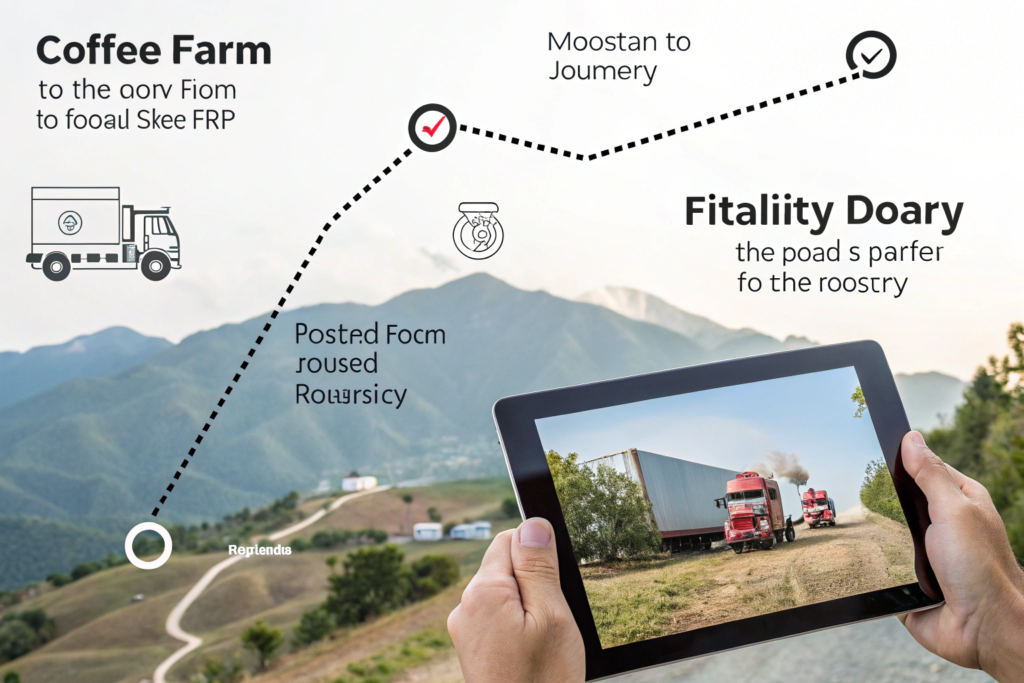
How Does DDP Eliminate the Risk of U.S. Customs Delays?
Customs is a black box for most people. A container gets flagged for a random exam. It sits at the port for a week. The clock ticks. Demurrage charges start. The shipping line charges for using their container beyond the free days. The terminal charges for storage. A small roaster can get a bill for $1,500 without any warning. And they can't do anything to speed it up. They don't know the system. They don't have a broker on speed dial. They just wait, furious and powerless.
With DDP, that risk is ours. We have a long-standing relationship with a U.S. customs broker who specializes in food and agricultural imports. Our documentation is meticulous. The coffee is pre-classified correctly. The paperwork matches exactly what CBP expects. This reduces the chance of a random exam. But if an exam happens, we handle it. We pay the exam fees. We pay the demurrage. We track the container status daily and resolve issues immediately. You are insulated from the pain. You just get an updated ETA. The coffee arrives a bit later, but your bank account is untouched. This risk transfer alone is worth choosing DDP. The peace of mind is not a luxury. It's a cost-saving measure. A single customs disaster can wipe out the profit on an entire pallet. DDP prevents that.
What Hidden Costs Do FOB Buyers Often Overlook Compared to DDP?
FOB looks cheaper on paper. The price per kilo is lower. That's the trap. The FOB price stops at the port of loading. Everything after that is your problem. Here is a list of hidden costs that ambush first-time FOB importers. Terminal Handling Charges at the destination port. Documentation fees. Customs bond fees. Courier fees for original documents. Exam fees if customs inspects. Demurrage if you are late picking it up. Pier pass fees. Chassis rental fees. Fuel surcharges on the truck. Inside delivery fees. If you don't have a forklift, you pay for a liftgate truck.
These line items add up fast. A container that looked $3,000 cheaper than DDP can end up costing $2,000 more after all the fees and the time you spent coordinating everything. And your time has value. The hours you spent emailing the broker, calling the trucker, and googling "what is a customs bond" are hours you didn't spend roasting, selling, or building your business. DDP bundles all those line items into one price. That price is negotiated in advance by us with our volume partners. We likely get a better rate on trucking and brokerage than a small roaster booking a one-off shipment. The bundle is cheaper in the end, and infinitely less stressful. You see the final number and make a clear business decision. No ghosts. No surprises.
Why Does DDP Make Direct Trade Relationships Viable for Small Businesses?
Direct trade is the dream. You visit a farm. You meet the family. You shake hands. You buy their coffee. You cut out the importers and the brokers. You capture the margin. You tell an authentic story. But the logistics of direct trade usually kill the dream for small roasters. The minimum order quantity from a farm might be a full container. 19,000 kilos. That's too much coffee and too much cash for a single-shop operation. And even if you split a container, the customs and freight coordination is a part-time job you didn't want. Direct trade stays a fantasy.
DDP makes direct trade practical. We can consolidate smaller shipments. You don't have to buy a full container. You can order five pallets. Ten pallets. We combine your coffee with other orders in a shared container to optimize freight costs. But you still get the direct trade relationship. You still talk to us, the farm owners. You still get the traceability. You still get your name on the lot. DDP handles the ugly logistics so the romance of direct trade can survive. You get to be a relationship buyer without being a logistics manager. This is a structural shift. It democratizes the supply chain. A small roaster in a small town can now buy direct from a single estate in Yunnan with zero logistics infrastructure. The barrier to entry is gone. The Specialty Coffee Transaction Guide shows that shorter supply chains correlate with higher prices paid to producers and better value for roasters. DDP enables that short chain.
How Can a Small Roaster Negotiate a DDP Contract Without Losing Leverage?
You are a small buyer. You worry about being ignored. You worry about being overcharged. You have leverage you don't realize. Your leverage is your brand. A specialty roaster with a good reputation and a loyal customer base is a valuable marketing channel for a farm. We want our coffee to be roasted well and featured proudly. We want to be on your Instagram. We want to be in your cafe. That exposure is worth something to us. Use it in the negotiation.
Don't just ask for a price. Ask for a partnership. Say, "I want to feature your farm as my exclusive Yunnan single origin for the next year. I'll put your farm name on the bag. I'll write about it on my blog. In return, I need a stable DDP price for five pallets per quarter." This frames the deal as a mutual investment, not a transaction. It gives you the leverage to ask for a better rate or a locked-in price. Also, be transparent about your volume. Don't pretend to be bigger than you are. A real 5,000-kilo annual contract that actually happens is better for us than a fake promise of a 20,000-kilo contract that never materializes. Honesty builds trust. Trust gets you better terms. And under a DDP deal, your reliability as a prompt payer matters even more. We are extending you a lot of credit by covering the entire logistics cost. Be the buyer who pays on time. That reliability is your strongest lever.
What Payment Structure Protects the Buyer in a DDP Transaction?
This is the big question. "I'm paying you everything upfront for a DDP shipment. What if the coffee never arrives? What if it arrives bad?" You need a payment structure that balances trust and protection. The standard model we recommend is a combination of a deposit and a balance payment against a pre-shipment sample. It works like this. You pay a 30% deposit to secure the coffee and begin the export process. We prepare your specific lot. We send you a sealed pre-shipment sample by express air courier. You cup it. You approve it.
Only after you approve the sample does the coffee ship. You then pay the remaining 70% balance against the presentation of the shipping documents. The documents include the Bill of Lading, which proves the coffee is on the water and headed to you. For established relationships, we also offer a Letter of Credit. This uses the banking system as an intermediary. Your bank guarantees the payment upon proof of shipment. It costs a bit more, but it provides ironclad protection for both sides. The key is to have the quality check point before the full payment. Do not pay 100% before you taste the final lot. Any reputable DDP exporter will agree to a pre-shipment sample approval clause. It's industry standard for specialty coffee. Check the Green Coffee Association's contract templates for language on pre-shipment approval. Use it.
How Does DDP Shipping Impact Your Roastery's Cash Flow and Inventory?
Cash flow is the heartbeat of a small business. FOB shipping creates a cash flow nightmare. You pay the coffee. You pay the freight. You pay the customs. You pay the truck. Each payment hits your account at a different, unpredictable time. You have a huge chunk of cash tied up while the coffee is on the water for three to four weeks. Then when it lands, you pay more. Your inventory is an expensive asset sitting in a warehouse, not earning money. It's stressful.
DDP smooths this out. You have one payment. It happens when the coffee is close to shipping or upon document presentation. The timeline is predictable. You can plan for it. Your cash is tied up for a shorter window because you are not juggling five different vendors. The all-in cost clarity also makes your inventory valuation simple. You know exactly what your cost per pound is, landed. You can price your roasted coffee correctly from day one. No guesswork. This stability is invaluable. It lets you forecast. It lets you sleep. It lets you reinvest profits into a new grinder or a marketing campaign instead of holding a cash buffer for logistics emergencies. The efficiency of DDP essentially unlocks working capital. It turns a chaotic, variable cost into a fixed, manageable one. The Harvard Business Review often discusses how supply chain simplification directly improves small business financial health. This is a practical example.
What Is the True Cost Comparison Between DDP and an FOB + Freight Model?
Let's run a realistic scenario. You are ordering 5 pallets of green coffee from Yunnan to Denver. That is roughly 3,500 kilos. Here is the breakdown.
| Cost Component | FOB Model (Your Cost) | DDP Model (Our Invoice) |
|---|---|---|
| Green Coffee (82 points) | $3.20/kg = $11,200 | Included |
| China Export Clearance | Included in FOB | Included |
| Ocean Freight (LCL Share) | $1,200 | Included |
| Insurance | $150 | Included |
| U.S. Customs Bond (Annual) | $500 | N/A |
| U.S. Customs Clearance Fee | $350 | Included |
| Duties (Currently 0%) | $0 | $0 |
| Merchandise Processing Fee | $75 | Included |
| Port to Door Trucking | $1,800 | Included |
| Total Landed Cost | $15,275 (Est.) | $15,500 (Single Invoice) |
| Your Time (Hours) | 15-20 hours coordination | 0 hours |
| Risk of Demurrage | Yours | Ours |
| True Cost | Higher, plus stress | Lower, plus peace |
Note: Prices are estimates. The point is clarity and risk transfer.
The DDP invoice is about $225 higher on this small shipment. But you saved 15 hours of your time. You avoided the risk of a $1,500 demurrage charge. You had one phone call, not ten. The small premium is an insurance policy on your time and sanity. For a larger container, the DDP price often beats your piecemealed FOB model because we get volume discounts on freight and brokerage that you cannot access. The bigger you go, the better DDP gets.
How Can Just-in-Time Inventory Work with a DDP Supply Chain?
Just-in-time inventory means you don't stockpile. You order smaller amounts more frequently. You keep less cash tied up in green coffee. This is a great model for small roasters with limited storage space. But JIT is impossible with unreliable logistics. If your container gets stuck in customs for two weeks, you run out of coffee. You stop roasting. You lose cafe accounts. JIT requires a delivery schedule you can set your watch to.
DDP makes JIT possible from an overseas origin. Because we control the entire chain, we can predict the transit time with much greater accuracy. From Shanghai to the U.S. West Coast, the ocean transit is about 14 to 16 days. With our pre-clearing customs process and pre-booked trucking, the total door-to-door time is very consistent. Three to four weeks, reliably. You can order five pallets every six weeks. The container sails, you know the ETA. You roast your existing stock down to a safe buffer. The new coffee arrives exactly as your buffer hits the reorder point. No stock-out. No pile-up. This rhythm is what allows you to offer fresh crop subscriptions and seasonal rotations without holding a massive, dusty inventory. It makes your roastery agile. Agility is a competitive advantage against the big, slow commodity roasters. We work with you to set this cadence. It becomes a predictable heartbeat for your business.
Conclusion
DDP shipping is not just a logistics term. It's a business strategy for small coffee roasters. It transfers the risk, the paperwork, and the hidden costs from your shoulders to ours. You get to focus on what you do best: roasting great coffee, telling great stories, and building your brand. You don't have to become a customs expert. You don't have to negotiate with truckers. You don't have to lose sleep over a container stuck at the port. You pay one price. You get your coffee. You roast it. You sell it.
We have walked through what DDP actually covers, from the mountain roads of Yunnan to your loading dock in America. We have compared it to the hidden dangers and costs of FOB. We have seen how it makes direct trade relationships practical and how it stabilizes your cash flow and inventory. The small premium you might pay on the invoice is an investment in certainty. Certainty in cost. Certainty in timing. Certainty in quality. In a business with enough variables already—weather, crop cycles, market demand—removing a massive variable from your supply chain is a wise move.
You are a roaster. You are an artist and an entrepreneur. You should not be a part-time import logistics coordinator. Let us do that job. We do it well. If you want to taste our coffee and experience a DDP shipment that actually feels easy, reach out to us. We can start with a small sample kit and a transparent all-in DDP quote for your specific zip code. Contact our export director, Cathy Cai, at cathy@beanofcoffee.com. She will show you exactly how much simpler your life can be when someone else handles the hard part.