
A head roaster from a well-known Scandinavian-style café in London sat at my cupping table last month. He had just tasted our new anaerobic washed Catimor. He set his spoon down and stared at the cup. "This is washed?" he asked. "It has the clarity of a washed Ethiopian, but there is this extra layer of... something. White florals. Candied citrus. It's almost too clean. What did you do?"
I smiled. His reaction was exactly what I had aimed for when we built our anaerobic washing protocol. Anaerobic washed coffee is a paradox. It combines the wild, fruity intensity of fermentation with the transparent cleanliness of washing. It is not a natural process. It is not a standard washed process. It is a hybrid that borrows the best of both. The result is a cup that tastes impossibly clean and yet more intensely aromatic than a standard washed coffee.
Anaerobic washed coffees achieve their distinctive clean brightness by removing the fruit mucilage before sealing the beans in oxygen-free tanks, allowing a purely yeast-driven fermentation of residual sugars in a sterile, temperature-controlled environment that prevents the formation of acetic acid and other defects.
This is not just a tweak to the standard protocol. It is a fundamental rethinking of what washed coffee can be. Here is exactly how the process works, what it does to the chemistry of the bean, and how to roast and source these exceptional lots.
What Happens During an Anaerobic Washed Fermentation?
To understand anaerobic washed coffee, you first have to separate it from two more common processes. A standard anaerobic natural ferments the whole cherry. The beans sit inside the fruit for days, absorbing sugars and esters directly from the mucilage and skin. This creates intense body and tropical fruit notes, but it also carries the risk of over-fermentation, sourness, and a certain heaviness in the cup.
A standard washed coffee removes the fruit completely before fermentation. The beans are pulped, the mucilage is broken down by microbes in open tanks, and then it is washed away. The fermentation is short and exposed to oxygen. The resulting cup is clean, transparent, and acid-driven, but it lacks the intense aromatic complexity of an anaerobic process.
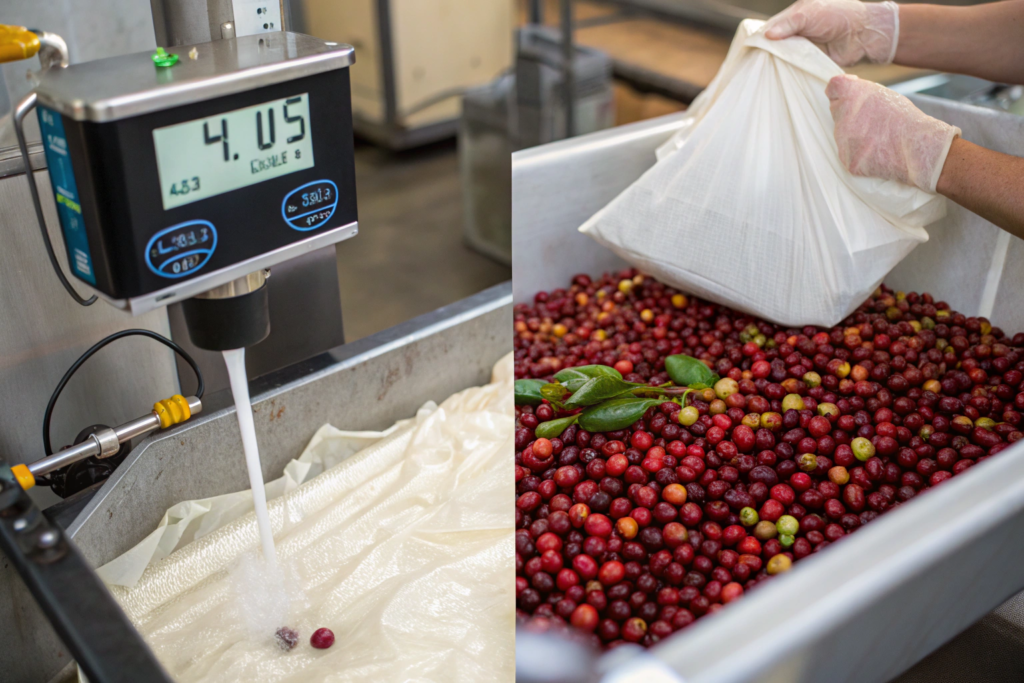
An anaerobic washed coffee takes a third path. The cherry is pulped, just like a standard washed lot. The skin is removed. But then, instead of fermenting in open air, the mucilage-covered beans are sealed in a tank flushed with carbon dioxide or nitrogen. The oxygen is purged. The tank is pressurized. The fermentation proceeds in an anaerobic environment, but without the fruit skin.
In an anaerobic washed protocol, the removal of the fruit skin before sealing the tank eliminates the heavy, winey, and often wild bacterial notes of a full anaerobic natural, resulting in a fermentation dominated by clean, fruity yeast esters that enhance brightness rather than body.
This small change—removing the skin before the anaerobic phase—has a massive impact on the microbial community. The wild bacteria and fungi that live on the cherry skin are largely removed. The fermentation inside the tank is driven by the yeasts and bacteria that live in the mucilage itself, and by any inoculated cultures the producer adds. The process is cleaner, more predictable, and less prone to the funky, sour, or overly fermented notes that can appear in anaerobic naturals.
The duration is typically 36 to 72 hours, at a controlled temperature of 20 to 24 degrees Celsius. The pH is monitored. When it drops to the target range—typically 3.8 to 4.2—the fermentation is stopped. The beans are removed from the tank, washed in clean water to remove the remaining mucilage, and dried on raised beds. The result is a coffee with the clarity of a washed lot and the aromatic intensity of an anaerobic process.
Why Does Removing Oxygen Improve Clarity Instead of Creating Funk?
This is the central question that confuses many buyers. In a natural anaerobic, the lack of oxygen often creates intense, sometimes challenging flavors—winey, fermented, funky. Why does removing oxygen in a washed anaerobic create the opposite effect—more clarity, more brightness?
The answer lies in what is being fermented. In a natural anaerobic, the whole cherry is present. The skin, the pulp, and the mucilage are all in the tank. This is a complex, sugar-rich environment. Many different microorganisms—yeasts, bacteria, fungi—compete for the sugars. Some produce desirable esters. Others produce acetic acid, butyric acid, and other compounds that taste sour, funky, or unpleasant. The anaerobic environment amplifies both the good and the bad.
In an anaerobic washed, the skin and pulp are gone. The substrate is primarily the mucilage, which is a simpler, less chaotic sugar matrix. The microbial diversity is lower because the skin-associated microbes have been removed. The fermentation is dominated by a smaller number of yeast species that produce high levels of fruity esters and low levels of acids.
The result is a fermentation that adds intense, clean, fruit-forward aromatics—white flowers, stone fruit, citrus—without the funky, sour, or heavy notes that can accompany full-fruit anaerobic fermentation. The clarity comes from the simplicity of the microbial community and the absence of the fruit skin.
The absence of the cherry skin in anaerobic washed fermentation removes the primary source of wild bacteria and fungi, shifting the microbial balance toward clean, ester-producing yeasts that enhance brightness and floral aromatics without the heavy, sour funk of full-fruit anaerobic processing.
This is why anaerobic washed coffees often cup with remarkable transparency. The cup is not muddied by competing microbial byproducts. The acidity of the original green coffee is preserved, even amplified, rather than being overwhelmed by ferment characters. The finish is clean and long, without the slightly sour aftertaste that some anaerobic naturals carry.
I have cupped anaerobic washed lots alongside anaerobic naturals from the same Catimor plot. The natural was a tropical fruit bomb—mango, passionfruit, heavy body. The washed was a glass of white wine—jasmine, lemon zest, silky body. They were both exceptional, but they were completely different coffees. The difference was the skin.
How Does Mucilage Composition Feed Clean Yeast Strains?
Mucilage is the sticky, sugary layer between the coffee bean and the fruit skin. It is composed of water, sugars—glucose and fructose—and complex polysaccharides called pectins. It is the primary fuel for fermentation in both standard washed and anaerobic washed processes.
In standard open fermentation, the mucilage is consumed by whatever microorganisms are present in the environment. The fermentation is a free-for-all. Yeasts, bacteria, and fungi all compete. The flavor outcome is somewhat random. Sometimes it is clean. Sometimes it is not.
In anaerobic washed fermentation, the producer can control the microbial community by inoculating the tank with a specific yeast strain. The mucilage provides a clean, simple sugar source for the yeast. The yeast consumes the sugars and produces alcohol, carbon dioxide, and esters—the fruity, floral aromatic compounds that make anaerobic washed coffees so distinctive.
Because the mucilage is a simpler substrate than whole cherry, the fermentation is more predictable. The yeast strain dominates. The production of desirable esters is maximized. The production of undesirable acids is minimized. The result is a fermentation that amplifies the inherent character of the coffee—its acidity, its florals, its sweetness—rather than overlaying it with heavy ferment notes.
I work with several specific yeast strains for our anaerobic washed lots, selected for their ability to produce high levels of floral and citrus esters. The choice of strain is a critical variable. A strain optimized for red wine production will produce different notes than a strain optimized for white wine or sparkling wine. The strain is matched to the variety and the target flavor profile.
How Does This Process Affect the Final Cup Profile?
The cup profile of an anaerobic washed coffee is a study in contrasts. It has the intensity of a natural and the clarity of a washed. It does not fit neatly into either category. It is its own category.
Acidity is the dominant attribute. Anaerobic washed coffees are bright—often intensely so. The fermentation preserves and amplifies the organic acids that give coffee its sparkle. A washed Catimor that cups with a mild citric acidity will, after anaerobic washing, cup with a pronounced lemon or even white grape acidity. The acid is not sharp or sour. It is refined, elegant, and wine-like.
Aroma is the second defining attribute. The ester production during fermentation adds a layer of floral and fruit fragrance that is not present in a standard washed lot. The dry grounds smell of jasmine, honeysuckle, or orange blossom. The brewed coffee releases a perfume that fills the cupping room. The aroma alone can be worth the price of the coffee.
Anaerobic washed coffee cups with the sparkling acidity and aromatic intensity of a high-end washed Ethiopian Yirgacheffe but layered with a cleaner, more refined body and a distinctly polished finish that eliminates any hint of rustic ferment.
Flavor follows the aroma. The fruit notes are not the heavy, jammy fruits of a natural. They are light, bright, and fresh—white peach, green grape, lychee, lemon zest. The florals carry through to the flavor. The sweetness is clean and honey-like, not heavy or caramelized. The body is silky and tea-like, not syrupy. The finish is exceptionally clean and long, with no astringency or sourness.
The overall impression is of a coffee that is intensely aromatic and brightly acidic, yet refined and elegant. It is a coffee that appeals to the Nordic-style roaster who wants clarity and complexity, but also to the adventurous consumer who wants a flavor experience that is unlike standard washed coffee.
What Is the Difference in Acidity Compared to a Standard Washed Coffee?
The acidity difference between a standard washed and an anaerobic washed lot from the same bean is the most immediately noticeable sensory shift. It is not just a matter of more acidity. It is a matter of a different kind of acidity.
A standard washed Catimor typically has a mild, pleasant citric acidity—think lemon or tangerine. The acidity is balanced by chocolate and nut notes. It is a supporting player, not the star. The pH of the green coffee is typically around 5.2 to 5.5. The perceived acidity in the cup is moderate.
An anaerobic washed Catimor has a more intense, more complex acidity. The pH of the green coffee is lower—typically 4.8 to 5.2—due to the controlled acid production during fermentation. The acids produced are not just the citric and malic of the bean itself, but also lactic acid and other organic acids produced by the fermenting yeasts. The acidity is layered—citrus, white wine, and a creamy lactic note.
On the cupping table, this translates to a coffee that tastes brighter, more vibrant, and more wine-like than its standard washed sibling. The acidity is not sour or harsh. It is balanced by the clean sweetness and the silky body. But it is undeniably the dominant attribute. For a roaster who wants a coffee that pops on the cupping table, anaerobic washed lots deliver.
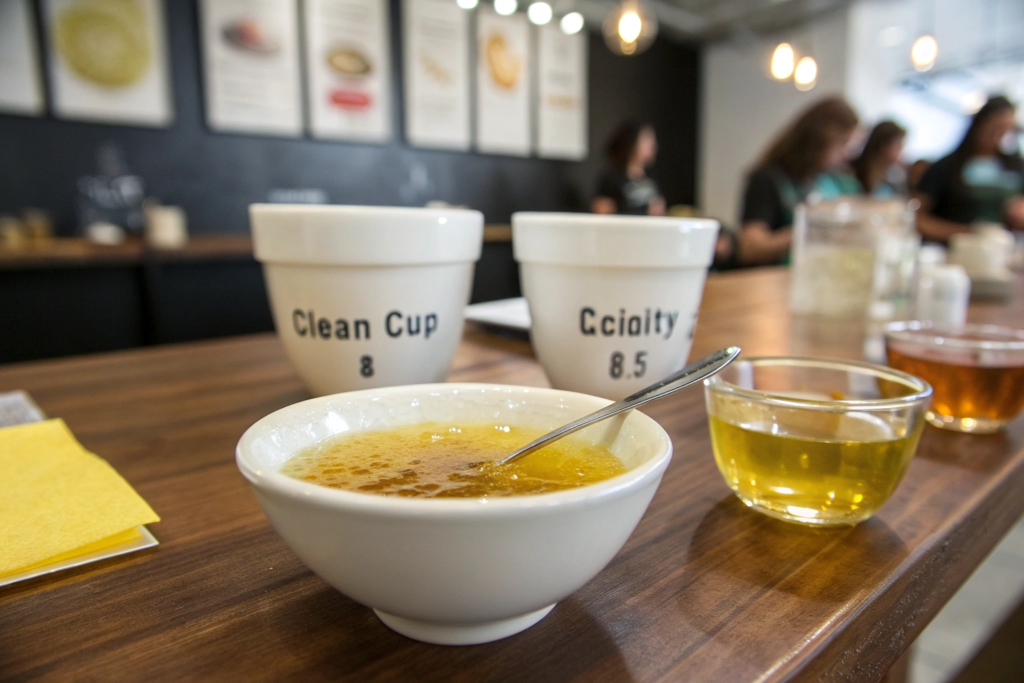
I have cupped our standard washed Catimor and our anaerobic washed Catimor side by side dozens of times. The standard lot cups with notes of dark chocolate, almond, and a hint of lemon. The anaerobic washed lot cups with notes of white grape, jasmine, and lemon zest, with a brighter, more lingering acidity. The difference is three to four points on the cupping score. The anaerobic washed lot consistently scores higher, driven by the acidity and aroma categories.
Can Anaerobic Washed Coffees Age Gracefully in Storage?
The aging behavior of anaerobic washed coffees is a question I have been studying for several seasons. The early results are promising. These coffees appear to age more gracefully than standard washed lots, though not as slowly as some natural processed coffees.
The reason is the altered chemical composition of the bean. The fermentation process produces compounds that are more stable than some of the volatile aromatics in a standard washed coffee. The esters created during fermentation are relatively stable molecules. They do not evaporate or degrade as quickly as some of the native coffee aromatics.
The lower pH of the green coffee also contributes to stability. A more acidic environment slows some of the oxidative reactions that cause staling. The lipids oxidize more slowly. The acids degrade more slowly. The coffee holds its vibrancy longer.
I have cupped anaerobic washed lots at 12 months post-harvest that still tasted remarkably fresh and bright. The acidity had softened slightly, but the floral and citrus notes were still present. A standard washed lot of the same age had faded more noticeably. The anaerobic washed lot had a longer shelf life.
This is valuable for roasters who hold inventory or who sell retail bags that may sit on shelves. The anaerobic washed coffee will still taste vibrant when the customer brews it weeks or months after purchase. The longer shelf life adds commercial value to an already premium product.
How to Roast Anaerobic Washed Lots for Maximum Clarity?
The delicate aromatics that make anaerobic washed coffees special are also what make them challenging to roast. The volatile esters and the bright organic acids are fragile. Apply too much heat, and they evaporate or degrade. Roast too dark, and they are buried under roast character. The roast profile must be designed to preserve and amplify these delicate compounds.
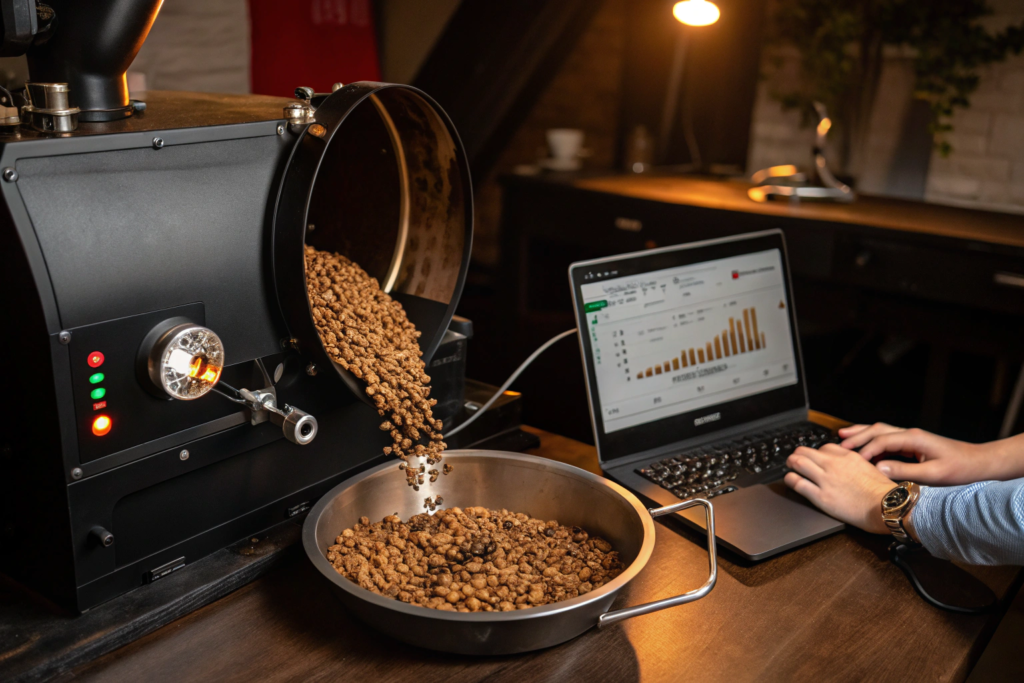
The first rule is to roast light. Agtron whole-bean reading of 65 to 75. This is lighter than the typical specialty filter roast. At this roast level, the Maillard reaction has progressed enough to develop the sugars and body, but the volatile aromatics are largely intact. The acidity is bright and sparkling. The floral and citrus notes are vivid.
The second rule is to use a gentle, extended Maillard phase. The Maillard phase is the period between the end of drying and the start of first crack. It is when the sugars and amino acids react to create browning and flavor. For anaerobic washed lots, this phase should be long enough to develop the sugars fully—typically 3 to 4 minutes—but not so hot that the delicate esters are destroyed.
Roasting anaerobic washed lots requires a light Agtron target of 65 to 75, an extended but gentle Maillard phase to develop sweetness without burning off esters, and a short development time of 12 to 14 percent to preserve the volatile floral and citrus aromatics that define the cup.
The third rule is to keep the development time short. Development time ratio of 12 to 14 percent. First crack on anaerobic washed beans is typically clear and energetic, similar to a standard washed lot. After first crack, the beans need just enough time to develop fully without losing their volatile edge. Pull the beans while the floral aroma is still rising from the trier. If the aroma shifts to caramel and chocolate, the florals are already fading.
The charge temperature should be moderate—slightly lower than for a standard washed lot of the same density. The lower charge temperature prevents scorching of the delicate surface compounds. The rate of rise should be gentle and declining, with no spikes. The airflow should be sufficient to carry away smoke and chaff without cooling the bean mass excessively.
Why Does a Lighter Roast Amplify the Aerobic Notes?
The volatile esters that produce the jasmine, white grape, and citrus notes are most stable at lower temperatures. As the bean temperature rises during roasting, these compounds begin to evaporate. The darker the roast, the more esters are lost. A light roast stops the process before the ester loss becomes significant.
The organic acids that produce the bright acidity also degrade at higher temperatures. Citric acid and malic acid begin to break down as the roast progresses past first crack. A light roast preserves these acids, resulting in a brighter, more vibrant cup. A darker roast mutes the acidity and allows the chocolate and roast notes to dominate.
A light roast also preserves the silky, tea-like body that is characteristic of anaerobic washed coffees. As the roast darkens, the body becomes heavier and more syrupy. The elegance of the mouthfeel is lost. The coffee becomes more generic.
The target Agtron range of 65 to 75 whole bean is the sweet spot where the sugars have developed, the body is present, but the volatile aromatics and the bright acids are still intact. The coffee tastes like what it is—an anaerobic washed lot—rather than like a generic light roast.
I provide roast recommendations with every anaerobic washed lot I sell. The recommendations include the target Agtron range, the development time ratio, and the charge temperature. The roaster should cup the coffee at different roast levels to find the exact sweet spot for their equipment and their customers.
What Brew Methods Best Showcase the Silky Mouthfeel?
The silky, tea-like body of an anaerobic washed coffee is best showcased by brewing methods that emphasize clarity and aroma. Pour-over methods—V60, Kalita Wave, Chemex—are ideal. These methods use paper filters that remove coffee oils and sediment, producing a clean, transparent cup. The delicate florals and the bright acidity are presented without distraction.
The V60, with its thin filter and fast flow rate, produces a cup with maximum clarity and brightness. The floral notes are vivid. The acidity is sparkling. This is the method of choice for a cupping-style evaluation.
The Chemex, with its thick filter, produces an even cleaner cup. The body is lighter and more tea-like. The aromatics are pure. This is the method for a customer who wants the most elegant, refined expression of the coffee.
For immersion methods—French press, Aeropress—the cup will have more body and a slightly muted acidity. The coffee is still delicious, but the delicate florals are less prominent. The immersion method adds weight.
I do not recommend anaerobic washed coffees for espresso, except as a very light, modern espresso for the adventurous drinker. The bright acidity can taste sour under pressure. The silky body can feel thin. The coffee is at its best as a filter brew, where its elegance can shine.
Conclusion
Anaerobic washed coffee is a breakthrough in processing that combines the aromatic intensity of anaerobic fermentation with the transparency and clarity of washing. The key is the removal of the fruit skin before the oxygen-free phase, which shifts the microbial community toward clean, ester-producing yeasts and away from the wild bacteria and fungi that create heavy, funky notes.
The result is a cup that is intensely bright and aromatic, with notes of white grape, jasmine, lemon zest, and a silky, tea-like body. The acidity is sparkling and complex. The finish is exceptionally clean. The coffee scores higher on the cupping table than standard washed lots from the same origin.
For roasters, anaerobic washed lots are a premium offering that appeals to Nordic-style filter enthusiasts and adventurous consumers. The roast must be light and gentle to preserve the delicate aromatics. The brew method should emphasize clarity. The story should focus on the clean, bright, wine-like character of the coffee.
If you want to experience the bright clarity of our anaerobic washed Yunnan lots, contact Cathy Cai at BeanofCoffee. She can send you a sample with the full fermentation protocol—yeast strain, pH curve, temperature log—and the cupping scores. She can also discuss custom anaerobic washed processing for your exclusive lot. Her email is cathy@beanofcoffee.com. She responds quickly. The lots are micro-sized. Reach out early to discuss availability for the current harvest.