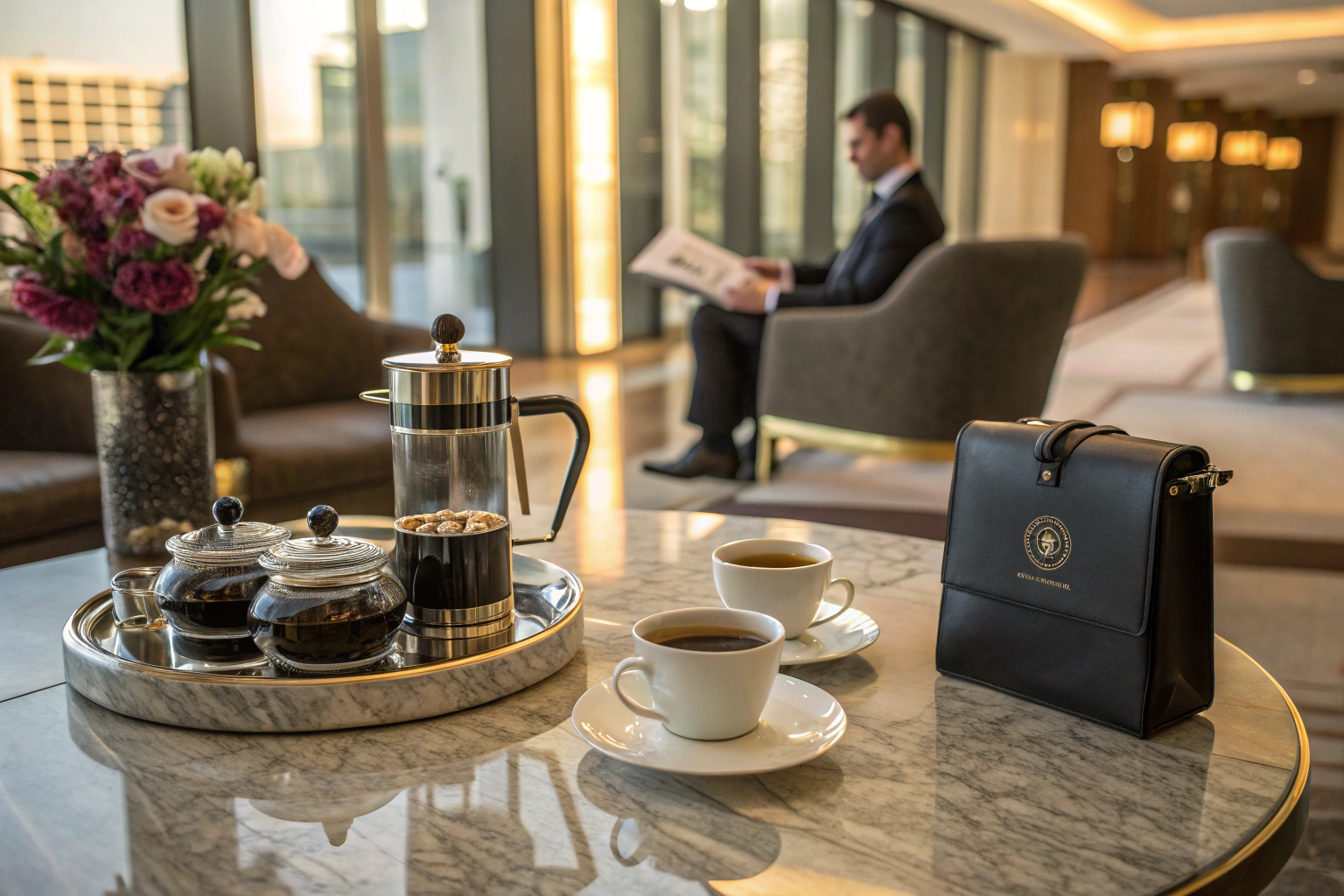
A hotel purchasing director from a five-star chain in Dubai contacted me last year. She was frustrated. Her hotel served a famous luxury brand of coffee, but her guests were complaining. "It tastes like burnt rubber," she said, bluntly. "My guests pay $1,000 a night. They expect better."
Her problem was not unique. For decades, luxury hotels have relied on legacy coffee brands with recognizable names but commodity-grade quality. Today's luxury traveler is different. They brew single-origin pour-overs at home. They recognize tasting notes. They demand an experience that matches the thread count of the sheets. She needed a private label coffee that aligned with her hotel's brand—elegant, distinctive, and memorable.
Sourcing green coffee for a luxury hotel private label requires a blend concept built on a clean, high-scoring base like washed Yunnan Catimor, layered with a fruit-forward natural lot for complexity, delivered with full traceability, a compelling origin story, and packaging flexibility that elevates the hotel's brand rather than the roaster's.
Here is how to design the blend, secure the supply chain, and package the story to meet the exacting standards of a five-star hotel.
How to Build a Blend Profile for a Five-Star Hotel?
A hotel private label is not just a coffee. It is a sensory signature. The blend must be distinctive enough to be memorable, but balanced enough to please hundreds of different palates every morning. It must taste excellent as a black filter coffee, but also hold up to milk in a cappuccino. It must taste luxurious—smooth, rich, and complex—without being challenging.
The foundation of a luxury hotel blend is a clean, high-scoring washed Arabica. This is the canvas. It provides the chocolate, nut, and caramel base notes that most guests recognize and love. It ensures the coffee is smooth and balanced, without the sharp acidity that divides opinion at the breakfast buffet. A washed Catimor from our high-altitude Baoshan plots is ideal for this role. It cups at 83 to 85 points with notes of dark chocolate, almond, and a gentle citrus brightness. It has the heavy body that makes a mouthfeel feel luxurious.
The second component is a fruit-forward natural processed coffee. This adds a layer of complexity and intrigue. A natural Yunnan Catimor, with notes of dried strawberry, honey, and a syrupy body, provides a subtle fruit undertone that makes the blend memorable. It is the note that makes a guest pause and think, "This is different. This is special." The natural component should be used at a low percentage—20 to 30 percent—so it enhances the base without dominating it.
A luxury hotel blend is built on a high-scoring washed base for clean chocolate and body, layered with a small percentage of a fruit-forward natural or anaerobic lot for a distinctive, memorable complexity that distinguishes it from standard commercial coffee.
The third, optional component is a "jewel"—a tiny amount of an exceptional micro-lot. This could be an anaerobic fermented lot, a wine yeast fermented lot, or a rare variety like SL28. The jewel adds a top note of extraordinary flavor that sets the blend apart from any other hotel coffee. It is used at 5 to 10 percent, enough to lift the blend without making it taste like a single origin.
The blend ratio I recommend for a luxury hotel is 60 to 70 percent washed Catimor base, 20 to 30 percent natural or honey lot, and 5 to 10 percent jewel micro-lot. The exact ratio depends on the target flavor profile and the specific lots available. The blend should be cupped blind by the hotel's team alongside their current coffee. The difference should be undeniable.
How Do You Balance Acidity for a Universal Palate?
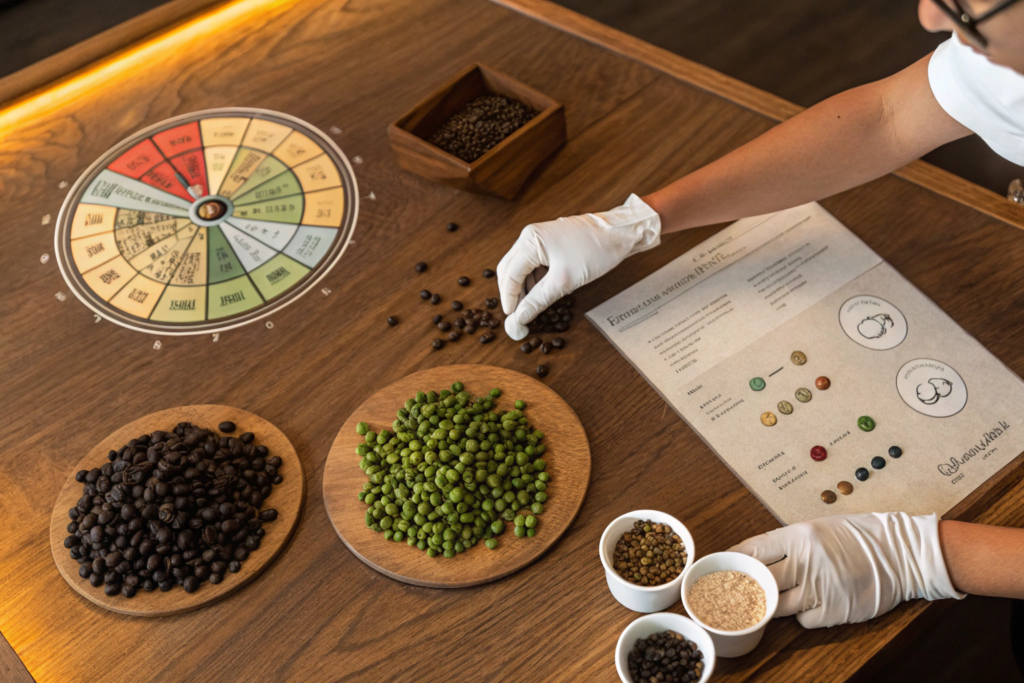
Acidity is the most polarizing attribute in coffee. Some guests love a bright, citrusy cup. Others find it sour and unpleasant. A luxury hotel must serve a coffee that pleases both groups.
The solution is to select a base coffee with moderate, balanced acidity—not absent, not aggressive. The washed Catimor from our high-altitude plots fits this requirement. The acidity is citric but soft, like a hint of lemon zest rather than a sharp squeeze of juice. It provides a pleasant brightness without overwhelming the cup.
The roasting approach also matters. For a hotel blend, a medium to medium-dark roast is appropriate. Agtron 50 to 55 whole bean. This roast level develops the chocolate and caramel notes fully while softening the acidity. The brighter notes from the natural component are preserved enough to add complexity but not so much that they taste sour.
The brew method in the hotel must be calibrated to the blend. Whether the hotel uses batch brewers, French press, or espresso machines, the recipe should be optimized to extract the sweetness and body fully without over-extracting acidity. I recommend that the roaster provide brewing guidelines and, ideally, train the hotel's F&B staff on proper extraction. A poorly brewed luxury blend still tastes mediocre. The coffee, the roast, and the brew are a system.
Why Is a "Signature" Flavor Story Critical for Branding?
A luxury hotel is selling an experience. Every detail—the sheets, the lighting, the scent in the lobby—is curated to tell a story. The coffee must tell a story too. "This is good coffee" is not a story. "This coffee comes from a single farm in the mountains of Yunnan, where the cherries are hand-picked and dried on raised beds" is a story.
The story should be crafted around the specific origin and the specific lots in the blend. The story should include the altitude, the variety, the processing method, and the farmer's name. It should include the tasting notes—chocolate, dried fruit, honey—that the guest can look for in the cup.
The story should be printed on the in-room menu, on the minibar card, and on the restaurant table tent. It should be brief—three or four sentences—and elegant. The guest reading it over breakfast should feel that they are participating in something special, not being given a lecture.
I provide a ready-to-use signature story with every private label lot. The hotel can print it verbatim or adapt it to their brand voice. The story is the bridge between the farm and the guest. It transforms a cup of coffee from a commodity into a memory. For more on how this complements other sourcing decisions, such as planning for summer menus or identifying reserve-grade lots, you can apply the same storytelling framework.
How to Ensure Consistency for a Multi-Site Hotel Chain?
A single boutique hotel can adapt its coffee offering as lots change. A chain with ten, twenty, or fifty properties cannot. The coffee served in Dubai must taste identical to the coffee served in London. The guest who stays at the chain for a business trip expects the same experience in every city. Consistency is non-negotiable.
This means the green coffee supply must be stable across seasons. The base component of the blend must be a coffee that is available in consistent volume and consistent quality, harvest after harvest. Single-plot micro-lots are too variable and too small. A larger, well-managed farm like ours, with multiple high-altitude Catimor plots that cup within a one-point range season to season, provides the necessary consistency.
The blend recipe must be treated as a specification, not a suggestion. The base component is locked in as a specific lot or a specific quality tier. The fruit component is locked in as a natural processed coffee with a defined cupping score range. If a specific lot runs out, the replacement lot must cup within the same profile. The hotel's roaster or quality control team must approve every replacement lot before it enters the blend.
Ensuring consistency for a hotel chain requires forward contracting of a stable, high-volume base coffee, strict quality tolerances for each blend component, and a documented approval process that requires cupping and pre-shipment sample verification for every lot before it ships.
The contract should include a forward booking agreement. The hotel commits to a specific annual volume. The supplier commits to delivering coffee that meets a defined sensory specification. The contract should specify the allowable variance in cupping score—typically plus or minus one point—and the remedy if the specification is not met.
At Shanghai Fumao, we work with hotel chains to establish multi-year supply agreements. We provide cupping data across multiple harvests to demonstrate consistency. We hold buffer stock to protect against seasonal variations. The hotel's coffee does not change.
What Quality Control Protocols Protect a Hotel's Brand?
A hotel brand is worth millions, sometimes billions, of dollars. A single food safety incident or a widely noticed quality failure can damage that brand. The coffee supply chain must have rigorous quality control protocols to protect the hotel.
The first protocol is the pre-shipment sample. Before every container or pallet ships, a sample is pulled from the exact bags that will be loaded. The sample is sent to the hotel's designated roaster or quality control team for cupping. The shipment is only approved if the sample cups within the agreed specification.
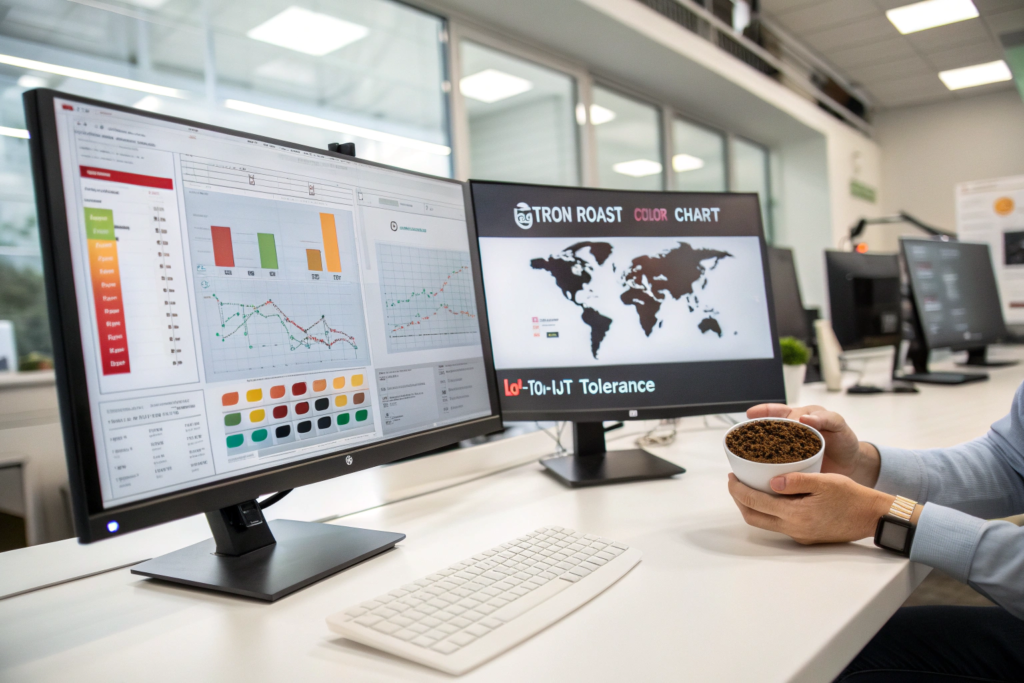
The second protocol is the moisture and water activity check. Every lot must have moisture between 10.5 and 12 percent and water activity below 0.60. These measurements ensure the coffee is microbiologically stable and will not mold or stale prematurely during storage. The data is provided with every shipment.
The third protocol is the roast color verification. The hotel's roaster should cup every production roast batch and measure the Agtron color. The roast color should be within a narrow target range—plus or minus 2 Agtron points. A batch that drifts outside the range is flagged and not shipped to the hotels.
The fourth protocol is the guest feedback loop. The hotel should have a system for capturing guest comments about the coffee, whether positive or negative. The feedback is shared with the supplier and the roaster. A pattern of negative feedback triggers an investigation and a corrective action.
I provide all of these protocols as part of our private label supply agreements. The hotel's brand is protected by a system of checks and balances that starts on the farm and ends at the guest's cup.
How Do You Manage Logistics for Global Hotel Distribution?
A global hotel chain needs coffee delivered to properties on multiple continents. The logistics must be reliable, predictable, and documented. A missed delivery means a hotel without coffee, which is unacceptable.
The logistics strategy depends on whether the coffee is shipped green to regional roasters or roasted centrally and shipped to hotels. Both models exist in the luxury hotel segment.
If the coffee is shipped green, the supplier manages the export logistics to regional ports. The coffee is shipped in GrainPro-lined containers to preserve freshness. Each regional roaster receives a pre-shipment sample, cups the lot, and approves it before the container departs. The supplier coordinates with multiple roasters to ensure consistent quality across regions.
If the coffee is roasted centrally, the supplier ships green coffee to a single roaster, who then distributes roasted coffee to the hotels. The logistics are simpler—one export route, one roaster—but the roasted coffee must be packaged to preserve freshness during distribution and on the hotel's shelf.
I recommend the regional roasting model for global chains with properties on multiple continents. The coffee arrives fresher, the shipping costs are lower, and the regional roasters can provide local support and training to the hotel staff. The supplier's role is to ensure the green coffee is consistent across all regions.
The contract should specify the delivery timelines, the Incoterms, and the insurance coverage. The supplier should provide the shipping documentation—bill of lading, certificate of origin, phytosanitary certificate—promptly and accurately. A single missing document can delay a container at customs by weeks. For more on the nuances of green coffee packaging and logistics, a reader might explore how micro-lot transport differs from commercial shipping.
How to Package and Present the Private Label Story?
The packaging for a luxury hotel private label coffee is an extension of the hotel's brand. The bag, the label, and the in-room collateral must be as carefully designed as the coffee inside.
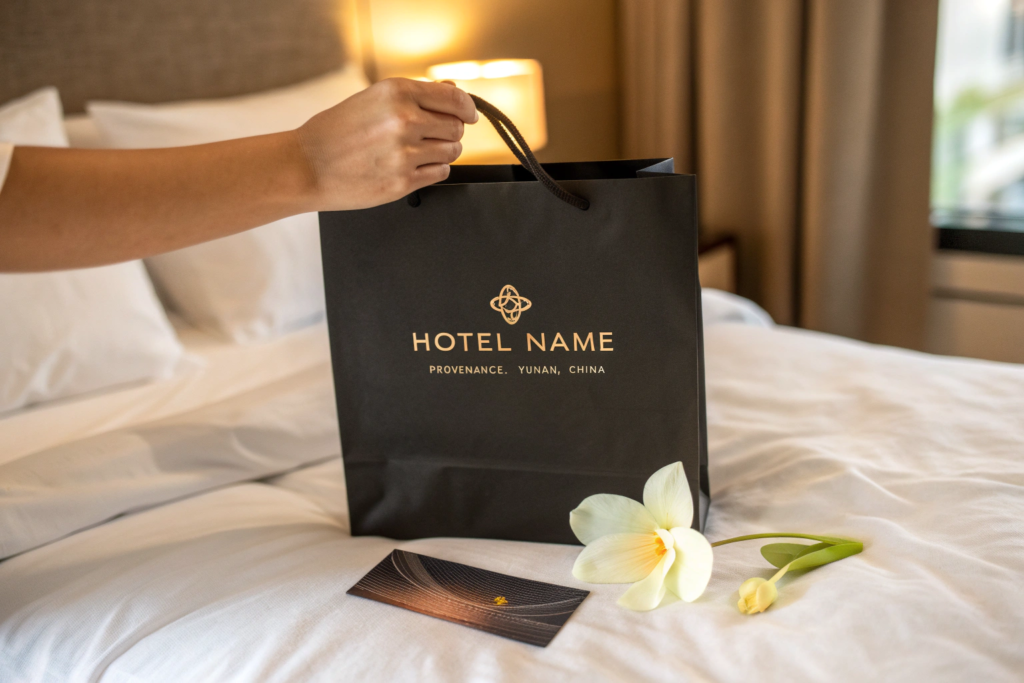
The bag should reflect the hotel's aesthetic. If the hotel is modern and minimalist, the bag should be clean and understated, with a simple logo and elegant typography. If the hotel is classic and opulent, the bag might feature gold foil and a more ornate design. The bag should look like it belongs in the hotel's rooms and suites.
The label should include the hotel's name and logo as the primary brand. The coffee's origin story and tasting notes should be secondary, presented as supporting detail that adds value. The guest is buying the hotel's coffee, not the roaster's. The private label arrangement ensures the hotel owns the customer relationship.
The in-room collateral is an opportunity to deepen the guest's connection to the coffee. A small card on the minibar tray can tell the story of the farm, the farmer, and the processing. The card can include brewing instructions for the in-room French press or drip maker. The guest who reads the card and brews the coffee is more likely to enjoy it and more likely to purchase a bag to take home.
Luxury private label packaging prioritizes the hotel's brand identity on the bag, with the origin story and tasting notes presented as supporting elements, and includes in-room collateral that invites the guest to engage with the coffee's provenance and brewing instructions.
The bag should also be available for retail sale in the hotel's gift shop or lobby café. The guest who loves the coffee at breakfast can purchase a bag to enjoy at home. The retail bag extends the hotel brand into the guest's daily life and generates additional revenue.
How Do You Train Hotel F&B Staff to Tell the Coffee Story?
The hotel's food and beverage staff are the front-line storytellers. The waiter who pours the coffee at breakfast, the barista in the lobby café, the room service attendant—they all interact with the guest around the coffee. If they cannot answer a simple question about the coffee, the carefully crafted story falls flat.
The training should be simple, memorable, and focused on three key points. First, where the coffee comes from. "This coffee is from a family farm in Yunnan, China, in the mountains near the Himalayas." Second, how it tastes. "It has notes of dark chocolate, dried fruit, and honey. It is smooth and rich." Third, why the hotel chose it. "We selected this coffee because it is exceptional quality and because we know the farmer personally."
The training should include a tasting. The staff should taste the coffee themselves. They should experience the flavor notes they are describing to guests. The tasting transforms the staff from script-readers into genuine advocates. A waiter who says, "I love this coffee—it has this amazing chocolate and berry thing going on," sells more coffee than one who recites a memorized line.
The training should be repeated periodically, especially when new staff are hired or when the seasonal blend component changes. A short video from the roaster or the producer, filmed at the farm, can be a powerful training tool. The staff see the trees, the cherries, and the farmer. The story becomes real.
I provide training materials—tasting notes, origin stories, farm photos, and videos—with every private label lot. The materials are designed to be used by the hotel's F&B trainer to onboard staff quickly and effectively.
What Is the ROI of a Premium Private Label Coffee?
A luxury hotel invests in a premium private label coffee for two reasons: guest satisfaction and brand differentiation. The return on that investment is measured in repeat bookings, positive reviews, and incremental revenue.
Guest satisfaction is the primary driver. A hotel that serves exceptional coffee earns a reputation for quality that extends beyond the breakfast table. The guest who remembers the coffee remembers the hotel. The guest who is disappointed by the coffee may also be disappointed by the hotel, even if everything else was perfect. Coffee is often the first and last thing a guest consumes each day. It sets the tone.
Brand differentiation is the secondary driver. A private label coffee tells a story that a generic commercial brand cannot. It gives the hotel a unique point of difference. The guest who travels frequently may stay at many luxury hotels. The one with the memorable coffee stands out.
Incremental revenue comes from retail sales. A guest who loves the coffee can purchase a bag to take home. The bag serves as a souvenir that extends the hotel brand into the guest's home. Every time the guest brews the coffee, they remember the hotel. The bag also serves as a marketing tool—friends and family who taste the coffee ask where it came from.
The cost of a premium private label coffee is higher than a commodity hotel blend. But the cost difference, spread across thousands of guest nights, is negligible per guest. The investment is in quality, consistency, and story. The return is in loyalty, reputation, and revenue.
Conclusion
Sourcing coffee for a high-end hotel chain private label is a partnership, not a transaction. It begins with a carefully constructed blend built on a clean, high-scoring washed base, layered with a fruit-forward natural or rare micro-lot for complexity. It requires a supply chain that delivers consistency across harvests and across continents, with rigorous quality control and transparent documentation. It is presented in packaging that reflects the hotel's brand and supported by a story that the F&B staff can tell with genuine enthusiasm.
The result is a coffee that meets the expectations of a luxury traveler—someone who knows good coffee and expects it to be part of a five-star experience. The coffee becomes part of the hotel's identity. The guest remembers it. The guest buys it. The guest returns.
If you are a hotel chain or a roaster serving the hospitality sector and want to explore a private label Yunnan coffee for your properties, contact Cathy Cai at Shanghai Fumao. She can send you a sample of our recommended blend components, along with cupping scores, lot traceability, and volume availability. She can also discuss forward contracting and custom blend development. Her email is cathy@beanofcoffee.com. She responds quickly and can help you build a coffee program that matches the standards of your hotel.