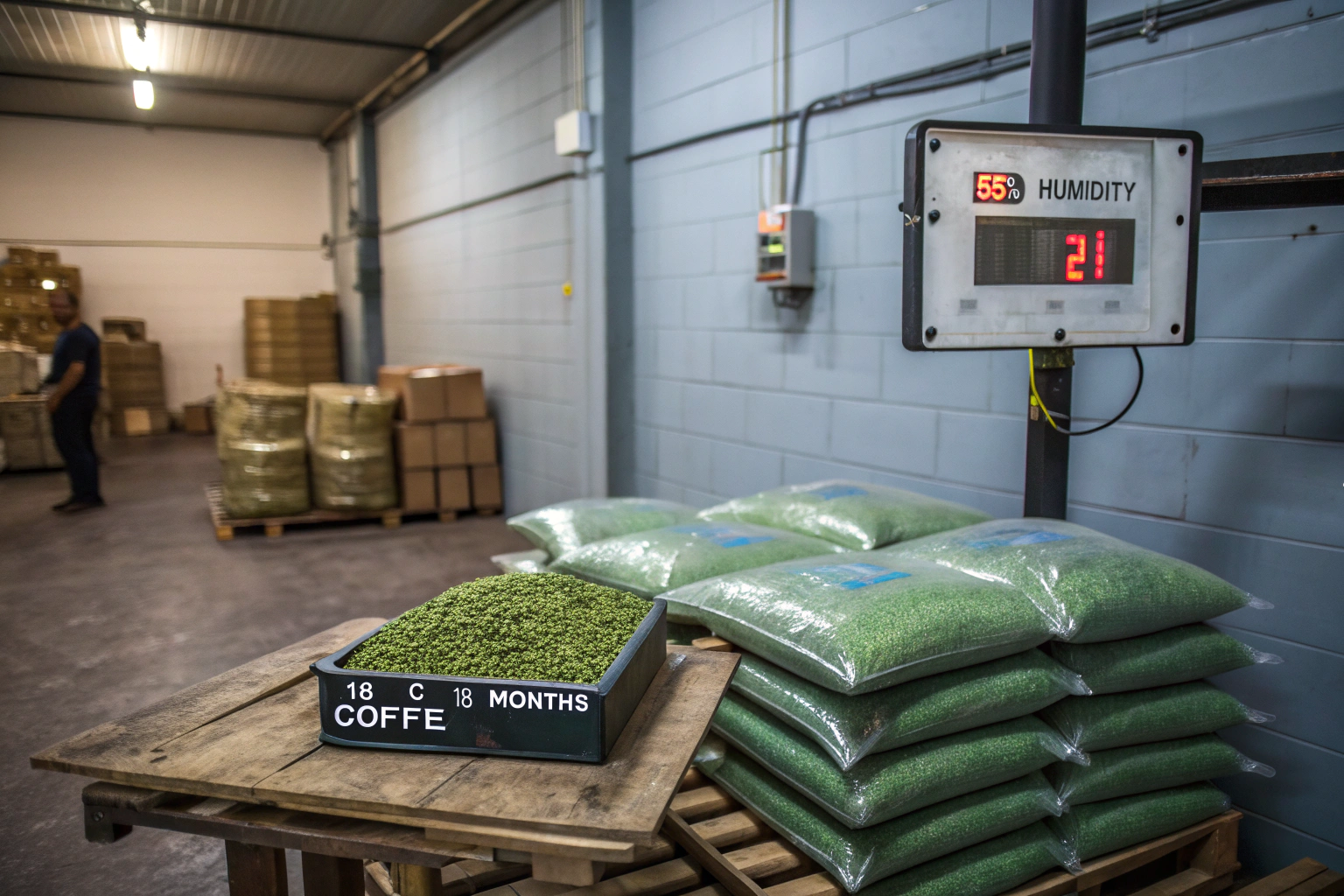
A roaster I work with in London called me with a dilemma last year. He had found a forgotten pallet of our Baoshan washed Arabica in the corner of his warehouse. The bags were vacuum-sealed. The date on the pallet was 26 months ago. He cut one open, expecting the worst. He cupped it against a fresh shipment of the same lot. The difference was barely a point. The aged coffee had lost some of its brightness, but it was still clean, sweet, and entirely usable. He had accidentally discovered what vacuum sealing can do.
The shelf life of vacuum-sealed green coffee beans, when stored in stable cool and dark conditions, can extend to 18 to 24 months from the harvest date while retaining specialty-grade cup quality. This is roughly double the 10 to 12 months expected from beans stored in standard GrainPro or jute packaging. The vacuum environment dramatically slows the oxidative and metabolic processes that cause coffee to age.
Vacuum sealing is not magic. It does not stop time. But it removes the primary driver of coffee staling, which is oxygen. Without oxygen, the fats in the bean do not go rancid. The volatile aromatics do not oxidize. The bean enters a state of suspended animation. The clock ticks, but much more slowly.
How Does Vacuum Sealing Preserve Green Coffee Differently from Other Methods?
Green coffee ages through two main pathways. Oxidation and metabolic respiration. Oxygen in the air reacts with the fats and oils in the bean, producing rancid, stale flavors. Meanwhile, the bean itself is alive. It respires, consuming its own sugars and releasing carbon dioxide and heat. Both processes degrade quality over time.
Vacuum sealing preserves green coffee differently by physically removing nearly all the oxygen from the packaging environment. This stops oxidative rancidity immediately and halts the bean's aerobic respiration. The bean enters an anaerobic state where its metabolic activity is drastically reduced, preserving sugars, acids, and volatile aromatics far longer than hermetic bags that trap a modified atmosphere but still contain some oxygen.
A GrainPro bag is an excellent storage technology. It creates a hermetic barrier. The beans inside consume the available oxygen and replace it with carbon dioxide. The resulting low-oxygen, high-CO2 environment slows aging. But the oxygen is not removed. It is consumed over time by the beans. During that consumption period, some oxidation occurs. A vacuum-sealed bag starts at near-zero oxygen from the moment it is sealed. There is no consumption period. The protection is immediate and complete.
What Happens to the Bean's Internal Chemistry Under Vacuum?
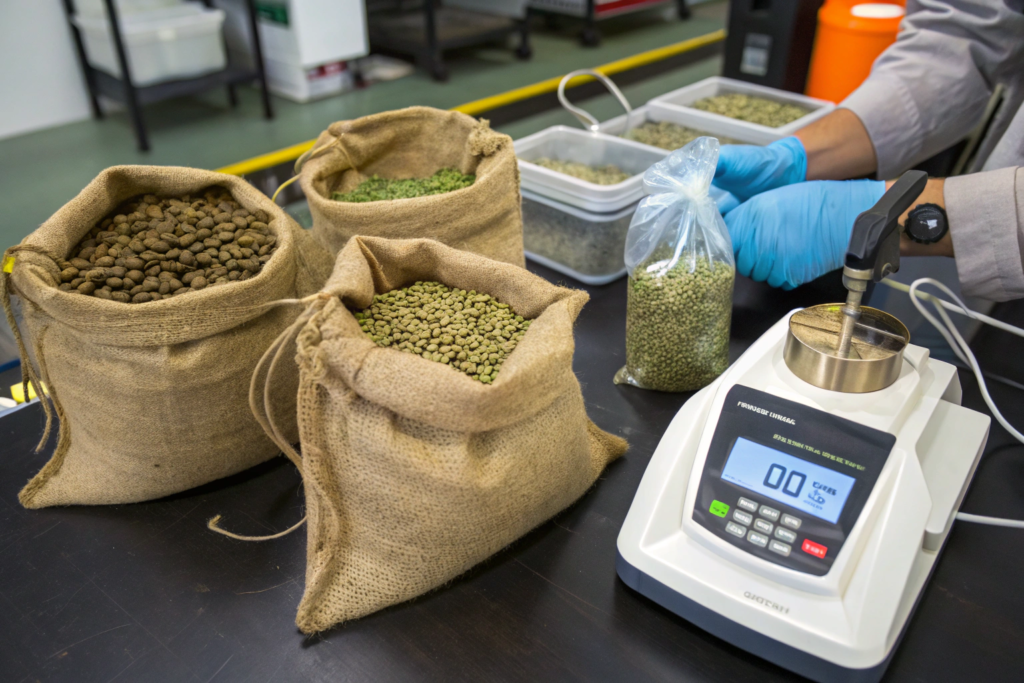
The coffee bean is a complex package of water, sugars, fats, proteins, and volatile aromatic compounds. Under normal atmospheric storage, these components interact. Oxygen attacks the double bonds in lipid molecules. Enzymes break down sugars. Volatile compounds evaporate or oxidize.
Under vacuum, these reactions slow to a crawl. The lipid oxidation pathway requires oxygen molecules. With oxygen removed, the fats remain stable. The enzymatic activity in the bean is not entirely oxygen-dependent, but the reduced metabolic state slows all reactions. The volatile aromatics, the compounds that give coffee its floral, fruity, and sweet notes, are trapped. They cannot evaporate into a vacuum. They remain in the bean. The result is a bean that, when opened after 18 months, smells and tastes remarkably close to a bean opened after three months.
How Does Vacuum Sealing Compare to Nitrogen Flushing?
Nitrogen flushing is another oxygen-removal technique. Instead of pulling a vacuum, the bag is filled with nitrogen gas, which displaces the oxygen. The bag is then sealed. The internal atmosphere is nearly pure nitrogen.
Both methods achieve the same goal: an oxygen-free environment. Vacuum sealing has the advantage of compressing the beans, which removes air pockets between them and creates a tighter, more compact package. Nitrogen flushing leaves the beans loose in the bag but can be gentler, avoiding the physical compression that might, in theory, crack fragile beans. In practice, both methods are highly effective. The choice often comes down to equipment availability and packaging line preference. For our exports, we use vacuum sealing for micro-lots and premium offerings, and GrainPro with nitrogen flush for standard container loads.
How Much Longer Can Vacuum-Sealed Green Beans Stay Fresh?
The shelf life extension provided by vacuum sealing is significant but not infinite. The bean is still a biological material. It still contains moisture. Chemical reactions still occur, just very slowly. The question is not whether vacuum-sealed beans will eventually age. The question is when the aging becomes noticeable in the cup.
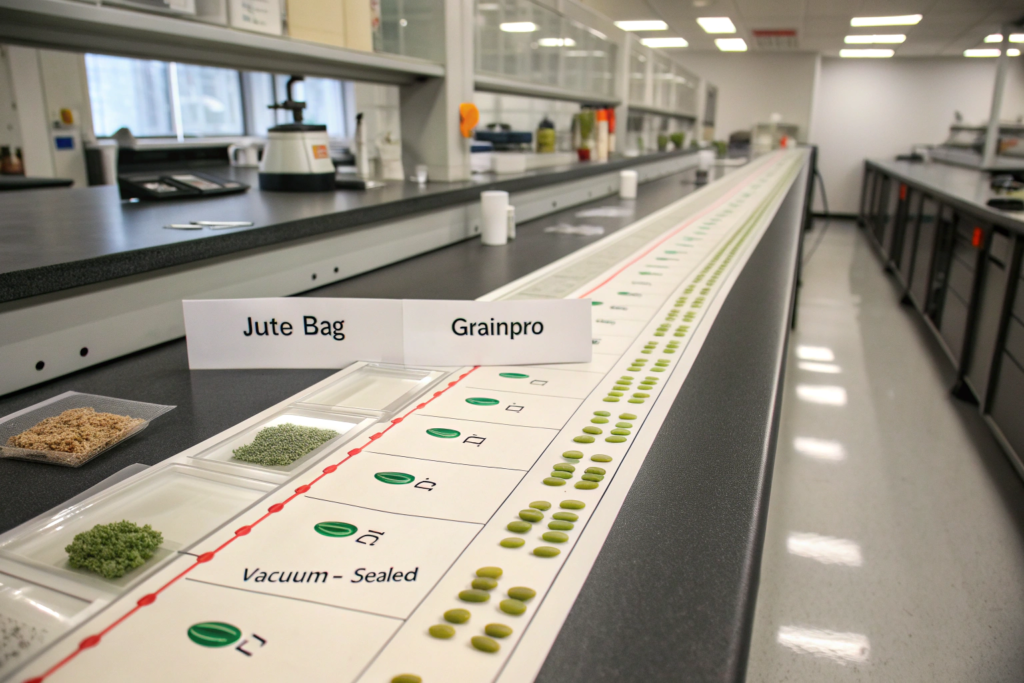
Vacuum-sealed green coffee beans maintain peak specialty cup quality for approximately 18 to 24 months from harvest, compared to 10 to 12 months for GrainPro-stored beans and 6 to 8 months for jute-stored beans. After 24 months, even vacuum-sealed beans begin to show gradual fading of acidity and aromatic complexity, though they may remain commercially usable for darker roast applications for several more months.
The 24-month mark is not a cliff. The coffee does not go from fresh to spoiled overnight. The decline is gradual. A bean at 26 months under vacuum may cup at 82 points instead of 84. It has lost some brightness and some floral top notes. But it is still clean, sweet, and free of the papery, woody defects that characterize past-crop coffee stored in inferior packaging.
What Happens When You Open a Long-Stored Vacuum Bag?
Opening a vacuum-sealed bag after long storage is a revealing moment. The first thing you notice is the smell. A fresh green coffee smell, grassy and sweet, not the flat, baggy smell of aged coffee. The beans look vibrant, their color preserved.
But the clock restarts the moment the seal is broken. Oxygen floods in. The beans, which have been in suspended animation, resume their metabolic activity. The aging process that was halted now begins. A roaster who opens a vacuum-sealed bag of 20-month-old coffee should plan to use it within a normal timeframe, ideally within one to two months, just like any other opened bag of green coffee. The vacuum sealing preserved the beans until opening. It did not make them immortal after opening.
Does the Coffee Variety or Processing Method Affect Vacuum Shelf Life?
The processing method influences shelf life under vacuum, just as it does under normal storage. Washed coffees, with their clean, stable chemistry, tend to hold up better under long-term vacuum storage. Their flavor profile depends on organic acids and clean sugars that degrade slowly in the absence of oxygen.
Natural processed coffees, with their fruit-derived sugars and more complex microbial chemistry, are more dynamic. The intense fruity notes that make a natural exciting when fresh are volatile compounds that slowly break down even without oxygen. A natural coffee under vacuum at 18 months will still be clean and sweet, but the explosive blueberry or strawberry notes will have faded more than the stable chocolate notes of a washed coffee stored for the same period. The variety also matters. Dense, high-altitude beans with thick cell walls preserve their internal structure and chemistry better than softer, lower-altitude beans.
What Are the Best Practices for Storing Vacuum-Sealed Green Coffee?
Vacuum sealing is a powerful preservation tool, but it is not indestructible. The bag is a physical barrier. If it is compromised, the protection is lost. The storage environment matters, even for vacuum-sealed beans, because temperature drives the chemical reactions that still occur slowly inside the bag.
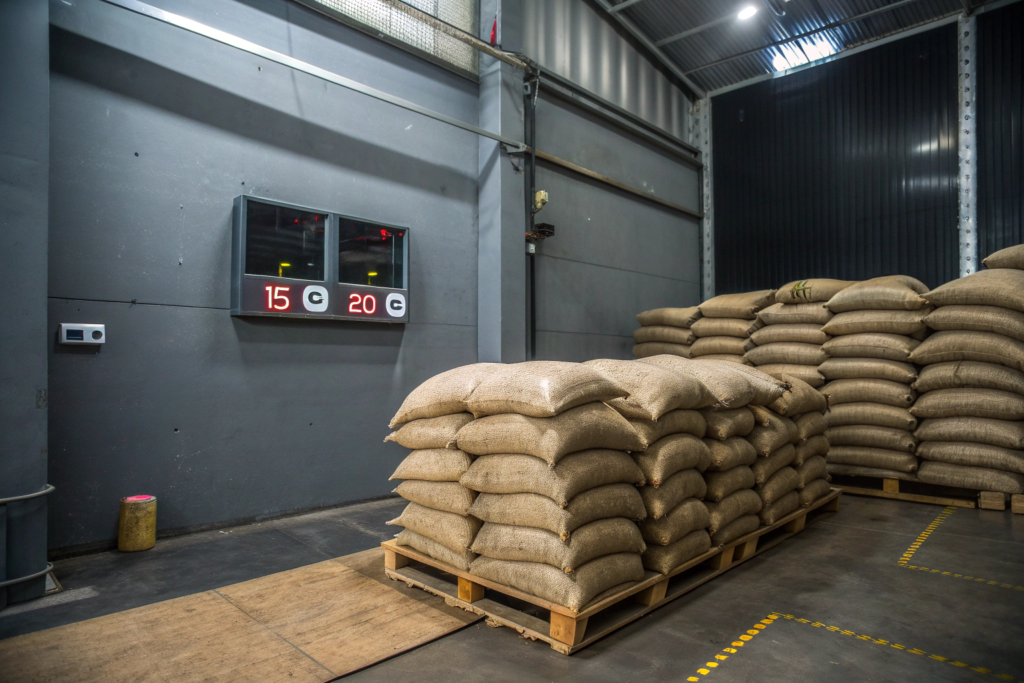
The best practices for storing vacuum-sealed green coffee are to keep the bags in a cool, dark, and dry environment with a stable temperature between 15°C and 20°C, protect the bags from physical damage that could break the vacuum seal, store them on pallets away from walls and floors to prevent moisture and pest access, and monitor the storage conditions with data loggers to catch any environmental fluctuations that could accelerate aging.
Temperature is the second most important factor after oxygen. Even without oxygen, chemical reactions proceed faster at higher temperatures. A vacuum-sealed bag stored at 25°C will age faster than the same bag stored at 15°C. The ideal storage room is cool and temperature-stable. A basement storage room that stays at a constant 16°C to 18°C year-round is ideal. A warehouse that swings from 10°C at night to 30°C during the day will degrade the coffee faster, vacuum or no vacuum.
How Should You Handle and Inspect Vacuum-Sealed Bags?
Vacuum-sealed bags require gentle handling. The plastic film is under tension from the vacuum. A sharp impact, a drag across a rough surface, or stacking heavy pallets on top can create micro-punctures that break the seal.
Bags should be inspected upon receipt and periodically during storage. A bag that was rock-hard and tightly compressed when it arrived and is now soft and loose has lost its vacuum. The seal is broken. Air has entered. That bag should be moved to the front of the usage queue and roasted promptly. The inspection is visual and tactile. Run a hand over the bag. Feel for tight compression. Look for any visible punctures or tears. A compromised bag is not ruined, but it is no longer protected by the vacuum.
Can Vacuum-Sealed Beans Be Frozen for Extended Storage?
Freezing green coffee is a practice used by some specialty roasters for very long-term storage of exceptional lots. The theory is sound. Extremely low temperatures slow all chemical reactions to near zero. Combined with vacuum sealing, freezing can preserve green coffee for several years.
The practical challenge is condensation. When frozen beans are removed from the freezer, they must be allowed to warm to room temperature inside the sealed vacuum bag before the bag is opened. If the bag is opened while the beans are still cold, condensation forms on the bean surfaces instantly. That moisture spike can damage the beans and initiate mold growth. The thawing protocol must be disciplined. Remove the bag from the freezer. Leave it sealed. Let it sit at room temperature for 24 hours. Open only when the bag feels room temperature to the touch. For most commercial roasters, freezing is unnecessary. Standard cool storage with vacuum sealing provides more than enough shelf life for normal inventory cycles.
How Should Roasters Adjust Their Purchasing Strategy with Vacuum-Sealed Coffee?
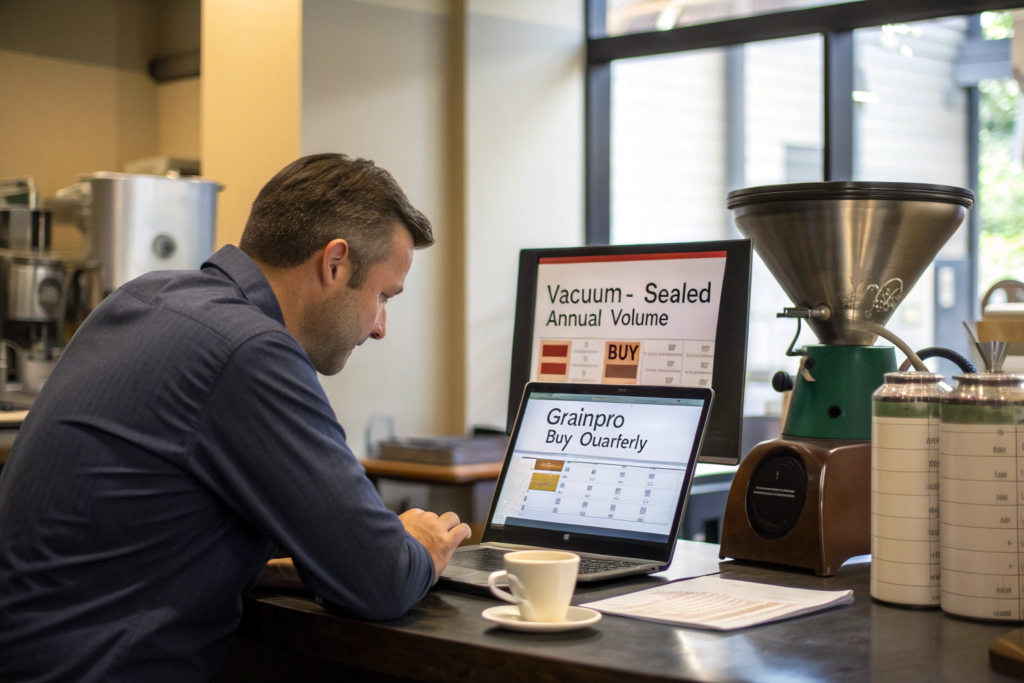
The extended shelf life of vacuum-sealed coffee changes the purchasing math. A roaster who previously bought coffee quarterly to ensure freshness can now consider buying annually. The purchasing decision shifts from "how much can I use before it fades" to "how much can I store properly and save on."
Vacuum-sealed green coffee allows roasters to buy larger volumes during the harvest season when prices are most favorable, secure specific lots before they sell out, and reduce the per-pound freight cost by shipping full containers instead of multiple smaller shipments. The extended shelf life converts green coffee from a perishable inventory item that must be turned quickly into a storable asset that can be held strategically.
The financial benefits of annual purchasing are significant. Buying during harvest captures the best pricing. The farmer or exporter is facing peak cash flow pressure and is most open to negotiation. The roaster locks in a full year's supply of a core coffee at a known price. The ocean freight per pound is lower for a full container than for multiple pallet shipments.
Is Bulk Buying with Vacuum Storage a Cost-Effective Strategy?
The cost comparison has several dimensions. The per-pound price of the coffee is lower when buying container volumes. The freight per pound is lower. The administrative cost of managing one purchase and one shipment is lower than managing four. These savings must be weighed against the cost of vacuum sealing and the cost of holding inventory.
Vacuum sealing adds a modest cost per pound, typically a few cents. The storage cost includes the warehouse space and the cost of capital tied up in inventory. For a roaster with available storage space and access to affordable working capital, the math usually favors annual bulk buying with vacuum storage. The savings on the coffee price and freight outweigh the sealing and storage costs. For a roaster with tight space or expensive capital, quarterly GrainPro purchases may be more practical.
How Should Inventory Rotation Change with Extended Shelf Life?
Extended shelf life does not eliminate the need for inventory rotation. It extends the rotation window. The "first in, first out" rule still applies. The oldest coffee should be used first, even if the oldest coffee is still perfectly good at 18 months.
A roaster with vacuum-sealed inventory should track the harvest date and the sealing date for every pallet. The rotation plan should prioritize the oldest lots for current production, while the newest lots remain sealed for future use. The risk is complacency. Because the vacuum-sealed coffee stays fresh for so long, it is easy to forget about a pallet in the back corner. Regular inventory audits and a clear rotation system prevent the accidental discovery of a five-year-old pallet.
Conclusion
Vacuum-sealed green coffee has a shelf life that changes the economics and logistics of specialty coffee roasting. At 18 to 24 months of peak quality, it effectively doubles the working window that roasters have with their green inventory. It preserves the vibrant color, the sweet aroma, and the complex cup profile that define specialty-grade coffee. It allows roasters to buy strategically, securing the best lots at the best prices, without the anxiety of coffee fading before it can be used.
The technology is not a replacement for good storage practices. It requires a cool, dark, and dry environment. It requires gentle handling to maintain the seal. It requires disciplined inventory rotation. But for roasters who invest in these practices, vacuum sealing transforms green coffee from a rapidly depreciating asset into a storable reserve of quality.
If you are interested in exploring vacuum-sealed packaging for your green coffee purchases from Yunnan, we offer vacuum sealing as an option for micro-lots and premium offerings. Our standard exports use GrainPro hermetic bags, which provide excellent protection for normal inventory cycles. For buyers planning long-term storage or annual bulk purchasing, vacuum sealing can extend your working window significantly. Contact Cathy Cai at cathy@beanofcoffee.com to discuss your storage needs and packaging options. We will help you choose the right solution for your roastery's inventory strategy.