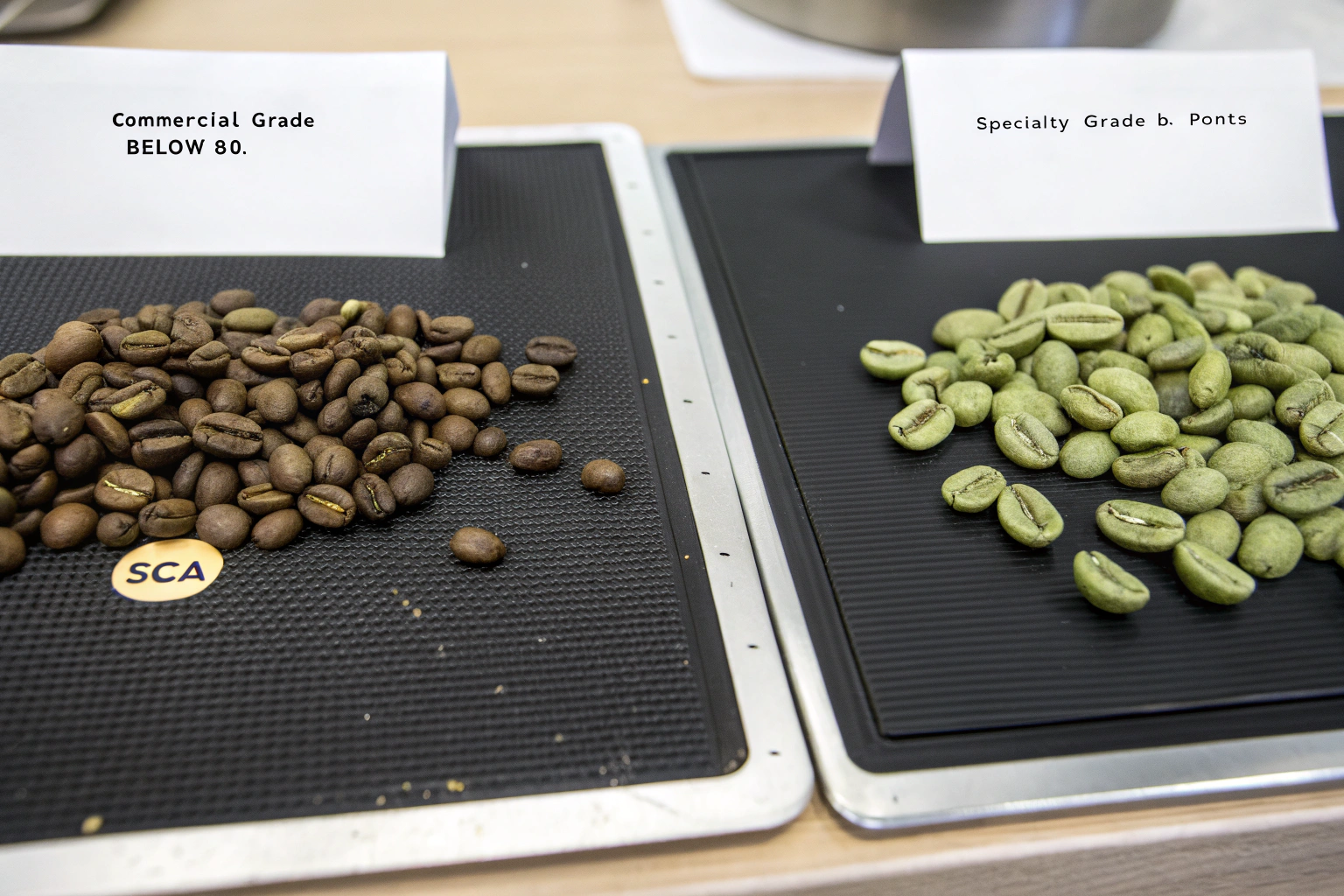
I once watched a buyer reject a container at the port of Oakland. He had approved a pre-shipment sample that scored 84 points. The coffee in the container looked different. Darker. More broken beans. A faint musty smell. He pulled a sample and cupped it on the spot. It scored 78. The supplier had swapped the approved lot with a cheaper commercial grade, hoping the buyer would not notice. He noticed. The container went back. That buyer now cups every single container himself before accepting delivery.
Specialty grade coffee beans are identified by a combination of physical inspection and sensory cupping. Physically, a 350-gram sample must have zero primary defects and no more than five secondary defects, with uniform screen size and moisture content between 10% and 12%. Sensorily, the coffee must score 80 points or above on the SCA cupping scale, exhibiting distinct positive attributes and zero taints. Commercial grade is everything that fails to meet one or both of these standards.
The line between specialty and commercial is not subjective. It is defined by the Specialty Coffee Association's Green Arabica Coffee Classification System. A coffee either passes the physical grading and the cupping evaluation, or it does not. There is no "almost specialty." There is pass and fail. Understanding how to apply these standards is essential for any buyer who wants to pay for specialty and actually receive it.
What Are the Physical Grading Standards That Define Specialty Coffee?
Physical grading is the first gate. Before a coffee is ever tasted, it must pass a visual and physical inspection. The SCA system defines two categories of defects. Category 1 defects are severe. Category 2 defects are less severe. The tolerance for each is specific.
The physical grading standard for specialty coffee requires that a 350-gram sample of green Arabica contains zero Category 1, primary, defects and no more than five Category 2, secondary, defects. The beans must also be uniform in screen size, with no more than 5% variance from the specified screen, and have a moisture content between 10% and 12%. Any lot that fails these physical standards is disqualified from specialty grade regardless of cup quality.
Physical grading is objective. Two trained graders looking at the same sample should reach the same pass or fail conclusion. The process removes subjectivity from the first stage of evaluation. A coffee that looks defective is defective, no matter how it tastes in the cup. This protects buyers from paying specialty prices for coffee that will roast unevenly and produce off-flavors, even if a skilled cupper can find some pleasant notes in a brewed sample.
What Are Category 1 vs. Category 2 Defects?
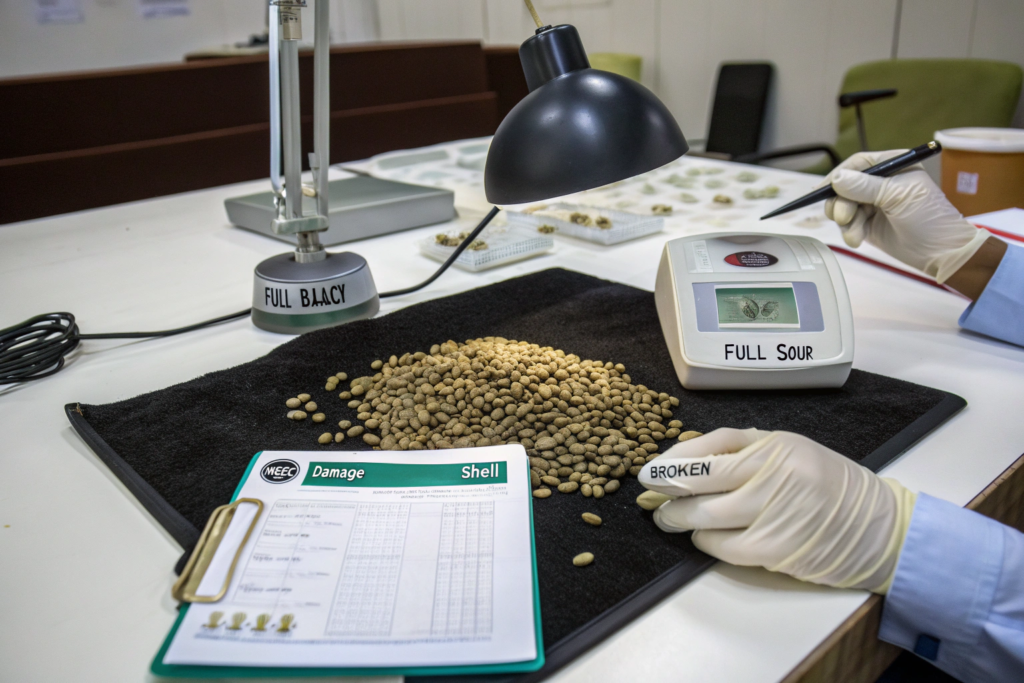
Category 1 defects are the dealbreakers. A single Category 1 defect in a 350-gram sample disqualifies the entire lot from specialty grade. The logic is that these defects have such a severe negative impact on cup quality that their presence, even in small numbers, is unacceptable.
A full black bean is a cherry that died on the tree or fermented completely in processing. It tastes like burnt rubber or ash. A full sour bean is a bean that underwent severe over-fermentation. It tastes like vinegar or rotten fruit. Severe insect damage, where the bean has been bored through by the coffee berry borer, introduces mold and rancidity. Category 2 defects include partial black beans, partial sour beans, chipped or broken beans, and slight insect damage. These defects have a negative impact but a less severe one. Up to five are allowed in the 350-gram sample.
How Do Screen Size and Moisture Content Affect the Grade?
Screen size is a measure of bean dimensions, determined by passing the coffee through calibrated sieves with holes of specific diameters. Specialty coffee must be uniform in screen size. A lot labeled as screen 17/18 should have at least 95% of beans within that range.
Uniform screen size is not about flavor directly. It is about roasting performance. Beans of different sizes roast at different rates. A mix of large and small beans will produce an uneven roast. The large beans will be underdeveloped while the small beans scorch. Moisture content must be between 10% and 12%. Below 10%, the coffee is overly dry, the cellular structure is damaged, and the cup tastes flat and woody. Above 12%, the coffee is at risk of mold growth during storage and transit. Moisture content is measured with a calibrated moisture meter and recorded on the grading form.
How Does the SCA Cupping Protocol Determine Specialty Grade?
Physical grading determines whether a coffee is eligible for specialty. Cupping determines whether it actually achieves it. A coffee can pass physical grading with zero defects and still fail the cupping evaluation if the sensory quality is not there.
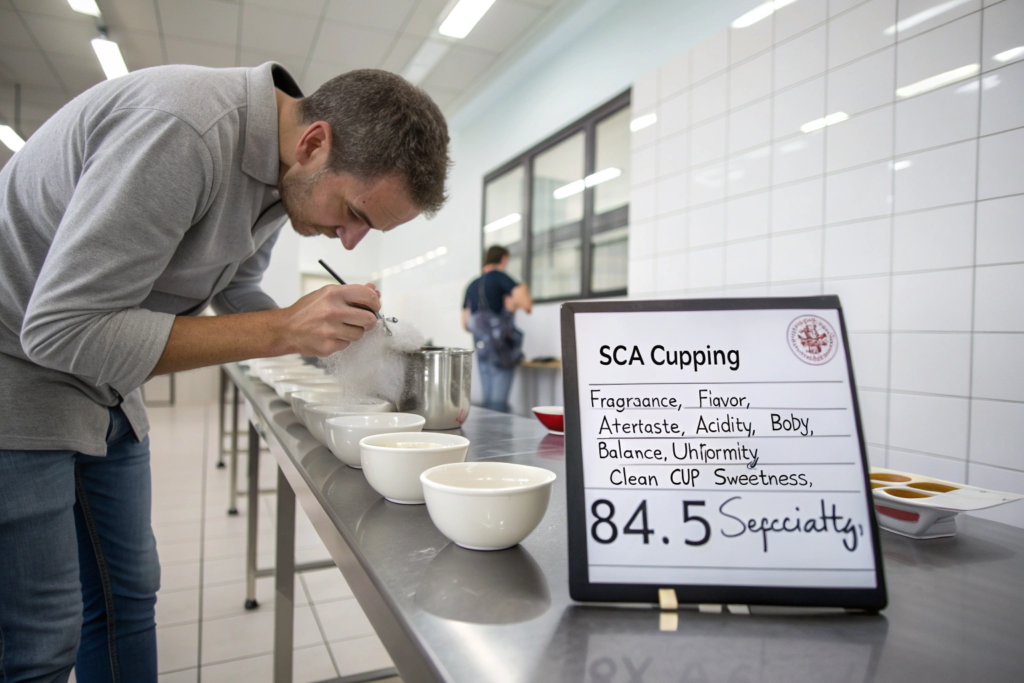
The SCA cupping protocol evaluates coffee on ten specific attributes, each scored on a standardized scale. The attributes are fragrance and aroma, flavor, aftertaste, acidity, body, balance, uniformity, clean cup, sweetness, and overall impression. A coffee must achieve a total score of 80 points or above to be classified as specialty grade.
The cupping protocol is rigorous. The water temperature, the grind size, the coffee-to-water ratio, and the steeping time are all standardized. Five cups of each sample are prepared to assess uniformity. The cupper evaluates the dry fragrance of the grounds, the wet aroma when hot water is added, and then breaks the crust and tastes the coffee at multiple temperatures as it cools. The process reveals how the coffee's flavor develops and whether any defects emerge as the cup cools.
What Does Each Scoring Category Actually Measure?
Fragrance and aroma evaluate the smell of the coffee, both dry and wet. Flavor is the main taste impression, the combination of all the gustatory and aromatic sensations. Aftertaste is the length and quality of the finish after swallowing or spitting.
Acidity is the brightness or liveliness of the coffee, a positive attribute when it is sweet and well-integrated. Body is the mouthfeel, the weight and texture of the coffee on the tongue. Balance is how all the elements work together, whether any single attribute dominates unpleasantly. Uniformity assesses whether all five cups of the sample taste the same. Clean cup evaluates the absence of interfering negative flavors. Sweetness is the perception of natural sweetness from the coffee's sugars. Overall is the cupper's holistic impression of the sample. Each category is scored on a 6 to 10 scale in quarter-point increments. The scores are summed to produce the final cupping score.
Why Does the Clean Cup Score Matter So Much?
The clean cup score is a binary assessment for each individual cup. A cup is either clean or it is not. A taint, a foul, musty, or fermenty flavor, results in a zero score for that cup. If two of the five cups are not clean, the coffee fails the specialty grade regardless of how high the other scores are.
The clean cup requirement is the safety net of the cupping protocol. A coffee can have a beautiful floral aroma and a sweet body, but if there is a hint of moldy, medicinal, or phenolic taint in the finish, it is not specialty. The taint indicates a processing defect, a storage problem, or contamination. No amount of roasting skill can mask these defects. The clean cup requirement protects the roaster from buying coffee that will produce complaints, returns, and brand damage.
What Visual Cues Help Buyers Spot Commercial Grade Beans Quickly?
A full physical grading and cupping protocol takes time. A buyer receiving a container or visiting a warehouse often needs a rapid assessment to decide whether a more detailed evaluation is warranted. Experience teaches visual cues that signal potential problems.
Visual cues that quickly identify commercial grade beans include uneven bean size within the sample, significant color variation ranging from pale green to brown or black, the presence of visible defects like insect holes, broken pieces, and beans with a mottled or moldy appearance, and a dull, faded overall color that indicates age or poor storage.
A specialty-grade sample looks uniform. The beans are close in size and color. The green is vibrant, whether the blue-green of a washed coffee or the amber-green of a natural. A commercial-grade sample looks chaotic. Sizes are mixed. Colors clash. Defects catch the eye immediately. This visual assessment is not definitive. Some excellent coffees have a slightly uneven appearance, especially naturals. But a sample that looks obviously defective almost certainly is.
What Does Bean Color Tell About Quality and Age?
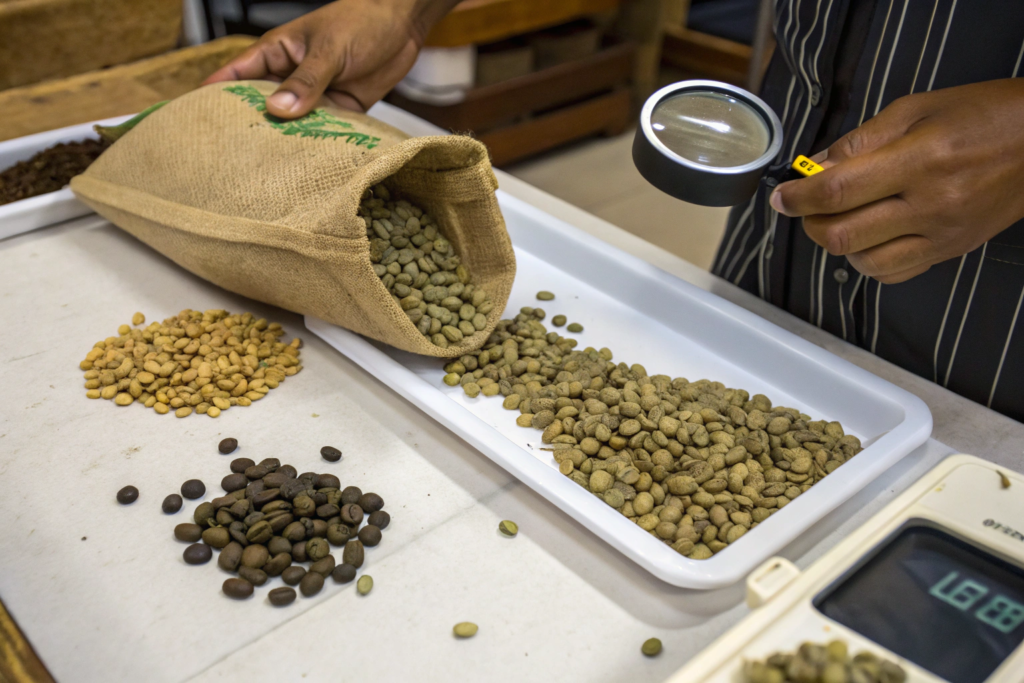
Fresh, well-processed green coffee has a vibrant, saturated color. The exact shade depends on the processing method. Washed Arabica typically displays a blue-green or olive-green hue. Natural processed Arabica often has a more amber or yellow-green tint.
Faded, dull, or whitish color is a warning sign. It indicates age, oxidation, or poor drying. A bean that has been stored too long loses its vibrant color as the lipids oxidize and the chlorophyll breaks down. Brown or black individual beans in an otherwise green sample are defects, usually full black or full sour beans. A sample with scattered brown beans is commercial grade. A sample with uniform, vibrant color is a positive indicator, but color alone is not sufficient. A beautiful sample must still be cupped to confirm it is free of sensory defects.
How Can You Spot Inconsistent Processing in a Sample?
Processing defects leave visual signatures. Uneven drying shows up as color variation. Beans dried too quickly may have a mottled, wrinkled surface. Beans dried too slowly may have a dull, faded appearance.
Over-fermented beans, even if they are not full sours, often have a slightly darker, brownish-red tint. Beans that were picked underripe may be smaller, with a darker green color and a more closed center cut. A well-processed lot shows consistency in all these visual attributes. The color is uniform. The surface texture is smooth. The center cut is even. A lot with wide variation in these attributes was processed inconsistently, and inconsistent processing produces an inconsistent cup.
How Should Importers Verify Grade Claims from Suppliers?
A supplier's claim is not a fact. It is a claim. The buyer's job is to verify it independently. Relying on a supplier's own grading report is an invitation to be cheated. The verification process begins before the coffee ships and continues after it arrives.
Importers verify grade claims by demanding independent third-party inspection reports from recognized agencies like SGS or Bureau Veritas, conducting their own physical grading and cupping of pre-shipment samples, performing arrival inspections that compare the shipped coffee against the approved sample, and building relationships with trusted suppliers whose track record of honesty reduces the need for adversarial verification.
The pre-shipment sample is the buyer's most important tool. Two weeks before the container is stuffed, the supplier sends a sample drawn from the exact lot that will be shipped. The buyer cups and grades this sample. If it passes, the buyer approves the shipment. The container should contain coffee that matches the approved sample. If the arrival sample does not match the pre-shipment sample, the supplier has a problem.
What Should a Third-Party Inspection Report Include?
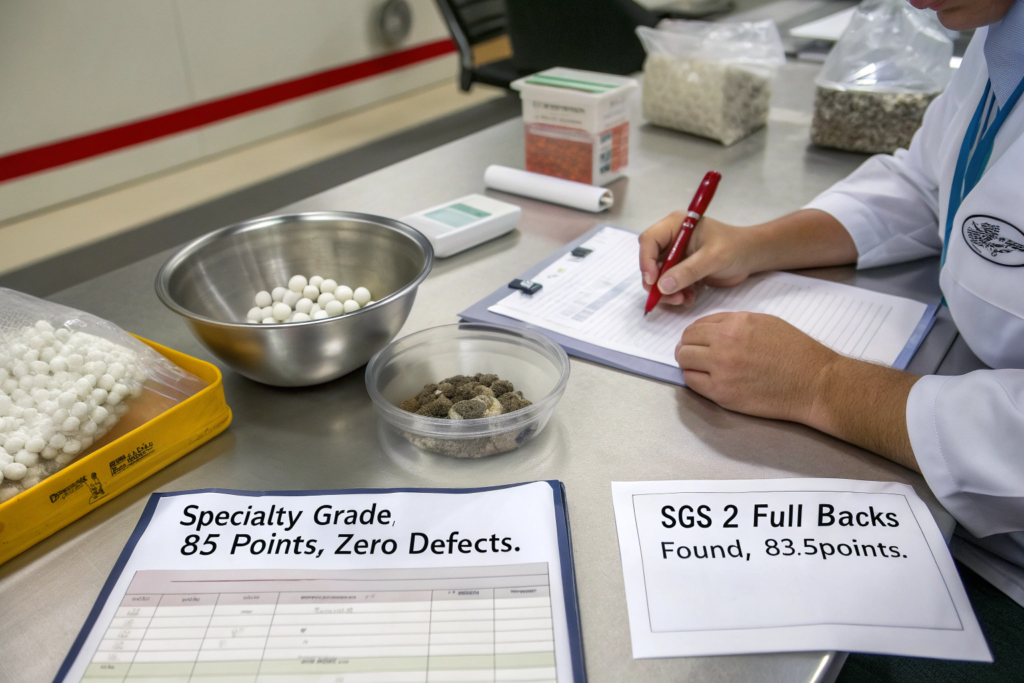
A third-party inspection report from an agency like SGS should be comprehensive and specific to the lot being purchased. It is not a generic certificate. It should include the sample collection methodology, stating how many bags were sampled and from which pallet positions.
The report should include the physical grading results: the defect count separated into Category 1 and Category 2, the screen size analysis with the percentage distribution across screen sizes, the moisture content and water activity readings, and a visual assessment of bean color and uniformity. If cupping is included, the report should show the SCA scores for each attribute and the total score. The report should have a unique reference number that the buyer can verify directly with the issuing agency. A report that lacks a verifiable reference number or that only provides summary statements without detailed data is insufficient.
How to Build a Supplier Verification Process That Works?
A verification process is a system, not a one-time check. It starts with supplier qualification. Before placing an order, the buyer requests the supplier's business license, export certifications, and trade references. The buyer conducts a virtual or physical audit of the supplier's farm or processing facility.
Once a supplier is qualified, every transaction follows the same protocol. Pre-shipment sample requested, cupped, and approved. Third-party inspection commissioned. Arrival sample pulled and cupped against the pre-shipment sample. Results documented. Discrepancies flagged and resolved. Over time, the buyer builds a quality history for each supplier. A supplier who consistently ships coffee that matches the approved sample earns trust and lighter verification. A supplier with a history of discrepancies faces stricter scrutiny. The process is fair, transparent, and based on data, not personal relationships.
Conclusion
Identifying specialty grade versus commercial grade coffee is a technical skill grounded in the SCA grading system. Physical grading separates lots with unacceptable defects from those eligible for specialty. Cupping evaluates the sensory quality and assigns a score. The 80-point threshold is the hard line between specialty and commercial. Below it, the coffee is a commodity. Above it, the coffee is a differentiated product with a quality premium.
For a buyer, the ability to independently verify grade claims is a core competency. It requires training in the SCA protocols. It requires a relationship with a third-party inspection agency. It requires a systematic verification process applied to every shipment. And it requires the discipline to reject coffee that fails the standards, no matter how much the supplier protests.
If you are looking for a supplier who makes grade verification straightforward, we provide full SGS inspection reports, detailed cupping scorecards, and pre-shipment samples for every lot we export. Our coffee is graded to SCA specialty standards, and we stand behind every bag. Contact Cathy Cai at cathy@beanofcoffee.com to request a sample with its complete grading documentation. Test us against the standards. We are confident in the result.