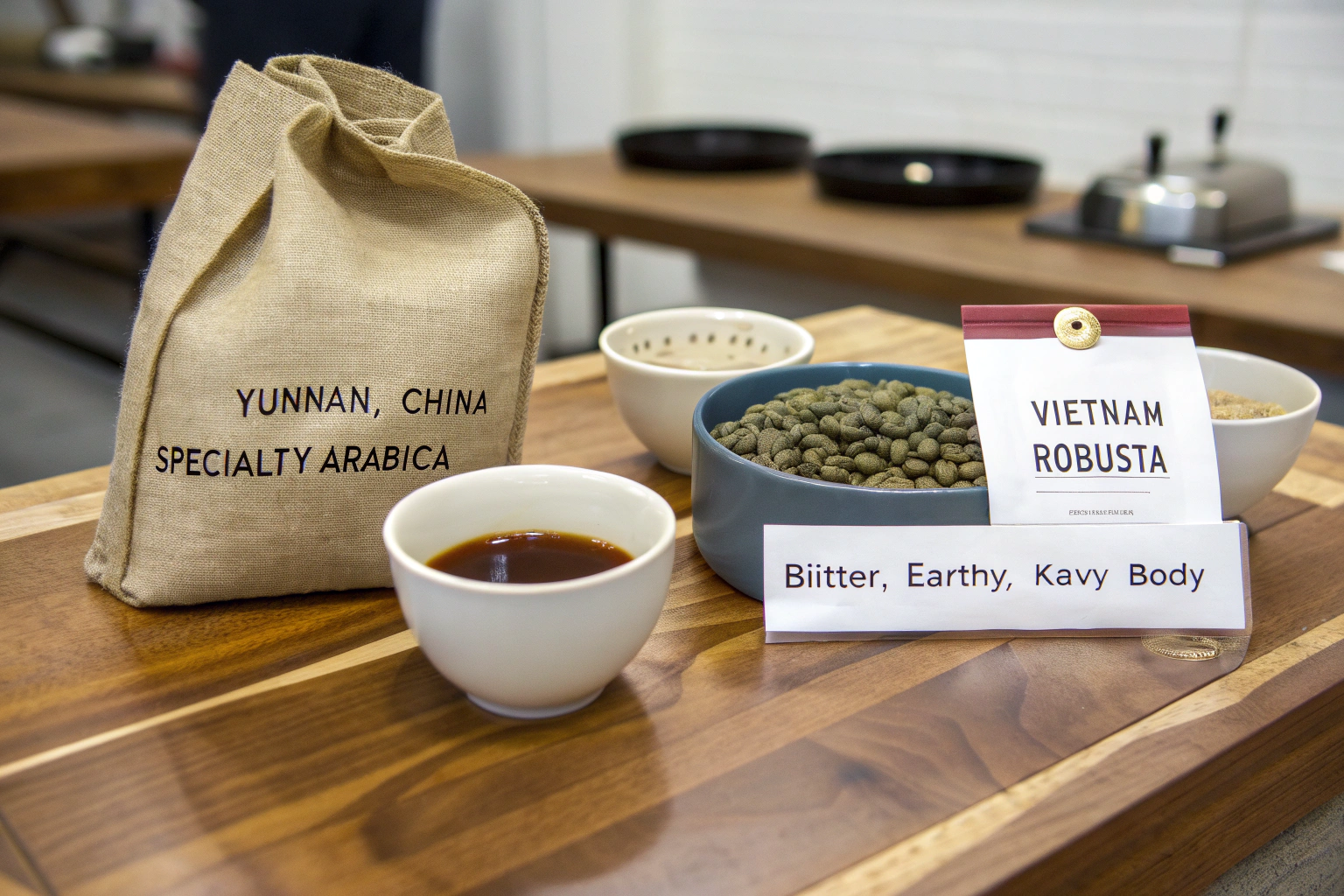
I sat across from a large European buyer at a trade show in Berlin last year. He was buying container loads of Vietnamese Robusta for his instant coffee line. I asked him why he was visiting my booth if he was committed to Vietnam. He sighed and said, "My customers are asking for specialty. They want single-origin bags with a story. Vietnam cannot give me that at scale. I am told Yunnan can." He cupped three of our lots that afternoon. By the end of the show, he had booked a sample container of our washed Catimor. He still buys Vietnamese Robusta for his instant line. But his specialty program now runs on Yunnan Arabica.
B2B coffee buyers increasingly prefer Chinese Arabica over Vietnamese coffee because China produces specialty-grade Arabica with cupping scores above 80, while Vietnam's output is predominantly commercial-grade Robusta with limited specialty potential. Chinese coffee offers traceability from large, professionally managed estates with digital compliance infrastructure, a flavor profile that fits clean, sweet specialty applications, and an export infrastructure aligned with modern B2B requirements including EUDR compliance, flexible MOQs, and direct trade transparency.
The shift is not about nationalism. It is about market segmentation. Vietnam dominates the low-cost, high-volume commodity coffee market. China is carving out a position in the specialty Arabica market. The two origins serve different buyer needs. A B2B buyer who needs cheap filler for a dark roast blend still goes to Vietnam. A B2B buyer who needs traceable, high-scoring single-origin lots for a specialty program is increasingly looking at Yunnan.
What Are the Fundamental Differences in Coffee Variety and Quality Between China and Vietnam?
The most basic difference between Chinese and Vietnamese coffee is what is planted in the ground. Vietnam plants Robusta. China plants Arabica. This single fact explains most of the quality and price gap between the two origins.
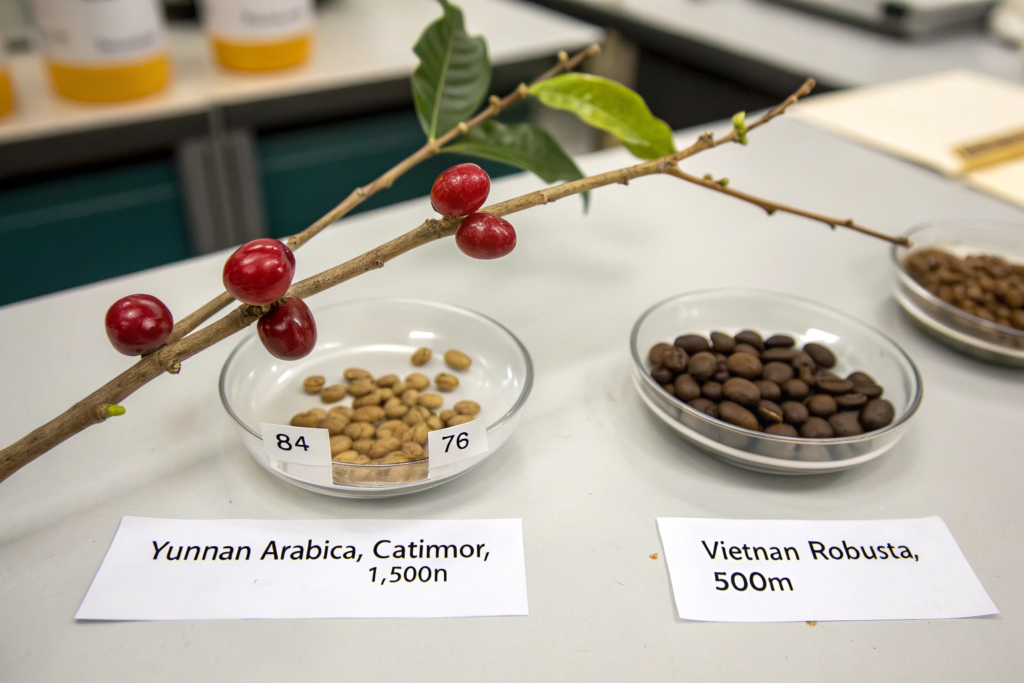
China's coffee production is over 95% Arabica, primarily the Catimor variety grown at altitudes of 1,200 to 1,600 meters in Yunnan Province. Vietnam's coffee production is over 95% Robusta, grown at lower altitudes of 500 to 800 meters, primarily in the Central Highlands. Arabica inherently has more complex sugars and acids, lower caffeine, and a smoother, sweeter cup than Robusta, which is higher in caffeine, more bitter, and has a heavier, grain-like body.
Robusta is not inherently bad coffee. It serves specific purposes. It adds body and crema to espresso blends. It provides the caffeine punch for instant coffee. It is extremely efficient to grow, with higher yields per hectare and better pest resistance than Arabica. But it does not cup at specialty grade. The flavor profile of even the best-processed Robusta is limited. Earthy, woody, grainy, and bitter notes dominate. Specialty coffee, by definition, requires Arabica.
Why Does Arabica Command a Higher Price Than Robusta?
The price gap between Arabica and Robusta is structural and persistent. Arabica futures on the ICE exchange consistently trade at a significant premium to Robusta futures on the LIFFE exchange. The premium reflects fundamental differences in production cost, cup quality, and market demand.
Arabica is more expensive to grow. It requires higher altitudes, more careful pest management, and more selective picking. Yields per hectare are lower than Robusta. The processing is more demanding. The resulting cup, however, is worth more to specialty buyers. The complex acidity, the floral and fruity notes, the clean finish, these are attributes that Robusta cannot replicate. A B2B buyer building a specialty brand needs Arabica. The market pays for Arabica because it delivers a sensory experience that Robusta does not.
What Cup Profile Differences Do B2B Buyers Actually Taste?
When a B2B buyer cups Chinese Arabica and Vietnamese Robusta side by side, the differences are not subtle. The Chinese Arabica cup, particularly from high-altitude Baoshan, presents dark chocolate, brown sugar, stone fruit, and a clean, malic acidity. The body is medium to heavy, coating but not gritty.
The Vietnamese Robusta cup presents grain, earth, dark bitterness, and a heavy, sometimes astringent body. There is little acidity. There are no fruit notes. The finish is often dry and woody. For a B2B buyer developing a single-origin specialty offering, a premium espresso blend, or a cold brew base that needs to taste smooth and sweet without additives, the Chinese Arabica profile fits. The Vietnamese Robusta profile works for instant coffee, budget espresso blends where cost is the primary driver, and products where coffee is an ingredient rather than the star.
How Does Traceability and Compliance Differ Between the Two Origins?
The European Union Deforestation Regulation has made traceability a hard requirement for any coffee entering the EU market. Coffee that cannot be traced to a specific, verified deforestation-free plot of land is illegal in Europe. This regulation plays directly to the structural differences between Chinese and Vietnamese coffee production.
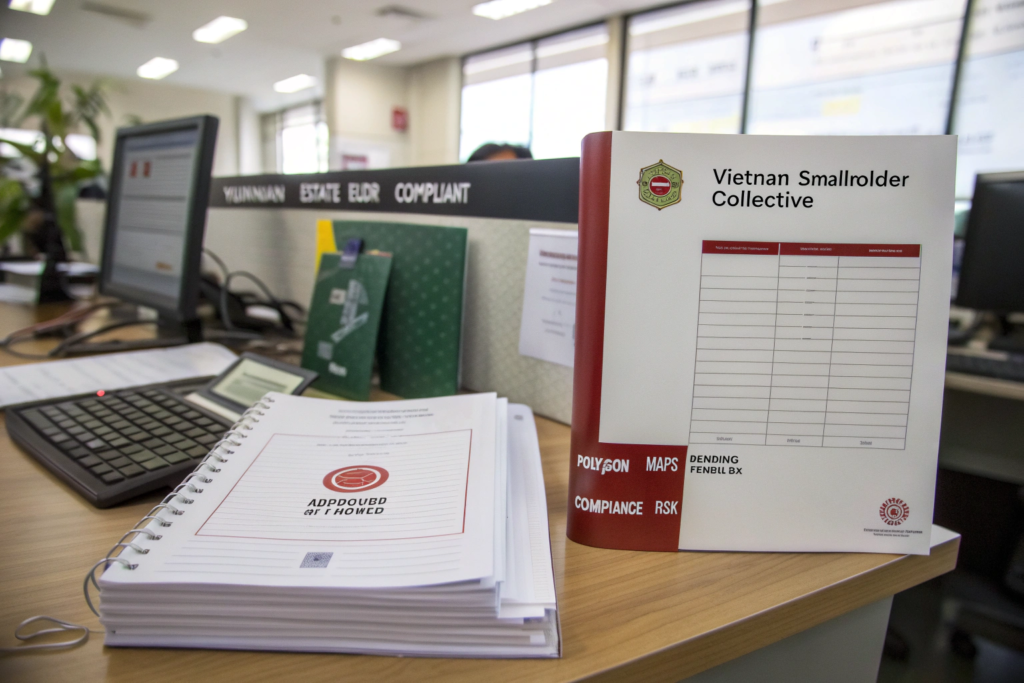
Chinese coffee traceability is facilitated by a production structure dominated by large, professionally managed estates with clear land tenure, digital mapping capabilities, and centralized documentation. Vietnamese coffee traceability is challenged by a production structure of millions of smallholder farmers with an average farm size of under two hectares, informal land tenure arrangements, and limited digital infrastructure for farm mapping and data collection.
For a B2B buyer who must file an EUDR due diligence statement for every container, the choice between a Chinese estate that provides a single polygon map and a complete digital dossier, and a Vietnamese supply chain that requires mapping hundreds of individual smallholder plots, is a practical business decision. The Chinese option is simpler, faster, and lower risk.
Why Is Vietnam's Smallholder Structure a Traceability Challenge?
Vietnam has approximately 500,000 coffee farming households. The average farm size is around 1 to 2 hectares. These farmers sell their cherries to local collectors, who aggregate them and sell to processors, who sell to exporters. The coffee from dozens or hundreds of farms is mixed at the first collection point.
Under EUDR, the importer must identify every plot that contributed to the shipment. For a container of Vietnamese coffee, that could mean documenting hundreds of individual farms. Many of these farmers lack formal land titles. Many do not have smartphones or GPS devices. The cost and complexity of mapping this fragmented supply base are enormous. Some Vietnamese exporters and cooperatives are investing in digital mapping programs, but the scale of the challenge is vast.
How Does China's Estate Model Simplify Regulatory Compliance?
China's coffee sector is structured around estates and large cooperatives. Our farm in Baoshan is a single legal entity with clear boundaries, formal land tenure, and centralized management. We map our farm once. The polygon covers the entire production area. Every bag we export traces back to that mapped, verified polygon.
The due diligence for a B2B buyer is straightforward. One polygon. One deforestation verification. One compliance dossier. The same applies to other large Yunnan estates and the well-organized cooperatives. This structure is not an accident. It is a product of China's land management system and the history of coffee development in Yunnan, which was driven by government-supported plantations rather than spontaneous smallholder adoption.
What Are the Logistics and Export Infrastructure Advantages of Chinese Coffee?
Coffee quality and traceability get the most attention. But for a B2B buyer, logistics is where the relationship lives or dies. A container that arrives on time, with dry bags and correct paperwork, builds trust. A container that is delayed, damaged, or misdocumented destroys it.
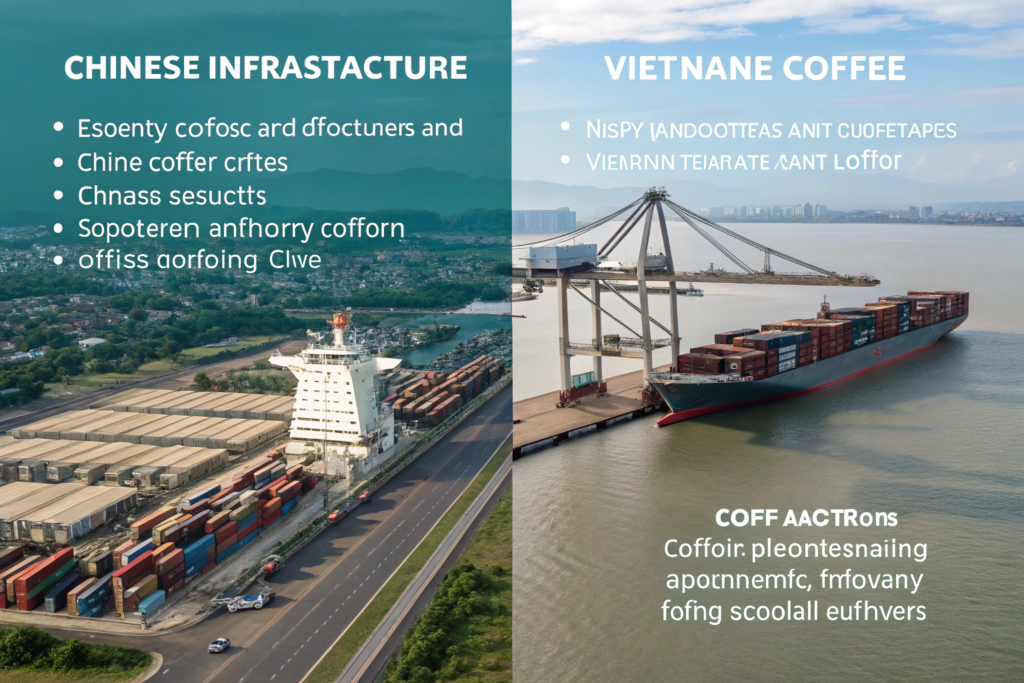
Chinese coffee benefits from an export infrastructure that includes modern, high-capacity container ports with frequent sailings to all major markets, a well-developed domestic transportation network connecting Yunnan to coastal ports, and a professional exporter base familiar with international documentation requirements. Vietnam's infrastructure, while rapidly improving, still faces bottlenecks at ports, longer and more complex shipping routes to Western markets, and a more fragmented exporter landscape with variable documentation quality.
The port infrastructure difference is measurable. Shanghai and Shenzhen are among the most efficient container ports in the world. Container availability is generally good. Customs procedures are well-established for coffee exports. The shipping routes from China to the US West Coast are direct and short, around 14 days. The routes to Europe are well-served.
How Do Shipping Routes and Transit Times Compare?
From Shanghai to Los Angeles, a container of Chinese coffee can arrive in 14 to 16 days. From Ho Chi Minh City to Los Angeles, the transit time is similar, but the sailing frequency is lower for coffee-exporting ports.
To Europe, the difference is more pronounced. From Shanghai to Rotterdam via the Cape of Good Hope, the current route avoiding the Red Sea, transit is 35 to 40 days. From Ho Chi Minh City, the transit can be 40 to 50 days depending on transshipment connections. The extra week or two of transit time for Vietnamese coffee means longer inventory pipeline, higher working capital requirements, and more exposure to the quality degradation that occurs during extended sea freight.
What About Export Documentation and Phytosanitary Standards?
Chinese export authorities are familiar with coffee. Yunnan has been exporting coffee for decades. The phytosanitary certificate issuance process is routine. The fumigation standards meet international requirements. The documentation package, commercial invoice, packing list, certificate of origin, and phytosanitary certificate, is standardized and reliable.
Vietnamese export documentation has improved significantly, but inconsistencies still occur. A B2B buyer who has experienced a container held at the destination port because of a paperwork error values the reliability of Chinese export documentation.
How Do Pricing and Value Compare for B2B Buyers?
Price is the first number a buyer sees. But value is the number that matters. Vietnamese Robusta is cheaper per pound than Chinese Arabica. That is a fact. But the B2B buyer who chooses coffee based only on the per-pound price is not doing their job.
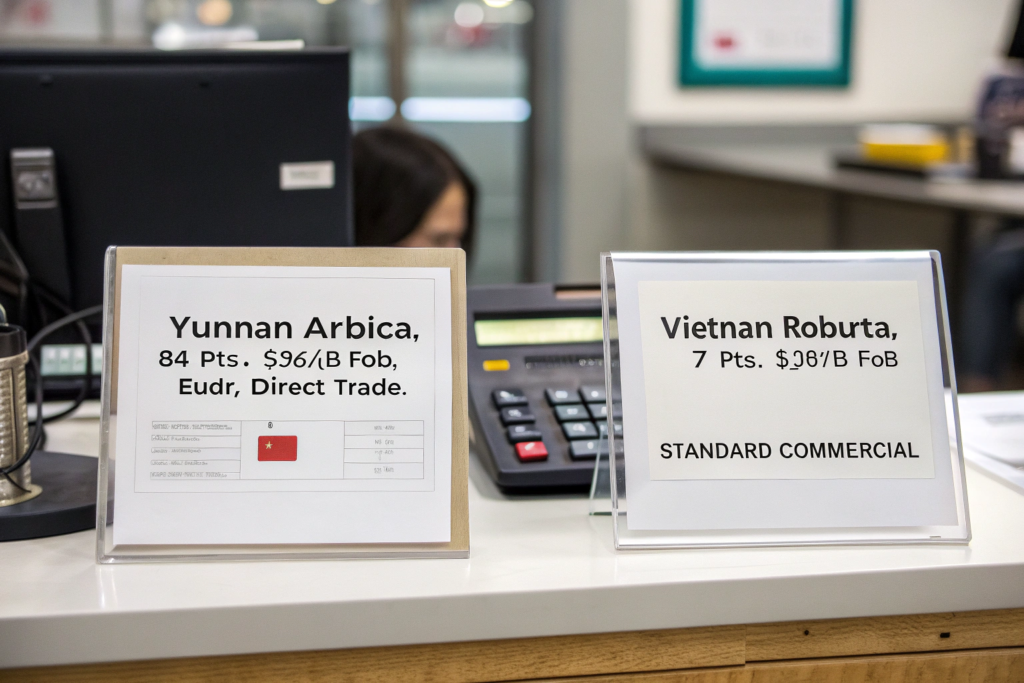
Chinese Arabica is priced higher than Vietnamese Robusta on a per-pound FOB basis, reflecting the inherent quality difference between Arabica and Robusta and the specialty grade classification. However, the value proposition for B2B buyers includes the higher retail price the end product can command, the compliance cost savings from ready-made EUDR documentation, the lower risk of shipment rejection, and the brand-building potential of a traceable, single-origin specialty product.
A B2B buyer who purchases Chinese Arabica for $3.20 per pound can sell the roasted coffee as a specialty single-origin for $14 to $18 per retail bag. A buyer who purchases Vietnamese Robusta for $1.80 per pound will sell it as a blend component or an instant coffee input at a much lower margin per pound. The absolute dollar profit on the Chinese Arabica bag is higher, even though the input cost is higher.
Is There a Market Segment Where Vietnamese Coffee Wins?
Yes, absolutely. Vietnamese Robusta is the correct choice for specific market segments. Instant coffee manufacturing relies on cheap, high-caffeine Robusta as the primary input. Commercial espresso blends for the food service industry often use Robusta to add body and crema at low cost. Budget retail coffee, the $5 bag in the supermarket, is built on cheap commodity coffee.
In these segments, the buyer's priority is cost minimization. Quality and traceability are secondary to hitting a target price point. Vietnamese Robusta excels here. It is the most cost-effective source of caffeine and coffee solids in the world. No Arabica origin can compete on price with Vietnamese Robusta in these commodity segments.
How Do Total Cost of Ownership and Risk Factor Into the Value Equation?
The FOB price is the starting point, not the ending point. A B2B buyer must calculate the total cost of ownership, including shipping, duties, quality control, compliance, and the cost of potential problems.
Chinese Arabica, with its reliable export infrastructure, EUDR-ready documentation, and estate-level quality consistency, has a lower risk of unexpected costs. The container arrives on time. The paperwork is correct. The coffee matches the pre-shipment sample. Vietnamese coffee, particularly from less established exporters, carries a higher risk of delays, documentation issues, and quality inconsistency. These risks have a financial cost. The B2B buyer who factors risk into the value equation often finds that the total cost of ownership gap between Chinese Arabica and Vietnamese Robusta is narrower than the FOB price gap suggests.
Conclusion
B2B coffee buyers do not prefer Chinese coffee over Vietnamese coffee in all cases. They prefer the right coffee for the right application. Vietnamese Robusta is the world leader in low-cost commodity coffee. It serves the instant coffee, commercial blend, and budget retail segments with unmatched price efficiency.
Chinese Arabica serves a different segment. It serves the specialty single-origin program. The premium espresso blend. The traceable, story-driven brand. The EUDR-compliant, low-risk, professionally documented supply chain. It is Arabica, not Robusta. It cups at 84 points, not 76. It comes from mapped estates, not anonymous smallholder plots. It ships reliably from world-class ports with standardized documentation.
For the B2B buyer whose business depends on specialty quality, regulatory compliance, and brand authenticity, Chinese Arabica is not just an alternative to Vietnamese coffee. It is a different product category entirely.
If you are a B2B buyer evaluating Chinese Arabica for your specialty program, we are ready to provide what you need. Samples with full cupping scorecards. EUDR compliance dossiers with polygon maps and satellite verification. Flexible order volumes from a single pallet to annual container contracts. Direct communication with the farm owner. Contact Cathy Cai at cathy@beanofcoffee.com to start the conversation. Taste the difference for yourself.