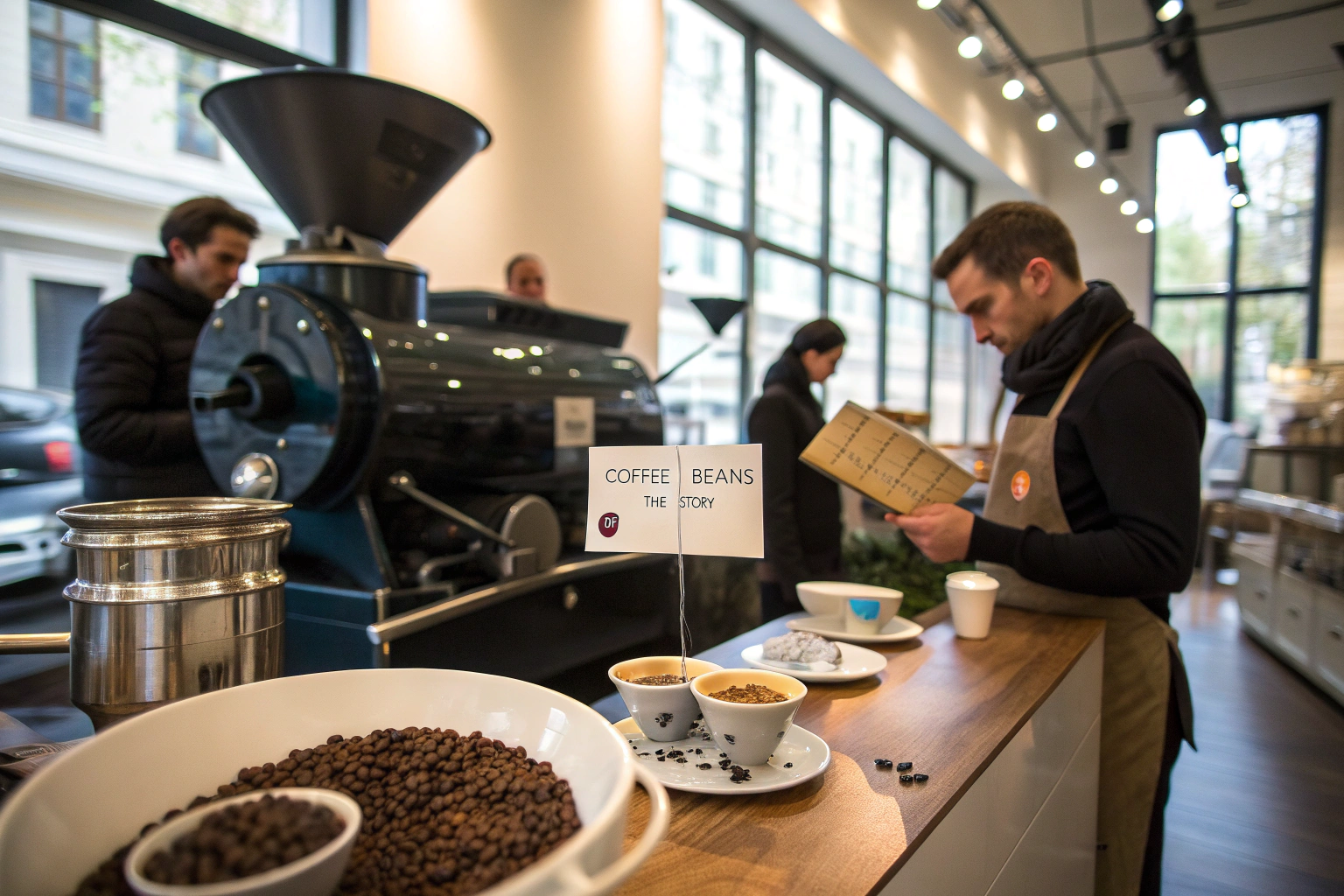
I walked into a busy cafe in Amsterdam last autumn. The barista handed me a flat white and pointed to a framed photo on the wall. It showed a coffee farmer in Colombia standing next to his drying beds. The barista told me the cafe owner had visited that farm. They had a direct relationship. No importers. No brokers. Just the farmer and the roaster. I asked how many of their coffees were direct trade. "All of them," she said. "Our customers ask. They want to know who grew the coffee. If we cannot tell them, they go somewhere else."
Direct trade coffee is gaining popularity in Europe because it satisfies a growing consumer demand for transparency, authenticity, and ethical assurance in the food supply chain. European roasters are adopting direct trade models to secure higher-quality specialty lots, build stable long-term supply relationships, differentiate their brands in a saturated market, and comply with emerging regulations like EUDR that require full traceability to the farm level.
The shift is not just about romance or idealism. It is about market logic. The European coffee consumer has changed. They are more educated, more skeptical, and more willing to pay a premium for coffee with a verifiable story. The roaster who can provide that story wins. The roaster who cannot is competing on price alone. Direct trade is the mechanism that produces the story, secures the quality, and future-proofs the supply chain.
How Does Direct Trade Differ from Fair Trade and Other Certifications?
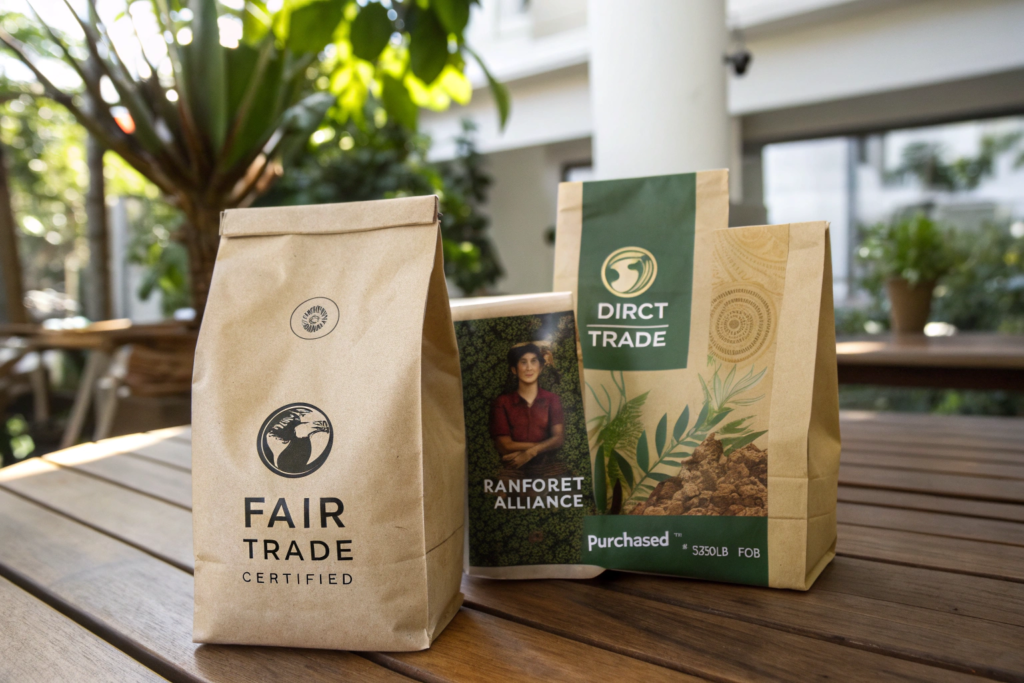
The ethical coffee landscape is crowded with labels. Fair Trade. Rainforest Alliance. Organic. Bird Friendly. Each represents a different approach to ensuring that coffee production meets certain social or environmental standards. Direct trade sits outside this certification system. It is not a label issued by an external body. It is a sourcing philosophy and a business relationship.
Direct trade differs from Fair Trade and other certifications by replacing the third-party audit model with a direct, verifiable relationship between the roaster and the farmer. While certifications set minimum price floors and standardized criteria, direct trade allows for flexible, relationship-based pricing that often exceeds Fair Trade minimums, and traceability that goes beyond the cooperative level down to the specific farm or even the specific lot.
Fair Trade certification guarantees a minimum price and a social premium paid to cooperatives. It is a valuable safety net. But it operates at the cooperative level. The roaster buying Fair Trade coffee knows the cooperative. They may not know the individual farmer. Direct trade pushes traceability further. The roaster knows the specific farmer, the specific farm, and often the specific block where the coffee was grown. The price is negotiated directly, not set by an external standard. The relationship is the guarantee, not the certificate.
What Are the Limitations of Traditional Certification Models?
Certifications have done enormous good. They brought ethical sourcing into the mainstream. They provide a baseline of assurance for consumers who cannot personally investigate every product. But they have limitations that direct trade seeks to address.
The cost of certification can be prohibitive for small farmers. The annual audit fees, the paperwork, the infrastructure requirements can exclude the very farmers the system aims to help. The minimum price, while providing a floor, can also act as a ceiling. A farmer producing an exceptional 88-point lot may receive only the Fair Trade minimum plus a small quality premium, far less than the coffee is worth on the specialty market. The traceability is typically to the cooperative level, not the individual farm. For a roaster seeking a specific flavor profile from a specific microclimate, cooperative-level sourcing does not provide the granularity they need.
How Does Direct Trade Offer More Transparency?
Transparency in direct trade is not a claim. It is a practice. The roaster and the farmer share information openly. The roaster knows the FOB price. The farmer knows the retail price. The costs in between are discussed. The margin distribution is understood.
This transparency extends to the consumer. A direct trade coffee bag can state the exact price paid to the farmer, not just a certification logo. It can show the farmer's face and name. It can provide GPS coordinates that the consumer can verify on a satellite map. This level of specificity is impossible under most certification models, which aggregate data to the cooperative or regional level. The consumer who values transparency gravitates toward the coffee that provides the most information. Direct trade provides more information than any certification label alone.
Why Are European Consumers Demanding More Transparency in Coffee?
The European food consumer has been through a series of shocks. Horse meat in beef products. Mislabeled seafood. Fraudulent organic claims. These scandals have eroded trust in opaque supply chains. The consumer response has been a demand for radical transparency. Where did this come from? Who made it? Can I verify the claims on the label?
European consumers are demanding more transparency in coffee because food supply chain scandals have created a culture of skepticism, the digital tools to verify origin claims are now in every consumer's pocket, and a generation of coffee drinkers has been educated by the specialty coffee movement to value origin, variety, and processing method as elements of quality and experience.
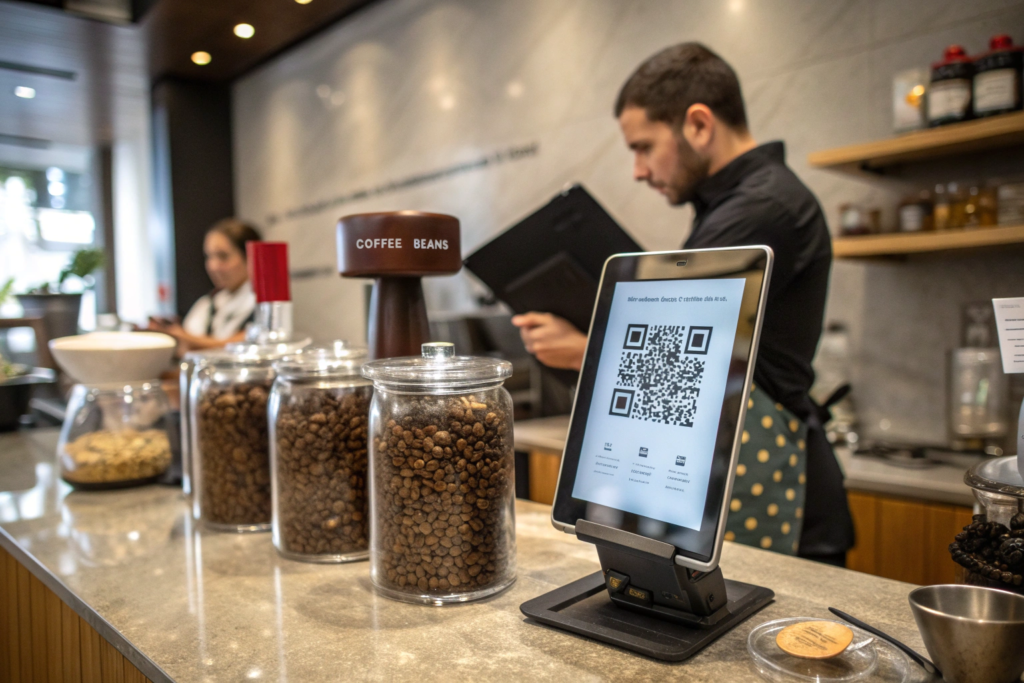
This demand is not limited to a niche of coffee enthusiasts. It has spread to the mainstream. Supermarket chains in Europe are launching specialty coffee ranges with farm-level traceability. The QR code on the bag is becoming as expected as the roast date. The consumer who can scan a code and see the farm is satisfied. The consumer who scans a code and finds a generic marketing page feels deceived.
How Is Social Media Driving the Demand for Coffee Origin Stories?
Social media has turned coffee from a private morning ritual into a public identity marker. People post photos of their coffee. They tag the roaster. They share the origin story. A beautiful pour-over with a compelling story about the farmer gets shared. A generic cup does not.
This dynamic rewards roasters who provide rich, shareable content about their coffee origins. A direct trade relationship generates an endless stream of authentic content. Photos of the farm. Videos of the harvest. Interviews with the farmer. This content is not manufactured by a marketing department. It is documented from a real relationship. The consumer can sense the difference between authentic content and stock photography. Social media amplifies the authentic and ignores the generic. Direct trade provides the raw material for the authentic.
What Role Do Younger Coffee Drinkers Play in This Shift?
The demographic driver of the direct trade trend is age. Younger European consumers, Millennials and Gen Z, have different purchasing values than their parents. They are more likely to research a product before buying. They are more likely to prioritize ethical and environmental considerations. They are more willing to pay a premium for products that align with their values.
These younger consumers are the future of the coffee market. Their preferences are shaping the strategies of roasters and retailers. A roaster who wants to capture this demographic needs more than good coffee. They need a credible story of positive impact. Direct trade provides that story in a way that a certification logo on a bag of anonymous beans does not.
How Does EUDR Accelerate the Shift Toward Direct Trade?
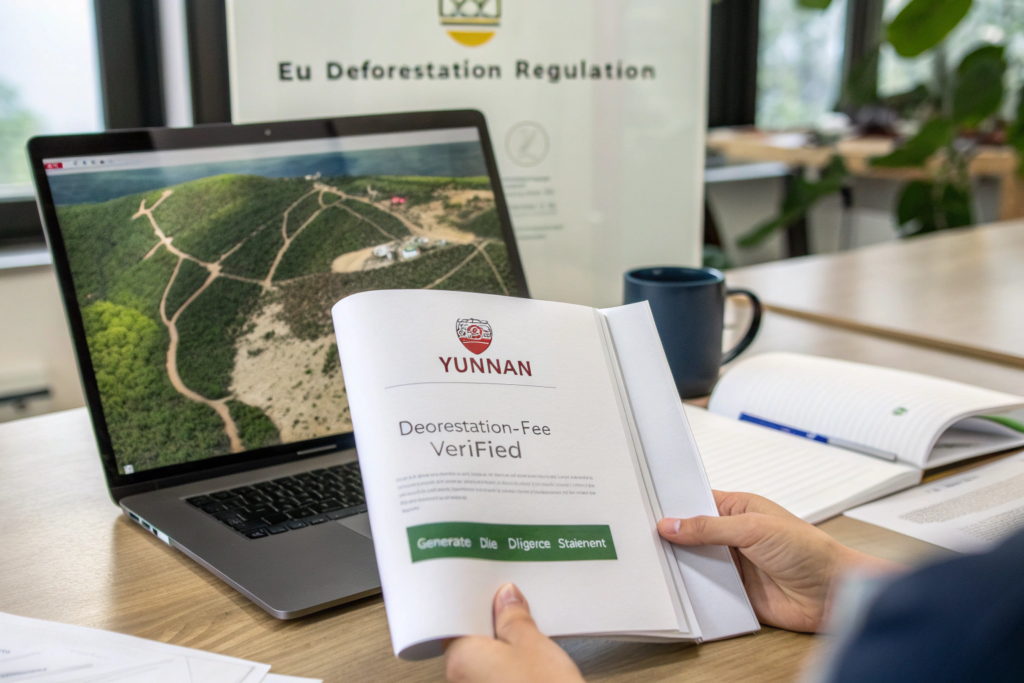
The European Union Deforestation Regulation, EUDR, is not a voluntary standard. It is law. It requires any coffee entering the European market to be traceable to the specific plot of land where it was grown, with geolocation data and proof that the land was not deforested after December 2020.
EUDR is accelerating the shift toward direct trade because the regulation demands the exact kind of farm-level traceability data that direct trade relationships naturally generate. A roaster who buys directly from a known farmer with a mapped farm and a documented supply chain is already largely compliant. A roaster who buys anonymous coffee through multiple intermediaries faces a much harder and riskier compliance challenge.
The regulation is a sorting mechanism. It rewards short, transparent supply chains. It penalizes long, opaque ones. Direct trade, by its nature, is a short, transparent supply chain. The roaster who has visited the farm, has the GPS polygon, and deals directly with the producer has the compliance dossier ready. The roaster who buys from a broker who buys from an exporter who buys from a collector faces a documentary nightmare.
Why Does EUDR Favor Direct Relationships Over Intermediated Supply Chains?
Every intermediary in the supply chain is a point where data can be lost, delayed, or distorted. A farmer sells cherries to a collector. The collector mixes cherries from fifty farms. The traceability to the individual farm is broken at the first step.
Under EUDR, the importer must provide the geolocation of every farm that contributed to the lot. If the lot contains beans from fifty unidentified farms, compliance is impossible. The coffee cannot enter the EU. The only way to comply is to either buy from a single, mapped estate, or buy from a cooperative that has mapped every member farm and maintains lot segregation through the entire chain. Direct trade with an estate or a well-organized cooperative solves the compliance problem at its root.
How Are European Roasters Restructuring Their Sourcing for Compliance?
European roasters are actively reducing the number of suppliers they work with and deepening relationships with those that remain. The transaction cost of collecting and verifying geolocation data from dozens of small suppliers is too high.
The roasters are prioritizing suppliers who can provide a complete digital compliance package with every lot. Polygon maps. Satellite verification reports. Digital traceability records. Direct trade partners who have invested in this infrastructure are becoming preferred suppliers. Suppliers who cannot provide the data are being dropped. The regulatory pressure is accelerating a consolidation of the supply base that was already underway for quality and relationship reasons.
What Are the Financial Benefits of Direct Trade for European Roasters?
The moral case for direct trade is clear. The quality case is clear. But the business case is equally compelling. Direct trade is not charity. It is a sourcing strategy that generates measurable financial returns.
The financial benefits of direct trade for European roasters include a lower cost per pound by eliminating intermediary margins, greater price stability through long-term fixed-price contracts that insulate against commodity market volatility, higher quality consistency that reduces waste and customer complaints, and stronger brand differentiation that supports premium retail pricing.
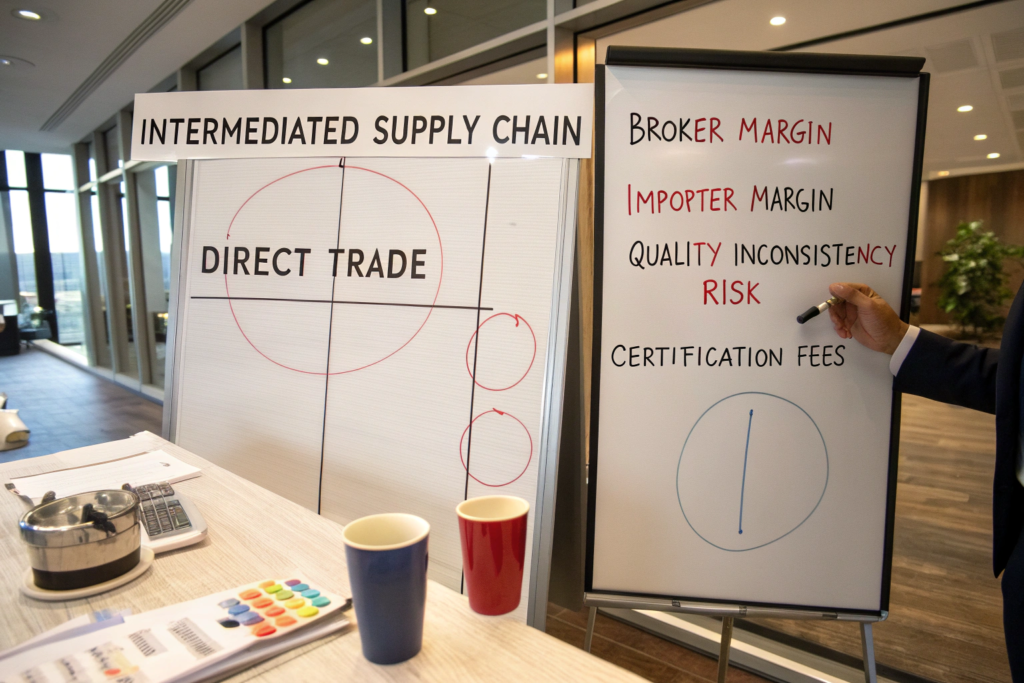
The cost savings are the most direct benefit. A coffee that passes through a local collector, a regional processor, an exporter, an importer, and a broker accumulates markups at every step. A coffee bought directly from the farmer eliminates most of those markups. The roaster pays the farmer a price that exceeds the local market rate, and still pays less than the intermediated price.
How Does Direct Trade Stabilize Green Coffee Prices?
The commodity market for coffee, the C-market, is volatile. Prices swing on weather forecasts, currency movements, and speculative trading. A roaster buying on the spot market is exposed to this volatility. The cost of their main raw material can change by 20% in a month.
Direct trade relationships often use fixed-price forward contracts. The roaster and the farmer agree on a price for the season, or for multiple seasons, based on the farmer's cost of production plus a fair margin. That price is decoupled from the C-market. If the C-market spikes, the roaster's price is protected. If it crashes, the farmer's price is protected. Both sides trade windfall potential for stability. For a roaster building a wholesale business that depends on consistent pricing for cafe clients, this stability is invaluable.
Does Direct Trade Quality Justify a Higher Retail Price?
The quality benefits of direct trade translate directly into pricing power. A direct trade coffee is not just a commodity. It is a differentiated product with a specific origin, a specific farmer, and a specific flavor profile. It can be marketed as a premium offering.
European consumers have demonstrated a willingness to pay more for coffee with a transparent and ethical origin story. A direct trade single-origin bag can retail for €14 to €18, compared to €8 to €10 for a generic specialty blend. The higher retail price generates a higher margin, even after paying the farmer a premium above the commodity price. The quality, the story, and the ethics together create a value proposition that supports the premium.
Conclusion
Direct trade is gaining popularity in Europe because it is the right model at the right time. It meets the consumer demand for transparency and authenticity that has been building for a decade. It provides the farm-level traceability data that the new EU Deforestation Regulation legally requires. It delivers financial benefits to roasters through cost savings, price stability, and premium brand positioning. And it rewards quality-focused farmers with prices that reflect the true value of their coffee.
The trend is not a passing enthusiasm. It is a structural shift in how specialty coffee is sourced and sold. The roasters who embrace direct trade now are building the supply chains, the relationships, and the brand stories that will define the European specialty coffee market for the next decade.
If you are a European roaster looking to build or expand your direct trade sourcing program, our farm in Baoshan, Yunnan, is direct trade ready. We provide full EUDR compliance documentation, fixed-price forward contracts, and complete traceability to the specific block where your coffee is grown. We welcome video audits and farm visits. Contact Cathy Cai at cathy@beanofcoffee.com to request samples and discuss how a direct trade partnership with BeanofCoffee can support your sourcing goals. Let's build a supply chain that makes sense for both of us.