You place a large order. You expect it to ship next week. Then reality hits. The supplier needs time to process. The mill needs time to sort. The shipping line needs time to book. The coffee needs time to sail. The total time, from the day you sign the contract to the day the container arrives at your warehouse, is the lead time. It is longer than you think. And if you do not understand it, it will wreck your inventory planning. I have seen buyers panic because they expected a two-week turnaround and got a two-month reality. Let me explain the lead time, step by step, so you can plan with confidence.
Lead time for large coffee orders is the sum of several sequential phases: order processing, dry milling and sorting, bagging and palletizing, inland transport, export customs, ocean transit, and destination delivery. At BeanofCoffee, a typical large order from contract signature to delivery at a US port takes 6 to 10 weeks. I provide my clients with a detailed timeline at the start of every order, so there are no surprises.
The lead time is not a mystery. It is a process. Understand the process, and you can plan your inventory with precision. Let me break it down for you.
Why Is There a Gap Between Order Confirmation and Ship Date?
You sign the contract. The clock starts. But the coffee does not instantly appear on a ship. There is a gap. This gap is the time it takes to physically prepare your specific coffee for export. It is not a delay. It is a necessary part of the process.
The gap between order confirmation and ship date is the production and preparation phase. At BeanofCoffee, this phase includes pulling the specific lots from my warehouse, running them through the dry mill for final sorting, bagging them to your specification, and palletizing the load. For a large order, this can take 1 to 3 weeks, depending on the complexity of the sorting and the current mill schedule.
You are not ordering a box off a shelf. You are commissioning a specific preparation of a bulk agricultural product. This takes time. A supplier who promises an immediate ship date is either lying or cutting corners.
What Happens During the Dry Milling and Sorting Phase?
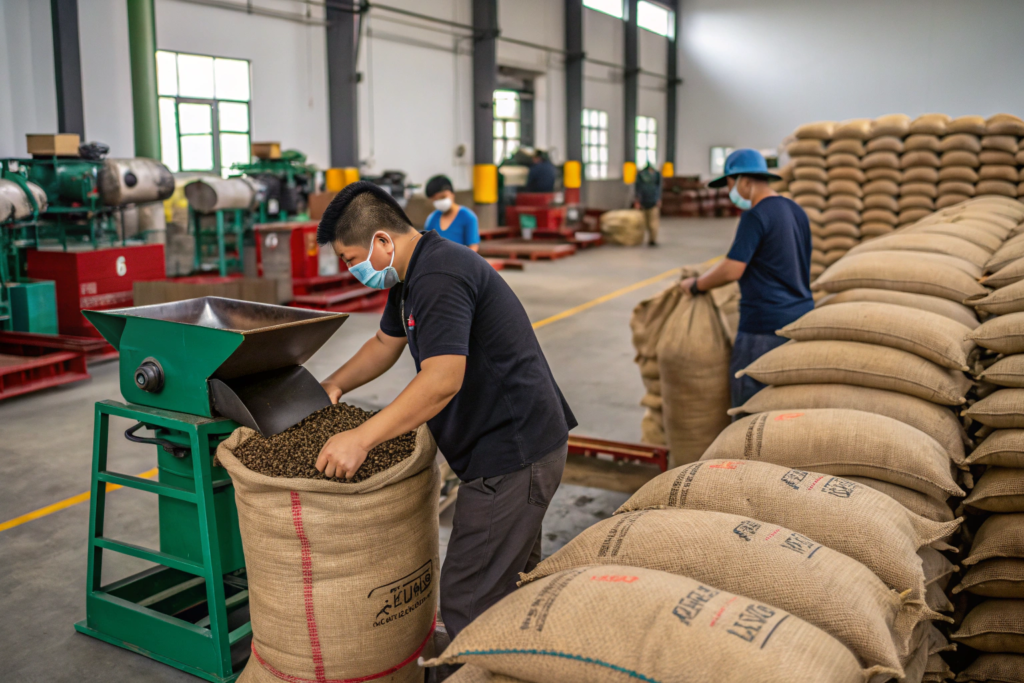
The coffee in my warehouse is in "parchment" form, or it is green coffee that has not yet been finally sorted for export. The dry milling is the final cleaning. The parchment is removed. The beans are passed through the screen graders to separate them by size. They are passed through the density table to remove the light beans. They are passed through the optical sorter to remove the defects. This is a meticulous process. It cannot be rushed. A rushed sorting means defects slip through. It means your coffee is not up to spec. I will not rush this process. The quality of the final cup depends on it.
How Does Bagging and Palletizing Affect the Timeline?
After sorting, the coffee is bagged. The standard bag is a 60-kilo jute sack, lined with a GrainPro bag for freshness. The bags are weighed, sealed, and labeled with the lot number. They are then stacked onto pallets. A standard pallet holds 16 to 20 bags. A 20-foot container holds 10 pallets. This is a physical, labor-intensive process. It takes time. It is also a point of quality control. Each bag is checked. Each pallet is wrapped. The goal is to deliver a clean, professional, export-ready load. This is not done in an hour. It is done over several days.
How Long Does Ocean Transit Take from Yunnan to Major Ports?
The ocean is the longest single leg of the journey. The time depends on the destination. A container from Yunnan to the US West Coast takes a different time than a container to Europe. You need to know these times to plan your ordering.
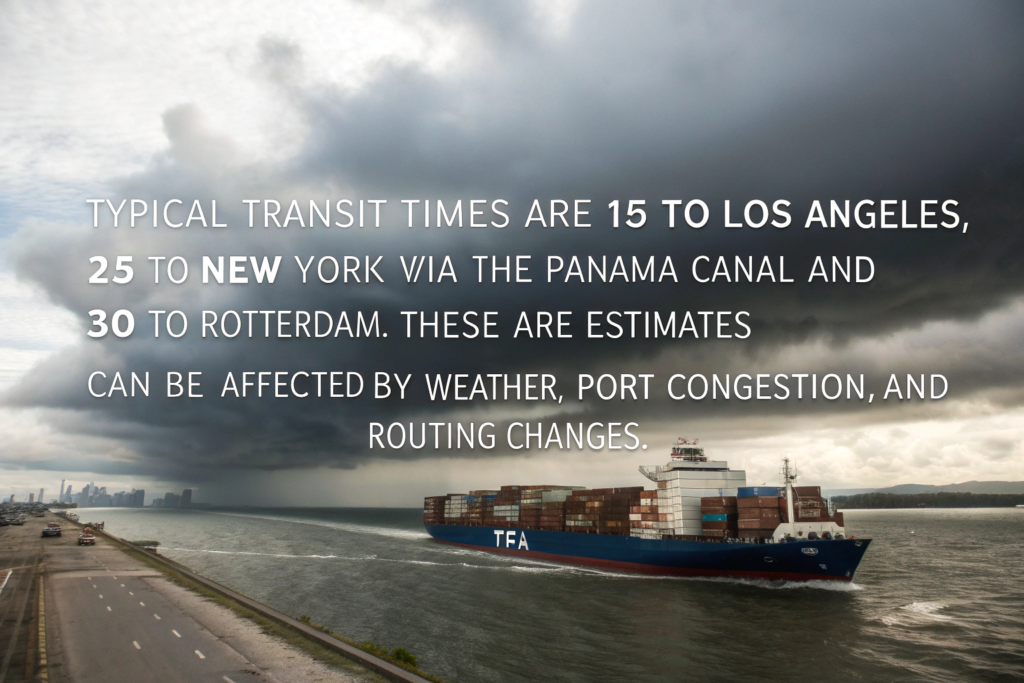
Ocean transit time is the duration of the sea voyage. At BeanofCoffee, my typical transit times are 15 to 20 days to Los Angeles, 25 to 30 days to New York via the Panama Canal, and 30 to 35 days to Rotterdam. These are estimates, and they can be affected by weather, port congestion, and routing changes.
The ocean is not a fixed schedule. It is a variable. But a good supplier gives you a realistic estimate, based on current conditions. I share my freight forwarder's schedule with my clients. They know what vessel the coffee is on, and they know when it is expected to arrive.
What Is the Realistic Transit Time to the US West Coast?
From the port of Shanghai, the main export gateway for Yunnan coffee, to the port of Los Angeles or Long Beach, the transit is usually 15 to 18 days. This is a well-established, heavily traveled route. The vessels are fast and frequent. This is the fastest route from Yunnan to the US. It is a major advantage for my West Coast clients. Their coffee arrives faster, which means it is fresher. If you are on the East Coast, the transit is longer. The vessel must either transit the Panama Canal, which adds a week, or sail all the way around South America, which adds much more. The route matters.
How Do European Ports Compare in Terms of Transit Time?
Europe is further. A container from Shanghai to Rotterdam, the largest port in Europe, takes about 30 to 35 days. The route is through the Malacca Strait, across the Indian Ocean, through the Suez Canal, and into the Mediterranean. The Suez Canal is a potential bottleneck. If there is a disruption, the transit time can extend significantly. The alternative route, around the Cape of Good Hope, adds two weeks or more. A good forwarder monitors these conditions and advises on the best routing. I keep my European clients informed of any potential delays. Transparency is the key.
How to Plan Your Inventory Buffer Around Lead Time Variability?
The lead time is not a fixed number. It is a range. The ship might be early. It might be late. The port might be congested. The customs clearance might be delayed. You need to plan for this variability. You need a buffer.
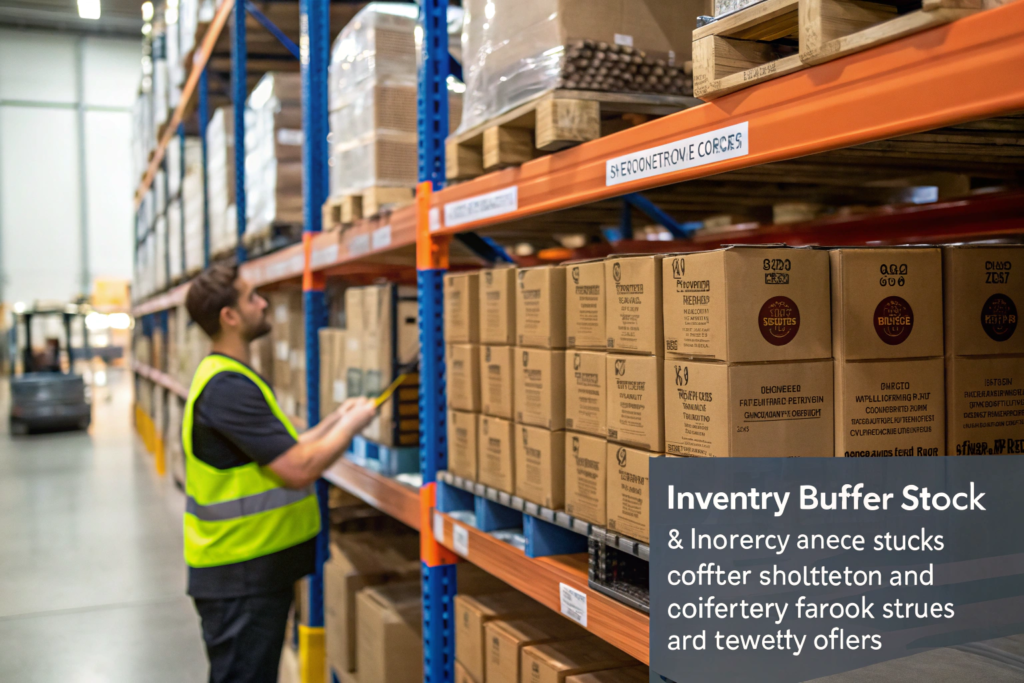
Inventory buffer is the extra stock you hold to cover the variability in lead time. At BeanofCoffee, I advise my clients to hold a buffer of 3 to 4 weeks of normal consumption. This buffer protects you against the unexpected: a rolled booking, a port strike, a customs hold. It is the cushion that prevents a stockout.
The buffer is not wasted money. It is an insurance policy. It is the cost of security. A roaster who runs out of coffee loses sales, loses customers, and loses reputation. The buffer prevents this catastrophe.
How to Calculate Your Reorder Point Based on Lead Time?
The reorder point is the inventory level at which you must place a new order to avoid running out before the new shipment arrives. The formula is simple. Reorder point equals your average weekly usage multiplied by your lead time in weeks. For example, if you use 500 pounds of coffee per week, and your lead time is 8 weeks, your reorder point is 4,000 pounds. When your inventory drops to 4,000 pounds, you place the order. This is a basic but powerful tool. It removes the guesswork from your ordering. I help my clients calculate their reorder points. It is a simple conversation that can save a lot of anxiety.
Why Should You Add a "Safety Stock" on Top of the Reorder Point?
The reorder point calculation assumes a consistent lead time. But lead time is not consistent. A storm can delay a ship. A customs inspection can add a week. The safety stock is the extra buffer on top of the reorder point. It is your protection against the unpredictable. A common safety stock is 50% of your weekly usage. If you use 500 pounds a week, your safety stock is 250 pounds. This means your actual reorder point is the calculated reorder point plus the safety stock. This extra cushion gives you peace of mind. It is the difference between a smooth operation and a constant state of emergency.
How Do Peak Season and Holidays Impact Lead Time?
The global shipping calendar has its own rhythm. There are times of the year when the system is overloaded. If you order during these times, you must expect longer lead times. The biggest of these is the peak season leading up to the Christmas holidays.
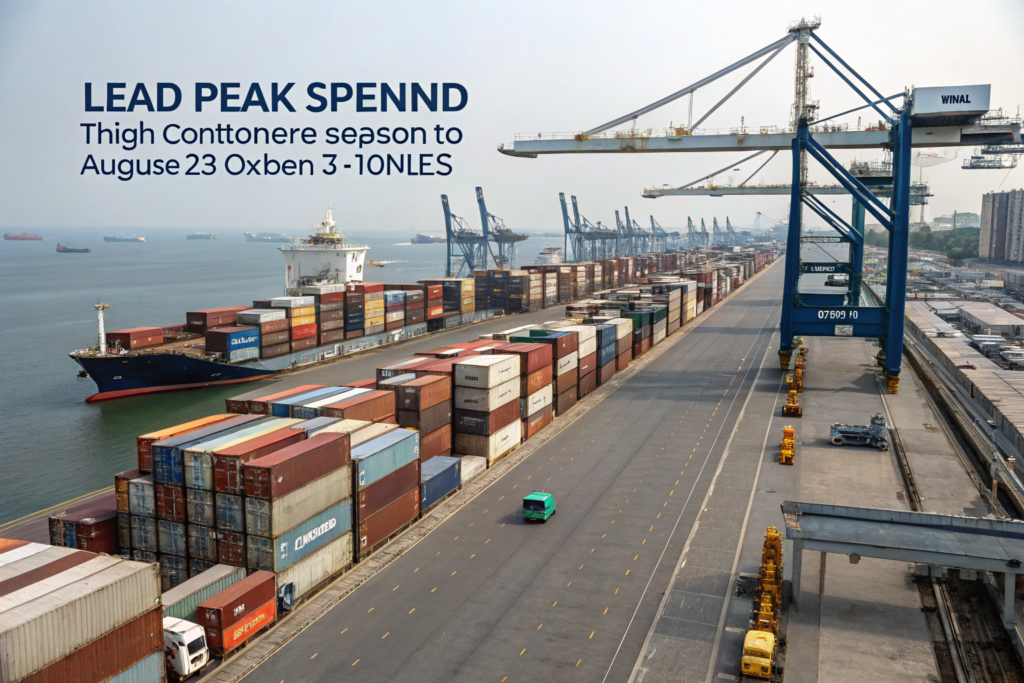
Peak season, from August to October, stretches lead times. The demand for container space is immense. Bookings get rolled. Ports get congested. At BeanofCoffee, I advise my clients to add 2 to 3 weeks to their planned lead time for shipments during this period. The extra buffer is essential.
The holidays do not just affect the ocean. They affect the destination. If your container arrives on December 20th, the customs broker might be on vacation. The trucker might be unavailable. The delivery slips into January. Planning is the only defense. A smart buyer orders early, before the chaos begins.
What Are the Longest Lead Times of the Year?
The longest lead times are typically in the months of September and October. This is the absolute peak of the pre-Christmas rush. The combination of high demand, full vessels, and potential weather disruptions in the Pacific creates a perfect storm of delays. A shipment that normally takes 20 days might take 30. A booking that is normally confirmed might be rolled twice. This is the period to avoid, if possible. If you cannot avoid it, you must plan for it. Add the extra buffer. Book the space early. Pay for the guaranteed load. The cost of the mitigation is less than the cost of a missed retail season.
How Do Chinese Holidays Affect the Export Schedule?
China has its own holiday calendar. The most significant is the Chinese New Year, or Spring Festival. This usually falls in late January or February. The entire country shuts down for a week or two. Factories close. Ports slow down. Trucking stops. If your order is scheduled to ship around this time, it will be delayed. The lead time extends by two to three weeks. A professional exporter plans for this. I inform my clients of the holiday schedule well in advance. We plan our shipments to avoid the shutdown, or we build the delay into the timeline. Do not be surprised by Chinese New Year. It happens every year. Plan for it.
Conclusion
Understanding lead time is not about memorizing a chart. It is about understanding a process. It is about knowing what happens between the signing of the contract and the arrival of the container. It is about respecting the physical realities of agriculture, processing, and global logistics. When you understand the lead time, you stop being surprised. You stop panicking. You start planning. You calculate your reorder point. You build your safety stock. You anticipate the peak season. You work with your supplier to create a timeline that is realistic and reliable. This is the foundation of a stable, profitable coffee business. It is the difference between a supply chain that runs smoothly and one that lurches from crisis to crisis.
Let's map out your lead time together. Contact me, Cathy Cai, at cathy@beanofcoffee.com. I will send you a detailed timeline for your specific order, from the Baoshan dry mill to your warehouse door. I will show you the transit time, the peak season adjustments, and the holiday schedule. We will build a plan that gives you the security of knowing exactly when your coffee will arrive. No surprises. Just a smooth, predictable supply chain.