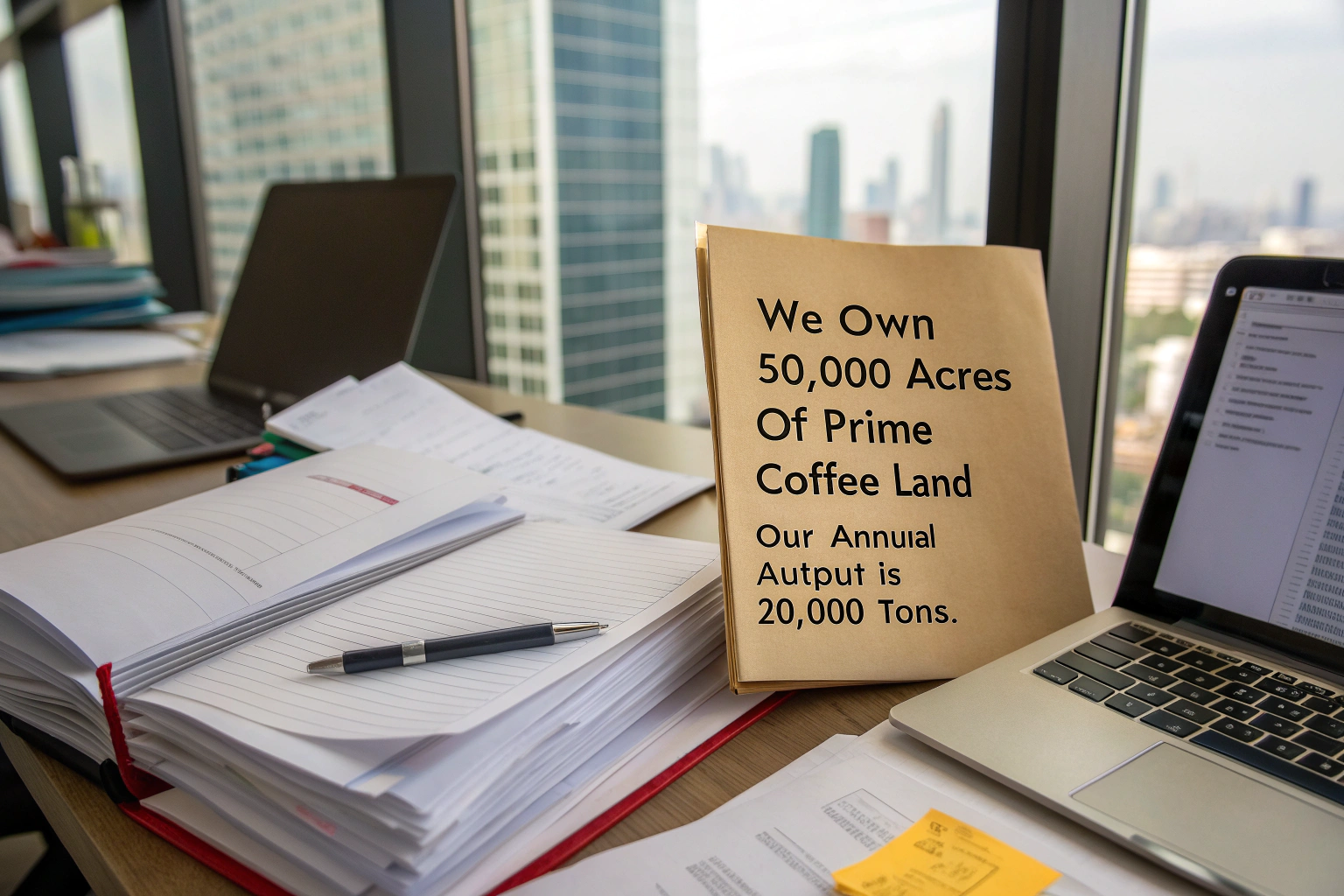
You get the email. "We own 50,000 acres of prime coffee land." "Our annual output is 20,000 tons." The numbers are impressive. They are designed to impress. But are they true? In the world of international coffee sourcing, the gap between a claim and reality can be vast. A middleman in a Shanghai office can claim to own a plantation he has never seen. A smallholder with 10 acres can inflate his numbers to attract bigger buyers. You need to verify. You need to look beyond the marketing language and find the hard evidence. I have built my reputation on transparency. I will show you how to check the claims of any supplier, including me.
Vetting a supplier's plantation size and output claims requires a combination of document verification, satellite imagery analysis, and on-the-ground questioning. At BeanofCoffee, I welcome this scrutiny. My 10,000 acres are real, my output is measurable, and my documentation is available to any serious buyer. A supplier who refuses to provide evidence is a supplier you should avoid.
The claims are not just numbers. They are a promise of supply. If the numbers are false, the promise is false. Let me show you how to find the truth.
What Documents Can Prove a Supplier's Land Ownership?
The first step is the paperwork. A legitimate land-owning coffee farmer has legal documents that prove their ownership or their long-term lease. These documents are not secret. They are part of the public record, or they can be shared with a potential business partner.
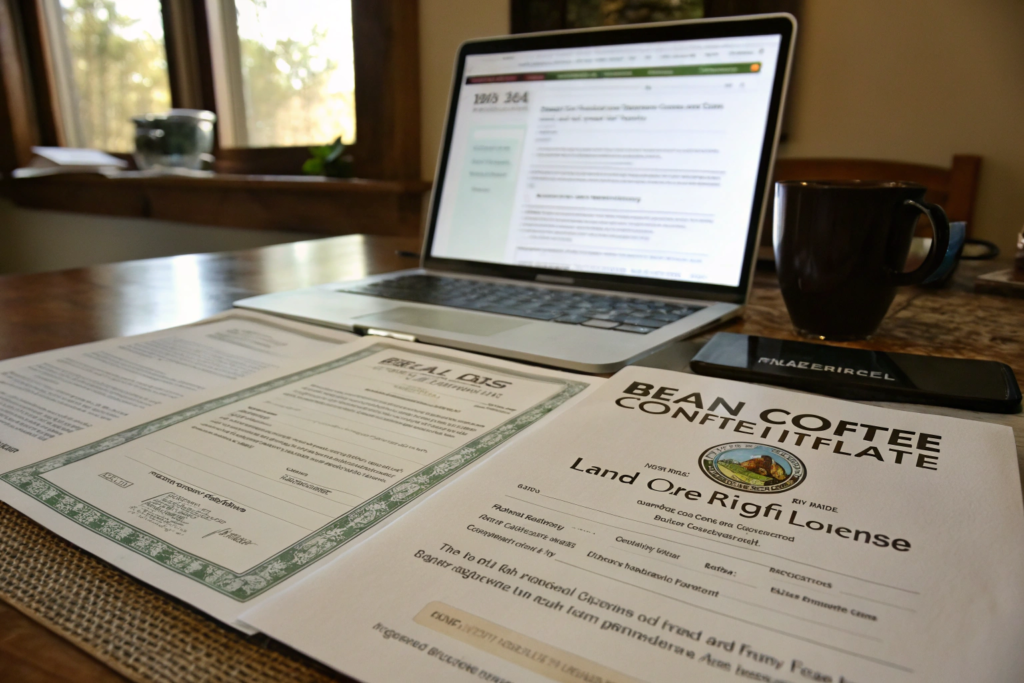
The key documents are the land use rights certificate, the business license, and any tax records related to the land. At BeanofCoffee, I can provide these documents to serious buyers. They show the registered area of my plantation and the legal basis of my ownership. A supplier who cannot produce these documents is hiding something.
The documents are the foundation. They are the legal proof of the claim. Without them, the claim is just words. In China, land ownership is complex. Most land is owned by the state, but farmers hold long-term "land use rights." These rights are documented and transferable. A legitimate farmer will have a land use rights certificate. It will state the area, the location, and the duration of the rights. Ask to see it.
How to Verify a Chinese Business License and Land Use Rights?
A Chinese business license is a public document. It contains the company's registered address, its legal representative, and its scope of business. You can ask for a copy. You can then verify it against public databases. The land use rights certificate is more sensitive, but a serious supplier will share it with a serious buyer under a non-disclosure agreement. The certificate will show the area of the land. Compare this to the supplier's claims. If the claim is 10,000 acres and the certificate shows 1,000 acres, you have found the lie. This is a simple, powerful check. It is the first step in separating the real farmers from the pretenders.
What Should a Transparent Supplier Be Willing to Share?
A transparent supplier shares more than just the minimum. They share their story. They share their maps. They share their harvest records. They invite you to visit. They offer a video tour. They are proud of what they have built, and they want you to see it. I am this kind of supplier. I will show you the GPS coordinates of my farm. I will show you the satellite images. I will show you the harvest logs. I will walk you through the fields on a video call. Transparency is not a burden. It is a competitive advantage. It is the foundation of trust.
How Can Satellite Imagery Validate the Size of a Coffee Plantation?
The paper can be forged. The satellite cannot. Google Earth and other mapping services provide a free, powerful tool for verifying the physical reality of a farm. You can see the land. You can measure it. You can assess its condition.
Satellite imagery is a powerful verification tool. At BeanofCoffee, my farm is clearly visible on Google Earth. You can see the coffee terraces, the shade trees, and the layout of the plantation. The scale of the operation is visible from space. It is the ultimate proof of my claims.
You do not need to be a satellite imagery expert. You just need to look. A 10,000-acre farm is not a small plot. It is a massive, visible feature of the landscape.
What Visual Signs on a Satellite Image Indicate a Real Coffee Farm?
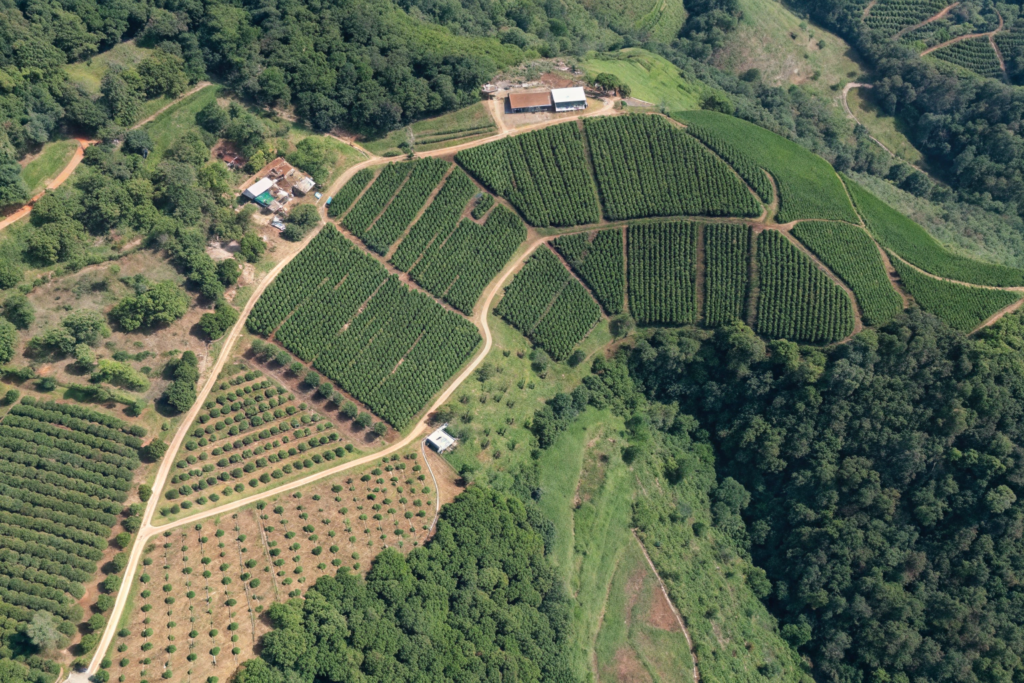
A coffee farm is not a random piece of land. It has a specific visual signature. Look for terraces. Coffee in mountainous Yunnan is often grown on terraces, carved into the slopes. These terraces appear as a pattern of parallel lines or curves on the hillside. Look for shade trees. A quality-focused farm will have a canopy of taller trees above the coffee bushes. These appear as a darker, more textured green. Look for infrastructure. A wet mill, a drying patio, a warehouse. These are signs of a professional operation. A bare, flat field with no features is not a coffee farm. It is a pasture, or a crop of something else.
How to Use Measurement Tools on Google Earth to Estimate Acreage?
Google Earth has a ruler tool. You can use it to measure the boundaries of the farm. Draw a polygon around the area that appears to be coffee. The tool will calculate the area. This is an estimate, not a precise survey. But it will tell you if the supplier is in the right ballpark. A claim of 10,000 acres should correspond to a polygon of roughly 10,000 acres, or about 40 square kilometers. If the visible farm is only a few hundred acres, the claim is false. This is a simple check that can save you from a bad deal.
How to Assess a Supplier's Annual Output Claims?
The output claim is a function of the land area and the yield per acre. A mature, well-managed coffee farm in Yunnan might yield 10 to 20 bags of green coffee per acre per year. A bag is 60 kilos. So, 10,000 acres would yield 100,000 to 200,000 bags per year. This is a huge volume. It would require a correspondingly huge infrastructure.
Annual output claims must be consistent with the farm size and the yield. At BeanofCoffee, my output is a matter of record. My harvest logs, my processing records, and my export invoices all tell the same story. A supplier who claims a massive output from a small farm is either lying or confused. Either way, they are not a reliable partner.
The numbers must add up. A 100-acre farm cannot produce the output of a 10,000-acre farm. The arithmetic is simple. The truth is in the math.
What Is a Realistic Yield Per Acre for Yunnan Coffee?
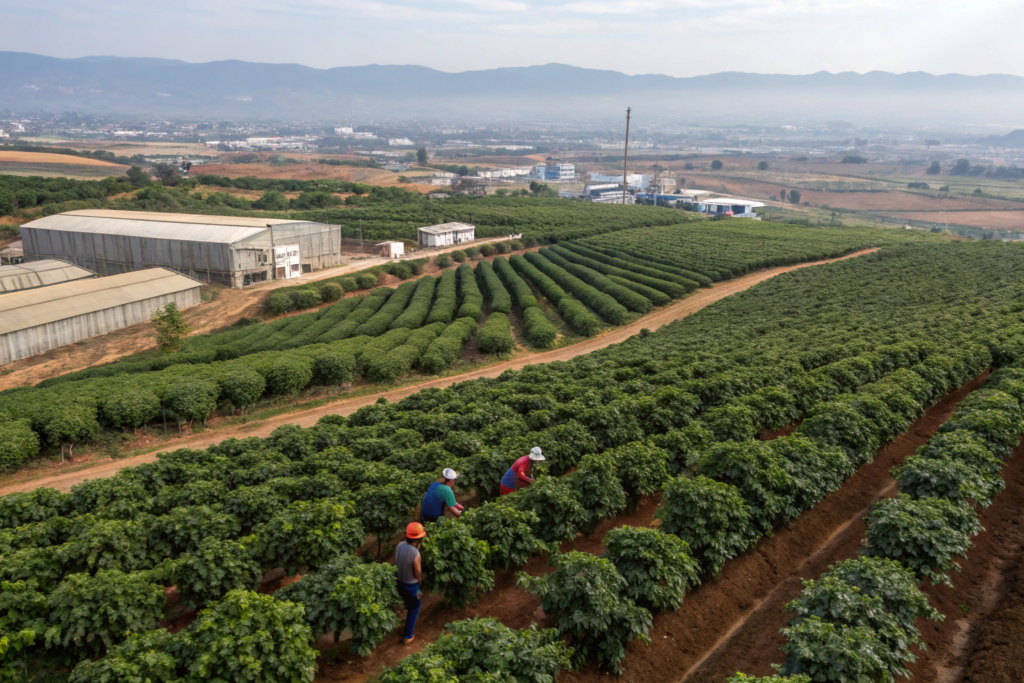
The yield depends on several factors. The variety. The altitude. The farming practices. The age of the trees. A well-managed farm with mature trees and good fertilization might yield 15 to 20 bags per acre. A poorly managed farm might yield 5 to 10 bags. A new farm with young trees will yield much less. When a supplier makes an output claim, you can work backward. Divide the claimed output by the claimed acreage. Does the resulting yield per acre fall within a realistic range? If the implied yield is absurdly high, like 50 bags per acre, the claim is suspect. If it is absurdly low, the farm is underperforming, and you need to ask why.
How to Cross-Check Output with Export Records and Mill Capacity?
A farm's output is not just a number on a brochure. It is a physical flow of coffee through a mill. The mill has a capacity. The export records show the shipments. Ask the supplier for their processing capacity. "How many tons of cherry can your wet mill process per day?" Ask about their export history. "How many containers did you ship last year?" These numbers should be consistent. A farm that claims 10,000 tons of output but has a mill that can only process 1,000 tons is not telling the truth. The infrastructure must match the claim.
Why Should You Ask for a Video Tour of the Entire Operation?
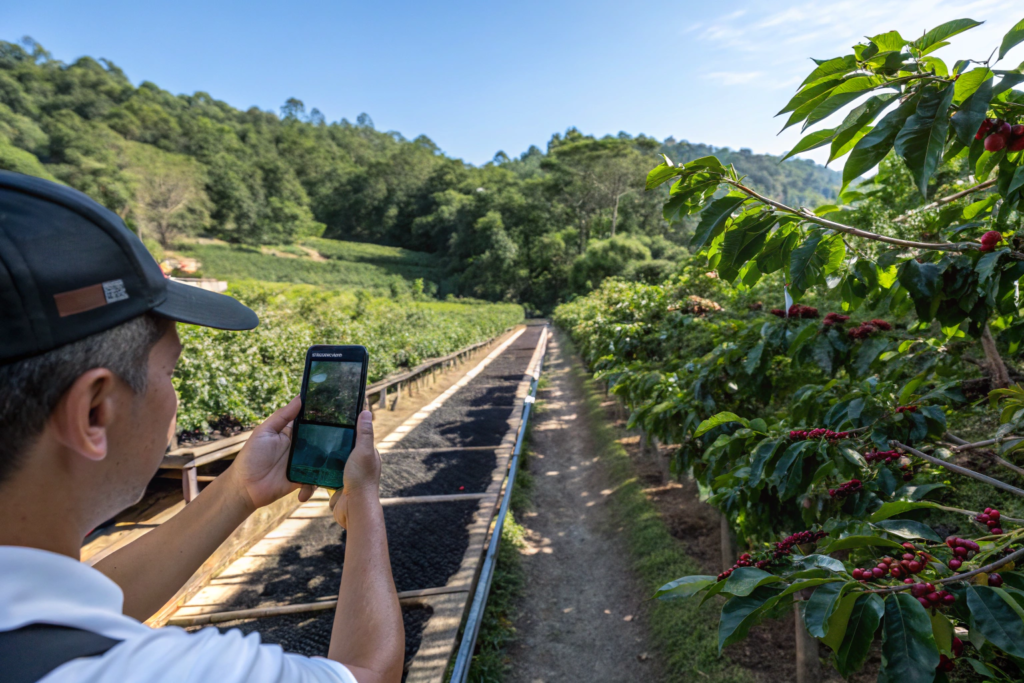
The video call is the modern substitute for the physical visit. It is not perfect, but it is powerful. A supplier who is proud of their farm will gladly give you a live tour. They will walk the fields with their phone. They will show you the mill. They will answer your questions in real time.
A live video tour is a powerful verification tool. At BeanofCoffee, I offer virtual farm tours to all my serious clients. I walk the plantation with my phone. I show the trees, the cherries, the drying beds, the mill. The video is unscripted and real. A supplier who refuses a video tour is hiding something.
The video tour is not just about verification. It is about connection. It is a chance for you to see the place, to meet the people, to feel the atmosphere. It is the next best thing to being there.
What Specific Areas Should You Ask to See on a Video Call?
Do not just accept a view of a scenic mountain. Ask to see the specific operational areas. Ask to see the nursery, where the young plants are grown. Ask to see the mature coffee trees, with cherries on them. Ask to see the wet mill, the fermentation tanks, and the washing channels. Ask to see the drying beds or the mechanical dryer. Ask to see the dry mill, the sorting equipment, and the warehouse. Ask to see the cupping lab. Each of these areas is a piece of the puzzle. A complete tour shows a complete operation. A fragmented tour shows a fragmented operation.
How to Assess the Condition of the Farm Through Video?
The condition of the farm tells you a lot about the management. Are the trees healthy and vigorous, or are they scraggly and neglected? Are the paths clean and well-maintained, or are they overgrown? Is the equipment well-kept, or is it rusty and broken? These are visual cues. They are not the final word, but they are clues. A well-managed farm looks well-managed. It has an air of order and purpose. A neglected farm looks neglected. The video tour is your chance to observe these cues. It is a qualitative assessment that complements the quantitative data.
Conclusion
Vetting a supplier's plantation size and output claims is not about distrust. It is about professionalism. It is about doing your homework before you commit your money and your reputation. The tools are available. The documents, the satellite images, the yield calculations, the video tour. A real supplier welcomes these checks. They have nothing to hide. Their claims are true, and the evidence confirms it. A false supplier will resist. They will make excuses. They will offer vague answers. The choice is yours. Choose the supplier who is willing to prove their claims. Choose the supplier who is transparent. That is the supplier who will be a reliable partner for the long term.
Put my claims to the test. Contact me, Cathy Cai, at cathy@beanofcoffee.com. I will send you my land documents, my satellite coordinates, and my harvest records. I will schedule a video tour of my farm. I will answer every question you have. I will prove to you that BeanofCoffee is exactly what I say it is. A real farm, with real output, and a real commitment to quality. The evidence is there. All you have to do is ask.