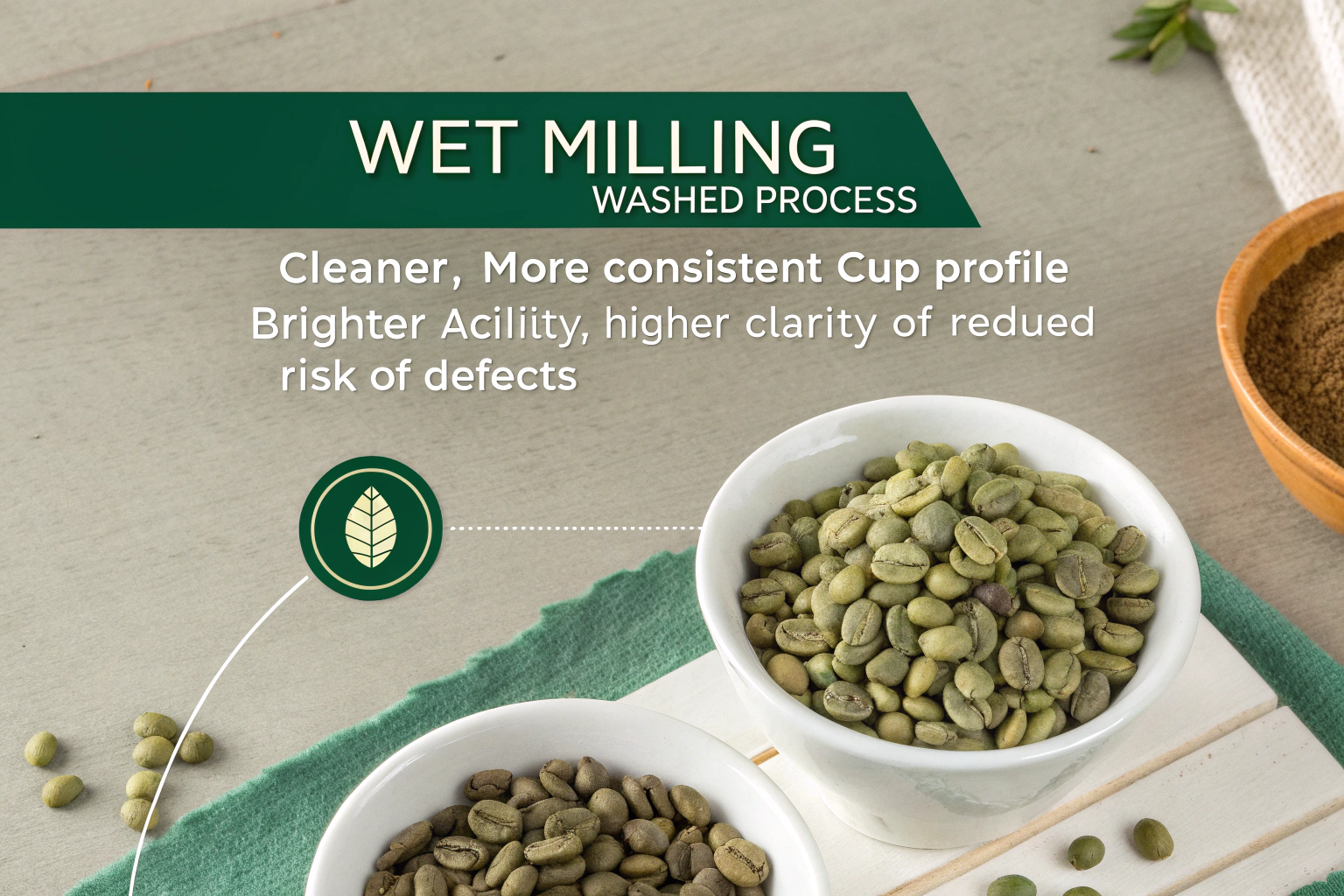
You've tasted coffee labeled "washed process" and noticed its clean, bright clarity. But what happens between the cherry and the green bean to create that profile? The answer lies in wet milling, a precise, water-intensive method that defines quality for much of the world's specialty coffee. On our Yunnan plantations, where we process both washed and natural coffees, the choice of milling method is the single biggest decision we make to shape the final product's destiny.
The primary benefits of wet milling (or the washed process) are a cleaner, more consistent cup profile with brighter acidity, higher clarity of flavor, and significantly reduced risk of defects. It produces green beans with more uniform moisture content and color, which enhances their storage stability and market value. For exporters and buyers, this translates to predictable quality, easier grading, and a product that reliably meets the specifications of discerning markets in North America, Europe, and Australia.
That's the high-level view. But wet milling isn't just a "better" process—it's a specific tool for achieving a specific result. It requires significant investment in infrastructure and water management, and it removes some of the fruity, wild flavors that other methods highlight. Let's dive into the details of how this method works and why it creates a product that is often seen as safe, reliable, stable, and trustworthy in the international market.
How Does Wet Milling Create a Cleaner Cup Profile?
The magic—and the rigor—of wet milling lies in its ability to swiftly separate the coffee seed from the fruity mucilage that surrounds it, halting fermentation early and by design. This controlled removal is what defines the taste.
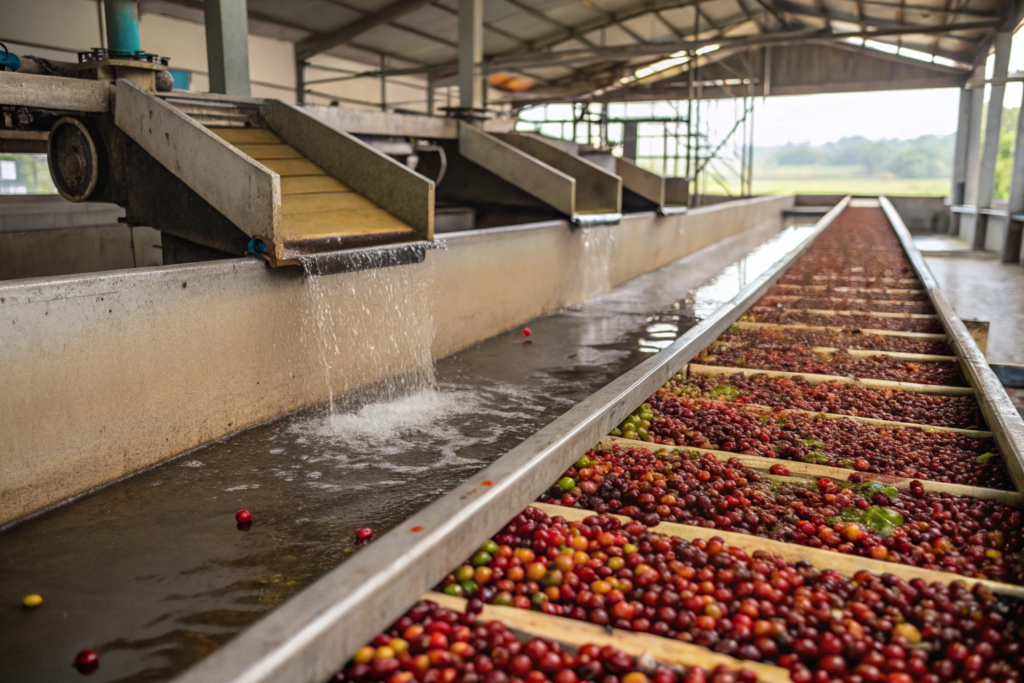
Wet milling creates a cleaner profile by mechanically and biologically stripping away the cherry's fruit material before the bean is dried. Here's the step-by-step alchemy: First, cherries are pulped—the outer skin is removed. The beans, still coated in a sticky, sugary layer called mucilage, are then fermented in water tanks. This fermentation breaks down the mucilage, which is finally washed away with high-pressure water channels. What's left is the bare parchment-covered bean, which is then dried. Because the bean isn't dried inside the fruity pulp, it doesn't absorb the heavy, winey, or wild sugars. Instead, the inherent flavors of the bean itself—shaped by its variety, soil, and altitude—shine through with clarity. This results in a cup celebrated for its purity, bright acidity (often citric or malic), and defined flavor notes like tea, lemon, jasmine, or clean stone fruit.
What Role Does Fermentation Play in Washed Coffee?
Fermentation in wet milling is a controlled, aquatic cleanup operation. Unlike in natural processing where fermentation happens unpredictably inside the fruit, here it's a submerged, monitored step. The goal isn't to add flavor, but to efficiently remove the mucilage. The water environment controls temperature and limits oxygen, promoting a more uniform breakdown by enzymes and microbes. The timing is critical—under-ferment, and sticky mucilage remains, causing drying problems; over-ferment, and the beans can develop undesirable sour or vinegar notes. Mastery of this step is a hallmark of a skilled processor and a key part of quality control. It's why our washing stations in Yunnan have dedicated, trained staff monitoring fermentation tanks around the clock.
Why Does This Process Reduce "Off-Flavors" and Defects?
Wet milling is a powerful quality filter. The floatation tank at the very beginning removes underripe or overripe (often hollow) cherries, which sink or float differently than dense, ripe ones. The washing channels further separate dense, good beans from lighter, defective ones. More importantly, by removing the sugary fruit flesh quickly, it denies mold, fungi, and unwanted bacteria a food source, drastically reducing the risk of earthy, musty, or phenolic defects that can occur in sun-dried cherries. For an exporter, this means a higher percentage of the final lot meets grade, and for a buyer like "Ron," it means greater security against receiving a bag with hidden quality issues. It directly addresses the pain point of inconsistent quality.
How Does Wet Milling Enhance Bean Consistency and Grading?
For commercial buyers, roasters, and large brands, consistency isn't a luxury—it's the foundation of their business. Wet milling is an assembly line for uniformity.
The process enhances consistency at every stage. 1) Uniform Start: The initial floating and sorting creates a more uniform batch of ripe cherries. 2) Even Processing: Every bean undergoes the same pulping, fermentation, and washing for a standardized amount of time. 3) Controlled Drying: After washing, the parchment-covered beans are typically dried on raised beds or patios (or mechanically) in a single layer, leading to even moisture reduction. This results in green beans that are remarkably consistent in size, density, color, and moisture content (typically a stable 10-12%). This physical uniformity makes the subsequent steps of grading, sorting, and roasting infinitely more predictable. A roaster can apply a profile knowing the beans will react similarly, producing a stable and reliable final product batch after batch.
Why Are Washed Beans Easier to Grade and Sort?
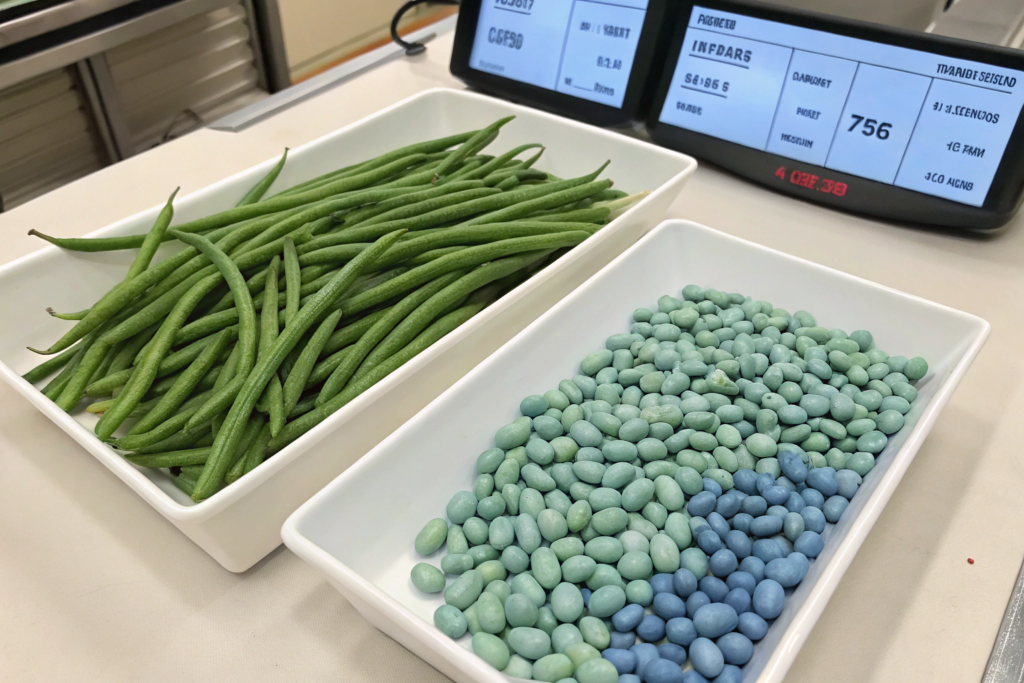
The answer is in their "clean slate" appearance. Washed beans, once hulled, have a clean, bluish-green or greenish-tan color with minimal silverskin residue. Any defects—black beans, insect damage, broken pieces—stand out starkly against this uniform background, making them easy to spot for both optical sorters and human sorters. This clarity allows for more precise grading according to international standards (like SCA or Brazilian COB). At Shanghai Fumao, our final optical sorting lines are most effective on our washed lots, ensuring we deliver a product with a verifiably low defect count. This gives buyers confidence and reduces their own labor for post-purchase sorting.
How Does This Consistency Benefit Large-Scale Buyers?
For a large company buyer, distributor, or brand, consistency translates directly to operational efficiency and brand trust. It means:
- Predictable Roasting: Fewer adjustments needed between batches, saving time and fuel.
- Stable Blend Formula: A washed coffee from a trusted supplier will perform the same in a blend year after year, protecting the signature taste of a product line.
- Simplified Quality Assurance: Incoming QC is faster and more objective when the beans are uniform.
- Market Confidence: They can sell to their customers with the assurance that the flavor profile advertised will be delivered.
This reliability is a core reason washed coffees from established origins like Colombia or our Yunnan Arabica lots form the backbone of so many commercial and specialty offerings worldwide. They are the trustworthy workhorses of the coffee trade.
What Are the Operational and Environmental Considerations?
The benefits of wet milling come with real costs and responsibilities. It is a capital- and resource-intensive process that must be managed responsibly to be sustainable.
Operationally, wet milling requires significant infrastructure: pulping machines, fermentation tanks, washing channels, and ample supplies of clean water. It demands skilled labor to manage the precise timing of fermentation. Most critically, it produces wastewater—the runoff from the pulping and washing stages is rich in organic matter (sugars, pectin) and can be highly polluting if released directly into rivers. Therefore, a professionally run wet mill must invest in wastewater treatment systems, such as settling tanks or anaerobic digesters, to neutralize this effluent. For an exporter, this is a major commitment, but it's non-negotiable for long-term operation and ethical sourcing. At Shanghai Fumao, our mills are equipped with modern water recirculation and treatment systems because we view environmental stewardship as part of producing good quality coffee responsibly.

Is Wet Milling More Costly Than Natural Processing?
Yes, unequivocally. The costs are higher due to:
- Infrastructure: High upfront cost for machinery and concrete works.
- Water: High volume usage and treatment costs.
- Labor: Requires more skilled, attentive labor than simply spreading cherries to dry.
- Yield: There is a slight weight loss from removing all the fruit material, and a risk of fermentation errors ruining a batch.
These costs are reflected in the typically higher price of washed coffees. However, for the buyer, this premium buys security against defects and a product that is often easier to roast and market. It's a value proposition centered on risk reduction and quality assurance.
How Can Water Usage Be Managed Sustainably?
Sustainable water management is a technical and ethical imperative. Best practices include:
- Mechanical Demucilaging: Using machines (aquapulpers or eco-pulpers) that scrub most of the mucilage off with little to no water and no need for fermentation.
- Water Recirculation: Treating and reusing water in a closed-loop system for multiple batches.
- Wastewater Treatment: Using the nutrient-rich effluent to fertilize coffee fields (after proper composting or digestion) or treating it to safe release standards.
A responsible exporter will be transparent about their water management. When evaluating a supplier, asking about their water use and treatment policies is a sign of a sophisticated buyer and helps identify reliable, forward-thinking partners.
How Does Wet Milling Impact Market Value and Buyer Perception?
In the global marketplace, perception is reality. Washed coffees have historically set the benchmark for "clean" coffee, influencing both pricing and purchasing decisions.
Wet milling enhances market value by aligning the product with the quality expectations of the world's most demanding markets. In North America, Europe, and Australia, the specialty coffee scene was built on the bright, acidic, terroir-transparent profile that washed coffees excel at. This has created a persistent price premium for high-scoring washed lots. For buyers, choosing a washed coffee is often seen as a safer bet—it's a known quantity with a predictable flavor range. It signals that the producer has invested in quality infrastructure and has control over their processing. This perception of professionalism and control builds trust, making washed beans a cornerstone of long-term trading relationships.
Why Do Specialty Roasters Prefer Washed Coffees?
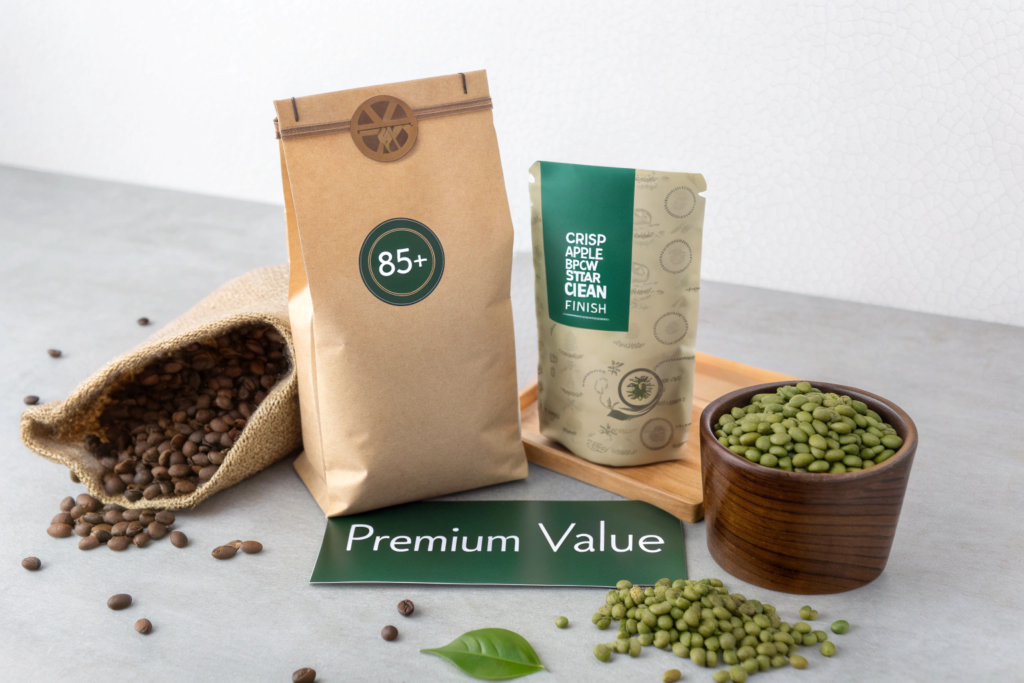
Many specialty roasters prefer washed coffees for their clarity and expressiveness. They act as a "blank canvas" that vividly reveals the influence of origin, altitude, and variety. A roaster can showcase a Yunnan Typica or a Bourbon from our farms with minimal flavor interference from the processing method. This allows for more precise roasting and more educational storytelling ("taste the lemon zest from this high-altitude valley"). While natural and honey processed coffees have gained popularity for their bold fruitiness, washed coffees remain the standard for evaluating pure origin character and a roaster's skill.
How Does It Affect Long-Term Storage and Shipment Stability?
Washed coffees are champions of stability. The uniform drying and lack of residual fruit sugars make them less hygroscopic (less prone to absorbing moisture from the air) and less likely to experience continued enzymatic activity during storage. This means they maintain their moisture content and cup profile better over time in transit and in warehouse storage. For an exporter shipping containers overseas, this is a critical advantage. It reduces the risk of quality degradation or mold during the long logistics chain, ensuring the buyer receives coffee that tastes as intended. This inherent reliability is a key selling point for our export business.
Conclusion
Wet milling is more than a process; it's a philosophy of coffee production centered on control, clarity, and consistency. It trades the wild, fruity intensity of other methods for a refined, articulate expression of the bean's inherent potential. For producers, it demands investment and expertise. For exporters, it creates a stable, high-value product. For buyers and roasters, it offers a reliable, versatile ingredient that forms the predictable backbone of quality coffee programs worldwide.
The benefits—cleaner cups, enhanced consistency, improved storability, and strong market perception—make it an indispensable tool, particularly for supplying the precise and quality-conscious markets of North America and Europe. It directly addresses the core needs of buyers for security, timeliness, and trustworthy quality.
At BeanofCoffee, we utilize wet milling for our premier Arabica lots because we believe in delivering that clarity and reliability. We pair it with rigorous environmental management because sustainability is part of that quality promise.
If you are a buyer seeking a consistent, clean, and high-scoring coffee that will perform reliably in your roasting program, explore our washed Yunnan selections. The clarity of the cup speaks to the care in the process.
To request samples of our wet-milled Catimor or Arabica and taste the benefits of precise processing, contact Cathy Cai at cathy@beanofcoffee.com. Experience the clean, bright profile that defines a professionally washed coffee.