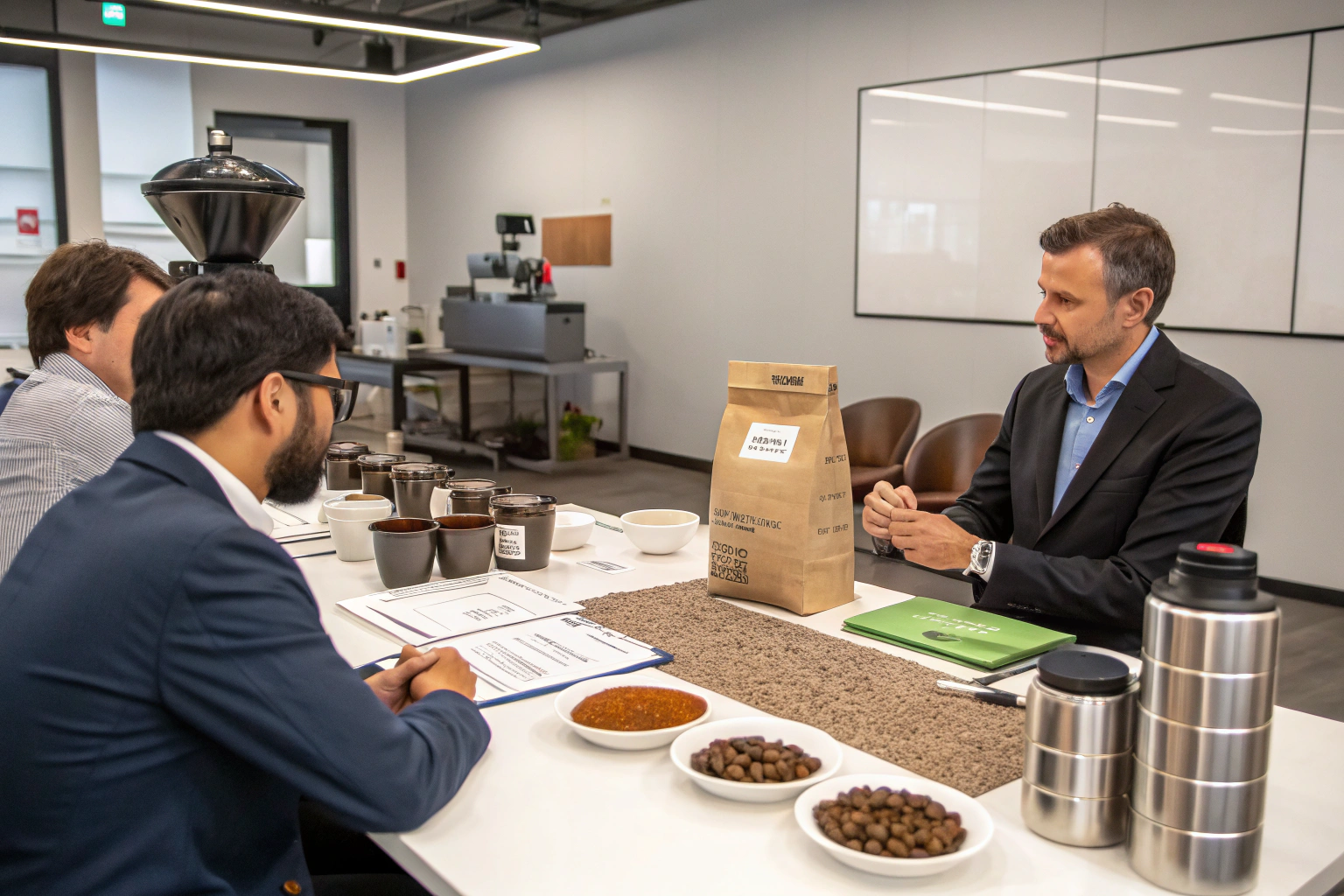
You're building a brand, not just a product. Your name is on the bag, the label, the story. The coffee inside must be consistently excellent, but it also needs to fit a precise cost structure and brand promise. Sourcing for private label is a different beast than buying for your own cafe. As an exporter who works with dozens of private label brands in North America, Europe, and Australia, I've seen the key patterns that separate successful partnerships from frustrating ones.
Sourcing coffee for a private label business requires a strategic partnership with a vertically-integrated exporter who can guarantee consistent supply, flexible customization, and end-to-end quality control. The process involves defining your brand's flavor profile and price point, then collaborating with a supplier on blending, roasting, packaging, and logistics. The goal is to find a supplier who acts as an extension of your brand, providing not just beans but reliability, scalability, and complete white-label service.
That sounds ideal. But the reality is a maze of decisions: Do you source green beans and contract roast? Or use a supplier's existing blends? How do you ensure quality when you're not on-site? The core challenge is maintaining your brand's unique identity while relying on another company's production. Let's walk through the steps to build a supply chain that is both reliable and customizable, turning a complex process into your competitive advantage.
What Are the Key Requirements for Private Label Coffee Sourcing?
Private label sourcing isn't about finding the most exotic microlot; it's about securing the most stable and scalable foundation for your brand. Your requirements shift from "the best" to "the most consistent."
The key requirements are: 1) Unwavering Consistency: Batch after batch, year after year, the coffee must taste the same. This demands robust quality control systems from the supplier. 2) Customization Flexibility: Ability to tailor roast profile, grind size, blend components, and packaging to your exact specs. 3) Volume Scalability: The supplier must be able to grow with you, from pallet to container orders, without quality dips. 4) Cost Transparency & Stability: Predictable pricing is critical for your margins. You need a partner who offers clear, fixed-cost contracts, not volatile market pricing. 5) Full-Service Capability: Ideally, the supplier handles roasting, grinding, packaging, and even drop-shipping under your label, simplifying your operations. For a business owner like "Ron," who is very concerned about price and timeliness, these points directly address the core pain points of inefficiency and uncertainty.
Why Is Consistency More Important Than Peak Flavor?
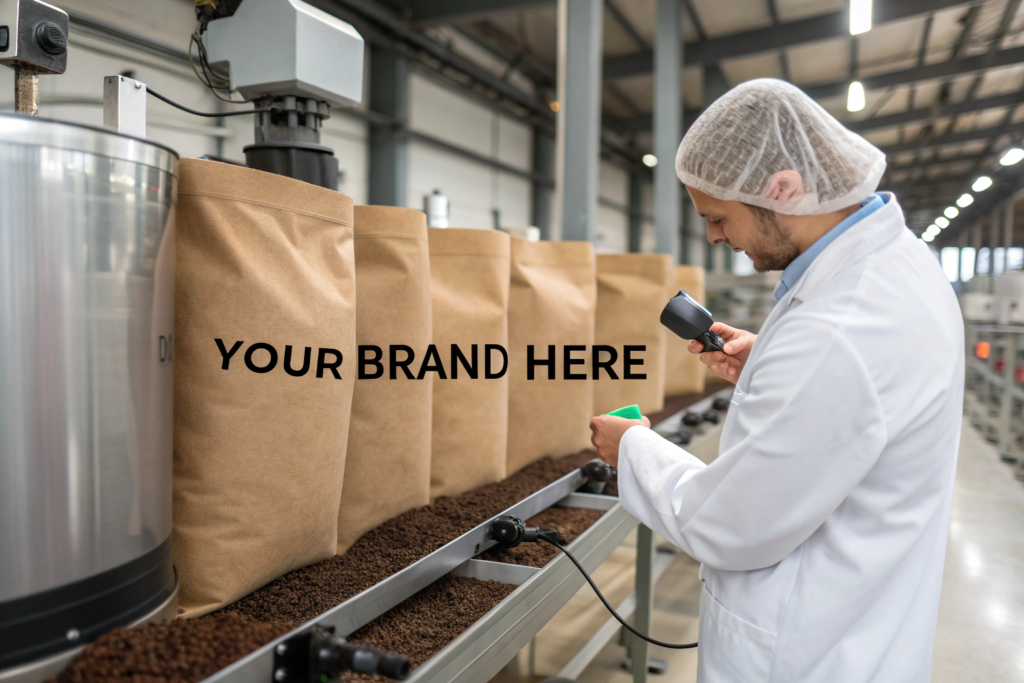
For a private label brand, customer loyalty is built on dependable experience. A consumer who loves your "Dark Roast" today must get the same satisfying cup six months from now. A one-time spectacular batch that can't be replicated is a liability. This is why serious private label suppliers use large-lot blending from consistent origins (like our Yunnan Arabica and Catimor estates), rigorous roast profiling with color analyzers, and tightly controlled packaging. The goal is to minimize variables. Your supplier's obsession with consistency is your brand's best protection. At Shanghai Fumao, we achieve this through vertical integration—controlling the crop from our farms allows us to standardize the green bean input, which is 80% of the consistency battle.
What Logistical Support Do Private Label Brands Need?
You need a supplier who is a logistics partner, not just a seller. This includes: providing timely production schedules, managing inventory for you (holding stock of your custom blend), handling all export documentation, and offering reliable shipping options (FOB, CIF, or even DDP). They should provide trackable shipments and proactive communication. For a brand focused on marketing and sales, not managing international freight, this seamless back-end is invaluable. It turns your coffee supplier into a reliable fulfillment center, directly tackling the pain point of sailing schedules and delivery security.
How to Choose Between Green Bean Sourcing vs. Finished Product?
This is the fundamental strategic choice. Each path offers different levels of control, complexity, and cost.
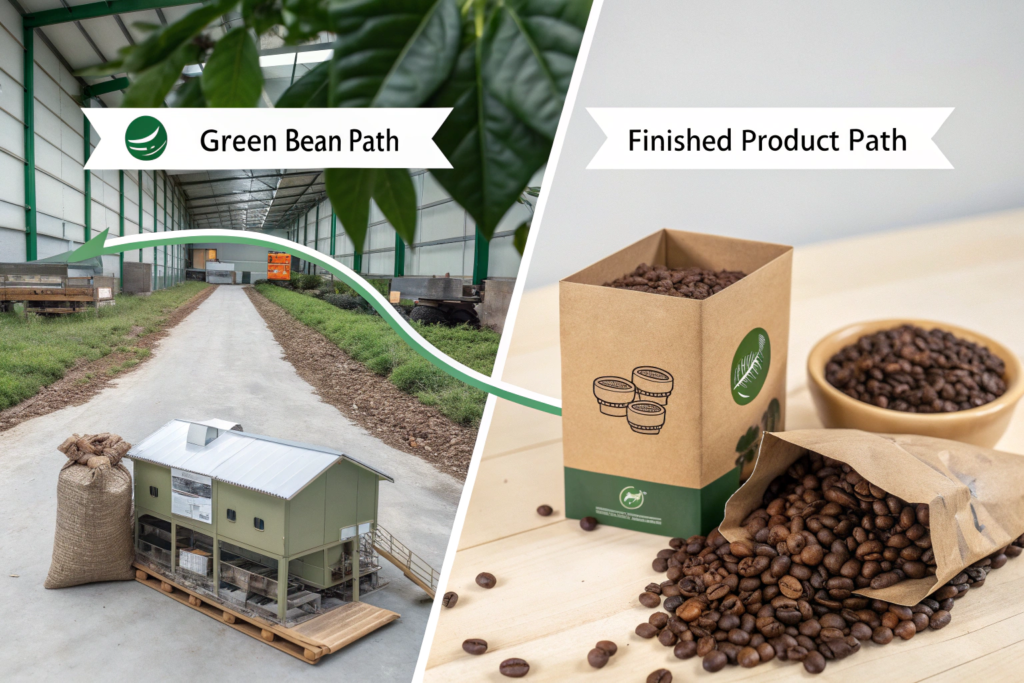
Green Bean Sourcing: You purchase green coffee and contract with a separate roaster. Pros: Maximum control over green quality and origin story. Cons: High complexity. You must manage two suppliers (exporter + roaster), carry inventory risk, and ensure the roaster can replicate your profile consistently. Requires significant coffee expertise.
Finished Product Sourcing: You partner with an integrated exporter who roasts and packages to your specs. Pros: Single point of contact, lower operational burden, faster time-to-market. The supplier assumes inventory and production risk. Cons: Less direct control over the green bean selection; reliant on the supplier's sourcing portfolio. For most emerging private label brands, especially those without deep roasting expertise, the finished product model from a trustworthy integrated supplier is the faster, lower-risk path to market. It allows you to focus on brand building and sales.
What Are the Cost Implications of Each Model?
The cost structures differ significantly:
- Green Bean + Contract Roasting: Your costs are: Green Bean Price + Roasting Fee + Packaging Cost + Logistics (twice: to roaster, then to you). You also carry capital in inventory. The variable green coffee market can affect your input cost.
- Finished Product (Turnkey): You pay a single, all-inclusive price per finished bag. This price is typically stable for the contract period, as the supplier hedges green coffee costs. Your capital is tied up only in finished goods, and you benefit from the supplier's economies of scale in roasting and packing. For a buyer focused on a good price and predictability, the finished product model often provides better total cost clarity and stability.
How to Evaluate a Supplier's Customization Capabilities?
Don't just ask "Can you private label?" Ask for specifics:
- "Can you create a unique blend based on our target profile, or are we limited to your existing menu?"
- "What are your minimum order quantities (MOQs) for custom roasting and packaging?"
- "Can you replicate a sample roast profile we provide?"
- "What packaging options do you offer (valve bags, materials, sizes, custom print runs vs. labels)?"
- "Can you provide origin blending (e.g., mixing our Yunnan Arabica with a Brazilian) to hit a cost target?"
A capable supplier like us at Shanghai Fumao will have a dedicated process for this. We start with a sample development phase, creating 2-3 prototype blends/roasts for your approval before scaling production. This collaborative development is key to a successful partnership.
How to Develop a Unique Blend and Flavor Profile?
Your blend is your signature. It should be distinctive, memorable, and aligned with your brand's identity (e.g., "Adventurous & Bold" vs. "Smooth & Approachable").
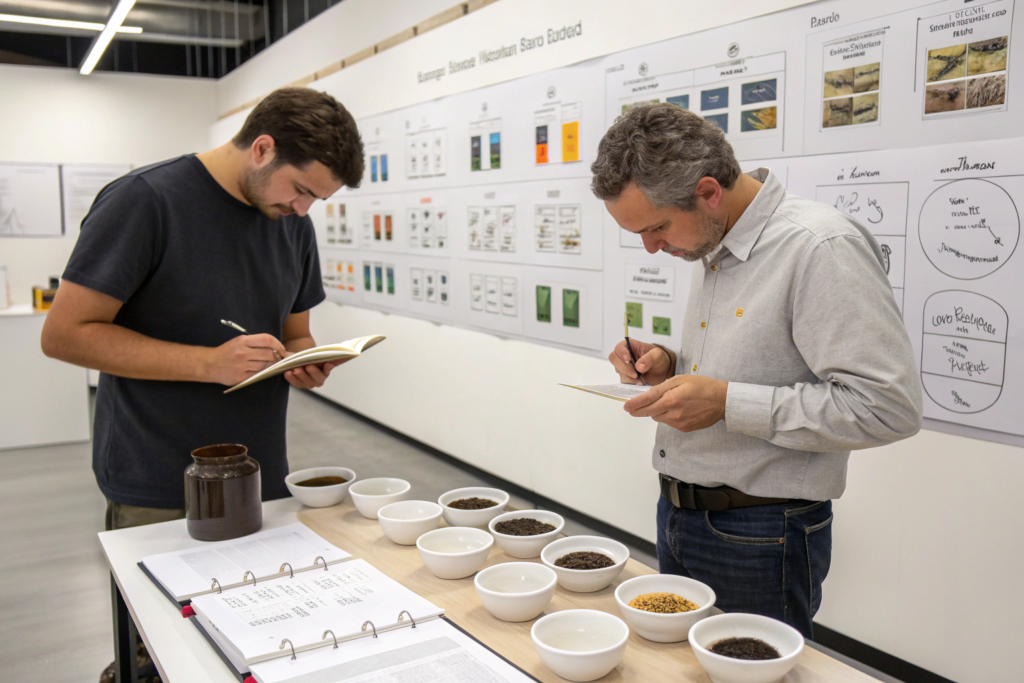
Development is a collaborative, iterative process with your supplier. Start by defining your target in simple terms: "We want a medium-dark roast, low acidity, with chocolate and nut notes, for under $8/lb FOB." Or, "We need a light roast single-origin that highlights floral and tea characteristics." Your supplier should then present options. This is where working with an exporter who owns farms is powerful. We can pull different Arabica and Catimor lots from our own inventory, and even incorporate Robusta for crema or cost, to craft a unique recipe just for you. The process involves sample roasting, cupping, adjusting ratios, and repeating until you sign off. The final recipe and roast profile are then documented as a "gold standard" for all future production.
Should You Use a Supplier's Existing Blend or Create a New One?
Using an existing blend is faster and cheaper (no development cost, lower MOQ). It's a good start for testing the market. However, your product won't be unique, and you have no proprietary recipe. Creating a new, custom blend is an investment that builds a competitive moat. It becomes an asset that only you and your supplier have. For brands planning serious scale and differentiation, the custom path is essential. We often advise clients to start with a modified version of one of our core profiles to reduce initial risk, then evolve into a fully custom blend as sales grow.
How to Ensure Your Profile Is Replicated Accurately Every Time?
Replication relies on specifications and verification. Your final approved sample becomes the physical benchmark. The supplier must have a quality control protocol that includes:
- Green Bean Spec: Approved origins, blend ratios, acceptable defect count.
- Roast Profile: A specific roast curve (time/temperature) and a target Agtron/colortrack number.
- Cupping Protocol: Regular cupping of production batches against the standard.
You should receive a certificate of analysis (COA) with each shipment, showing it passed internal QC against these specs. This systematic approach is what makes a supplier safe and trustworthy. It removes guesswork and ensures your brand's integrity is protected.
What Packaging and Labeling Options Are Critical for Private Label?
The unboxing experience is a marketing moment. Packaging must preserve freshness, reflect your brand's quality, and comply with destination market regulations.
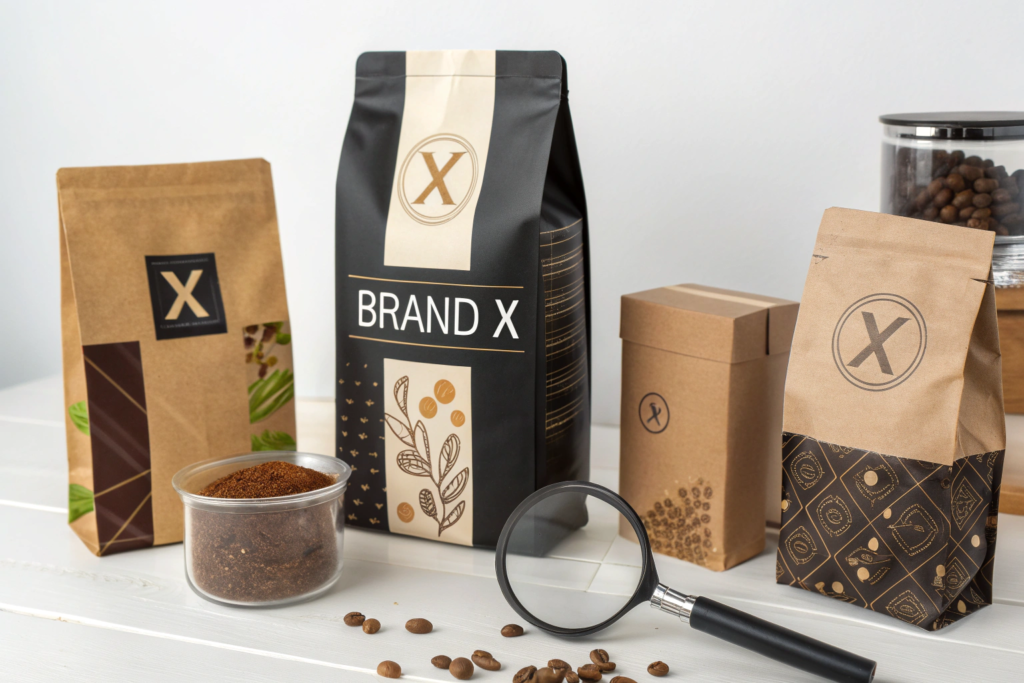
Critical options include: 1) Bag Type: High-barrier, multi-layer foil bags with one-way degassing valves are the standard for freshness. Consider GrainPro-style liners for extra protection in humid climates. 2) Bag Style: Flat-bottom stand-up pouches, side gusset bags, or traditional pillow packs. 3) Closure: Ziplock, tin-tie, or heat seal. 4) Labeling: Either pre-printed custom bags (high MOQ, lower per-unit cost) or applying high-quality printed labels to stock bags (lower MOQ, more flexible for changes). 5) Information: Must include your brand, net weight, roast date, origin, and any required legal disclaimers (e.g., FDA in USA). Your supplier should guide you on best practices for your target market to avoid customs or retail issues.
How Does Packaging Impact Shelf Life and Customer Perception?
Packaging is your first line of defense against staling. A poor-quality bag allows oxygen in, making your coffee taste flat within weeks. A professional, high-barrier bag maintains freshness for 6-12 months, protecting your brand from negative reviews due to stale product. Aesthetically, the bag must look premium and align with your brand. A flimsy, poorly printed bag signals low quality, regardless of what's inside. Investing in good packaging is non-negotiable for building a reliable brand reputation. We offer a range of certified food-grade packaging and work with trusted printers to ensure our clients' brands look impeccable.
What Are the Regulatory Compliance Considerations?
This is often overlooked. Your supplier must ensure the packaging materials are food-safe and compliant with regulations in your country (e.g., FDA, EU food contact materials). Labeling must be accurate and include all mandatory information. For the USA, this includes net weight in both metric and imperial, the name and place of business of the distributor (you), and a disclaimer if the coffee is not a significant source of calories. An experienced exporter will handle this. At Shanghai Fumao, we have standard templates for major markets and advise on compliance, preventing costly recalls or customs holds. This is part of the security we provide.
How to Negotiate Contracts and Ensure Supply Chain Security?
The handshake deal isn't enough. A formal contract protects both parties and ensures the long-term stability of your supply.
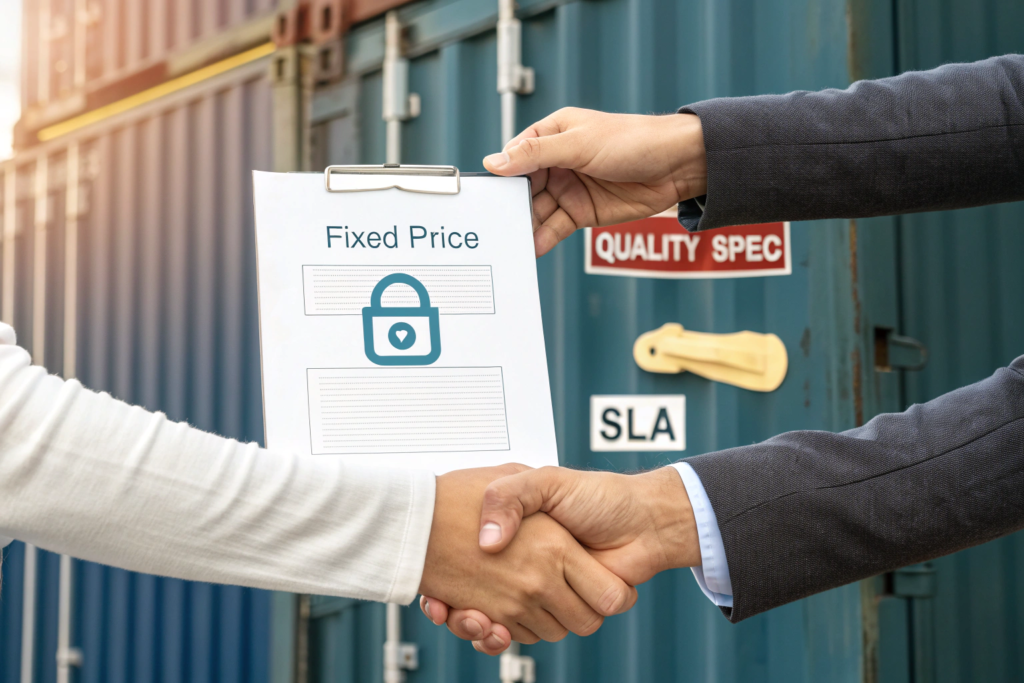
A good contract should cover: 1) Product Specifications: The detailed, signed-off recipe and quality standards (as described above). 2) Pricing & Payment Terms: Fixed price for a defined period (e.g., 6-12 months), payment schedule (e.g., 50% deposit, 50% before shipment). 3) Ordering & Lead Times: Defined MOQs, order process, and firm production/shipping lead times (e.g., "30 days from order confirmation to FOB"). 4) Intellectual Property: Clarifies that the blend recipe is confidential and owned by you (the brand), but the production know-how is the supplier's. 5) Liability & Force Majeure: Outlines responsibilities for quality disputes, shipping delays, and unforeseen events. 6) Renewal & Exit Terms. The goal is clarity, not confrontation.
What Should Be Included in a Service Level Agreement (SLA)?
The SLA is the operational heartbeat of the contract. It defines measurable performance standards:
- Order Fulfillment Accuracy: e.g., 99.8% correct items per shipment.
- On-Time Shipping: e.g., 95% of shipments depart within 3 days of the promised date.
- Quality Failure Rate: e.g., acceptance of a maximum defect level, with a clear process for claims.
- Communication Response Times: e.g., all emails answered within 24 business hours.
Having an SLA turns subjective expectations into objective metrics, making the partnership more professional and reliable. It directly addresses the timeliness and security concerns of buyers.
How to Build a Redundant Supply Chain?
Don't put all your beans in one basket. For critical, high-volume products, consider dual-sourcing. This could mean qualifying a second supplier for the same blend or having a backup generic blend that can be substituted in an emergency (like a crop failure). While this adds complexity, it mitigates extreme risk. A primary supplier should understand this need and may even help by providing production in two geographically separate facilities they own. At our scale, we manage redundancy by having multiple plantation zones and processing lines, ensuring that a local issue doesn't stop our clients' supply. This systemic security is a key reason large trading companies choose to work with us.
Conclusion
Sourcing for private label is about building a strategic alliance, not just making a purchase. It requires a supplier who combines the consistency of a manufacturer with the flexibility of a craftsman and the reliability of a logistics partner. The goal is to create a seamless extension of your own brand, where quality, consistency, and delivery are guaranteed, allowing you to focus entirely on growth and marketing.
The most successful private label brands treat their coffee supplier as a key operational partner. They invest time in the development phase, insist on rigorous specifications, and foster transparent communication. This collaborative approach transforms sourcing from a cost center into a core brand asset.
If you are building a private label coffee brand and need a partner with the vertical integration to ensure consistency, the expertise to develop your unique profile, and the global logistics capability to deliver reliably, let's talk. At BeanofCoffee, we are built for this model.
To start a conversation about developing your custom private label coffee, from concept to delivery, contact Cathy Cai. She will guide you through our process and provide samples of our base offerings. Email: cathy@beanofcoffee.com. Let's build your brand's signature taste, together.