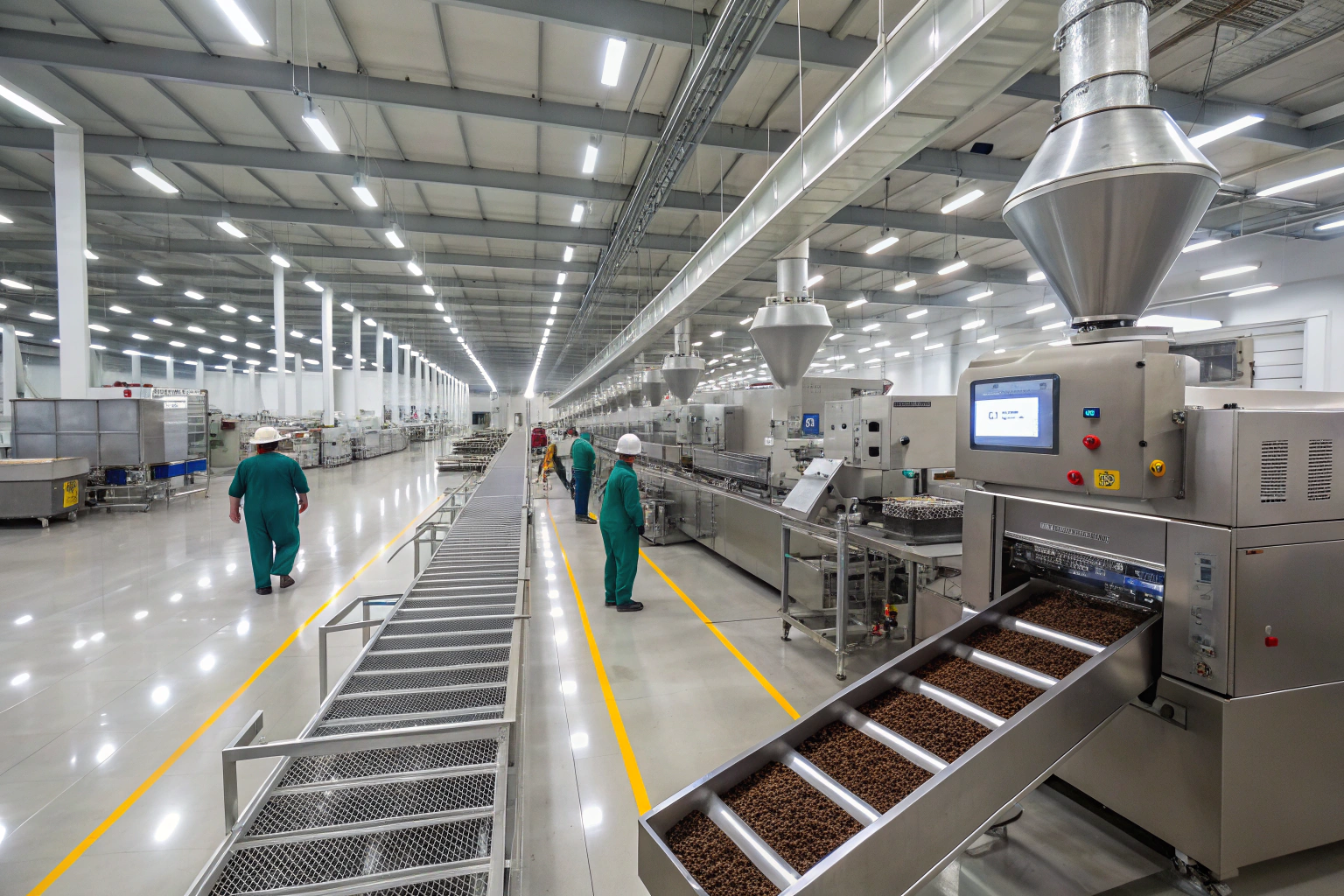
I remember when we upgraded from two lines to five. It was a massive construction project. Concrete dust, welding sparks, and endless cups of tea. But the first day we fired up all five lines simultaneously, I stood on the catwalk and just watched. The flow of green coffee was like a river. It was the moment I knew we could compete with any mill in the world in terms of volume, without sacrificing an ounce of quality. The pain point for a buyer like you, Ron, is reliability. You need to know that if you order five containers for a specific delivery window, we have the physical capacity to process and load that coffee on time.
The maximum capacity of a five production line coffee dry mill, operating on a standard 8-hour shift, is approximately 40 to 50 metric tons of green coffee output per day, translating to a theoretical annual capacity of 10,000 to 12,000 metric tons, which is roughly 165 to 200 full 20-foot containers of export-ready coffee per year.
This is not a small operation. This is an industrial-scale facility built to serve large roasters and distributors who need consistent volume and timely execution. Let me break down the math and the machinery that makes this possible at BeanofCoffee.
How Is Coffee Factory Capacity Measured in the Green Bean Industry?
When we talk about "capacity," we are not talking about how many bags we can store in the warehouse. We are talking about throughput. How many kilos of dried parchment can enter the mill in an hour, and how many kilos of graded, bagged green coffee come out the other end?
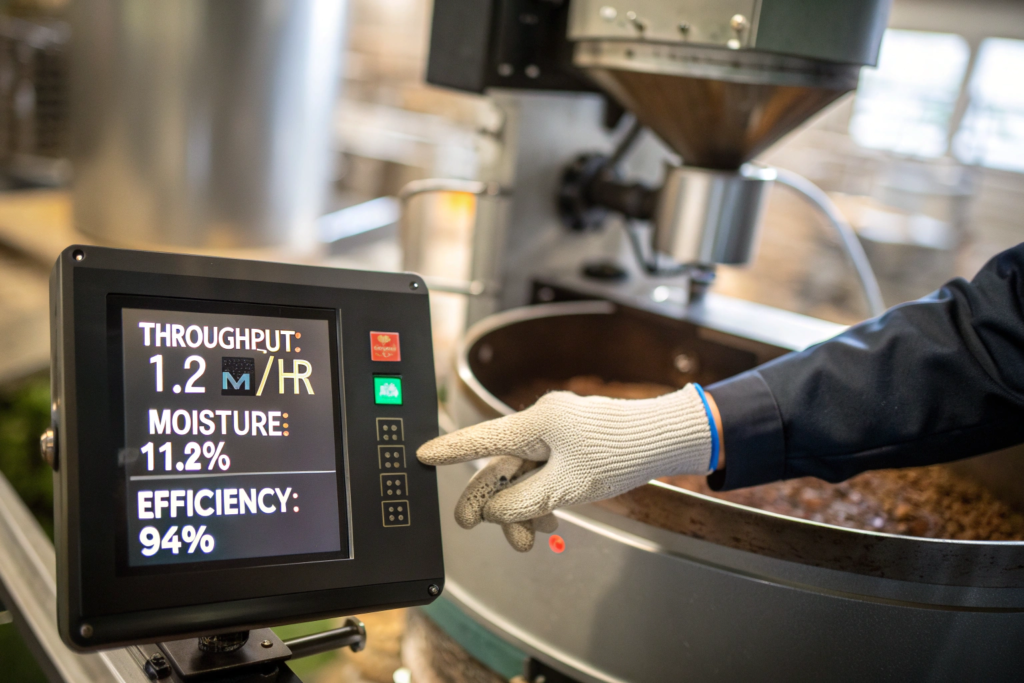
Coffee factory capacity is measured in metric tons per hour (MT/hr) of green coffee output, calculated based on the rated throughput of the bottleneck machine in the production line—usually the gravity separator or the huller—multiplied by the number of operational hours and shifts per day, adjusted for downtime due to cleaning and maintenance.
It is not as simple as "5 lines x 10 tons = 50 tons." You have to account for the real world: changeovers, cleaning, and the specific characteristics of the coffee being processed.
What Is the Bottleneck Machine in a Coffee Dry Mill Production Line?
In any factory, the slowest machine dictates the speed of the entire line. You can have a huller that processes 2 tons per hour, but if your gravity separator can only handle 1 ton per hour, your line capacity is 1 ton per hour. The extra capacity of the huller is wasted.
In a modern coffee mill, the bottleneck is almost always the Densimetric Table (Gravity Separator) . This is the machine that does the precise, heavy lifting of density sorting. It uses vibration and air to separate heavy beans from light beans.
Why is it the bottleneck? Because you cannot rush physics. The beans need a certain amount of time on the vibrating deck to stratify properly. If you feed the table too fast, the separation is poor. Light beans and hollow shells end up in the heavy fraction. Quality suffers.
Therefore, to calculate capacity, we look at the Rated Throughput of the Gravity Separator at the desired quality setting. For high-grade specialty coffee, we run the tables slower to ensure perfect separation. For commercial grade, we can run them faster. At Shanghai Fumao, we always quote capacity based on Specialty Grade settings. We would rather under-promise and over-deliver on quality.
How Do Different Coffee Grades Affect the Mill's Throughput Speed?
This is a crucial detail for planning your order. The same machine processes different grades of coffee at different speeds.
| Coffee Grade | Input Material | Gravity Separator Speed | Approx. Throughput per Line |
|---|---|---|---|
| Specialty Grade 1 | Clean, large bean parchment | Slow (Max separation accuracy) | 0.6 - 0.8 MT/hour |
| Commercial Grade 2 | Standard parchment | Medium (Balanced) | 1.0 - 1.2 MT/hour |
| Low Grade / Domestic | Mixed sizes, some defects | Fast (Volume priority) | 1.5+ MT/hour |
If you order a container of Specialty Grade 1, it takes us longer to mill that coffee than if you order Commercial Grade. We allocate more machine time to it. This is factored into our production scheduling and lead times. It is one of the reasons why top-grade coffee costs more. It is not just the bean. It is the time and care required to process it perfectly. You can learn more about the mechanics of density sorting from equipment manufacturers like Oliver Manufacturing, who are leaders in gravity separator technology.
What Does a "Five Production Line" Setup Look Like at BeanofCoffee?
Let me walk you through our Baoshan dry mill. This is the engine room of our export operation. When a buyer visits virtually or in person, this is what they see.
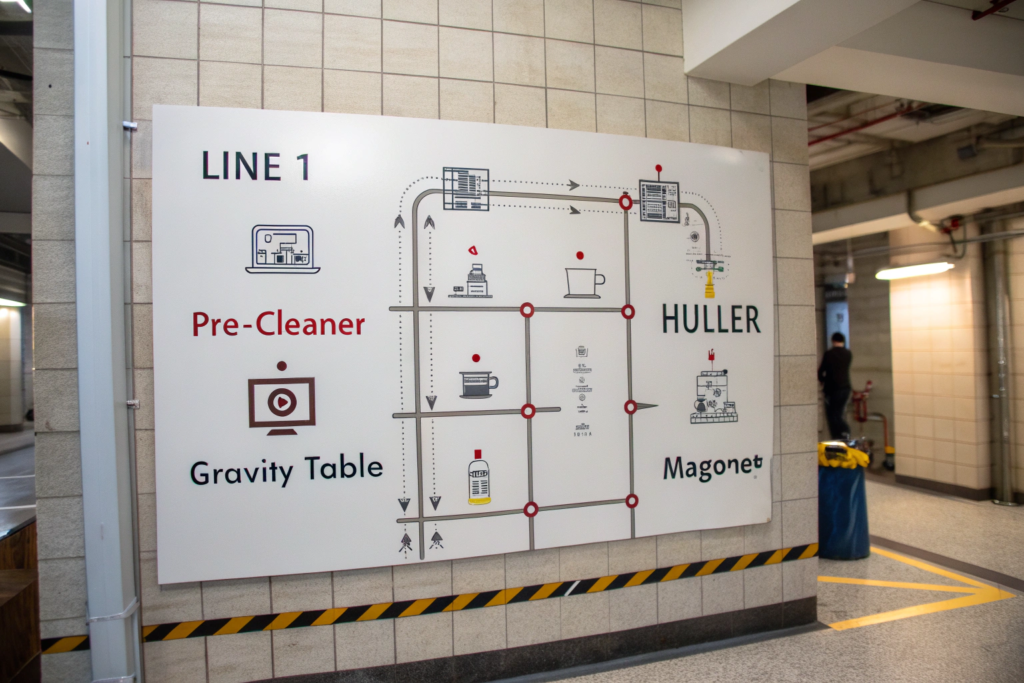
A five production line setup at BeanofCoffee consists of five independent, parallel processing streams, each containing its own pre-cleaner, huller, gravity separator, and magnetic trap, all feeding into a central bagging and weighing station, allowing for simultaneous processing of different lots or varietals without risk of cross-contamination.
This parallel design is what gives us both volume and flexibility. It is a significant capital investment, but it is the only way to serve multiple clients with different specifications at the same time.
How Many Metric Tons Per Hour Can Our Baoshan Facility Process?
Let's do the math based on our actual equipment.
- Number of Lines: 5
- Average Throughput per Line (Specialty Grade): 0.75 MT/hour
- Gross Hourly Capacity (5 lines): 3.75 MT/hour
Per 8-Hour Shift:
- 3.75 MT/hr x 8 hrs = 30 Metric Tons of Green Coffee
Per Day (Two Shifts during peak season):
- 30 MT/shift x 2 shifts = 60 Metric Tons
Per Week (6-day operation):
- 60 MT/day x 6 days = 360 Metric Tons
Per Year (Theoretical Maximum, 50 weeks):
- 360 MT/week x 50 weeks = 18,000 Metric Tons
However, this is the theoretical maximum. Reality involves maintenance days, changeovers between lots, power outages, and the fact that we run slower for specialty lots. Our practical, sustainable annual capacity is around 10,000 to 12,000 Metric Tons. That is roughly 165 to 200 containers of export-ready coffee. This is the number we use for long-term planning with our large wholesale partners. At Shanghai Fumao, this capacity ensures we can meet the demands of high-volume buyers like you, Ron, without delays.
What Is the Difference Between Dry Mill Capacity and Wet Mill Capacity?
This is a distinction that often confuses buyers. The Wet Mill and the Dry Mill are two different facilities with two different jobs.
- Wet Mill (Beneficio Humedo): This is where the cherry is received, pulped, fermented, washed, and dried into parchment coffee. Capacity here is measured in Cherry Received per Hour. Our wet mill can process 20 tons of cherry per hour during the peak of harvest.
- Dry Mill (Beneficio Seco): This is where the dried parchment is rested, hulled, graded, sorted, and bagged into green coffee. This is the "Five Production Line" facility we are discussing. Capacity here is measured in Green Coffee Output per Hour.
The Wet Mill is only busy for 4-5 months during harvest. The Dry Mill is busy year-round, preparing coffee for export. A bottleneck in the Wet Mill means you lose quality during harvest. A bottleneck in the Dry Mill means you miss your shipping window. We have invested to ensure both facilities have excess capacity relative to our estate production and our contracted smallholder partners. This redundancy is key to reliability.
How Does Our Factory Capacity Translate to Reliable Shipping Schedules?
You care about capacity for one reason: timeliness. A factory can have all the machines in the world, but if they are disorganized, your container will still be late. Capacity is just potential. Execution is what matters.
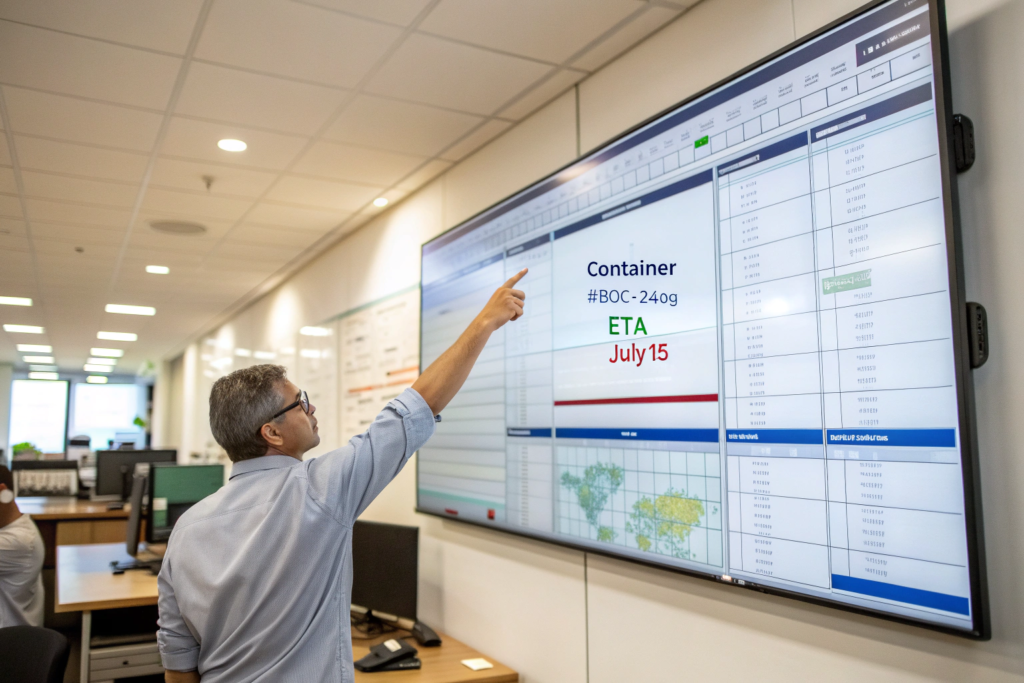
Our factory capacity translates to reliable shipping schedules because our excess milling capacity allows us to absorb delays from unexpected events (like a power outage or a rainy day) and still catch up to the production schedule, ensuring that your container is stuffed and at the Shanghai port in time for the booked vessel cut-off. We do not run at 100% capacity every day. We run at 70-80%. That 20-30% buffer is your insurance policy against delays.
How Many Containers Can We Stuff and Dispatch in a Peak Week?
Let's talk about the final step. The coffee is milled. It is in supersacks or bags. It needs to go into a shipping container. This is the Stuffing process.
We have two dedicated loading docks with overhead conveyor systems. A 20-foot container holds roughly 320 bags (19.2 MT). It takes a trained crew about 2-3 hours to carefully load and stack a container with GrainPro-lined bags.
Calculation for Peak Week Dispatch:
- Daily Milling Capacity: 60 MT (Two shifts)
- Equivalent Containers per Day: 60 MT / 19.2 MT = 3 Containers
- Weekly Dispatch (6 days): 3 Containers/day x 6 days = 18 Containers
In a peak week, typically in July or August when the new crop is ready, we can stuff and dispatch 15 to 18 full containers of coffee. That is roughly 300 metric tons of coffee moving from our warehouse to the port of Shanghai in a single week.
This volume capacity is what allows us to serve large roasters who need multiple containers per month. It is also what gives us the flexibility to slot in a "rush" order for a smaller client who needs a quick replenishment. At Shanghai Fumao, our logistics team, led by Cathy, coordinates this complex dance of trucks, containers, and vessel schedules.
What Happens to My Order If a Machine on One Line Breaks Down?
This is the real-world test of a factory's design. In a single-line factory, a broken machine means everything stops. Production halts. Containers are delayed. You get an apologetic email.
In our Five-Line Parallel Design, a breakdown on one line reduces our capacity by 20%, but it does not stop production. We have redundancy.
Here is the protocol:
- Immediate Switch: The feed of parchment coffee is diverted to the other four operational lines.
- Maintenance Call: Our in-house engineering team immediately begins repair work on the down line.
- Overtime Adjustment: If necessary, we add a few hours to the shift or run a Saturday to compensate for the lost 20% capacity.
- Client Notification: If the breakdown is major and might affect a specific deadline, we notify the client immediately with a revised timeline. This is rare because of the redundancy.
This is the advantage of scale and smart engineering. Your order is not dependent on a single point of failure. The system is designed to be resilient. This is the kind of behind-the-scenes reliability that you pay for when you partner with a large, professional mill instead of a small, undercapitalized operation. For more on industrial reliability, resources from the Society for Maintenance & Reliability Professionals highlight the value of redundant systems.
How Can Our Capacity Support Large-Scale and Custom Blending Orders?
Volume is one thing. Complexity is another. You might not just need 10 containers of Grade 1 Arabica. You might need 10 containers of a custom blend consisting of 70% washed Arabica and 30% natural Catimor. This requires an extra layer of capacity: Blending Capacity.
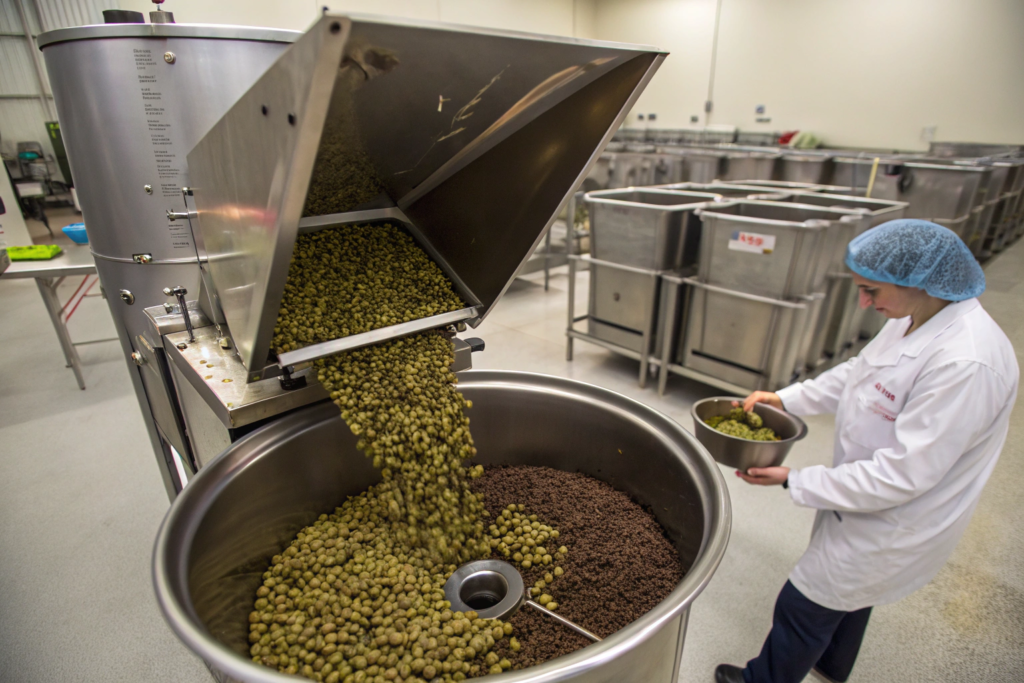
Our five-line dry mill setup supports large-scale custom blending orders by allowing us to dedicate specific production lines to the individual blend components, which are then combined in precise ratios using our 5-ton industrial ribbon blender, ensuring a homogeneous mix before the coffee is bagged for export. This is the service that sets us apart from smaller mills that can only offer single-origin lots.
What Is the Capacity of Our Industrial Ribbon Blender for Green Coffee?
The ribbon blender is the heart of our custom blend program. It is a large, stainless steel trough with a rotating helical blade inside. It gently lifts and folds the coffee beans, mixing them thoroughly without breaking or chipping them.
- Blender Capacity: 5 Metric Tons per Batch
- Mix Time: 15-20 minutes per batch (including loading and unloading).
- Daily Blending Capacity (Single Shift): Approximately 20-25 Metric Tons.
This means we can blend a full container (19.2 MT) in a single day. For a large order requiring 5 containers of a custom blend, we can process the entire order in less than a week.
This dedicated blending capacity is what allows us to offer this service efficiently. A smaller mill might try to blend by hand with shovels, which is inaccurate and labor-intensive. Our system is automated, precise, and scalable. At Shanghai Fumao, we verify the homogeneity of every blend batch by taking samples from the top, middle, and bottom of the blender and cupping them for consistency.
Can We Run Multiple Different Custom Orders Simultaneously?
Yes. This is another advantage of the five-line parallel design and the dedicated blending station.
Scenario: We have three clients with orders in the queue:
- Client A: Wants 5 containers of Single-Origin Grade 1 Arabica.
- Client B: Wants 2 containers of Custom Espresso Blend (70% Arabica, 30% Robusta).
- Client C: Wants 1 container of Single-Origin Natural Catimor.
How we execute:
- Line 1 & 2: Dedicated to Client A's Grade 1 Arabica. High-speed, continuous milling.
- Line 3 & 4: Milling the Arabica component for Client B's blend.
- Line 5: Milling the Robusta component for Client B's blend.
- Blender: In the afternoon, Lines 3, 4, and 5 stop milling. The components are loaded into the ribbon blender to create Client B's custom mix.
- Next Day: Line 5 is switched over to Client C's Natural Catimor.
This flexibility is only possible with excess capacity and separate processing streams. We are not a one-track factory. We can multitask. This means shorter lead times for custom orders and less waiting for you.
Conclusion
The maximum capacity of a five production line coffee factory is more than just a big number. It is the engine that powers reliability, consistency, and scalability. It is the reason we can say "yes" to a 10-container order with a tight shipping window. It is the reason we can offer complex custom blending without delaying other clients. And it is the reason we have built-in redundancy so a broken machine does not ruin your month.
At BeanofCoffee, our 10,000-acre estate and our 5-line dry mill work in harmony. The estate provides the volume. The mill provides the precision. Together, they provide you with a supply chain that is robust, transparent, and ready to grow with your business.
If you have a large project coming up and you need to know if we have the capacity to support it, let's talk specifics. We can share our production calendar and reserve milling slots for your order.
Email Cathy Cai with your projected volume needs. She can confirm availability and provide a realistic timeline. Contact Cathy at: cathy@beanofcoffee.com