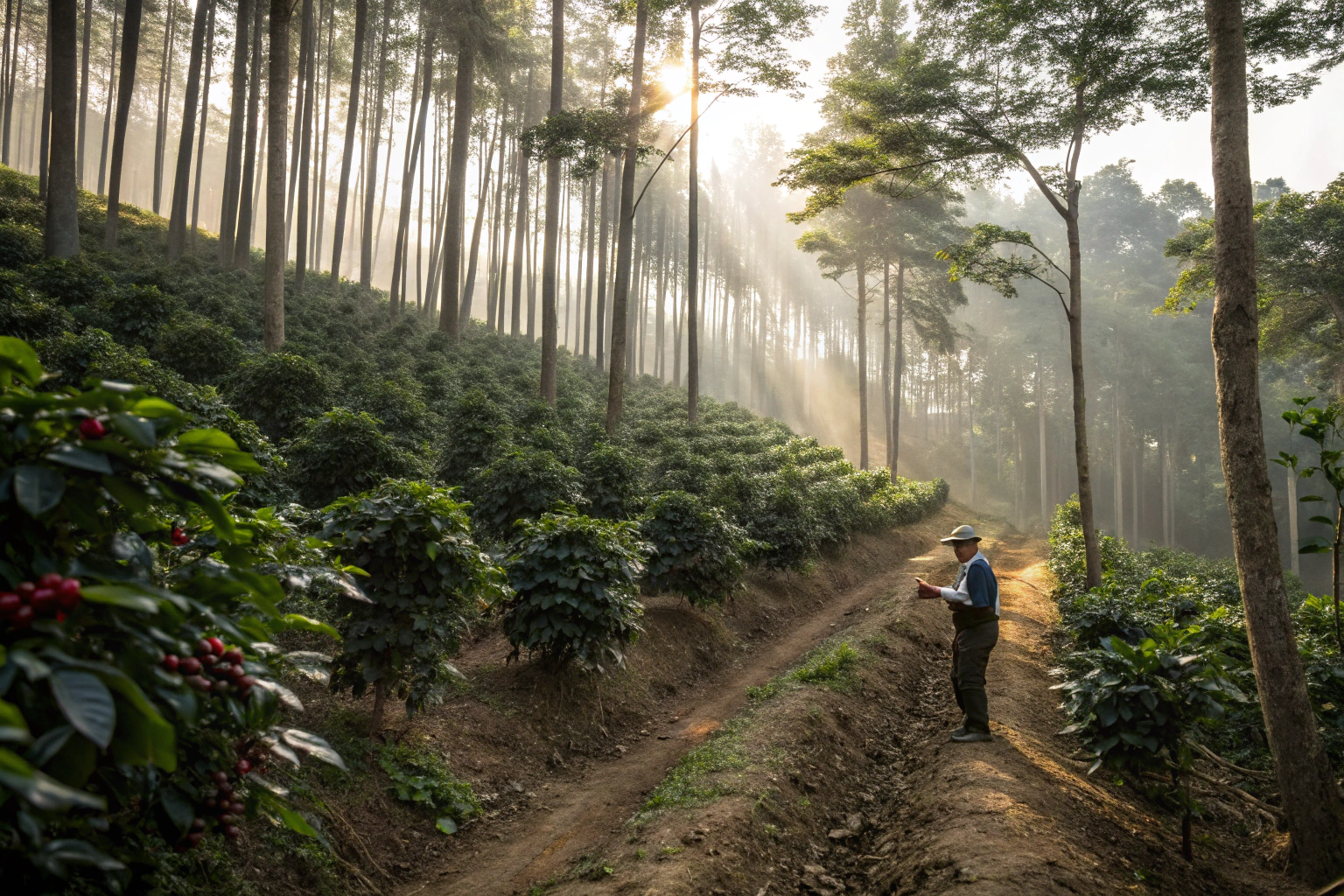
A specialty coffee buyer from Australia visited our farm in Baoshan a few years ago. We walked through one of our high-altitude Catimor plots in the open sun. The trees were productive and the cherries were plentiful. Then we walked into an older plot where the canopy of trees closed over our heads. The air was noticeably cooler. The coffee trees were taller and more slender. The cherries were fewer, but they were darker red and visibly denser.
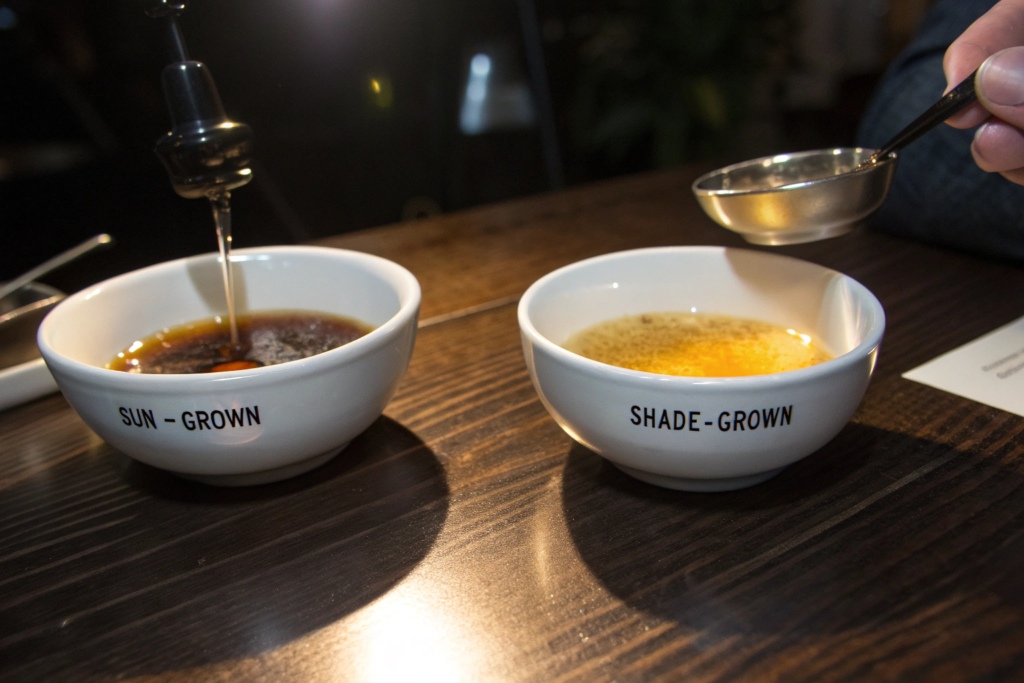
He pointed up. "What are those trees?" he asked. I told him they were native Albizia and Ficus species, planted decades ago by the previous generation. "Do they make a difference in the cup?" he asked. I told him we had been running trials for years, keeping the shaded and sun-grown lots separate. The shaded lots consistently scored 1 to 3 points higher, with brighter acidity and more complex sweetness. He cupped them side by side. He ordered the shaded lot.
Shade trees improve Chinese coffee quality by moderating the microclimate—lowering ambient temperature, preserving soil moisture, and slowing cherry maturation—which allows for greater sugar development, higher concentrations of organic acids, and a more complex, higher-scoring cup profile compared to sun-grown lots.
This is not just a romantic idea. It is measurable agronomy. Here is exactly how shade changes the bean, what the sensory differences are, and how to source shade-grown Yunnan lots that deliver a premium in the cup.
How Does Shade Modify the Microclimate for Coffee Trees?
Coffee is a plant that evolved in the understory of Ethiopian forests. It is not naturally a full-sun crop. The modern practice of growing coffee in full sun, without a protective canopy, is an intensification strategy designed to maximize yield. It works—sun-grown coffee trees produce more cherries. But the quality cost is significant.
A shade canopy modifies the microclimate in three critical ways. First, it reduces the intensity of solar radiation. The leaves of the shade trees intercept direct sunlight. The coffee trees below receive diffused, gentle light. This prevents the leaf scorching and heat stress that occur in full-sun plantations during the hottest months.
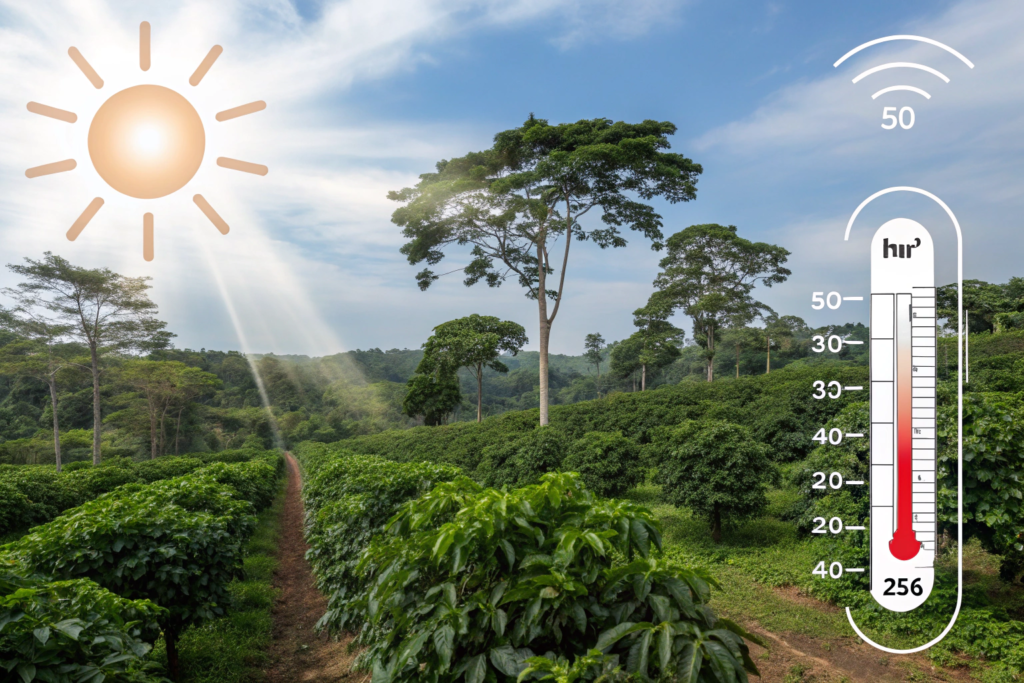
Second, shade reduces the ambient temperature. The air temperature beneath a well-managed shade canopy is typically 2 to 5 degrees Celsius cooler than in an open sun plot. The soil temperature is also cooler. These cooler temperatures slow the metabolic processes of the coffee tree, including cherry maturation.
Shade trees create a cooler, more humid, and more stable microclimate that buffers coffee trees from temperature extremes, reduces water stress, and extends the cherry maturation period, all of which contribute to higher bean density and more complex flavor development.
Third, shade increases and stabilizes humidity. The canopy reduces wind speed and evaporation. The soil retains moisture longer. The coffee trees experience less water stress. Water stress can cause cherries to ripen unevenly or prematurely, leading to underdeveloped, astringent beans. Consistent soil moisture supports even cherry development and uniform ripening.
The combination of reduced light intensity, cooler temperatures, and stable moisture creates an environment where the coffee tree is not fighting to survive. It is not stressed. It can allocate its energy to producing high-quality cherries with dense beans and high sugar content, rather than simply pushing out more cherries as fast as possible.
Why Does Cooler Leaf Temperature Slow Cherry Maturation?
The rate of cherry maturation is directly controlled by temperature. Chemical reactions, including the synthesis of sugars and the development of flavor precursors, proceed faster at higher temperatures. In a full-sun plot, the ambient temperature is higher, and the cherries mature quickly—often in 6 to 7 months from flowering to harvest.
In a shaded plot, the cooler temperatures slow everything down. The maturation period extends to 8 to 9 months. This extra time is the key to quality. The cherry spends more weeks on the branch in the final stages of ripening, when sugar accumulation is most rapid. The longer the cherry hangs, the more glucose and fructose it produces.
The organic acids that contribute to bright, complex acidity also benefit from the extended maturation. In hot conditions, the tree respires faster at night, consuming the acids that built up during the day. In cool conditions, nighttime respiration is slower. The acids are preserved. The resulting bean has a higher concentration of citric and malic acid.
The physical density of the bean also increases with slower maturation. The bean has more time to fill out its cellular structure. The cells are more compact. The bean is harder and denser. A high-density bean roasts more evenly and retains its volatile aromatics better. The combination of higher sugar, higher acidity, and higher density is what makes shade-grown coffee cup better.
I measure the cherry maturation period for each of our plots. The shaded plots consistently take 30 to 45 days longer from flowering to harvest than the sun plots at the same altitude. The Brix readings at harvest are 1 to 3 points higher. The cup scores are 1 to 3 points higher. The data confirms what the sensory experience suggests.
How Does Root Competition Between Trees Affect Bean Density?
Root competition is the other side of the shade coin. The shade trees and the coffee trees share the same soil. Their roots compete for water and nutrients. This competition, when managed correctly, can actually improve coffee quality.
Mild water stress—not drought, but a slight, consistent shortage—encourages the coffee tree to produce more concentrated sugars and secondary metabolites in the cherry. The tree diverts its limited resources to seed production, the seed being the coffee bean. The bean becomes denser and more chemically complex.
Excessive competition, however, harms quality. If the shade trees are too dense, or if they are species with aggressive, shallow root systems, they can outcompete the coffee trees for water and nutrients. The coffee trees become stunted. The cherries are small and underdeveloped. The cup is thin and astringent.
The key is species selection and spacing. The ideal shade tree has a deep taproot that accesses water and nutrients below the coffee root zone, rather than competing in the topsoil. Leguminous trees, such as Albizia and Inga, are particularly valuable because they fix nitrogen from the atmosphere, adding nutrients to the soil rather than depleting them.
Our shaded plots use Albizia and Ficus species planted at a density of 100 to 150 trees per hectare. The tree density provides roughly 40 to 60 percent shade cover. The root competition is managed through occasional root pruning and adequate organic fertilization. The result is a balanced system where the coffee trees benefit from the microclimate without suffering from excessive competition.
What Sensory Differences Define Shade-Grown Chinese Coffee?
The sensory difference between shade-grown and sun-grown coffee from the same variety and altitude is consistent and noticeable. It is the difference between a pleasant but simple cup and a complex, memorable one.
Acidity is the attribute that changes most dramatically. Shade-grown coffee has brighter, more complex acidity. The cooler maturation preserves organic acids that would be respired away in sun-grown conditions. The cupper experiences a lively, sparkling acidity—citrus, stone fruit, sometimes floral—that is balanced by sweetness. Sun-grown coffee from the same plot has softer, flatter acidity. It may still be pleasant, but it lacks the brightness and complexity that define specialty-grade coffee.
Sweetness is also enhanced. The extended maturation allows more time for sugar accumulation. The cupper perceives a deeper, more caramelized sweetness in shade-grown coffee. The sweetness is not just more intense; it is more complex—brown sugar, honey, caramel, rather than simple sugar sweetness.
Shade-grown Chinese coffee cups with more vibrant acidity, deeper sweetness, and greater flavor complexity than sun-grown lots from the same variety, with the shade effect adding 1 to 3 points to the cupping score and producing a more elegant, memorable cup.
Flavor complexity is the third differentiator. The cooler, more stable microclimate allows the bean to develop a wider range of flavor precursors. A shade-grown washed Catimor might show notes of dark chocolate, almond, and a hint of stone fruit, where the sun-grown version shows only chocolate and nut. A shade-grown natural might show layered notes of strawberry, mango, and honey, where the sun-grown version is more one-dimensionally fruity.
The body and finish are also affected. Shade-grown beans are denser, which translates into a heavier, creamier body in the cup. The finish is longer and cleaner. The overall impression on the SCA cupping form is higher. The shade-grown lot simply tastes like a more expensive, more carefully produced coffee.
Does Shade Influence the Flavor Profile of Washed vs. Natural Coffees?
Shade affects washed and natural processed coffees differently, amplifying certain characteristics in each.
In washed coffees, shade amplifies acidity and clarity. The bright, citric notes that define a high-quality washed Catimor are more intense and complex in shaded lots. The clean, transparent character of washed processing allows the shade effect to shine through. The cup is a clear expression of the terroir and the variety, with the shade adding brightness and complexity.
In natural processed coffees, shade amplifies sweetness and body. The extended maturation adds more sugar to the cherry, which migrates into the bean during drying. The resulting cup is heavier, sweeter, and more intensely fruity than a sun-grown natural from the same plot. The shade also helps prevent the over-fermentation and mold issues that can plague sun-dried naturals. The cooler, more humid microclimate slows the drying, which is beneficial for natural processing if managed correctly.
I have cupped shade-grown and sun-grown versions of the same Catimor lot, processed both washed and natural. The shade effect was present in both processing methods, but it expressed differently. The washed version showed the shade effect primarily in the acidity. The natural version showed it primarily in the sweetness and body. Both were superior to their sun-grown counterparts.
For a roaster building a menu, shade-grown washed lots are ideal for filter coffees where acidity and clarity are prized. Shade-grown natural lots are ideal for espresso and cold brew where body and sweetness are the focus.
How Can You Market the "Slow Ripening" Story to Customers?
The "slow ripening" story is a powerful marketing tool. It connects the customer to the natural process that created the flavor in their cup. It is authentic, specific, and sensory.
The story is simple: the coffee cherries matured slowly under the shade of native trees, taking an extra month or more to ripen fully. This slow maturation allowed the sugars to develop more fully and the flavors to become more complex. The result is a coffee with brighter acidity, deeper sweetness, and a longer, cleaner finish.
The story can be told in a few sentences on the bag or the menu. "Shade-Grown: This coffee was cultivated under a canopy of native Albizia trees, which cooled the mountain air and slowed the ripening of the cherries by over 30 days. The extended maturation created the vibrant citrus notes and honey sweetness you are tasting."
The story can be supported with specific data. The altitude of the plot. The shade tree species. The number of extra days of maturation. The higher Brix reading at harvest. The higher cupping score. The data turns a nice story into a verifiable fact.
The story also carries an environmental message. Shade-grown coffee supports biodiversity, provides habitat for birds, and sequesters carbon. For consumers who care about sustainability, the shade-grown story is doubly compelling. It is better for the cup and better for the planet.
I provide the shade-grown story, the plot data, and the cupping scores with every shaded lot I sell. The roaster can use them on the bag, in the café, and on social media to connect the customer to the farm.
How to Verify and Source Shade-Grown Yunnan Lots?
Shade-grown is a claim that is easy to make and difficult to verify. A seller can call any coffee "shade-grown" regardless of how it was actually cultivated. The buyer needs objective evidence.
The first verification step is the farm visit or the video call. A genuine shade-grown plot has visible shade trees—tall canopy species growing above the coffee trees. The coffee trees are visibly different from sun-grown trees: taller, more slender, with larger, darker green leaves. The light beneath the canopy is dappled, not direct.
During a video call, I can walk the buyer through our shaded plots. I can show the Albizia and Ficus trees, the coffee trees beneath them, and the light conditions. I can show the sun-grown plots for comparison. The visual difference is immediately obvious.
Verifying shade-grown claims requires visual confirmation of the shade canopy through a farm visit or video call, satellite imagery analysis of tree cover, and cupping evidence of the characteristic brighter acidity and greater complexity that shade cultivation produces.
The second verification step is satellite imagery. Google Earth Pro or similar tools can show the tree cover over the coffee plot. A shaded plot is visible as a darker, more textured area compared to the uniform green of a sun-grown monoculture. The canopy cover can be estimated from the imagery.
The third verification step is the cupping. Shade-grown coffee cups differently from sun-grown coffee. The brighter acidity, deeper sweetness, and greater complexity are characteristic. If a lot labeled "shade-grown" cups with flat acidity and simple flavor, either the shade claim is false, or the processing was poor enough to negate the shade effect.
At Shanghai Fumao, we designate specific plots as shade-grown. These plots have documented canopy cover, documented shade tree species, and documented cupping scores that demonstrate the shade effect. The documentation is provided with the lot.
What Certifications Exist for Shade-Grown or Bird-Friendly Coffee?
Several certifications address shade-grown coffee, though not all are equally rigorous or equally recognized in the market.
Bird-Friendly certification, developed by the Smithsonian Migratory Bird Center, is the most stringent shade certification. It requires a minimum of 40 percent shade cover, a minimum of 10 tree species, and a canopy height of at least 12 meters. The certification is specifically focused on habitat quality for migratory birds. It is the gold standard for shade-grown claims but is not yet common in Yunnan.
Rainforest Alliance certification includes shade requirements in its sustainable agriculture standard, though they are less prescriptive than Bird-Friendly. RA-certified farms must maintain a certain level of native tree cover and biodiversity. Several Yunnan farms are Rainforest Alliance certified.
Organic certification does not require shade, but organic farms often use shade trees as part of their pest and soil management strategies. The presence of organic certification can be a proxy indicator for shade cultivation, though it is not a guarantee.
For Yunnan lots specifically, the most common shade-related certification is Rainforest Alliance. However, many genuinely shade-grown lots are not certified. The certification process is expensive and time-consuming. A smaller farm may practice shade cultivation without the paperwork to prove it. In these cases, the visual verification, the satellite imagery, and the cupping are the practical verification tools.
Can NDVI Mapping or Satellite Data Prove Shade Practices?
NDVI, the Normalized Difference Vegetation Index, is a satellite-based measurement of vegetation density and health. It can be used to estimate canopy cover over a coffee plot.
An NDVI image of a sun-grown coffee plantation shows uniform, moderate vegetation density—the coffee trees themselves. An NDVI image of a shade-grown plot shows higher and more variable vegetation density, reflecting the presence of the shade canopy above the coffee trees. The difference is quantifiable.
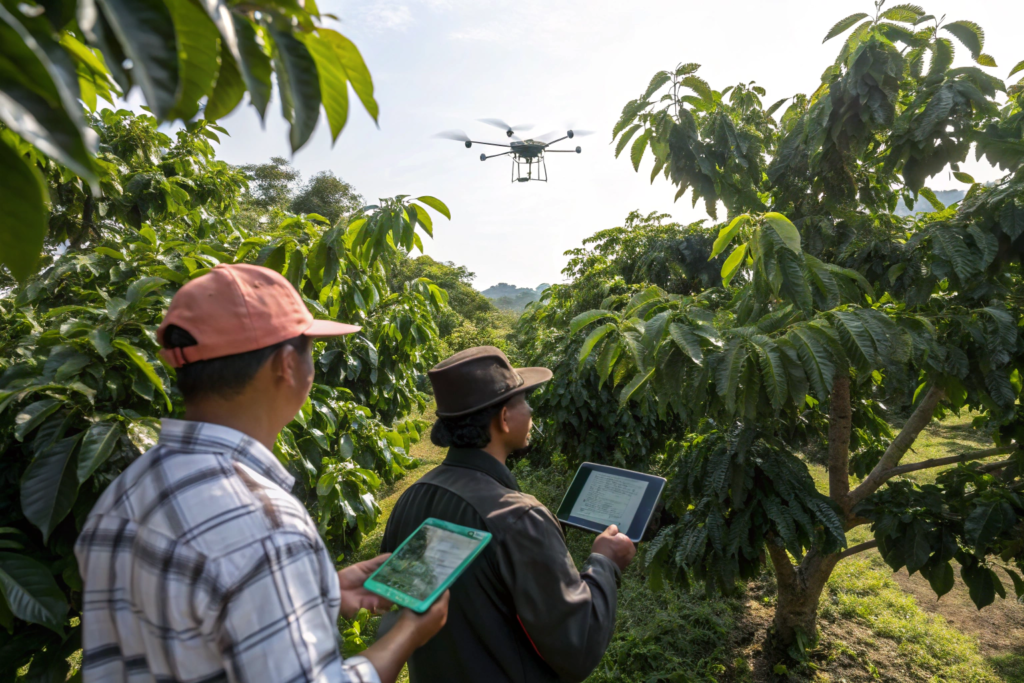
Several companies and platforms offer NDVI analysis for agricultural verification. A buyer can request the GPS coordinates of the plot, run an NDVI analysis, and verify the canopy cover. The analysis provides objective, third-party evidence of shade cultivation.
I provide GPS coordinates and plot maps for our shaded lots. Buyers who want to verify the shade cover independently can do so using satellite imagery or NDVI analysis. The data is available. The transparency is there.
Conclusion
Shade trees are not just a romantic feature of traditional coffee farms. They are a measurable input that improves coffee quality. The cooler microclimate slows cherry maturation, allowing more sugar development and preserving organic acids. The result is a coffee with brighter acidity, deeper sweetness, and greater flavor complexity—typically scoring 1 to 3 points higher on the cupping table than sun-grown coffee from the same plot.
The shade effect benefits both washed and natural processed coffees, though it expresses differently in each. Washed lots show the effect primarily in acidity and clarity. Natural lots show it in sweetness and body. Both are superior to their sun-grown counterparts.
Sourcing genuine shade-grown coffee requires verification. The farm visit or video call, the satellite imagery, and the cupping all provide evidence of shade cultivation. Certifications like Bird-Friendly and Rainforest Alliance add credibility, but many excellent shade-grown lots are not certified.
If you are interested in tasting the difference that shade makes in Yunnan coffee, contact Cathy Cai at BeanofCoffee. She can send you samples of our shade-grown and sun-grown Catimor from the same altitude, processed identically, so you can taste the difference yourself. She can also provide the plot data, the shade tree species, and the cupping scores. Her email is cathy@beanofcoffee.com. She responds quickly and can help you add a shade-grown story to your menu.