A roaster from a mid-sized chain in the Midwest cornered me at an expo last year. "My customers think fermented coffee is spoiled," he said. "I tried to sell a lactic processed lot. Told them about the bacteria. Told them about the pH monitoring. Their eyes glazed over. I sold three bags in two weeks. The rest went stale. How do I sell this stuff to normal people who just want a good cup of coffee?"
I understood his frustration immediately. I have watched this scene play out from the producer's side for years. A roaster falls in love with an exotic anaerobic fermentation lot. They buy it with enthusiasm. They write a label full of technical language. They put it on the shelf. And it sits there. The mainstream customer picks up the bag, reads "Lactobacillus Inoculated Anaerobic Fermentation," puts it back down, and reaches for the Breakfast Blend.
Marketing exotic processing methods to mainstream coffee drinkers requires abandoning technical jargon and microbiology lessons in favor of simple, indulgent flavor descriptors, familiar food analogies, and curated tasting experiences that frame the coffee as a delicious new flavor experience rather than a science experiment.
The problem is not the coffee. Mainstream consumers love new flavors when they are presented correctly. The problem is the story. The specialty coffee industry tells processing stories to itself, in its own language, and forgets that most people do not speak that language. Here is how to translate exotic processing into words, experiences, and products that mainstream customers actually want to buy.
Why Does Traditional Coffee Language Fail with Exotic Processes?
The specialty coffee industry has developed a rich vocabulary for describing processing. We talk about washed, natural, honey, anaerobic, carbonic maceration, lactic fermentation, thermal shock, and a dozen other terms. These terms are precise. They describe real differences in how the coffee was made. They matter to producers, to cuppers, to competition judges, and to the most dedicated enthusiasts.
But they mean nothing to the mainstream consumer. Nothing. Zero.
The mainstream consumer does not know what "washed" means, let alone "anaerobic fermentation." They have never heard of lactobacillus. They do not know what carbonic maceration is. These words are not just unfamiliar. They are alienating. They signal to the consumer that this product is not for them. It is for a different tribe—the coffee geeks, the insiders, the people who speak this strange language.
The specialty coffee industry's reliance on processing terminology like "anaerobic," "lactic," and "carbonic maceration" on retail packaging creates an unintentional barrier that alienates mainstream consumers who interpret technical language as complexity, pretension, or a product intended for someone else.
The problem is compounded when the language sounds vaguely alarming. "Bacteria." "Fermentation." "Yeast." These words, in the context of food, can trigger negative associations. Spoiled food. Rot. Something gone wrong. A consumer who reads "lactic fermented with lactobacillus" on a bag of coffee may think, "That sounds like yogurt that went bad." They do not know that controlled lactic fermentation is safe, deliberate, and delicious. They just know the words sound scary.
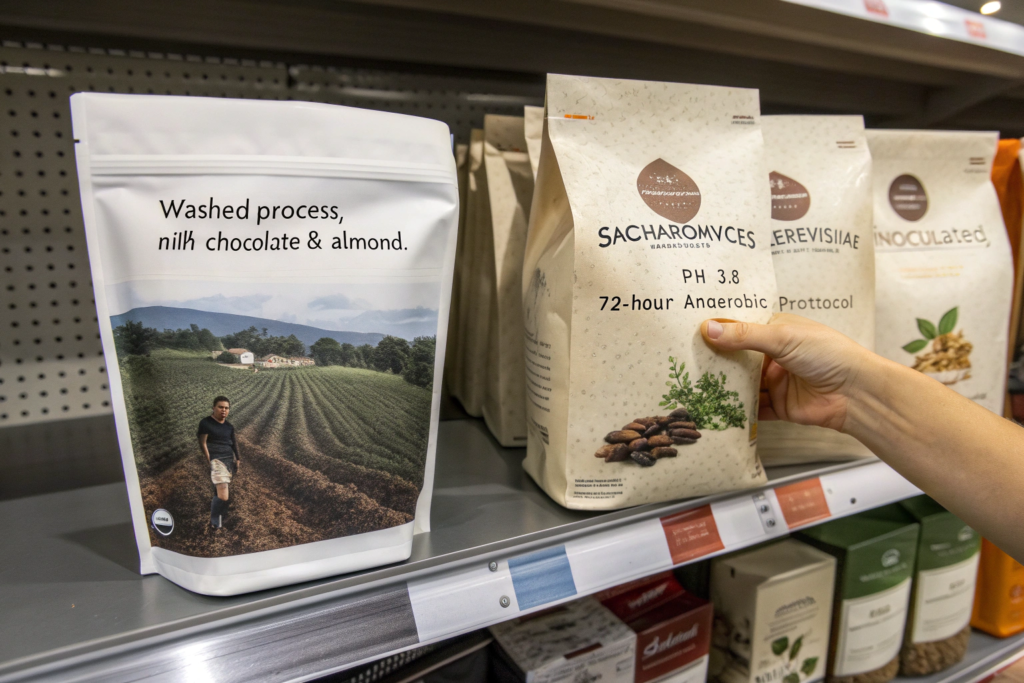
The solution is not to dumb down the coffee. It is to change the language around it. Stop leading with the process. Start leading with the flavor. The process can be mentioned on the back of the bag, in a sentence or two, for the curious consumer. But the front of the bag, the shelf talker, the barista's description—these should be about what the coffee tastes like and how it will make the drinker feel.
How Should You Describe a Lactic Processed Coffee to a Beginner?
Let me give you a concrete example. I produce a lactic processed Catimor in Baoshan. It is fermented with lactobacillus for 72 hours at a controlled temperature. The pH is monitored. The tanks are sterilized. The result is a coffee with intense notes of yogurt, tropical fruit, and cream.
If I were to sell this coffee to another producer or a competition barista, I would describe it exactly as I just did. The technical details are relevant to them. They understand the microbiology. They want the data.
If I were to sell this coffee to a mainstream consumer, I would describe it completely differently. I would say: "This coffee tastes like a strawberry smoothie. It is creamy, fruity, and a little bit tangy—like yogurt with fresh berries. It is not flavored. It is 100 percent coffee. The unique taste comes from a special fermentation, similar to how yogurt or sourdough bread gets its flavor. If you like rich, fruity, creamy coffee, you will love this."
Notice the difference. No mention of lactobacillus. No mention of pH. No mention of anaerobic environments. The description is built entirely around familiar, positive flavor experiences. Strawberry smoothie. Yogurt with berries. Creamy. Tangy. These are words that make a consumer's mouth water. They create curiosity, not confusion.
The most effective way to describe exotic processed coffee to a mainstream audience is to replace process vocabulary with flavor-first language: "Lactic fermented" becomes "creamy and tangy, like berry yogurt," while "anaerobic" becomes "intensely fruity, like tropical punch."
The key is to make the unfamiliar familiar. Everyone knows what a strawberry smoothie tastes like. Everyone knows what yogurt tastes like. By anchoring the description to these familiar reference points, the consumer can imagine the coffee before they buy it. They have a mental model for what they are going to experience. That mental model reduces risk and increases the likelihood of purchase.
Why Do Familiar Food Analogies Reduce Customer Anxiety?
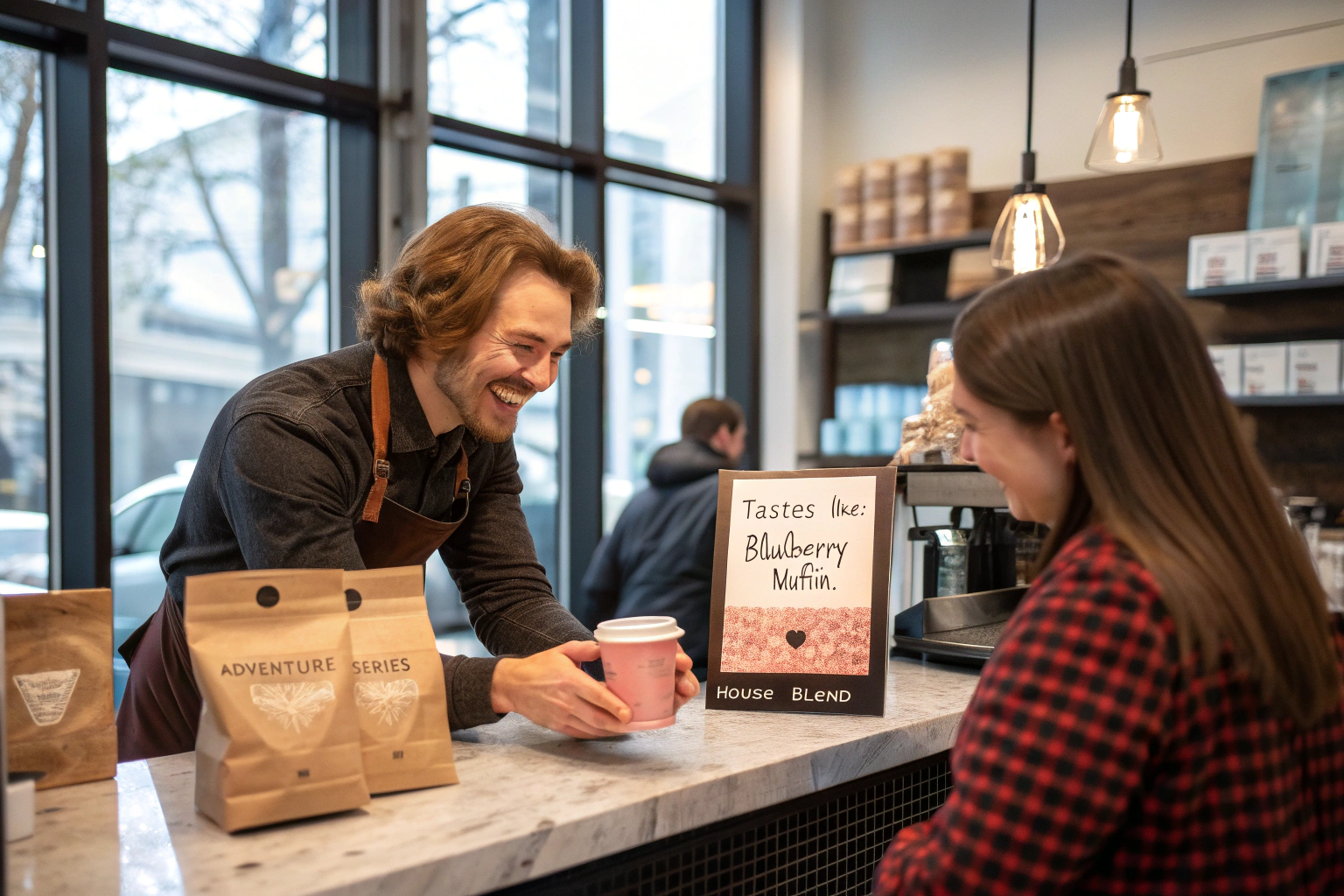
Food analogies work because they short-circuit the fear of the unknown. A consumer standing in front of a retail shelf is making a split-second decision. They are not reading paragraphs. They are scanning labels for familiar cues. If the cue is "anaerobic fermented," the brain registers "unfamiliar" and moves on. If the cue is "tastes like blueberry muffin," the brain registers "familiar and delicious" and reaches for the bag.
Analogies also set expectations correctly. If a consumer buys a coffee described as "winey and complex," they might not know what to expect. Winey can mean many things. If they buy a coffee described as "tastes like raspberry jam on toast," they know exactly what to expect. When they brew the coffee and taste the raspberry note, they feel satisfied. The coffee delivered on its promise. That satisfaction drives repeat purchases.
I encourage roasters to develop a library of food analogies for their exotic processed coffees. A carbonic maceration lot might be "tastes like fruit punch." A natural processed lot might be "tastes like dried strawberries and dark chocolate." A thermal shock lot might be "tastes like lemon meringue pie." The analogy should be specific, positive, and accurate to the cup. It should be a food that the target consumer actually eats and enjoys.
The back of the bag can include a short, simple explanation of the process for the curious. "This coffee got its intense fruit flavor from a special fermentation inside sealed tanks, a method borrowed from winemaking." That is enough. It satisfies the curious without overwhelming the cautious. For more on consumer coffee preferences and how language affects purchasing, the National Coffee Association publishes annual reports on consumption trends and consumer behavior.
How Can Free In-Store Tastings Convert Skeptical Customers?
The most powerful marketing tool for exotic processed coffee is not a label or a social media post. It is a tiny paper cup handed to a customer for free. Taste is the ultimate convincer. All the skepticism in the world melts away when the coffee touches the tongue and the flavor is unexpectedly delicious.
I have watched this happen hundreds of times at trade shows. A buyer walks up to my cupping table. They are skeptical about Chinese coffee in general and fermented coffee in particular. I hand them a spoon. They slurp a lactic processed Catimor. Their eyes widen. They slurp again. "This tastes like yogurt and pineapple," they say. "This is coffee?" That moment of surprised delight is the sale. The rest is just paperwork.
Roasters should apply the same principle at the retail level. An exotic processed coffee on a shelf is just a bag with words on it. An exotic processed coffee brewed fresh and handed to a customer as a free sample is an experience. The customer cannot ignore the flavor. They cannot misinterpret the label. They taste it. They react. The reaction is usually positive because the coffee is genuinely delicious. The free sample converts skepticism into curiosity and curiosity into purchase.
Free in-store tastings are the single most effective tool for selling exotic processed coffees because they bypass the language barrier entirely, allowing the coffee's unique and delicious flavor to convince the skeptical mainstream customer more powerfully than any label or description ever could.
The key to a successful tasting is to frame it correctly. Do not say, "Would you like to try our anaerobically fermented lactic coffee?" The customer will say no. They do not know what that is and they do not want to risk an unpleasant experience. Instead, say, "Would you like to try a free sample? This one tastes like a berry smoothie." The customer knows what a berry smoothie tastes like. They like berry smoothies. They take the cup. They taste it. They are surprised. They buy the bag.

How Should You Frame the Tasting Experience?
The framing of the tasting determines how the customer interprets the flavor. If you tell the customer, "This is a fermented coffee, it might taste weird," their brain will look for weirdness. They will find it, even if the coffee is delicious. The power of suggestion is strong.
Instead, frame the tasting positively and confidently. Say, "I want you to try this. It is one of my favorites. Tell me what you taste." Hand them the cup. Let them taste. Let them react. Then ask them what they tasted. If they say "blueberry," say "Exactly. This coffee was processed in a way that brings out that natural fruit flavor. Pretty cool, right?" The conversation is now about the delicious fruit flavor they just experienced, not about the scary fermentation process.
If the customer asks how the flavor got there, keep the explanation simple. "The coffee cherries were fermented in a sealed tank, kind of like how wine is made. It pulls out all these amazing fruit notes." That is enough. Do not launch into a lecture on anaerobic metabolism. The customer's question was casual. The answer should be casual too.
I also recommend offering a side-by-side tasting. Give the customer a tiny cup of your standard washed coffee and a tiny cup of the exotic processed coffee. Ask them to taste both. The difference will be immediately obvious. The washed coffee will taste familiar—chocolate, nut, balanced. The exotic coffee will taste wildly different—fruit, cream, intensity. The contrast makes the exotic coffee's uniqueness visible. The customer may prefer the washed. That is fine. But many will be intrigued by the exotic. The side-by-side tasting gives them a reference point. It makes the exotic coffee's flavor a discovery rather than a gamble.
What Role Does Brewing Method Play in the Tasting Experience?
The brewing method can make or break the tasting. A poorly brewed exotic coffee tastes weird and unpleasant. A well-brewed exotic coffee tastes extraordinary. The difference is often in the extraction.
Exotic processed coffees, especially anaerobic and lactic lots, tend to be more soluble than standard washed coffees. The fermentation alters the bean's cell structure. Water penetrates more easily. Extraction happens faster. If you brew an anaerobic coffee with the same recipe as your washed coffee, you may over-extract it. The result is harsh, bitter, and astringent. The customer tastes that and thinks the coffee itself is bad.
I recommend dialing in the brew recipe for the tasting specifically for that coffee. Use a slightly coarser grind. Use a slightly lower water temperature—around 92 degrees Celsius instead of 95. Use a shorter brew time. The goal is a clean, balanced extraction that highlights the coffee's fruit and cream notes without introducing bitterness.
The coffee should also be served at an appropriate temperature. Do not serve it scalding hot. Heat masks flavor. Let the coffee cool for a minute or two before pouring the samples. The customer should taste the full flavor profile, not just heat. A warm, not hot, coffee reveals its fruit notes more clearly.
Finally, serve the coffee in a way that highlights its unique appearance. Exotic processed coffees often have a slightly hazy, almost milky appearance, or a pinkish-orange hue when brewed as filter. Serve it in a clear glass cup. The visual is part of the experience. The customer sees the unusual color before they taste the unusual flavor. The visual primes them for something different. For more on brew optimization for fermented coffees, Perfect Daily Grind has published brew guides for different processing methods.
How Can You Use Limited Edition Drops to Build Excitement?
The mainstream market is not one thing. It contains a segment of consumers who are adventurous, curious, and influenced by scarcity. These consumers may not understand anaerobic fermentation, but they understand limited releases. They buy sneakers in limited drops. They buy craft beer in seasonal releases. They buy special edition anything. The format is familiar. The psychology is powerful.
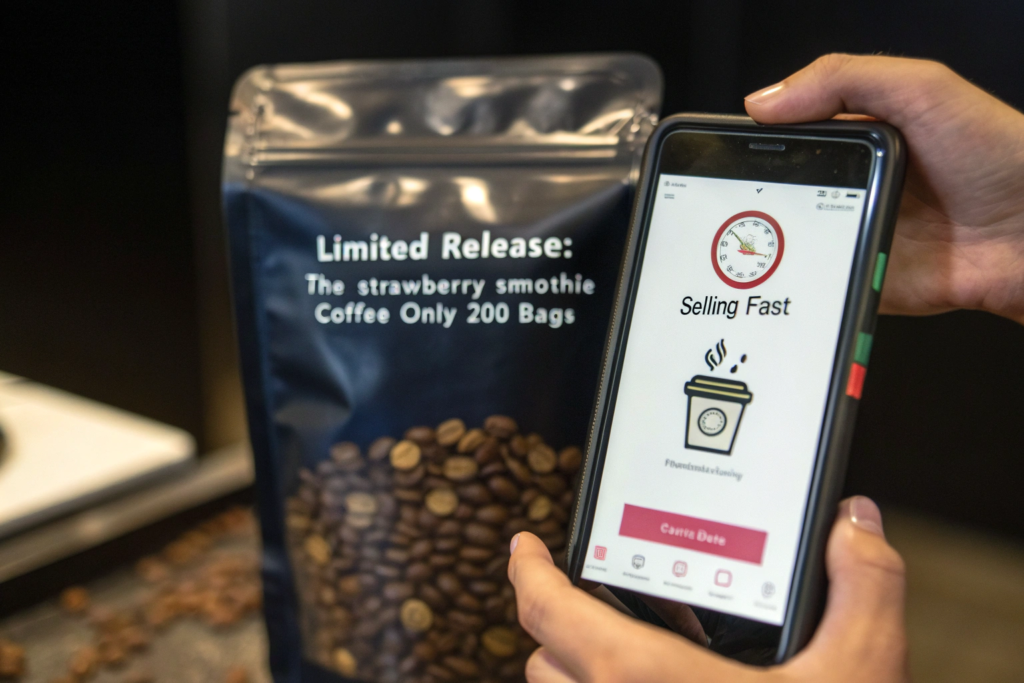
Positioning exotic processed coffees as limited edition drops leverages this consumer psychology. The coffee is genuinely scarce. The micro-lot might only be 100 or 200 kilograms. The scarcity is real, not manufactured. When the roaster announces the drop honestly—"Only 200 bags produced of this lot, and when it is gone, it is gone until next season"—the consumer understands the proposition. This is not a regular product. This is a special opportunity.
Limited edition drops convert the challenge of micro-lot volumes into a marketing advantage by framing scarcity as exclusivity, creating urgency through honest supply constraints, and building a collector mentality among customers who look forward to each new release.
The drop format also creates a sense of event. An email goes out to the subscriber list. A social media post teases the release. The coffee goes live on the website at a specific time. It sells out in hours. Customers who missed out ask for more. The roaster responds, "Next season. Different lot. Different flavor." The cycle repeats. The limited drop becomes a recurring feature of the brand, something customers anticipate and talk about.
I have watched this model work brilliantly for roasters who buy our experimental micro-lots. They do not try to sell a lactic processed Catimor year-round. They buy 60 kilograms. They roast it. They sell it in a weekend. Their customers ask when the next exotic release is coming. The scarcity drives demand. The demand validates the premium price. The limited format makes the exotic accessible to the mainstream by framing it as a special treat rather than a permanent menu item.
How Do You Price Exotic Processed Coffees for the Mainstream Market?
Pricing is a delicate balance. Exotic processed coffees cost more to produce. The green coffee price is higher. The volumes are smaller. The roast profile may require extra attention. The retail price must reflect these higher costs. But the price cannot be so high that the mainstream consumer dismisses it as unattainable.
The specialty coffee market has established a clear pricing ladder. A standard single-origin washed coffee retails for $16 to $20 per 12-ounce bag. A premium single-origin, like a high-scoring natural or a renowned origin, retails for $20 to $26. An exotic micro-lot—anaerobic, lactic, carbonic maceration—retails for $26 to $36. Some exceptional lots push higher.
The mainstream consumer who buys $18 bags of coffee is not the target for a $32 exotic lot. But the mainstream consumer who occasionally buys a $24 bag as a treat is. The pricing should signal premium quality and rarity without crossing into unattainable luxury.
The limited drop format helps justify the higher price. The consumer understands that a limited, seasonal, hand-numbered product costs more than a year-round offering. The price becomes part of the story. "This coffee cost more because only 200 kilograms were produced, and I bought it direct from the farmer." The consumer feels they are getting something special for the premium.
For roasters, the margin on exotic lots should be healthy. The green cost is higher, but the retail price is proportionally higher. A lactic lot that costs $5.50 per pound FOB and lands at $7.00 per pound can retail at $28 per bag and deliver a solid margin. The key is to sell through the inventory quickly. Exotic lots have a limited shelf life. Price them to move within 60 days of roast.
What Packaging Cues Signal "Approachable Adventure"?
Packaging is silent communication. Before the customer reads a word, they see the bag. The design, the colors, the typography, the imagery—all of it signals what kind of product is inside and who it is for.
Many exotic processed coffees are packaged in a way that signals "extreme specialty." Black bags. Minimalist typography. Technical language. These designs appeal to the hardcore coffee enthusiast. They signal that the coffee is serious, rare, and demanding. They also signal to the mainstream consumer that this coffee is not for them.
I recommend a different design language for exotic coffees aimed at the mainstream. The packaging should signal "delicious adventure," not "technical challenge." Use warm, inviting colors. Use imagery that suggests fruit, flavor, and enjoyment, not laboratory equipment and fermentation tanks. Use typography that is friendly and approachable, not stark and clinical.
The bag should clearly state the flavor in large, prominent text. "Tastes Like: Tropical Fruit Punch." The processing method should be mentioned in smaller text, perhaps on the back, with a one-sentence explanation. The front of the bag is prime real estate. Use it to sell the flavor, not the process.
Some roasters use a sub-brand or a series label for their exotic offerings. "Adventure Series." "Limited Edition." "Discovery Collection." These labels create a clear separation between the everyday coffees and the special releases. The consumer knows that the Adventure Series is where the wild flavors live. They can choose to enter that space or stick with the familiar. The choice is theirs. For more on packaging design and consumer behavior, Specialty Coffee Association has published market research on specialty coffee consumer segmentation and purchasing drivers.
How Do You Train Baristas to Sell the Story Without the Jargon?
The barista is the final link in the marketing chain. The roaster can create the perfect label and the perfect tasting event, but if the barista cannot describe the coffee simply and enthusiastically to the customer at the counter, the sale is lost.
I have seen baristas kill exotic coffee sales with poor language. The customer asks, "What is this coffee?" The barista says, "It is a lactic fermented anaerobic Catimor from Yunnan. It was inoculated with lactobacillus and fermented for 72 hours at 22 degrees Celsius." The customer's eyes glaze. They order a latte with the house blend. The exotic bag stays on the shelf.
Training baristas to sell exotic coffees means training them to stop speaking like coffee professionals and start speaking like normal humans who love delicious things. The training should focus on flavor, analogy, and enthusiasm. Not on technical accuracy.
Effective barista training for exotic coffee sales replaces technical scripts with flavor-first storytelling, analogies to familiar foods, and genuine personal enthusiasm, empowering the barista to describe the coffee as "the one that tastes like a strawberry smoothie" rather than "the anaerobically fermented one."
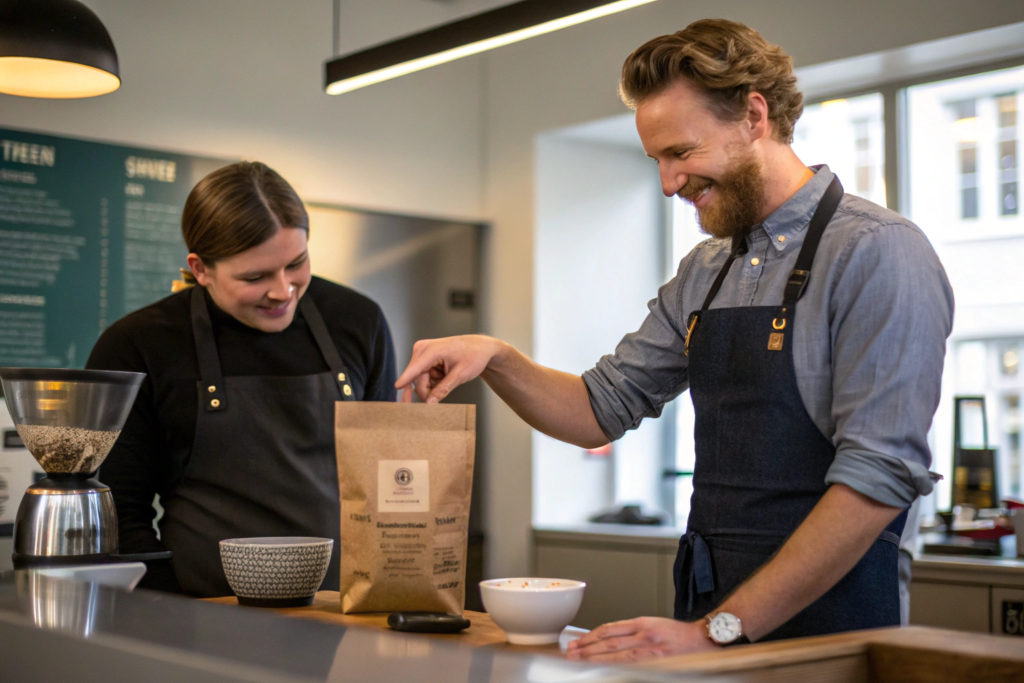
I recommend a simple three-sentence framework for baristas describing exotic coffees. Sentence one: the flavor, in simple, indulgent terms. "This coffee tastes like a blueberry muffin—fruity, sweet, and a little bit cakey." Sentence two: the one-sentence explanation, if the customer is curious. "It gets that flavor from a special fermentation, kind of like how sourdough bread gets its tang." Sentence three: the personal endorsement. "It is my favorite coffee on the menu right now. I drink it every morning."
This framework gives the barista a script that is natural, confident, and effective. The customer hears deliciousness, simplicity, and genuine enthusiasm. They are much more likely to try the coffee than if they heard a technical lecture.
What Simple Scripts Work Best for Describing Fermented Flavors?
Scripts give baristas confidence. They do not have to invent a description on the spot. They have a practiced, proven phrase ready to go. The script should be short, sensory, and focused on pleasure.
For a lactic processed coffee: "This one tastes like a strawberry yogurt smoothie. It is creamy, a little tangy, and super fruity. It is 100 percent coffee, but it tastes like it has fruit in it. It is incredible iced."
For a carbonic maceration coffee: "This one tastes like fruit punch. Like tropical fruit—mango, passionfruit, pineapple. It is really intense and juicy. If you like fruity coffees, you have to try this."
For a natural processed coffee: "This one tastes like dried strawberries covered in dark chocolate. It is sweet, a little funky in a good way, and really heavy-bodied. It makes an amazing pour-over."
For a honey processed coffee: "This one is like the middle ground between a washed and a natural. It has a little more body and sweetness, with notes of caramel and stone fruit. It is very balanced and easy to drink."
Notice that none of these scripts mention fermentation, bacteria, pH, or processing techniques. They mention flavor, texture, and familiar foods. The consumer can instantly imagine what the coffee will taste like. The scripts also include a serving suggestion or a personal endorsement. This adds warmth and authenticity.
Roasters should provide these scripts to their wholesale café accounts on a one-page sheet. The sheet should include the coffee name, the simple flavor description, the one-sentence process explanation, and a suggested brew method. The easier you make it for the barista to sell the coffee, the more coffee they will sell.
How Can You Use Social Media Teasers Before a Drop?
Social media is the digital equivalent of the in-store tasting. It is where the consumer first encounters the coffee. The goal is to create curiosity and desire before the coffee is even available.
The teaser posts should be visual, simple, and focused on flavor. A photo of the coffee being brewed, with steam rising, and a caption that reads: "Something wild is coming. It tastes like a strawberry smoothie. It is 100 percent coffee. Drops Friday." That is enough. No process details. No jargon. Just a promise of deliciousness and a date.
The next post, a day before the drop, can reveal a little more. A photo of the bag, with the flavor description prominent, and a caption: "Only 150 bags of this micro-lot exist. Our newest Adventure Series coffee was fermented in a sealed tank, just like fine wine. The result? Pure tropical fruit explosion. On sale tomorrow at 10am." Still simple. Still flavor-first. But now the scarcity and the process hint add intrigue.
The final post, on drop day, is the call to action. A photo of the coffee in a clear glass, showing its unusual color, with a caption: "It is here. The Strawberry Smoothie coffee. 150 bags. When they are gone, they are gone. Link in bio." The urgency is real. The scarcity is honest. The consumer who has been teased for a week is ready to buy.
Social media also allows roasters to share customer reactions. A repost of a customer's photo with the coffee, captioned "This really does taste like a smoothie," is more powerful than any marketing copy. Social proof converts. When the mainstream consumer sees other normal people enjoying the exotic coffee, the fear of the unknown recedes. For more on digital coffee marketing strategies, Perfect Daily Grind has published articles on social media and e-commerce tactics for specialty roasters.
Conclusion
Marketing exotic processed coffees to mainstream drinkers is not about dumbing down the coffee. It is about translating it. The coffee is delicious. The flavor is extraordinary. The story is compelling. But the language that the specialty coffee industry uses to tell that story—technical, precise, insider—is the wrong language for the audience.
The fix is simple. Lead with flavor. Use food analogies. Let the customer taste the coffee before they have to commit. Frame the product as a limited, special experience rather than a permanent, intimidating menu item. Design packaging that signals deliciousness, not difficulty. Train baristas to speak like enthusiastic food lovers, not like scientists.
When these elements come together, the exotic coffee sells itself. The mainstream customer does not need to understand anaerobic fermentation to enjoy a coffee that tastes like a tropical fruit punch. They just need to taste it. They just need someone to hand them a cup and say, "Try this. It is delicious." The rest takes care of itself.
If you are a roaster looking for exotic processed micro-lots to build your Adventure Series around, contact Cathy Cai at BeanofCoffee. She manages our experimental fermentation program—lactic, carbonic maceration, anaerobic, and more. She can provide cupping scores, process documentation, and marketing-ready flavor descriptions that translate the microbiology into consumer-friendly language. Her email is cathy@beanofcoffee.com. She responds quickly and can ship samples so you can taste the smoothie coffee yourself.