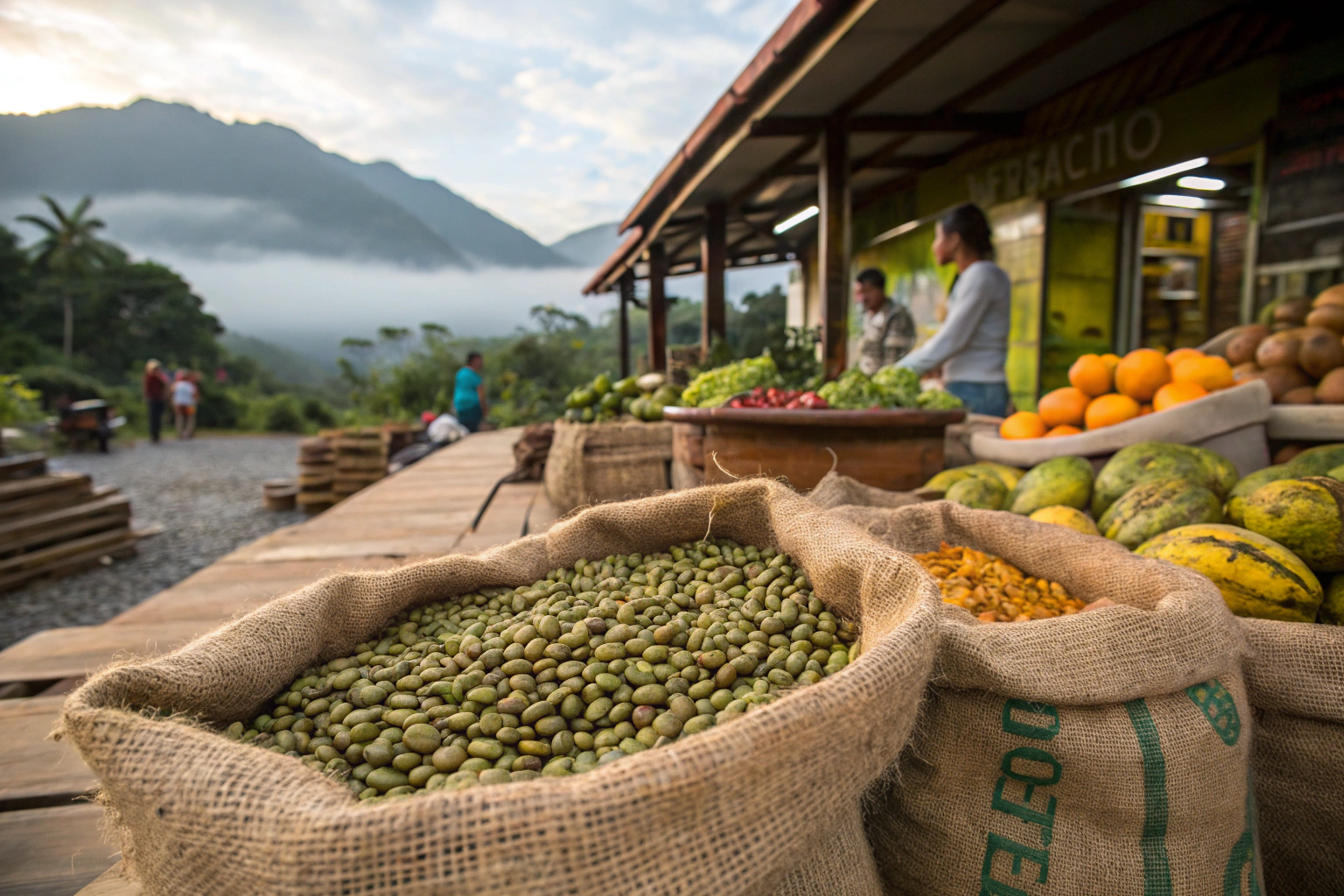
A subscription roaster from Austin emailed me six months ago. "My customers are bored with chocolate and nut notes," he wrote. "Every coffee on my menu tastes like a variation of milk chocolate and almond. I need something that tastes like fruit. Real fruit. Mango, passionfruit, pineapple. Where do I find that in wholesale volumes?"
I knew exactly what he needed. He needed a coffee that had been processed specifically to amplify fruit character. Not a washed coffee with a subtle hint of citrus. Not a natural with a vague berry note. He wanted a fruit bomb. A coffee that, when you slurp it at a cupping, makes you say "wow, that tastes like tropical fruit punch." Those coffees exist. They are not common. They are not cheap. But they are findable if you know where to look and what processing methods to target.
Wholesale coffee beans with prominent tropical fruit notes are found by sourcing specific processing methods—anaerobic fermentation, carbonic maceration, and carefully dried natural process lots—from origins with the altitude and varietal genetics to support intense fruit expression, particularly from Yunnan, China, and select Central American and Colombian micro-lots.
This is not about flavored coffee. This is about 100 percent pure Arabica that, through variety selection and processing technique, develops intense natural fruit flavors. Here is exactly what drives those flavors, which origins produce them most reliably, and how to find them in wholesale volumes for your roasting business.
What Processing Methods Create Tropical Fruit Flavors in Coffee?
The tropical fruit notes that excite specialty coffee drinkers—mango, passionfruit, pineapple, lychee, papaya—are not present in the green bean. They are latent. They exist as precursor compounds—esters, terpenes, and other volatile aromatics—that are unlocked during roasting. But the precursors themselves are created or destroyed during processing. The processing method determines whether the coffee will taste like chocolate and nuts or like a tropical fruit salad.
Washed processing, the most common method, produces clean, balanced coffees with mild acidity and notes of chocolate, nut, and sometimes a gentle citrus. The mucilage is removed completely before drying. The fermentation is short and controlled. The bean absorbs few fruit-derived compounds. The cup reflects the varietal and the terroir, but the fruit character is restrained.
Natural processing, where the whole cherry is dried with the fruit intact, produces heavier, fruitier coffees. The bean marinates in the drying fruit for weeks. Sugars and fruit esters migrate into the bean. The result is a coffee with more body, more sweetness, and more fruit character than a washed lot. But the fruit notes in a standard natural are often dried fruit—raisin, dried strawberry, dried apricot—rather than fresh tropical fruit.
Anaerobic fermentation and carbonic maceration are the processing methods that produce the most intense fresh tropical fruit notes—mango, passionfruit, pineapple—because the oxygen-free environment forces the cherry to ferment internally, creating high concentrations of the fruity ester compounds that survive roasting.
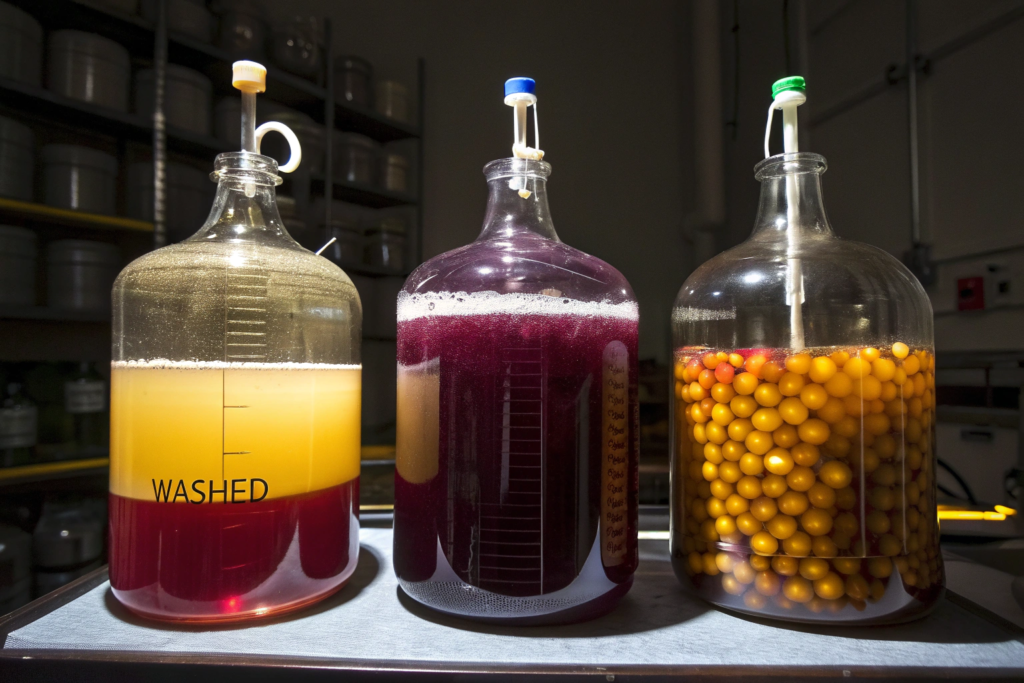
Anaerobic fermentation takes the natural process further. The whole cherries or pulped beans are sealed in a tank with no oxygen. The fermentation is intracellular. The yeasts and bacteria produce high levels of esters—volatile compounds that smell intensely of fruit. Ethyl butyrate smells like pineapple. Isoamyl acetate smells like banana. The bean absorbs these compounds. After roasting, the coffee explodes with tropical fruit aroma and flavor.
Carbonic maceration is a specific type of anaerobic fermentation borrowed from winemaking. The tank is flushed with carbon dioxide. The cherries ferment from the inside out. The result is even more intense fruit character, often with a winey, complex edge. These are the coffees that win competitions and command the highest prices.
How Does Anaerobic Fermentation Amplify Fruity Esters?
Anaerobic fermentation is not just "fermentation without oxygen." It is a fundamental shift in the microbial metabolism that creates radically different flavor compounds.
In an aerobic, open fermentation, yeasts consume sugars and produce alcohol and carbon dioxide. Some esters are produced, but the process is dominated by alcohol production. In an anaerobic fermentation, the lack of oxygen stresses the yeast. The yeast shifts its metabolism. It produces more esters and fewer alcohols. The ester production is a survival mechanism. The yeast is trying to survive in a hostile environment. The byproduct happens to smell delicious.
The specific esters produced depend on the yeast strain, the temperature, the pH, and the duration. At our Baoshan facility, we have tested dozens of anaerobic protocols. We have found that a fermentation temperature around 22 to 24 degrees Celsius, a duration of 72 to 96 hours, and a pH target of 3.8 to 4.2 produce the most intense tropical fruit character in our Catimor.
After fermentation, the beans are dried slowly on raised beds. The drying preserves the volatile esters. If the drying is too fast or too hot, the esters evaporate. If the drying is too slow, mold can develop. The drying curve is carefully managed to lock in the fruit character.
The result is a green bean that smells faintly of fruit even before roasting. After roasting, the fruit notes explode. The cupping table fills with aromas of mango, passionfruit, and pineapple. The coffee tastes more like a tropical fruit punch than a traditional washed Arabica. For more on the science of ester production in coffee fermentation, the Specialty Coffee Association has published research on fermentation chemistry and sensory outcomes.
Why Do Natural Process Coffees Often Taste Like Dried Fruit Instead?
Natural process coffees are fruity, but the fruit character is different from anaerobic coffees. Naturals taste like dried fruit—raisin, dried strawberry, dried mango—rather than fresh tropical fruit. The reason is oxidation.
In a natural process, the whole cherry is exposed to oxygen throughout the drying period, which can last three to four weeks. Oxygen reacts with the fruit compounds. Fresh, bright fruit esters oxidize into heavier, darker fruit compounds. The bright, zesty note of fresh passionfruit becomes the deeper, jammier note of dried passionfruit. The fresh pineapple note becomes more like pineapple upside-down cake.
Oxidation is not a defect. It is a flavor choice. Some consumers prefer the deeper, jammier fruit character of a natural. Others prefer the bright, fresh fruit explosion of an anaerobic. Both have a place in a specialty coffee menu. But if the target is specifically "tropical fruit," the anaerobic and carbonic maceration methods are more direct routes.
The drying speed also affects the fruit character. A natural dried quickly in full sun will have less fermented fruit character and more fresh fruit brightness. A natural dried slowly in shade will have more fermented, winey, overripe fruit notes. The producer controls the fruit expression through drying management.
At Shanghai Fumao, we offer both anaerobic lots for fresh tropical fruit and natural lots for jammier dried fruit. The choice depends on the roaster's target flavor profile. I always recommend cupping both side by side to understand the difference before buying.
Which Origins Reliably Produce Tropical Fruit-Forward Coffee?
Not every origin can produce tropical fruit notes. The fruit character in coffee comes from a combination of genetics, altitude, and processing. Some origins have the right combination naturally. Others do not.
Ethiopia is the classic origin for fruity coffee. The heirloom varieties, the high altitudes, and the tradition of natural processing produce coffees with intense blueberry, strawberry, and tropical fruit notes. But Ethiopian coffees with true tropical fruit character—mango, passionfruit—are typically natural processed lots from specific regions like Yirgacheffe and Guji. They are available in wholesale volumes, but the best lots are often sold at auction at high prices.
Central America, particularly Costa Rica and Panama, produces exceptional tropical fruit-forward coffees through anaerobic and carbonic maceration processing. The high altitudes and the advanced processing knowledge in these origins allow producers to create intensely fruity micro-lots. The challenge is volume. These lots are often 100 to 300 kilograms. Wholesale buyers seeking larger volumes may need to aggregate lots from multiple producers.
Colombia has emerged as a major source of tropical fruit-forward coffees. The high altitudes of Huila and Nariño, combined with innovative processing by forward-thinking producers, produce anaerobic lots with intense mango and passionfruit notes. The volumes are larger than Central America. Container-load shipments of fruity Colombian coffee are possible.
Yunnan, China is an emerging origin for tropical fruit-forward coffee, where high-altitude Catimor subjected to controlled anaerobic fermentation produces intense mango, lychee, and passionfruit notes at wholesale volumes and FOB prices that are often more accessible than equivalent Ethiopian or Central American lots.
Our anaerobic Catimor from Baoshan cups with notes of mango, passionfruit, and lychee. The altitude—1,500 to 1,600 meters—provides the slow cherry maturation needed for sugar development. The washed Catimor base is clean and sweet. The anaerobic fermentation adds the tropical fruit explosion. The volumes are not micro-lot scale. We can supply container loads of anaerobic Catimor for roasters who need consistent, large-volume tropical fruit expression.
How Does Yunnan's Terroir Support Fruity Fermentation Profiles?
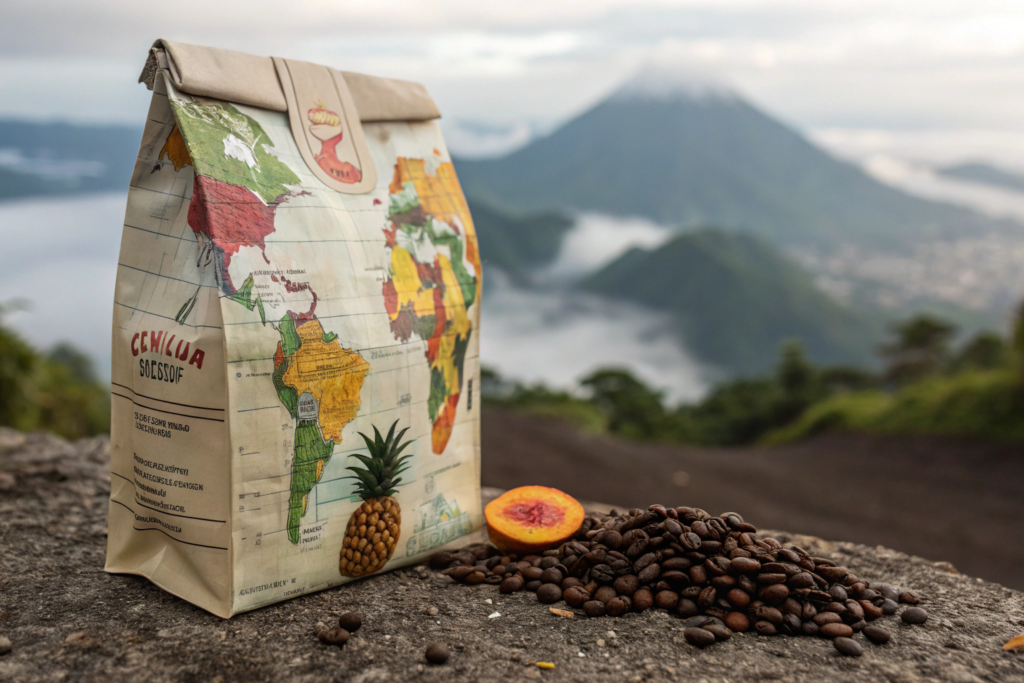
Yunnan's terroir is uniquely suited to producing clean, fruit-forward fermented coffees. The combination of altitude, climate, and soil creates a base coffee that takes fermentation beautifully.
The altitude in Baoshan—1,500 to 1,600 meters—is high enough to slow cherry maturation and develop dense, sugary beans. The sugar content of the cherry is the fuel for fermentation. More sugar means more ester production. The dense bean structure absorbs the esters deeply and retains them through roasting.
The climate has a distinct dry season during harvest from November to February. The dry weather is critical for processing. Anaerobic fermentation happens in sealed tanks, so the weather does not affect the fermentation itself. But after fermentation, the beans must be dried. The dry Baoshan harvest season allows slow, even drying on raised beds. The low humidity prevents mold. The consistent sunshine drives off moisture steadily. The volatile esters are preserved.
The red laterite soil of Baoshan also contributes. It is well-drained and mineral-rich but not overly fertile. The slight nutrient stress on the trees concentrates sugars and secondary metabolites in the cherries. The base coffee has a natural sweetness and complexity that the fermentation amplifies.
The combination of these factors—sugary cherries, dry harvest weather, and mineral soil—means that Yunnan anaerobic coffees tend to be cleaner and more fruit-forward than anaerobic coffees from more humid origins, which can sometimes develop earthy or musty notes alongside the fruit. For more on Yunnan's coffee terroir, the International Coffee Organization publishes country coffee profiles that describe growing conditions and flavor characteristics.
Can Washed Coffees Ever Deliver Tropical Fruit Notes?
Washed coffees are rarely the first choice for tropical fruit expression. The washing process removes the fruit mucilage before drying, which removes most of the fruit-derived compounds. The cup is clean, transparent, and focused on the varietal and the terroir. Fruit notes in washed coffees tend to be citrus—lemon, lime, orange—rather than tropical fruit.
However, there are exceptions. Some varietals have such intense fruit character that a hint survives even washed processing. Geisha is the most famous example. A washed Geisha from Panama or Colombia can cup with intense jasmine, bergamot, and stone fruit notes. Some washed Geishas have a distinct mango or papaya note. But Geisha is expensive and the volumes are small.
SL28, the famous Kenyan variety grown in Yunnan, can also show tropical fruit notes in washed processing. Our washed SL28 cups with blackcurrant, savory tomato, and sometimes a hint of mango. The tropical note is subtle compared to an anaerobic lot, but it is present.
For a roaster who wants tropical fruit notes in a washed coffee, the strategy is to select a high-intensity fruit varietal—Geisha, SL28, Pacamara—from a high-altitude origin, and cup extensively to find lots where the fruit character survived the wash. The search is harder. The volumes are smaller. The prices are higher. But the result is a coffee with tropical fruit notes and the clean, transparent profile of a washed coffee.
Most roasters who want reliable, large-volume tropical fruit expression choose anaerobic or carbonic maceration lots. The processing method is the most direct and controllable route to the flavor target. For more on varietal selection, World Coffee Research maintains a comprehensive variety catalog with sensory profiles.
How to Verify Fruit Notes When Sourcing Wholesale Green Coffee?
Buying coffee based on a flavor descriptor is risky. "Notes of tropical fruit" on a supplier's offer sheet could mean anything from intense mango to a faint hint of distant citrus. The only way to verify fruit notes is to cup the coffee yourself.
When I send samples to potential buyers, I always include a cupping form with my own scores and notes. But I also encourage buyers to cup the coffee independently. Their palate is different from mine. Their roast profile is different. The coffee may taste different to them. The pre-shipment sample is the buyer's opportunity to confirm that the coffee matches their expectations.
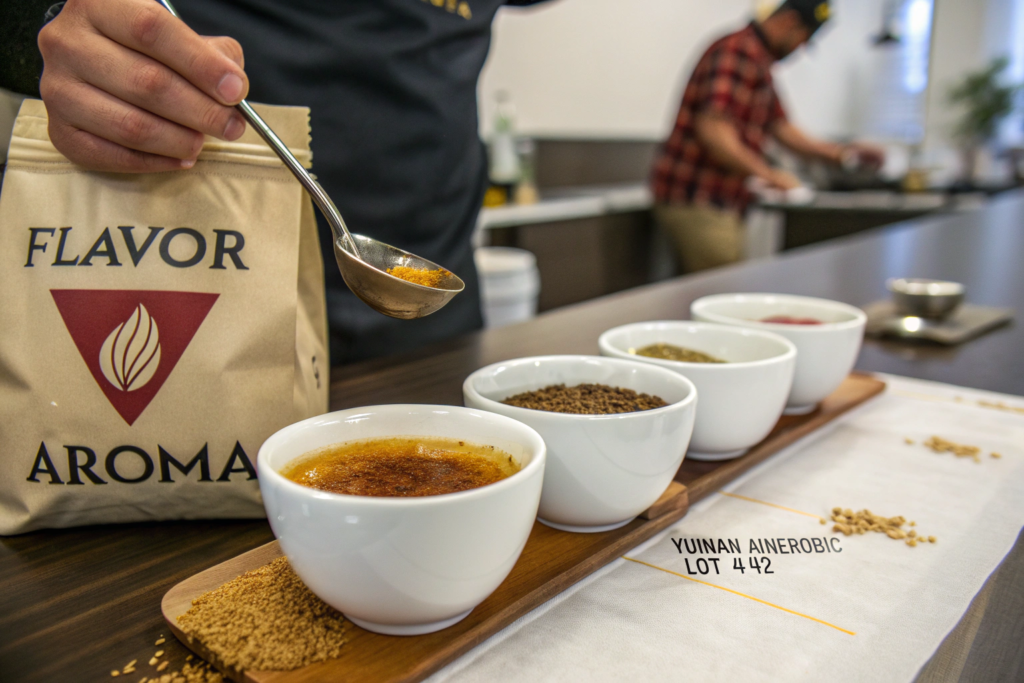
The cupping should be done blind, against reference samples. If the target is tropical fruit, include a reference coffee that you know has tropical fruit notes. Include a washed coffee from the same origin as a baseline. The contrast will reveal the fruit character more clearly than cupping the lot in isolation.
The most reliable way to verify tropical fruit notes when sourcing wholesale green coffee is to request a pre-shipment sample, cup it blind against a washed reference and a known fruity benchmark, and taste for specific, identifiable fruit notes—mango, passionfruit, pineapple—rather than vague "fruity" character.
The cupping protocol should include cooling. Coffee changes as it cools. Tropical fruit notes often become more pronounced at warm room temperature than at hot cupping temperature. Cup the coffee hot, warm, and at room temperature. Note how the fruit character evolves. A coffee that tastes tropical at every temperature is a coffee with genuine, stable fruit expression.
I also recommend cupping the coffee again a week after roasting, and again two weeks after roasting. Some fruit notes fade quickly. The coffee that tasted like a tropical explosion on day two may taste flat by day ten. A coffee with lasting fruit character is more valuable for a roaster who needs the retail bag to taste good for several weeks on the shelf.
What Questions Should You Ask a Supplier About Their Fermentation Process?
The supplier's answers to process questions reveal whether the tropical fruit notes are genuine and intentional or accidental and unreliable. Here are the questions I recommend every buyer ask.
First: "What specific fermentation protocol did this lot undergo?" The answer should include the method, the duration, the temperature, and the pH targets. "72-hour anaerobic fermentation at 22 degrees Celsius, pH target 3.8 to 4.2" is a real answer. "Special fermentation" is not.
Second: "Was the fermentation inoculated with a specific yeast or bacteria strain?" The answer tells you whether the process was controlled or wild. Inoculated fermentations are more predictable and consistent. Wild fermentations can produce great results but are harder to replicate.
Third: "How was the lot dried after fermentation?" The drying method and duration affect the preservation of fruit esters. Slow, shaded drying preserves more volatiles than fast, full-sun drying.
Fourth: "What cupping score did this lot achieve, and what were the specific fruit notes?" The supplier should provide a specific score and specific notes. "86 points, mango, passionfruit, lychee" is what you want to hear. "Good coffee, fruity" is not sufficient.
Fifth: "Can you provide cupping data from previous harvests of the same lot or plot?" This reveals consistency. A lot that cups with tropical fruit notes year after year is a reliable source. A lot that was fruity one year and flat the next is a gamble.
At Shanghai Fumao, we provide full processing documentation, cupping scores, and fermentation data with every sample. Our repeat buyers know exactly what to expect because the process is documented and consistent.
How Can You Ensure the Fruit Notes Survive the Roast?
The roaster's profile determines whether the tropical fruit notes in the green coffee survive into the cup. A poorly roasted anaerobic lot can taste flat, baked, or roasty, with no fruit character at all.
The key principle is gentleness. The volatile esters that produce tropical fruit notes are fragile. They evaporate or degrade at high temperatures. A roast profile that is too hot, too fast, or too dark will incinerate the fruit character. What remains is a heavy-bodied, roasty coffee with none of the tropical magic.
I recommend a light to medium-light roast for tropical fruit-forward coffees. Agtron whole-bean reading of 58 to 70. The charge temperature should be moderate. The rate of rise should be gentle and declining. The development time after first crack should be on the shorter side—12 to 15 percent of total roast time. The drop temperature should not exceed 210 to 212 degrees Celsius for filter roasts, or 215 degrees Celsius for espresso roasts.
The roast should be profiled specifically for the individual lot. Two anaerobic lots from different origins or different fermentation protocols may require different profiles. The roaster should cup the coffee at multiple roast levels and identify the profile that maximizes the tropical fruit expression.
I provide roast recommendations with every lot I sell. The recommendations are based on my own profiling and feedback from roasters who have successfully roasted the lot. They are a starting point, not a prescription. Every roaster's equipment is different. The roaster must adapt the recommendations to their own machines. For more on profiling fruit-forward coffees, Cropster allows roasters to track and share roast curves for specific lots.
Conclusion
Tropical fruit-forward coffee is one of the most exciting and marketable categories in specialty coffee. The flavors are intense, the consumer appeal is broad, and the premium pricing is justified by the processing investment. Finding these coffees in wholesale volumes requires targeting the right processing methods—anaerobic fermentation and carbonic maceration—and the right origins—Yunnan, Colombia, Costa Rica—where the altitude, varietal, and processing expertise align.
Verifying the fruit character means cupping the pre-shipment sample carefully, asking the supplier detailed questions about the fermentation protocol, and ensuring the roast profile preserves the volatile esters that create the tropical notes. Marketing the coffee successfully means leading with flavor, not process, and creating tasting experiences that let the coffee speak for itself.
If you are looking for a tropical fruit-forward coffee for your next limited release or permanent menu item, contact Cathy Cai at BeanofCoffee. She manages our anaerobic and carbonic maceration micro-lot program and can send you samples of our current offerings—Catimor lots with notes of mango, passionfruit, and lychee, cupping scores, and FOB pricing. She can also provide the fermentation documentation and roast recommendations you need to bring the fruit character into the cup. Her email is cathy@beanofcoffee.com. She responds quickly and ships samples worldwide.