I once ruined a perfectly good espresso blend by adding a delicate, floral Geisha. The roaster in San Francisco called me, confused. "The cupping score is 90. Why does the espresso taste hollow and sour?" I knew exactly why. Geisha is a filter queen. Its high acidity, tea-like body, and jasmine notes are glorious in a pour-over. But under 9 bars of pressure, those delicate florals turn into sharp, metallic sourness. And the thin body vanishes completely in milk. A great espresso variety is not just a great coffee variety. It is a specific kind of coffee, built for the brutal, delicious physics of the espresso machine.
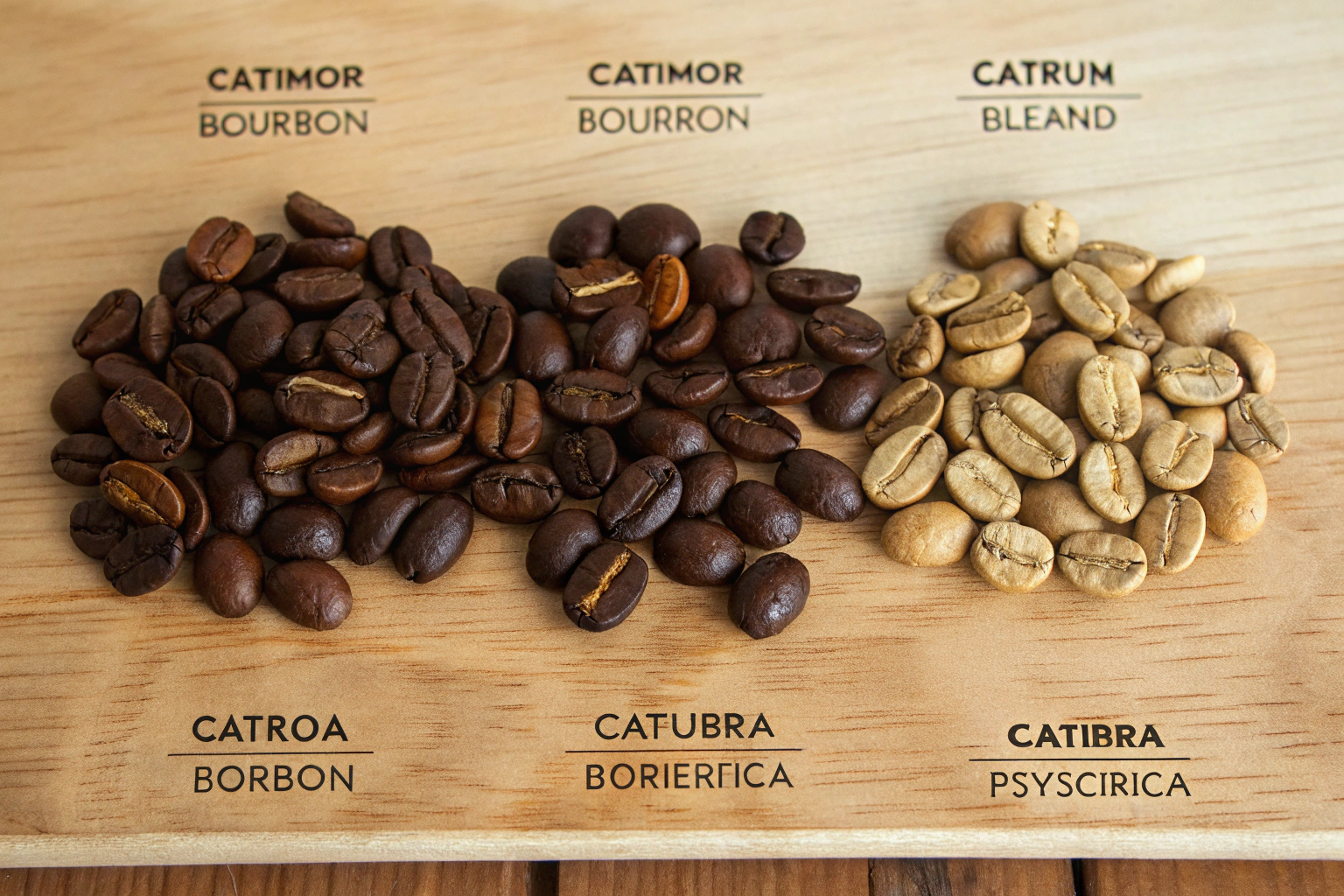
The best Arabica varieties for espresso blends are those with a naturally heavy body, low to medium acidity, and a sweetness structure that caramelizes well during roasting. Catimor, Bourbon, Caturra, and Typica are the workhorses of the espresso world. Catimor provides dense body and chocolate notes at a competitive price. Bourbon and Caturra add creamy sweetness and nuttiness. Typica brings a clean, classic base. The art is not in finding the single best variety. It is in combining them.
At BeanofCoffee, we grow Catimor and other varieties on our 10,000-acre farm in Baoshan. We have spent years dialing in the specific processing methods that make our Arabica sing in an espresso cup. Let me walk you through the varieties, their specific espresso strengths, and how to blend them into something unforgettable.
Why Is Catimor a Rising Star in Espresso Blends?
A barista at a competition in Tokyo pulled a shot of our single-origin Baoshan Catimor. The judges tasted it blind. They wrote "dark chocolate, hazelnut, heavy body, long finish." They assumed it was a classic Brazilian Pulped Natural. They were shocked when the reveal said "China, Catimor." That moment crystallized what I have been telling buyers for years. Catimor, when grown at altitude and processed correctly, is an espresso monster. It just needed someone to take it seriously.
Catimor is rising in espresso blends because it delivers an exceptionally heavy, syrupy body and a clean, chocolate-driven sweetness at a price point that allows roasters to build margin. Its natural low acidity means it can handle a darker roast without becoming bitter charcoal. For milk-based espresso drinks—lattes, cappuccinos, flat whites—Catimor is the anchor that holds the coffee flavor through the milk.
The genetic heritage of Catimor is part of its espresso advantage. It is a hybrid of Caturra and Timor Hybrid. The Timor Hybrid parent gives it robusta lineage. That robusta lineage is usually a dirty word in specialty. But for espresso, that robusta distant relative is a gift. It provides body, crema stability, and an earthy sweetness that pure Arabica sometimes lacks.
What Flavor Profile Does High-Altitude Catimor Bring to a Shot?
Low-altitude Catimor can be harsh. Grassy. Astringent. But high-altitude Catimor, grown above 1,400 meters like our lots in Baoshan, is a completely different bean. The cold nights slow the cherry maturation. The bean gets denser. The sugar content increases. The harsh, green notes fade. What emerges is a deep, malty sweetness.
When I cup our high-altitude washed Catimor, the dominant note is always dark chocolate. Not milk chocolate. Not cocoa powder. Real, dark, 70% cacao chocolate. Behind that is a nutty layer. Roasted hazelnut. Almond brittle. The acidity is malic, like a red apple skin. It is gentle. It does not poke you. It just provides a subtle backbone.
In an espresso shot, this profile translates into a thick, coating mouthfeel. The crema is dense and persistent. The World Coffee Research sensory lexicon describes these chocolate and nutty notes as key drivers of consumer preference. The shot tastes like a dessert, even without milk. Add 6 ounces of steamed milk, and the coffee still punches through. That is the Catimor promise. Not delicate beauty. Dependable, delicious power.
How Does Roast Level Transform Catimor's Espresso Performance?
Light-roasted Catimor in espresso is a mistake. I have tried it. The shot tastes underdeveloped, malty in a bad way, like uncooked grain. Catimor needs heat. It needs development. A medium to medium-dark roast, what many call a Full City or a light Vienna, is where Catimor shines.
At this roast level, the natural sugars in the dense bean fully caramelize. The malic acidity softens into a gentle, baked-apple warmth. The dark chocolate note intensifies into a fudge-like richness. The body becomes even heavier. The shot pulls with a tiger-stripe crema and a syrupy drip.
Roasters who push Catimor into a true dark, oily roast will find a coffee that stands up to it without turning to ash. This is rare. Many high-acidity Arabicas, like Kenyans or Ethiopians, become bitter, smoky shells at a dark roast. Catimor does not. It keeps its chocolate core. This makes it incredibly versatile for Italian-style espresso blends that require a longer, hotter roast profile. The Specialty Coffee Association roast profile guide emphasizes this varietal-specific roast matching. You do not roast a Catimor like a Geisha. You roast it like it wants to be roasted.
How Do Bourbon and Caturra Contribute to Espresso Complexity?
Our farm in Baoshan has a small plot of Bourbon. It is our prized section. The trees are older. The yield is lower. The cherries are smaller. But the cup quality is incomparable. When I blend our Bourbon with our Catimor, something magical happens. The Catimor provides the heavy, chocolatey canvas. The Bourbon paints on it with bright, creamy, sweet brushstrokes. The blend becomes more than the sum of its parts.
Bourbon and Caturra varieties contribute sweetness, balance, and creamy mouthfeel to espresso blends. Bourbon is famous for its classic, refined sweetness and buttery body. Caturra, a natural mutation of Bourbon, offers a slightly brighter acidity and lighter body, making it an excellent top-note variety to lift a heavy base. Together, they add the complexity that a single-variety Catimor or Brazil base might lack.
These varieties are the soul of traditional Central and South American espresso blends. They are not as heavy as Catimor. They are not as wild as Ethiopian heirlooms. They are the elegant, balanced center. A blend without them often feels one-dimensional. Heavy but dull. Sweet but boring.
Why Is Bourbon Considered the "King" of Espresso Sweetness?
Bourbon plants produce fewer cherries than high-yield hybrids. That lower yield means the tree channels more sugar and nutrients into each cherry. The result is a bean with a naturally higher sucrose content. That sucrose, when roasted, caramelizes beautifully. It does not just create a generic sweetness. It creates a specific, buttery, caramel-cream sweetness.
In an espresso shot, Bourbon's texture is unmistakable. It is not just heavy. It is silky. It coats the tongue like melted butter. The acidity is citric but soft. Think of a ripe tangerine, not a sharp lemon. This creamy, silky quality is what makes a straight Bourbon espresso such a luxurious experience.
When you blend Bourbon into a Catimor base, you are adding this silkiness. The Catimor body becomes less heavy and more plush. The finish becomes cleaner. The sweetness lingers longer. This is the difference between a good espresso blend and a great one. A good blend satisfies. A great blend makes you pause, put down the cup, and take another sip just to check if the first sip was real. Bourbon does that.
How Can Caturra Brighten a Dark, Heavy Espresso Base?
Caturra is often described as Bourbon with the volume turned up on acidity and turned down on body. It is a lighter, brighter bean. On its own as an espresso, it can be too sharp. Too thin. But as a blending component, it is invaluable.
Imagine a blend that is 60% Catimor and 40% Bourbon. The Catimor dominates the body and the chocolate notes. The Bourbon adds the creamy sweetness. It is good. Very good. Now imagine swapping 10% of that Bourbon for Caturra. Just 10%. The Caturra adds a tiny, bright spark at the top of the flavor arc. A hint of dried cherry. A whisper of lemon zest. The blend is no longer just "chocolate and nuts." It is "chocolate with a secret."
This is the complexity that espresso judges look for. A layered experience. The heavy base is the foundation. The creamy sweetness is the middle. The bright acidity is the roof. A well-constructed blend with Caturra has all three dimensions. At BeanofCoffee, we sometimes add a small percentage of a bright Caturra lot to a custom blend request for a buyer who wants their espresso to have "a little something extra."
What Is the Ideal Espresso Blend Ratio Using Yunnan Arabica?
A roaster in Melbourne asked me for a blend recommendation. He wanted a house espresso that was 80% Yunnan, showcasing the origin. I told him to be careful. Yunnan Arabica, especially our Catimor, is powerful. Too much, and the blend becomes monolithic. No complexity. Just a wall of chocolate. I recommended a starting point of 60% Yunnan Catimor as the base, 30% a sweet Bourbon or Caturra for creaminess, and 10% a bright African for top notes. He tried it. It became his best-selling blend.
The ideal espresso blend ratio using Yunnan Arabica starts with a 50% to 60% base of washed Yunnan Catimor for body and chocolate depth. Then it layers in 30% to 40% of a sweet, balanced variety like Bourbon or a clean Brazilian for mid-palate creaminess. Finally, it adds 10% to 20% of a high-acidity, fruity coffee, such as an Ethiopian Natural or a bright Caturra, to provide aromatic lift and complexity.
This is not a rigid formula. It is a starting framework. The exact ratios depend on your roast profile and your target flavor. But the principle is constant. Yunnan provides the power. The other components provide the grace. A pure Yunnan espresso is a statement. A blended Yunnan espresso is a business.

How Should You Structure a Three-Bean Blend with Yunnan as the Base?
Let's break down a specific, actionable three-bean blend structure. Bean One is the base. This is your 60% Yunnan washed Catimor, roasted to a Full City. It gives you the dark chocolate fudge, the syrupy body, and the long, clean finish. It is the reliable backbone.
Bean Two is the sweetener. This is 30% of a washed Bourbon from a classic origin, or if you want to stay fully Asian, a high-grown washed Catimor processed specifically for brightness. This bean provides the creamy, buttery texture and the caramel sweetness. It fills in the mid-palate where the base bean might be a bit hollow.
Bean Three is the accent. This is 10% of a natural processed coffee with intense fruit. An Ethiopian Yirgacheffe natural, with its blueberry and strawberry notes, works brilliantly. So does a natural processed Yunnan Arabica from a farm that does clean anaerobic fermentations. This tiny 10% does not dominate. It just peeks through at the beginning of the sip. A burst of red berry. A hint of jasmine. Then the chocolate and caramel wash over it.
This three-bean structure is a proven winner. It scores well in competitions. It works as a straight shot and as a milk base. The Barista Guild espresso blend design principles emphasize this layered structure. The base carries. The sweetener balances. The accent surprises.
Can a Single-Origin Yunnan Espresso Compete with Blends?
A barista champion in China won a regional competition using a single-origin, natural-processed Yunnan Bourbon as her espresso. The judges were stunned. She did not need a blend. The coffee had it all. A heavy, syrupy body from the high altitude. A complex, winey acidity from the natural process. A dark chocolate finish from the variety. It was a complete espresso, straight from one farm.
Can a single-origin Yunnan compete? Yes. But it requires a very specific lot. It must be a high-altitude, carefully processed micro-lot, usually a natural or honey process, not a standard washed. The processing must add the fruit complexity that a blend normally provides through different beans. The roast must be perfectly tuned. This is not an everyday, production espresso. It is a showcase espresso.
For a roaster, a single-origin Yunnan espresso is a powerful marketing tool. It tells a complete story. "This espresso is from one farm, one mountain, one harvest." That narrative commands a premium. But it requires a consistent, exceptional lot. That is what we try to produce at BeanofCoffee with our top micro-lots. They are not for volume buyers. They are for the roaster who wants to win competitions and charge a premium.
How Does Processing Method Change a Variety's Espresso Suitability?
A washed Catimor and a natural Catimor from the same farm, same harvest day, taste like different species. The washed is clean, chocolatey, and focused. The natural is wild, fruity, and heavy. Same bean. Different processing. The decision of how to process the coffee is just as important as the decision of which variety to plant. For espresso, processing is not a minor detail. It is a fundamental flavor architect.
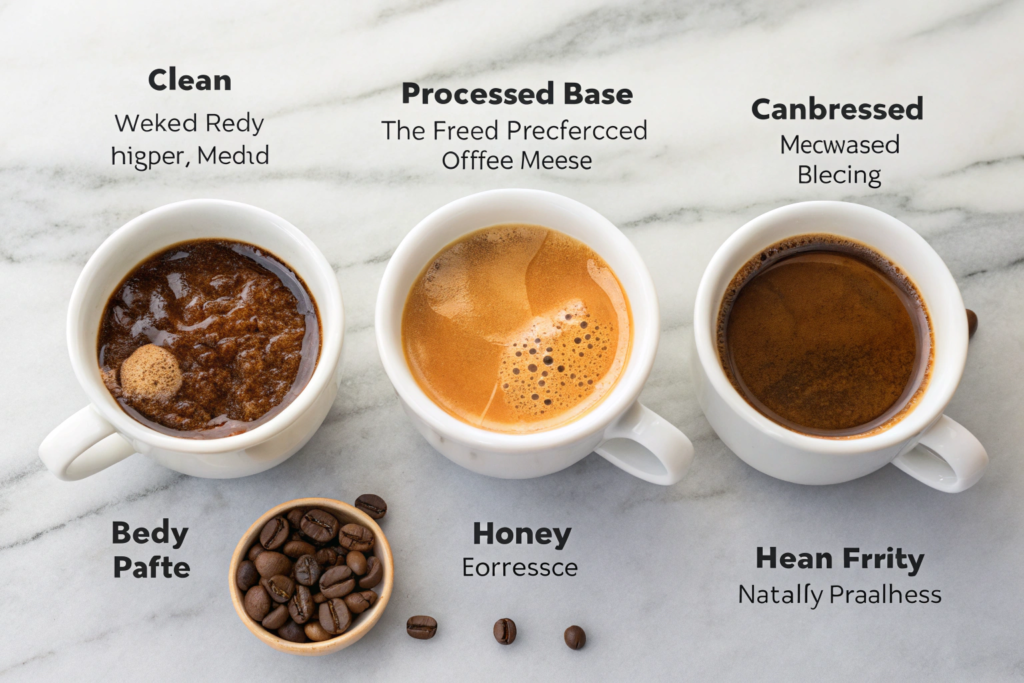
The processing method profoundly reshapes a coffee variety's body, acidity, and flavor complexity, directly impacting its role in an espresso blend. Washed processing produces a clean, crisp, transparent cup that works best as a base. Honey processing adds body and a caramelized sweetness ideal for the mid-palate. Natural processing creates heavy, fruity, complex cups that work as accent beans. Choosing the right process for the espresso function is as critical as choosing the right variety.
At our Baoshan farm, we process the same Catimor cherry in three different ways for three different espresso functions. This is not an academic exercise. It is a product development strategy. We are engineering the flavor profile at the processing stage.
What Happens When You Use a Natural Processed Catimor in Espresso?
Natural processed Catimor is a different animal. The cherry is dried with the fruit still attached. The bean soaks up the sugars and the fruit character from the mucilage over several weeks. The result is a coffee that tastes fermented, fruity, and intensely heavy.
When I pull a shot of our natural Catimor, the first thing I notice is the aroma. It smells like strawberry jam and dark chocolate. The shot is thick. Almost chewy. The flavor is a mix of dried berries, baking spices, and a deep, molasses-like sweetness. The acidity is winey. It is not a clean, transparent shot. It is a loud, messy, beautiful shot.
Use a natural Catimor in your espresso blend at 10% to 20%. It will transform a boring, clean base into something exotic. Too much natural, and the blend tastes fermented, over-fruity, and unstable. The natural is a spice. Not the main course. A research paper on processing effects on coffee flavor from the Food Science journal confirms that natural processing increases body, sweetness perception, and volatile fruit compounds. For espresso, these changes are a powerful blending tool.
Why Is Washed Processing Still the Gold Standard for Espresso Bases?
Washed processing is the gold standard for espresso bases because it delivers consistency, cleanliness, and transparency. A washed coffee tastes like the bean, not like the fermentation. You taste the variety. You taste the terroir. You get a clean, stable, predictable flavor profile.
For a base bean that makes up 60% of your blend, predictability is everything. You need that chocolate note to be there, every batch, every week. Washed Catimor delivers that. It is a known quantity. It does not have wild, funky fruit notes that drift from harvest to harvest. It is the steady, reliable partner in your blend.
The clean profile of a washed base also allows the accent beans to shine. If your base is already wild and fruity, adding an Ethiopian natural creates a confusing, muddy shot. A clean washed base provides a silent canvas. The accent bean paints the color. This is why, despite all the exciting new processing methods, washed coffee remains the foundation of the world's great espresso blends. It is not trendy. It is essential.
Conclusion
The best Arabica varieties for espresso are not the highest cupping scores. They are the varieties with body, low acidity, and a sweetness that loves heat. Catimor, especially high-altitude Yunnan Catimor, is a powerhouse base. Bourbon is the sweet, creamy heart. Caturra is the bright spark. The magic is in the blend, not the single bean. A 60% Catimor base, 30% Bourbon sweetener, and 10% natural accent—that is a structure you can build a business on.
Processing changes the game. A washed base provides stability. A honey process adds body. A natural accent explodes with fruit. The roast must match the variety. A light roast kills Catimor. A dark roast murders Bourbon's sweetness. It all connects.
At BeanofCoffee, we grow and process these varieties with espresso in mind. We know what a roaster needs because we cup espresso from our own beans, weekly. We are not just selling green coffee. We are building the ingredients for your signature shot.
If you are developing a new espresso blend and want to explore what Yunnan Arabica can bring to it, contact us. We can ship you samples of our washed Catimor base, our honey Bourbon, and our natural micro-lots. Experiment. Find your ratio. Contact Cathy Cai at cathy@beanofcoffee.com. She will put together a sample box based on your target flavor profile. Your next award-winning espresso might start in a cupping room in Baoshan.