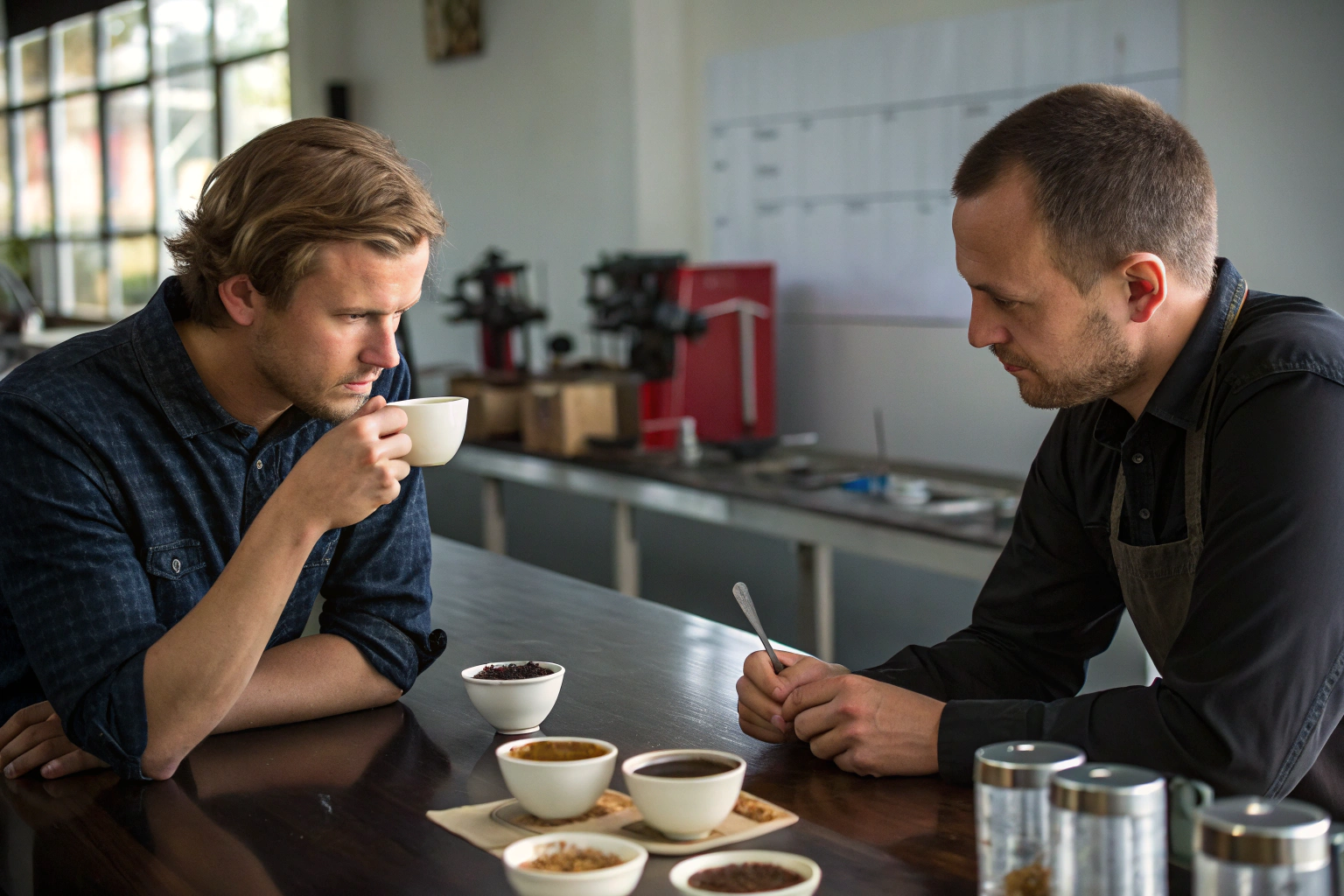
A buyer from Amsterdam once told me, over a cupping session in our Baoshan lab, that he switched suppliers every two years. "It keeps them competitive on price," he said. I put down my spoon. I looked at him. I did not argue. I just asked him one question: "How much better could your blend be if a farmer had been saving his absolute best micro-lot for you, specifically, for five years?" He stared at his cupping bowl. He had never tasted that hypothetical lot. Because that lot does not exist without a long-term relationship. It requires trust built over years. Not a contract renegotiated every 24 months.
Building a long-term relationship with coffee farmers requires a structural commitment that goes beyond price and contracts. It is built on five pillars: consistent, multi-year purchasing commitments, direct and transparent communication, shared investment in quality improvement, fair and timely financial practices, and genuine personal presence at the farm level. This is not charity. It is strategic sourcing. A farmer who trusts you will call you first when the exceptional lot appears. They will work overtime to fix a quality issue for you. They will not sell your contracted coffee to a higher spot bidder.
At BeanofCoffee, we are both the farmer and the exporter. We have been the farmer waiting for a buyer to commit. We have been the exporter trying to keep a long-term partnership alive through a difficult harvest. I have seen what works from both sides of the table. This is not theory. This is what I have learned on the ground in Baoshan.
Why Does Transactional Buying Fail to Secure the Best Lots?
A trading company in Singapore once offered us a spot price for our top anaerobic lot. The price was high. Higher than our contracted buyer's price. They wanted the coffee immediately. Cash. No long-term commitment. Just a one-time deal. We said no. Not because we are saints. Because the contracted buyer had been with us for four years. They had visited our farm. They had sent their roaster to train our processing team. They had never once tried to squeeze us on a 10-cent price swing. The transactional offer was tempting. But the relationship was more valuable. The trading company got a standard lot. Our partner got the gem.
Transactional buying fails because it treats coffee as a interchangeable commodity and farmers as interchangeable suppliers. It prioritizes short-term price optimization over long-term quality access. The farmer, in response, prioritizes short-term volume over long-term quality improvement. Both parties optimize for the single transaction, not the shared future. The result is a race to the middle. Average coffee. Average prices. No loyalty.
A transactional buyer always sees the coffee that is available to everyone. The generic lot. The standard grade. The relationship buyer sees the coffee that is never publicly offered. The reserved micro-lot. The experimental process. That access is the competitive advantage that no spot market can replicate.

How Does Price-Only Negotiation Damage Trust Over Time?
I remember a painful conversation with a European buyer a few years ago. The C-market had dropped 15% in a month. He emailed me, asking to renegotiate our contracted price downward. Our contract was signed. The coffee was already processed and bagged. He argued that his end-customers would demand lower prices. I understood his pressure. But his problem was not my problem. Our cost to produce that coffee had not dropped 15%. Fertilizer, labor, and transport had all stayed the same.
When a buyer reopens a signed contract because the market moved in their favor, they communicate one thing: "My profit margin matters more than our agreement." The farmer remembers this. The next time that buyer needs a rush order, or a favor, the farmer remembers. The next time a competing buyer offers a slightly higher price, the farmer remembers. The contract is just paper. Trust is the real enforcement mechanism.
Price-only negotiation also ignores the farmer's cost structure. A good buyer asks, "Is this price sustainable for you?" A transactional buyer just says, "This is my target." The difference is enormous. The Sustainable Coffee Challenge partnership principles explicitly name fair pricing as a prerequisite for long-term supply security. If your farmer is losing money, they will not be your farmer next year.
What Hidden Costs Come with Constantly Switching Suppliers?
Switching suppliers looks cheap on a spreadsheet. A new supplier offers a lower FOB price. You save $0.15 per pound. Great. What the spreadsheet does not show is the hidden cost of qualifying that new supplier. The samples. The cupping. The video calls at strange hours. The contract negotiation. The anxiety of the first shipment. The potential quality deviation. The new logistics chain you have to debug.
I have watched roasters spend $5,000 of their own time and travel budget to save $3,000 on a container of coffee. It makes no economic sense. A stable relationship eliminates these switching costs entirely. The quality is known. The logistics are known. The communication rhythm is known. The transaction is efficient.
A stable supplier also finances some of your risk for you. We extend informal credit terms to buyers we have known for years. We prioritize their shipments when vessel space is tight. We hold safety stock for them in our warehouse without a formal contract. These are financial benefits that a new supplier would never offer. They do not appear on the invoice. But they are real. And they are valuable.
How Can You Create a Mutually Beneficial Partnership Model?
A roaster in Melbourne proposed something unusual a few years ago. Instead of a fixed-price contract, he proposed a floor price with a profit-sharing bonus. If he sold his roasted coffee above a certain margin, we would get a percentage. If the market crashed, we still had a guaranteed floor. I thought it was complicated. But I agreed to try it. That year, the floor price saved us when the C-market dipped. The next year, the profit share paid us a bonus when his blend won a national award. We celebrated together. That is a partnership.
A mutually beneficial partnership model aligns the financial incentives of the farmer and the roaster toward the same goal: a high-quality, well-marketed coffee that commands a premium in the final market. This alignment can take the form of multi-year price bands, profit-sharing agreements, joint investment in processing equipment, or pre-harvest financing. The common thread is shared risk and shared reward.
The traditional buyer-seller model is adversarial. The buyer wants the lowest price. The seller wants the highest price. The partnership model flips this. Both parties want the highest final value, and then they negotiate how to share it. This is a fundamentally different conversation.
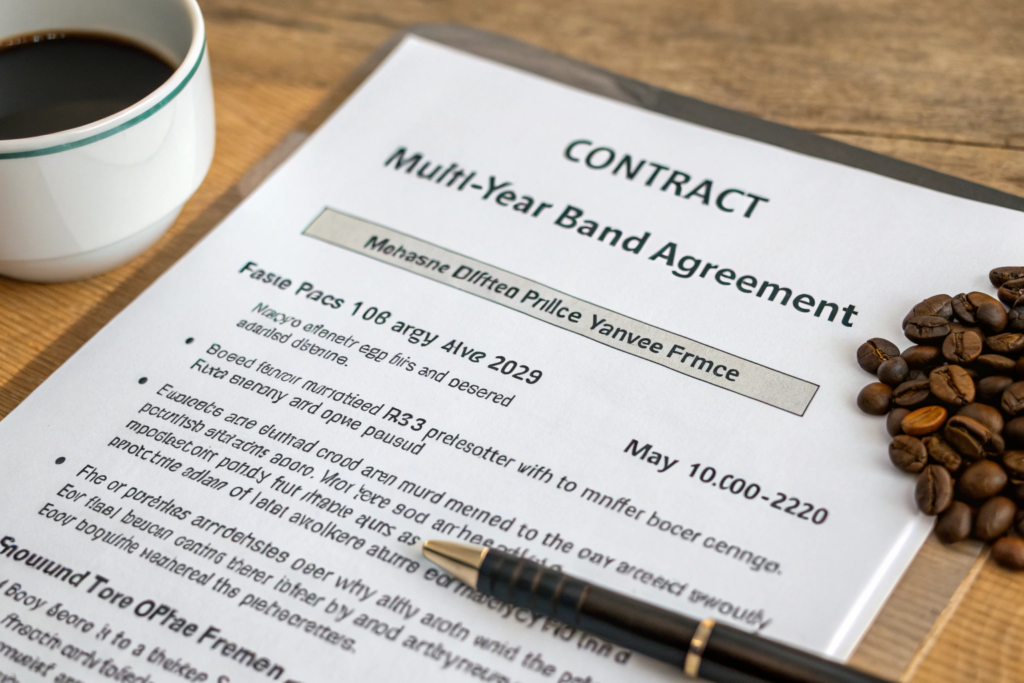
What Is a Multi-Year Price Band and How Does It Work?
A multi-year price band is a contract structure that sets a minimum and maximum price per pound for a defined quality grade, valid for two to three harvest cycles. The minimum protects the farmer when the market crashes. The maximum protects the roaster when the market spikes. The price floats within that band based on the actual cupping score and the cost of production.
For example, a three-year band for an 84-point Yunnan washed Arabica might have a floor of $3.20 FOB and a ceiling of $3.80 FOB. If the C-market plus differential would price the coffee at $2.80, the roaster still pays $3.20. The farmer survives. If the market spikes to $4.20, the roaster still pays $3.80. The roaster survives. Both parties sacrifice a bit of upside to eliminate the downside.
This model requires trust and transparency. The farmer must open their cost books. The roaster must share their margin structure. This can feel uncomfortable. But that discomfort is the foundation of a real partnership. At BeanofCoffee, we have offered price bands to a few long-term partners. The contracts are more complex to draft. The relationships are vastly more stable.
How Can Joint Investment in Processing Equipment Benefit Both Sides?
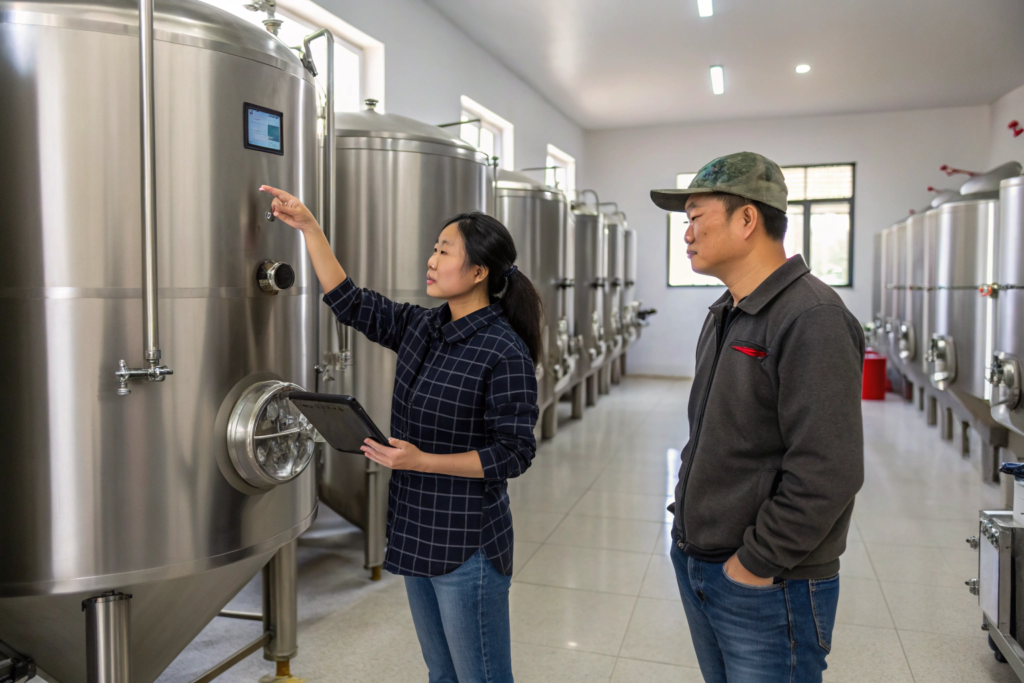
A roaster in Texas wanted a very specific flavor profile from our Catimor. He asked if we could experiment with a yeast-inoculated anaerobic fermentation. We had the tanks. But we needed a temperature-controlled room to manage the process precisely during the hot Yunnan summer. The room cost $8,000.
He offered to pay for half of it. Upfront. In exchange, he got exclusive first-right-of-refusal on the coffee produced from that room for three years. We accepted. The room now produces our most awarded lots. It attracts other buyers who see the quality. His initial $4,000 investment created an asset that generates value for him every harvest. And for us, it expanded our processing capability without full capital risk.
This is the essence of partnership investment. The roaster puts capital into the farm's infrastructure. The farm dedicates the output or a preferential allocation to that roaster. Both parties own the improvement. The Specialty Coffee Association's value chain investment models highlight this type of joint capital project as a high-impact relationship builder. It tangibly demonstrates commitment beyond a purchase order.
What Communication Practices Build Trust Across Continents?
A buyer in London emails me once a month. Not to place an order. Not to complain. Just to ask how the farm is doing. "How are the flowering rains?" "Did your daughter finish her university exams?" These emails take me two minutes to answer. But they mean something. When his order is delayed by a week, I do not see his name on my phone and feel dread. I see it and feel a responsibility to fix the problem fast. The relationship is human before it is commercial.
Cross-continental trust is built through consistent, proactive, and personal communication. It requires a cadence of regular updates, complete transparency during problems, and a genuine curiosity about the other party's context. The communication technology is easy—WeChat, WhatsApp, Zoom. The discipline to use it regularly and honestly is the hard part.
Most supplier relationships fail in the silence between orders. The buyer goes quiet. The farmer goes quiet. The only communication is a purchase order and an invoice. Silence breeds suspicion. Regular contact breeds familiarity. And familiarity is the soil where trust grows.
Why Is Proactive Problem Communication More Important Than Perfect Execution?
A container of our washed Arabica had a moisture issue last year. A batch at the bottom of the dryer had been slightly under-dried. We caught it during our pre-shipment quality check. The moisture was 12.5%, not the contracted 11.5%. The coffee was still safe. But it was not to spec.
I had two choices. I could ship it, hope the buyer did not test it rigorously, and deal with a potential claim later. Or I could call the buyer, explain the mistake, and offer a solution. I called. I told him exactly what happened. I offered a 5% discount on that portion of the lot. He accepted. He also thanked me for the honesty. He said, "I trust you more now than if the coffee had been perfect."
Proactive problem communication transforms a negative event into a trust-building moment. The buyer sees that you prioritize their long-term satisfaction over your short-term avoidance of an uncomfortable conversation. A hidden problem always gets discovered eventually. The discovery always damages trust more than the original problem. The Harvard Business Review's research on trust repair confirms that early, full disclosure is the most effective strategy. Own the mistake before the buyer finds it. You control the narrative. You demonstrate integrity.
How Often Should You Visit the Farm in Person?
A buyer once told me he had sourced from a Colombian farm for eight years and had never visited. "I trust their samples," he said. I asked him if he had ever seen their drying beds. No. Their fermentation tanks. No. Their worker housing. No. He was buying a product. He was not in a partnership.
In-person farm visits are not tourism. They are due diligence. They are relationship deepening. A single visit, where you walk the farm, cup on the patio, and share a meal with the farmer's family, builds more trust than five years of emails. You see the farm with your own eyes. You understand the terrain, the micro-climate, the logistical challenges. You are no longer an abstract email address. You are the person who came.
I recommend visiting your key origin partners at least once every two years. The visit does not need to be during harvest. Off-harvest visits show you care about the farm as a year-round operation, not just as a seasonal supplier. You can discuss next year's plans. You can see the pruning and fertilizing work that determines the next crop's quality. The cost of the trip is a fraction of the value of a deepened, resilient partnership. At BeanofCoffee, the buyers who visit Baoshan are the ones who stay with us the longest. The mountain roads, the hot pot dinners, the early morning cupping sessions—these shared experiences are the real contract.
What Financial Practices Cement Farmer Loyalty?
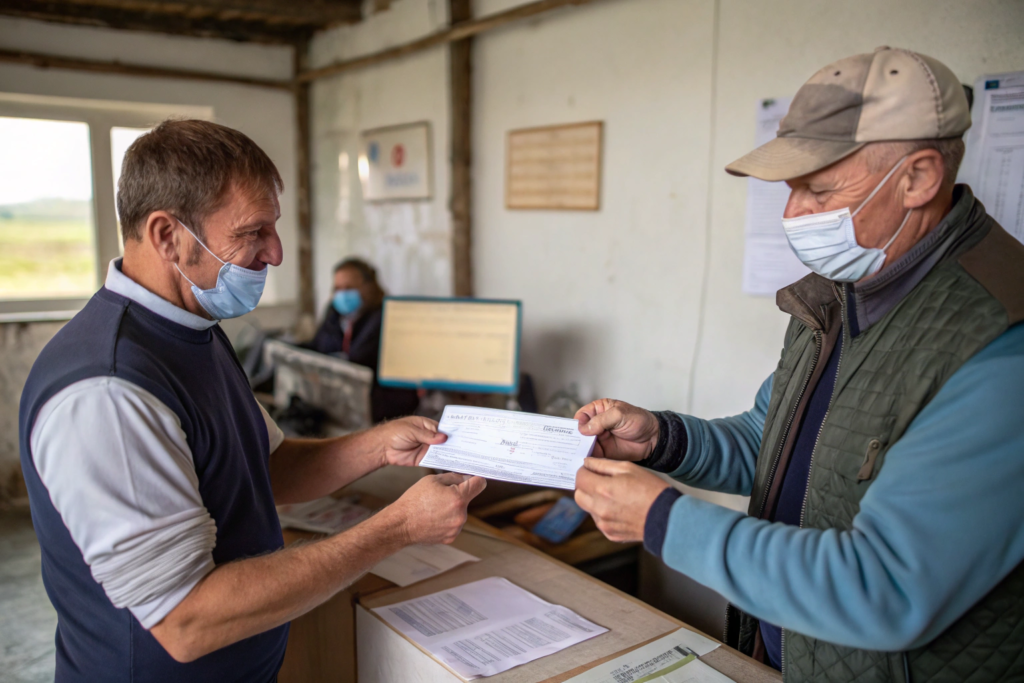
During the pandemic, a long-term buyer in Germany paid our invoice in full, two weeks before the vessel even departed Shanghai. He said, "I know cash flow is tight right now. Use this to pay your pickers." I almost cried. Not because the money was life-saving, but because the gesture was so deeply human. He understood that a farmer's biggest stress is not the harvest. It is the cash flow gap between paying workers and receiving export payment. His early payment meant we could pay our seasonal workers on time, with bonuses. Those workers returned the next harvest. They remembered.
Financial practices that cement farmer loyalty include timely payments, pre-harvest deposits, flexible credit during emergencies, and price transparency. These practices recognize that farmers operate on thin margins with seasonal cash flow. A buyer who respects this financial reality earns a level of loyalty that no price premium can buy.
The coffee supply chain is a river of money flowing from consumer to farmer. The speed, reliability, and fairness of that flow determine the health of the relationship. Slow payments, surprise deductions, or price renegotiations are financial toxins.
How Does Pre-Harvest Financing Strengthen the Supply Chain?
Pre-harvest financing is a simple concept. The buyer advances a portion of the contract value—typically 20% to 30%—several months before the harvest. The farmer uses this capital to buy fertilizer, pay for pruning labor, and cover the upfront costs of preparing for the harvest. The advance is deducted from the final shipment invoice.
This practice does several things. It reduces the farmer's reliance on high-interest local loans. It ensures the crop is well-maintained in the critical pre-harvest period. It binds the buyer and farmer together in a shared commitment to the harvest's success. The buyer has skin in the game. The farmer is not just selling coffee. They are fulfilling a trust.
Pre-harvest financing also gives the buyer priority access. If the harvest is short and multiple buyers want the same lot, the buyer who financed the crop gets the coffee. This is understood. It is not written into every contract. But it is the unwritten law of fair partnership. The Root Capital impact reports on agricultural lending demonstrate how pre-harvest financing improves both farmer livelihoods and buyer supply security.
Why Are Timely Payments a Competitive Advantage in Sourcing?
A farmer in the next valley from our farm once told me about a buyer who consistently paid 60 days late. The coffee was delivered. The quality was perfect. The paperwork was clean. The buyer just had a slow accounts payable department. The farmer still sold to them, but he sold his "B" lot. He reserved his "A" lot for a Japanese buyer who paid within 7 days of the Bill of Lading.
Timely payment is not just courteous. It is a competitive sourcing advantage. Farmers talk. In a region like Baoshan, the coffee farming community is tight. A buyer who pays promptly develops a reputation. That reputation attracts the best lots. Farmers proactively offer their top-quality coffee to the buyer they know will pay quickly and without drama.
Conversely, a slow payer is known within a season. The best coffee gets quietly diverted to more reliable buyers. The slow payer gets the coffee that meets the contract specification, but never the exceptional micro-lot that was not required to be offered. The payment terms in the contract are a minimum. The spirit of the payment behavior determines the spirit of the supply.
Conclusion
A long-term relationship with a coffee farmer is not a marketing slogan. It is a sourcing strategy that compounds in value every year. It starts with abandoning the transactional mindset. Stop optimizing for the cheapest container this quarter. Start optimizing for the best lot next harvest. Build a partnership model that shares risk and reward, so the farmer is incentivized to grow quality, not just volume. Communicate like a human, not a procurement department. Visit the farm. Share a meal. Tell the farmer about your roastery, your customers, your dreams. Pay on time, or early, and consider pre-harvest financing if you can. These financial gestures speak louder than any contract.
At BeanofCoffee, we live this philosophy from both sides. As farmers, we know which buyers deserve our best beans. As exporters, we help our international clients build genuine, durable connections with our farm team. We translate the partnership model across language and culture.
If you want a supplier who thinks in years, not containers, let's start a conversation. Come visit us in Baoshan. Walk the farm. Cup the lots. Meet the families who grow your coffee. If you cannot visit, we will bring the farm to you through video calls, transparent reports, and honest updates. Contact Cathy Cai at cathy@beanofcoffee.com. Tell her about your roastery and your sourcing philosophy. She will connect you with the right person on our team. A great coffee relationship, like a great coffee, takes time to develop. But the flavor is worth the wait.