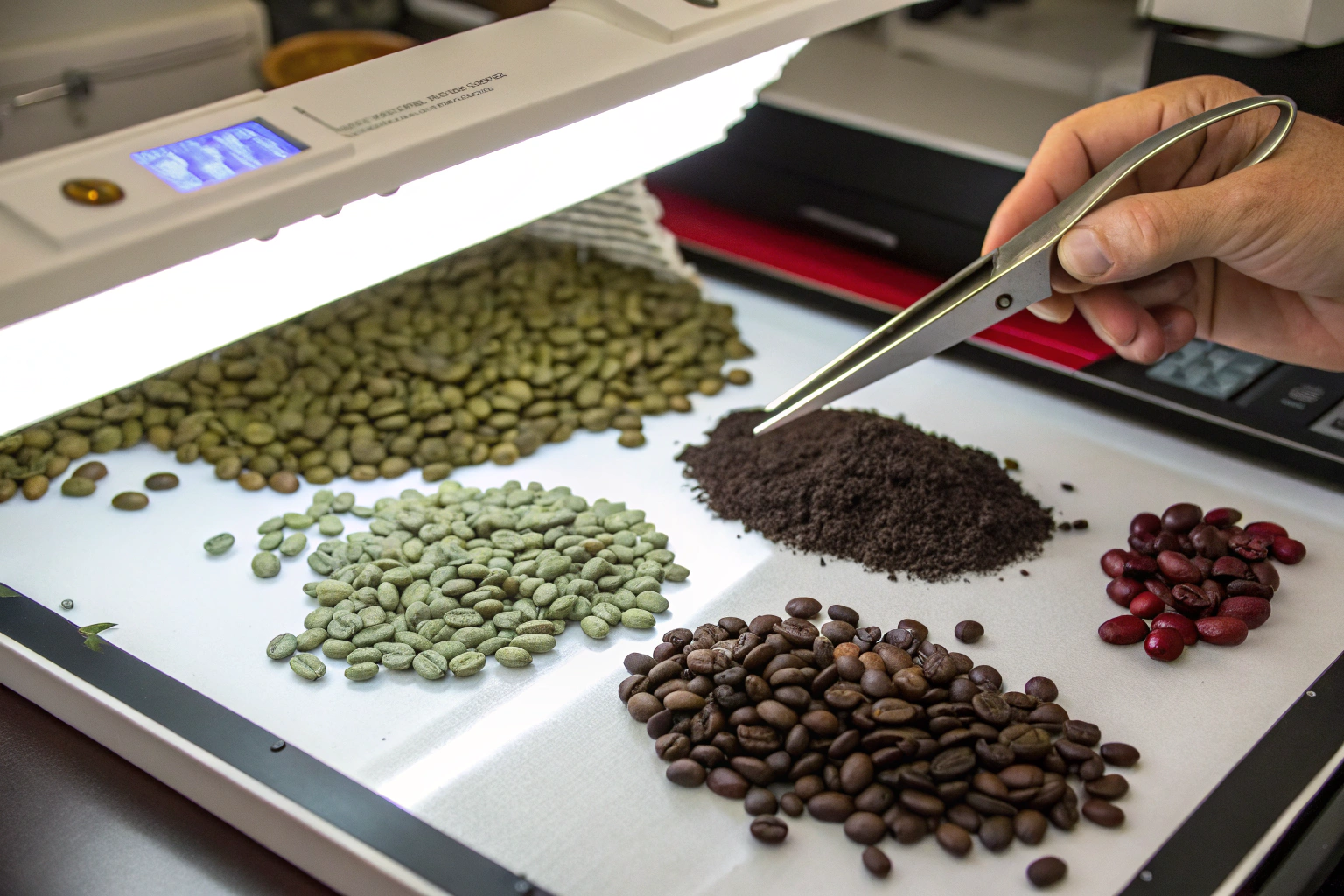
I nearly lost a major client once because of an over-fermented lot. It was a natural processed Catimor from a lower-altitude plot. We had an unexpected rain during drying. The cherries sat damp for two days. The cupping score had been borderline. We shipped it anyway. Big mistake. The roaster called me two weeks later. "Half the bags smell like vinegar. The other half taste flat and sour. What happened?" I knew immediately. Over-fermentation. I had missed the signs before shipment. I should have caught it.
That experience changed how I inspect every lot that leaves our warehouse. Over-fermentation is one of the most common and damaging defects in specialty coffee. The frustrating thing is that it is often preventable—or at least detectable—before the coffee ever reaches a roaster's drum. You just need to know what to look for. The green bean tells the story if you know how to read it.
You can identify over-fermented coffee before roasting by inspecting the green beans for a reddish-brown or dark brown tint, a sour or vinegary dry fragrance, an abnormally low density, and a soft, crumbly texture—all of which indicate that uncontrolled microbial activity has damaged the bean's cellular structure and produced excess acetic and butyric acids.
These visual, olfactory, and physical checks take only a few minutes with a sample. They can save you from roasting a batch of defective coffee, blending it into your production, and damaging your brand with customers who taste the ferment and never come back.
What Visual Cues Reveal Over-Fermented Green Beans?
The first line of defense against over-fermented coffee is your eyes. Before you grind, before you cup, before you roast—look at the green beans carefully under good light. The signs are there.
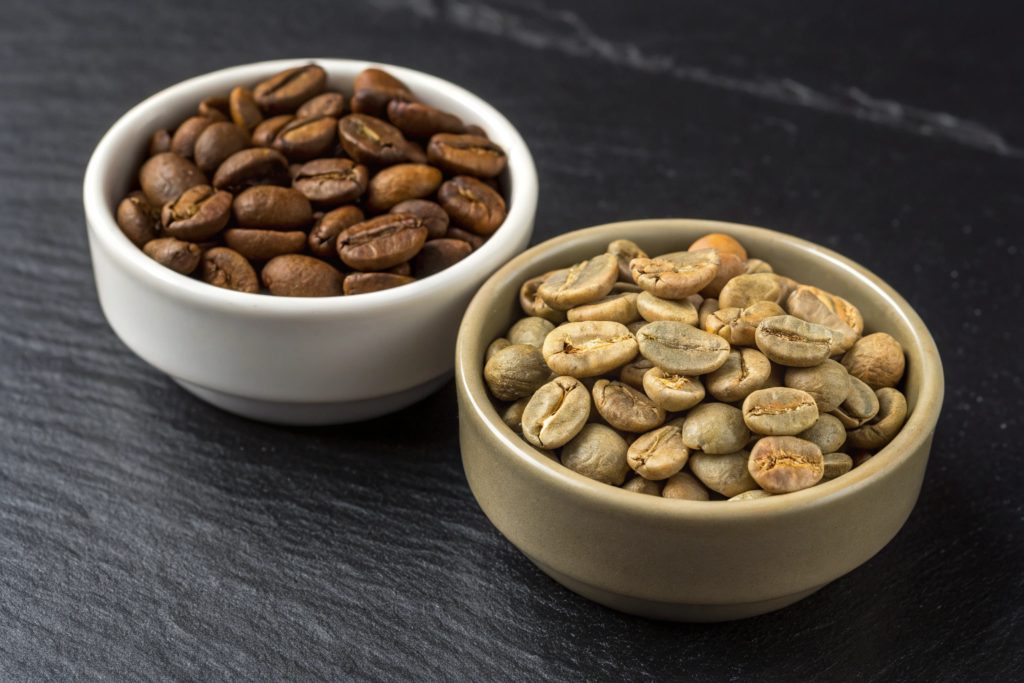
A healthy washed Arabica bean is a uniform blue-green to jade green color. The surface is clean and smooth. The center cut is pale and tight. A healthy natural Arabica bean is slightly more varied in color but still shows a range of green to yellow-green hues. Uniformity matters. A lot where every bean looks similar in size, shape, and color is a lot that was processed consistently.
Over-fermented beans lose this uniformity. The color shifts from green to brownish, reddish, or amber tones. This color change is caused by the breakdown of chlorophyll and the oxidation of organic compounds during excessive microbial activity. Think of an apple slice left on the counter. It browns. Over-fermented coffee does the same thing, only inside the bean.
The most reliable visual indicators of over-fermentation are a reddish-brown or "foxy" discoloration on the bean surface, an uneven mottled appearance across the lot, darkened and widened center cuts, and in severe cases, beans that appear partially black or shriveled.
The center cut tells a particularly useful story. On a healthy bean, the center cut is a thin, pale line running along the flat side. On an over-fermented bean, the center cut often darkens. It may look brown or black. It may widen or look frayed. This indicates that fermentation byproducts penetrated deep into the bean's interior, not just the surface.
What Do "Foxy" Beans Indicate About Fermentation Levels?
The term "foxy" in coffee grading refers to beans with a reddish-brown or rusty discoloration. It is one of the most common visual defects associated with over-fermentation.
Foxy beans result from the oxidation of iron-containing compounds in the bean during prolonged exposure to moisture and microbial activity. The process is similar to rust formation on metal. The bean literally rusts internally. The reddish tint is a chemical marker of excessive fermentation.
Not all foxy beans are created equal. A few slightly foxy beans in a lot may be acceptable if the cup is still clean. A lot with widespread foxing is almost certainly over-fermented and will cup with sour, vinegary, or rotten notes. The threshold depends on the percentage of affected beans.
I train my sorting team to flag any lot where more than five percent of beans show foxy discoloration. At that level, the cupping score almost always drops below 80 points. The lot is not specialty grade. It should not be sold as such. For reference grading standards that include foxy bean definitions, the Green Coffee Association defect handbook provides detailed color photographs and classification guidelines.
How Does Bean Density Change with Over-Fermentation?
Density is a physical measurement that tells you what happened inside the bean during fermentation. Over-fermented beans are less dense than properly fermented beans of the same variety and altitude.
The reason is cellular damage. During normal fermentation, the mucilage is broken down and removed. The bean's cell walls remain intact. The bean dries evenly and retains its compact structure. During over-fermentation, the microbial activity does not stop at the mucilage. It begins to attack the bean itself. Enzymes break down pectin in the cell walls. Acids corrode the cellulose structure. The bean becomes softer, more porous, and less dense.
You can measure this with a simple density meter, also called a bulk density tester. Fill a one-liter container with green beans and weigh them. A healthy high-grown Arabica should weigh 700 to 750 grams per liter. An over-fermented lot of the same origin and variety might weigh 650 grams per liter or less. The difference is noticeable.
A practical field test: take a handful of beans and squeeze them. Healthy green beans are hard. They resist pressure. You cannot crush them between your fingers. Over-fermented beans feel softer. They give slightly when squeezed. In severe cases, you can actually crush them with moderate pressure, and they crumble rather than cracking cleanly. For more technical information on bean density measurement, World Coffee Research has published protocols used in variety trials.
What Aromas in Green Coffee Signal a Defect?
Your nose can detect over-fermentation before your mouth ever touches the coffee. Green coffee should not smell like much. It has a mild, grassy, vegetal aroma. Some washed coffees smell faintly of fresh hay or green tea. Some natural coffees have a subtle fruity sweetness. None of them should smell aggressive, sour, or chemical.
Over-fermented green coffee announces itself immediately when you open the sample bag. The aroma is sharp and unpleasant. Vinegar is the most common note. Acetic acid, produced by bacteria during excessive fermentation, smells exactly like white vinegar. If the green coffee smells like a salad dressing, it is over-fermented.
The unmistakable olfactory signatures of over-fermented green coffee are sharp vinegar notes indicating acetic acid overproduction, fermented fruit or rotten banana notes from esterification, and in severe cases, a nail polish remover scent indicating ethyl acetate buildup from advanced microbial spoilage.
A fermented fruit note is another warning sign. This is not the pleasant, jammy fruit of a well-processed natural. It is the heavy, overripe, slightly rotten smell of fruit that has sat in a bowl too long. It smells sweet but in a decaying way. The aroma makes you pull back slightly, not lean in.
In the worst cases, the coffee smells like nail polish remover. This is ethyl acetate, a volatile ester produced by yeast under stress. A faint hint of fruitiness might be fine. A strong solvent-like smell is not. The coffee is spoiled. It will not roast out. It will not cup out. It is waste.
Why Does Over-Fermented Green Coffee Smell Like Vinegar?
Vinegar is acetic acid. Acetic acid is produced by acetic acid bacteria, primarily from the genus Acetobacter. These bacteria are present everywhere—in the air, on the cherry skin, in the fermentation tank. They consume ethanol and convert it to acetic acid. This is the same biological process that turns wine into vinegar.
In a normal washed fermentation, the production of ethanol and acetic acid is minimal and controlled. The fermentation is stopped before significant acid buildup occurs. In over-fermentation, the process runs too long or at too high a temperature. The Acetobacter population explodes. Acetic acid levels spike. The bean absorbs the acid. The vinegar smell becomes permanent.
A small amount of acetic acid is normal. It contributes to perceived acidity in the cup. But the threshold is low. Beyond a certain concentration, the acidity shifts from pleasant and winey to harsh and vinegary. The defect is not fixable. Roasting burns off some of the volatile acetic acid, but enough remains in the bean to taint the cup.
If you open a green coffee sample and the vinegar smell hits you, do not roast it. Do not blend it. Reject it. The cupping will only confirm what your nose already knows. For more on fermentation acid chemistry, the Coffee Quality Institute provides sensory calibration resources that cover acid-related defects.
Can You Smell the Difference Between Over-Fermentation and Aging?
This is a common confusion. Aged coffee and over-fermented coffee can both smell flat and slightly sour. But the aromas are distinct.
Aged green coffee smells papery, dusty, and stale. It is a dry, flat smell, like old books or a cardboard box left in an attic. There is no sharpness. No vinegar. No fermented fruit. Just emptiness. The coffee has lost its volatile aromatics over time, but it has not produced new, unpleasant ones.
Over-fermented green coffee smells active and aggressive. It is sour, sharp, and sometimes fruity or chemical. The aroma is not empty. It is full of unpleasant compounds that were actively produced by microorganisms. It hits your nose immediately and unpleasantly.
You can train your nose to distinguish these with practice. Take a known fresh, clean sample. Take a known aged sample. Take a known over-fermented sample. Smell them side by side repeatedly. Your brain will learn the difference. This training is invaluable for anyone who buys green coffee regularly. Many green coffee defects can be identified by smell alone before any roasting or cupping occurs.
How Does Quick Testing Confirm Suspected Over-Fermentation?
Visual inspection and smell will catch most over-fermented lots. But sometimes the signs are subtle. The color might be slightly off. The aroma might be faintly fruity but not obviously vinegar. You are not sure. In these cases, quick physical and sensory tests can confirm your suspicion before you invest time in a full roast and cupping.
The first quick test is a hot water soak. Take about 50 grams of green coffee. Put it in a bowl or French press. Pour boiling water over the beans. Let them steep for five minutes. Then smell the water and the wet beans. The hot water releases volatile compounds trapped inside the bean. If the coffee is over-fermented, the aroma will be much more pronounced than the dry fragrance. Vinegar, ferment, or chemical notes will bloom out of the cup clearly. This test takes ten minutes and requires no roasting equipment.
The second quick test is a density check. As discussed earlier, over-fermented beans are less dense. Measure the bulk density with a one-liter container and scale. If the density is significantly below the expected range for that origin and altitude, over-fermentation or other structural damage is likely.
A simple hot water soak test on green beans rapidly confirms over-fermentation by releasing trapped volatile acids that produce a distinct vinegar or rotten fruit aroma, while a bulk density measurement below 680 grams per liter for high-grown Arabica signals the cellular breakdown characteristic of excessive microbial activity.
The third quick test is a fracture test. Take ten beans. Place them on a hard surface. Press down firmly with the flat side of a heavy knife or a metal tamper. Healthy beans crack cleanly with a sharp sound and shatter into hard fragments. Over-fermented beans crush softly and crumble into smaller pieces. The difference in sound and texture is immediately obvious.
What Is the Hot Water Soak Test and How Reliable Is It?
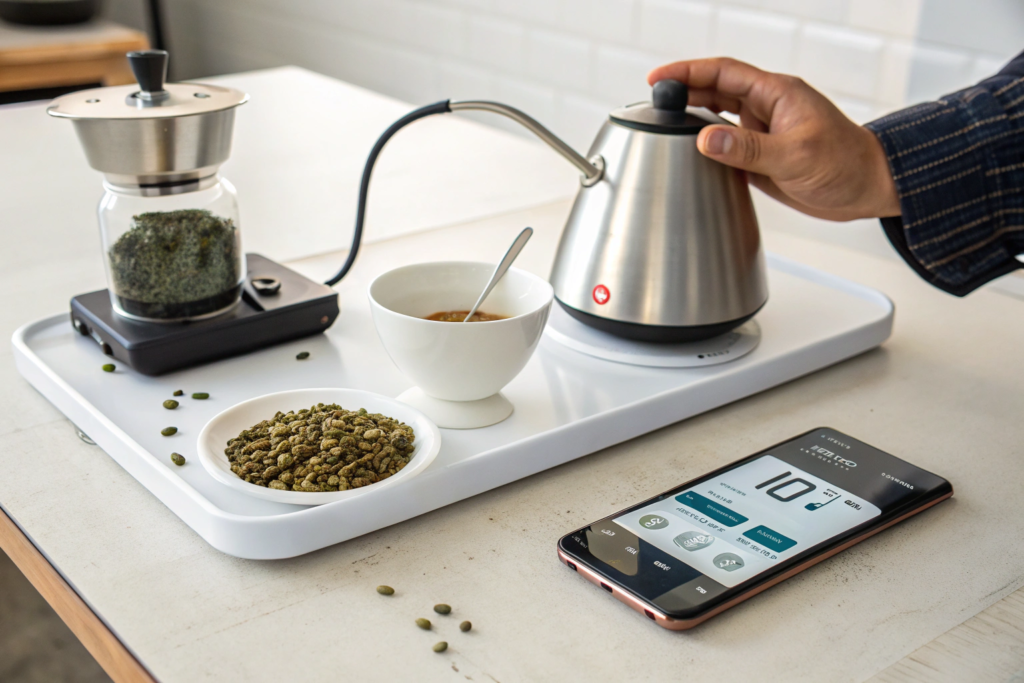
The hot water soak test is the fastest, most accessible method for confirming over-fermentation without roasting. I use it at the cupping table when I have a sample that looks suspicious but I am not fully sure.
The procedure is simple. Weigh 50 grams of green coffee. Place it in a clean glass or ceramic vessel. Pour 200 milliliters of water just off boil—around 95 degrees Celsius—over the beans. Cover the vessel. Let it steep for five minutes. Remove the cover. Smell immediately.
The hot water extracts water-soluble compounds from the green bean, including acetic acid, butyric acid, and other fermentation byproducts. The heat volatilizes these compounds. The steam carries them to your nose. If the coffee is over-fermented, the aroma is unmistakable—vinegar, rotten fruit, or solvents. There is no ambiguity. The smell is not subtle.
The reliability of this test is high for moderate to severe over-fermentation. A lot that smells clean in the hot water soak is unlikely to show major ferment defects in the cup. A lot that smells offensive in the soak will cup offensive. The test is less reliable for very mild over-fermentation, where the defect may only appear after roasting. But for screening purposes—deciding whether to reject a lot outright or proceed to roasting and cupping—the hot water soak is a valuable tool.
I have used this test to quickly evaluate lots offered to me by smallholder farmers. In ten minutes, I can tell them whether the lot has potential or is unfortunately spoiled. It saves time, saves money, and saves the heartbreak of cupping a coffee that was doomed from the drying bed.
How Quickly Does Over-Fermented Coffee Fade After Roasting?
This is a cruel feature of over-fermented coffee. Sometimes a lightly over-fermented lot cups okay immediately after roasting but then collapses within days or weeks.
The volatile acids and esters that cause the ferment flavor are unstable. Some evaporate after roasting. But the cellular damage remains. The roasted bean is more porous than a healthy bean. Oxygen enters faster. Lipids oxidize more quickly. The coffee stales at an accelerated rate. A healthy roasted coffee might hold its peak flavor for two to four weeks. An over-fermented roasted coffee might taste flat, sour, and old within five to seven days.
This delayed defect is particularly dangerous for roasters who sell retail bags. The coffee tastes acceptable when they cup it post-roast. They bag it. It sits on a shelf for a week. The customer brews it at home and tastes stale, sour coffee. The roaster never knows there was a problem because they only cupped the fresh roast.
I recommend that any lot with borderline fermentation indicators be cupped again seven to ten days after roasting. If the cup has deteriorated significantly, the lot is over-fermented, and it should not be sold as specialty grade. The short shelf life will damage your brand even if the initial cup was passable. This is a lesson I learned the hard way and now apply rigorously to every lot that raises even a slight concern during green inspection.
Conclusion
Over-fermented coffee is a preventable disaster if you know what to look for before the beans ever touch a roaster. The green beans tell the story through their color, their density, their smell, and their response to simple tests like the hot water soak. A lot that shows reddish-brown discoloration, a soft crumbly texture, a vinegar aroma, and a low bulk density is not going to roast into a clean, balanced cup. It will taste sour, fermented, and unpleasant.
The cost of catching over-fermentation at the green stage is a few minutes of inspection and a rejected sample. The cost of missing it is a spoiled roast batch, a damaged blend, and a loss of customer trust. The calculus is simple. Build green coffee inspection into your sourcing workflow as a non-negotiable step.
Train your team to recognize the visual and olfactory signs. Keep reference samples of known defects for training. Run the hot water soak test on any borderline lot. Cup the coffee again a week after roasting if there is any doubt. These habits will protect your quality and your reputation.
If you want to practice your green coffee evaluation skills with properly processed, clean Yunnan lots—or if you want to see examples of common defects so you can learn to identify them—contact Cathy Cai at BeanofCoffee. She can send you a reference kit with both clean samples and documented defect samples for training purposes. She can also provide cupping scores, moisture data, and fermentation documentation for every lot we ship, so you have full transparency before any coffee leaves our warehouse. Her email is cathy@beanofcoffee.com. She responds quickly and supports buyers who want to deepen their green coffee evaluation expertise.