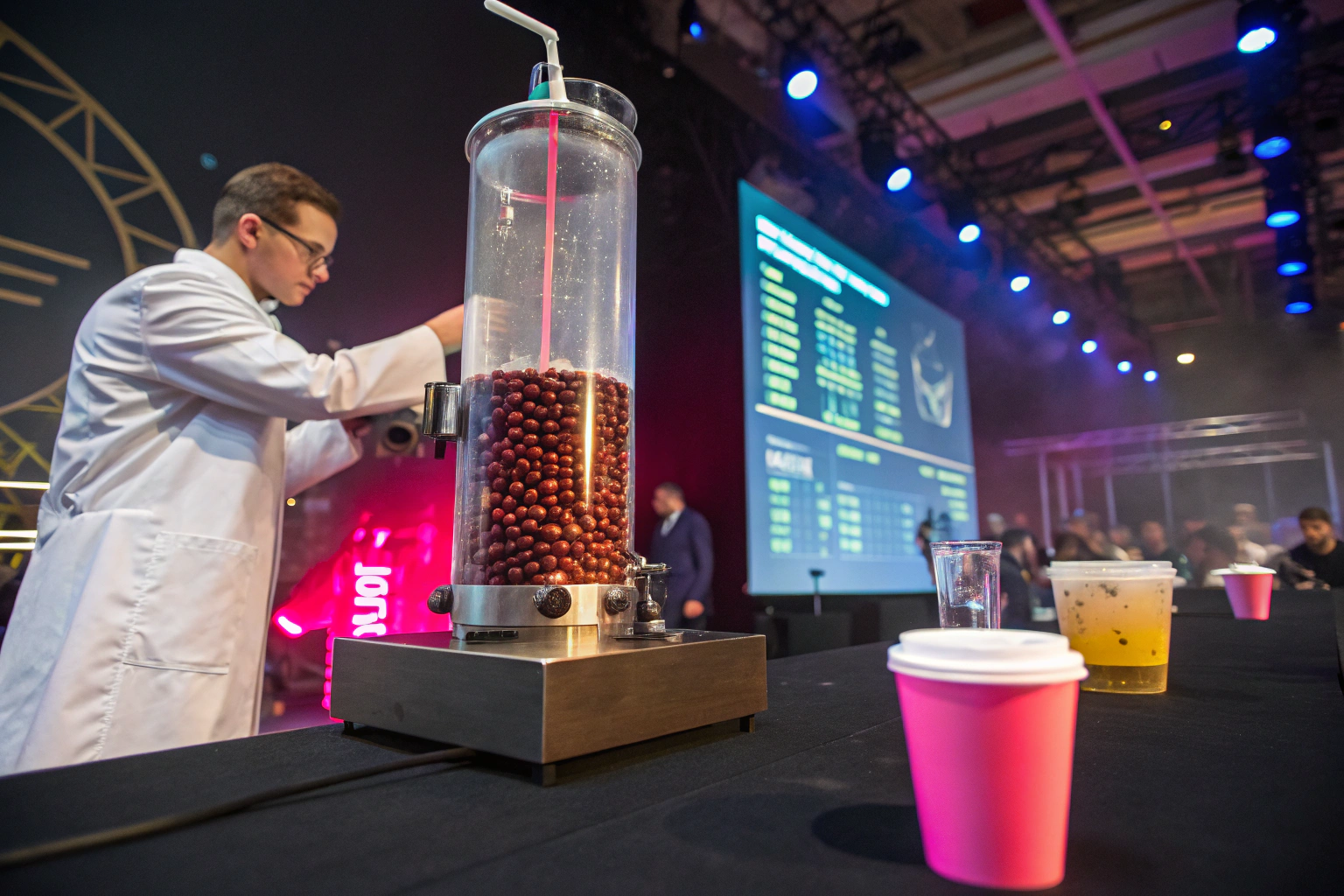
Last year, I watched a World Barista Championship routine. The competitor from Costa Rica presented an anaerobic yeast-fermented Geisha. He described the yeast strain—Saccharomyces cerevisiae, specifically selected for ester production. He showed fermentation charts. He explained how the yeast metabolized specific mucilage sugars into pineapple and passionfruit aromatics. The judges cupped the coffee. Their faces lit up. The score was astronomical.
A fellow producer sitting next to me leaned over. "Five years ago, no one talked about yeast at competitions. Now it feels like every finalist has a custom fermentation story." He was right. The competition landscape has shifted dramatically. Yeast fermentation is no longer a curiosity. It has become a strategic advantage for competitors who want to present a coffee that tastes unlike anything the judges have ever experienced.
Experimental yeast fermentations dominate coffee competitions because precisely selected yeast strains can be engineered to produce specific, intense aromatic compounds that standard wild fermentations cannot reliably create, giving competitors a unique, repeatable, and sensorily explosive coffee that scores exceptionally high on the competition cupping table.
This is not about making coffee taste weird for the sake of weirdness. It is about using microbiology to control flavor outcomes with a precision that traditional processing cannot achieve. Let me explain how it works, why it scores so high, and what it means for coffee buyers who are not competing but want extraordinary coffee.
What Happens During a Controlled Yeast Fermentation?
Standard washed coffee fermentation relies on whatever microorganisms happen to be present on the cherry skin, in the water, and on the tank walls. It is a wild fermentation. The microbial community is complex and unpredictable. Yeasts, bacteria, and fungi compete for the sugars in the mucilage. The outcome is generally clean and pleasant, but it is not controlled. The specific flavor compounds produced vary from batch to batch.
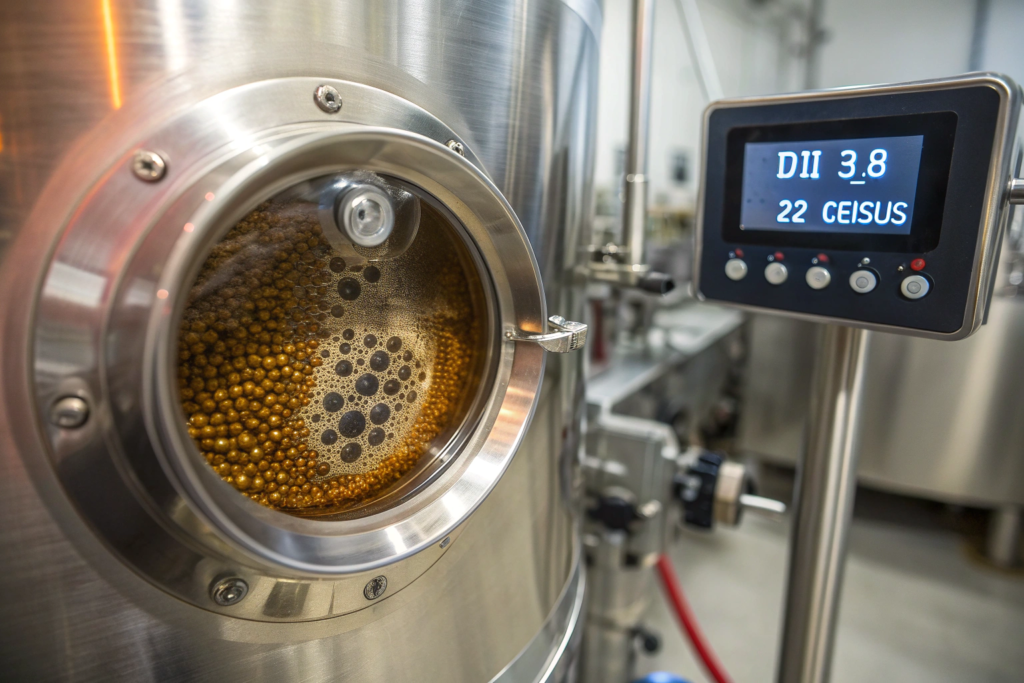
Controlled yeast fermentation changes this completely. The producer sterilizes the tank. The pulped coffee is loaded in. A specific yeast strain, cultured in a laboratory and shipped as a dried powder or liquid inoculant, is added to the tank. This yeast strain has been selected or bred for specific metabolic traits. It might be a strain known to produce high levels of isoamyl acetate, which smells like banana. Or a strain that produces ethyl butyrate, which smells like pineapple. The inoculated yeast dominates the fermentation. The wild microorganisms are outcompeted. The flavor outcome is directed by the genetics of the yeast.
Controlled yeast fermentation replaces the unpredictable microbial community of wild fermentation with a single, selected yeast strain that predictably converts mucilage sugars into target aromatic compounds, allowing producers to design specific flavor profiles at the fermentation stage rather than simply revealing terroir.
The fermentation is monitored precisely. Temperature is held constant, usually between 20 and 25 degrees Celsius. The pH is tracked. The duration is predetermined based on the yeast strain's metabolic curve. When the target pH and flavor development are reached, the fermentation is stopped. The coffee is washed and dried. The result is a lot that tastes like the yeast was programmed to make it taste.
How Are Yeast Strains Selected for Coffee Fermentation?
The yeasts used in experimental coffee fermentation are not random. They come from culture collections maintained by research institutions and biotechnology companies. Many of the strains were originally isolated from wine, beer, or fruit fermentations. They were selected for their ability to produce specific desirable aromas in those beverages. Coffee producers have adapted them for mucilage fermentation.
The selection process starts with screening. A producer or a consultant tests multiple yeast strains on small batches of coffee. Each batch is fermented identically except for the yeast strain. The dried coffees are cupped blind. The strains that produce the most interesting, intense, and pleasant aromas are selected for larger trials.
Some yeast strains are now commercially available specifically for coffee fermentation. Companies like Lallemand and Fermentis sell dried yeast products marketed to coffee producers. The strains have names like "Intense Fruit" or "Citrus Burst." They come with technical data sheets that specify optimal temperature ranges, fermentation durations, and expected flavor outcomes. The industrialization of coffee yeast is underway.
A detail often missed: the coffee variety and the yeast strain interact. A yeast that produces intense tropical fruit notes on a high-sugar Geisha might produce milder results on a lower-sugar Catimor. The producer must match the yeast to the variety and the target profile. There is no universal "best" yeast. The pairing matters. For more technical information, Perfect Daily Grind has published features on yeast fermentation trials conducted by producers in various origins.
What Flavor Compounds Do Different Yeasts Produce?
Yeasts are chemical factories. They consume sugars and produce a range of volatile organic compounds as metabolic byproducts. The specific compounds depend on the yeast strain.
Saccharomyces cerevisiae, the classic brewing and baking yeast, tends to produce esters. Esters are fruity-smelling compounds. Ethyl acetate smells like pear. Isoamyl acetate smells like banana. Ethyl hexanoate smells like apple. A cerevisiae-fermented coffee can taste explosively fruity, like a tropical fruit basket.
Non-saccharomyces yeasts—like Pichia kluyveri, Torulaspora delbrueckii, or Hanseniaspora species—produce different compound profiles. They may generate higher levels of terpenes, which smell floral and citric. Or they may produce more glycerol, which increases the perception of body and sweetness. Some non-saccharomyces strains produce lower levels of acetic acid, resulting in a softer, rounder acidity.
The compound profile can be analyzed in a laboratory using gas chromatography-mass spectrometry. Some competition competitors actually present GC-MS data showing the specific aromatic compounds present in their coffee. The data proves that the flavor notes on the bag are not just marketing. They are chemically real. For competitors, this scientific validation adds authority and impresses judges. For consumers, it provides a level of transparency that builds trust. More on the science of coffee aromatics can be found at World Coffee Research, which has a sensory science program exploring these compounds.
Why Do Yeast Fermented Coffees Score So High in Competitions?
Competition scoring rewards distinctiveness. The Specialty Coffee Association cupping form has categories for flavor, aftertaste, acidity, body, balance, and overall impression. A coffee that tastes generically pleasant—chocolate, nut, mild citrus—can score well, maybe 84 or 85 points. But it will not win.
To win a national or world competition, a coffee needs to score 88 points or higher. It needs to be extraordinary. It needs to have flavor notes that jump out of the cup and grab the judge's attention. "Intense passionfruit, lychee, and jasmine" will outscore "milk chocolate and almond" every time, assuming the coffee is clean and balanced.
Yeast fermented coffees dominate competition cupping tables because they reliably deliver the intense, specific, and exotic flavor notes—tropical fruit, intense florals, wine-like complexity—that score at the top of the SCA cupping form, giving competitors a sensory weapon that wild fermentation cannot consistently provide.
Consistency matters too. A competitor trains for months. They need a coffee that tastes the same every time they practice. A wild-fermented lot can vary bag to bag. A yeast-fermented lot, if fermented correctly, is highly consistent. The competitor can rely on the coffee performing exactly as expected on stage.
How Does Flavor Intensity Affect Judges' Scoring?
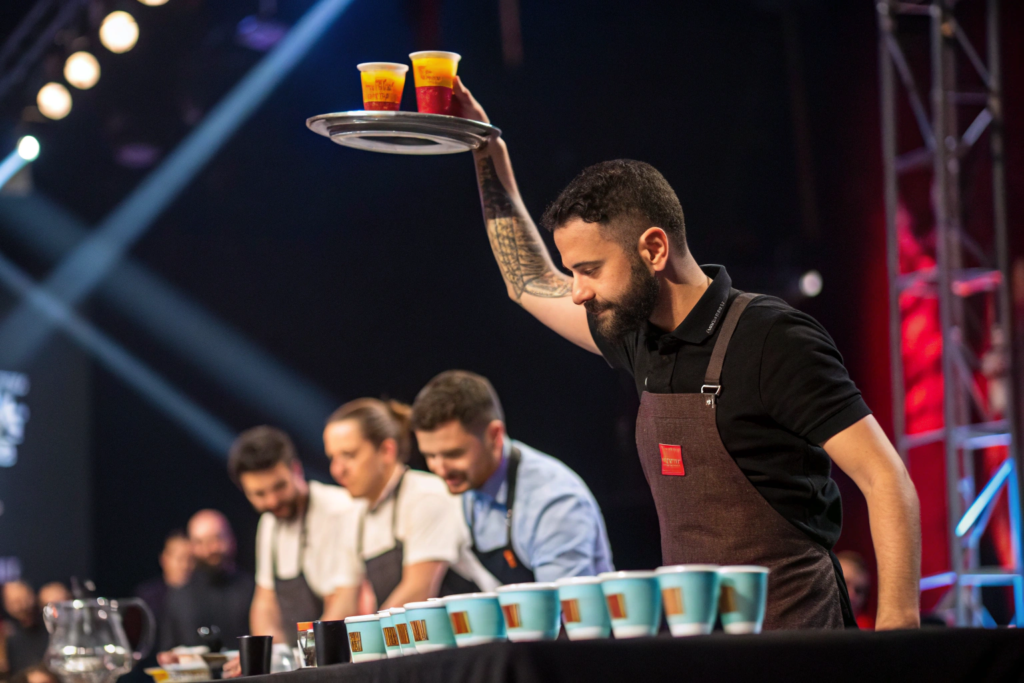
Judges taste dozens of coffees in a competition setting. Palate fatigue is real. After a certain point, clean but mild coffees start to blur together. A coffee with intense, unusual flavors cuts through that fatigue. It wakes the judge up. It is memorable.
The cupping form rewards intensity, but with a caveat. The intensity must be balanced by cleanliness. A wild, over-fermented coffee that tastes like vinegar will score poorly, no matter how intense it is. A yeast-fermented coffee that tastes intensely of passionfruit but is clean on the finish, with no off-notes, will score very well.
Yeast fermentation allows the producer to push the intensity envelope without crossing into defect territory. Because the fermentation is controlled, the risk of off-flavors from wild bacteria is reduced. The coffee can taste wildly fruity while remaining technically clean. That combination—extreme flavor, no defects—is the winning formula.
I have supplied yeast-fermented micro-lots to competitors in national barista championships. They tell me the same thing: the coffee does the work for them. They do not have to convince the judges that there are subtle notes of stone fruit. The notes are obvious, immediate, and undeniable. The judge tastes passionfruit. The judge writes down passionfruit. The score reflects the clarity of the flavor communication.
Can Yeast Fermentation Create a Unique Competition Story?
Competitions are not just about taste. They are about narrative. The competitor must present a compelling story about the coffee—its origin, its producer, its processing, its unique journey from seed to cup.
Yeast fermentation provides rich narrative material. The competitor can talk about the specific yeast strain. They can mention the laboratory where it was cultured. They can describe the fermentation parameters—temperature, pH, duration. They can show data from the fermentation log. They can even share a chemical analysis of the aromatic compounds. The story blends agriculture, microbiology, and sensory science. It sounds innovative and sophisticated. It positions the competitor as knowledgeable and the coffee as cutting-edge.
This narrative advantage is significant. Judges are influenced by the story as well as the taste. A compelling, well-told story that is backed up by verifiable facts enhances the perception of quality. The yeast fermentation story is easier to tell and easier to verify than a vague story about "traditional processing" or "unique terroir."
I have seen competitors build entire routines around a single yeast strain. The strain becomes a character in the story. The fermentation becomes the plot. The cup becomes the climax. The judges are captivated. The scores reflect the full package—taste plus narrative. More on competition trends can be found at the Specialty Coffee Association, which publishes competition archives and winner routines.
How Can Roasters Source Yeast Fermented Coffee from Yunnan?
Sourcing yeast-fermented coffee is different from sourcing standard washed or natural lots. The volumes are tiny. The documentation is technical. The supplier relationship is more collaborative.
First, understand that yeast-fermented lots are micro-lots by nature. Most producers run yeast trials on small batches—50 to 200 kilograms. The yeast itself costs money. The monitoring requires labor. The risk of batch loss, while lower than with wild fermentation, is still present. The producer will not risk a large volume on an experimental fermentation. If you want yeast-fermented coffee, you will be buying micro-lots.
Second, ask for the fermentation documentation. A legitimate yeast-fermented lot has a paper trail. The yeast strain should be named. The inoculation rate should be recorded. The fermentation temperature and duration should be logged. The pH curve should be available. If the producer cannot provide this data, the coffee may be standard anaerobic, not a controlled yeast fermentation.
To source yeast-fermented coffee from Yunnan, work directly with a producer who documents their yeast strains and fermentation protocols, request a cupping sample of the specific micro-lot, and be prepared to pay a significant premium over standard washed lots—typically 1.5 to 2 times the price—for the added microbiology and labor involved.
Third, cup the specific lot. Do not assume that all yeast-fermented coffees taste amazing. Different yeast strains produce different results. Some are spectacular. Some are strange and unpleasant. Your palate is the final judge.
What Questions Should You Ask About the Yeast Protocol?
Here are the six questions I recommend every buyer asks when sourcing a yeast-fermented lot:
First: "What is the name and source of the yeast strain?" A legitimate answer names the species and strain, and the supplier. "Saccharomyces cerevisiae, strain LalBrew Farm from Lallemand" is a real answer. "Special coffee yeast" is not.
Second: "What was the inoculation rate?" The rate is typically measured in grams of dried yeast per kilogram of cherry or pulped bean. It affects the speed and intensity of fermentation. A documented inoculation rate indicates a controlled process.
Third: "What was the fermentation temperature and duration?" Precise numbers, not estimates, are expected. "22 degrees Celsius for 72 hours" is a real answer. "A few days when it was warm" is not.
Fourth: "What was the initial and final pH?" This data shows that the fermentation was monitored. The pH should drop from around 5.5 to between 3.8 and 4.2 for a typical yeast fermentation.
Fifth: "Was the fermentation purely the inoculated yeast, or were wild microorganisms also present?" Some fermentations are co-inoculated with yeast and bacteria. Others are pure monoculture. The answer affects the flavor outcome.
Sixth: "Can I see the drying data for this lot?" Post-fermentation drying is critical. A poorly dried yeast-fermented lot will lose its aromatics or develop mold. The drying log should show slow, controlled drying with even moisture reduction.
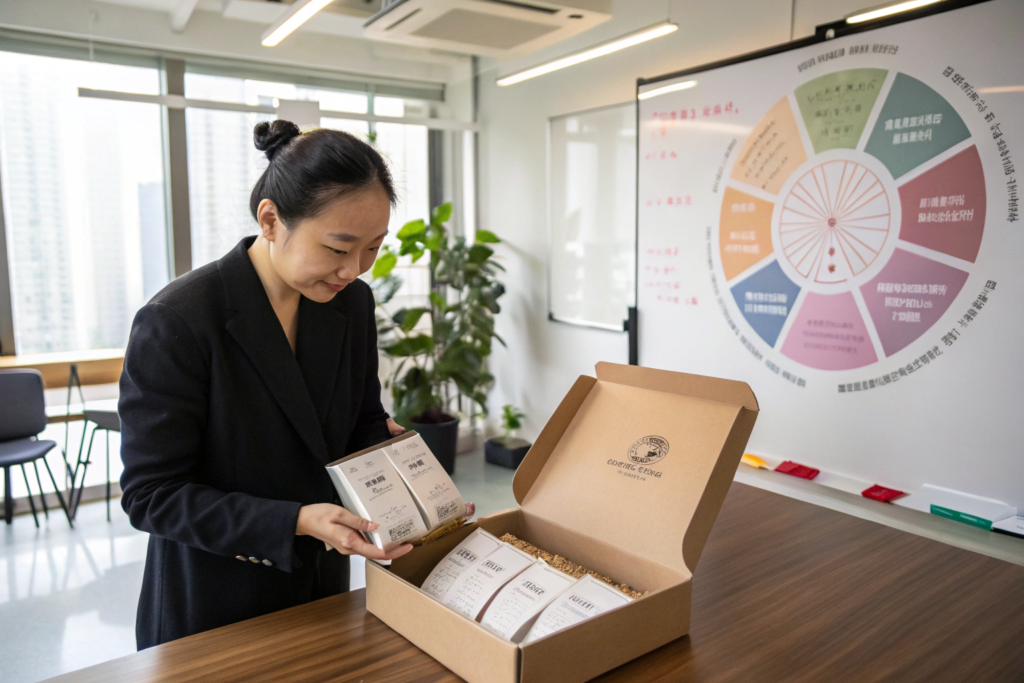
The Shanghai Fumao team provides full fermentation documentation with every yeast-fermented micro-lot. Buyers receive the strain name, the protocol data, the pH curve, and the drying log. There is no mystery about what was done to the coffee.
What Price Premium Should You Expect for Yeast Fermented Micro-Lots?
Yeast fermented coffee is expensive. The premium reflects the cost of the yeast culture, the extra labor for monitoring, the specialized tank infrastructure, and the smaller batch sizes.
Here is a typical price comparison for our Yunnan Catimor processed different ways:
| Processing Method | FOB Price per Pound (USD) | Premium vs. Washed |
|---|---|---|
| Washed | $2.80 - $3.20 | Baseline |
| Natural | $3.20 - $3.80 | 1.2x |
| Anaerobic (wild) | $4.00 - $5.00 | 1.4x |
| Yeast Fermented | $4.50 - $6.00 | 1.6x - 1.9x |
| Carbonic Maceration | $5.00 - $6.50 | 1.8x - 2.0x |
The yeast premium is significant but comparable to other controlled fermentation methods. The retail price must reflect the green cost. A yeast-fermented Yunnan retailing at $28 to $35 per 12-ounce bag is positioned correctly for the specialty market.
The return on investment for a roaster comes from differentiation and customer loyalty. A yeast-fermented coffee is a unique product that cannot be found at every roaster. Customers who try it and love it become repeat buyers. The margin per bag supports the higher green cost.
If you are ready to explore yeast-fermented micro-lots from Yunnan, contact Cathy Cai at BeanofCoffee. She manages our experimental fermentation program and can provide current availability, cupping scores, yeast strain data, and FOB pricing. She can ship samples so you can cup the lots yourself before committing. Her email is cathy@beanofcoffee.com. She responds quickly and will share the full fermentation documentation for any lot you are interested in.
Conclusion
Experimental yeast fermentation has transformed specialty coffee competitions because it provides a level of flavor control, intensity, and narrative sophistication that traditional processing cannot match. A selected yeast strain predictably produces specific aromatic compounds. The resulting coffee tastes explosively fruity, floral, and complex. It scores at the top of the cupping table. It gives competitors a compelling story to tell.
For roasters who are not competing, yeast-fermented coffees offer the same sensory excitement in a retail product. The coffee tastes unlike anything most consumers have experienced. It generates word-of-mouth buzz. It commands a premium price. Sourcing these lots requires working directly with producers who document their protocols and who are willing to share fermentation data.
The future of specialty coffee processing is not wild. It is controlled. Yeast selection, bacterial inoculation, fermentation monitoring—these are tools that will become standard for premium micro-lots. The producers who master them will produce the coffees that define the top end of the market. The roasters who source them will have products that stand out in an increasingly crowded specialty landscape. The coffee tells the rest of the story.