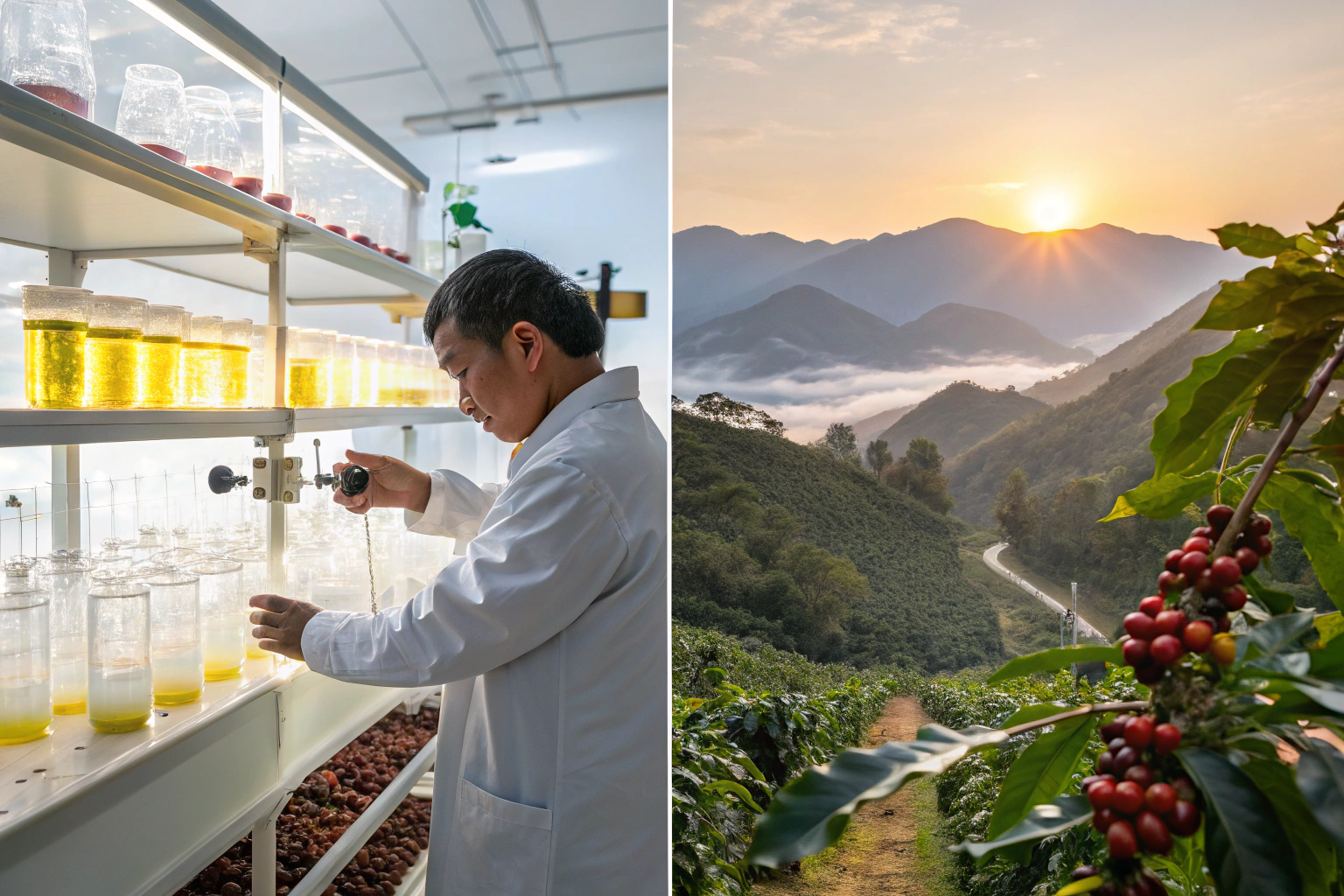
At a trade show last year, a young entrepreneur approached my booth. He did not want to buy coffee. He wanted to tell me that my business would be obsolete in a decade. "Lab-grown coffee will replace farmed coffee," he said confidently. "No climate risk. No supply chain issues. No price volatility. It's just a matter of time and scaling."
I did not argue with him. I asked him if he had ever walked a coffee farm during harvest. He had not. I invited him to Baoshan. He has not taken me up on the offer yet. But our conversation forced me to think seriously about what lab-grown coffee actually means for producers like me and for roasters like you who buy our beans.
Lab-grown coffee, produced through cellular agriculture in bioreactors rather than on trees, will likely capture a segment of the mass commodity market within ten to fifteen years, but it will not replace high-quality specialty Arabica grown at altitude because it cannot currently replicate the complex terroir-driven flavors, the seasonal variety, and the cultural provenance that define the premium coffee experience.
This is not a distant hypothetical anymore. Startups in Europe, Israel, and the United States have already produced the first cups of cell-cultured coffee. Venture capital is flowing. The technology is advancing. But there is a massive gap between producing a brown liquid that contains caffeine and replicating a single-origin Yunnan Catimor grown at 1,600 meters. Let me break down what lab-grown coffee actually is, where the technology stands, and what it means for the future of real coffee.
What Exactly Is Lab Grown Coffee and How Is It Made?
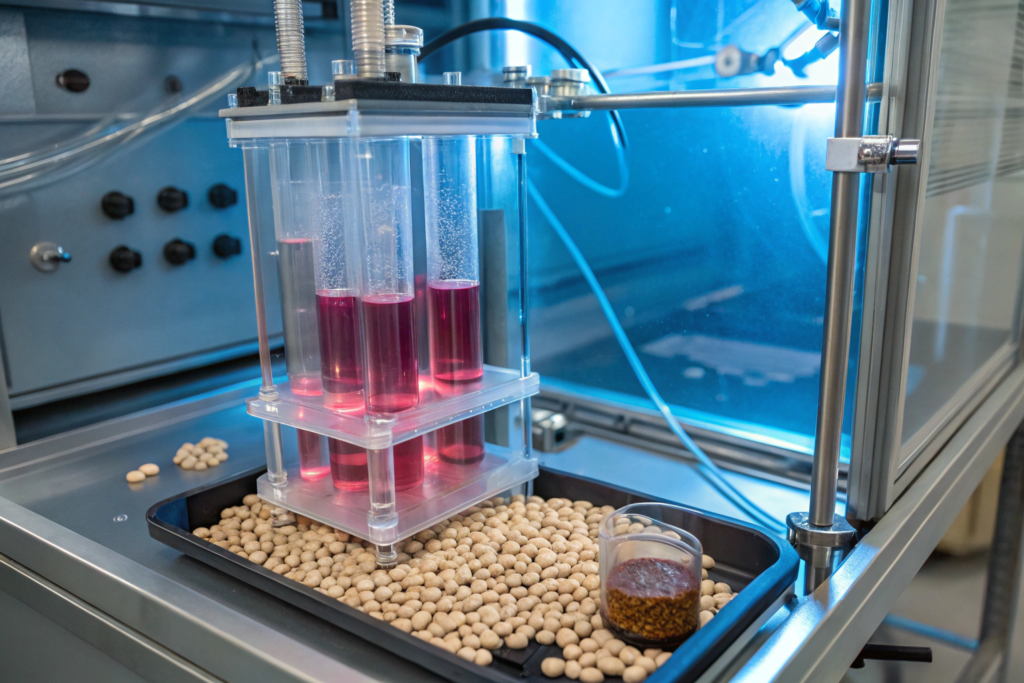
Lab-grown coffee, also called cell-cultured or cellular coffee, is not grown on a farm. It is grown in a stainless steel tank. The process borrows directly from cellular agriculture technologies developed for lab-grown meat.
The starting material is a small sample of living cells taken from a coffee plant—usually from the leaf or the cherry. These cells are placed in a bioreactor filled with a nutrient solution containing sugars, amino acids, vitamins, and plant hormones. The cells multiply rapidly. They form a biomass that resembles a pale, wet paste. This biomass is harvested, dried, and roasted. The roasted material is ground and brewed like conventional coffee.
The entire process takes days or weeks instead of the years required to grow a coffee tree from seedling to first harvest. The production happens indoors, in a controlled environment, independent of weather, seasons, altitude, soil, or climate. The input is energy and nutrients. The output is a coffee-like substance.
Lab-grown coffee is produced by cultivating coffee plant cells in bioreactors with nutrient solutions, harvesting the cellular biomass, and drying and roasting it into a coffee-like product that mimics some but not all of the chemical and sensory properties of farm-grown coffee.
There is a critical distinction to understand. Lab-grown coffee is not synthetic coffee. Synthetic coffee would be a chemical mixture of caffeine, acids, and flavor compounds assembled in a factory without any biological input. Lab-grown coffee comes from real coffee plant cells. The cells are real. The genetics are real. The environment is artificial. The result is a product that shares some biological identity with farmed coffee but develops under completely different conditions.
How Does Cellular Agriculture Replicate Coffee Flavor?
This is the central challenge. Coffee flavor is not a single compound. It is a symphony of over a thousand volatile aromatic compounds that develop during the cherry's slow maturation on the tree and during the controlled stress of roasting.
Plant cells grown in a bioreactor do not experience the same biochemical journey as a cherry ripening on a mountain. The bioreactor environment is constant and optimized for rapid growth. The cells produce primary metabolites—sugars, proteins, caffeine—but they do not produce the complex secondary metabolites that create the flavor of a fine Arabica. There is no drought stress to concentrate sugars. There is no diurnal temperature swing to build acids. There is no fruit mucilage fermentation to develop esters.
Current lab-grown coffee products taste like coffee, but in a generic, one-dimensional way. Cuppers describe the flavor as "coffee-like" or "roasty" but lacking the fruit, floral, chocolate, and spice notes that define specialty grades. The body is thinner. The acidity is flat. The aftertaste is short. It tastes like a commodity robusta instant coffee, not a washed Yunnan Catimor.
Researchers are working on stress-induction techniques to push the cells to produce more complex metabolites. They can manipulate light, temperature, and nutrient levels to mimic some aspects of field conditions. But replicating the full complexity of an 86-point single-origin coffee is a scientific challenge that remains unsolved. For those following the science, World Coffee Research occasionally reports on cellular agriculture developments in the context of coffee breeding and genetics research.
What Are the Current Companies Producing Lab Grown Coffee?
Several startups have emerged in the cellular coffee space. They are at various stages of development, from lab-scale production to pilot-scale facilities.
VTT Technical Research Centre in Finland was one of the first to produce lab-grown coffee cells and brew a cup. Their work demonstrated the basic feasibility of the concept. They have since spun off the technology, and commercialization efforts are underway.
Compound Foods, a US-based startup, has raised venture capital funding to develop cell-cultured coffee. They position their product as a climate-friendly alternative to farmed coffee, emphasizing the environmental benefits of eliminating deforestation and transportation emissions.
Another company, Stem, based in France, is working on cellular agriculture for coffee and cocoa. Their focus is on producing specific flavor compounds through cell culture rather than replicating the whole bean experience.
Mighty Coffee, based in Israel, has publicly announced plans to bring cell-cultured coffee products to market within the next few years. Their messaging focuses on sustainability and supply chain resilience.
The common thread among these companies is that they are not targeting specialty coffee. They are targeting the commodity coffee market—the massive volume of low-grade Arabica and Robusta that goes into instant coffee, flavored beverages, and mass-market blends. The economic argument is that lab-grown coffee can eventually be produced at a lower cost and with lower environmental impact than commodity farmed coffee.
Why Are Investors Betting on Lab Grown Coffee?
The investment case for lab-grown coffee is not based on flavor. It is based on risk. Specifically, climate risk.
The global coffee industry is concentrated in a narrow band around the equator. This region is highly vulnerable to climate change. Rising temperatures, shifting rainfall patterns, and increased pest pressure are already reducing suitable coffee-growing land. Some projections suggest that up to 50 percent of current Arabica-growing areas could be unsuitable by 2050. The supply of coffee is under long-term threat.
At the same time, demand is rising. Coffee consumption is growing in producing countries like China and India, and in emerging markets in Africa and the Middle East. The supply-demand balance is tightening. Prices are becoming more volatile. A frost in Brazil, a drought in Colombia, or a rust outbreak in Central America can spike global coffee prices overnight.
Investors are funding lab-grown coffee as a hedge against climate-induced supply disruption, betting that cellular agriculture can eventually produce a consistent, scalable, and climate-independent coffee product that insulates the industry from the environmental and geopolitical risks threatening traditional coffee farming.
Lab-grown coffee promises to decouple coffee production from climate. If coffee can be grown in a bioreactor, it can be produced anywhere—in a factory in Norway, in a warehouse in Singapore, in a container in Dubai. The supply chain shortens dramatically. The price stabilizes. The environmental footprint potentially shrinks. This is a compelling narrative for investors who see climate risk as the defining challenge of the next few decades. For more on how climate affects coffee, the International Coffee Organization publishes climate impact assessments and market analyses.
Can Lab Grown Coffee Really Save the Environment?
The environmental case for lab-grown coffee is more nuanced than the marketing suggests. There are genuine benefits, and there are open questions.
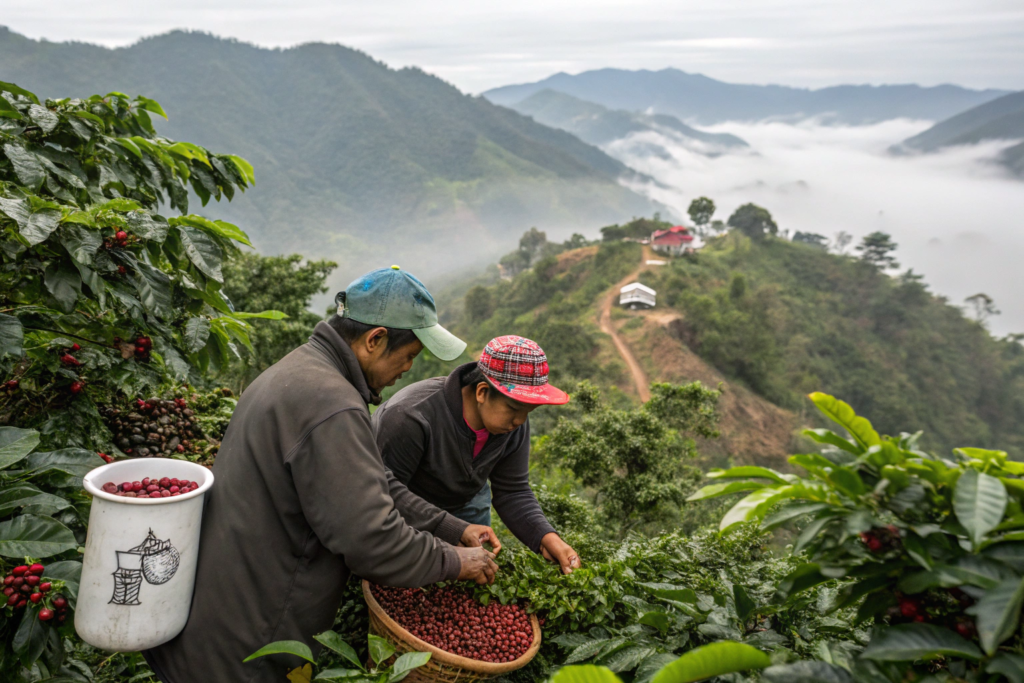
On the benefit side, lab-grown coffee could eliminate deforestation for coffee farming. Coffee has historically been a driver of forest clearing in tropical regions. Moving production to indoor facilities would remove that pressure. It could also dramatically reduce transportation emissions. Instead of shipping coffee from remote tropical farms to consumers in North America, Europe, and Asia, bioreactors could be located closer to consumption centers.
Water usage is also potentially lower. Coffee farming is water-intensive, particularly for washed processing. Bioreactors operate in a closed-loop system where water is recycled. The total water footprint per kilogram of product could be significantly lower.
On the open question side, the energy demand of bioreactors is substantial. Running a sterile, temperature-controlled facility with pumps, lights, and monitoring equipment requires electricity. If that electricity comes from fossil fuels, the carbon footprint could be higher than farmed coffee. If it comes from renewables, the footprint drops.
The nutrient solution also has an environmental cost. The sugars and amino acids fed to the cells must come from somewhere. If they come from industrial agriculture, the upstream environmental impact—fertilizer use, land use for sugar crops—offsets some of the downstream savings. Lifecycle analyses comparing farmed and lab-grown coffee are still preliminary. More data is needed before definitive environmental claims can be made.
Will Lab Grown Coffee Be Cheaper Than Farmed Coffee?
In the long run, probably yes, for the commodity segment. In the short term, no. The technology is still expensive and will remain so for years.
The current cost of producing lab-grown coffee cells is many times higher than the cost of growing commodity Robusta in Vietnam or low-grade Arabica in Brazil. The bioreactors are expensive. The nutrient media are expensive. The energy to run the facility is expensive. The process has not been optimized for scale.
However, the cost curve for cellular agriculture is trending downward. The same pattern has occurred with lab-grown meat, where production costs have dropped by orders of magnitude over the past decade. As the technology matures, as bioreactors become larger and more efficient, and as nutrient media are reformulated with cheaper inputs, the cost of lab-grown coffee will fall.
The target market for cost parity is commodity coffee, not specialty. A lab-grown product priced at $2 to $3 per pound could compete with commodity Arabica and Robusta for the instant coffee and mass-market blend segment. A lab-grown product priced at $6 to $8 per pound is not competitive with specialty single-origin lots that sell on flavor quality and provenance. For the foreseeable future, specialty coffee will remain cheaper to grow on a mountain than in a bioreactor. The market dynamics around coffee pricing are frequently updated by Perfect Daily Grind.
Will Lab Grown Coffee Threaten Specialty Coffee Growers?
This is the question I care about most. I am a producer. My family has farmed coffee in Baoshan for years. The trees on our mountains are not just economic assets. They are part of a landscape, a community, and a tradition. Does lab-grown coffee threaten that?
The honest answer is yes and no. It depends on which segment of the market we are talking about.
For commodity coffee farmers—those growing low-altitude, low-quality Arabica or Robusta for the bulk market—lab-grown coffee is an existential threat. If a factory can produce a coffee-like substance at $2 per pound, the bottom of the market collapses. Farmers who are already struggling with low prices and climate stress will be pushed out. The social consequences in coffee-dependent regions will be severe.
For specialty coffee farmers—those growing high-altitude, carefully processed, high-scoring lots with traceable provenance—lab-grown coffee is not a direct competitor. The specialty market buys flavor, story, and relationship. A bioreactor cannot produce a coffee that tastes like blackcurrant and tomato. It cannot tell the story of a family farm in Yunnan. It cannot offer a roaster a video call from the drying beds. The specialty segment is protected by its very definition: it is special.
Lab-grown coffee will likely displace commodity coffee in the industrial segment over the next two decades, but specialty coffee grown at altitude with distinct terroir, varietal character, and direct trade relationships occupies a market position that cellular agriculture cannot currently replicate or threaten.
The danger is not replacement. The danger is market confusion and price pressure. If consumers cannot distinguish between lab-grown and farmed coffee, and if labeling is not transparent, specialty producers could be undercut by a cheaper, lower-quality substitute. Regulatory frameworks for labeling lab-grown coffee are still developing. Clear, honest labeling will be essential to protect both farmers and consumers.
What Unique Value Do Real Farms Offer That Labs Cannot?
The value of a real coffee farm is not just the coffee. It is everything around the coffee. The ecosystem. The culture. The human connection.
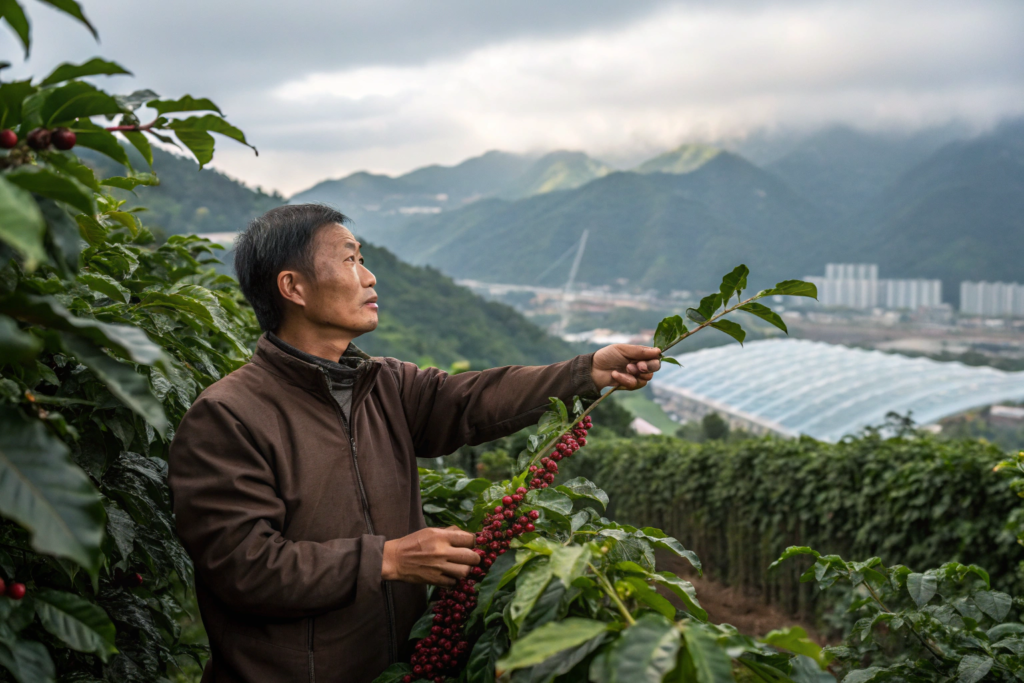
Our farm in Baoshan supports dozens of families. The coffee trees are intercropped with shade trees that provide habitat for birds and insects. The processing station uses spring water that has flowed through the Gaoligong Mountains for centuries. The workers who pick our cherries are skilled artisans who know exactly which shade of red means ripe. The cupping lab is where I sit with buyers and share stories over fresh brews.
None of this exists in a bioreactor. A bioreactor has no soil, no birds, no seasons, no community, no history. It produces a substance, not a product with provenance. For a growing segment of consumers, provenance matters. They want to know where their coffee came from and who grew it. They want their purchase to support a real place and real people. This desire for connection is not a passing trend. It is a fundamental shift in consumer values, especially among younger buyers.
Lab-grown coffee companies try to tell a story about sustainability and technology. That story resonates with some consumers. But it is a different story than the one a specialty roaster tells about a single-origin micro-lot from a specific farm in Yunnan. Those two stories appeal to different audiences. The specialty audience is smaller but more loyal and less price-sensitive. It is not the market that lab-grown coffee is targeting.
How Can Specialty Producers Differentiate From Lab Grown Products?
Differentiation starts with transparency. The more a producer shares about their farm, their process, and their quality, the harder it is for a faceless lab product to compete.
I provide every buyer with the GPS coordinates of the specific plot, the harvest date, the processing method in detail, the fermentation log, the drying curve, and the cupping scores. I invite buyers to visit. I video call them from the drying beds. I tell the stories of the farm. This level of transparency is impossible for a lab to replicate because a lab has no story beyond the bioreactor.
Specialty producers should lean into their identity. Not just the quality of the coffee, but the uniqueness of the origin. A lab can produce a generic coffee-like substance. It cannot produce a Baoshan Catimor with the specific flavor signature of our altitude, soil, and processing. The more distinct and recognizable the origin character, the more protected it is from substitution.
Traceability technology also helps. Blockchain-based traceability platforms, QR codes on retail bags that link to farm videos, and digital lot cards all reinforce the authenticity of farmed coffee. They create a direct link between the consumer and the farm. A lab product can try to imitate this, but the connection is synthetic. For more on traceability innovations in the specialty sector, the Specialty Coffee Association has published reports on digital traceability tools.
Conclusion
Lab-grown coffee is real. It is not a science fiction fantasy. Startups are producing it. Investors are funding it. The technology is advancing. Within the next decade, cell-cultured coffee will likely appear in some commercial products, probably in the instant coffee and mass-market segment where price and consistency matter more than flavor complexity and provenance.
But lab-grown coffee will not replace specialty Arabica grown on real farms. The two products are fundamentally different. One is a biological commodity produced in a stainless steel tank. The other is an agricultural product shaped by soil, altitude, climate, variety, and human craft. They may share a name on a label, but they do not share a soul.
For specialty coffee producers and the roasters who buy from them, the future is not about competing with lab-grown coffee on price. It is about deepening the qualities that lab-grown coffee cannot replicate: terroir, provenance, human connection, and sensory complexity. As long as consumers value those qualities—and the specialty market proves they do—there will be a place for real coffee grown on real mountains by real people.
If you want to taste coffee that comes from a real place with a real story, contact Cathy Cai at BeanofCoffee. She can send you samples from our current harvest in Baoshan—washed, natural, honey, and experimental lots. She can provide the GPS coordinates, the harvest dates, the processing logs, and the cupping scores. She can arrange a video call so you can see the farm yourself. The coffee is real. The people are real. The story is waiting for you. Write to cathy@beanofcoffee.com. She answers quickly and ships samples to roasters worldwide.