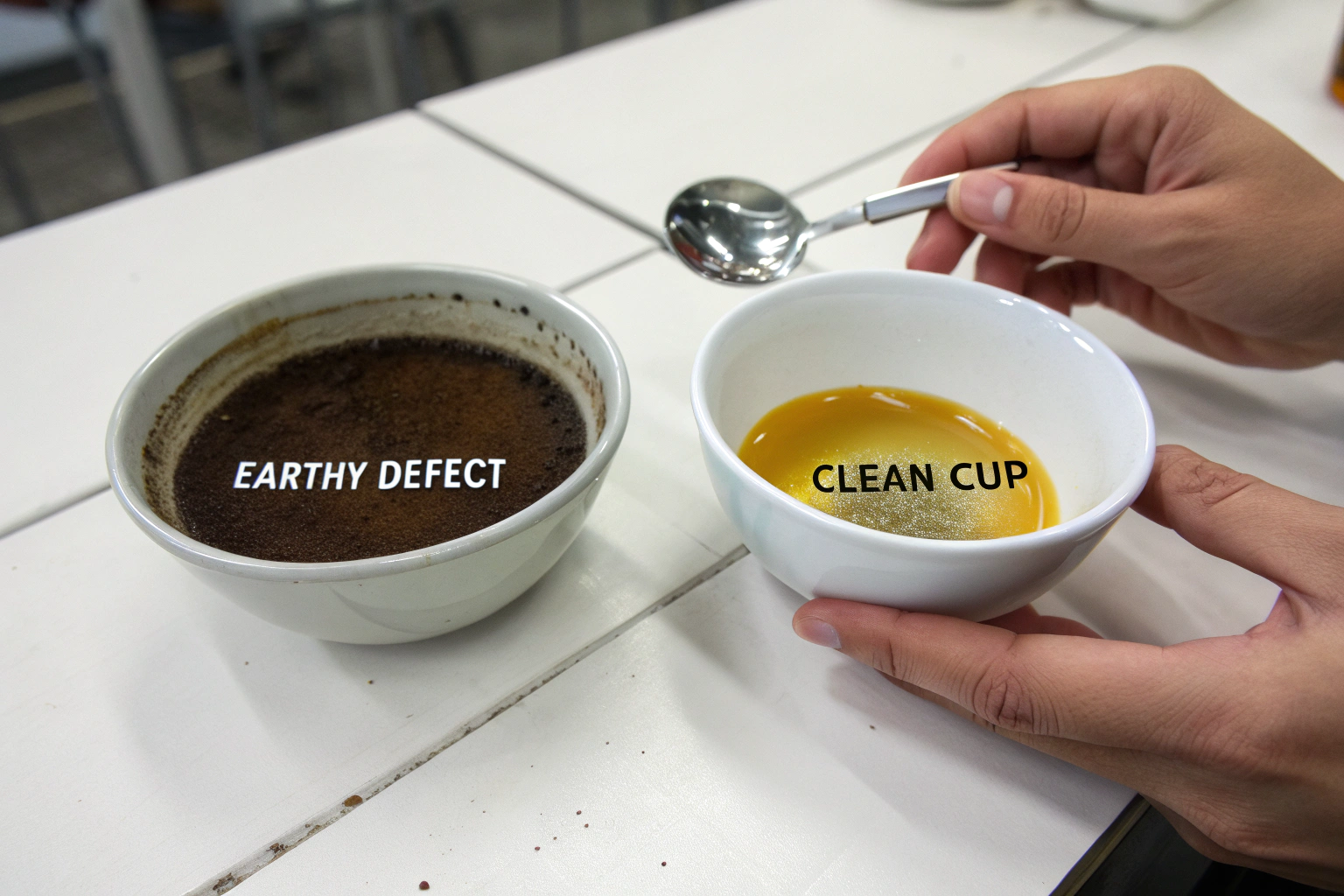
I remember cupping a sample from a new supplier in Yunnan about five years ago. I was hopeful. The price was good. The bean size was decent. I broke the crust, and a wave of damp basement hit me in the face. Wet cardboard. Forest floor after a rainstorm. I knew immediately. This was the classic earthy defect. I did not buy that lot. But it stuck with me. It reminded me of the old reputation Chinese coffee had—a reputation we have worked tirelessly to erase. The pain for a buyer is real. You buy a container of "Grade 1" coffee at a good price, and it arrives tasting like a potato cellar. You cannot serve that. You cannot blend it away. It is a total loss.
The earthy taste in some Chinese coffee beans is primarily caused by improper drying and storage practices that allow mold and bacteria to develop on the parchment or green bean, specifically from contact with soil during sun-drying or from moisture re-absorption in humid warehouses, a defect that can be reliably avoided by sourcing from suppliers who use raised African drying beds, enforce strict moisture protocols, and utilize hermetic GrainPro storage.
This defect is not inherent to the soil of Yunnan. It is a processing flaw. And it is completely preventable. Let me explain the science behind the funk and, more importantly, how you can ensure you never buy a bag of it again.
What Causes the Earthy or Musty Flavor Defect in Green Coffee?
The flavor we describe as "earthy," "musty," "baggy," or "Rioy" is almost always a sign of microbial activity. It is not a terroir characteristic. It is a sign that fungi or bacteria have been eating the sugars and oils in your coffee bean. The question is: when did this happen?
The earthy flavor defect in green coffee is caused by the metabolic byproducts of molds (specifically Aspergillus and Fusarium species) and bacteria that proliferate when the moisture content of the bean exceeds safe thresholds (>12.5%) during drying or storage, producing volatile compounds like geosmin and 2-methylisoborneol that are perceptible even at parts-per-trillion levels.
These compounds are stable through roasting. You cannot roast away a moldy taste. The damage is done at the farm or the warehouse.
How Does Poor Drying Technique on Patios Introduce Soil Contamination?
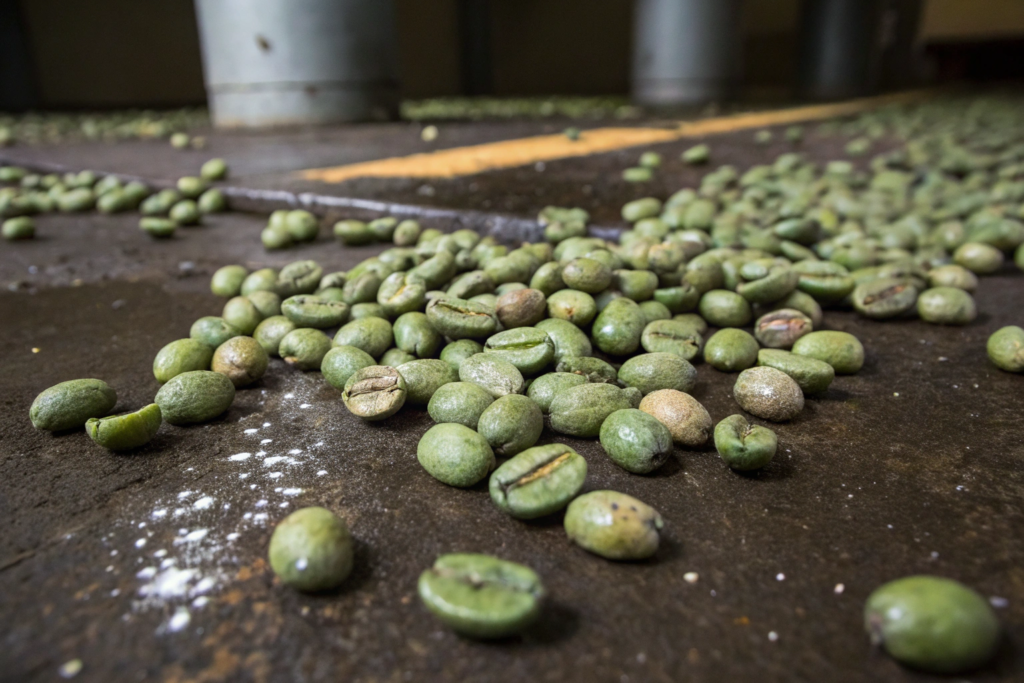
This is the most common source of the earthy defect in traditional coffee processing. Smallholder farmers with limited resources often dry their coffee on bare earth patios or dirt roadsides. They spread the parchment coffee in a thin layer on the ground.
Here is what happens:
- Ground Contact: The bottom layer of coffee is in direct contact with damp soil. Soil is full of Aspergillus and Fusarium spores. The moisture from the ground wicks up into the coffee.
- Uneven Drying: The sun heats the top layer, but the bottom layer stays cool and damp. This creates a perfect microclimate for mold growth right at the soil interface.
- Nighttime Re-wetting: The coffee is left out overnight. Dew forms. The beans absorb moisture from the air and the ground. The mold growth cycle restarts every night.
- Geosmin Absorption: Geosmin is the chemical compound that gives soil its "earthy" smell (it is also what makes beets taste like dirt). Coffee beans are like sponges. They absorb this compound directly from the soil.
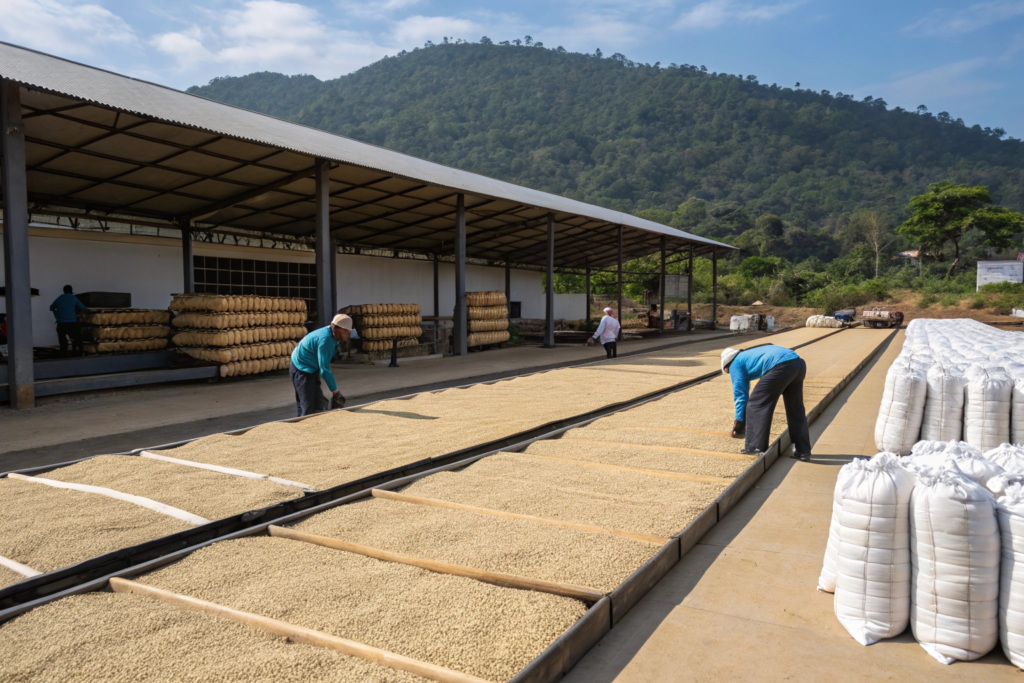
This is why "earthy" coffee literally tastes like dirt. It has absorbed dirt. At Shanghai Fumao, we never dry coffee on the ground. We use Raised African Beds. These are tables with a mesh surface, elevated a meter off the ground. Air circulates above and below the coffee. The drying is fast and even. There is zero soil contact. This is a non-negotiable standard for specialty coffee.
What Role Does Warehouse Humidity Play in Developing Baggy Notes?
Even if the coffee is dried perfectly on raised beds, the risk is not over. The coffee must be stored correctly. This is where "baggy" or "musty" notes can creep in.
Coffee is hygroscopic. It absorbs moisture from the air. If dried parchment coffee (at 11% moisture) is stored in a warehouse with 80% relative humidity, the beans will slowly absorb water. Over weeks and months, the moisture content can creep back up to 13% or 14%.
Once the moisture crosses that 12.5% threshold, dormant mold spores that survived the drying process can wake up. They start growing inside the jute bag. This is the "baggy" flavor. It smells like the burlap sack itself—dusty, woody, stale.
This is why the warehouse environment is just as important as the drying patio. A clean, dry, well-ventilated warehouse is essential. At our Baoshan facility, we monitor warehouse humidity daily. We use dehumidifiers during the rainy season. And most importantly, we use GrainPro bags. These hermetic bags create a vapor barrier. Even if the warehouse air is humid, the beans inside the sealed bag remain at their stable 11% moisture. They cannot absorb the ambient dampness. This is the single most effective technology for preventing post-drying flavor defects. You can learn more about moisture management from the International Coffee Organization guidelines on green coffee storage.
How Does BeanofCoffee's Processing Protocol Prevent Earthy Defects?
Preventing earthy defects is not about one magic trick. It is about a system. It is about building a processing protocol that eliminates the conditions where mold can thrive at every single step from cherry to container.
BeanofCoffee prevents earthy defects through a multi-barrier approach that includes: (1) selective hand-picking of only ripe cherry, (2) immediate wet milling with clean water, (3) sun-drying exclusively on raised African beds with strict turning schedules, (4) mechanical drying backup to avoid rewetting, and (5) final moisture stabilization and storage in hermetic GrainPro bags.
If you do all five of these things, the probability of an earthy defect drops to near zero.
Why Are Raised African Beds and Strict Turning Schedules Non-Negotiable?
Let me be blunt. I will not buy coffee from a supplier who dries on the ground. It is a dealbreaker. And neither should you.
Raised African Beds provide:
- Airflow: Convection currents dry the coffee from below as well as above. Drying time is cut in half compared to a concrete patio.
- Cleanliness: No contact with soil, stones, or animal waste.
- Visibility: It is easier to spot and remove defects or foreign matter.
But having the beds is not enough. You need the Turning Schedule. Coffee left in a thick pile on a bed will still mold on the bottom.
Our protocol is strict:
- Day 1-3: Rake the parchment every 30-45 minutes. The goal is to remove surface water quickly to stop fermentation.
- Day 4-10: Rake every 2-3 hours. This ensures even drying throughout the mass.
- Night & Rain: The coffee is gathered into a central pile and covered with a waterproof tarp. It is never left exposed to dew or sudden showers.
This labor is expensive. It takes a dedicated team to manage the drying beds. But it is the only way to produce clean, sweet coffee. At Shanghai Fumao, the drying beds are the heart of our quality program. For more visual examples of best practices, the Perfect Daily Grind has excellent articles on raised bed construction and management.
How Does Our Dry Mill Remove Light, Moldy Beans Before Export?
Even with perfect processing, there is natural variation. A few cherries might have been slightly overripe. A few beans might have been damaged. These outliers are more susceptible to mold.
This is where the Gravity Separator (Densimetric Table) in our dry mill becomes a food safety tool, not just a quality tool. As we discussed in the density sorting article, the gravity table separates beans by weight.
Mold-damaged beans are less dense. The fungus has eaten the cellulose structure of the bean. It is hollow or spongy. When these beans hit the gravity table, they behave differently. They float on the air cushion. They slide downhill to the "Lights" fraction.
This means that even if a microscopic level of mold damage occurred in the field, the mechanical sorting process removes those specific beans from the export lot. They go to the domestic instant coffee market, where they are sterilized and extracted.
This is a critical layer of defense. A smallholder selling directly to a trader might not have this equipment. They might hand-sort for obvious defects, but they cannot sort by density. A gravity table is a six-figure investment. It is one of the reasons why buying from a large, professional estate like ours is safer than buying from an anonymous collective.
How Can I Screen for Earthy Taints When Cupping a Yunnan Sample?
You have requested a sample. It has arrived. Now you are the detective. You need to determine if this coffee is clean or if it has a hidden earthy flaw. There are specific techniques to find this defect, even if it is subtle.
To screen for earthy taints when cupping a Yunnan sample, pay close attention to the aroma at the "crust break" for any hint of damp basement or wet cardboard, and critically, taste the coffee again after it has cooled to room temperature, as earthy and phenolic defects become more pronounced and unavoidable as the cup cools.
What Are the Telltale Aroma Markers at the Dry Fragrance and Crust Stage?
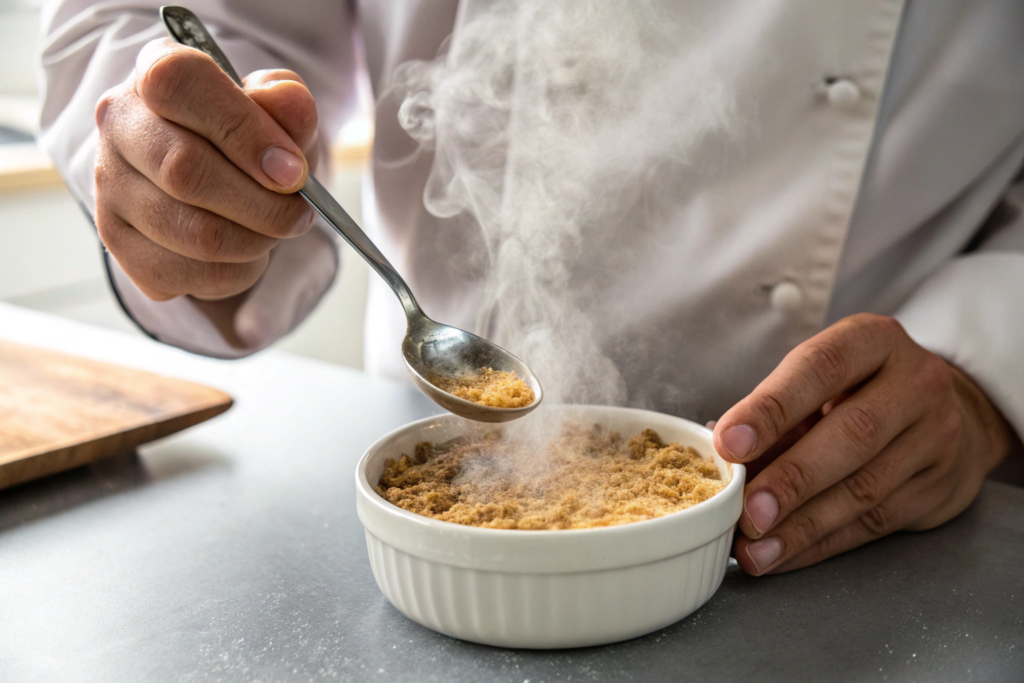
Your nose is your first line of defense. Do not just sniff the ground coffee casually. Be systematic.
- Dry Fragrance (Grounds): Smell the freshly ground, dry coffee. You are looking for Sweet, Floral, Fruity, Nutty. If you smell Dusty Attic, Old Books, or a Musty Basement, stop. That is the defect.
- Crust Aroma (After Hot Water Pour): Wait 4 minutes. Do not break the crust yet. Lean over the bowl. Break the crust with your spoon and inhale deeply. This is the moment of truth. A clean coffee will explode with intense, sweet aromatics. An earthy coffee will release a puff of Wet Cardboard, Damp Forest Floor, or Moldy Hay. It is unmistakable once you know what to look for.
I train my staff to cup blind. I will slip a known earthy sample into the lineup occasionally. The goal is for them to call it out before they even taste it. The aroma is that obvious. At Shanghai Fumao, if a sample has a questionable crust aroma, it fails immediately. No second chances.
Why Is the Cool Cup the Ultimate Test for Hidden Defects?
This is the pro move. This separates the amateur cuppers from the professionals. You have tasted the coffee hot. It seemed fine. Maybe a little flat, but not obviously earthy. You think it passed.
Then you walk away for 20 minutes. You come back. The cup is room temperature. You take a sip.
If there is an earthy or phenolic defect, it will be screaming at you now. The heat of the coffee masks volatile phenolic compounds. As the coffee cools, those compounds become the dominant flavor. What was a "hint of earth" when hot becomes a "mouthful of dirt" when cold.
I always tell buyers: Do not sign off on a sample until you have tasted it cold. It is the most honest expression of the coffee's cleanliness. A clean Yunnan Arabica will taste sweet and tea-like even when cold, maybe with a pleasant cocoa note. A defective coffee will taste like a damp cloth.
This is a simple, free test that can save you thousands of dollars.
What Are the Long-Term Storage Solutions to Ensure My Shipment Stays Clean?
You bought a clean container. The coffee arrived tasting fantastic. Your job is not done. The coffee is now in your care. If you store it poorly, you can introduce the earthy defect after it has passed all the quality checks. This is a self-inflicted wound.
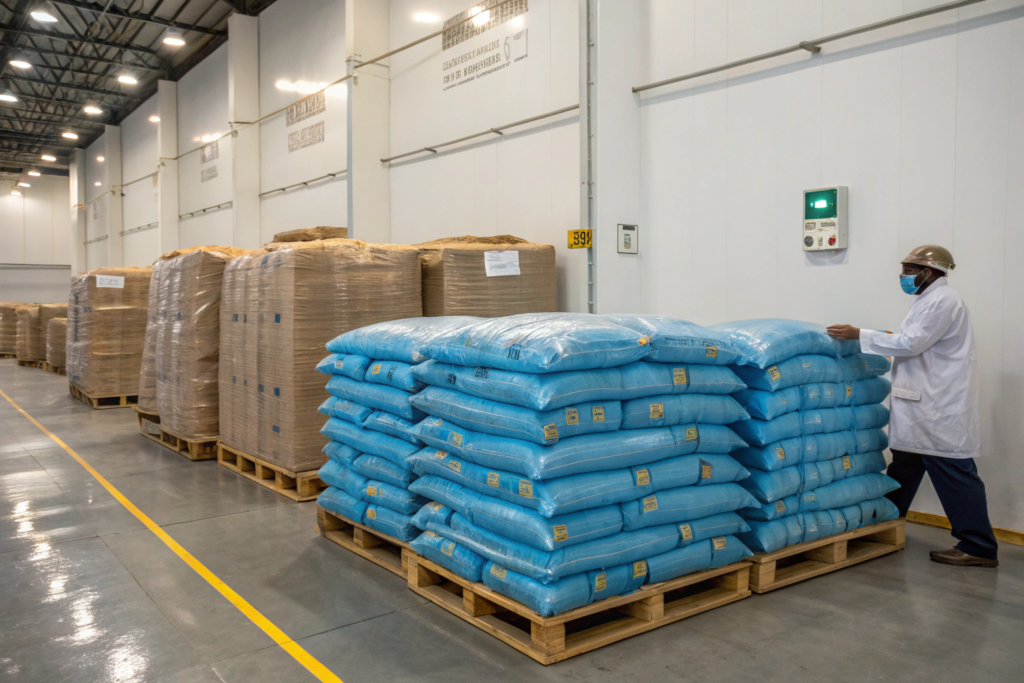
To ensure a clean shipment stays clean, roasters must store green coffee in a climate-controlled environment (ideally below 75°F and 60% relative humidity), keep the coffee sealed in its original GrainPro liner until ready to use, and ensure pallets are stored on racks off the concrete floor to prevent ground moisture wicking into the bottom bags.
Should I Keep the GrainPro Liner Sealed Until the Day of Roasting?
Yes. Absolutely. 100% yes.
This is the single biggest mistake I see roasters make. They receive the pallet. They cut open the jute bag and the GrainPro liner to "let the coffee breathe." They scoop out what they need and leave the bag open to the air.
The coffee does not need to breathe. It is not a wine that needs oxygen to age. Oxygen is the enemy of green coffee. It accelerates staling. And worse, in a humid roastery environment, that open bag is absorbing moisture from the air.
Here is the rule:
- Keep it sealed. Cut a small corner of the GrainPro liner just big enough to scoop out the beans you need for that day's roasting.
- Reseal it. Roll the cut corner down tightly and clamp it with a strong clip.
- Minimize Air Exchange. The less ambient air that gets into the bag, the longer the coffee will stay fresh and clean.
If you are using a full pallet over several months, consider transferring the coffee into airtight food-grade barrels or bins. But if you are using the bag as intended—sealed until empty—you will maintain that clean, sweet cup profile for up to 12 months. For more on roastery best practices, the Roast Magazine archives are a goldmine of technical information.
What Is the Ideal Warehouse Environment to Prevent Secondary Mold Growth?
You do not need a million-dollar climate-controlled vault. But you do need to pay attention to the environment where the pallets sit.
- Temperature: Keep it stable. Avoid direct sunlight on the bags. Avoid placing pallets next to the roaster exhaust or a steam boiler. Heat accelerates aging and can create condensation.
- Humidity: This is the critical one. Try to keep relative humidity below 60%. If your roastery is in a humid climate (like Florida or the UK), invest in a dehumidifier for your green coffee storage area. It is a small expense that pays for itself by preventing quality loss.
- Floor Contact: Never store bags directly on a concrete floor. Concrete is porous. It wicks ground moisture. The bottom bag in a stack sitting on concrete will have a much higher moisture content than the top bag. Always use wooden pallets to create an air gap.
At Shanghai Fumao, we do all this at origin. We expect our partners to do it at destination. It is a shared responsibility to protect the quality of the coffee from our farm to the final cup.
Conclusion
The "earthy" taste in Chinese coffee is not a mystery. It is not an unavoidable characteristic of the terroir. It is a specific processing defect caused by poor drying and storage. And it is completely preventable.
By understanding the science—soil contact, moisture migration, and mold metabolism—you can arm yourself with the knowledge to avoid it. By choosing suppliers like BeanofCoffee who invest in raised beds, gravity tables, and hermetic storage, you dramatically reduce the risk. And by using proper cupping techniques and storage practices in your own roastery, you ensure that the coffee stays as clean as the day it left our mill.
The days of "earthy" being synonymous with Yunnan are over. The new Yunnan coffee is clean, sweet, and complex. You just need to know where to look.
If you want to taste the difference that clean processing makes, let us send you a sample of our washed Grade 1 Arabica. Cup it hot. Cup it cold. I am confident you will find nothing but sweetness and black tea. Email Cathy Cai. Tell her you want to taste a "Clean Cup" sample. Contact Cathy at: cathy@beanofcoffee.com