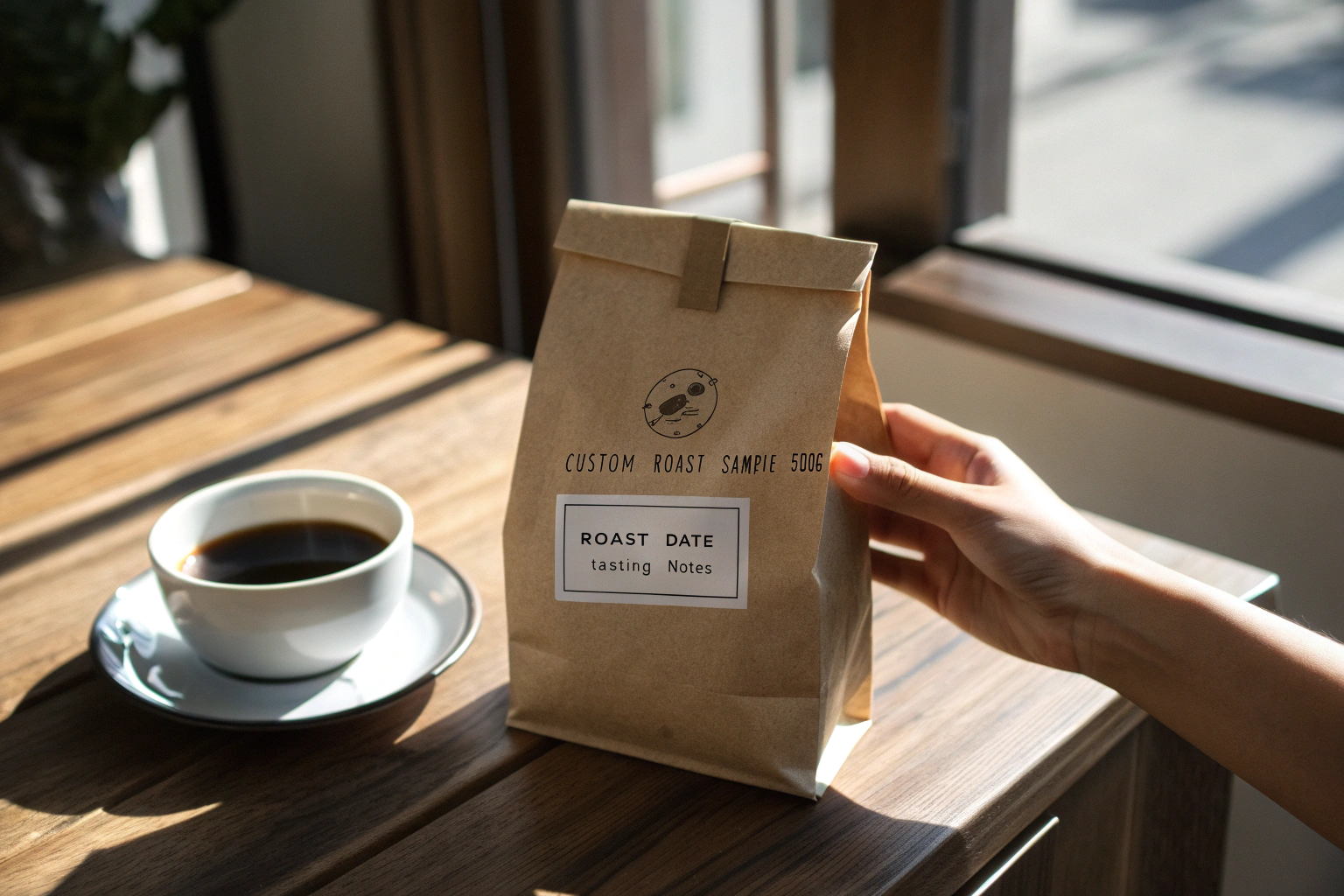
I once had a potential client—a roaster from Texas—who was ready to sign a full container contract. But he hesitated. He said, "I love your green samples. But I need to know how this coffee roasts. I need to taste it the way my customers will taste it." He was right. Green cupping tells you potential. Roasted coffee tells you reality. I told him I would send him a custom roasted sample of the exact lot he was considering. I roasted it myself on our sample roaster to the profile he specified. He received it, brewed it, and signed the contract the next week. The pain of buying green coffee is the leap of faith between the cupping spoon and the production roaster.
To request a 500g custom roasted sample pack from BeanofCoffee, you need to email our export manager with the specific lot number you are interested in, your desired roast level using the Agtron scale or a descriptive term, and your physical shipping address, after which we will roast, package, and ship the sample via express courier at your cost.
This is a service we offer specifically for serious buyers like you, Ron. It bridges the gap between the cupping lab and the real world. It lets you put the coffee through your own grinder, your own brewer, and most importantly, serve it to your own customers for feedback. Let me walk you through exactly how this process works and how to get the most out of it.
Why Should I Request a Custom Roasted Sample Instead of Just Green Beans?
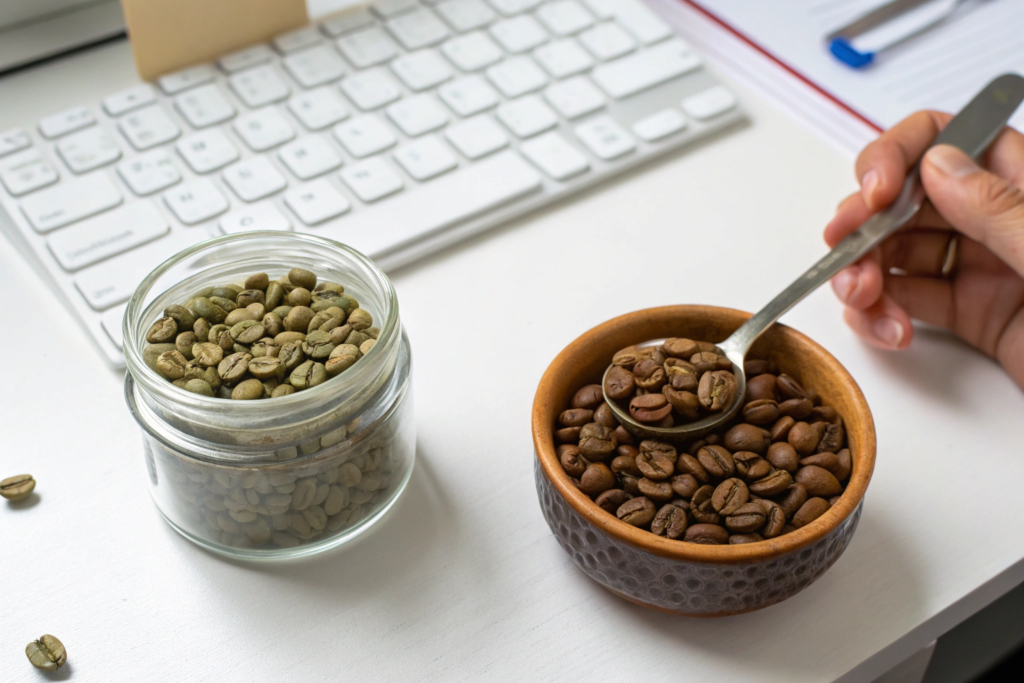
Green samples are essential. They tell you about the raw material. You can check the screen size. You can check the moisture. You can cup the coffee and get a sense of its intrinsic flavor. But a green sample has limitations. It is evaluated in a vacuum, using a standardized roast profile that may be nothing like your production roast.
Requesting a custom roasted sample is valuable because it allows you to evaluate the coffee's performance under your preferred roast degree, assess its solubility and extraction behavior in your specific brewing equipment, and gather real-world feedback from your customers before committing to a large volume purchase. It takes the theoretical and makes it practical. It is the final, crucial step in due diligence.
How Does a Production-Style Roast Reveal Different Characteristics Than a Cupping Roast?
This is the insider secret of professional coffee buying. The SCA cupping protocol requires a very specific roast. It is light. It is fast. It is designed to highlight origin character and defects. It is not designed to taste good to a typical consumer.
A cupping roast on a Yunnan washed Arabica will show you the black tea notes and the lemon zest acidity very clearly. But it might also taste a bit grassy or underdeveloped. This is normal for a cupping roast.
A custom roasted sample, roasted to your specific production profile (e.g., Full City for espresso or Light-Medium for filter), reveals the coffee's true potential. The sugars caramelize. The body rounds out. The acidity integrates into the overall flavor.
Here is what you learn from a production-style roast that you miss in a cupping roast:
- Roast Defect Tolerance: How does this bean handle heat? Does it scorch easily? Does it need a gentle start?
- Sweet Spot: At what roast degree does the sweetness peak? Is it better as a light roast or a dark roast?
- Flavor Balance: How does the acidity play with the roast notes? Does it become too bitter? Does it get thin?
At Shanghai Fumao, we encourage this step. It prevents the situation where you love the green sample but hate the production roast. That mismatch wastes everyone's time and money.
Can I Use a Roasted Sample to Test Espresso Extraction and Crema Quality?
Absolutely. And for espresso-focused roasters, this is non-negotiable. You cannot evaluate espresso potential from a green bean or even a cupping bowl. You need to pull shots.
When you receive a 500g custom roasted sample, you have enough coffee to:
- Dial in your grinder: Find the sweet spot for a 1:2 ratio in 25-30 seconds.
- Evaluate Body and Crema: How thick is the body? Is the crema persistent and rich, or thin and fleeting? Our high-altitude Yunnan Catimor, when roasted for espresso, produces a massive, mousse-like crema. You need to see this with your own eyes.
- Test with Milk: How does the coffee hold up in a latte or cappuccino? Does the flavor cut through the milk? Yunnan's chocolate and brown sugar notes are exceptional in milk drinks.
This is the ultimate real-world test. It answers the question: "Will my customers love this as their morning cappuccino?" If the answer is yes, you have found a winner. If the answer is no, you have saved yourself from a costly mistake, having only invested in a sample. For more on espresso evaluation, resources from the Specialty Coffee Association Barista Guild are excellent.
What Specific Information Do I Need to Provide to Get the Right Roast?
A custom roast sample is only useful if it matches what you intend to do. Saying "Send me a roasted sample" is too vague. Saying "Roast it like you think it should be" is also not helpful. You need to speak the language of roast degree.
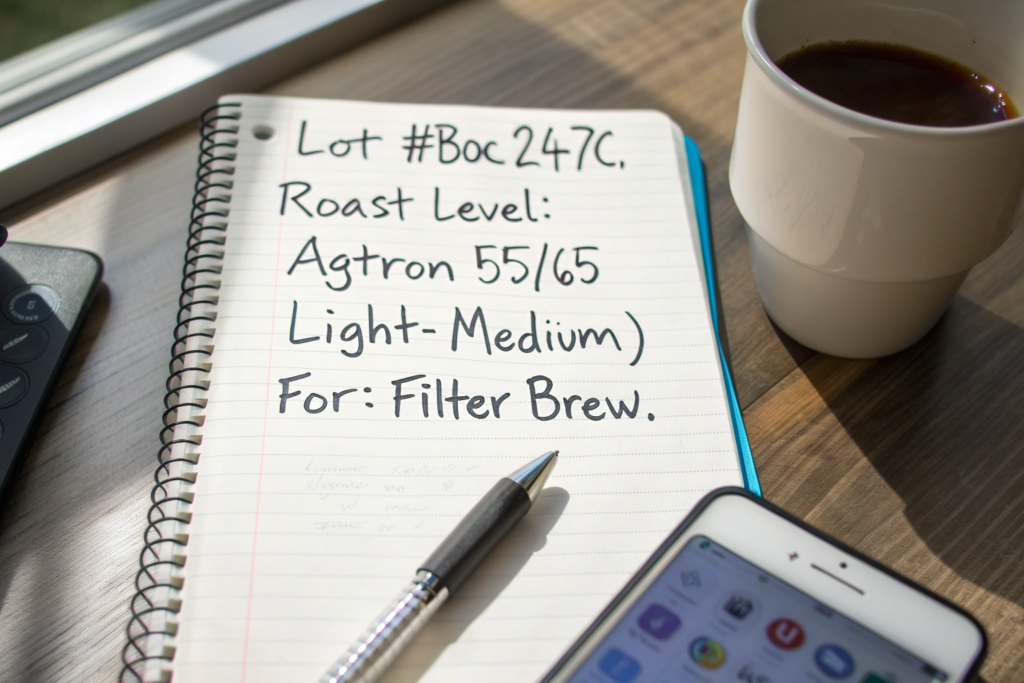
To ensure you receive the right roast, you must provide either an Agtron target number (e.g., Agtron Ground 55) or a clear descriptive term (e.g., City+, Full City, Light Espresso), along with your intended brewing method, so that our sample roaster can calibrate the profile to match your production environment. This specificity eliminates guesswork. It makes the sample a true preview of the coffee you will receive.
What Are the Agtron Equivalents for Common Roast Descriptors?
The Agtron scale is the industry standard for measuring roast color. It is objective. It is measurable. Using these numbers is the best way to ensure we are speaking the same language.
Here is a quick reference table for common roast levels:
| Descriptive Term | Agtron Whole Bean (Approx) | Agtron Ground (Approx) | Typical Use |
|---|---|---|---|
| Cinnamon / Light | 75 | 65 | Cupping, Filter (Nordic Style) |
| City / Light-Medium | 65 | 55 | Filter, Pour-Over (US Style) |
| City+ / Medium | 55 | 48 | Omni-Roast, Drip, Aeropress |
| Full City / Med-Dark | 45 | 38 | Espresso (Modern), Light Espresso |
| Vienna / Dark | 35 | 28 | Espresso (Traditional Italian) |
If you know your typical production roast, tell us the Agtron number. For example, "Please roast this sample to an Agtron Ground of 55." If you do not have a color meter, use the descriptive term that best matches your menu. "We roast our espresso to a Full City level."
At Shanghai Fumao, our sample roaster is equipped with a digital color meter. We can hit a specific Agtron target within a tight tolerance. This is the kind of precision that makes the sample useful.
Should I Specify My Intended Brew Method or Grind Setting?
Yes. This is a detail that many buyers overlook. The ideal roast profile for espresso is different from the ideal roast profile for filter coffee. Even if the final color is the same, the development time and heat application during the roast should be different.
Tell us:
- Intended Use: "This sample is for espresso evaluation."
- Typical Brew Ratio: "We use a 1:2 ratio in 28 seconds." (Optional, but helpful).
- Water Chemistry: "Our water is quite soft." (Advanced, but very helpful).
We will adjust the roast profile accordingly. For an espresso sample, we will ensure the roast is fully developed through the center of the bean to avoid sourness under pressure. For a filter sample, we might drop the heat slightly earlier to preserve more delicate floral or fruity top notes.
Do not worry about the grind. We will send the beans whole bean. You should grind them fresh on your own equipment. That is the point. You need to test the coffee through your grinder to evaluate how it behaves. We are sending you the roast; you provide the rest of the extraction equation.
What Is the Process and Timeline for Receiving a Custom Roast Sample?
You have requested the sample. You have specified the roast. Now, what happens next? Understanding the timeline helps you plan your evaluation and your purchasing decision.
The process for receiving a custom roast sample involves a 1-2 day roasting and packaging window at our Baoshan facility, followed by international express courier shipping which typically takes 3-5 business days to major US cities, meaning you should expect to receive your sample within approximately one week of confirming the request and payment for shipping. We move quickly. We know that a sample request usually means a buying decision is imminent. We treat it with urgency.

How Is the Sample Packaged to Preserve Freshness During Transit?
This is critical. You want to evaluate the coffee, not the shipping box. If we roast the coffee and throw it in a paper bag, it will be stale by the time it clears customs in Anchorage.
We use a specific protocol for sample shipments:
- Rest and Degas: We roast the coffee and let it rest for 8-12 hours to allow the initial CO2 to escape. We do not ship it hot off the roaster, as that can burst the bag.
- Foil-Lined Valve Bag: We package the 500g of roasted beans in a high-barrier, foil-lined bag with a one-way degassing valve. This valve lets CO2 out but does not let oxygen in. It keeps the coffee fresh for weeks, not days.
- Heat Seal: The bag is heat-sealed completely. No tin ties. No clips. A hermetic seal.
- Protective Outer Box: The sealed bag is wrapped in bubble wrap and placed inside a sturdy cardboard box. We label the box with "Roasted Coffee Samples - Not for Resale" to facilitate smoother customs clearance.
This packaging ensures that the coffee you taste a week later is as close as possible to the coffee that left our roaster. You are tasting the bean, not the transit. At Shanghai Fumao, we use the same packaging standards for samples as we would for a retail product.
Who Covers the Cost of the Sample and the International Courier Fee?
This is a fair and common question. Let's be transparent about the costs.
- Cost of the Coffee: We cover it. The 500g of green coffee, the labor to roast it, the packaging materials—that is on us. It is a marketing investment. We believe in our product.
- Cost of the Courier: You cover it. International express shipping from rural Yunnan to the USA is expensive. It costs roughly $60 to $90 USD depending on your exact location and the speed of the service (DHL or FedEx). We do not mark this up. We send you the actual shipping quote.
Why do we do it this way? Charging for the coffee would create a barrier to you trying it. We want you to try it. But if we covered the $80 shipping fee for every inquiry, we would go out of business.
This split—we provide the product, you cover the shipping—is the industry standard for serious B2B sample requests. It also serves as a small filter. It ensures that the person requesting the sample is a legitimate business with a genuine interest, not just someone looking for free coffee.
Once you agree to the shipping cost, we send you a PayPal or wire transfer invoice for the courier fee. Once paid, the sample is shipped within 24 hours, and you receive the tracking number.
How Can I Translate the Roasted Sample Experience Into a Larger Order?
The sample has arrived. You have cupped it. You have brewed it. You have pulled shots. You like it. Now what? The final step is translating that positive experience into a confident purchase order.
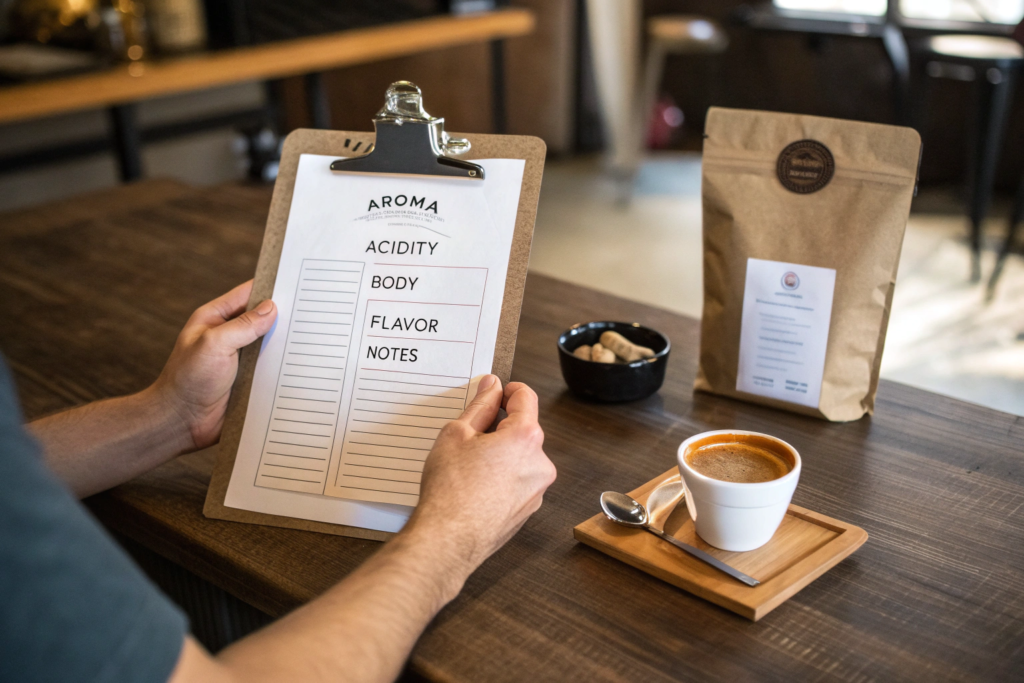
To translate the roasted sample experience into a larger order, document your specific roast profile settings and cupping notes from the sample, then communicate these findings back to us so we can ensure the production lot of green coffee matches the same cup profile and that we are aligned on the quality expectations for the full container shipment. The sample is not just for your approval. It is a calibration tool for our partnership.
Can I Use My Roast Data from the Sample for the Green Bean Order?
Absolutely. This is the most powerful use of the custom roast sample. When you roasted our 500g sample on your 15-kilo production roaster, you likely took detailed notes. You know the charge temperature, the turning point, the time to first crack, and the development time ratio that produced the best cup.
Send us that data. Seriously.
When you say, "I got the best results with a 4:30 Maillard phase and a 15% development time," it tells us a lot about the bean density and heat tolerance. It confirms that the lot we are holding for you matches the sample you tested.
This is especially important for multi-container contracts. We want to ensure that the next container, perhaps from a different block of the farm or a different harvest, roasts exactly like the sample you approved. By sharing your roast data, you give us a physical benchmark. We can cup and measure future lots against that benchmark to guarantee consistency.
This is the difference between a transactional sale and a technical partnership. At Shanghai Fumao, we want your roast data. It helps us understand our own coffee better.
What If the Sample Is Great but the Full Container Arrives Tasting Different?
This is the nightmare scenario we work hard to prevent. It is why we have the Pre-Shipment Sample (PSS) process we discussed in an earlier article.
If the 500g custom roast sample is excellent, that becomes our Gold Standard Reference. We attach the roasting notes and the cupping score to the lot file.
Before we ship the full container, we will pull a new green sample from the exact bags that are going into the container. We will roast that sample using the same roast profile that produced the great 500g sample. We will cup it. We will send you a small portion of that PSS roast for final approval.
Only when you confirm that the PSS roast matches the original sample roast do we load the container.
This system provides a chain of sensory custody. It links the initial 500g sample, the PSS, and the final container. If the container arrives and tastes different, we have a documented trail to find out why. Was it a transit issue? Was it a different lot accidentally loaded? The paper trail and the retained samples give us a way to resolve the dispute fairly and quickly.
This is the value of a supplier who is also a roaster. We understand the variables. We control for them.
Conclusion
Requesting a 500g custom roasted sample is one of the smartest moves a coffee buyer can make. It costs you only the shipping fee, but it buys you an immense amount of confidence. It removes the guesswork from green buying. It allows you to test the coffee in your environment, with your equipment, and for your customers.
At BeanofCoffee, we see this service as an essential part of our sales process. We are not afraid of how our coffee performs in your roaster. We want you to test it. We want you to push it. Because we know that when you do, you will taste the quality of the Baoshan mountains and the care of our processing.
If you have a specific lot in mind and you are ready to take the next step, let's get a sample roasting for you. Email Cathy Cai with the lot number, your desired roast level, and your shipping address. She will get you a shipping quote and put the sample in the queue. Contact Cathy at: cathy@beanofcoffee.com