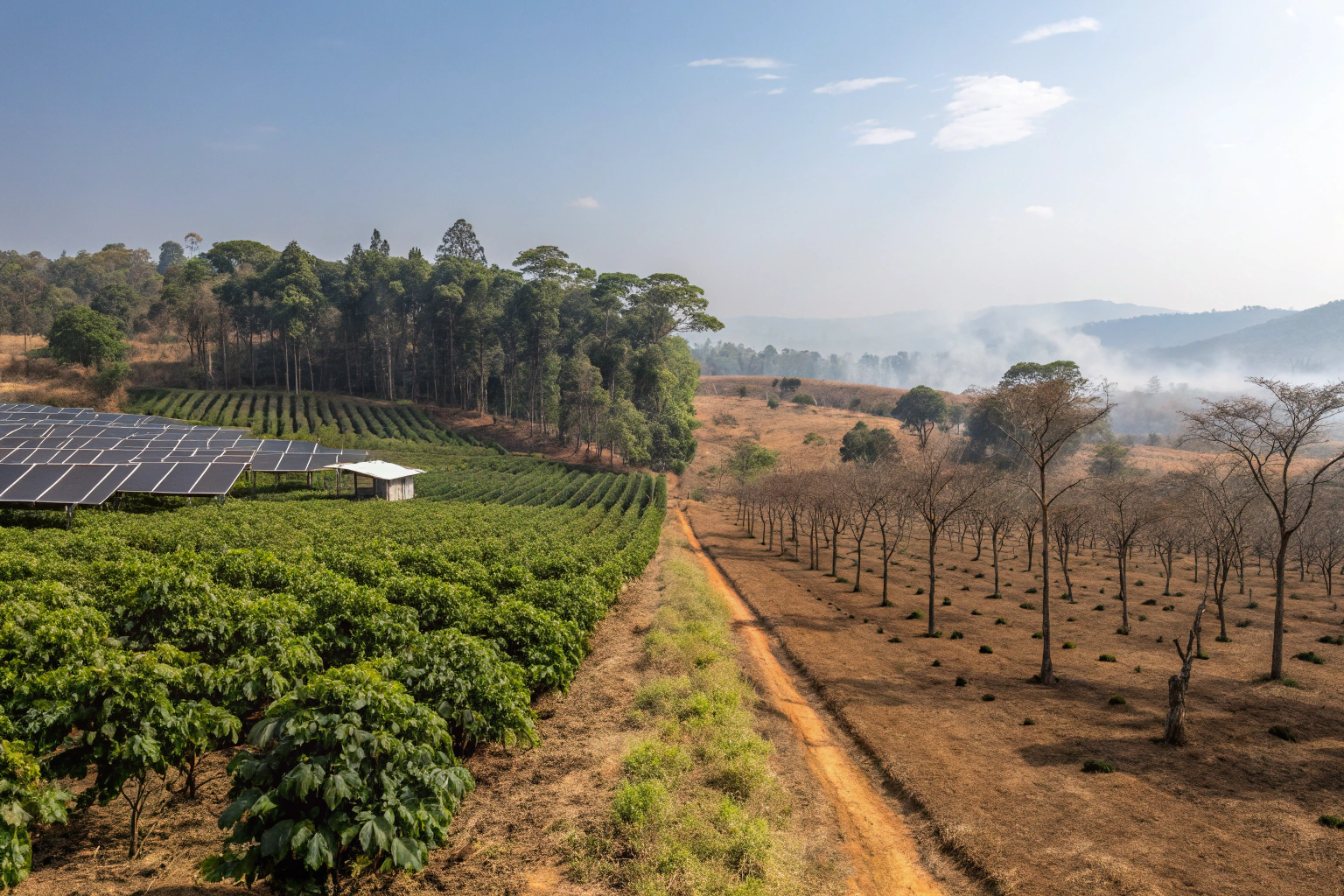
I used to ignore this topic. Honestly. Five years ago, if a buyer asked me about carbon footprints, I'd roll my eyes. I'm a farmer, not an accountant. But then, a major European distributor sat me down in Berlin. He showed me data. His end consumers were switching brands based on environmental impact. He told me, "If your coffee isn't certified climate-conscious by 2025, I can't put it on the shelf." That conversation shook me. It wasn't about politics. It was about market access. My 10,000 acres in Baoshan suddenly felt less like an asset and more like a responsibility.
Carbon-neutral coffee is green coffee produced and transported under a system where all greenhouse gas emissions from the farm to the export port are measured, reduced as much as possible, and then balanced out by purchasing verified carbon offsets that fund reforestation or renewable energy projects. It matters because European and North American buyers increasingly require it as a condition of listing, and it genuinely helps preserve the high-altitude microclimates that specialty Arabica needs to survive.
This isn't just a marketing sticker. It's a cost of doing business in the premium segment. And, if we're being honest, it's the right thing to do for the land that feeds us. Let me walk you through what it actually looks like on a working farm, not in a glossy brochure.
How Do Coffee Farms Actually Measure Carbon Footprint?
You can't manage what you don't measure. That's an old business saying, but it applies to soil and air as much as it applies to profit and loss. When we started this journey at BeanofCoffee, I asked my team a simple question: "What spits out the most carbon on this farm?" I assumed it was the diesel trucks. I was wrong, but only partly.
Farms measure their carbon footprint using a Life Cycle Assessment model that calculates the total greenhouse gas emissions from fertilizer production, on-farm fuel use, wet mill electricity consumption, wastewater methane release, and the land transport leg from the mountain to the export port.
It's a complex equation. But a necessary one. An independent auditor comes in. They don't just look at the diesel tank. They look at the nitrogen fertilizer we put on the soil. Nitrogen fertilizer releases nitrous oxide when it breaks down. That's a greenhouse gas 300 times more potent than CO2. That shocked me. You think you're feeding the trees, but you might be cooking the atmosphere.
What Are the Biggest Emission Sources on a Plantation?
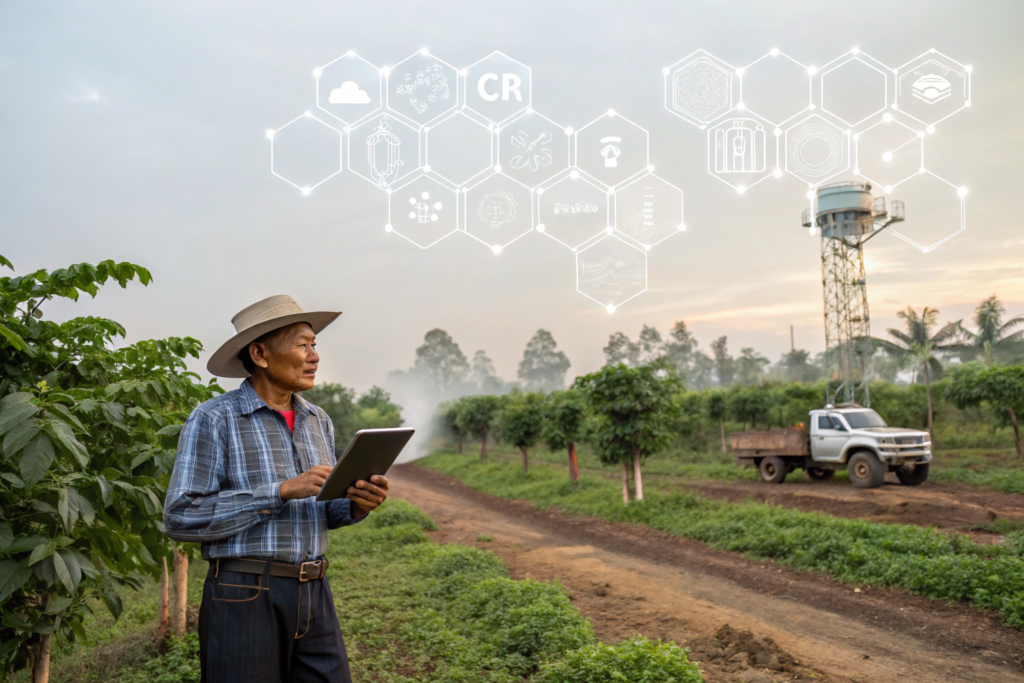
Fertilizer. By a long shot. Synthetic nitrogen is the elephant in the room. Then comes the methane from the wet mill wastewater ponds. After that, the diesel for transporting cherries from the hillside to the mill and the green bean from Baoshan to the port of Shenzhen or Shanghai.
A small detail many miss is the deforestation history. If land was cleared of forest to plant coffee decades ago, that historical carbon debt is sometimes counted. We are fortunate. Much of our Baoshan Yunnan land has been agricultural for generations. But we still have to account for the shade trees we maintain. A farm with a heavy tree canopy actually sequesters carbon in the wood. That's a credit against our emissions. Nature is an accounting system too.
How Long Does a Full Audit Take?
A proper audit for a 10,000-acre operation isn't a one-day visit. It takes weeks. The auditors need to see utility bills, fuel receipts, fertilizer purchase records, and employee transport logs. They take soil samples to check the organic carbon content.
The process is intense. But it reveals inefficiency. We discovered an old diesel generator at a remote wet mill that was burning twice the fuel of a modern one. Replacing it cut emissions and saved money. That's the part I like. Good environmental practice often aligns with good financial practice. Measuring the carbon footprint is just a health check for the farm's metabolism.
What Practices Make Yunnan Coffee Carbon-Neutral?
So, how do you get to zero? Not by doing one big thing, but by doing a hundred small things. It's a shift in farming philosophy. We started with the low-hanging fruit: the easy, cost-saving fixes. Then we moved to the harder, structural changes. The goal was never just to buy offsets and call it a day. The goal was to actually change the way the land breathes.
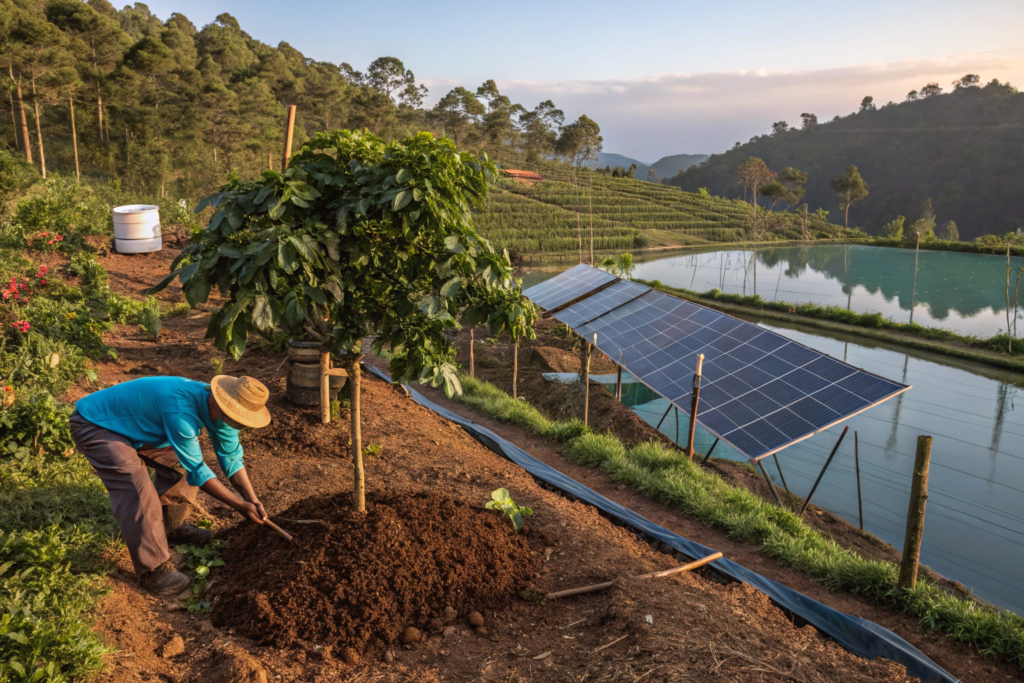
Key practices for reaching carbon neutrality include switching to organic compost and intercropping to fix nitrogen naturally, installing solar-powered water pumps for irrigation, capturing methane from processing wastewater for biogas, and maintaining dense agroforestry shade canopies that actively pull carbon dioxide out of the atmosphere.
This is not a theoretical list. It's our operational roadmap. Some of these changes take years to show results. A shade tree you plant today sequesters serious carbon in year five, not year one. You have to think in decades, not quarters. That's the advantage of owning the land. We can afford the long view.
How Does Agroforestry Work as a Carbon Sink?
Instead of growing coffee in full sun, we plant nitrogen-fixing shade trees like Inga or native hardwoods. These trees do three jobs. They shade the coffee, which improves the cup quality and slows ripening. They drop leaves, which builds organic matter in the soil. And they lock carbon in their trunks and roots.
It's a natural pump. The tree pulls CO2 from the air, keeps the carbon, and releases the oxygen. A well-managed agroforestry system can sequester several tons of CO2 per hectare per year. That offsets a big chunk of the farm's operational emissions. It also provides habitat for birds, which eat pests. A natural pest control service means fewer chemical sprays. The loop closes. Your premium Arabica grows in a mini-forest, not a desert.
Can Processing Wastewater Be Turned Into an Asset?
Coffee pulping creates a lot of sugary, acidic water. If it just sits in a lagoon, it goes anaerobic and produces methane. Methane is a climate super-villain. But we can trap it. We install covered lagoons, or biodigesters. The methane is captured and piped to a small burner to heat water for the workers' dormitories.
The leftover liquid, now de-gassed, becomes a nutrient-rich fertilizer that we pump back onto the fields. It replaces some of the synthetic nitrogen we used to buy. This sounds high-tech, and it is. But the payback is real. Lower energy bills, lower fertilizer costs, lower carbon tax liability in the future. It turns a pollution problem into a resource stream. That's smart business, not just green marketing.
Why Do European Buyers Demand Carbon-Neutral Certification?
I learned this lesson in a cold meeting room in Hamburg. The buyer across the table was polite, but firm. "We have a corporate commitment to Net Zero by 2035," she said. "Our Scope 3 emissions, the ones from purchased goods, must drop by 40%. That includes your coffee." I realized then that this wasn't a niche preference. It was procurement policy.
European buyers demand carbon-neutral certification because EU regulations are increasingly taxing carbon-intensive imports through Carbon Border Adjustment Mechanisms, consumer surveys consistently show a willingness to pay a premium for certified sustainable goods, and major retail chains have set science-based targets that flow down to every supplier on their shelves.
If you want to sell into the EU market, you need to speak their language. And right now, that language is CO2 equivalent per kilogram of green bean. This is the new quality metric, right alongside moisture content and screen size.
How Do Carbon Border Taxes Affect Your Price?
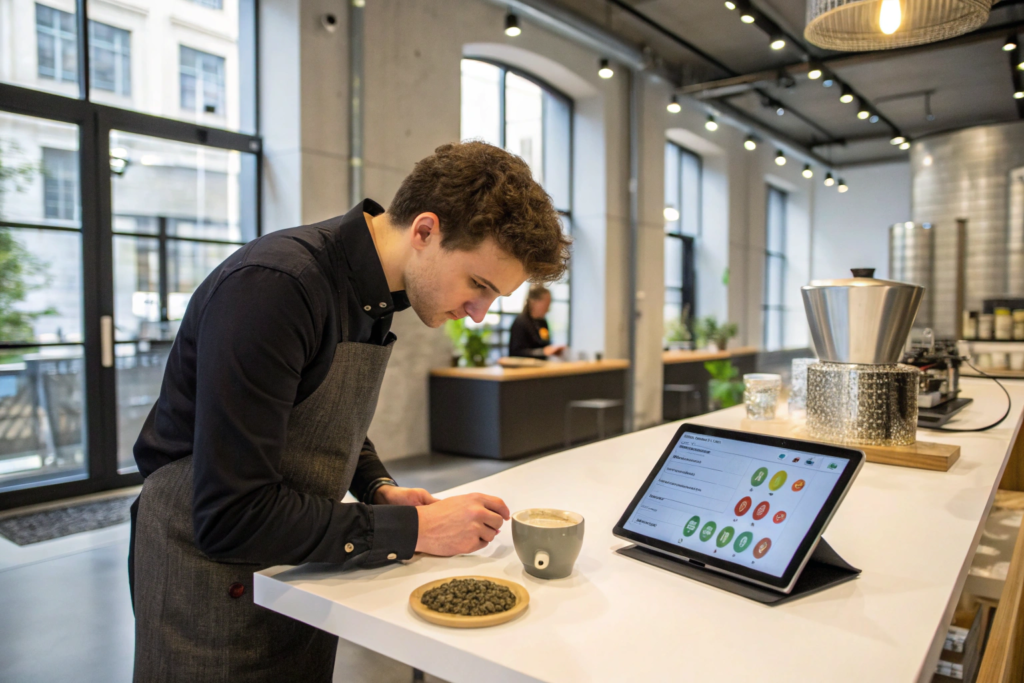
The EU is serious about this. The Carbon Border Adjustment Mechanism, or CBAM, is already in a transitional phase for some industries. Coffee isn't in the first wave, but the direction is clear. Within a few years, a carbon-intensive import will face a surcharge at the border.
If you, Ron, are selling roasted coffee to a European client, your landed cost will increase if the green bean doesn't come with a verified low-carbon footprint. A carbon-neutral certification acts as a shield against this future tax. It keeps your product competitive on the shelf. BeanofCoffee is building that documentation now, so our buyers are protected tomorrow. It's forward-looking trade strategy.
What Happens to Suppliers Who Ignore This Trend?
They get delisted. Quietly. The supermarket chains and the big brand buyers won't announce it publicly. They'll just run an RFP, and the non-certified farms won't make the shortlist. The business shifts to producers who did the homework.
This is already happening in the cocoa and tea sectors. Coffee is next. I refuse to let our 10,000 acres become irrelevant because we ignored a spreadsheet column called "Carbon Intensity." As a business owner yourself, you understand this. You adapt, or you die. We are adapting, and we want to bring our buyers along with us, as partners.
Does Carbon-Neutral Certification Actually Improve Coffee Quality?
This is the question that really matters to me. Does all this carbon accounting make the coffee taste better? Or is it just paperwork for the Europeans? I'm a coffee farmer first. The cup is the truth. And my honest answer is this: the carbon-neutral journey almost always pushes quality up. Not automatically, but through the side effects of better farming.
Carbon-neutral practices improve coffee quality because agroforestry shade slows cherry maturation and builds sugar concentration, organic composting feeds the soil microbiome which enhances nutrient uptake and flavor complexity, and the meticulous data logging required for carbon audits forces a discipline of lot tracking that catches quality defects earlier.
When you reduce synthetic nitrogen, the tree doesn't just pump up with vegetative growth. It focuses. The cherries develop slower, denser, and sweeter. A plant under a bit of healthy stress, not chemical stress, produces more of the volatile compounds that end up as flavor notes in your cup. Sustainability and quality are not trade-offs. They are the same path.
How Does Shade Growth Affect the Cup Profile?
Sun-grown coffee is fast. It ripens in a rush. The bean inside is often less dense and has lower sugar content. You taste this as a thin body and a simple, flat acidity. Shade-grown coffee, under a canopy of nitrogen-fixing trees, ripens slowly over months.
This slow maturation allows the bean to pack in more carbohydrates. More sugars mean more fuel for the Maillard reaction during roasting. The result is a cup with deeper caramel sweetness, more complex fruit acidity, and a heavier, silkier body. The shade trees that sequester carbon are also the trees that build a better Catimor cup profile. It's a perfect alignment of ecology and gastronomy.
Is There a Direct Link Between Soil Health and Flavor?
Absolutely. The soil is a stomach. You feed the soil, and the soil feeds the plant. Organic compost, made from pulped cherry skins and cow manure, feeds a whole web of fungi and bacteria. These microbes break down minerals into forms the coffee roots can absorb.
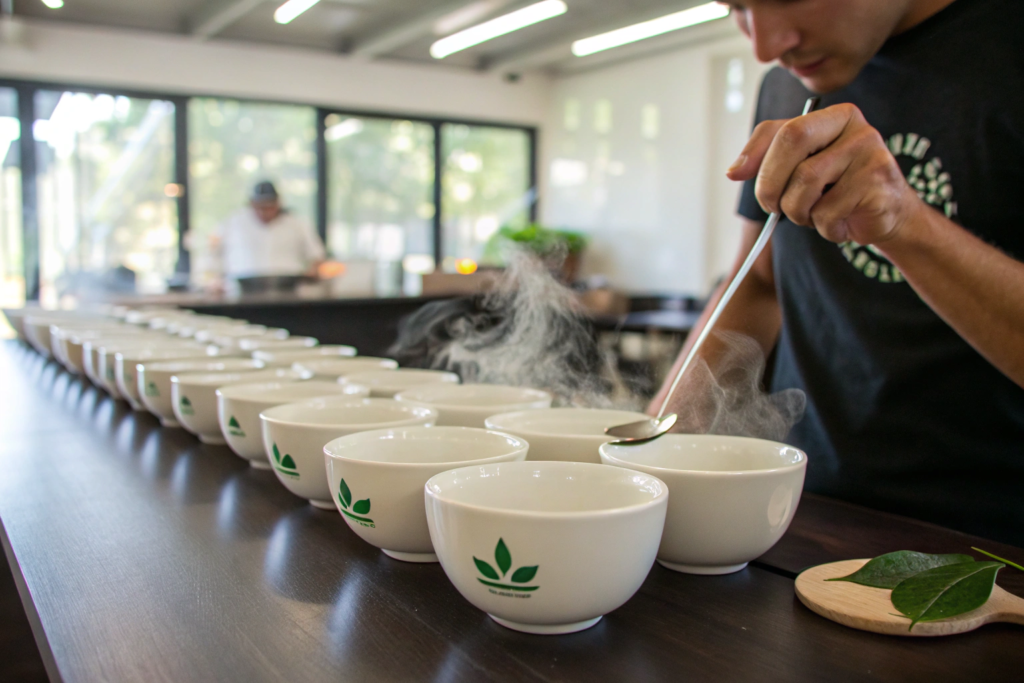
A healthy, living soil transfers micronutrients like zinc and magnesium into the cherry. These elements are flavor precursors. A dead soil, kept on life support by synthetic salts, produces a technically adequate bean that lacks soul. I can taste the difference between a compost-fed block and a synthetic-fed block on our cupping table. The compost block has more sparkle, more life. Carbon farming is essentially soil farming, and good soil makes good coffee.
Conclusion
Carbon-neutral coffee is not a fad. It's the new baseline. It started as a whisper from European buyers. Now it's a roar. It's embedded in regulations like the CBAM, in corporate procurement rules, and in the expectations of the end consumer at the supermarket shelf. Ignoring it is a risk. Embracing it is a competitive edge.
But beyond the market access, the real story is about the land. The shift to agroforestry, the composting, the wastewater treatment. These practices don't just balance a carbon ledger. They regenerate the soil that our coffee trees live in. They cool the microclimate. They build a buffer against drought and disease. And yes, they produce a denser, sweeter, more flavorful bean in the process.
We're on this journey right now across our 10,000 acres in Baoshan. We're measuring, planting trees, and documenting everything. Not just to sell a certificate, but to ensure that this land can grow exceptional Yunnan coffee for another century. If this matters to your market, and it should, let's talk. Cathy Cai can walk you through our current carbon data, our certification roadmap, and what it means for your landed cost and your brand story. Reach her at cathy@beanofcoffee.com. Let's make your supply chain part of the solution.