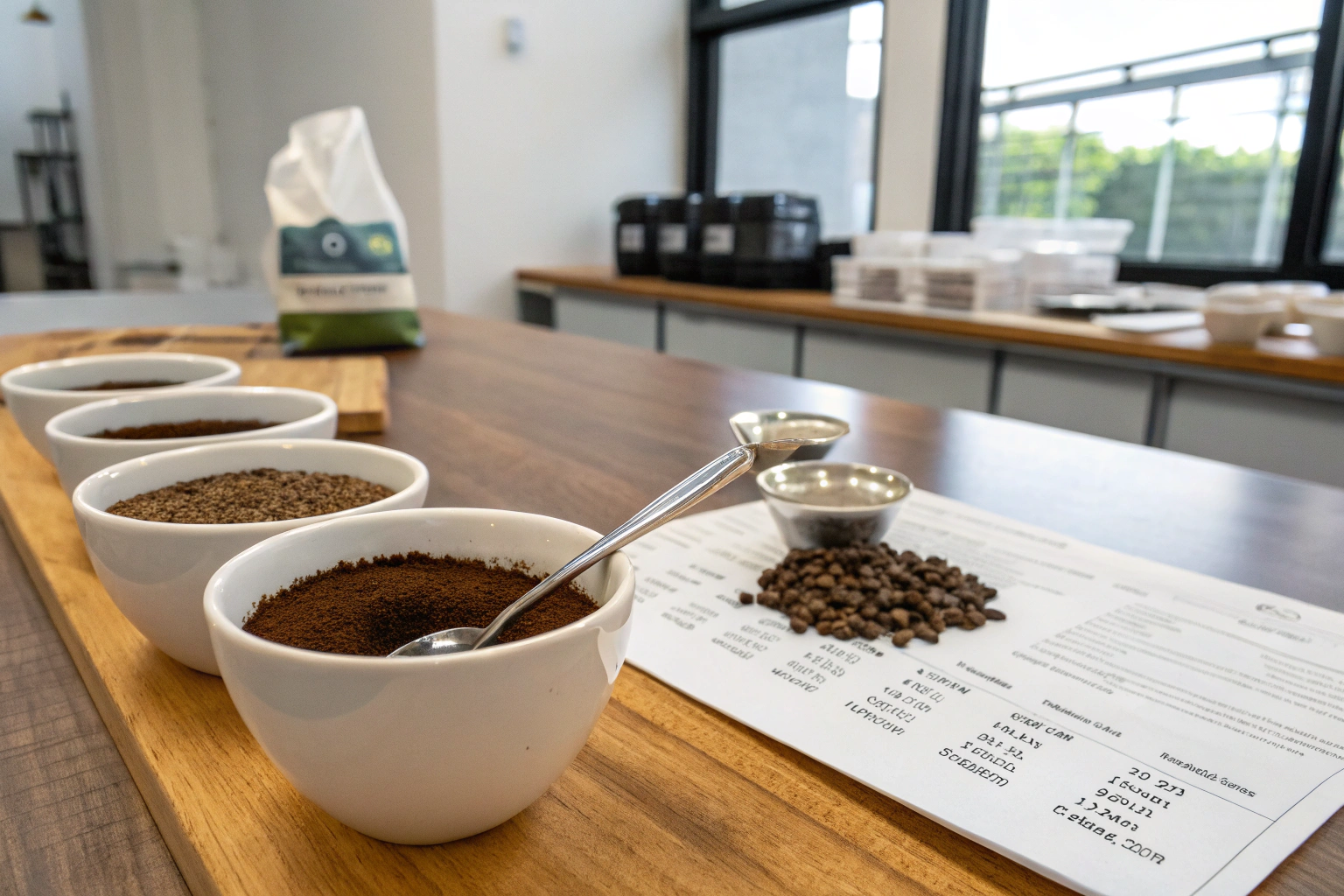
I learned this lesson the hard way, and it cost me $8,000. A buyer from Australia asked for a sample. I sent him a beautiful 200-gram pouch from a micro-lot we had carefully hand-sorted. He approved it. Then he ordered a full container. The container arrived. He cupped it. And he called me, furious. The container coffee was good, but it wasn't the same as the sample. The sample was a curated gem. The container was a commercial lot. That mismatch almost killed the relationship. I never made that mistake again. Sampling isn't just about sending a pretty bag. It's about sending a statistically honest representation of what you will actually ship.
Proper green coffee sampling requires requesting a production sample drawn from the actual export lot, not a showcase micro-sample. The buyer should cup the sample immediately upon arrival, check the moisture content and density with their own equipment, and roast it on their usual profile to evaluate how the bean reacts to their specific drum roaster before committing to a bulk purchase.
Ron, you care about price and timeliness. A bad sample process destroys both. You buy a container based on a misleading sample, you lose money. You wait three weeks for a sample that never arrives, you lose time. Let me show you how to run this process like a professional.
Why Should You Request a Production Sample Instead of a Showcase Sample?
The trap is seductive. You email a supplier. You ask for a sample. They send you a small, beautifully packaged pouch. The beans are flawless. Uniform in size. Bright green. Perfect moisture. You roast them. They taste amazing. You place a $50,000 order. And six weeks later, the container arrives, and the beans are... different. Not bad, necessarily. But different. What happened? You were seduced by a showcase sample.
A production sample is a representative draw from the actual homogenized export lot, whereas a showcase sample is a manually curated, hand-picked selection of the absolute best beans from a much smaller batch. Showcase samples flatter the coffee, but they lie about the commercial reality you are buying.
A trustworthy supplier like BeanofCoffee will always send a production sample when you are serious. A showcase sample has its place, maybe for a barista competition. But not for a bulk contract. For a bulk contract, you need the ugly truth, not the beautiful lie.
How Can You Tell the Difference Between the Two?
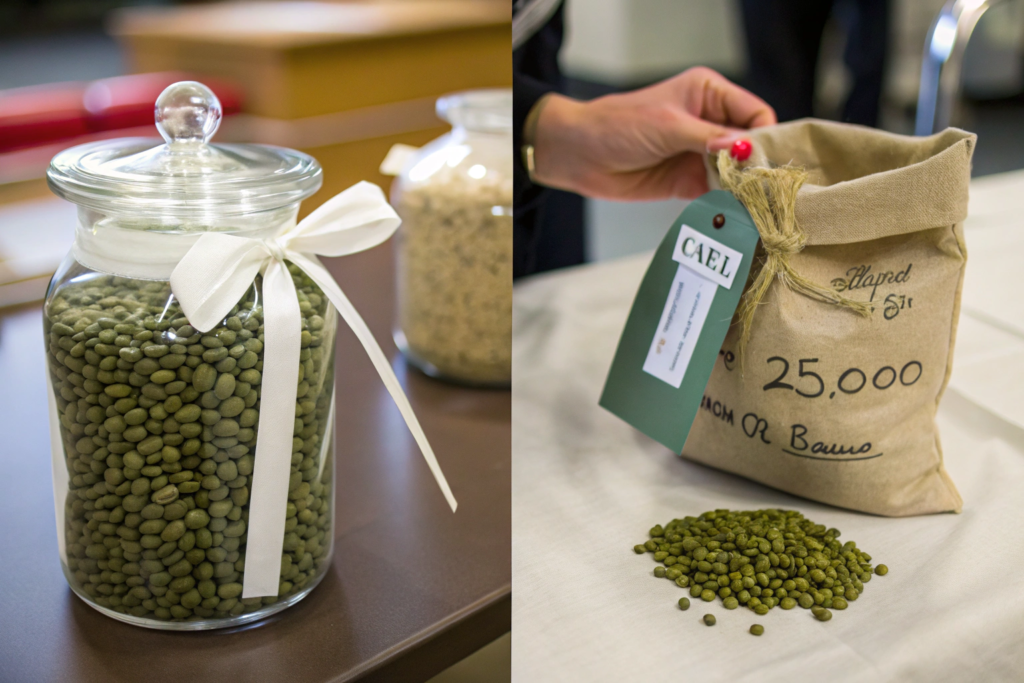
Look at the packaging. A showcase sample often comes in a pretty little foil bag with a nice label. A production sample comes in a vacuum-sealed, plain bag with a lot number, a date, and a weight written in marker. It looks industrial, not romantic.
Look at the beans themselves. A production sample will have some slight variation. A little bit of chipped edges. Maybe a few beans that are slightly lighter in color. That's normal. That's reality. A perfect, absolutely uniform sample is a warning sign. Coffee is an agricultural product, not a manufactured widget. Natural variation exists. If the sample has zero variation, someone spent hours hand-picking it. Ask the supplier directly. "Is this a production sample drawn from the lot you intend to ship me?" A direct question gets a direct answer from an honest supplier.
What Is the Proper Way to Draw a Representative Sample?
There's an actual protocol for this. It's not just grabbing a handful from the top of a sack. The Specialty Coffee Association recommends using a trier, a long, pointed probe that you insert into the center of the jute bag to pull beans from the core.
At our warehouse in Baoshan Yunnan, when we prepare a production sample for a client, we take multiple trier pulls from different bags across the pallet. We mix those pulls together in a bucket. We then divide that aggregate down using a sample divider until we get the required weight, usually 200 to 350 grams. This is a miniaturized version of the actual lot. It's statistically honest. If your supplier doesn't use a sample divider, the sample might be biased.
How to Evaluate Moisture Content and Water Activity?
This is the most boring part of the process. And it's the part that can save you from a container full of mold. Moisture content is the single biggest predictor of how the bean will age in transit. Too wet, and it molds. Too dry, and it fades, losing its volatile aromatics and tasting flat. The sweet spot is narrow.
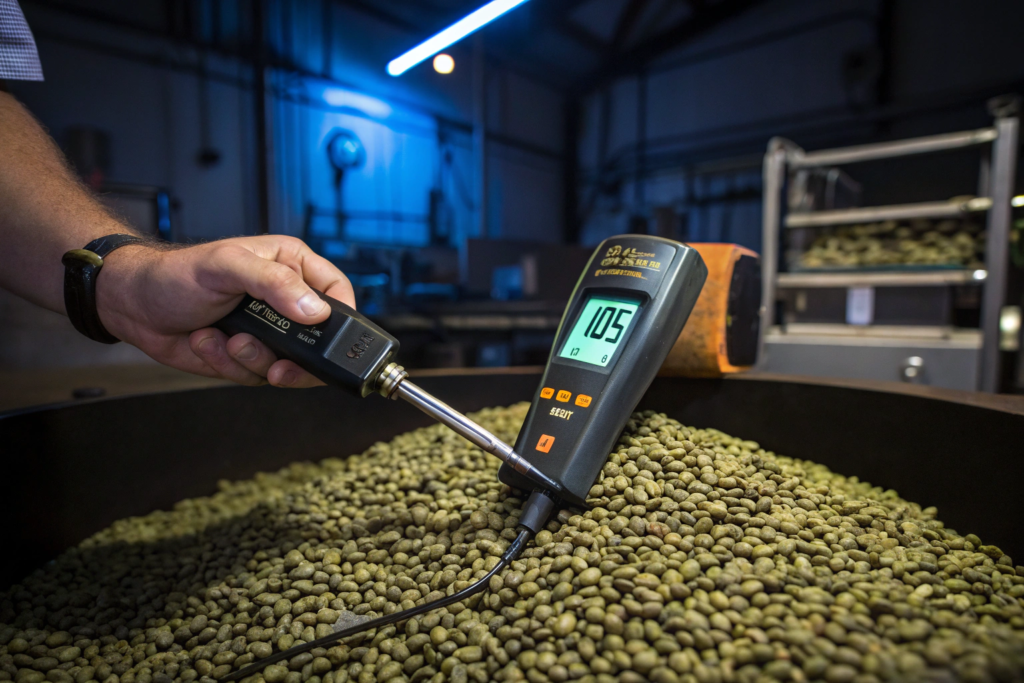
To evaluate moisture, use a calibrated capacitance moisture meter on the production sample immediately after opening the vacuum bag. A reading between 10.5% and 12% is ideal for green coffee. Below 10%, the cup risks tasting woody. Above 12.5%, the risk of mold and Ochratoxin A development during the sea voyage increases dramatically.
I test moisture on every single export lot before it leaves our warehouse. But you should test it again when the sample arrives. Why? Because moisture can shift in transit. A sample bag that's poorly sealed can absorb humidity. Or lose it. Testing on your end verifies the condition at the point of decision.
What Is Water Activity and Why Does It Matter More?
Water activity is different from moisture content. Moisture content tells you how much water is in the bean. Water activity tells you how much of that water is free and available for mold and bacteria to use. It's a measure of biological risk.
You can have a bean at 12% moisture with a safe water activity of 0.55. You can have another bean at 12% moisture with a dangerous water activity of 0.70. The moisture reading alone doesn't catch this. A water activity meter does. It's a more expensive tool, but for a serious buyer importing containers, it's worth every penny. Safe water activity for green coffee is below 0.60. Between 0.60 and 0.70 is a caution zone. Above 0.70, reject the lot. It will mold in the container. The sea voyage from China to the U.S. is three to four weeks. That's plenty of time for mold to bloom.
Can You Check Density at Home?
Yes, and you should. High-density beans roast better. They hold flavor longer. A quick density check tells you about the bean's physical integrity. Take a graduated cylinder. Fill it with water to a specific mark. Weigh out 100 grams of green coffee. Submerge the beans. Measure the water displacement. Divide the weight by the volume. A reading above 0.70 grams per milliliter is good, solid high-altitude Arabica. Below 0.65, you might be dealing with low-grown or past-crop beans. This simple test takes five minutes and tells you a lot about what's inside the bean.
How to Conduct a Roast Sample Test for Consistency?
Cupping raw green beans tells you nothing about flavor. You have to roast them. But how you roast the sample is as important as the sample itself. If you roast it on a different profile than your production roast, you're evaluating a fantasy. You need to see how this bean performs on your profile, in your roaster, under your conditions.
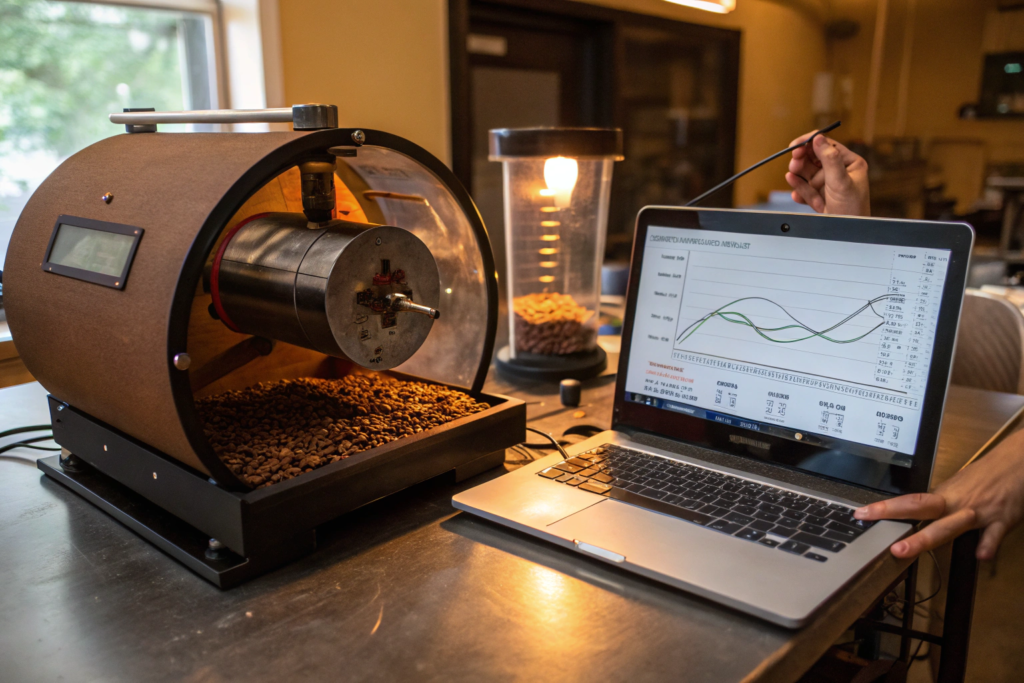
To test consistency, roast the production sample on your standard production profile. Record the roast curve. Compare it to your reference curve for a similar density bean. Look for deviations. If the sample requires significantly more or less gas to hit your milestones, the bean's thermal behavior is different than what you expected, and you may need to adjust your approach.
I always include a roast recommendation with our samples. Charge temperature suggestion. Development time target. But it's just a starting point. Your machine is different from mine. Your gas pressure is different. Your airflow is different. The only way to know if the bean works for you is to run it.
What Are the Key Roast Milestones to Track?
Watch the turning point. If the bean is high density, it will turn later and require more energy. Watch the yellowing phase. If it's too fast, the bean is soft and may scorch. Watch first crack. Is it energetic and uniform, or ragged and drawn out? A clean, rolling crack suggests a well-processed, uniform lot.
Track the time between first crack and drop. This is your development time. A consistent bean hits these milestones predictably across multiple roast batches. Roast the sample at least three times. Three roasts tell you if the bean is consistent. One roast could be an accident. Three roasts is a pattern. If the bean behaves wildly differently across three roasts, the lot lacks uniformity. You can't build a product on that.
How Do You Compare the Roasted Sample to a Control?
Always cup the sample against a control coffee. Something you know intimately. Maybe your current Catimor supplier's lot. Maybe a washed Central American bean you use as a benchmark. The control anchors your palate.
Score both on the SCA form. Fragrance, aroma, flavor, aftertaste, acidity, body, balance. Be strict. A good Yunnan Arabica should score 83 to 86. If it scores below 82, something is wrong with the processing. If it scores above 86, you might have found a gem. The score, combined with the roast curve data, gives you a complete picture. Taste plus data. That's how you make a safe buying decision.
What Are the Key Physical Defects to Spot in a Sample?
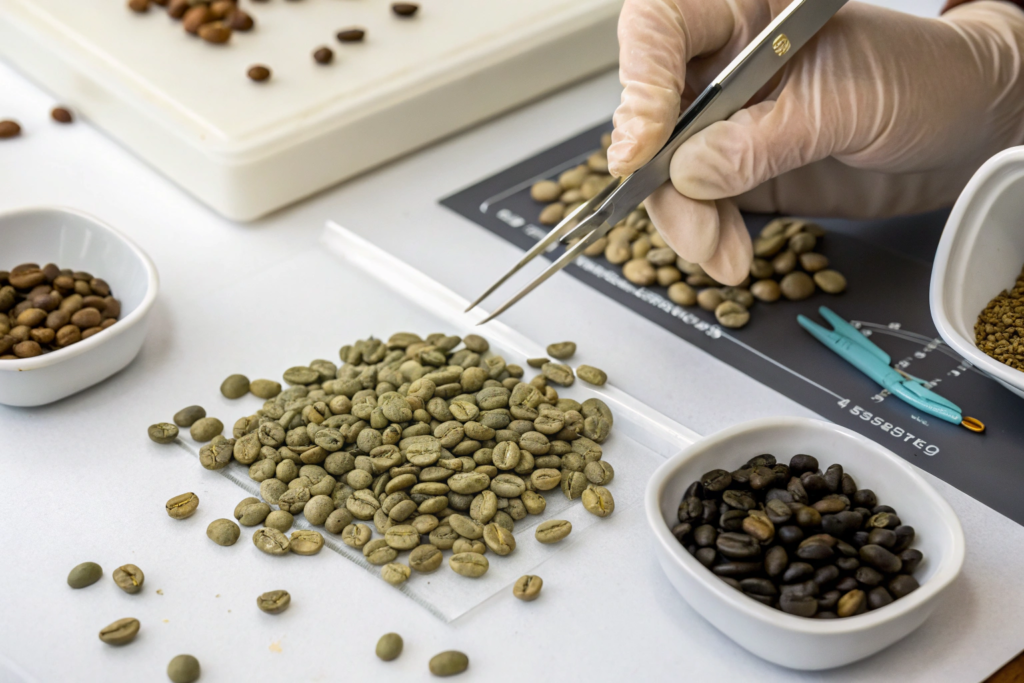
Before you roast. Before you cup. Before you even measure moisture. Just look at the beans. Spread them out on a sheet of white paper. Your eyes are the first line of defense. A high-defect sample tells you instantly that the dry mill did a poor job. And if the dry mill did a poor job, what else did they do poorly?
Key physical defects to spot include black beans, which taste fermented and harsh, sour beans, which indicate over-fermentation and a vinegar taint, insect-damaged beans with tiny boreholes, and a high percentage of broken or chipped beans, which roast unevenly and create a bitter, ashy cup.
We grade every lot at BeanofCoffee according to the SCA Green Coffee Classification. A specialty grade lot must have zero Category 1 defects and no more than five Category 2 defects in a 350-gram sample. Ask your supplier for the defect count sheet. If they can't provide one, they didn't do the work.
How Many Defects Are Acceptable in a Specialty Lot?
Zero primary defects. That's the rule. No full black beans. No full sour beans. No large stones. No large sticks. These are Category 1 defects, and even one disqualifies the lot from specialty status.
Secondary defects are allowed up to a maximum of five. These are things like partial black, partial sour, broken beans, shells, and slight insect damage. A few broken beans are normal. They happen during dry milling. But if you count 15 or 20 in your 350-gram sample, the mill was too aggressive or the bean was too dry and brittle. That lot is going to roast unevenly. Your customers will taste it. Reject it, or negotiate a significant discount.
What Does Insect Damage Tell You About Storage?
A bean with a small, round borehole tells a story. The story is that a coffee borer beetle laid an egg in the cherry when it was still on the tree, or a warehouse weevil bored into the dried bean in storage. One or two holes per sample are common in some origins.
More than three, and you have an infestation problem. The supplier's storage conditions are poor. If the insects are still active, you risk introducing pests into your own warehouse. This is a customs issue, too. A high level of insect damage might trigger a quarantine hold at the destination port. Ask the supplier about their fumigation protocol. A reliable supplier fumigates before shipment and provides a Phytosanitary Certificate. But the sample tells you the truth before the paperwork does.
Conclusion
Sampling is a science, not a lottery. The goal is not to be delighted by a tiny, perfect bag. The goal is to know, with statistical confidence, exactly what will arrive in the container. You do that by demanding a production sample, not a curated showcase. You measure the moisture and water activity to catch spoilage risk. You roast it three times on your own machine and track the curve against a control. And you spread the beans on a white sheet and count the physical defects with a pair of tweezers.
This process takes time. Maybe a week from receiving the sample to making a decision. But that week is the cheapest insurance policy you will ever buy. It protects you from a $40,000 container of mold. It protects your roastery's reputation. It protects the trust you have built with your own customers.
I want our buyers to do this. I send the samples. I send the defect count sheet. I send the moisture and density readings. I send the roast profile suggestion. Not because I have to, but because a well-informed buyer is a long-term partner. When you cup our Yunnan coffee and see the quality for yourself, the contract writes itself.
If you're ready to put our beans through this process, Cathy Cai will arrange a production sample from our current harvest. She can include a full spec sheet with moisture, water activity, density, and defect count. Just email her at cathy@beanofcoffee.com. Let's start with a sample. The container can wait.