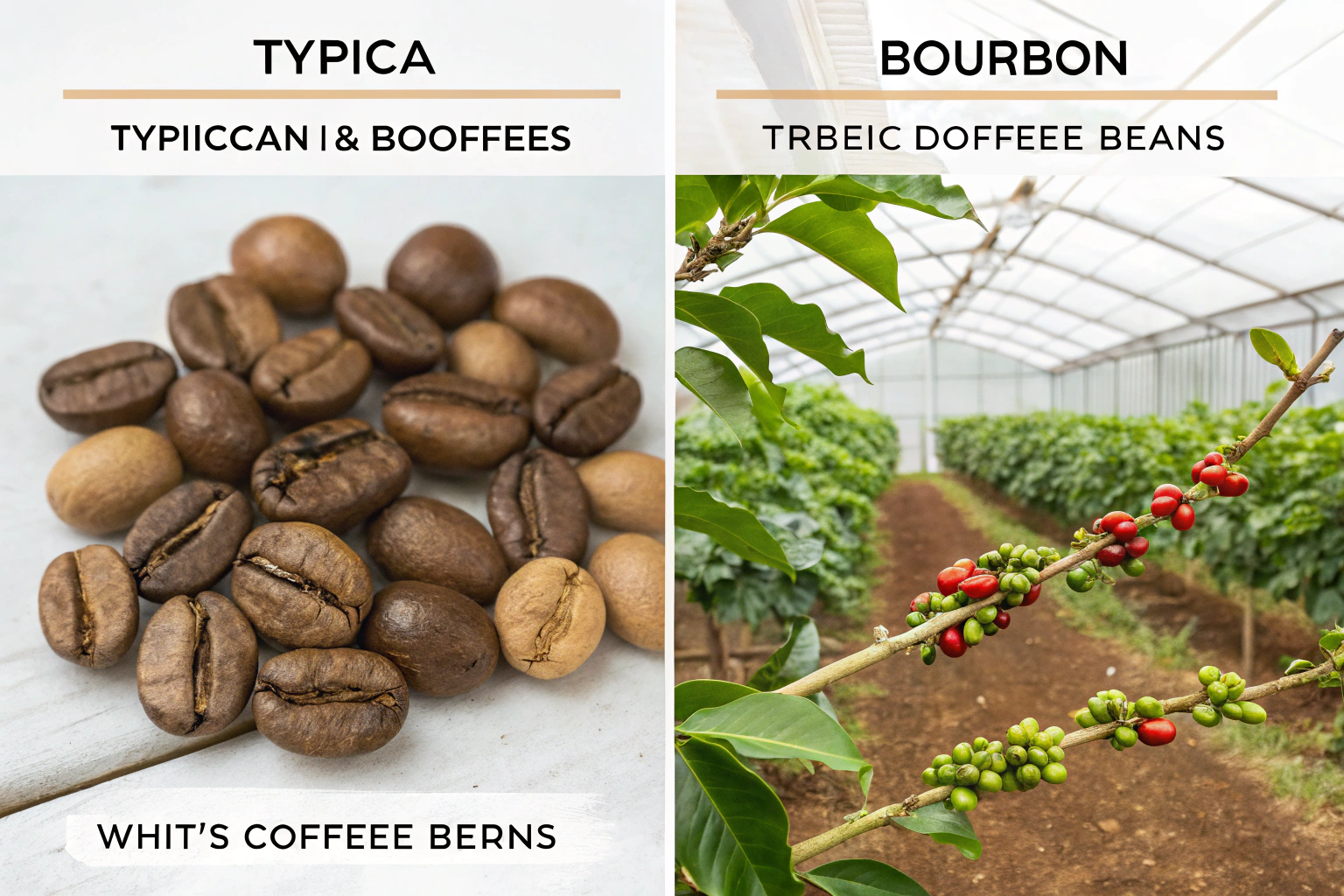
You're sourcing green coffee. A supplier offers you a "Yunnan Typica" and a "Yunnan Bourbon." The prices differ, and so do the flavor notes. But they're both 100% Arabica, from the same region. What are you actually paying for? As a grower with both varieties in our Yunnan plantations, I live with this question daily. The choice between Typica and Bourbon isn't just academic—it affects yield, cup profile, and ultimately, your cost and quality. Understanding them is key to making an informed buying decision.
The difference between Arabica Typica and Bourbon lies in their genetic lineage, physical bean structure, cup profile, and agronomic behavior. Typica, one of the foundational "base" Arabica varieties, tends to produce an elegant, clean, and often floral cup with lively acidity, but has lower yield and is more disease-prone. Bourbon, a natural mutation of Typica, typically offers a sweeter, more balanced cup with pronounced fruit and chocolate notes, slightly higher yield, but still shares some vulnerability to pests and disease. Both are revered in specialty coffee but present different value propositions for growers and buyers.
That's the summary. But to truly grasp why a Bourbon might cost more than a Typica from the same farm, or why a roaster would choose one over the other, we need to dig into the details. Their story is the story of coffee's spread around the world, and their characteristics directly impact your sourcing stability, quality, and price.
How Do Typica and Bourbon Differ in Genetics and History?
Think of them as siblings from a centuries-old family. Their shared history explains their similarities, but a key genetic divergence shaped their global journeys.
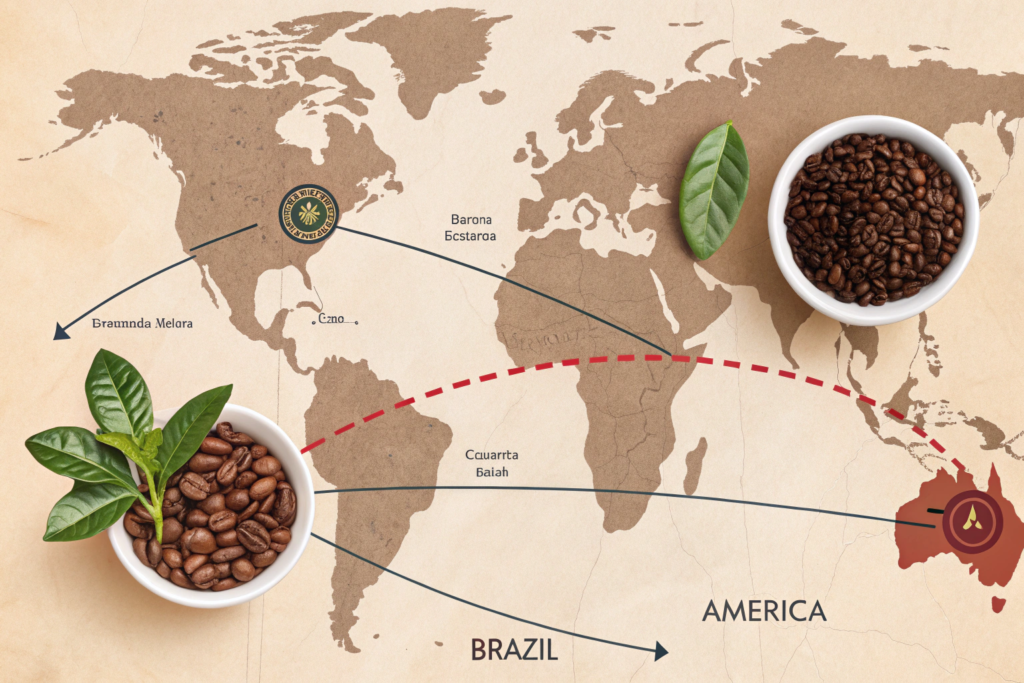
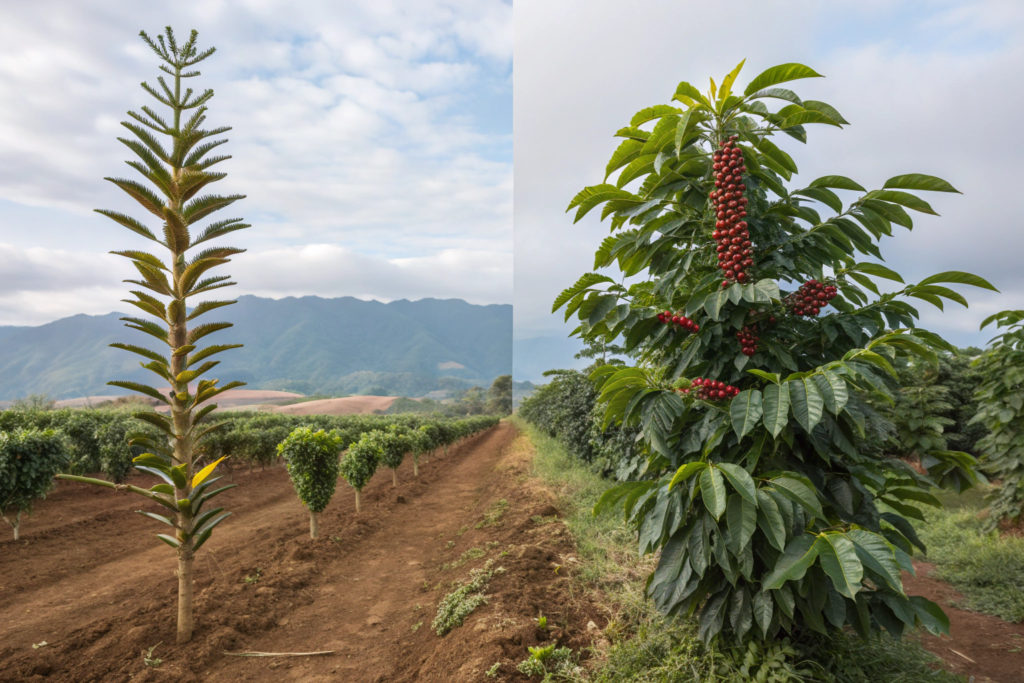
Typica's Journey: It's the "original" cultivar. The Typica genetic line is traced back from Yemen to the Indian botanical gardens, then to the island of Java, and finally to the Amsterdam botanical garden. A single plant from there was sent to the Americas in the early 18th century. This extreme genetic bottleneck means all Typica plants around the world are remarkably similar—tall, with a conical shape, and bronze-tipped new leaves. It's a pure, ancient lineage.
Bourbon's Journey: Bourbon is a natural mutation (or offshoot) of Typica that occurred on the island of Réunion (formerly Île Bourbon) in the Indian Ocean. It was later brought to Brazil and then spread throughout Latin America and Africa. It's genetically very close to Typica but distinct. Its plants are slightly more compact, with green-tipped new leaves. This shared but separate history means they have a familiar family resemblance in the cup but with their own personalities.
Why Is This History Important for Buyers?
This history matters because it explains diversity and risk. Relying solely on a farm that grows only Typica is a higher agricultural risk due to its lower yield and disease susceptibility. For a buyer, this can mean less stable supply and potentially higher prices if disease strikes. Bourbon offers a marginal improvement. Understanding a farm's varietal mix (like our plantations which grow both) is a sign of a reliable supplier managing biological risk. It also connects to traceability—these are heirloom varieties with a story, which adds value for specialty roasters and their customers.
How Did They Shape Global Coffee Production?
Typica was the pioneer that built the coffee industries of Java, Sumatra, and the Americas. Bourbon, with its slightly better yield, became the backbone of coffee in Brazil and much of Central America. In essence, Typica planted the flag, and Bourbon scaled production. In regions like Yunnan, China, both were introduced relatively recently. Here, we evaluate them not for history, but for performance: which adapts better to our microclimates and produces the cup profile our international buyers seek. This practical, results-oriented approach is what modern sourcing is about.
What Are the Distinct Physical and Agronomic Characteristics?
On the farm, the differences are visible and have direct business implications. You can see and measure the trade-offs between quality potential and farming efficiency.
Typica:
- Plant: Tall (up to 4-5 meters), open branching, conical shape. "Bronze tip" on new leaves.
- Bean: Often large, elongated ("elephant bean" shape).
- Agronomics: Lower yielding. Very susceptible to coffee leaf rust and other diseases. Prefers higher altitudes and more careful shading. Requires more space between plants.
Bourbon: - Plant: Shorter and more compact, with denser branching. "Green tip" on new leaves.
- Bean: Typically more rounded, slightly smaller than Typica.
- Agronomics: 20-30% higher yield than Typica. Still susceptible to rust but often slightly hardier than Typica. Also prefers higher altitudes for best quality.
How Do These Physical Traits Affect Harvesting and Processing?
Typica's tall, open structure can make harvesting slightly more difficult but allows for good air circulation, which can be beneficial in humid climates to prevent disease. Its large beans are prized visually but can sometimes crack more easily during milling if not processed carefully. Bourbon's compact growth can lead to denser cherry clusters, which might ripen unevenly, requiring more selective picking to ensure quality. At our processing station in Yunnan, we handle them with adjusted settings on our density sorters and graders. We know that a lot of Bourbon will have a slightly different physical profile than a lot of Typica, and we process them to optimize the unique potential of each. This is a key part of our quality control.
What Are the Yield and Disease Implications for Sourcing?
For you, the buyer, agronomics translate to supply security and price. Typica's low yield and high vulnerability mean it is more expensive to produce and carries more supply risk. A severe rust outbreak can decimate a Typica plot. Therefore, a clean, high-quality Typica often commands a premium price. Bourbon, with its better yield, can offer a slightly more stable supply and a better price point for a similarly high-quality cup. When we offer both, we are giving buyers a choice: the rarer, elegant Typica or the more prolific, balanced Bourbon. This allows brand buyers and roasters to choose based on their blend needs and cost structure.
How Do Their Flavor Profiles Compare in the Cup?
This is where the rubber meets the road. All the history and agronomics lead to this: what's in the cup? While influenced heavily by terroir and processing, the varieties have classic tendencies.
Classic Typica Profile:
- Acidity: Often bright, clean, and lively. Can be citric or wine-like.
- Body: Generally lighter, more tea-like.
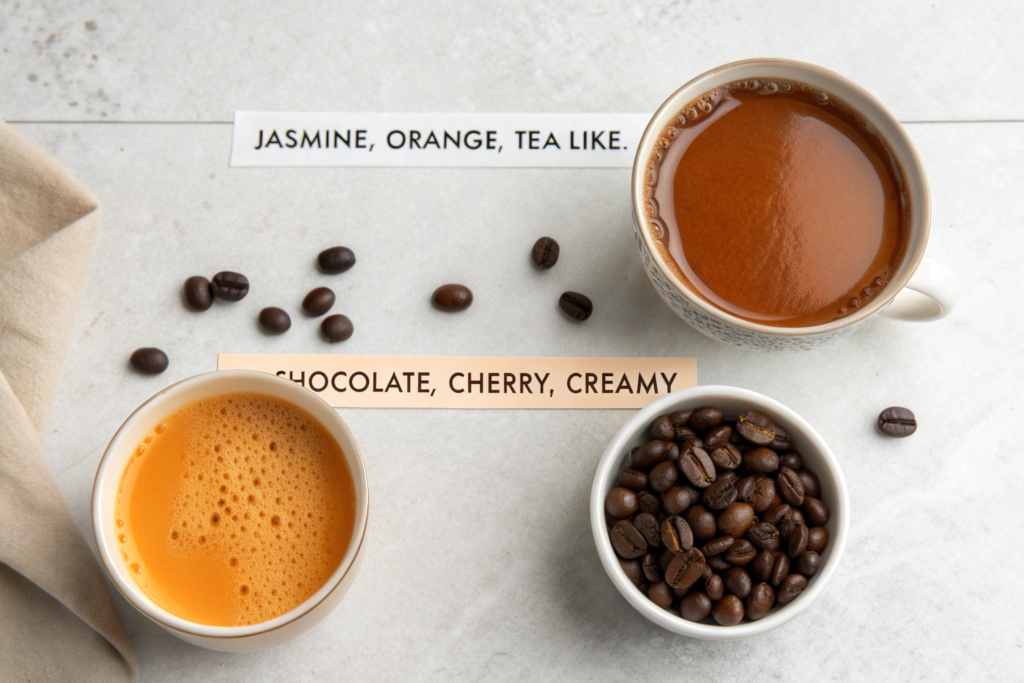
- Flavors: Known for floral notes (jasmine, bergamot), citrus, and a refined, complex sweetness. It can have a "clean" or "transparent" quality that clearly expresses its origin.
- Overall: Elegant, aromatic, and nuanced. It's often described as the "classic" high-grown Central American profile.
Classic Bourbon Profile:
- Acidity: Softer, rounder than Typica. Often a malic acidity (like apple).
- Body: Usually heavier and creamier than Typica.
- Flavors: Pronounced sweetness. Notes often trend toward chocolate, ripe red fruit (cherry, raspberry), nutty, and caramel. It has a balanced, satisfying quality.
- Overall: Sweet, balanced, and approachable with a rich mouthfeel.
Can Processing Methods Override These Inherent Profiles?
Processing can emphasize or mask certain varietal traits. A washed process will highlight the inherent acidity and clarity of both. A natural process will amplify body and fruitiness. For example, a natural-processed Yunnan Bourbon from our farms can explode with berry and chocolate notes, while a washed Typica might showcase delicate florals and tea-like clarity. However, the processing doesn't fundamentally change the structural base of the cup—Bourbon will tend to retain a heavier body and rounder acidity compared to a Typica from the same lot processed the same way. This is why knowing the variety helps you predict a coffee's behavior in the roastery and in the blend.
Which Variety Is Better for Espresso vs. Filter?
This is a matter of goal, not a strict rule. Bourbon, with its inherent sweetness, heavier body, and chocolate/red fruit notes, is often a superstar in espresso blends. It provides a creamy mouthfeel and sweet base that stands up well to milk. Typica, with its clarity and bright acidity, can make breathtaking single-origin filter coffees, showcasing terroir. However, a well-developed Typica can also bring amazing brightness and complexity to an espresso blend, and a Bourbon can make a wonderfully sweet pour-over. The key is to work with a supplier who can provide detailed profiles so you can choose based on your application. This level of specificity is part of the good quality and service we provide at Shanghai Fumao.
Why Are Both Varieties Still Important in Modern Coffee Farming?
In an era of disease-resistant, high-yielding hybrids like Catimor, why do farmers bother with fragile heirlooms like Typica and Bourbon? The answer lies in the cup quality and market demand.
They remain important because they are the quality benchmarks. They produce some of the most complex, delicious, and sought-after cups in the world. The specialty market, driven by roasters and consumers willing to pay a premium for exceptional flavor, creates the economic incentive to grow them despite their agronomic challenges. They are also the genetic foundation for most modern hybrids; to improve coffee, we must preserve these original genetic resources. On our farms, we grow them as our "premium line" for discerning buyers, while also cultivating hardier Catimor for stable volume. This diversified approach manages risk and captures value across market segments.

How Do Typica and Bourbon Compare to Modern Hybrids (e.g., Catimor)?
This is the practical trade-off every farmer and buyer considers—a delicate balance between quality, cost, and purpose that shapes the very heart of coffee sourcing.
For a buyer, this means: choose Typica/Bourbon for peak quality in a microlot program, where each bean tells a story of terroir, handpicked at dawn when the dew still clings to the cherries, and roasted with meticulous care to unlock notes of honeyed citrus, jasmine, and a silky body that lingers like a whispered secret. These are the gems sought after by specialty cafes and discerning palates, where every sip is an experience worth savoring, even if it comes with a premium price tag. On the other end of the spectrum, choose a well-processed Catimor for excellent quality at a more accessible price for larger blends. Picture rows of robust, disease-resistant bushes standing tall in sun-dappled fields, their cherries ripening in uniform waves—easier to harvest en masse, processed efficiently with modern techniques that preserve a clean, balanced flavor profile: bright acidity, nutty undertones, and a smooth finish that complements
What Is the Future of These Heirloom Varieties?
Their future is secure but niche. They will not feed the mass market, but they will continue to be the crown jewels of specialty coffee. The trend is towards identifying and preserving specific sub-varieties (like Red Bourbon, Yellow Bourbon, SL28—which is a Bourbon derivative) and understanding their performance in specific microclimates, like in Yunnan. For exporters and buyers, this means traceability to the variety level will become an even more important marker of quality and value. At Shanghai Fumao, we are documenting the performance of our Typica and Bourbon plots meticulously, so we can offer not just the variety name, but data on its specific expression on our land. This builds trust and reliability in the long term.
Conclusion
Typica and Bourbon are two sides of the same precious coin. Typica offers elegance and transparency; Bourbon delivers sweetness and balance. Their shared vulnerability and lower yields are the price paid for their exceptional cup potential. For the coffee buyer, understanding this difference is a powerful tool—it allows you to select beans not just by origin or process, but by their genetic recipe for flavor.
Choosing between them (or using both) depends on your target profile, price point, and supply needs. They are living pieces of coffee history that continue to shape the highest end of the market.
At BeanofCoffee, we cultivate these heirloom varieties alongside modern ones to give our clients a complete palette to work from. Whether you seek the delicate complexity of a Yunnan Typica or the rich sweetness of a Yunnan Bourbon for your next release, we provide the traceability and quality assurance you need.
To explore the distinct cup profiles of our Typica and Bourbon lots and find the perfect match for your roasting program, contact Cathy Cai. She can arrange for targeted samples and provide detailed cupping notes. Email: cathy@beanofcoffee.com. Taste the lineage, taste the difference.