You're a business buyer, and you need volume. You need consistent, large quantities of coffee beans to supply your brand or your customers. But the question is—how do you get that volume without sacrificing quality or breaking the bank? You hear terms like "high yield" thrown around, but what does it really mean for your bottom line? Choosing the wrong variety can leave you with a shortfall, quality issues, or costs that eat up your profit. The pressure to deliver is real, and you need a reliable source that can scale with your demand.
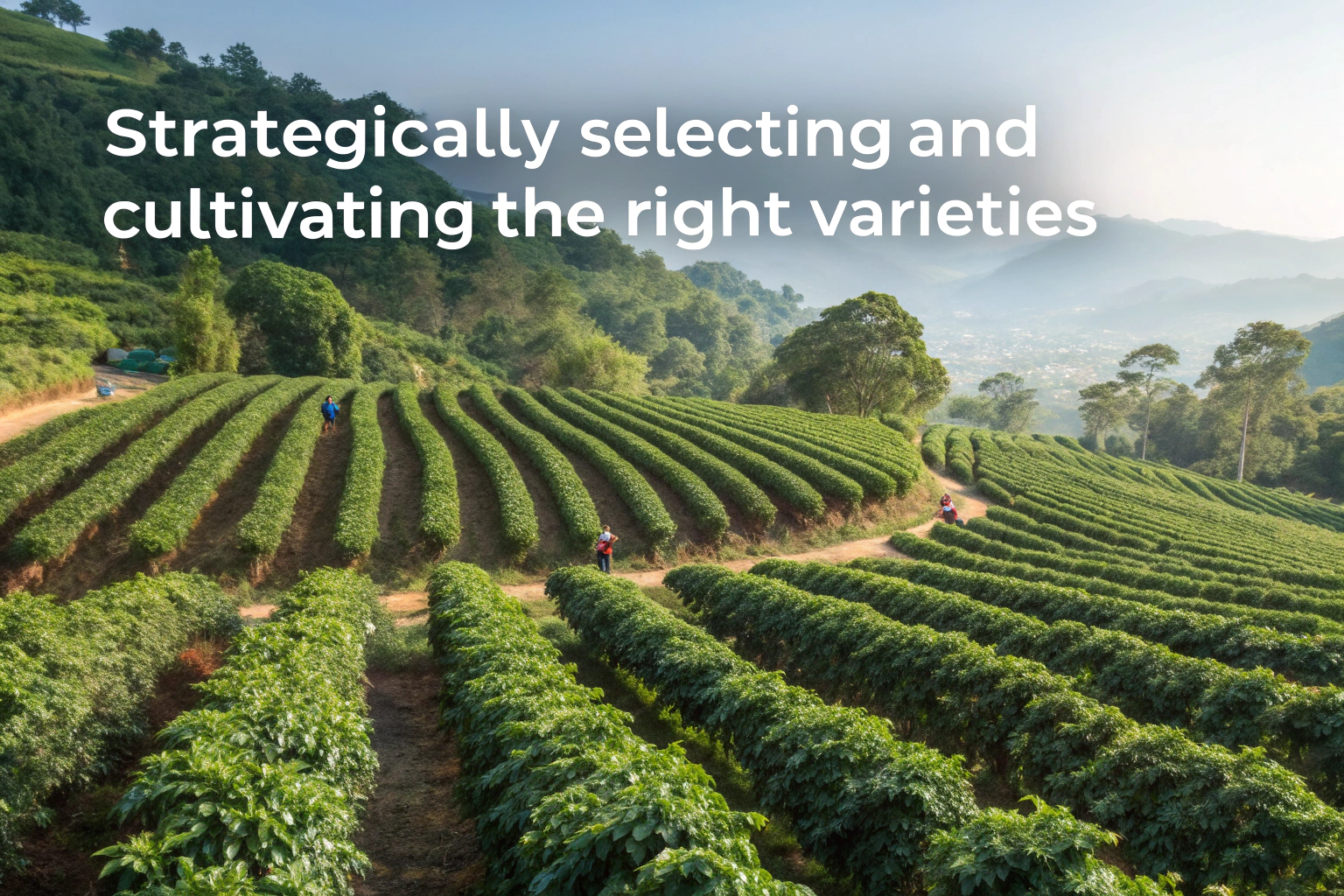
The best varieties for high yield production are those that combine strong genetics, disease resistance, and adaptability to their environment—all while maintaining a cup quality that the market accepts. From our perspective as a major plantation owner in Yunnan with over 10,000 acres, we don't just talk about yield; we live by it every season. The answer isn't one single "magic bean." It's about strategically selecting and cultivating the right varieties for the specific terroir, and then supporting them with expert farm management. For us, this means a focus on robust, proven hybrids like Catimor and selected Arabica lines, alongside the undeniable volume champion, Robusta.
So, if you're evaluating suppliers based on their ability to deliver large, stable volumes year after year, you need to look at their varietal portfolio and their agricultural backbone. Let's break down which varieties deliver on the promise of high yield and why that matters for your supply security.
How Does Catimor Ensure Consistent High Yields?
When you think of high yield in the Arabica world, one name consistently comes up: Catimor. It's a hybrid, a cross between Timor (which has Robusta genetics for disease resistance) and Caturra (a compact, high-yielding Arabica). This combination was bred for one main purpose: to produce a lot of coffee cherries reliably, even when conditions aren't perfect. For a commercial buyer, this genetic stability is a huge advantage. It means predictable volume, which translates to predictable supply and cost planning for you.
On our farms in Baoshan, Yunnan, Catimor is a cornerstone of our production. Why? Because it thrives here. The climate is suitable, but more importantly, Catimor's built-in resistance to Coffee Leaf Rust (a devastating fungus) significantly reduces crop loss risk. Fewer losses mean more usable cherries per hectare. Another point—it's a compact plant. We can plant more trees per acre compared to some taller, traditional varieties. More trees often mean more cherries, boosting the overall yield from the same land area. Honestly, for a large-scale operation focused on supplying the wholesale market, Catimor's reliability is unmatched. It gives us, and by extension you, a solid production baseline.
What are the specific yield advantages of Catimor over traditional Arabica?
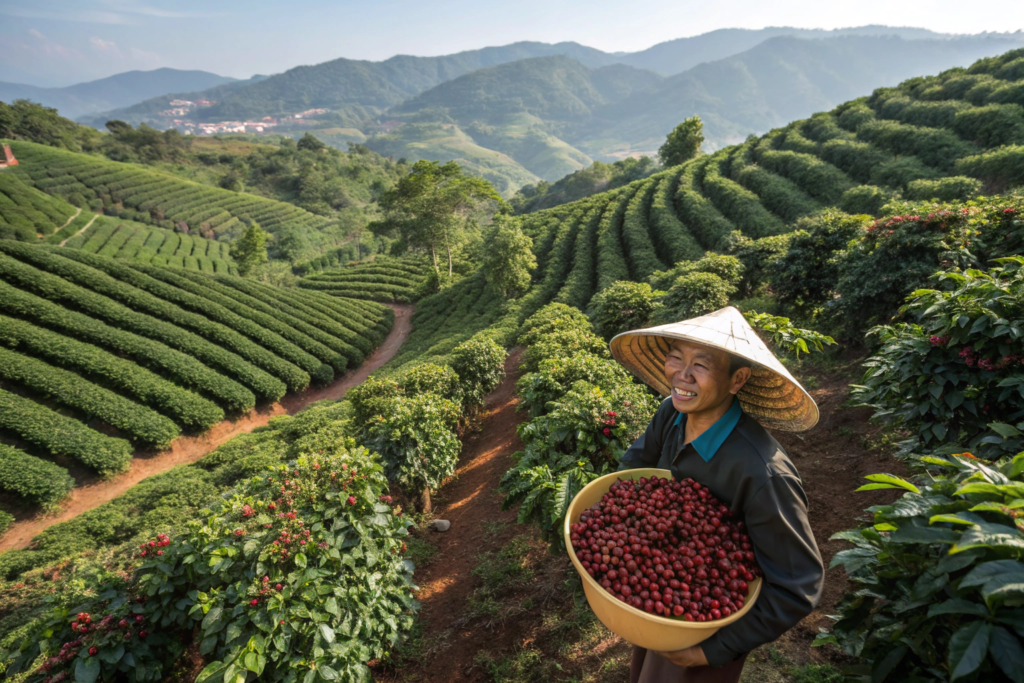
Let's talk numbers. Traditional heirloom Arabica varieties, like Typica or Bourbon, are beloved for their cup quality but are often lower-yielding and more susceptible to disease. Catimor, in contrast, can produce significantly more cherries per tree. Under good management, yields can be 20-30% higher or more. The key reason is its hybrid vigor and disease resistance. A plant fighting off rust or pests is a plant not putting energy into fruit production. Catimor spends less energy on defense and more on making coffee cherries. This efficiency is why it's become a staple for commercial production in many parts of the world, including Southeast Asia and South America. For you, this higher yield per hectare directly influences the FOB price we can offer—it's simply more cost-effective to produce.
How does farm management maximize Catimor's yield potential?
Great genetics need great farming. High yield isn't automatic. It requires precise plantation management. First, pruning. Catimor benefits from regular pruning to maintain its shape and encourage new, productive growth. Second, fertilization. High-yielding plants pull more nutrients from the soil. We implement soil testing and customized fertilizer programs to replace exactly what the trees need. Third, and this is critical, harvest timing. Catimor cherries can ripen relatively uniformly, but picking at the peak of ripeness ensures maximum weight and quality. We train our picking teams rigorously for this. This integrated approach is what separates a high-potential variety from a truly high-yielding asset. It's the daily work behind the scenes that guarantees the volume in your container.
Why Is Robusta the Unbeatable Champion for Pure Volume?
If your primary metric is kilograms per hectare, Robusta is the undisputed champion. It's not even a close race. Robusta (Coffea canephora) naturally out-yields Arabica by a wide margin—often two to three times as much. Its name hints at its nature: robust. It's more resistant to pests and diseases, tolerates hotter and lower-altitude climates, and generally requires less meticulous care. For products where a strong, bitter profile is desired—like instant coffee, espresso blends for body, or certain commercial grades—Robusta is the most cost-effective raw material you can source.
We cultivate Robusta in suitable areas of our Yunnan holdings specifically to serve clients who need massive, reliable volume for blending or specific product lines. The business case is clear: higher yield per acre means a lower cost of production. This saving is passed along the chain, giving you a significant price advantage in competitive markets. Furthermore, Robusta's hardiness makes its production more predictable. It's less likely to suffer catastrophic loss from a weather event or outbreak, which is a major risk management factor for your supply chain. When you need thousands of tons delivered on schedule, Robusta's agricultural reliability is a powerful asset.
How does Robusta's yield compare numerically to Arabica?
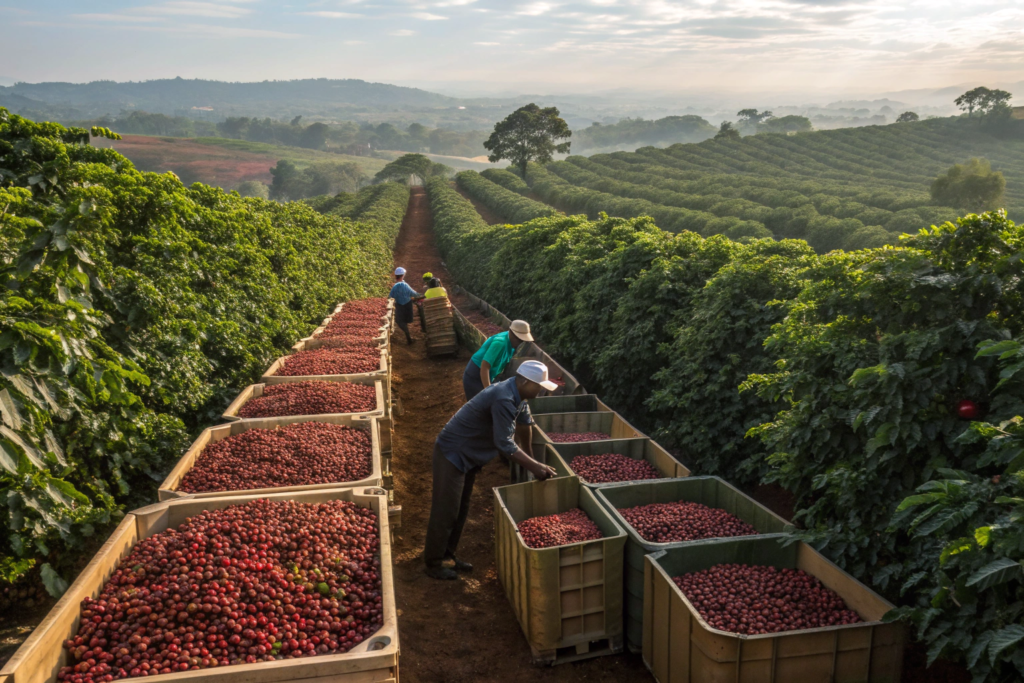
The difference is stark. While a well-managed Arabica farm might yield 1,500 to 2,000 kg of green coffee per hectare per year, a Robusta farm can easily produce 3,000 to 4,000 kg or more in the same area. In ideal conditions, some Robusta plots can exceed 5,000 kg/ha. This volume advantage is fundamental. It allows us to commit to very large contract sizes with confidence. For a buyer sourcing for a major brand or a large-scale processing facility, this yield differential is often the deciding factor. It ensures you can secure the tonnage you need without having to aggregate from countless small, unpredictable sources.
What are the best commercial uses for high-yield Robusta beans?
Robusta is the backbone of many commercial coffee products. Its high caffeine content and strong, earthy flavor profile make it ideal for espresso blends, where it provides that prized crema and body. It's the primary component in instant coffee due to its solubility and lower cost. It's also widely used in fillers for lower-grade ground coffee blends. Don't mistake "commercial" for "low quality"—premium, carefully processed Robusta has its own market and is essential for creating specific taste profiles. For a trading company or distributor, offering a reliable source of clean, well-processed Robusta from a direct plantation like ours opens doors to these large and stable market segments.
Can High-Yield Varieties Also Deliver Good Cup Quality?
This is the million-dollar question. The old assumption was "high yield equals low quality." Today, that's simply not true. Through careful plant breeding, selection, and—importantly—meticulous post-harvest processing, many high-yield varieties can produce a very respectable, even excellent, cup. The key is not to generalize. Some varieties, like certain Catimor lines, were initially criticized for their taste. But modern iterations and specific processing methods (like honey or natural processing) can unlock surprising sweetness and complexity.
At BeanofCoffee, we prove this every day. Our Yunnan Catimor, grown at high altitudes with precise processing, consistently scores well in cuppings, offering a balanced body with nutty and herbal notes that are perfect for daily drinking blends. We also cultivate selected high-yield Arabica lines that are bred for both volume and quality. The point is this: you don't have to choose between volume and acceptable (or even good) quality for the target market. With the right supplier who controls both farming and processing, you can have both. This is where partnering with an integrated exporter like Shanghai Fumao makes all the difference—we manage the entire chain to optimize for both yield and the final flavor profile you need.
How does processing technique impact the final quality of high-yield beans?
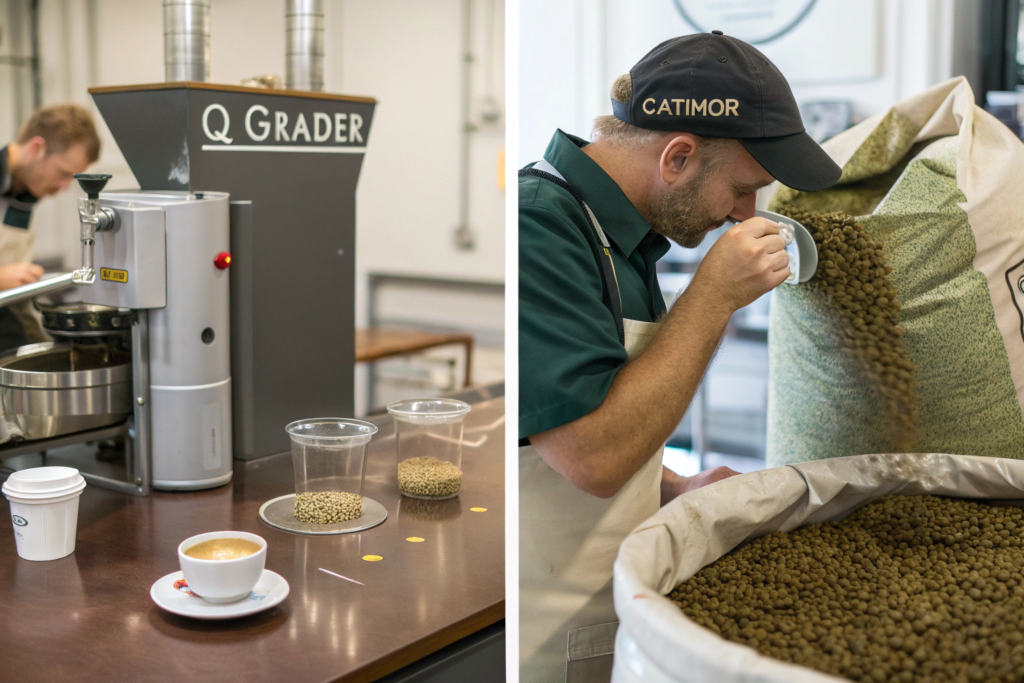
Processing is where potential becomes reality. A high-yield bean processed poorly will taste bad. Processed well, it can shine. For example, a washed process can highlight the clean, balanced attributes of a good Catimor. A natural or honey process can add fruitiness and body, masking any potential astringency and elevating the cup. We invest in modern milling equipment and train our processing teams extensively. We control fermentation times, drying rates, and sorting precision. This hands-on control in the critical post-harvest phase is what allows us to guarantee that our high-yield beans meet a consistent quality standard, shipment after shipment. It's a non-negotiable part of our value proposition.
What are some high-yield, quality-focused Arabica varieties beyond Catimor?
The world of coffee agronomy is always advancing. Breeders are constantly developing new varieties. Some notable names include Sarchimor (similar parentage to Catimor, often with better cup potential), and Colombia or Castillo varieties developed by CENICAFÉ in Colombia for rust resistance and quality. While these are more common in the Americas, the principle is global: the new generation of hybrids aims for the "triple threat"—yield, disease resistance, and quality. We are actively trialing such varieties in Yunnan to future-proof our offerings. For a forward-thinking buyer, discussing these options with your supplier shows you're invested in long-term quality and supply stability.
How Do You Choose the Right Variety for Your Market Needs?
The "best" variety isn't an abstract winner; it's the one that best fits your specific product, price point, and market demand. A specialty roaster needs a different bean than a large-scale instant coffee manufacturer. Your choice should be a strategic business decision, not just an agricultural one. It starts by clearly defining your end product and working backward to the raw material that can deliver it profitably.
Ask yourself: What is the flavor profile my customers expect? What is my target production cost? How important is organic or certification? What are my volume requirements? A supplier who offers a portfolio, like we do at BeanofCoffee, can be your guide. We can match your needs: Catimor for a reliable, medium-quality Arabica volume; selected premium Arabica for higher-end blends; or Robusta for maximum volume and cost-efficiency. Our role is to provide options and transparent information—like cupping scores, defect ratios, and yield data—so you can make an informed choice that balances risk, cost, and quality for your business.

What factors should a buyer prioritize when selecting a variety?
Create a priority list. 1. Volume & Price: If filling containers at a competitive price is key, yield becomes the top factor (leaning towards Catimor or Robusta). 2. Quality Threshold: Define the minimum cupping score or defect count you can accept. This will narrow down which high-yield lots qualify. 3. Supply Stability: Consider the variety's resistance to disease in the origin region. A resistant variety means fewer supply shocks. 4. Market Story: Does your brand benefit from a specific origin story (e.g., "Yunnan Arabica") versus a more generic "high-yield blend"? Align the variety with your marketing. We help our clients navigate this checklist to find their optimal match.
How can a supplier's scale guarantee consistent variety and quality?
Scale brings control. A small farm might grow one variety. A large plantation like ours grows multiple varieties in dedicated blocks. This allows us to offer you pure, unmixed lots. When you order Catimor, you get 100% Catimor from our designated fields, not a field blend. This purity is essential for consistency in roasting and final taste. Our scale also justifies investment in precision sorting equipment, which removes defects that undermine quality. Consistency in variety and processing, backed by large-scale quality control, is what turns a high-yield potential into a dependable, high-yield product for your brand. It’s the operational muscle behind the genetic promise.
Conclusion
Selecting the best coffee varieties for high-yield production is a strategic calculation. It balances the raw agricultural power of plants like Catimor and Robusta with the demands of your market and the expertise of your supplier. High yield no longer means sacrificing all quality; through advanced farming and processing, it's possible to achieve volume that supports your growth and a cup profile that satisfies your customers.
The real security comes from partnering with a source that masters this balance from seed to shipment. A supplier with deep agricultural roots, like us at BeanofCoffee, doesn't just sell you beans—we offer a reliable, scalable production system designed for businesses that need volume they can count on.
Ready to build a supply chain on a foundation of high-yield, consistent quality coffee? Let's discuss which of our varieties—Catimor, Arabica, or Robusta—is the perfect engine for your business growth. Contact our sales director, Cathy Cai, to request samples and yield specifications: cathy@beanofcoffee.com.