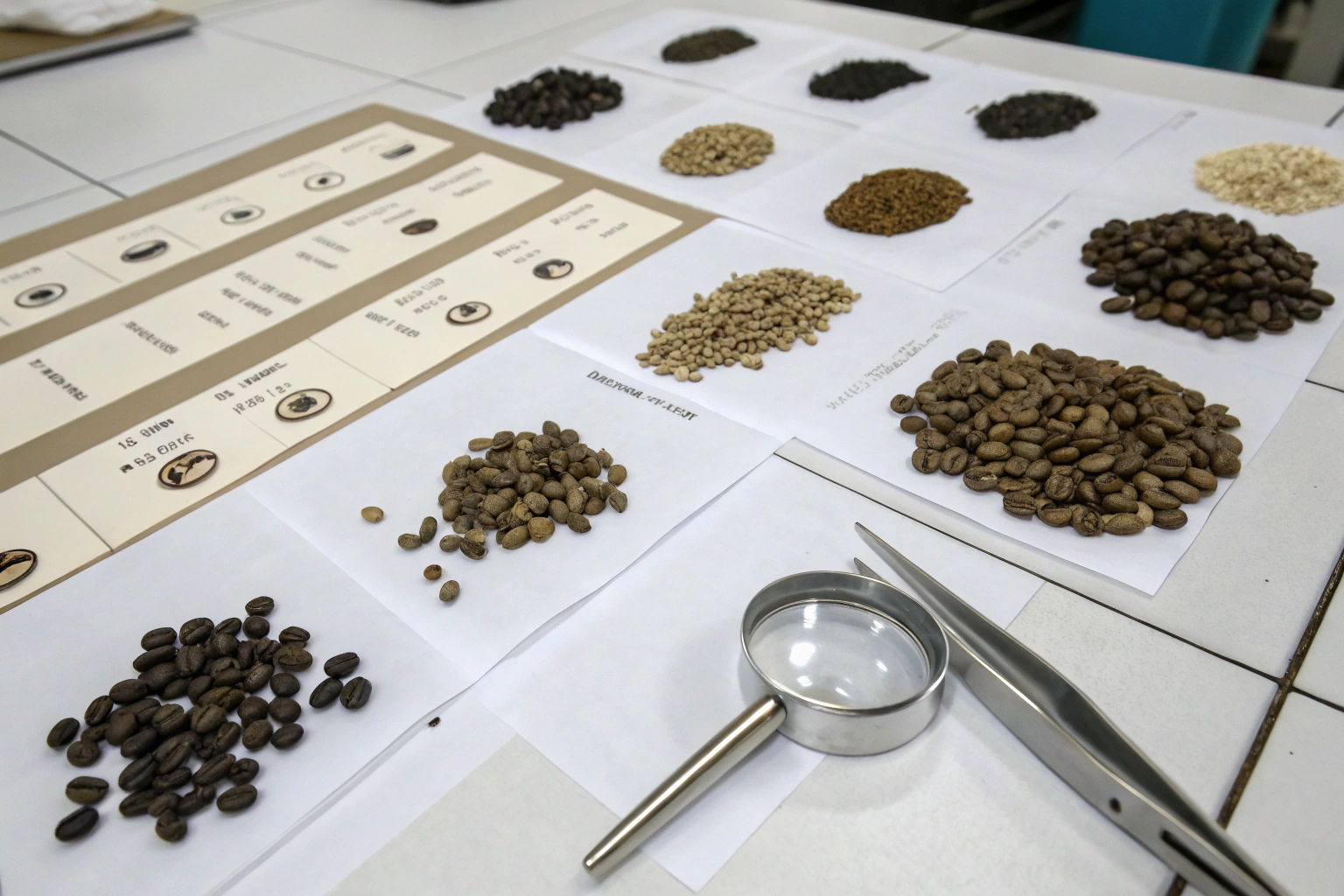
I remember the first time I truly understood defects. I was a young farmer, maybe 25 years old, and I had just delivered a truckload of parchment to a buying station. The cupper, an old guy from Kunming with 30 years in the trade, took one look at my sample. He didn't even taste it. He just spread the green beans on a white sheet, pointed a wrinkled finger at a small, shriveled black bean, and said, "This one bean? It ruins the whole bag. Do you understand? One bean." I didn't understand. Not really. I thought he was being dramatic. Then he roasted a batch with that black bean in it. The smell of burnt oil and ash filled the room. The cup tasted like an ashtray. One bean. One defect. That was the day I stopped being a farmer who grew coffee and started being a farmer who understood quality.
The most common green coffee defects are full black beans, full sour beans, insect-damaged beans, broken or chipped beans, shells, and fungus-damaged or moldy beans. According to the Specialty Coffee Association's Green Arabica Grading System, these are classified into primary defects, which are catastrophic and instantly disqualify a lot from specialty status, and secondary defects, which are cumulative and reduce the overall grade. A primary defect is a bean that will ruin an entire roast batch with a single, intense off-flavor. A secondary defect is a bean that diminishes the cup but does not destroy it alone.
Defects are the language of quality. They tell the story of what happened on the farm, at the wet mill, or in the warehouse. If you can read that language, you can protect your investment. You can avoid the container that smells like a damp basement. You can reject the lot that will produce pale, peanut-tasting quakers in your roast. Let me walk you through each major defect, what causes it, what it tastes like, and how to spot it.
What Are Primary Defects and Why Do They Matter Most?
Primary defects are the nuclear bombs of the coffee world. They are not minor blemishes. They are not cosmetic issues. They are beans that are chemically corrupted. They contain compounds that, when heated, volatilize and contaminate everything around them. The SCA is very clear about this: a specialty-grade lot must have zero primary defects in a 350-gram sample. Not one. Zero.
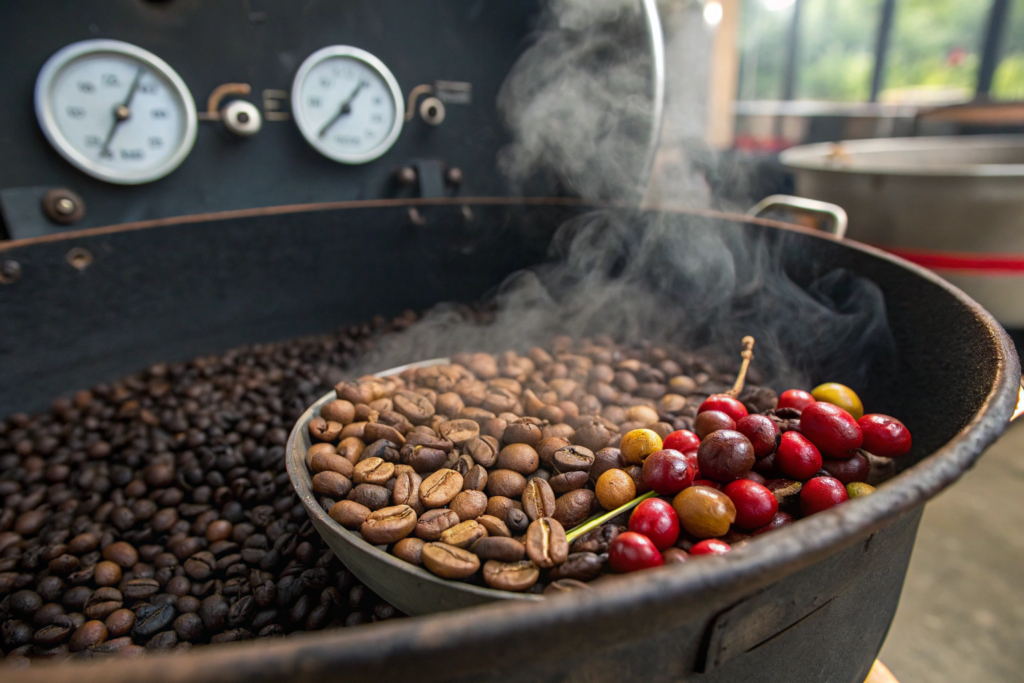
Primary defects matter most because they are chemically potent enough to ruin an entire roast batch single-handedly. A full black bean, when roasted, turns into a piece of charcoal and fills the drum with acrid, burnt-oil smoke that adheres to every other bean. A full sour bean, when roasted, releases volatile organic acids that produce a fermented, vinegar-like taste that permeates the entire batch. These defects do not dilute. They contaminate. One in a sample is evidence of severe processing failure—dead cherries picked from the ground, or catastrophic over-fermentation in the washing tank.
What Exactly Is a Full Black Bean?
A full black bean is death. Specifically, it's a bean that comes from a cherry that was dead before processing. The cherry fell on the ground. Or it was an over-ripe, fermented cherry clinging to the branch too long. Or it was a floater—a hollow, insect-eaten cherry that should have been skimmed off in the washing channel but wasn't.
Visually, it's unmistakable. It's opaque. Not translucent like a healthy bean. It's shriveled, with a cracked, oily surface. The color is not dark green. It's black. Sometimes it's a deep, rotten brown. When you cut it with a knife, the inside is dark and brittle, not pale and moist.
Chemically, it's a disaster. The sugars have fermented into acetic acid. The fats have oxidized into rancid, foul-smelling compounds. When you roast it, it does not expand. It does not pop. It carbonizes. It burns. It creates a thin, sharp smoke that makes the entire batch smell like burnt rubber and taste like ash. Roasters I know talk about the "black bean taint" as one of the most instantly recognizable and unforgivable defects in the industry. You can learn more about these grading standards from the Specialty Coffee Association.
How Does a Full Sour Bean Develop?
A sour bean is the product of a different kind of failure. It's not death by neglect. It's death by drowning. It comes from over-fermentation.
The cherry was pulped correctly. The skin was removed. But then the sticky, mucilage-covered beans were left in the fermentation tank too long. Or the water in the tank was dirty, filled with bacteria from previous batches. The bacteria consumed the sugars and produced acetic acid, lactic acid, and other volatile organic acids. This acidic soup soaked into the bean's cell structure.
Visually, a full sour bean is a sickly yellow-brown. It's mottled, not uniform. It often has a slightly greasy sheen. The smell is the giveaway. It smells like vinegar. Like old pickle brine. Like rotten fruit.
When roasted, the heat volatilizes these trapped acids. They don't burn away. They vaporize and condense on the surface of the good beans. The resulting cup tastes fermented, sour in a bad way, and unclean. It's a defect that screams "dirty processing." The SCA Arabica Green Coffee Standard lists this as a Category 1 primary defect.
What Secondary Defects Should You Count and Tolerate?
Secondary defects are the broken windows of a coffee lot. One broken window on a street is a nuisance. A street with fifty broken windows is a bad neighborhood. Secondary defects are cumulative. The SCA allows a certain number before the lot loses its specialty status.
The most common secondary defects are insect-damaged beans, broken or chipped beans, and shell beans. Insect damage is a small, dark borehole where the coffee berry borer drilled into the cherry. Broken beans are fragments, halves, and sharp-edged chips created by rough dry milling. Shells are malformed beans that look like little hollow ears, caused by genetic stress or drought during cherry development. In the SCA system, three insect-damaged beans equal one secondary defect. Five broken beans equal one secondary defect. A full defect count above five in a 350-gram sample drops the coffee below the 80-point specialty threshold.
How Much Insect Damage Is Acceptable?
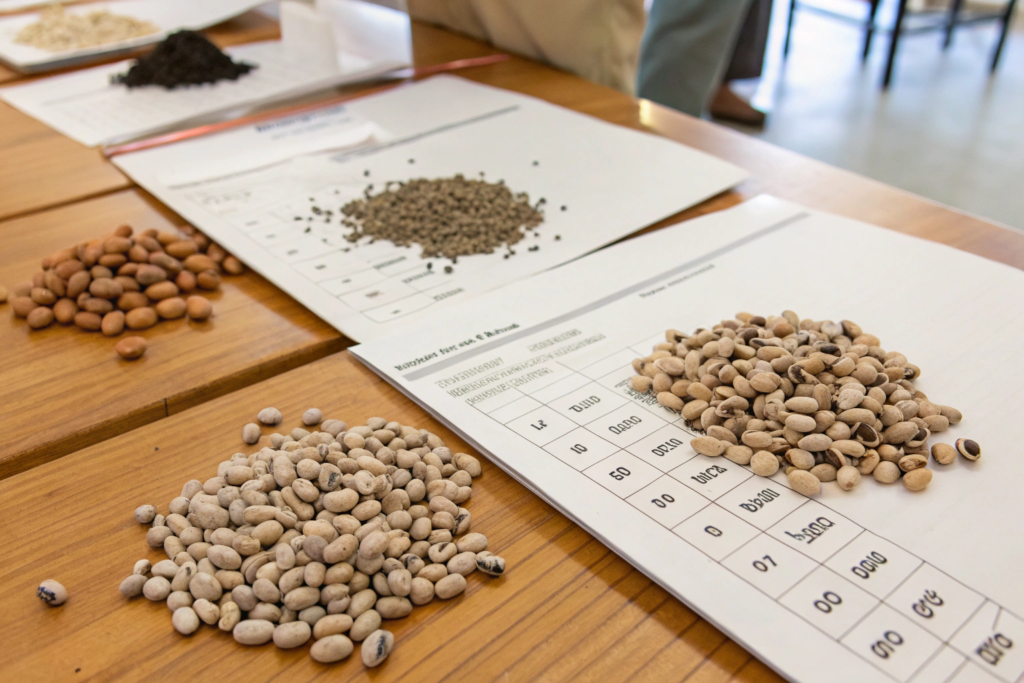
The coffee berry borer is a tiny beetle. It burrows into the cherry, lays its eggs, and the larvae eat the bean from the inside. The visual result is a small, perfectly round hole in the green bean, often with a dark, oxidized edge around the entrance.
A few insect-damaged beans are almost inevitable in any natural product. The SCA standard allows up to five damaged beans before it becomes a full secondary defect. But even a few can be noticeable. The borer damage allows oxygen and microbes into the bean. The area around the hole often ferments slightly. It can taste musty, dirty, or slightly phenolic.
A good wet mill will float the cherries before pulping. The borers often create air pockets inside the cherry, making them float. Skimming the floaters removes a large percentage of the damaged beans. Then, the dry mill will use a density table and an optical color sorter to kick out any remaining ones. At BeanofCoffee, our tolerance for borer damage is close to zero for our specialty lots. We hand-sort after the machines to catch what they miss.
Why Are Broken Beans Considered a Defect?
A broken bean is a piece of a bean. Not a whole seed. It has sharp, fractured edges and irregular surfaces.
The problem with broken beans is physical, not chemical. During roasting, these fragments have a much higher surface-area-to-mass ratio than whole beans. They heat faster. They roast faster. They burn. By the time a whole bean is perfectly at first crack, the broken pieces beside it are already charred. They introduce a burnt, smoky note into the roast.
They also create chaff dust that can clog roaster filters and even catch fire. A high percentage of broken beans indicates poor dry milling. The parchment was too dry when hulled, or the hulling machine was too aggressive. A good lot should have less than 2% broken beans by weight.
Shells are a different beast. They look like little conch shells. They are a genetic or environmental malformation. The bean didn't form properly; it's hollow inside. They roast to a crisp in seconds and contribute a papery, woody flavor. They are a secondary defect and should be minimal in a well-graded lot.
How Do Processing Errors Create Specific Defects?
Nature gives you cherries. Processing gives you beans. If processing goes wrong, the beans carry the scars forever. You cannot fix a processing defect with roasting. You cannot blend it away. You can only detect it and reject the lot.
Processing errors create the majority of both primary and secondary defects. Over-fermentation creates sour beans. Incomplete washing leaves a sticky, sugary residue that molds during drying, creating musty or moldy beans. Drying too fast on a hot concrete patio scorches the bean and locks moisture inside, leading to internal cracking and uneven roasting. Drying too slow, or in thick layers, allows mold to grow. Each error is a lapse in attention, training, or infrastructure. A well-processed coffee is the result of rigorous discipline, not luck.

What Happens When Coffee Is Dried Too Quickly?
Drying is the most delicate phase. The goal is to bring the bean from around 50% moisture down to 11% steadily and evenly over a period of one to three weeks, depending on the method.
If the coffee is dried too quickly—spread too thin on a scorching hot concrete patio under full sun—the outside of the bean dries and hardens while the inside is still wet. This is called "case hardening." The bean looks dry. It measures 11% on a surface moisture meter. But inside, it's 14%. The moisture is trapped.
This trapped moisture will cause the bean to split and crack internally. During roasting, these internal fractures cause uneven heat transfer. The cup will taste grassy, astringent, and "green"—the flavor of incomplete development. Worse, the trapped moisture can lead to mold growth during storage or transit, long after the exporter thought the coffee was stable.
How Does Fermentation Go Wrong?
Fermentation is where the magic of processing happens—the removal of the mucilage layer and the development of complex flavor precursors. It's also where the magic turns to poison if not controlled.
The ideal fermentation is short, clean, and monitored. The coffee sits in clean water in a clean tank for 12 to 36 hours. Natural yeasts and bacteria eat the sugars in the mucilage. The process produces a slight tang, but nothing unpleasant.
Over-fermentation happens when the coffee sits too long, or the water is dirty, or the ambient temperature is too high. The bacteria shift from consuming the mucilage to consuming the bean itself. They produce butyric acid, which smells like vomit. They produce propionic acid, which smells like Swiss cheese. These defects are often called "stinkers" because a single over-fermented bean will announce itself loudly in the cup.
A clean fermentation process is the mark of a professional mill. We use stainless steel tanks with temperature control at BeanofCoffee. We track the pH and the brix. It's scientific, not guesswork.
How Do Harvesting Practices Influence Defect Rates?
The defect story begins long before the wet mill. It begins in the field, at the moment of picking. A picker's hands are the first quality control checkpoint. If the hands are indiscriminate, no amount of later sorting can fully recover the lot.
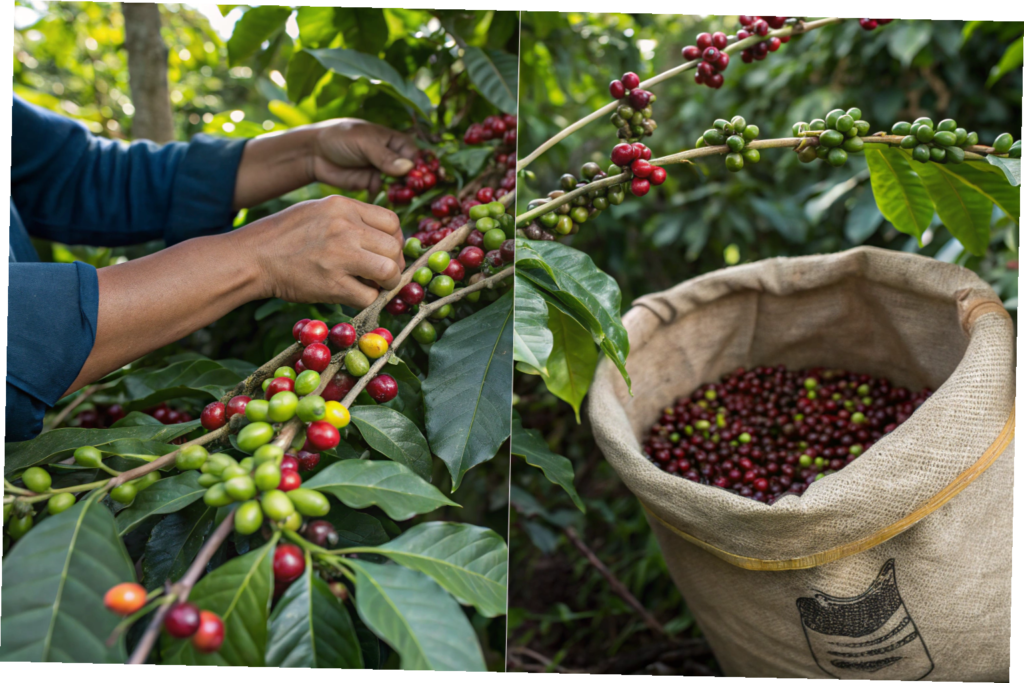
Harvesting practices directly determine the baseline defect rate of a coffee lot. Selective hand-picking, where only fully ripe cherries are harvested, results in a uniformly high-quality lot with very few defects. Strip-picking, where all cherries are pulled from the branch regardless of ripeness, introduces a cascade of defects: green under-ripes that become quakers, black over-ripes that become full black beans, and dried raisins that shatter into broken fragments during milling. The cost difference between these two methods is enormous, and it is the single most reliable predictor of cup quality.
What Is the Defect Profile of Strip-Picked Coffee?
Strip-picked coffee is a disaster in a bag. The picker grabs the branch and pulls. Everything comes off. Ripe red cherries. Hard green cherries. Soft, purple over-ripe cherries. Dried, black raisins. Sticks. Leaves. It all goes in the basket.
At the wet mill, this mix is impossible to sort perfectly. The green cherries are dense and sink, mixing with the good red cherries. The over-ripe cherries are soft and get pulped, but they're already internally fermented. The raisins are too dry to pulp and shatter into fragments.
The resulting green bean lot is a chaotic mix. You will find quakers from the green cherries—pale, underdeveloped beans that taste like peanuts and paper. You will find full black beans from the raisins and over-ripes. You will find a high percentage of broken beans from the dry, brittle raisins shattering in the pulper.
Strip-picking is the hallmark of commodity-grade coffee. It's fast. It's cheap. It produces volume, not quality. For specialty coffee, it's unacceptable. You cannot build an 85-point cup on a foundation of strip-picked cherry.
Why Does Selective Picking Cost So Much More?
Because it's slow, repetitive, and requires skill. A selective picker walks the rows and looks at each branch. They touch only the deep red, perfectly ripe cherries. They leave the green ones for next week's pass. They leave the over-ripe ones for the ground. They come back to the same tree three, four, five times over the course of the harvest.
A selective picker harvests maybe 80 to 120 kilos of cherry per day. A strip picker can do 200 or 300 kilos. The labor cost per kilo is two to three times higher for selective picking. That cost is the single largest investment in quality a farmer makes.
But the return is clear. Selective picking eliminates the primary source of defects at the very beginning. It makes every subsequent step—floating, pulping, fermenting, drying, sorting—easier and more effective. The Green Coffee Association contracts often specify "European Preparation" or "Specialty Preparation," which assume selective picking as the baseline.
Conclusion
Defects are not random. They are predictable, preventable, and detectable. They are the fingerprints of bad decisions: a picker in a hurry, a fermentation tank left too long, a drying patio that was too hot, a mill that skipped the final hand-sort. A clean, defect-free lot is not an accident. It's the result of a hundred small, correct decisions made consistently.
For a buyer, understanding defects is empowerment. When you look at a sample and see a black bean, you know what it means. You know the supplier cut corners. You know the cup will suffer. You can reject the lot before it costs you money and reputation. When you see a sample that is clean, uniform, and vibrant, you know you're looking at a supplier who cares.
We take defect control seriously. It's the foundation of our export quality. Our sorters are trained to identify and remove every category of defect I've described. Our processing protocols are designed to prevent defects from forming in the first place. And our pre-shipment samples reflect the actual container, not a cherry-picked handful of perfect beans.
If you want to test your defect-detection skills on a sample of our current Baoshan Arabica, I invite you to do so. See what a clean, specialty-grade lot looks like up close.
To request a 200-gram pre-shipment sample, complete with a moisture and defect analysis sheet, reach out to Cathy Cai.
Email: cathy@beanofcoffee.com. Train your eyes on the beans that speak the truth.