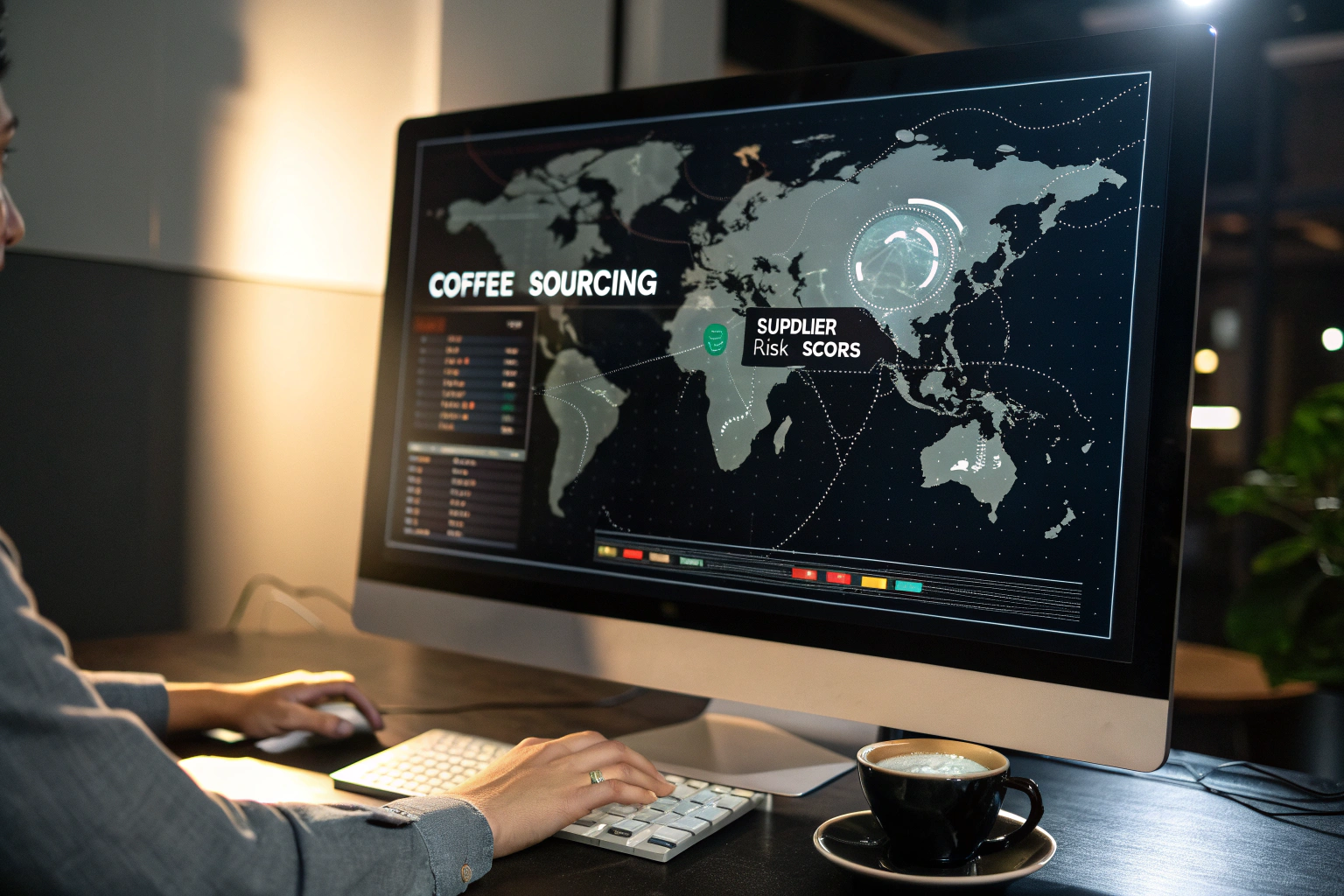
Two years ago, I would have laughed at the idea. AI? Finding coffee suppliers? Come on. Coffee is about relationships. Handshakes. Cupping tables. The smell of the earth after rain. But then my son, who studies computer science in Shanghai, showed me something. He took a list of 200 potential buyers I had collected from a trade show in Berlin. He ran it through a simple AI tool. In ten minutes, it sorted them by their importing history, their social media activity, and their financial health score. The top ten names on that list? I closed deals with four of them within six months. The old way—blind emails, gut feelings, expensive flights—still has its place. But ignoring AI now? That's like refusing to use a moisture meter and relying on your teeth to test the beans.
You can use AI tools to find better coffee suppliers by automating three critical but time-consuming tasks: market discovery, supplier verification, and communication optimization. AI-powered platforms can scan global trade databases, analyze a supplier's digital footprint for red flags, and even help you draft culturally appropriate, professional inquiry emails. The goal is not to replace human judgment. The goal is to feed your judgment with better, faster, and more organized data so you spend your time cupping samples, not scrolling through endless Alibaba listings.
I'm a farmer. I'm not a tech guru. But I've learned to use these tools because they give me an edge. And if you're a buyer—whether you're Ron from America or a startup roaster in Canada—these tools can help you find a supplier like me, or they can help you avoid a supplier who looks good on paper but is hiding something. Let me break down exactly how you can put AI to work in your sourcing process.
How Can AI Accelerate the Discovery of Verified Suppliers?
Finding suppliers used to mean one thing: Google. You'd type "coffee supplier China" and get 50 million results. The first three pages would be Alibaba links, some sketchy-looking websites, and maybe a decent blog. You'd click, scan, open a hundred tabs, and still have no idea who was real and who was a middleman with a nice website. AI changes this. It doesn't just search. It filters. It learns.
AI accelerates supplier discovery by going beyond keyword matching to analyze intent, context, and patterns. Tools like ChatGPT with web browsing, Google's Gemini, or specialized B2B platforms with integrated AI can scan trade registries, check company incorporation dates, analyze shipment histories on platforms like ImportYeti or Panjiva, and present you with a curated shortlist of suppliers who match your specific volume, quality, and certification requirements.
What Prompts Can You Use to Find Specific Supplier Types?
The quality of the AI's output depends entirely on the quality of your input. A vague prompt gives a vague answer. A specific, detailed prompt gives you a research report.
Don't just ask: "Find me coffee suppliers." That's useless. Ask something like: "Search for specialty-grade Arabica exporters in Yunnan, China, who have been in business for at least five years, have a functional website with an English version, and show evidence of direct farm ownership rather than just trading licenses. Cross-reference any company names with US FDA facility registration databases and look for any negative trade dispute records."
That's a powerful query. The AI will take a few minutes. It will crawl. It will filter. It will give you five or ten names, not five hundred. Then you can take those names and do your human due diligence.
Another prompt I've used: "Identify the top ten green coffee importers in Australia who have mentioned 'Yunnan' or 'Chinese coffee' on their website, social media, or in industry news articles in the last two years. Provide their company name, website URL, and a direct quote of the mention." This is pure gold for building a targeted buyer list.
Which AI-Enhanced Platforms Are Best for Coffee Sourcing?
You don't need to build your own AI. Several existing platforms have already integrated AI features that are directly useful for coffee sourcing.
Alibaba has a "Smart Sourcing" feature. You describe what you need, and it suggests verified suppliers. It's not perfect—it still leans heavily on paid listings—but it's a starting point. More useful are trade data platforms like ImportYeti. It's a free tool that lets you see the actual shipping records of any company. You can see who is already importing Chinese coffee, what volumes they're moving, and who their suppliers are. This is public customs data, visualized by an AI.
For deeper financial verification, Dun & Bradstreet uses AI to score the financial health of companies. For specialized coffee sourcing, platforms like Algrano and Cropster's marketplace are beginning to layer in machine learning to match buyers with producers based on past cupping preferences. The Specialty Coffee Association is also exploring data-driven ways to connect the supply chain.
How Can You Use AI to Assess a Supplier’s Reliability?
You've got a list. Now you need to know who on that list is going to take your deposit and ship you sawdust in a GrainPro bag. The internet is full of ghosts. Fake companies. Fake reviews. Fake photos. But ghosts leave footprints. AI is very good at finding footprints.
You can use AI to assess a supplier's reliability by prompting it to perform a "digital forensic audit." Ask the AI to analyze the supplier's website for inconsistencies—such as stock photos being used to represent their farm, an SSL certificate that doesn't match the company name, or a domain registered only six months ago. Ask it to search for the owner's name on LinkedIn and cross-reference the employment history with the company's founding date. Ask it to look for patterns of negative keywords like "scam," "problem," or "lawsuit" associated with the company name on trade forums.
What Digital Red Flags Can AI Detect?
An AI can spot things your tired eyes might miss on a late-night sourcing session.
First, image authenticity. You can ask an AI image detector, or a multimodal AI like GPT-4, to analyze the photos on a supplier's website. "Are these images likely stock photography, AI-generated, or authentic photographs of a working coffee farm?" A supplier who uses a glossy AI-generated image of a "perfect coffee plantation" that looks more like Colombia than Yunnan is either lazy or deceptive. Neither is good.
Second, text consistency. You can feed the AI the "About Us" page of a supplier. Ask it: "Does this text contain specific, verifiable details like GPS coordinates, varietal names, and processing methods, or is it vague marketing language that could apply to any farm?" A real farmer writes about their Catimor from plot 4B, dried on raised beds for 18 days. A middleman writes about "premium quality beans from the best high mountains."
Third, network analysis. An AI with web browsing can check if the supplier's claimed certifications—Rainforest Alliance, Organic, Fair Trade—are actually listed on the certifier's official website. A fake certificate on a PDF is easy to make. A listing on the Rainforest Alliance certificate database is hard to fake.
How Can You Verify a Supplier's Claims with AI?
Claims are cheap. "We own 10,000 acres." "We export 500 containers a year." "We have 50 years of experience." These are big numbers. They are also easily checked.
You can use the AI to cross-reference shipping records. A tool like ImportYeti shows the actual bill of lading data. If a supplier claims to export heavily to the US, they should appear in the US customs data. If they don't, they're lying or exaggerating.
You can also ask the AI to analyze Google Maps satellite imagery of the supplier's stated address. "Show me the GPS coordinates 25.11 N, 99.16 E. Is this a coffee farm with visible drying beds and a wet mill, or is it an office building in Kunming city center?" I've done this. I've had buyers do this to me, and I welcome it. Our farm in Baoshan is clearly visible from space—the rows of trees, the processing facilities. It's proof.
Here's a clever prompt: "Find any interviews, podcast appearances, or conference speaker profiles featuring [Supplier Name]. Transcribe any claims they make about their volume or history, and cross-check those claims against their written marketing materials for consistency." A supplier who tells a podcast they produce "a few hundred bags" and then tells you they can supply "ten containers a month" is waving a red flag.
Can AI Improve Your Communication with Overseas Suppliers?
Language is a barrier. Culture is a barrier. I'm comfortable writing these articles in English, but many Chinese coffee producers are not. Their English might be rough. Their emails might seem blunt or rude when they don't mean to be. Conversely, your casual, friendly email might confuse a supplier who expects formality. Miscommunication kills deals before they start.
AI writing assistants like ChatGPT, Claude, or Grammarly's tone detector can dramatically improve cross-cultural communication with suppliers. You can use AI to draft a professional, respectful inquiry that uses the correct trade terminology and acknowledges cultural norms. You can also use AI to "translate" a confusing email from a supplier, not just linguistically but contextually—explaining what the supplier is actually trying to say versus what their blunt phrasing implies. Finally, AI can review your outgoing messages and flag any phrasing that might be misinterpreted as aggressive, disrespectful, or ambiguous.
How Do You Draft an Inquiry That Gets a Response?
A generic "Please send price list" email goes to the trash. I get dozens of those. They're lazy. They signal that the buyer is a tire-kicker, not a serious partner.
AI can help you write an inquiry that stands out. Feed the AI a prompt like this: "Draft a professional email to a specialty coffee exporter in Yunnan, China, introducing myself as a roaster from Portland, Oregon, with three cafes. Mention that I've researched their farm online and was impressed by their Typica processing methods. Specifically request FOB pricing for a full container of washed Arabica, Screen 16+, for shipment in March. Ask about their minimum sample process. Maintain a respectful, direct tone, avoiding overly casual American slang."
The AI will produce a clean draft. You can tweak it. It will get you 90% of the way there. The key is the specific details. Mentioning their Typica processing shows you've done your homework. It's flattering. It makes me, as the exporter, want to reply.
How Can AI Help You Interpret Supplier Responses?
Sometimes I write an email in the middle of a busy harvest day. I'm tired. I'm brief. I might write: "Price $3.20 FOB. Sample next week." That's it.
A Western buyer might read that and think I'm cold, uninterested, or hiding something. The AI can act as a cultural interpreter. You can paste my brief email into ChatGPT and ask: "Interpret the tone of this response from a Chinese coffee exporter. Is the brevity a sign of disinterest, or is it culturally normal in a time-pressed agricultural context? How should I respond to maintain a warm relationship while still being efficient?"
The AI will likely tell you that brevity during harvest is normal and not a sign of disrespect. It might suggest a reply that matches my efficiency while adding a small human touch: "Understood. Thank you for the quick reply. I'll wait for the sample. Hope the harvest is going smoothly."
This small act of cultural attunement builds rapport. It separates you from the hundreds of buyers who fire off demands without any understanding of the rhythm of farm life. A tool like Grammarly's tone detector can add a real-time gauge to your writing.
How Do You Integrate AI Insights Without Losing the Human Touch?
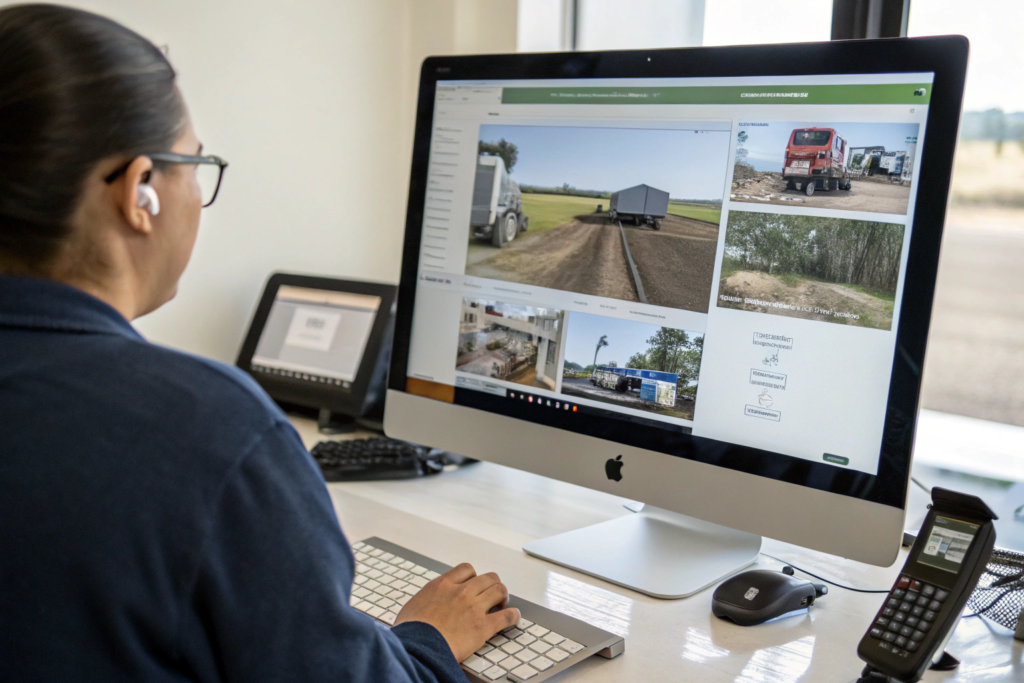
Here's the danger. You can become so reliant on AI that you forget the whole point. Coffee is a sensory product. It's a relationship business. You cannot prompt your way to trust. You cannot algorithm your way to a perfect roast profile. AI is a filter. It's not a decision-maker.
Integrating AI insights without losing the human touch means using AI for the objective, data-heavy, repetitive parts of sourcing—verification, cross-checking, drafting—and reserving the human mind for the subjective, sensory, and relational parts. Let AI tell you which ten suppliers are likely legitimate. Then you personally call them. You personally cup their samples. You personally visit their farm, or at least do a live video walkthrough. The AI gets you to the table. The human seals the deal.
When Should You Trust Your Gut Over the Data?
AI can tell you a supplier has a perfect digital footprint. Clean website. Good trade records. Positive mentions. But when you receive the sample, and the coffee is just... flat. It's technically correct, but it has no soul.
Trust your cupping spoon. Trust your palate. A supplier can be perfectly legitimate and still not be the right partner for your brand. Maybe their style of processing just doesn't match your roast philosophy. Maybe their communication style grates on you. These are human judgments.
I've met buyers who told me they almost didn't contact me because their AI screening tool flagged my company as "high risk due to geographical location." Yunnan was flagged as a region with variable infrastructure. That's true, technically. The roads can be rough. But the buyer's gut told them to check anyway. They called me. We talked. They realized I had solved the logistics problems years ago. The AI was right about the regional risk, but wrong about my specific company. Human judgment corrected the AI's blind spot.
How Do You Use AI to Maintain Long-Term Relationships?
AI is not just for finding new suppliers. It's also for deepening existing relationships.
I use a simple CRM with AI features. It reminds me of a buyer's birthday. It prompts me to follow up three months after a shipment: "Ask [Buyer Name] how the Catimor lot performed in their espresso blend. Mention the specific lot number." It helps me be a better, more attentive partner.
A buyer can do the same. Use AI to remember details about my farm. "Congratulate them on the harvest. Mention the Typica lot we discussed. Ask if the raised bed expansion project is finished." This level of detail shows you're paying attention. It transforms a transactional email into a conversation between partners.
The goal is to automate the admin, so you have more mental space for the relationship. The BeanofCoffee team uses a mix of traditional quality control and modern digital tools to stay organized and responsive.
Conclusion
AI is not going to replace the cupping spoon. It's not going to replace the handshake. But it is going to replace the blind Google search, the naive trust in a glossy website, and the hours wasted on dead-end leads. It is a force multiplier for your attention. It helps you sift through the noise and find the signal.
In the coffee trade, the signal is a supplier who is real, who is consistent, and who is aligned with your values. AI can help you verify the first two. The third—values—that's still a human call. So use the tools. Use the prompts. Check the databases. Draft the emails. But then, pick up the phone. Cup the sample. Have the conversation.
If you're looking for a supplier who is comfortable with technology but grounded in the soil, you're in the right place. We're a data-driven farm. We track our fermentation temperatures with sensors. We log our drying curves. We use AI internally for crop forecasting. And we're happy to provide all the digital verification you need—live video tours, satellite coordinates, trade records, and direct access to our head of quality.
To start a sourcing conversation, request a verified sample, or simply test our responsiveness to your AI-drafted inquiry email, reach out to Cathy Cai.
Email: cathy@beanofcoffee.com. Let's see if the algorithm leads you to Baoshan.