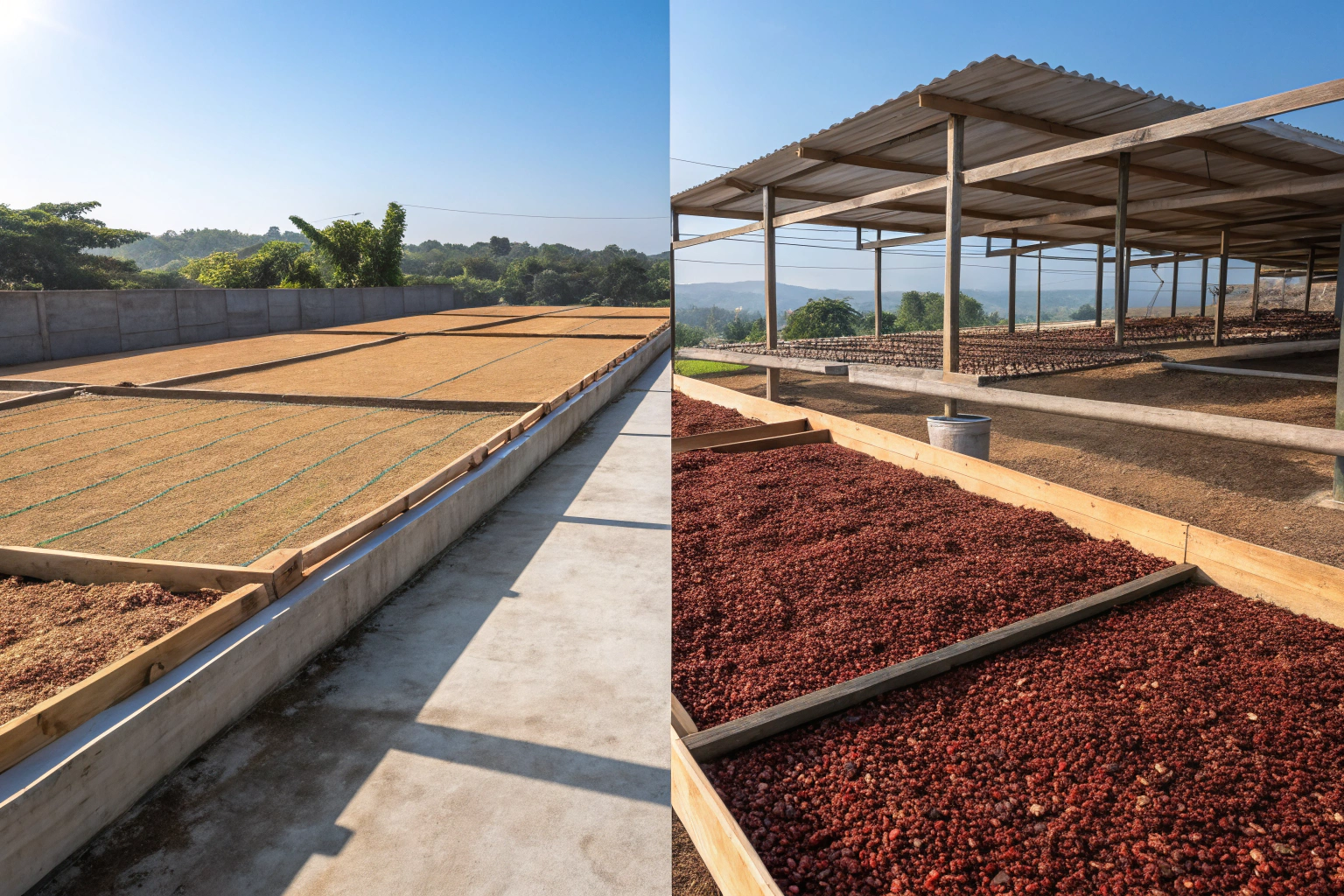
You're at a coffee farm, watching workers spread a sea of red and yellow cherries onto a vast, flat concrete surface. At the next farm over, cherries are neatly arranged on waist-high mesh tables. Both are drying coffee, but the results in your cup will be distinctly different. So, what's the real impact of choosing a patio over a raised bed? This isn't just about tradition versus modernity; it's a fundamental decision that influences airflow, temperature control, labor, and ultimately, the clarity, sweetness, and cleanliness of the final flavor. For a roaster or importer, understanding this choice helps you select coffees that match your quality goals.
At its core, drying is the final, critical phase of processing where moisture is carefully removed from the coffee seed (bean) to stabilize it for storage and shipping. How this is done—whether on the ground or elevated—has profound effects. At BeanofCoffee, across our Yunnan estates, we utilize both methods strategically for different coffee lots and market demands. The choice between patio and bed drying is one of the key factors that allows us to tailor the flavor profile for our clients. Let's dive into the mechanics and outcomes of each.
How Does the Physical Setup and Airflow Differ Fundamentally?
The most obvious difference is physical, but the implications are chemical and sensory. A patio is a large, flat, hard surface—usually concrete, sometimes brick or packed earth. Coffee is spread directly on this surface in layers that can be several inches thick. A raised bed (or drying table) is a frame, typically wooden or metal, standing 0.5 to 1 meter off the ground, with a bottom made of mesh or netting.
This structural difference dictates the primary drying agent: airflow.
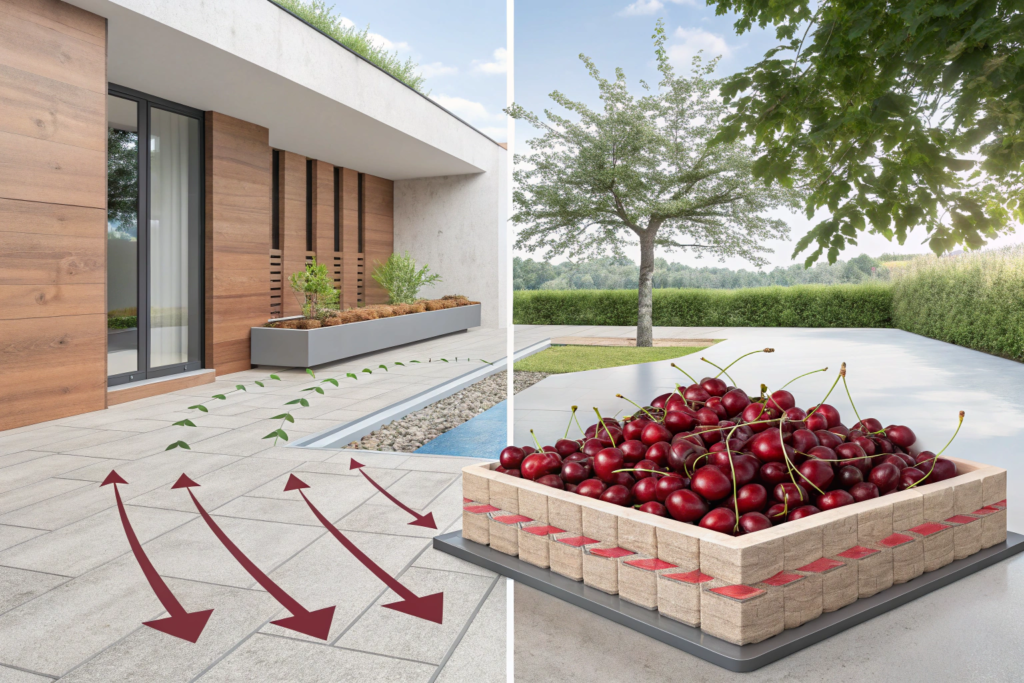
- Patio Drying: Relies heavily on conductive heat from the sun-warmed concrete and radiant heat from the sun. Airflow is primarily horizontal across the top layer. The cherries on the bottom of the pile have minimal air circulation and can trap moisture, leading to risk of over-fermentation or mold.
- Raised Bed Drying: Creates vertical airflow. Air can move above, below, and through the layer of cherries. This 360-degree circulation pulls moisture away from the beans more evenly and consistently. The bed itself stays closer to ambient air temperature, avoiding the heat buildup of concrete.
Think of it like baking cookies on a solid sheet pan versus a wire rack. The rack allows heat and moisture to escape from all sides, leading to more even results.
What Are the Typical Dimensions and Capacity Differences?
These systems are built for different scales and control levels.
- Patios: Can be enormous, covering thousands of square feet. They are designed for high volume and mechanical turning—a tractor with a paddle can drive across to turn the cherries. This is efficient for large commercial lots.
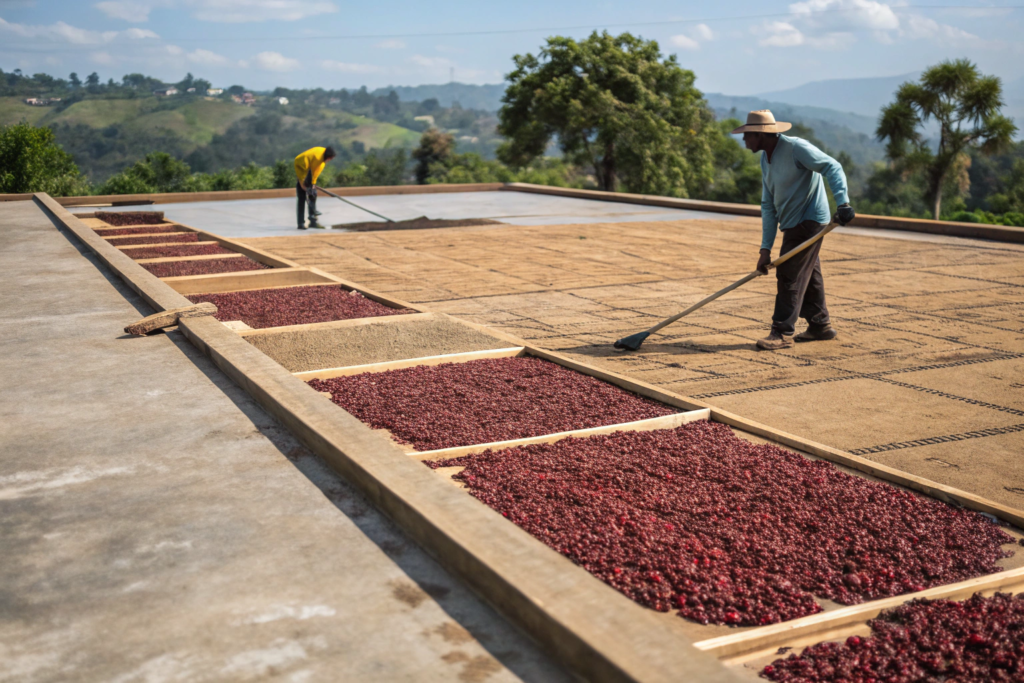
- Raised Beds: Are narrower (usually 1.5-2 meters wide) and longer. They are designed for manual labor and careful curation. The limited width allows workers to reach across to turn the cherries by hand. Capacity per square meter is lower because the layer of cherries must be thin (often just 2-4 cm deep) to allow for airflow.
The choice often comes down to volume versus control. Patios handle volume; beds offer control.
How Does Airflow Directly Impact Drying Rate and Evenness?
Even drying is non-negotiable for quality. Uneven drying creates "case hardening," where the outer skin of the cherry or bean dries too quickly, sealing in moisture inside. This trapped moisture can later lead to musty, fermented off-flavors or cause instability during storage.
- On Patios: The turning schedule is critical. Without frequent turning (every 1-2 hours), the bottom layer can become compacted and dry much slower than the top, creating a gradient. The risk of case hardening is higher.
- On Raised Beds: The natural airflow from below helps moisture escape uniformly. The cherries dry more slowly and evenly as a whole, significantly reducing the risk of case hardening. The need for turning is less frequent (3-4 times a day), and the process is gentler on the beans.
This fundamental difference in airflow is why bed-dried coffees often command a premium—they represent a lower-risk, more controlled process that protects the bean's intrinsic quality.
What Are the Direct Impacts on Coffee Flavor and Quality?
The drying method imprints itself on the flavor. It's not that one is universally "better," but they produce different profiles suited for different markets.
Patio-Dried Coffee:
- Typical Profile: Can develop deeper, heavier, and sometimes more rustic flavors. The slower, less-even drying (especially at the bottom of the pile) can lead to more continued fermentation, which can add winey or fermented notes. There's a higher risk of picking up earthy or musty tones if not meticulously managed.
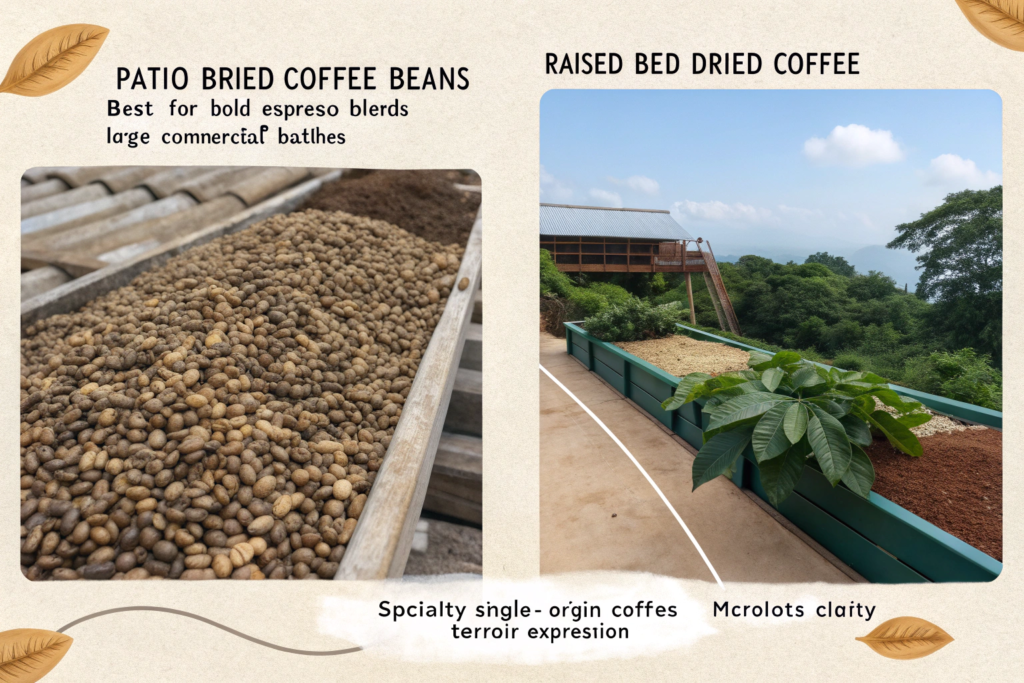
- Best For: Coffees destined for bold espresso blends, or large commercial batches where a consistent, classic "coffee" flavor is the goal. When managed expertly with frequent turning, patio-dried coffees can still be very clean.
Raised Bed-Dried Coffee:
- Typical Profile: Tends to be cleaner, brighter, and more articulate in its flavor notes. The even drying preserves the bean's inherent acidity and allows fruit or floral notes to shine without muddiness. It often results in a more complex and nuanced cup.
- Best For: Specialty single-origin coffees, microlots, and any coffee where clarity and specific terroir expression are desired. This is the method of choice for most high-scoring, traceable lots.
At Shanghai Fumao, we use raised bed drying for our premium and specialty lots to ensure the unique characteristics of our Yunnan terroir—like the stone fruit and tea-like notes—are presented with clarity. Patios are used for high-volume commercial lots where consistency and efficiency are prioritized.
How Does Each Method Affect Bean Density and Physical Integrity?
The gentler, more even drying of raised beds helps preserve the bean's cellular structure. Beans are less likely to develop stress fractures (cracks) from uneven shrinking. This can lead to slightly higher density and more intact beans, which translates to more even roasting and better flavor development in the roaster.
Patio-dried beans, if subjected to temperature shocks from hot concrete or uneven drying, can be more brittle and porous. This doesn't always mean lower quality, but it requires the roaster to be more attentive to heat application.
What is the Risk Profile for Defects and Contamination?
- Patio Risks: Higher risk of absorbing earthy flavors from the ground (if not perfectly sealed concrete). Greater risk of contamination from dust, animals, or debris. Much higher risk of mold if the cherries are piled too deep or turned infrequently.
- Raised Bed Risks: Primarily exposure to birds or insects, though nets can mitigate this. The elevated design naturally reduces ground contamination and improves hygiene. The risk of mold is vastly lower due to superior airflow.
For a buyer, a coffee labeled "raised bed dried" is a signal of intentional quality processing and lower inherent risk of hidden defects. It's a marker of a trustworthy coffee supplier who invests in infrastructure for quality.
What Are the Labor, Cost, and Space Considerations?
The choice between patios and beds is also an economic and logistical calculation for the producer.
Labor Intensity:
- Patios: Can be less labor-intensive per ton if mechanical turners are used. However, manual turning of large patios is extremely arduous.
- Raised Beds: Are more labor-intensive. Turning is done entirely by hand, raking the cherries carefully to avoid damage. Spreading and gathering the thinner layers also takes more time per kilogram.
Capital Cost and Space:
- Patios: Have a high initial construction cost for proper concrete but a very low cost per square meter of drying area. They are space-efficient in terms of volume dried.
- Raised Beds: Have a higher cost per square meter of drying area due to materials (wood, metal, mesh) and construction. They require significantly more land area to dry the same volume of coffee because the cherry layer must be thin.
Climate Dependency:
- Patios: Excel in consistently hot, dry, and windy climates where rapid, even drying is possible.
- Raised Beds: Offer more adaptability. They perform well in humid climates because the airflow fights moisture, and they can be covered with plastic roofs during unexpected rain, creating a simple greenhouse effect to continue drying.
For us in Yunnan, where late harvest can meet occasional moisture, the raised beds provide a critical buffer, allowing us to maintain quality even if the weather isn't perfect.
When Do Producers Typically Choose One Method Over the Other?
The decision matrix often looks like this:
- Choose Patios: For large commercial volumes, in very dry climates, when capital for beds is limited, or when producing for a market less sensitive to nuanced flavor differentiation.
- Choose Raised Beds: For specialty or premium lots, in humid or variable climates, when targeting high-value markets, or when the producer's brand is built on quality and traceability.
Many progressive farms, including ours, use a hybrid approach. They might use patios for the initial, high-moisture phase of drying (the first 2-3 days) to quickly remove surface water, then transfer the cherries to raised beds for the slower, more controlled final drying phase. This optimizes both efficiency and quality.
Can high heat from concrete patios really impart a “baked” off-flavor to coffee beans?
The answer, for those who store their precious harvests in such proximity, is a resounding yes. Concrete, that seemingly inert material, is a master of thermal retention—absorbing the relentless sun like a sponge during the day and radiating its stored heat long into the cool of evening. Imagine, if you will, a sun-baked patio at midday: the air shimmers with heat, the surface so hot it could scorch a bare foot, and nearby, a burlap sack of freshly harvested coffee beans, their delicate aroma already hinting at the complexity within. As the day fades, the concrete does not relent; it becomes a silent furnace, its warmth seeping through the thin layers of fabric or paper that might separate the beans from direct contact. The beans, sensitive as they are to temperature fluctuations, begin to undergo subtle yet profound changes.
The high, dry heat penetrates their cellular structure, causing the Maillard reaction to accelerate prematurely—a process that, when controlled in roasting, creates desirable nutty and caramel notes, but here, unregulated and excessive, leads to a harsh, acrid transformation. The result? A 'baked' off-flavor that lingers like a memory of overdone bread, with a flat, lifeless quality that smothers the beans' natural brightness and acidity. It's as if the beans have been subjected to an unwelcome oven, their potential reduced to a dull, cloying taste that no amount of grinding or brewing can fully redeem.
How Can Buyers Identify and Verify the Drying Method?
As a buyer, you shouldn't have to guess. Transparency from your supplier is key. Here’s how to discern and confirm:
- Ask Directly: Any reputable exporter or roaster should be able to tell you the processing method, including the drying technique. "Washed, raised bed dried" should be a standard part of the lot description.
- Review Documentation: Quality-focused suppliers provide photos or videos of their processing facilities. Look for images of the drying beds or patios in the background of farm profiles.
- Cupping Clues: While not definitive, you can sometimes taste it. A coffee with exceptional clarity, bright acidity, and clean fruit notes often suggests careful, raised bed drying. A coffee with heavier body, deeper, sometimes more fermented fruit notes, or a risk of slight earthiness might indicate patio drying (though skilled patio drying can also be very clean).
- Visit or Virtual Tour: The most reliable method. Many producers, including us at Shanghai Fumao, offer virtual farm tours to show our infrastructure directly to buyers.
In your specifications when ordering, you can request coffees dried on raised beds if your brand emphasizes clean, articulate flavors. This level of specificity is becoming more common in the specialty trade.
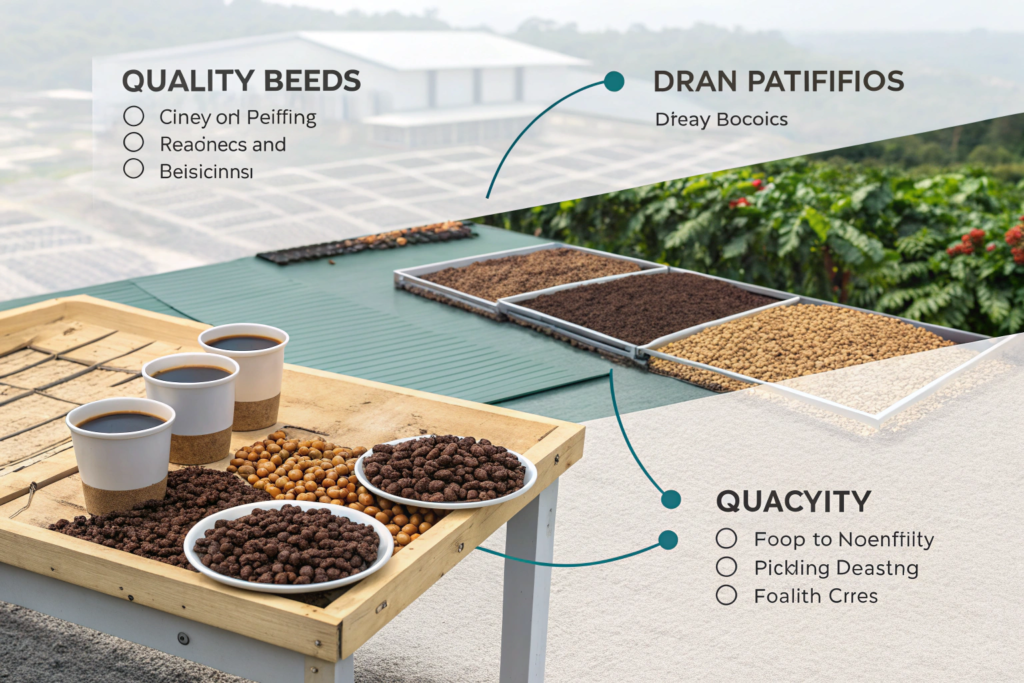
What Questions Should You Ask Your Supplier About Drying?
To ensure quality control, ask:
- "What method was used for drying this specific lot?"
- "What was the average depth of the cherry layer during drying?"
- "What was the turning schedule?"
- "What was the total drying time, and how did you determine it was complete?"
- "Can you share any photos of the drying process for this lot?"
Answers to these questions demonstrate a supplier's command over this critical processing stage and their commitment to transparency. It's part of what defines a stable coffee supplier—one that controls variables to deliver consistent results.
Can you actually taste the difference between patio-dried and raised-bed-dried coffee in the cup?
The answer, for those who savor the nuances of specialty coffee, is a resounding yes—a symphony of flavors and textures that dance on the palate, each method imprinting its unique fingerprint. Imagine holding a cup of patio-dried coffee: its aroma hits first, earthy and sun-kissed, with hints of dried fruit and a subtle, almost smoky undertone, as if the beans have absorbed the warmth of a Mexican village courtyard where they were spread thin on stone slabs, turning slowly under the relentless midday sun. The first sip unfolds with a bright acidity, like a zing of citrus—tangerine or lemon peel—cutting through a body that's medium to full, rich and velvety, with a finish that lingers, sweet and slightly nutty, like toasted almonds.
Now, contrast that with raised-bed-dried coffee: here, the aroma is more delicate, floral even, with whispers of jasmine or green apple, a result of beans gently cascading down wooden beds in Ethiopia, where the cool mountain air and controlled airflow prevent overheating. The sip is gentler, with a softer acidity, more like ripe strawberry or pear, and a lighter body that feels crisp and clean, as if the beans have retained their vibrant, fresh character. The finish is shorter but brighter, leaving a refreshing, almost herbal aftertaste, like a walk through a dewy morning garden. To the untrained palate, they might seem similar, but to the connoisseur, these differences are as distinct as day and night—each a story of sun, wind, and careful craftsmanship, waiting to be savored in every cup.
Conclusion
The difference between patio and raised bed drying is a choice between conductive heat with horizontal airflow and ambient heat with vertical airflow. This choice directly shapes the coffee's flavor profile, its physical bean integrity, and its risk of defects. Patios offer volume and efficiency, often yielding deeper, bolder flavors. Raised beds offer control and clarity, producing cleaner, more nuanced coffees that better express their origin's terroir.
For coffee professionals, understanding this distinction is crucial for making informed sourcing decisions that align with your brand's quality goals and customer expectations. It's a tangible example of how processing decisions long before the roastery have a lasting impact in the cup.
If you are looking to source coffees where the drying method is carefully chosen to highlight specific quality attributes, we can help. Our Yunnan estates utilize both methods with precision to match different market needs. Contact our processing manager, Cathy Cai, to discuss lot specifications and request samples: cathy@beanofcoffee.com.