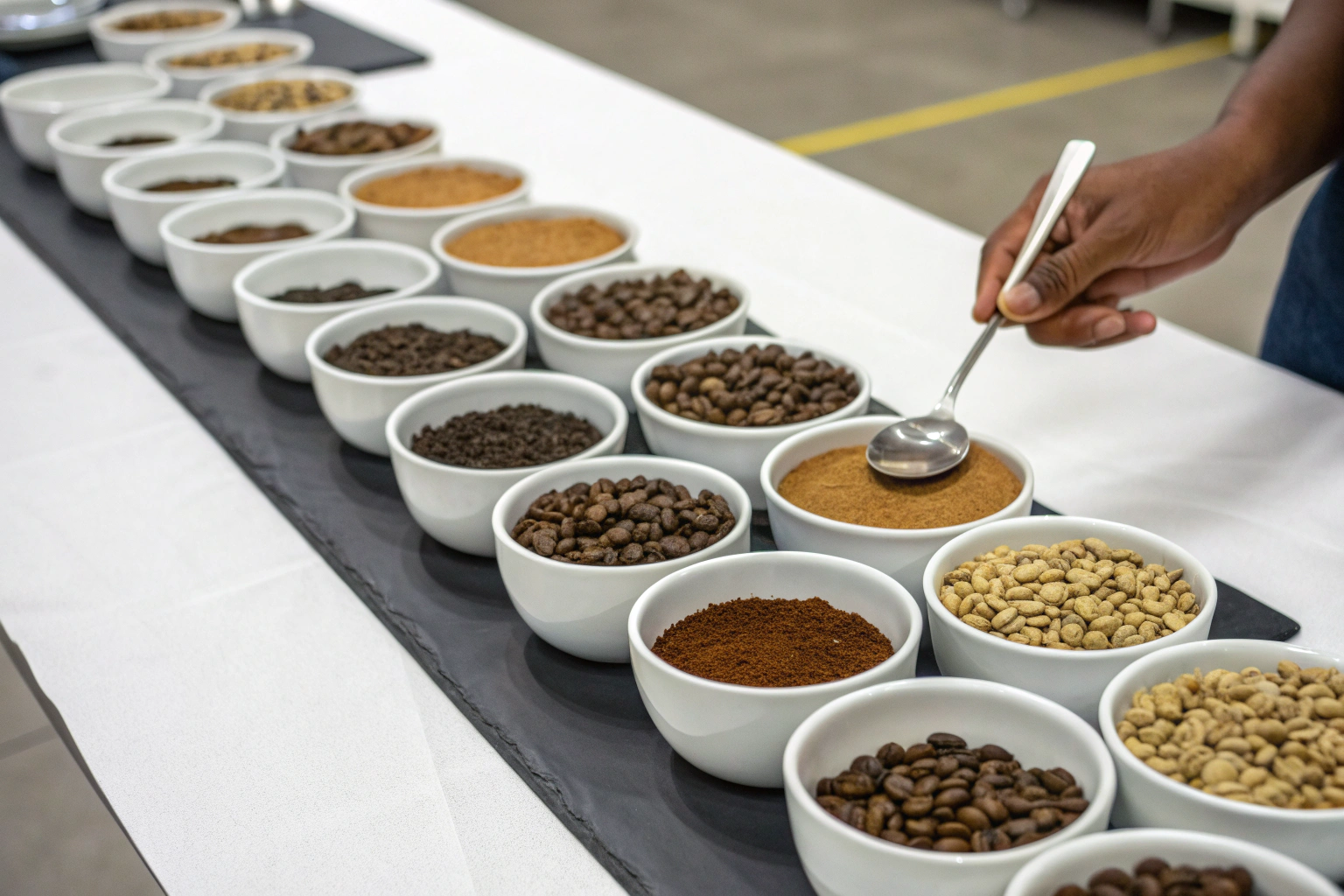
I used to hide my Robusta. When buyers visited our farm in Baoshan, I'd walk them past the Robusta plots quickly, steering them toward the Arabica terraces. Robusta was the ugly stepchild—good for instant coffee, good for cheap blends, but not something you talk about with a specialty roaster. That changed for me about three years ago. A buyer from London asked to cup our washed Robusta. He spent ten minutes over the bowl, frowning in concentration, and then said something I'll never forget. "This doesn't taste like Robusta. This tastes like coffee. Really good coffee, actually." He bought two pallets. And he's been reordering ever since.
The future of Robusta in the specialty market is one of careful, qualified elevation. Fine Robusta—grown at altitude, meticulously processed, and graded with the same rigor as specialty Arabica—is carving out a niche. It offers a body, crema, and flavor intensity that Arabica cannot replicate. While it will never replace Arabica as the specialty standard, it is gaining recognition as a legitimate component in premium espresso blends and, increasingly, as a standalone single-origin offering for adventurous consumers.
For a buyer sourcing from us at BeanofCoffee, understanding this shift is an opportunity. Robusta is not a commodity by destiny. It's a commodity by treatment. Treat it like specialty, and it starts to behave like specialty. Let me show you what I mean.
How Is Fine Robusta Different From Commodity Robusta?
Most people who say they hate Robusta have never tasted fine Robusta. They've tasted low-grade, unwashed, commodity Robusta—the stuff that goes into cheap instant coffee and gas station blends. That Robusta is often grown at low altitude, strip-picked, poorly processed, and shipped with minimal quality control. It tastes like burnt rubber and dirt because it was treated like burnt rubber and dirt. Fine Robusta is a different species of product. Almost literally.
Fine Robusta is distinguished from commodity Robusta by altitude of cultivation, selective hand-picking, careful wet processing, and rigorous defect sorting. When grown above 1,000 meters, harvested at peak ripeness, and washed or honey-processed, Robusta develops a clean, chocolatey, nutty profile with a heavy body and virtually none of the harsh, rubbery notes associated with the commodity grade. The physical bean is larger, denser, and more uniform, rivaling Arabica in visual appeal.
Why Does Altitude Change the Robusta Flavor Profile So Dramatically?
Robusta is a hardier plant than Arabica. It tolerates heat, humidity, and lower altitudes. That hardiness is why it's planted in vast, lowland monocultures across Vietnam and Brazil—the classic commodity model. But that same plant, moved up the mountain, behaves differently.
Our Robusta in Baoshan grows at 1,200 meters and above. The cooler temperatures slow the cherry maturation. Instead of rushing to ripeness in five months, the cherry takes seven or eight. More time on the branch means more sugar development in the mucilage. That sugar translates into a softer, sweeter cup. The harsh chlorogenic acids that give lowland Robusta its bitter, astringent bite are less concentrated in high-altitude beans.
I've cupped our washed high-altitude Robusta next to a standard Vietnamese commercial Robusta. The difference is night and day. The Vietnamese sample was earthy, bitter, and one-dimensional. Our Baoshan sample was smooth, with notes of dark chocolate, toasted nuts, and a surprisingly clean finish. My cupping team actually guessed it was a low-acidity Arabica. That's when I knew we had something worth taking seriously. Altitude doesn't just tweak Robusta. It transforms it.
What Processing Methods Elevate Robusta to Specialty Standards?
Processing is where most Robusta fails. The commodity model is simple: strip-pick everything, pulp it quickly, dry it on concrete patios, and ship it. The defects are ground into the profile. Fine Robusta requires the exact opposite approach.
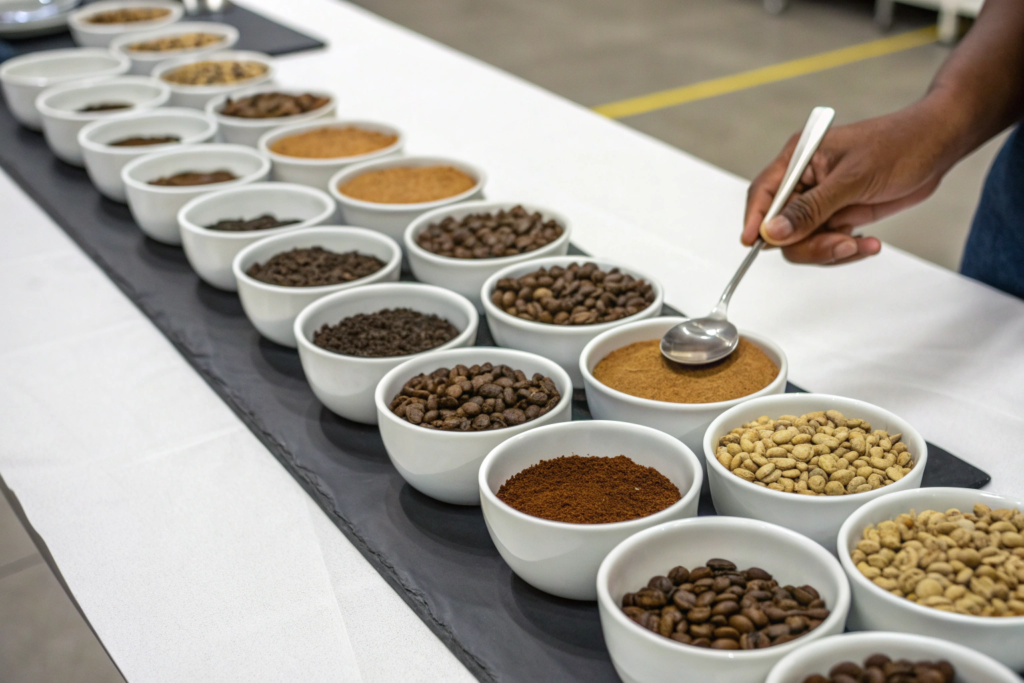
We process our specialty Robusta the same way we process our best Arabica. Selective hand-picking of ripe cherry only. Flotation to remove floaters and under-ripes. Controlled fermentation in clean water tanks. Slow drying on raised African beds under shade netting. The beans are turned by hand every two hours. The drying takes 18 to 22 days, depending on the weather.
This is labor-intensive and expensive. A washed, high-altitude Robusta processed this way costs more to produce than a standard commercial Arabica. The market has to be willing to pay for that effort. The specialty market, increasingly, is. The result of this processing is a Robusta that cupping judges can score using the same SCA protocols they use for Arabica. The cup is clean. The body is syrupy. The finish is free of the harsh, lingering bitterness that defines the commodity stuff. Processing is not magic. But it's close.
Can Robusta Ever Compete With Arabica in Quality Cupping Scores?
The cupping score is the gatekeeper of the specialty market. Historically, the gate has been firmly closed to Robusta. The SCA scoring system was designed for Arabica. The flavor wheel assumes Arabica. The vocabulary—bright, floral, fruity, acidic—is Arabica vocabulary. Robusta doesn't fit neatly into that box. But the box is slowly expanding.
Robusta can compete with Arabica on quality scores when judged on its own terms, not Arabica's. Fine Robusta regularly scores in the 80 to 86 range on adapted cupping protocols that value its strengths—body, mouthfeel, intensity, and chocolate-nutty flavors—rather than penalizing it for lacking acidity and floral notes. While it will rarely score 90+ in an Arabica-centric competition, a well-processed fine Robusta can absolutely outperform a mediocre commercial Arabica in a blind tasting.
What Would a Robusta-Specific Cupping Protocol Look Like?
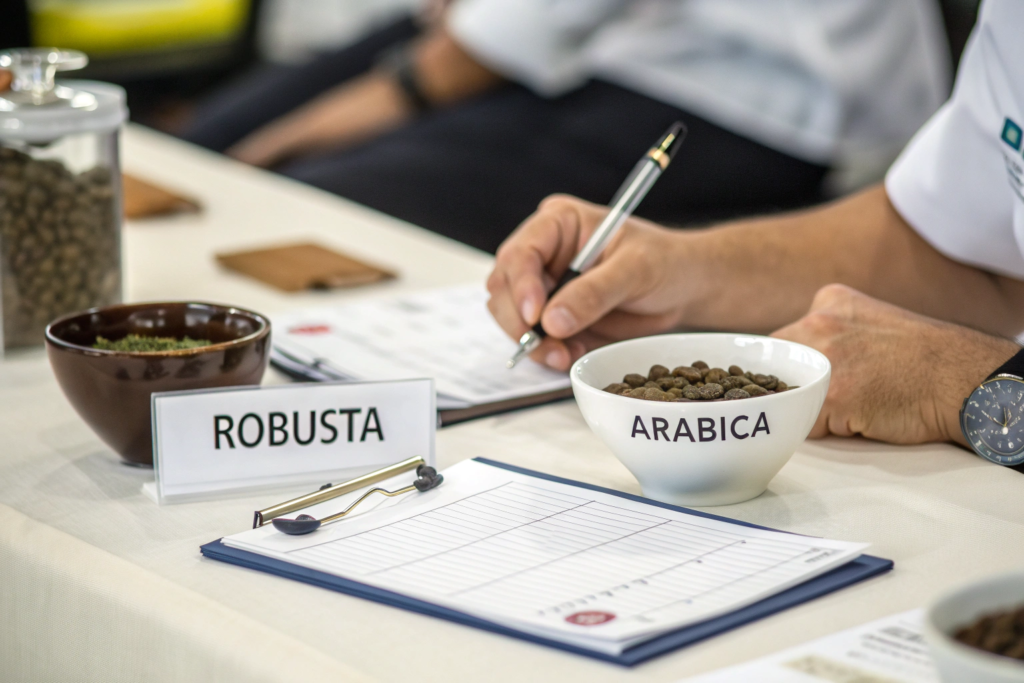
The current SCA cupping form penalizes Robusta at a structural level. Points are allocated for acidity, which Robusta naturally lacks. Points are allocated for floral and fruity notes, which are not the Robusta flavor profile. Judging Robusta on this form is like judging a bass by how well it sings soprano.
A Robusta-specific protocol would shift the weighting. It would value body and mouthfeel more heavily. It would reward intensity, length of finish, and the quality of chocolate, nut, and spice notes. It would penalize defects—rubber, earth, phenol—but it would not penalize the absence of acidity. Acidity would be a neutral attribute, not a scored one.
Some industry groups, including the Coffee Quality Institute, have begun developing Robusta-specific scoring systems. These protocols are not yet as widely adopted as the SCA Arabica form, but their existence is a signal. The industry is building the infrastructure to evaluate Robusta fairly. Once the scoring system exists, the specialty market has a vocabulary for quality Robusta. And once the vocabulary exists, the gate opens wider.
Are There Blind Tastings Where Robusta Has Beaten Arabica?
Yes. And these moments are awkward for the traditionalists, but they happen. I've conducted blind cuppings in our lab where our fine Robusta was served alongside commercial-grade Arabica from several origins. The Robusta did not always win. But it never lost badly. And sometimes, it was the preferred cup.
In one session with a visiting European buyer, we cupped three samples blind. Sample A was a washed Ethiopian Yirgacheffe, an 84-point coffee. Sample B was a Brazilian natural Arabica, 82 points. Sample C was our washed high-altitude Robusta. The buyer scored Sample C second, above the Brazilian. He commented on its "lovely chocolate body and clean finish." When we revealed the samples, he laughed out loud. Then he asked for the FOB price.
These anecdotes don't prove that Robusta is better than Arabica. That's not the argument. The argument is that Robusta, when produced with care, belongs in the conversation. It can stand on a cupping table next to specialty Arabica and not embarrass itself. For a roaster building an espresso blend, that level of quality Robusta is a powerful tool. It adds body and crema without adding the off-flavors that commodity Robusta brings.
Why Are Espresso Blenders Driving the New Demand for Fine Robusta?
The espresso machine is Robusta's best friend. In the high-pressure environment of an espresso extraction, Robusta's natural characteristics become advantages. Arabica produces delicate, nuanced espresso that can get lost under milk. Robusta produces a powerful, structured shot that punches through. Specialty espresso blenders have known this for decades in Italy. The new development is that specialty roasters outside Italy are catching on.
Espresso blenders are driving demand for fine Robusta because it adds body, crema persistence, and flavor intensity that Arabica alone cannot deliver. In a milk-based drink, a shot pulled from a blend with 10% to 15% fine Robusta has more presence, a thicker mouthfeel, and a longer finish than a 100% Arabica shot. For the growing specialty espresso segment, fine Robusta is transitioning from a cost-cutting filler to a performance-enhancing ingredient.
What Percentage of Robusta Optimizes a Specialty Espresso Blend?
The old Italian tradition used 30%, 40%, even 50% Robusta. But that was with commodity-grade beans, and the result was bitter, harsh espresso that required sugar to be drinkable. The new specialty approach is more restrained and more intentional.
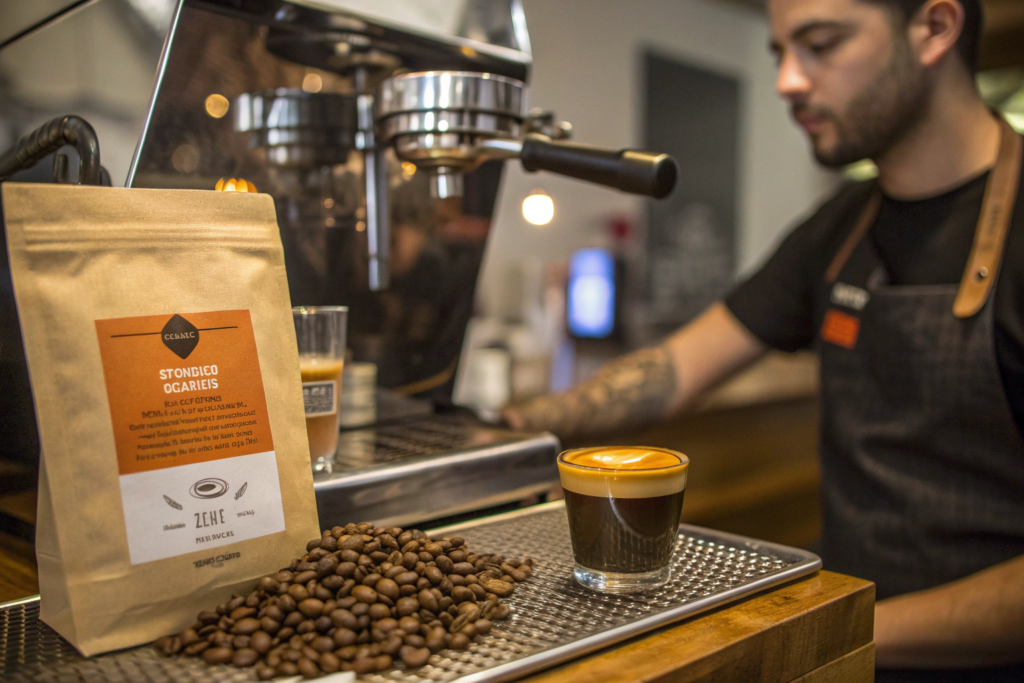
I've worked with roasters to test different blend ratios using our fine Robusta. The sweet spot, in my experience, is between 10% and 20%. At 10%, the Robusta is barely detectable in the flavor but noticeably improves the crema color, thickness, and persistence. The shot looks better in the cup and holds its structure longer. At 15% to 20%, the Robusta's chocolate and nut notes start to contribute to the flavor profile, adding depth without harshness.
Above 25%, the Robusta begins to dominate, and the cup loses the nuance that specialty consumers expect. The skill of the blender is finding the ratio where Robusta enhances without overwhelming. This is not a formula. It is a cupping exercise for each specific Arabica base and each specific Robusta lot. A washed Ethiopian Arabica might pair beautifully with 12% of our fine Robusta. A natural Brazilian base might want 18%. The blending is a craft, and fine Robusta is a new tool in the craftsperson's kit.
How Does Fine Robusta Improve Crema and Mouthfeel Scientifically?
The science is straightforward. Crema is a foam of coffee oils, proteins, and carbon dioxide, stabilized by melanoidins formed during roasting. Robusta contains more soluble solids than Arabica—roughly 2% to 3% more by weight. It also contains a different protein profile that produces a more stable foam structure.
When you pull a shot of 100% Arabica espresso, the crema is often lighter in color and dissipates quickly, sometimes within 30 seconds. A shot with a percentage of fine Robusta produces a darker, thicker, longer-lasting crema with the tiger-striping that baristas prize. The mouthfeel is fuller and rounder, coating the palate in a way that pure Arabica often does not.
For a specialty cafe serving milk drinks, this is not a cosmetic detail. A latte made with a blend that includes fine Robusta tastes creamier and more coffee-forward. The espresso flavor cuts through the milk more effectively. The customer perceives a stronger, more satisfying drink. The barista presents a more beautiful shot. These are real quality improvements, not just cost savings. Fine Robusta earns its place in the blend on performance, not just price.
How Should Buyers Evaluate and Source Fine Robusta Lots?
Sourcing fine Robusta is different from sourcing specialty Arabica. The supply chain is less developed. The quality signals are less standardized. A buyer who applies exactly the same evaluation framework they use for Arabica will miss important information—and may overlook a great lot. The opportunity is there, but it requires a more active, inquisitive approach.
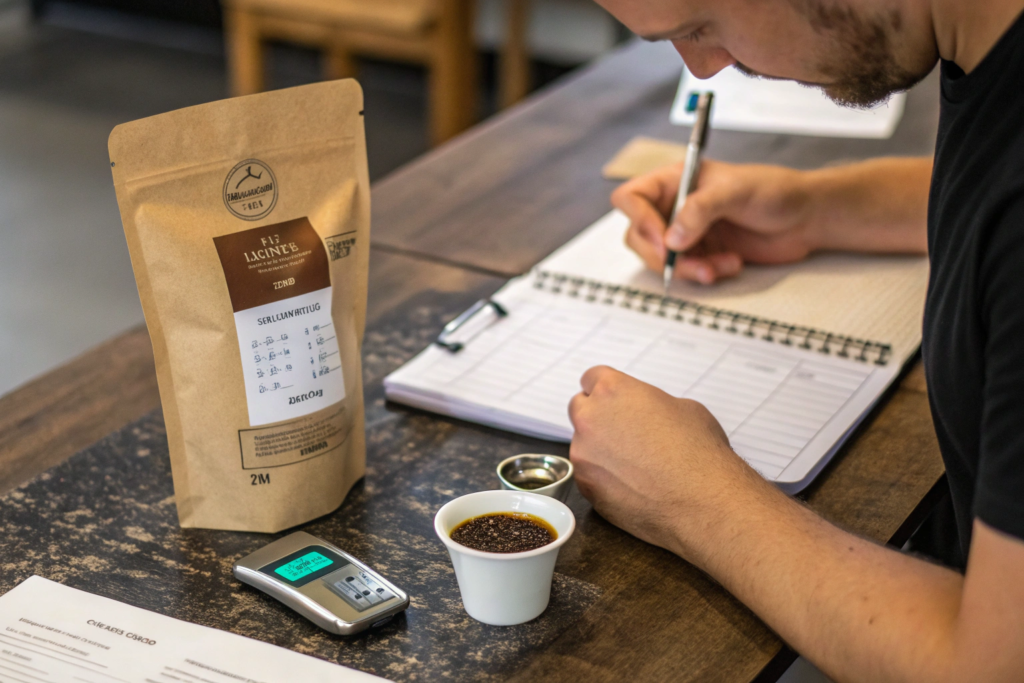
Evaluating and sourcing fine Robusta requires demanding the same documentation and sample protocols you would for specialty Arabica—lot traceability, processing method details, moisture and water activity readings, and a pre-shipment sample. Additionally, buyers should request altitude data, picking method, and variety information specific to Robusta. The cupping evaluation should focus on cleanliness, body, and the quality of chocolate-nutty notes while screening for the harsh, rubbery defects that indicate commodity-grade processing.
What Specific Questions Should You Ask a Robusta Supplier?
A generic "is this good Robusta?" question will get a generic yes. You need specific questions that reveal whether the supplier understands the distinction between commodity and fine Robusta. The answers tell you whether you're dealing with a producer who is serious about Robusta quality or just selling the same old beans with a new story.
Here are the questions I recommend. What is the altitude of the farm where this Robusta was grown? What is the variety—is it a selected cultivar or a generic local strain? Was the cherry selectively hand-picked or strip-picked? What processing method was used—washed, honey, or natural? What are the moisture content and water activity readings for this lot? Can you provide a cupping score and detailed cupping notes? Can I receive a pre-shipment sample drawn from the exact bags that will fill my container?
A professional supplier of fine Robusta answers these questions as readily as they would for their best Arabica. They have the data. They have the samples. They are proud of the product. If a supplier hesitates, deflects, or gives vague answers, assume the Robusta is commodity grade until proven otherwise. The burden of proof is on the seller.
How Do You Cup Robusta Alongside Arabica Fairly?
Cupping Robusta and Arabica side by side requires some mental adjustments. The first sip of Robusta after a delicate washed Arabica will taste heavy, even harsh. The contrast amplifies the differences. A more fair approach is to cup Robusta in its own session, calibrated to its own profile, with at least one other Robusta on the table for comparison.
I recommend cupping fine Robusta against a known commodity Robusta as a benchmark. This reveals the quality gradient within the species. The difference between our washed Baoshan Robusta and a standard Vietnamese commercial Robusta is so stark that a buyer immediately understands the value proposition. Then, if you want to compare against Arabica, do it in a separate round with a clear palate and an open mind.
Focus the evaluation on the attributes where Robusta excels. How is the body? Is it syrupy and coating, or thin and watery? What is the dominant flavor? Clean dark chocolate, toasted hazelnut, and brown spice are positive. Burnt rubber, wet earth, and medicinal notes are negative. How is the finish? A clean, sweet finish is the hallmark of fine Robusta. A lingering bitter astringency is the mark of commodity grade. Judge Robusta by what it can be, not by what Arabica is.
Conclusion
The future of Robusta in specialty coffee is not about replacing Arabica. It's about earning a seat at the table that was never offered before. Fine Robusta, grown with care at altitude and processed with the same rigor as the best Arabica, is not the same product that gave Robusta its bad name. It is a distinct category—small in volume, high in quality, and uniquely suited to espresso applications where body, crema, and intensity matter.
The roasters who recognize this early are building blends that perform better in the cup and stand out on the shelf. They're offering their wholesale customers an espresso that looks better, tastes bolder, and tells a more interesting story. At BeanofCoffee, our fine Robusta is a point of pride now, not something we hide. If you want to explore what high-altitude, washed Yunnan Robusta can do for your espresso program, reach out to Cathy Cai at cathy@beanofcoffee.com. She can send you a sample, share the cupping data, and help you run your own side-by-side evaluation. You might be surprised. I know I was.