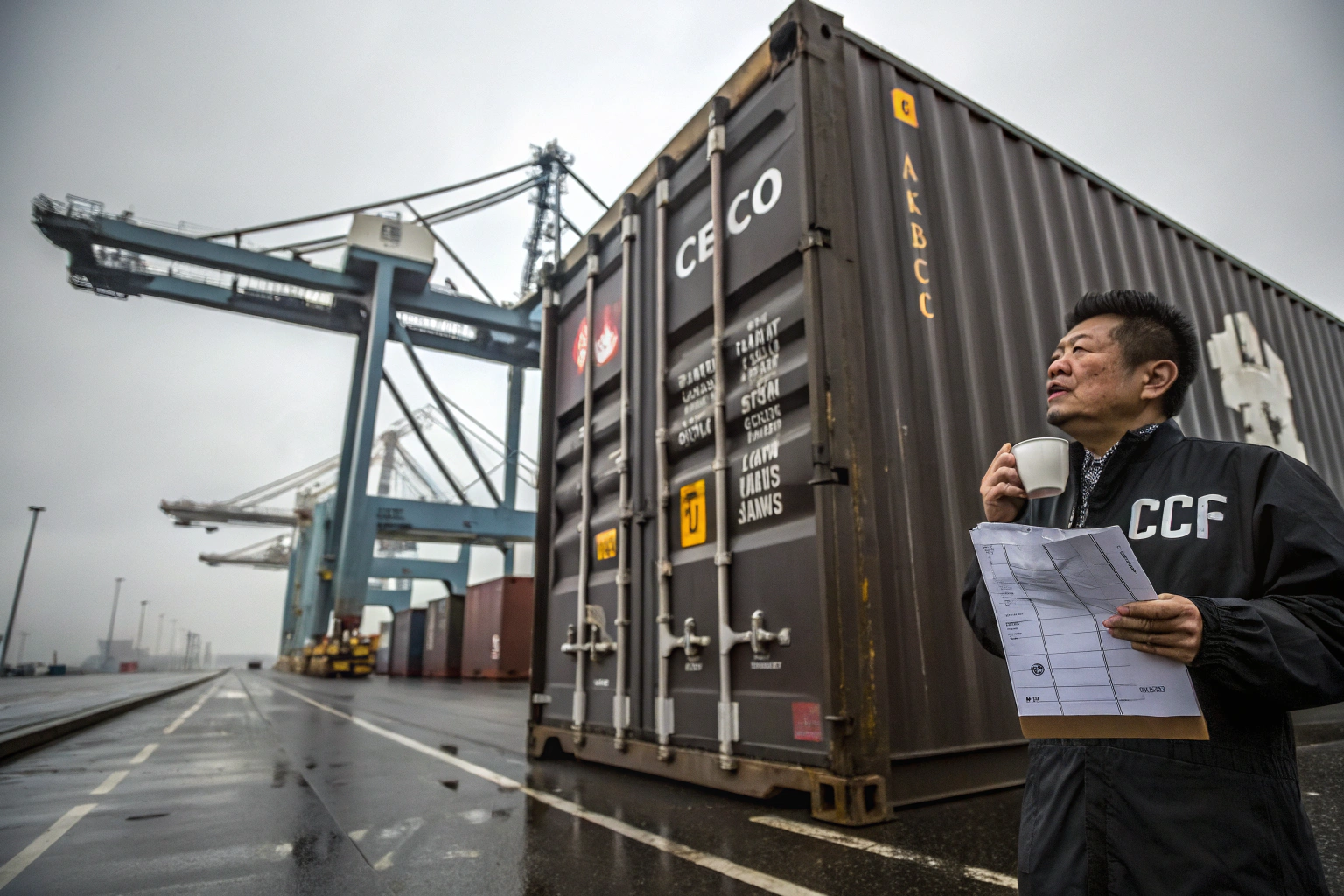
I got a call from a roaster in Seattle last month. He was reviewing his landed cost spreadsheet and found a line item he didn't recognize. A 7.5% additional duty on his container of Yunnan Arabica. He thought it was a mistake. It wasn't. The tariff that his customs broker applied was real, and it had quietly added over $6,000 to his shipment. He wasn't angry at me. He was frustrated that nobody had explained this to him before the contract was signed. That conversation is why I'm writing this.
US tariffs on Chinese goods directly increase the landed cost of green coffee imported from China. While coffee itself is not always the primary target of these trade policies, Section 301 tariffs on a wide range of Chinese imports can apply to coffee depending on its tariff classification. Even when coffee is temporarily excluded, the uncertainty itself is a cost—buyers hesitate, supply chains shift, and prices adjust to reflect the risk. Understanding this landscape is not optional for any roaster sourcing from China.
I'm not a trade lawyer. I'm a coffee farmer in Baoshan watching these policies shape my buyers' decisions. Here's what I've learned, what the numbers actually look like, and how smart buyers are navigating this.
What Are the Current US Tariffs on Chinese Coffee Imports?
Let's start with the facts. Most people hear "US-China trade war" and think of steel, electronics, and solar panels. But agricultural products, including coffee, got caught in the net. The tariff situation is not static. It shifts with executive orders, trade negotiations, and expiration dates. A buyer who checked the rules two years ago might be operating on outdated information.
The current US tariff framework for Chinese imports is shaped by Section 301 of the Trade Act of 1974. Under this authority, additional duties were imposed on billions of dollars of Chinese goods across multiple lists. Green coffee, depending on its specific Harmonized System code, has been subject to additional tariffs at various points. The situation is dynamic, and the applicable rate depends on the HS code classification, the current status of exclusion requests, and any retaliatory or reciprocal adjustments in force at the time of import.
How Does the Section 301 Tariff Framework Actually Work?
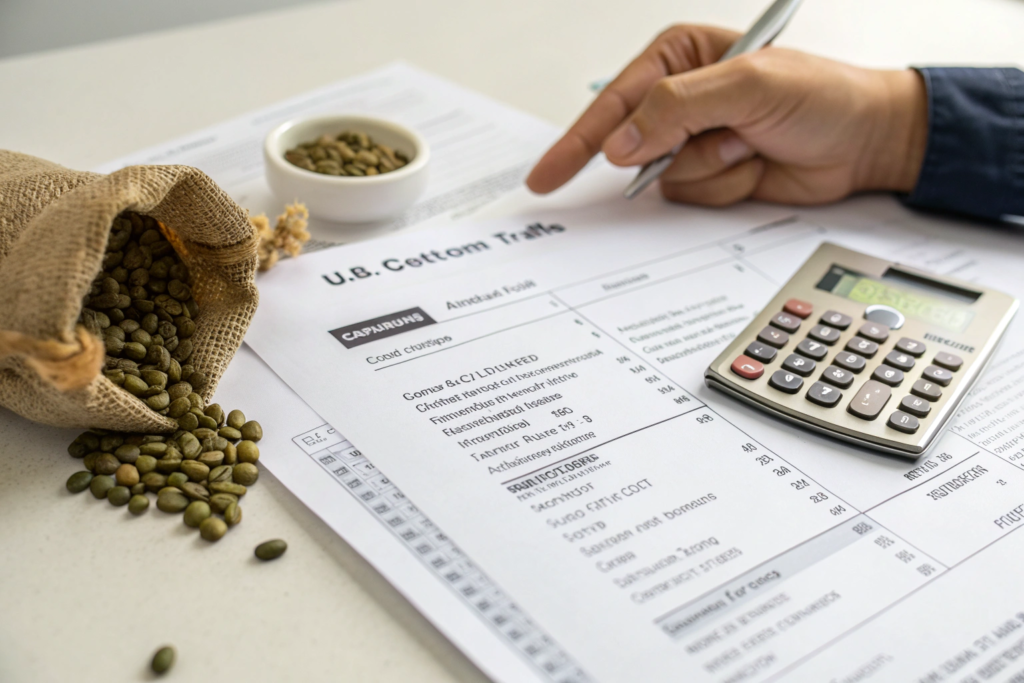
Section 301 is a trade enforcement tool. The US Trade Representative uses it to impose additional duties on goods from countries deemed to engage in unfair trade practices. For several years now, China has been the primary focus. The tariffs were rolled out in waves—List 1, List 2, List 3, List 4A, List 4B. Each list covers different product categories.
Coffee falls into the agricultural product category. Depending on how green coffee is classified—as an unroasted agricultural commodity, as a processed product, or under a specific subheading—it may be subject to an additional Section 301 duty. The base tariff rate for green coffee under normal trade relations is generally low or zero. But the Section 301 surcharge, when applied, can add 7.5% or more on top of that.
The administrative complexity is part of the problem. Customs brokers must correctly classify the coffee and apply the correct tariff code. A mistake in classification can result in overpayment or underpayment, both of which create problems during an audit. I've seen containers where the broker applied a blanket "agricultural goods" surcharge without checking the specific coffee exclusion. That's money left on the table.
Are There Active Exclusions for Green Coffee Beans?
Exclusions exist, but they are temporary and unpredictable. The USTR periodically grants product-specific exclusions from Section 301 tariffs. These exclusions are typically valid for one year and must be renewed. If the exclusion expires without renewal, the tariff snaps back into place. This creates a stop-start environment that is hard for importers to plan around.
For green coffee from China, there have been periods where the exclusion was in effect and periods where it was not. The critical skill for a buyer is knowing the current status at the time of the contract. An exporter should be able to provide the correct HS code for their product. The buyer's customs broker can then verify the current tariff treatment for that specific code.
I keep a running dialogue with my US buyers about this. When they ask for an FOB quote, I also provide the HS code for the lot. I recommend they have their broker confirm the duty rate before they finalize their landed cost calculation. This five-minute check can prevent a $6,000 surprise. It's not complicated. It just requires someone to ask the question.
How Do Tariffs Translate Into Real Costs for Coffee Roasters?
A 7.5% tariff sounds abstract. Let's make it concrete. A 20-foot container holds about 300 bags of green coffee, roughly 19 metric tons or 42,000 pounds. If our washed Yunnan Arabica is priced at $3.50 per pound FOB, the total invoice is around $147,000. A 7.5% tariff on that invoice value adds $11,025. That is not a rounding error. That is a significant cost that must be absorbed somewhere—by the roaster's margin, by the retail price, or by the consumer.
Tariffs on Chinese green coffee translate into real costs through the customs duty line on the importer's entry documentation. The duty is calculated as a percentage of the declared customs value, which is typically the FOB price plus ocean freight and insurance. This additional cost flows through the supply chain, increasing the roaster's cost of goods sold, compressing margins, and ultimately affecting the retail price or the volume the roaster can afford to purchase.

What Is the Difference Between Ad Valorem and Specific Tariffs?
Most tariffs on coffee are ad valorem—a percentage of the value. A 7.5% ad valorem tariff on a high-value specialty lot generates a larger dollar amount than the same percentage on a low-grade commercial lot, because the base value is higher. This means specialty coffee from China is disproportionately affected by percentage-based tariffs.
A specific tariff, by contrast, is a fixed dollar amount per unit—say, $0.10 per pound—regardless of the bean's value. This structure hits lower-value coffee harder on a percentage basis but affects all quality levels equally in absolute terms. Currently, the Section 301 tariffs on Chinese goods are ad valorem, which is why a premium Yunnan Arabica lot attracts a significant dollar duty.
For a specialty roaster, this creates a painful math problem. The quality premium that makes Yunnan coffee attractive also amplifies the tariff impact. A $4.00 per pound micro-lot pays more duty than a $2.50 per pound commercial Catimor lot. The tariff functions like a penalty on quality. Understanding this distinction helps a buyer evaluate whether the landed cost still supports their retail price point.
How Should You Calculate the True Landed Cost Including Tariffs?
Landed cost is the total cost of coffee delivered to your warehouse door. Too many roasters calculate FOB price plus freight and stop there. The tariff, if applicable, is a real cost that must be included. Ignoring it is not optimism. It is a budgeting error.
The formula is straightforward. Start with the FOB price per pound. Add ocean freight per pound. Add insurance per pound. This sum is the CIF value—the customs value. Multiply the CIF value by the tariff rate. That is the duty per pound. Add the duty to the CIF value. Then add domestic costs: port handling, customs brokerage, trucking to your warehouse.
Let's run a simplified example. FOB price: $3.50 per pound. Ocean freight: $0.18 per pound. Insurance: $0.02 per pound. CIF value: $3.70 per pound. Tariff at 7.5%: $0.2775 per pound. Duty-paid cost before domestic logistics: $3.9775 per pound. That's the number you should be using to calculate your margins.
A professional supplier helps with this math. At BeanofCoffee, I want my buyers to know their true landed cost before they sign the contract. I provide the FOB price, the HS code, and the estimated freight cost. The buyer plugs in the tariff and the domestic logistics. No surprises. No hidden line items discovered after the container arrives.
What Strategic Responses Can Coffee Importers Use to Mitigate Tariff Impact?
Tariffs are a reality. Wishing them away is not a strategy. Smart importers adjust their sourcing, their logistics, and their pricing to manage the impact. I've watched my most successful buyers develop playbooks for this environment. They don't panic. They don't abandon Chinese origins. They adapt.
Mitigating the impact of tariffs on Chinese coffee imports involves a combination of tariff engineering through correct HS code classification, strategic use of bonded warehousing, exploring the First Sale for Export valuation method, and building flexible pricing models with suppliers that share the tariff burden. The most effective approach is a proactive relationship with a knowledgeable customs broker who understands agricultural imports and the specific exemptions and rulings applicable to green coffee.
Can Tariff Engineering Through HS Code Classification Reduce Your Bill?
Tariff engineering is not illegal manipulation. It is the legitimate practice of ensuring that your product is classified under the correct HS code, which may carry a lower rate than a similar but incorrect classification. The burden is on the importer to classify correctly, and a well-classified product can legally pay less.
Green coffee has a specific HS code. Roasted coffee has a different one. Flavored coffee has another. Each may have a different tariff treatment under Section 301. If a customs broker reflexively classifies a shipment under a generic agricultural code without drilling down to the specific coffee subheading, the importer may overpay.
I recommend that buyers ask their supplier for the exact HS code used at origin. At BeanofCoffee, I provide the full 10-digit code for every lot we export. I encourage buyers to share this code with their customs broker and ask for confirmation that it is the most advantageous correct classification. This is a one-time conversation that can save thousands on every subsequent shipment.
What Role Can Bonded Warehousing Play in Deferring Tariff Costs?
Bonded warehousing is a powerful cash flow tool that many small and medium roasters overlook. A bonded warehouse is a secured facility where imported goods can be stored without immediately paying customs duties. The duty is paid when the coffee is withdrawn from the warehouse for domestic sale.
This allows a roaster to bring in a larger shipment—say, a full container—to capture volume pricing on freight, but defer the duty payment until the beans are actually needed for roasting. Instead of paying the full tariff bill at the port, the roaster pays it incrementally as the coffee is released from the bonded facility over several months.
The cash flow benefit is significant. For a roaster who operates on tight margins and seasonal sales cycles, bonded storage smooths out the tariff cost. It turns a lump-sum payment into a pay-as-you-go expense that tracks with revenue. This doesn't reduce the absolute tariff amount, but it makes it easier to manage financially. Ask your freight forwarder or customs broker if bonded storage is available near your roastery and whether it fits your business model.
How Is the Tariff Landscape Likely to Evolve for Coffee Importers?
Predicting trade policy is a fool's game. I won't try. But I can share what I observe from the ground in China, talking to other exporters, logistics partners, and buyers who manage this daily. The trend lines are visible even if the specific policy moves are not.
The tariff landscape for Chinese coffee imports is likely to remain dynamic rather than static. The broader US-China trade relationship, the political calendar, and the outcomes of review processes all influence whether tariffs are increased, decreased, extended, or allowed to expire. Importers should expect periodic changes and build flexibility into their sourcing contracts rather than assuming the current rate will persist indefinitely.

What Are the Warning Signs That Tariffs Might Increase or Decrease?
Trade policy does not shift without signals. An announcement from the USTR office about a Section 301 review is a public event. Comments periods are opened. Industry associations submit testimony. News outlets cover the developments. A buyer who pays attention to agricultural trade news will not be blindsided.
I subscribe to several trade policy newsletters. They are dry reading, but they provide a valuable early warning system. When the USTR announces a review of agricultural exclusions, I alert my buyers. They may want to accelerate a shipment before an exclusion expires, or delay a negotiation until a review is completed. This is not speculative trading. It is informed scheduling.
Another signal is the broader political climate. Election cycles in the US often bring trade policy into the spotlight. Campaign rhetoric does not always translate into policy, but it indicates the direction of travel. A buyer who sources significant volume from China should have a basic awareness of these dynamics. They don't need to become a trade expert. They need to know enough to ask their broker the right questions at the right time.
How Can Long-Term Contracts Adapt to Tariff Uncertainty?
A fixed-price, long-term contract signed in an uncertain tariff environment is a risk for both parties. If the tariff increases, the buyer's landed cost spikes. If the tariff decreases, the seller may be locked into a price that doesn't reflect the new competitive landscape. The solution is a contract that acknowledges the uncertainty and shares it.
I've started including tariff adjustment clauses in our longer-term agreements. The clause specifies a base FOB price and states that the price is based on the current tariff rate. If the tariff rate changes by more than a specified percentage—say, 2%—between contract signing and shipment, the parties will negotiate an adjustment in good faith.
This doesn't fix the price. It fixes the principle. The principle is that the tariff is an external factor, not a profit lever for either side. When the tariff moves, the pain or benefit is shared. For buyers, this provides assurance that they will not bear the full brunt of a sudden tariff hike. For sellers, it prevents the buyer from demanding a full price renegotiation because the tariff dropped. The relationship stays intact because the contract is built for reality.
Conclusion
Tariffs on Chinese goods are not a distant policy abstraction. They are a line item on the customs entry document, a cost that flows directly into the roaster's margin, and a factor that shapes sourcing decisions. The difference between a roaster who manages this well and one who gets burned is information. Knowing the current rate. Knowing the correct HS code. Knowing whether an exclusion is in effect. Knowing the landed cost formula that includes the tariff, not ignores it.
At BeanofCoffee, I can't control US trade policy. But I can make sure my buyers have the information they need to make smart decisions. I provide the HS code. I provide the FOB price breakdown. I provide advance notice of shipments so the broker can confirm the duty rate. And I'm always available to discuss how we can structure a contract that works through the uncertainty. If you're sourcing Yunnan coffee and want a partner who takes the tariff question seriously, reach out to Cathy Cai at cathy@beanofcoffee.com. She'll give you the numbers you need to build an accurate landed cost. No surprises. Just honest math from a farm that wants your business for the long haul.