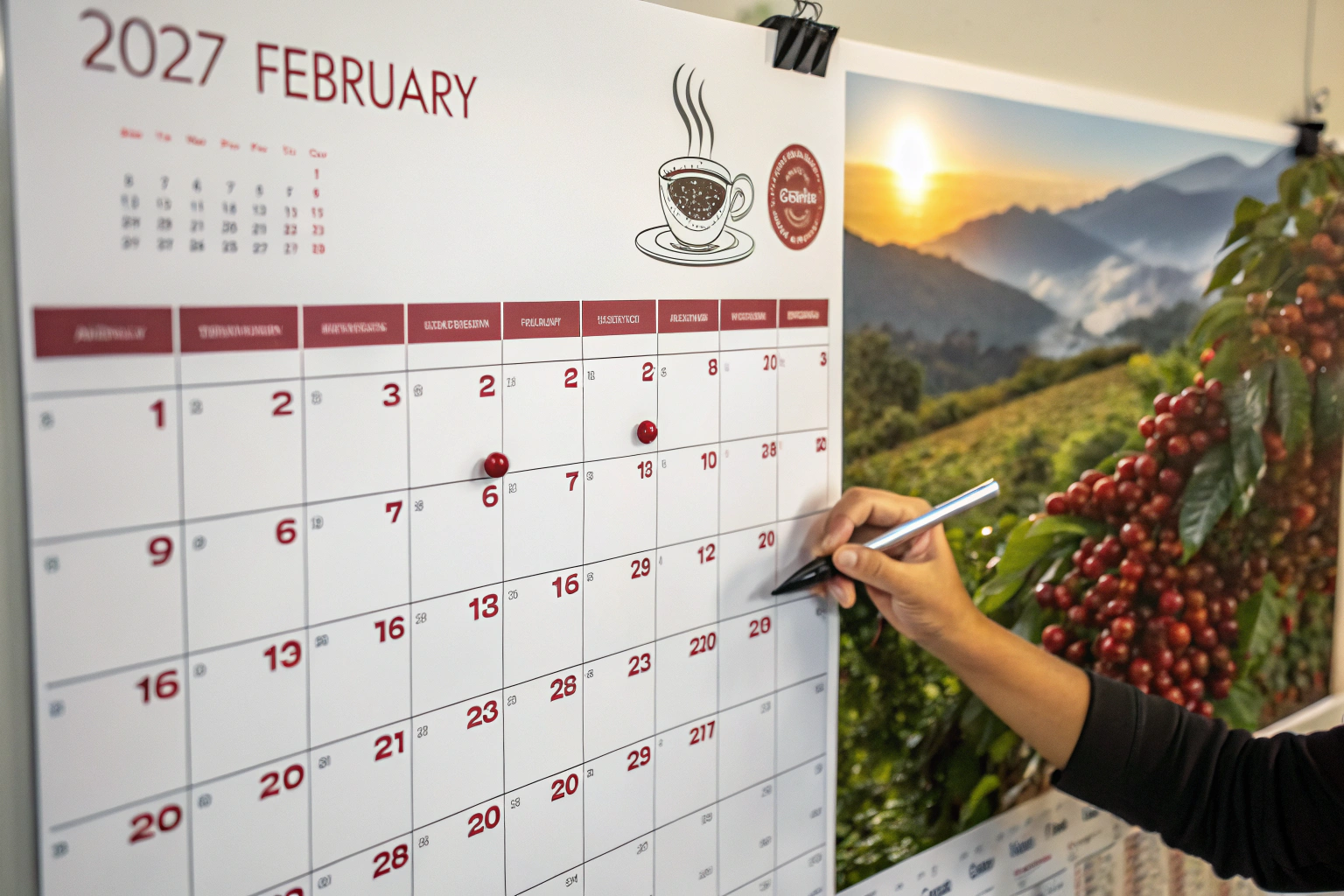
You're planning your sourcing calendar for the year. You've had success with Yunnan coffee. Your customers love the chocolatey, smooth profile. You want to make it a core part of your program and maybe even lock in a container of that exceptional new micro-lot you've heard whispers about. But then you remember the scramble from last year. You tried to order fresh crop in August, and your supplier, with an apologetic tone, told you it was all past-crop until the new harvest arrived deep in the winter. You missed the window entirely. The best lots were gone. You don't want to make that mistake again. You need hard dates. You're asking: When exactly are the cherries being picked in Yunnan for the 2026/2027 season? When can I get my hands on fresh samples? And when is the critical moment to sign a contract before the coffee I want is sold to someone else?
The harvest season for Yunnan Arabica coffee beans follows a predictable, single annual cycle driven by the region's distinct subtropical seasons. For the 2026/2027 crop year, harvesting will commence in late October 2026 and conclude by the end of February 2027. The peak picking months, when the vast majority of the highest quality, high-elevation coffee is harvested under ideal dry conditions, are November, December, and January. Fresh crop samples from this peak harvest will be available for international buyers starting in late January 2027, with the first exportable containers of new crop coffee ready for shipment from March through May 2027. For a buyer seeking the best selection, the critical contracting window is February to April 2027.
Honestly, you know the feeling. You get your sourcing rhythm wrong, and you're stuck either paying a premium for someone else's leftovers or scrambling to find a replacement bean. I see this cycle play out every year with new buyers at Shanghai Fumao. They taste an amazing Yunnan in the summer, but by the time they decide to order, the fresh stuff is a memory. So, what does this mean for your business? It means that getting Yunnan coffee isn't just about finding a good price; it's about syncing your procurement calendar with the actual seasons of the earth. Let me give you the precise, month-by-month walkthrough of the Yunnan coffee year so you can plan your sourcing with the precision of a seasoned buyer and secure the freshest, most vibrant coffees for your customers.
When Does the Yunnan Coffee Harvest Actually Start and Peak?
Unlike those equatorial origins that seem to have coffee ripening year-round, Yunnan operates on a single, dramatic, and concentrated harvest. It's a sprint, not a marathon. This is both a logistical challenge and a massive opportunity for quality, as the entire region's focus is on this one critical window.
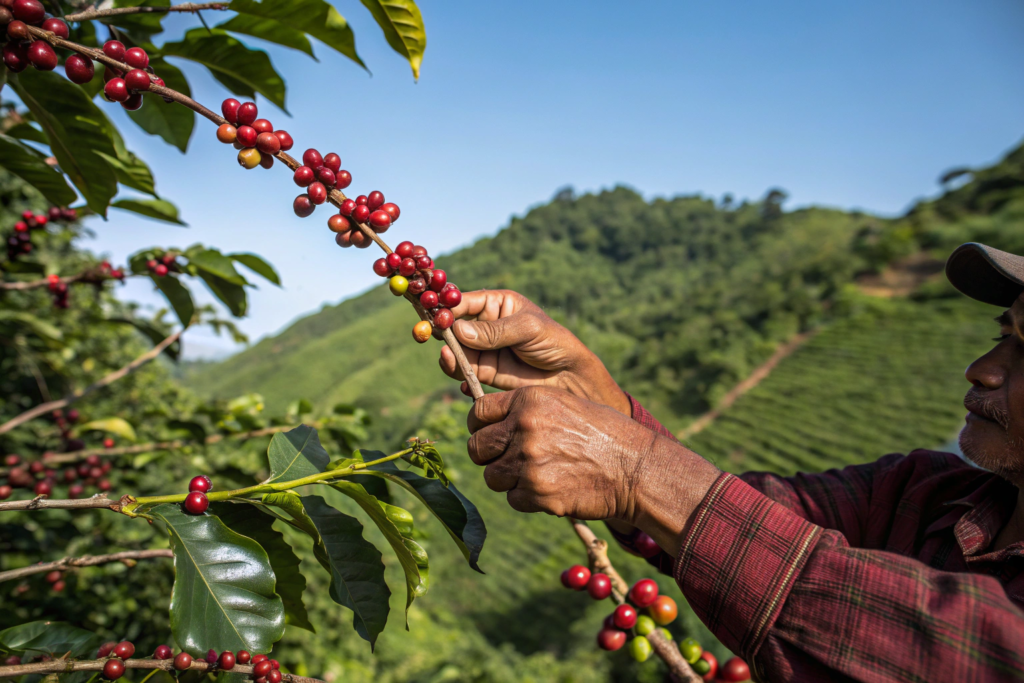
The Yunnan Arabica harvest for the 2026/2027 cycle will begin in the lower, warmer elevations around late October 2026. The harvest then progresses steadily up the mountainsides, with the peak picking period occurring across the prime mid-to-high elevation farms (1,300 to 1,600+ meters) during the cool, dry months of November, December, and January. The season concludes in February at the very highest and coolest plots. This four-to-five-month window is the sole source of Yunnan's annual coffee production.
Another way to look at this is comparing it to a wave pool. The wave starts small at the shallow end (lower altitude in October), builds to a powerful crest (peak harvest in November-January), and then gently fades out at the deep end (high altitude in February). Understanding the shape of that wave is key to understanding the quality of what's available.
Why Is the "Peak Harvest" Window of November to January So Critical for Cup Quality?
If you're looking for those Yunnan lots that score 84, 85, or even 86 points—the ones with the distinct dark chocolate, the surprising hint of dried cherry, and the syrupy body—you're looking for coffee picked during this peak window. This is not a coincidence. It's science.
The coffee picked during November, December, and January benefits from a perfect storm of positive conditions. First, the cherries on the mid-to-high elevation trees have had the full benefit of the cool nights and warm, dry days. They mature slowly, allowing for maximum sugar development and dense bean structure. Second, the weather is almost flawless for processing. The Yunnan dry season is in full swing—clear skies, low humidity, and cool temperatures. This is a detail you might not consider: It's perfect weather for slow, even drying on raised beds, whether you're doing a pristine washed process or a complex natural. The risk of rain disrupting fermentation or causing mold is minimal. At Shanghai Fumao, our top-tier micro-lots and reserve offerings are sourced exclusively from this peak harvest window. It's the foundation of quality.
How Does Elevation Create a "Staggered" Harvest and Why Should a Roaster Care?
Yunnan is not a flat plain. It's a landscape of steep hills and deep valleys. A single estate, like our 10,000 acres, can have coffee growing anywhere from 1,200 meters all the way up past 1,600 meters. That difference in altitude changes everything about when the cherry is ready.
The harvest is a wave moving uphill. It starts in the warmer, lower areas in October and finishes in the cool, misty highlands in February. A sophisticated farm manager tracks this wave with precision, deploying picking crews to the exact right spot at the exact right time. Why should you, a roaster, care? Because the elevation of the pick directly correlates to the bean's density and flavor profile. The late-harvest, February-picked beans from the highest, coolest plots are often the densest and most complex, with a brilliant, almost sparkling acidity. They are fundamentally different from the early-harvest beans from lower down. A great supplier will be able to tell you not just the farm, but the specific elevation block and harvest date of your lot. This is the level of detail that separates a commodity from a true specialty coffee.
When Are Fresh Crop Samples and New Crop Containers Actually Ready?
Okay, the cherries are picked in November. So you can cup the fresh crop in December, right? Wrong. This is the single biggest misconception I have to correct for new buyers. The coffee is not ready the moment it leaves the tree. It has a long and critical journey through the mill before it's ready for your sample roaster. Patience is not just a virtue here; it's a requirement for quality.
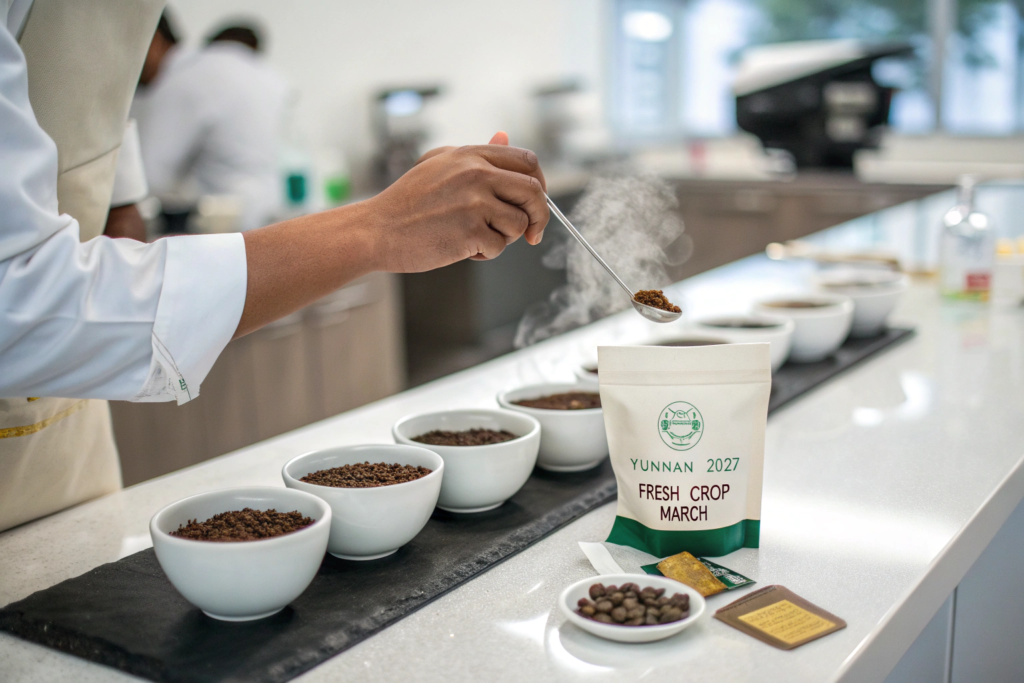
After the cherry is picked, it must undergo processing (washed, natural, or honey), which takes one to four weeks depending on the method. It must then be dried to the correct moisture content. Most critically, it must then rest in parchment for a period of 4 to 8 weeks—a process called "reposo"—to allow the internal moisture to stabilize and the harsh, vegetal flavors to fade. Only then is it dry-milled, sorted, and graded. This entire post-harvest sequence means the first truly representative fresh crop samples are not available until late January or early February. The peak selection of samples arrives in March and April.
So, what does this mean? It means that if someone offers you "fresh crop Yunnan" for shipment in December, you should be very skeptical. It's either coffee that was rushed through an inadequate rest period—and will taste grassy and thin—or it's not actually fresh crop.
What Is the "Reposo" Resting Period and Why Does It Make or Break a Coffee?
This is one of those invisible quality steps that separates world-class producers from the rest. You'll never see "reposo" on a marketing bag, but you will absolutely taste its absence. Reposo is the quiet, patient resting period after the coffee has been dried to its optimal moisture content but while it's still in its protective parchment shell.
A coffee that hasn't rested properly is a green, vegetal mess. It tastes of fresh-cut grass, raw peanuts, and has a thin, astringent body. It's undrinkable. During the reposo period, which we strictly maintain for 60-90 days at Shanghai Fumao, the internal moisture of the bean slowly migrates and equilibrates. Volatile compounds settle. The flavor integrates and matures. It's like letting a stew sit overnight—the flavors meld and become more harmonious. This process is non-negotiable for us. We track the rest period for every single lot. It's a major reason why our coffees cup with such a clean, sweet, and balanced profile. You can find more detailed scientific breakdowns of green coffee aging and resting from the research published by World Coffee Research.
What Is the "Golden Window" for Contracting the Best Yunnan Lots?
This is the key piece of strategic information for your business. If you wait until you receive and cup a fresh sample in late March to start thinking about a contract, you are already behind the curve. The most exceptional micro-lots—the anaerobic fermentations, the top Geisha separations, the highest-scoring P4 Catimor blocks—will have already been promised to the roasters who planned ahead.
The smart buyers operate on a different timeline. They are in communication with their trusted suppliers during the harvest. They are asking, "What are you excited about? What's looking exceptional this year?" Then, the optimal contracting window runs from February to April. You receive the first wave of pre-shipment samples during this time. You cup, you select, and you sign a contract, securing your allocation before the coffee is even bagged for export. This is how you guarantee access to the best of what Yunnan has to offer. The first containers of this new crop coffee then ship to you from March through May, arriving in perfect condition for your summer and fall menus.
What If I Need Yunnan Coffee Outside the "Fresh Crop" Window?
Life doesn't always align with the harvest calendar. You might discover a hole in your blend in August. You might get a new wholesale account in October that demands a specific profile. Does this mean you can't buy good Yunnan coffee outside of the spring window? Absolutely not. It just means you need to shift your mindset from "fresh crop" to "well-stored past-crop."
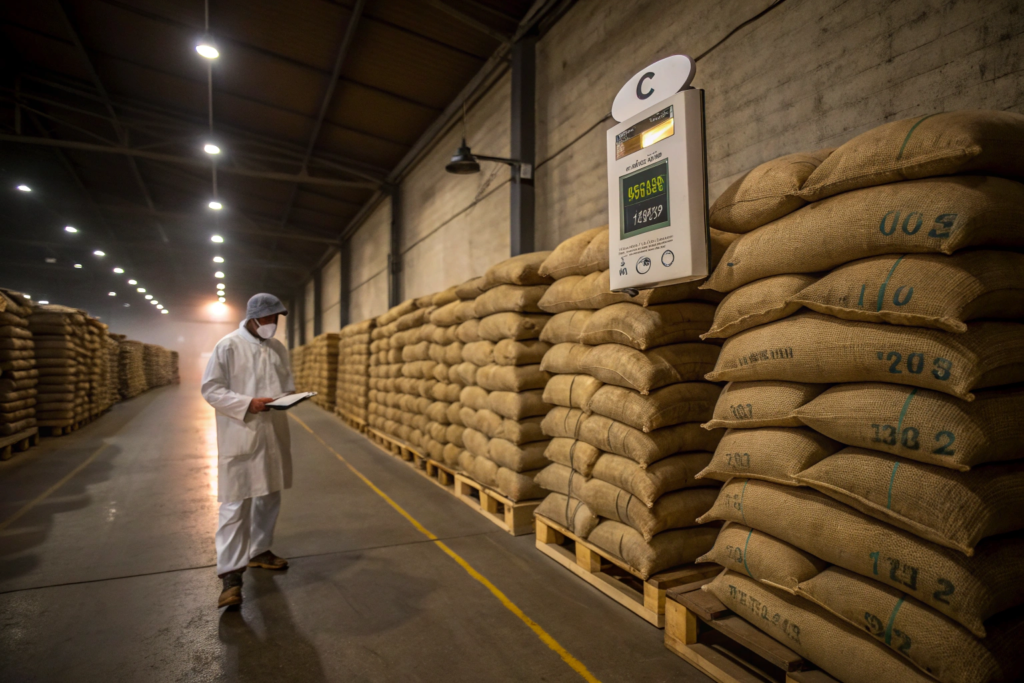
If you're buying Yunnan coffee from July through October, you are buying coffee from the previous harvest. And let me be clear: "Past-crop" is not a synonym for "bad." A well-stored past-crop coffee from a reputable supplier is an excellent, often more affordable, and wonderfully smooth coffee. The key question to ask your supplier is not "Is this fresh?" but rather, "How has this coffee been stored since harvest?" A coffee stored in a hot, humid warehouse will taste like cardboard. A coffee stored in a climate-controlled environment, in sealed GrainPro bags, will retain its core chocolate and nut character beautifully, with just a pleasing mellowing of the acidity. At Shanghai Fumao, we maintain our past-crop inventory under strict climate control and re-cup every lot every 60 days to ensure it meets our quality standards. We are always transparent about the crop year.
How Does the "Past-Crop" Profile Differ and How Can I Use It?
This is where a smart roaster turns a perceived weakness into a strength. A well-stored past-crop Yunnan is different from a fresh one, and that difference is a tool for your blending arsenal.
A fresh crop Yunnan has a vibrant, malic acidity that pops. It's bright and lively. A past-crop Yunnan has a softer, more integrated acidity. The body remains heavy and syrupy, but the flavor profile shifts toward a deeper, smoother dark chocolate and toasted nut character. The "sparkle" is gone, but the "comfort" is amplified. This profile is absolutely ideal for a core espresso blend. It provides a smooth, sweet, chocolatey foundation without any sharp edges. It allows the other, brighter components of your blend to shine. Many roasters I work with actually prefer a 6-9 month rested Yunnan for their year-round espresso program. It's more predictable and forgiving. It's all about using the right tool for the right job.
Is It Smarter to Forward Contract or Play the Spot Market?
This depends entirely on the role the coffee plays in your business. For a "nice to have" single origin that you rotate seasonally, playing the spot market and looking for interesting lots as they become available is a fine strategy. You can be opportunistic.
But for a core coffee—a base for your best-selling blend, the anchor of your espresso program—forward contracting during the February-April window is the only prudent strategy. The small amount you might save by trying to time the absolute bottom of the spot market is dwarfed by the immense value of certainty. Certainty of supply, so you don't run out of your flagship coffee. Certainty of quality, so your blend doesn't change flavor from batch to batch. And certainty of cost, so you can budget accurately and set your own prices with confidence. Forward contracting is a sign of a mature, professionally managed coffee business. At Shanghai Fumao, our long-term partners rely on this model, and we prioritize their needs accordingly.
Conclusion
The Yunnan coffee harvest is not a random event; it's a predictable, beautiful, and powerful annual rhythm. It's the heartbeat of the origin. By internalizing this calendar—knowing that the peak of quality is picked from November to January, that fresh samples arrive from February to April, and that the contracting window for the best lots is right in that spring sweet spot—you transform yourself from a reactive buyer into a strategic partner.
You can plan your menu with confidence. You can build a reliable, year-round supply of exceptional coffee. You can deepen your relationship with your producer by showing that you understand and respect the rhythm of their work. You align your business with the natural cycle of the land.
At Shanghai Fumao, we are committed to transparency and partnership. We work with our clients to share the progress of each harvest, to provide timely samples, and to help them secure the coffees that will define their success for the year ahead.
If you're ready to align your sourcing calendar with the rhythm of the Yunnan harvest and secure your place for the 2026/2027 crop, I invite you to start the conversation now. My email is cathy@beanofcoffee.com.