
I have been on both sides of this table. I know what it feels like to wire a deposit to a factory you have never walked through. Your money is gone. You wait six weeks. You pray. And sometimes—too many times—what arrives is not what you ordered. The sample was gorgeous. The container? A different story. This is the real pain of sourcing from overseas. You are not just buying coffee. You are buying trust across 7,000 miles of ocean. And trust, in this business, has to be earned with hard questions. Not small talk. Hard questions.
Before ordering from a Chinese coffee bean factory, you must ask about their specific lot traceability systems, their moisture and defect tolerances, their export licensing and food safety certifications, and their logistics contingency plans for port congestion and tariff changes. These questions separate a reliable plantation owner from a volume-shifting middleman.
Here is a subjective observation from my desk in Shanghai. A lot of buyers are afraid to push too hard. They think being direct is rude. Let me tell you something. A good factory owner loves these questions. I love these questions. Why? Because it means you are serious. It means you are not a tire-kicker who will waste three weeks of my time haggling over 10 cents. It means you are a partner. So, let's walk through the conversation you should be having. You know? The one that saves you from a container full of regret.
What Certifications and Quality Control Documents Should I Require From a Yunnan Coffee Exporter?
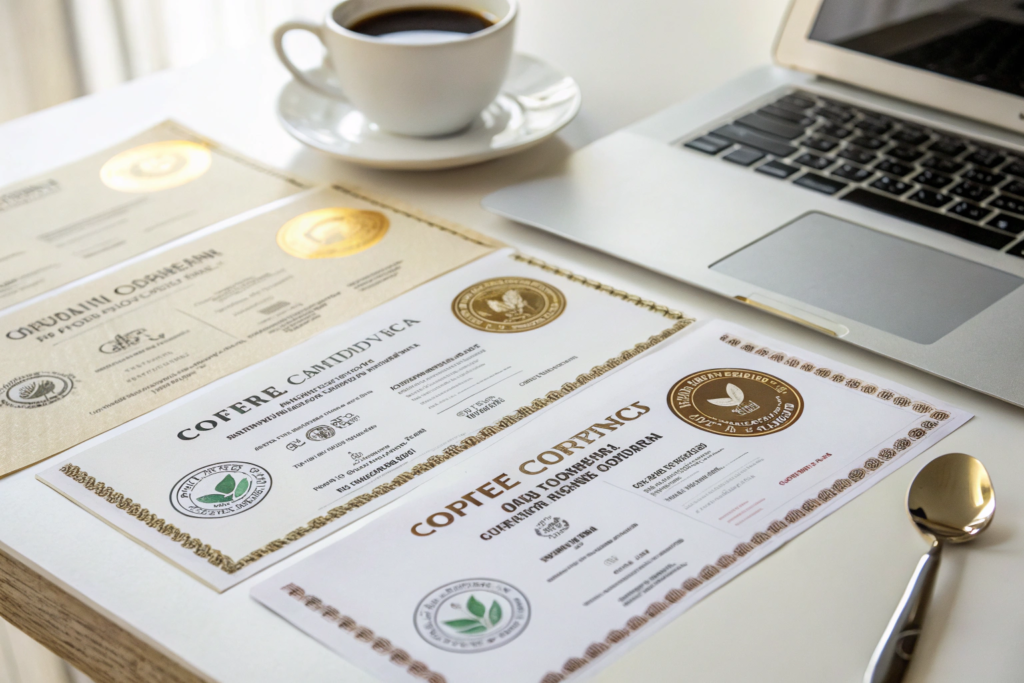
This is the non-negotiable part of the call. You need to see the paper. Not a promise. The actual PDF with the stamp and the signature. The pain here is obvious. If the factory cuts corners on paperwork, what corners are they cutting in the wet mill? You cannot taste a phytosanitary certificate. But you sure as heck will taste the consequences if it is missing when the container hits U.S. Customs.
A Yunnan coffee exporter must provide at minimum a valid ISO 22000 or HACCP certificate, a recent third-party lab analysis for Ochratoxin A and Aflatoxin, and a clear explanation of their lot identification protocol from harvest date to shipping container. This is the baseline for safety. But safety is just the floor. We want the ceiling to be high, too.
How Can I Verify ISO 22000 and HACCP Certifications for a Chinese Factory?
Anyone can Photoshop a logo. You would be shocked how often that happens. So how do you verify? First, ask for the certificate number and the name of the certifying body. It should be a recognized international firm—SGS, TÜV Rheinland, Eurofins, or a local Chinese equivalent that is accredited by the China National Accreditation Service for Conformity Assessment. CNAS is the big one. If they are legit, you can call the certification body directly and verify the scope of the certificate.
I tell my clients this: "Call them. It takes five minutes." The scope matters. Is the certificate for the farm? The dry mill? Or just the office? You want it to cover the processing and storage facility. Another red flag? A certificate that is set to expire next month and they have no renewal in process. That shows a lack of management. I keep our certifications at Shanghai Fumao current and, honestly, I overshare them. I want you to be bored by how many papers we have. Boredom means security. You should also check resources like the Global Food Safety Initiative to understand which schemes are benchmarked and recognized globally.
What Specific Defect Counts and Moisture Content Guarantees Are Standard for Export Grade Arabica?
This is where the conversation gets technical and where you separate the farmers from the fakers. You need to ask a very specific question: "What is your guaranteed defect count per 350 grams for Grade 1 Arabica?" The answer should be clear. For specialty grade, we are talking zero Category 1 defects (full black, full sour) and less than five Category 2 defects (partial sour, parchment, broken). For commercial Grade 1, the Specialty Coffee Association protocols allow a bit more, but not much.
Then, hit them with moisture. "What is your water activity level and moisture percentage at the time of stuffing the container?" You want moisture between 10.5% and 12%. Anything over 12.5% is a mold risk. Anything under 10% and the bean is brittle, dead in the roaster. We target 11% and we use GrainPro bags to keep it there.
I remember a buyer once asked me, "What is your protocol if the moisture is 12.6% at the port?" I told him: "We don't ship it. We send it back to the dry mill for further conditioning." That answer either scares them or makes them a customer for life. It is the second one that matters to me. If a factory cannot give you a straight number on defects and moisture, walk away. Just walk.
How Do I Evaluate Minimum Order Quantities and Payment Terms With Chinese Coffee Wholesalers?
Money. It always comes down to the flow of cash. You want to buy enough to test the market but not so much that you drown in inventory. And you want payment terms that protect you if the container falls off the ship. The pain here is real. You wire 30% deposit. The factory goes silent. Or worse, they ship the coffee and then the quality is off, but they already have 70% of your money. You have zero leverage.
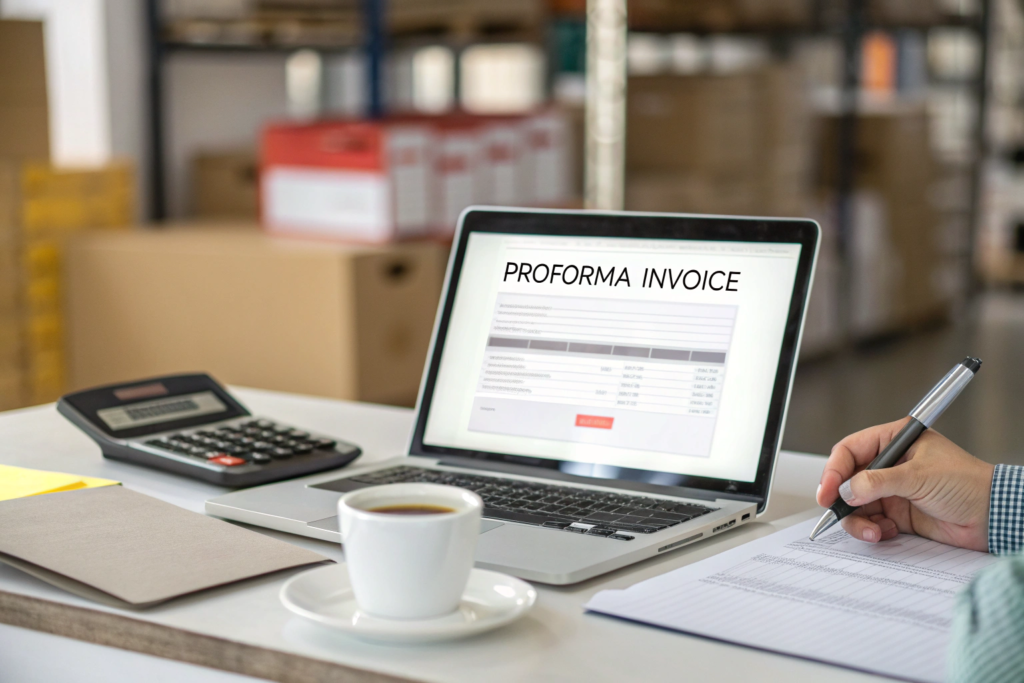
Evaluating MOQs and payment terms requires understanding that while small sample orders are flexible, full container loads offer the best logistics value, and payment should always be tied to verifiable milestones like the Bill of Lading or SGS inspection report, not just a calendar date.
What Is a Typical FOB Price Range for Yunnan Catimor vs. Arabica in 2026?
You want a number. I get it. But giving a number without context is like giving a weather report without looking out the window. It depends on the grade, the screen size, and the processing. However, you need a benchmark to know if you are being taken for a ride. For commercial Grade 1 washed Catimor, FOB Shanghai, you are generally looking in the range of $1.80 to $2.20 per pound. For higher altitude, specialty-grade Arabica (screen 17/18), that range jumps to $2.80 to $3.40 per pound FOB.
What about robusta? Yunnan robusta is a smaller crop but gaining traction. That can be in the $1.30 to $1.60 range. But here is the real talk. If someone quotes you $1.50 for "Grade 1 Arabica," they are lying. They are selling you old crop or floor sweepings. Or they plan to switch the beans at the port. The price has to make sense against the C-market futures, plus the differential for quality and the cost of export documentation. You can track the base commodity price on sites like NASDAQ for the coffee contract. Add 30 to 50 cents for the differential, and you have a rough idea of fair value.
How Does Shanghai Fumao Structure MOQ and Sample Orders for First-Time U.S. Buyers?
I get asked this daily. "Can I buy just one pallet to start?" The short answer is: it is expensive. The freight on a single pallet is brutal compared to a full container. But I am not in the business of forcing you to buy a boatload of coffee you have never tasted. So here is how we work.
We start with a sample. We will air-freight you 2 kilos of roasted samples and 5 kilos of green samples. You pay the courier cost. That is fair. Once you cup it and love it, we can look at LCL (Less than Container Load) shipments for a test run of maybe 10 to 20 bags. The per-pound logistics cost will be high. I will tell you that upfront. I will not hide it.
But the real relationship starts when you commit to a full 20-foot container. That is about 320 bags of 60kg each—roughly 19 metric tons. At that volume, the freight cost per pound drops to something manageable. Payment terms? For first-time buyers, we typically use 30% deposit to secure the booking and production, with the 70% balance against a copy of the scanned Bill of Lading. Once trust is built over a few shipments, we can move to Letter of Credit or even open account terms for established partners. Shanghai Fumao wants you to reorder. That means we need you to succeed on the first one.
Can I Trust Green Bean Samples From China to Match the Final Container Shipment?
This is the million-dollar question. The fear that keeps buyers up at night. You cup the sample. It sings. It is clean, sweet, complex. You sign the contract. Eight weeks later, you open the container, roast a batch, and it tastes like a burlap sack soaked in cardboard water. The pain is betrayal. You feel like you were baited and switched.
Trusting that samples match shipments requires a factory with a documented chain of custody and a willingness to allow third-party pre-shipment inspection by an agency like SGS or a trusted local representative who can pull and seal reference samples directly from the container stuffing line.
What Is the Best Way to Request a Pre-Shipment Sample for Approval?
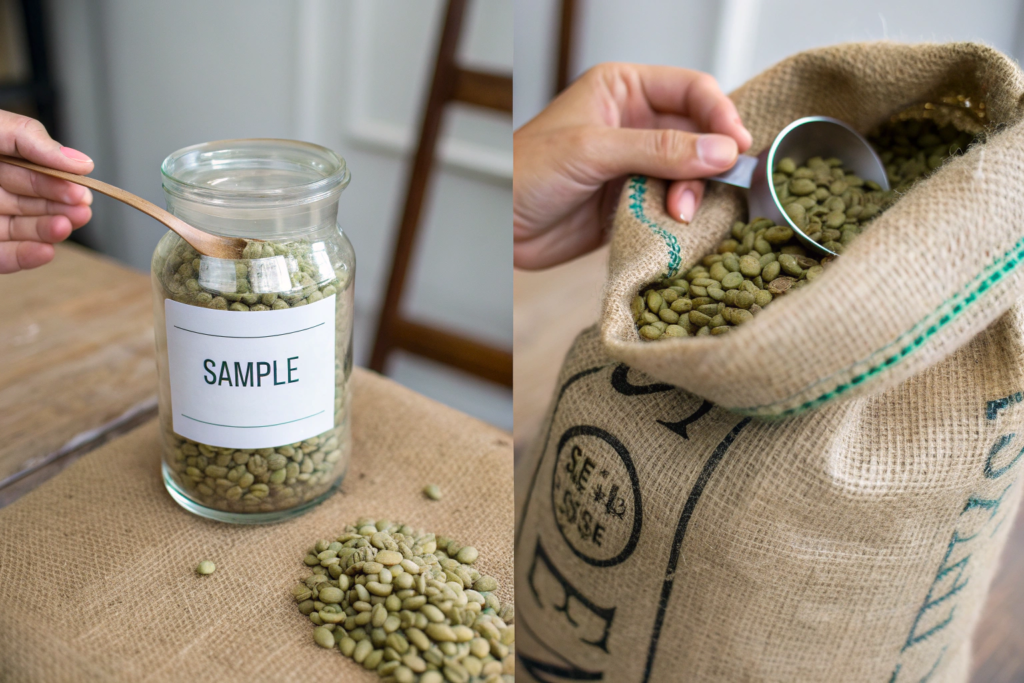
Do not accept a sample that comes in a pretty little foil bag via FedEx two months before shipping. That sample could be from the best cherry of the best day of the harvest. You need a Pre-Shipment Sample (PSS) . Here is the correct way to ask.
"Mr. Cai, before you stuff the container, I need you to pull a representative 500-gram sample from the actual lot that is going into the bags. I want that sample to be drawn by a third party or on video with a date stamp, and I want it shipped to me via express for final approval before the vessel sails."
This gives you a final check. It costs a few hundred dollars in courier fees. That is cheap insurance on a $40,000 load of coffee. If the factory refuses this request, that is a massive red flag. They have something to hide. At our facility, we encourage it. We will even have the SGS inspector draw and seal three samples. One goes to you. One stays with SGS. One stays with us in a locked cabinet. If there is a dispute later, we break the seals and compare. You can learn more about this process through standards set by the Institute of Food Technologists, which covers global food supply chain integrity.
How Does Proper Green Coffee Packaging Prevent Moisture Damage During Ocean Freight?
You can have the best coffee in the world, but if it sits in a jute bag for 20 days on the Pacific Ocean, it will absorb moisture like a sponge. Jute is beautiful and traditional. It is also terrible for long-term ocean freight. This is a detail that most new buyers miss.
You need to ask: "What is your internal liner?" The only acceptable answer is GrainPro or an equivalent high-barrier hermetic bag. These bags are like a dry suit for coffee. They lock the moisture and the atmosphere in place. We also require that the container itself is inspected for holes and that desiccant strips are hung inside before the doors close.
Here is a small story. I once had a buyer complain of "sweaty beans." We traced it back. The container had a tiny puncture in the roof. Rainwater had dripped onto the top pallet for three weeks. It ruined 10 bags. Now? We double-check every seal and we use a desiccant brand that is so aggressive it could dry out a swamp. It costs more. But replacing 10 bags of premium Arabica costs way more. And the trust? That is priceless.
What Are the Lead Times and Shipping Schedules for Coffee Exports From Shanghai to the USA?
Time is money. That is not a cliché in this business. It is the whole game. You have a roasting schedule. You have customers who need fresh coffee on the shelf for a specific promotion. If the boat is late, you are not just out of stock. You are out of credibility. The pain of timeliness is one of the sharpest in this industry.
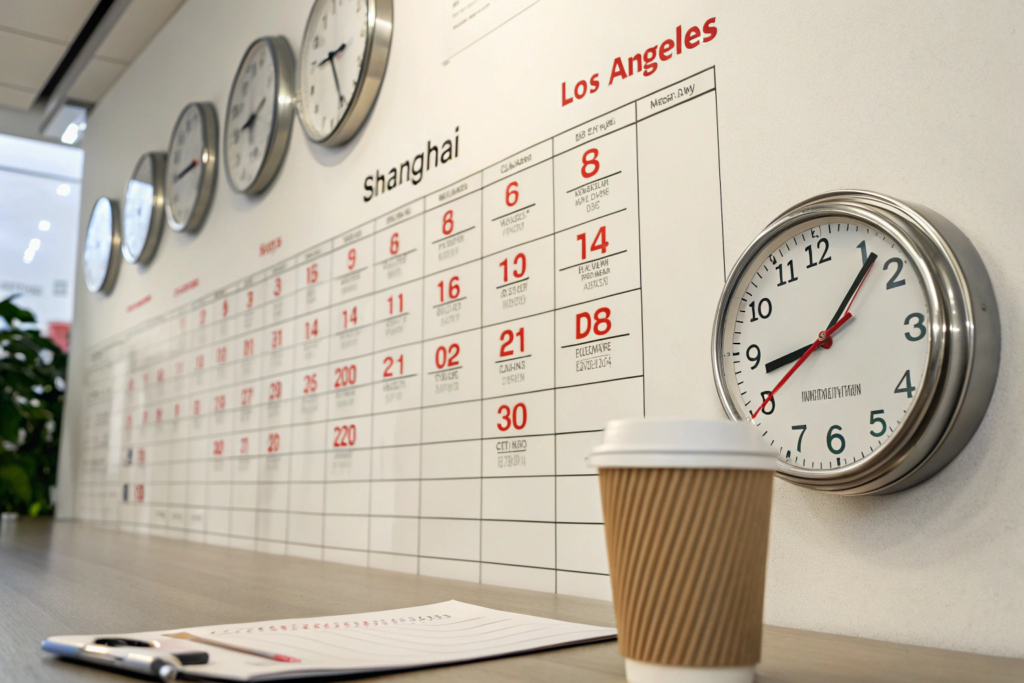
Lead times for Yunnan coffee exports typically run 4 to 6 weeks from contract signing to vessel departure, with ocean transit adding another 3 to 4 weeks to the U.S. West Coast, meaning buyers must plan their inventory 90 to 120 days in advance to avoid costly production gaps.
How Far in Advance Should I Book a Coffee Container During Harvest Season?
Harvest in Yunnan runs roughly from November through March. That is our busy time. The mills are running 24/7. The trucks are lined up at the port. If you want coffee shipped in January, you should be talking to me in October or November. Booking late means you get pushed to a later vessel. Or you pay a premium for "hot cargo."
Here is the rhythm I recommend. Start sample requests in September. Cup in October. Finalize contracts in November. Book vessel space for December or January stuffing. This gives you a buffer for delays. There will be delays. A truck breaks down. There is a holiday in China. The port gets fogged in. A wise buyer builds two weeks of buffer into their calendar. If you are trying to book a container for immediate shipment during Chinese New Year, you might as well try to push a rope uphill. It is not happening. The whole country shuts down for a week or more. Plan around it. Check the port congestion status at major hubs like Los Angeles and Long Beach using the Port of Los Angeles real-time dashboards.
What Documentation Is Required for Smooth Customs Clearance of Chinese Coffee?
Missing paperwork is the silent killer of timeliness. The boat arrives Friday. Customs flags the container because the invoice has a typo in the HS code. Now it sits in a bonded warehouse all weekend accruing storage fees. Monday comes. You finally get it released. That delay cost you $1,200 in demurrage. That eats up your margin in one bite.
You need to ensure the factory provides a complete and accurate set of docs before the vessel arrives. The checklist is short but sacred:
- Commercial Invoice: Shows seller, buyer, description of goods (Green Coffee Beans, Arabica, Grade 1, Crop Year 2026), HS Code 0901.11.00, quantity, unit price, total value.
- Packing List: Shows container number, seal number, bag count, net weight, gross weight.
- Bill of Lading (BOL): The title to the goods. Make sure the consignee is correct.
- Certificate of Origin: Form E for the duty reduction.
- Phytosanitary Certificate: Issued by China Customs.
I cannot stress this enough. Check the details. Are the weights on the BOL exactly the same as the invoice? Yes. Are the container numbers exactly right? Yes. One digit off and the system rejects it. At Shanghai Fumao, we use a three-person check system before releasing docs. One person types. One person verifies. And Cathy does the final eyeball. Because she knows if she messes up, you call her at 3 a.m. her time. And nobody wants that call.
Conclusion
You came here looking for a list of questions. I hope you are leaving with a checklist and a new mindset. Asking the right questions is not about being difficult. It is about being smart. It is about protecting your business and your reputation. From verifying the lab tests for mold to locking down the GrainPro bags for the ocean voyage, every single question you ask forces the factory to prove they are as professional as they claim to be.
The factories that squirm at these questions are the ones you avoid. The ones that answer quickly, with documents attached, are the ones you build a future with. That is how we operate at BeanofCoffee. We want you to ask the hard stuff. We want you to test the samples. We want you to know exactly what is in that container before it leaves Shanghai.
The coffee business is built on relationships, yes. But the strongest relationships are built on a foundation of verified facts and clear expectations.
If you have a list of questions and you want to see how we answer them, let's talk. No pressure. Just a conversation between two business owners trying to make a great cup of coffee and a decent margin. Reach out to my export manager. She handles the details so I can focus on the dirt and the cherries. Send your questions to Cathy Cai at: cathy@beanofcoffee.com