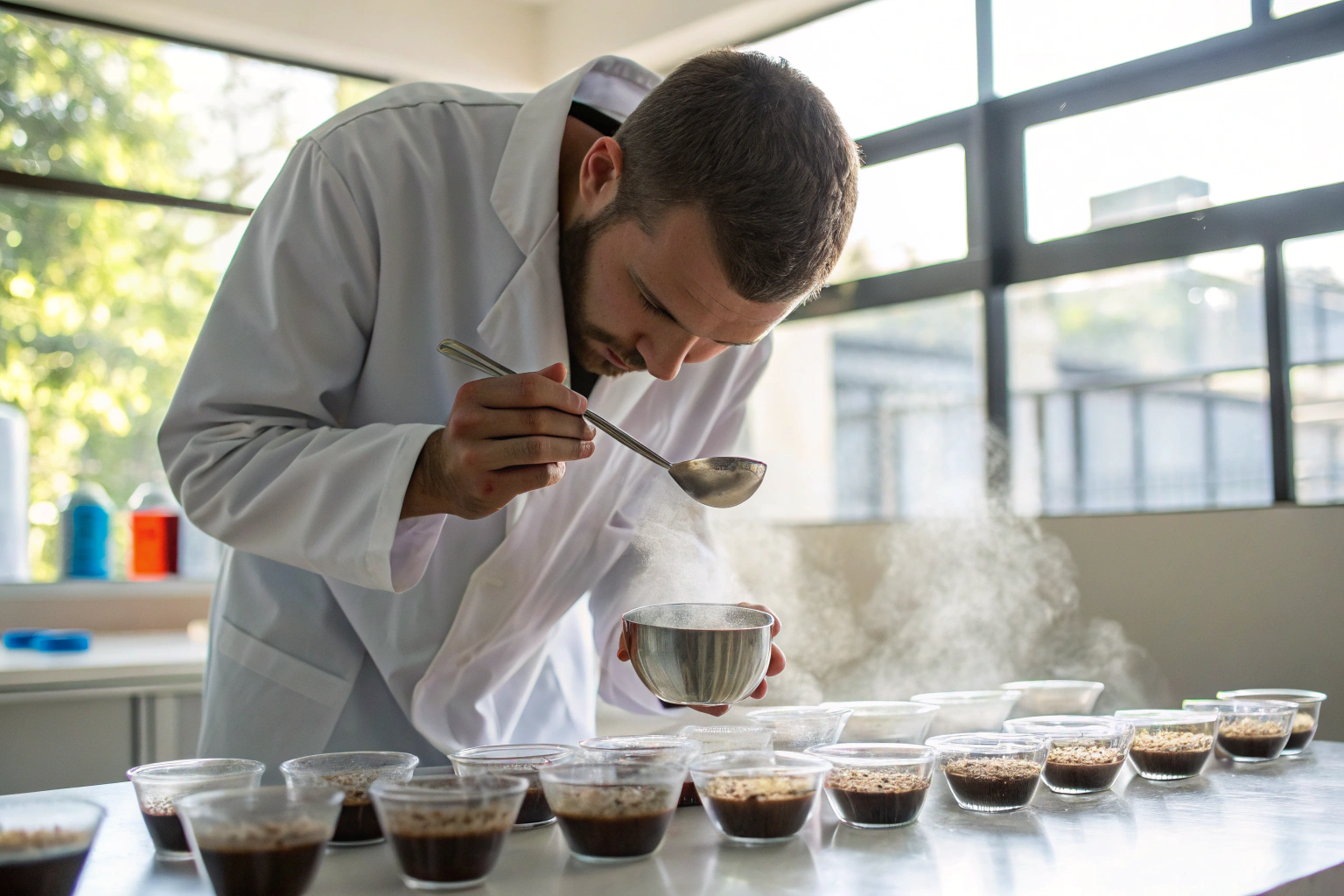
Let me tell you about the worst phone call I ever got from a buyer. He was shouting. Actually shouting. The sample I sent him three months ago was honey-sweet, with notes of stone fruit and a clean finish. The container that just hit his warehouse? It was flat. Lifeless. It cupped like paper. He thought I had scammed him. I had not. But that did not matter. His trust was shattered. And in this business, trust is the only inventory that matters. The pain here is brutal. You approve a sample. You wire the money. You plan your production. And then the shipment arrives and it is... different. Not bad enough to reject at customs. Just different enough to ruin your blend.
Getting a pre-shipment sample approved for coffee wholesale requires a documented, verifiable process where a representative sample is drawn from the actual shipment lot under third-party supervision or video evidence, then evaluated against the original approval sample using a standardized cupping protocol before the container is allowed to sail.
Here is something most buyers do not think about. The sample is not just about quality. It is about leverage. Once that container hits the water, your negotiating power drops to zero. You are stuck with it. So the pre-shipment sample is your last, best chance to say, "No. This is not what we agreed on. Fix it." That is power. And you need to know how to use it properly. Let me walk you through exactly how we do this at our operation, and how you should demand it from any supplier you work with.
What Is a Coffee Pre-Shipment Sample and Why Does It Differ From Offer Samples?
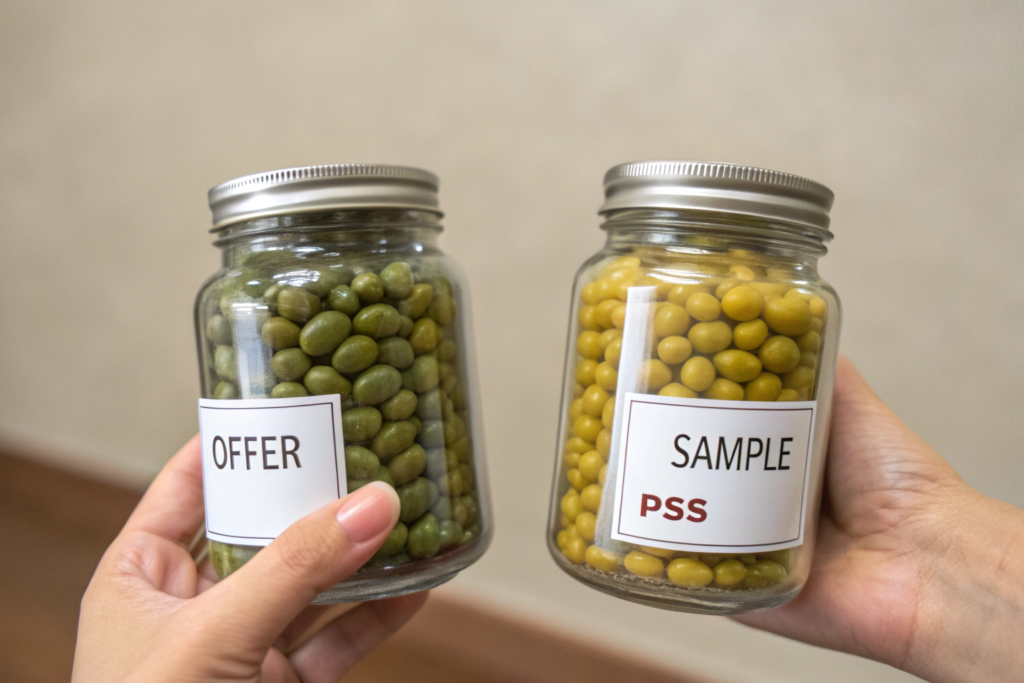
This confusion causes more disputes than tariffs and freight rates combined. You receive a small, beautiful bag of beans. You cup it. You love it. You sign a contract. But that bag came from a "spot lot" sitting in the exporter's office. It might be the best three kilos from a 30,000-kilo pile. That is an Offer Sample. A Pre-Shipment Sample (PSS) is different. It is pulled from the actual bags that are about to be loaded into the actual container with your name on it.
A coffee pre-shipment sample differs from an offer sample because the PSS represents the specific homogenized lot ready for export, drawn after final milling and blending, whereas an offer sample may be a curated selection from an earlier batch or a specific day's harvest that may not represent the full container's consistency. This distinction is everything. If you do not understand it, you will get burned.
How Can I Tell If a Factory Sent a Curated Offer Sample vs. a True Composite PSS?
There is a trick to this. A curated sample looks too perfect. Every bean is exactly screen 18. The color is flawlessly uniform. There is zero chipped beans or brokens. That is not real coffee. Real coffee has slight variation. Even Grade 1 specialty has a tiny percentage of visual imperfection that does not affect the cup.
Here is what you ask the factory: "How many bags did you probe to pull this PSS?" The answer must be a number. Not "a few." Not "some." A number. At Shanghai Fumao, we probe at least 10% of the bags in the lot. For a 320-bag container, that means we stick a trier into 32 different bags, selected at random from different pallets. We mix those cores together. Then we quarter that mix down to your 500-gram sample. That is a true composite.
Another way to verify? Ask for a video. I do this for my buyers. I record the entire process on my phone. I show the bag numbers. I show the trier going in. I show the mixing. It is not Hollywood production. It is a shaky cell phone video. But it proves the sample came from the lot. If a factory refuses to show you this, be suspicious. They might be hiding inconsistency. You can learn more about green coffee grading standards from the Specialty Coffee Association protocols on sampling methodology.
What Are the Acceptable Tolerance Ranges Between PSS and Arrival Quality?
You need to be realistic. Coffee is an agricultural product. It is not manufactured widgets. A PSS that cups at 85.5 and an arrival that cups at 85.0 is not a breach of contract. That is normal variation from the voyage. But what is acceptable?
Here is a practical tolerance table that I use with my buyers:
| Attribute | PSS Reading | Acceptable Arrival Range | Red Flag Threshold |
|---|---|---|---|
| Moisture Content | 11.0% | 10.5% - 11.8% | Above 12.5% or Below 9.5% |
| Water Activity | 0.55 aw | 0.52 - 0.60 aw | Above 0.65 aw (Mold Risk) |
| Screen Size | 90% Screen 17+ | 85% Screen 17+ | Below 80% Screen 17+ |
| Cup Score | 84.5 Points | 83.5 - 85.0 Points | Below 82.0 or Defect Taints |
| Full Black/Sour | 0 per 350g | 0-1 per 350g | More than 2 per 350g |
This table is not in any official contract. It is just experience. It is the reality of shipping a living seed across the ocean. You want to lock these tolerances into your purchase agreement. It saves the shouting matches later. If you want to understand the science behind moisture migration during shipping, resources from the International Trade Centre provide excellent guides on coffee export handling.
How Do I Establish a Legally Binding Pre-Shipment Sample Approval Protocol?
This is where the conversation shifts from coffee chat to contract law. A verbal approval means nothing in a dispute. An email that says "Looks good, ship it" might hold some weight. But a formal protocol? That is your insurance policy. The pain you avoid here is the legal gray zone. If the coffee arrives bad and you want a discount, the factory will say, "You approved the PSS." If you did not follow a protocol, they might be right.
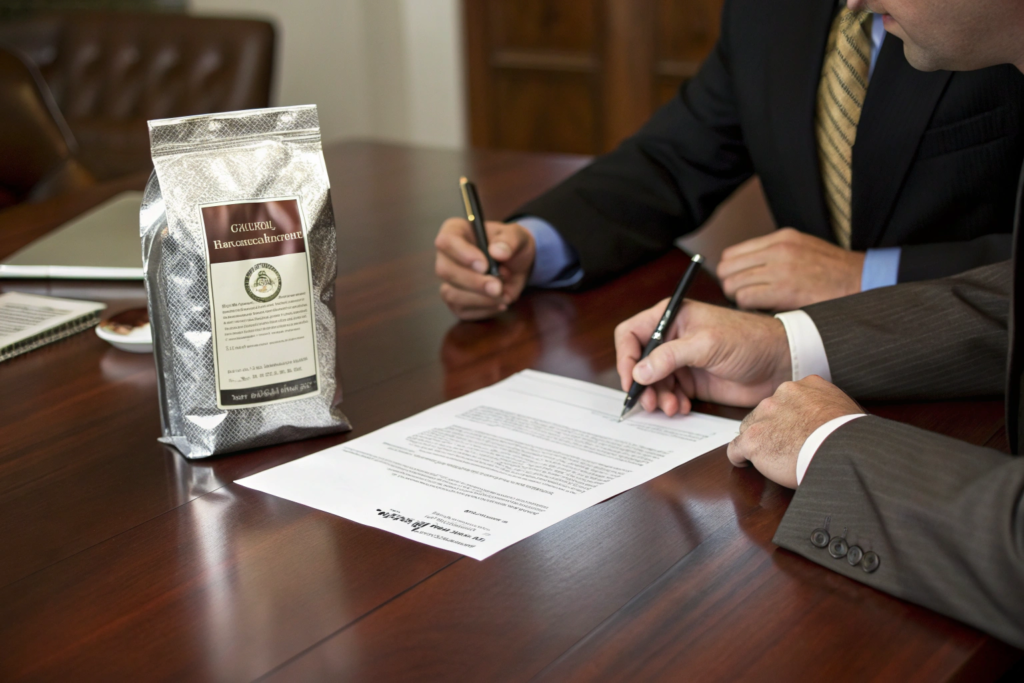
A legally binding pre-shipment sample approval protocol requires a written addendum to the sales contract specifying the sample drawing method, the approving party, the timeline for approval, and the explicit language that shipment is conditional upon written confirmation of PSS acceptance. Do not skip this. It takes 15 minutes to write into the contract. It can save you $50,000 in arbitration.
What Exact Wording Should I Include in a Coffee Purchase Contract for PSS Approval?
Do not rely on boilerplate contract language. You need specific clauses. Here is the wording I recommend you push your supplier to include—or better yet, what we already use at Shanghai Fumao:
Clause X: Pre-Shipment Sample Approval
- Drawing Method: At least fourteen (14) calendar days prior to the estimated stuffing date, Seller shall draw a representative composite sample from no less than ten percent (10%) of the bags comprising the contracted lot. The drawing shall be video recorded with continuous footage showing the bag markings, the probing process, and the final sealing of the sample package.
- Delivery: The sealed PSS shall be shipped via express courier (Buyer's account) to Buyer's designated address. A duplicate sealed sample shall be retained by Seller or a nominated third-party inspection agency (e.g., SGS) for a period of ninety (90) days post vessel arrival.
- Approval Timeline: Buyer shall have five (5) business days from receipt of PSS to evaluate the sample and provide written approval or rejection via email. Failure to respond within this window shall not constitute automatic approval. If Buyer rejects the PSS, Seller shall have the right to cure by providing a replacement lot within ten (10) business days, or the contract shall be considered null and void with full refund of deposit.
- Condition of Shipment: Seller shall not load the contracted goods onto any vessel without explicit written approval of the PSS from Buyer. Any shipment made without this approval is deemed a material breach of contract.
This language is clear. It sets expectations. It gives you an out. If a factory refuses to sign this, you know they plan to ship regardless of what you think. That is a factory you fire immediately.
Who Pays for the Courier and Third-Party Inspection Fees During PSS Evaluation?
Money always complicates things. The PSS process costs money. A courier from China to the U.S. for a 1kg package is maybe $60 to $100. A full SGS inspection with sampling and sealing can be $500 to $800. Who foots the bill?
The standard industry practice is this: Buyer pays the courier cost for the PSS shipment. Why? Because it is a small, direct expense for their own due diligence. It is the cost of doing safe business. Seller pays for the coffee and the bag. That is fair.
What about third-party inspection? This is negotiable. If I, as the seller, am confident in my product, I might agree to split the cost of an SGS inspection 50/50, or I might absorb it for a large contract. If the buyer demands the inspection and the coffee passes, the buyer should pay. If it fails, the seller should pay.
Here is a subjective observation. I have had buyers who nickel and dime me over the $80 FedEx fee. Those are the buyers who will also complain about a half-point moisture swing. It is a red flag for the relationship. A serious buyer says, "Send me the tracking number, I've got it." That tells me they value their own quality control. It builds trust. For more detailed information on coffee contracts and arbitration, the Green Coffee Association provides standard contract templates that many U.S. buyers rely on.
What Specific Tests Should I Perform on a Pre-Shipment Coffee Sample?
The sample is on your desk. The clock is ticking. You have five days to say yes or no. You cannot just sip it and hope for the best. You need a repeatable, systematic checklist. The pain you prevent here is the "I thought it tasted fine" regret. Subjective taste fades. Objective data does not.
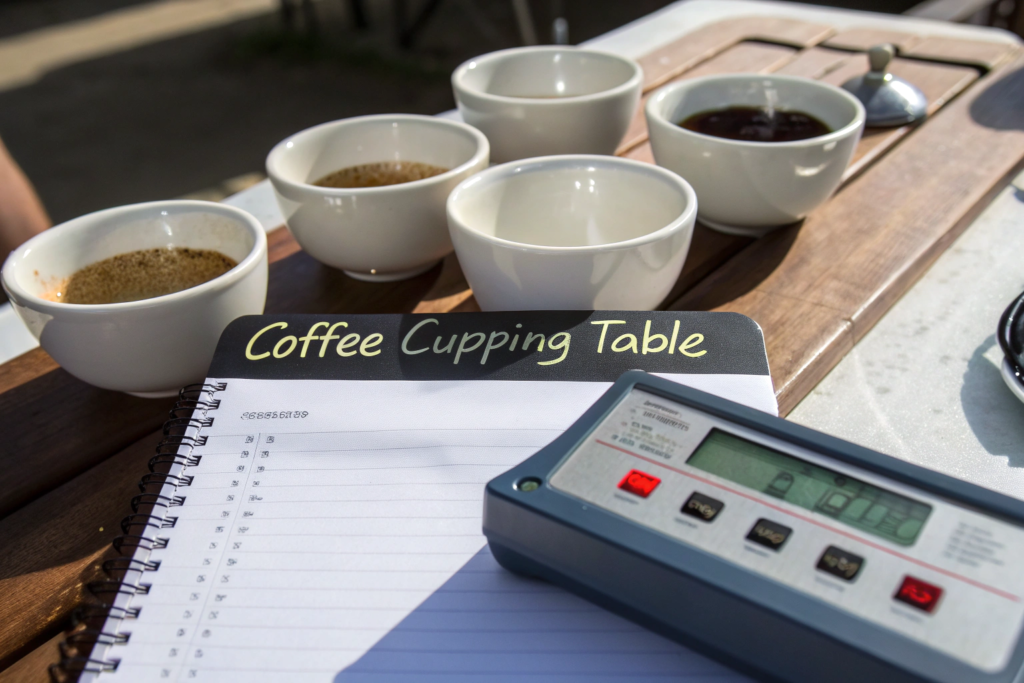
The specific tests to perform on a pre-shipment coffee sample include moisture content analysis using a calibrated meter, green bean defect count per 350 grams, screen size distribution analysis, roast color comparison against a reference standard, and a formal cupping protocol to score fragrance, aroma, flavor, aftertaste, acidity, body, and balance.
Skip one of these steps and you are leaving a hole in your defense. Do them all and you sleep well.
How Do I Use a Moisture Meter Correctly on Green Coffee Beans?
You would be amazed how many people use a moisture meter wrong and then blame the coffee. First, calibrate your meter. Most cheap meters are off by 1% or more. Buy a calibration standard. It is a little vial of salt solution. It costs $20. It saves thousands.
Second, the sample must be room temperature. If the beans just came off a freezing cold FedEx truck in February, the reading will be falsely low. Let the sample rest in the cupping lab for 24 hours in an open container.
Third, take multiple readings. I take five readings from different beans in the sample bag. Then I average them. If the spread between the highest and lowest reading is more than 0.5%, the lot might be unevenly dried. That is a problem. We target 10.5% to 11.5% with a spread of less than 0.3%. That is stable coffee. If you want to dig deeper into moisture management, the National Coffee Association has resources on green coffee storage and handling best practices.
What Cupping Protocol Should I Follow to Match the Supplier's Evaluation?
You and the supplier need to speak the same language. If you are cupping with a random spoon and they are using SCA protocols, you are speaking different dialects. The result is confusion and disagreement.
Here is the protocol we use at Shanghai Fumao and the one I expect you to use when evaluating my PSS.
- Roast: Agree on a roast level. For sample evaluation, I use an Agtron ground color of 58/63 (whole bean/ground). This is a light-medium roast that highlights origin character without hiding defects in roast flavor.
- Rest: Let the roasted sample rest for 8 to 12 hours. Do not cup it hot out of the roaster. It will taste gassy and harsh.
- Grind: Use a consistent grind. Slightly coarser than filter drip. I use a Mahlkönig EK43 at setting 8.5. You might have a different grinder. Just keep it the same for every sample you evaluate.
- Ratio: Use 8.25 grams of coffee to 150 ml of water. That is the SCA standard 1:18.18 ratio.
- Water: Use filtered water heated to 200-205 degrees Fahrenheit (93-96 Celsius).
- Break: Break the crust at 4 minutes. Smell it. That is the aroma. Skim the foam. Let it cool.
- Taste: Taste at 160F, 140F, and room temperature. The defects show up as it cools.
If you do this exactly the same way I do, and we still disagree on the score, then we have a real conversation. If your method is random, we just have noise. I also recommend looking at the training resources provided by the Coffee Quality Institute to standardize your team's sensory skills.
What Happens If I Reject the Pre-Shipment Sample?
This is the moment everyone dreads. You have done the work. You have cupped the sample. And it is just... not there. It is vegetal. Or it has a ferment note. Or the moisture is 13%. You have to say no. The pain here is twofold. First, you are back to square one on sourcing. Second, you might have to fight to get your deposit back. It is stressful.
If you reject a pre-shipment sample, you must provide immediate written notice with specific, objective reasons tied to the contract specifications, request the retention of the sealed duplicate sample, and propose one of three remedies: replacement of the lot, reconditioning of the coffee at seller's expense, or cancellation of the contract with full refund.
How Do I Document a PSS Rejection to Protect My Deposit Refund?
Do not just send an email that says "Coffee tastes bad." That is subjective and unenforceable. You need to build a case file.
Your rejection notice should include:
- Contract Number: So there is no confusion about which lot this is.
- Specific Defect: "Moisture reading average 13.2%, exceeding contractual maximum of 12.0%." Or "Detected full black defect count of 4 per 350g, exceeding Grade 1 tolerance."
- Cupping Note: "Identified distinct phenolic/medicinal taint at room temperature on 4 out of 5 cups." Use the SCA flavor wheel terms.
- Photographic Evidence: Take a clear photo of the moisture meter reading next to the sample bag. Take a photo of the defects spread out on a white sheet of paper.
- Request for Duplicate: "Pursuant to our contract addendum, I request that the sealed duplicate sample held by SGS/Factory be sent to a mutually agreed third-party lab for arbitration."
This documentation does two things. It shows the supplier you are professional and not just trying to renegotiate price. And it builds an evidence trail if this ends up in mediation. Most honest suppliers—and I count myself in this group—will look at this evidence and immediately offer a solution. We do not want a container of bad coffee either. It ruins our reputation. The last thing I want is my beans sitting in a warehouse in Oakland while we fight over who pays for disposal.
What Are Reasonable Timelines for a Supplier to Provide a Replacement PSS?
You rejected the sample. Now what? The clock is still ticking. You have a gap in your green coffee inventory. You need a solution fast.
Here is what a reasonable supplier should offer:
- Immediate Acknowledgment: Within 24 hours of your rejection notice.
- Investigation: They should check the sealed duplicate sample within 48-72 hours. If they find the same defect, they should admit it.
- Replacement Offer: Within 5 business days, they should offer a specific replacement lot number with a new expected PSS date.
If the supplier drags their feet for two weeks, they are stalling. They are hoping you get desperate and accept the container anyway. Do not fall for it. Hold the line.
At my operation, if we mess up—and yes, it happens rarely, we are human—we move fast. We want to fix it and prove we are still a reliable partner. I once had a lot that developed a slight baggy note during storage due to a warehouse humidity spike we missed. The buyer rejected the PSS. I did not argue. I sent the PSS data from my own lab showing the same issue. I immediately offered a replacement from a different warehouse block. It cost me extra freight and time. But that buyer still buys from me five years later. That is the long game. If you need to verify the reliability of a supplier's claims, you can sometimes cross-reference with industry associations like the International Coffee Organization.
Conclusion
The pre-shipment sample is your last line of defense. It is the difference between a smooth, profitable roasting season and a logistical nightmare that ties up your cash and your warehouse space. Getting it approved is not just about tasting coffee. It is about establishing a system. A system that includes a proper composite sample draw, a legally binding approval clause, a rigorous testing protocol, and a clear plan for what happens if things go wrong.
You cannot control the weather in Yunnan. You cannot control the whims of the ocean freight carriers. But you can control the process of verification. And that process starts with the PSS. It forces transparency. It forces accountability. And it separates the professional suppliers from the opportunists.
At Shanghai Fumao, we do not fear the pre-shipment sample process. We embrace it. We want you to know exactly what you are buying. We want you to cup our coffee next to the best in the world and see how it holds up. That is the only way we build the kind of partnership that lasts beyond a single container.
If you are ready to work with a supplier who actually wants you to test the coffee before it leaves the port, we should talk. No games. Just good beans and clear communication.
Reach out to my export manager, Cathy Cai. She can walk you through our sampling protocol and get a PSS on its way to your cupping table. Email Cathy at: cathy@beanofcoffee.com