I learned this lesson the hard way in my first year as an exporter. A buyer from Germany contacted me in August. He wanted two containers of premium washed Arabica. Immediately. I had to tell him no. Not because I did not want the business. But because the coffee did not exist yet. It was still green cherry on the branch. He was operating on a Brazilian calendar. Yunnan is different. The pain of sourcing at the wrong time is real. You either pay a premium for old crop that has been sitting in a warehouse for six months, fading in quality. Or you commit to new crop and wait... and wait... while your inventory gap grows.
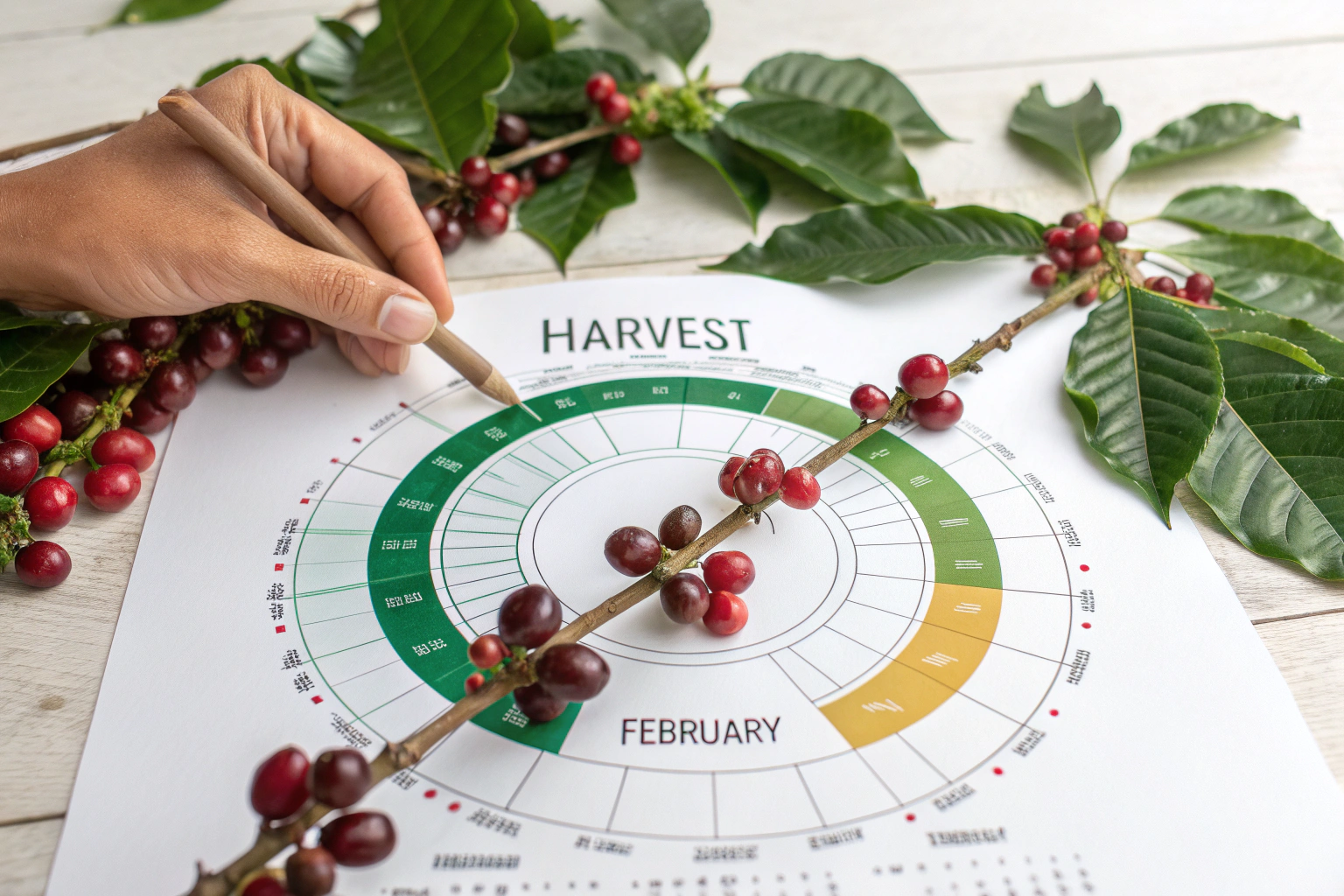
The best time to source fresh Yunnan coffee is between January and March for contracting the new harvest, with the peak availability of freshly milled green beans for export occurring between June and September, as the coffee requires a resting period in parchment after the November-to-March harvest before it is hulled and prepared for shipment.
This is not a simple "buy in November" answer. The harvest is just the beginning of the story. The coffee needs time to rest, just like a fine wine or a good cheese. If you understand this calendar, you can plan your inventory perfectly and lock in the best quality and price. Let me walk you through the rhythm of the year in Baoshan.
When Is the Yunnan Coffee Harvest Season and Why Does It Matter?
The first thing you need to know is that Yunnan is a winter harvest origin. While Central America is picking in January and Brazil is picking in June, we are picking in the cold, dry months of the Yunnan winter. This is a huge advantage for quality.
The Yunnan coffee harvest season runs primarily from late November through early March, with the peak of the harvest occurring in December and January, a timing that coincides with the dry season which allows for slow, even sun-drying of the coffee parchment, a critical factor in developing the clean, sweet cup profile of premium Yunnan Arabica.
If you want the freshest, most vibrant coffee, you need to align your sourcing with this window.
How Does the Dry Season Impact the Quality of the Harvest?
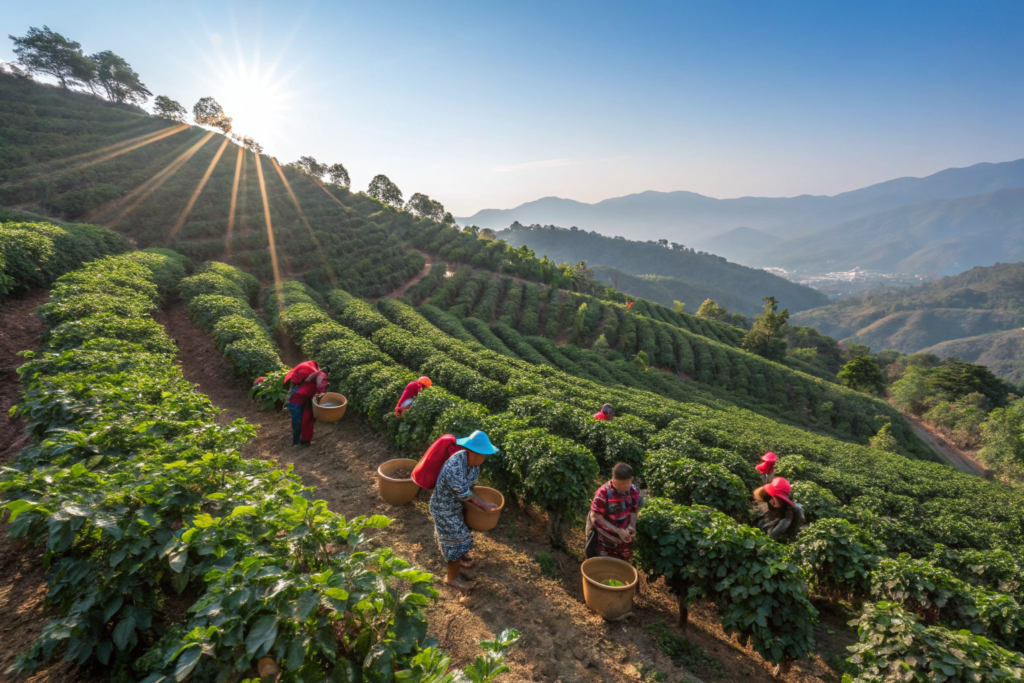
This is the secret weapon of Yunnan coffee. In many coffee origins, the harvest happens during the rainy season. Farmers are fighting mud, humidity, and the constant threat of fermentation going wrong. Drying coffee on patios becomes a race against the afternoon downpour.
In Baoshan, November through March is bone dry. The air is cool and crisp. The sky is often a brilliant blue. This is perfect coffee weather.
Here is why it matters for quality:
- Cherry Integrity: Dry cherries mean less chance of mold and bacteria growing on the skin before pulping.
- Controlled Fermentation: In the wet mill, the cool temperatures allow for a slower, more predictable fermentation. The fruity notes develop without turning sour or vinegary.
- Even Drying: We spread the parchment on raised African beds. The low humidity and steady breeze dry the coffee slowly and evenly over 10 to 14 days. This locks in the sweetness and prevents the "baggy" or "earthy" defects that come from drying too fast or too slow.
This natural climatic advantage is why Yunnan can produce washed coffees with such a clean, transparent cup profile. We are not fighting the weather. We are working with it. At Shanghai Fumao, we time our entire processing schedule around this dry window. For more on how climate affects coffee quality, the research from World Coffee Research is an excellent resource.
What Happens to Coffee Quality If You Buy "Fresh" Crop Too Early?
This is the mistake I see buyers make every year. They hear "Harvest is done in February!" and they want a container on the water by March. They want the absolute freshest crop possible.
If I shipped you coffee in March, it would taste terrible. It would be grassy. Peanutty. Astringent. It would have no sweetness. You would think Yunnan coffee was just bad coffee.
The reason is Reposo. Reposo is the Spanish word for "rest." The coffee bean, after being dried to 11% moisture, is still biologically active. The cellular structure is tight and stressed. The volatile aromatic compounds have not yet stabilized. The coffee needs time to sit in its parchment shell. This resting period allows the moisture to equalize within the bean and for some of the harsh, green vegetal notes to fade away.
In Yunnan, we rest the parchment coffee for a minimum of 60 to 90 days. This means coffee harvested in December is not ready for dry milling (hulling) until April or May. Coffee harvested in late February is not ready until June or July.
If a supplier offers you "Fresh 2026 Crop" ready to ship in March, they are either lying about the harvest date or they are selling you coffee that has not been rested. Both are bad. You should wait for the rested coffee. It is worth the wait. You can read more about the science of coffee resting and aging in publications from the Specialty Coffee Association.
What Is the Optimal Window for Contracting and Pricing Yunnan Coffee?
Knowing the harvest calendar is step one. Step two is knowing the business calendar. When should you actually sign the contract and lock in the price? This is where you can save or lose significant money.
The optimal window for contracting and pricing Yunnan coffee is between January and March, as this is when the harvest volume and quality become clear, allowing exporters to offer firm pricing and roasters to secure the best selection of specific lots before the coffee is fully milled and offered to the broader spot market.
If you wait until June to start negotiating, the best lots are already spoken for. You are picking from the leftovers.

Should I Contract "Forward" Based on Cherry Prices or Wait for the Parchment?
There are two ways to buy.
- Forward Contract (Jan - Feb): You commit to a volume and a grade based on the expected harvest. The price is negotiated based on the current market differential and the estimated cost of production. This is riskier for you if you do not trust the supplier, but it often yields a slightly better price because you are helping the exporter finance the harvest.
- Parchment Contract (Mar - May): The coffee is harvested and resting in parchment. The exporter knows exactly how much volume they have and the preliminary quality is clear. You can cup samples from the parchment stage. This is lower risk. You know the coffee exists and is good.
At Shanghai Fumao, I prefer Parchment Contracts with new clients. I want you to taste the coffee before you commit. In March, we can send you a sample of the parchment coffee (you can hull it yourself with a small hand mill or just evaluate the green color and aroma). Once you approve the quality, we lock in the price for dry milling and export in June/July. This gives you the security of knowing what you are buying while still securing the lot before the general market release.
How Does the Chinese New Year Holiday Affect Sourcing Timelines?
This is a critical logistical detail that trips up Western buyers every single year. Chinese New Year (Spring Festival) falls in late January or February.
For about two weeks, China shuts down. The mills close. The trucking companies stop. The port operations slow to a crawl. If you need a container stuffed in February, you need to have the contract signed and the logistics booked before the holiday starts.
Here is the rhythm:
- Early January: Finalize contracts for new crop. Get paperwork started.
- Mid-January: Push through any urgent sample shipments via courier.
- Late Jan - Mid Feb: Holiday. Expect slow email responses.
- Late February: Operations resume. This is when the real work of preparing export orders begins.
If you wait until February 10th to send an inquiry, your email is going into a black hole for a week. Plan ahead. At Shanghai Fumao, Cathy sends out a notification to all our regular buyers in early January with our holiday closure dates. We want you to plan around it. For more on Chinese business culture and holiday planning, resources like the China-Britain Business Council often publish helpful guides.
When Are Yunnan Green Beans Actually Ready for Export Shipment?
You have signed the contract. You have waited through Reposo. Now the coffee is ready to move. This is the shipping window. It is different from the harvest window. Understanding this gap is key to managing your inventory.
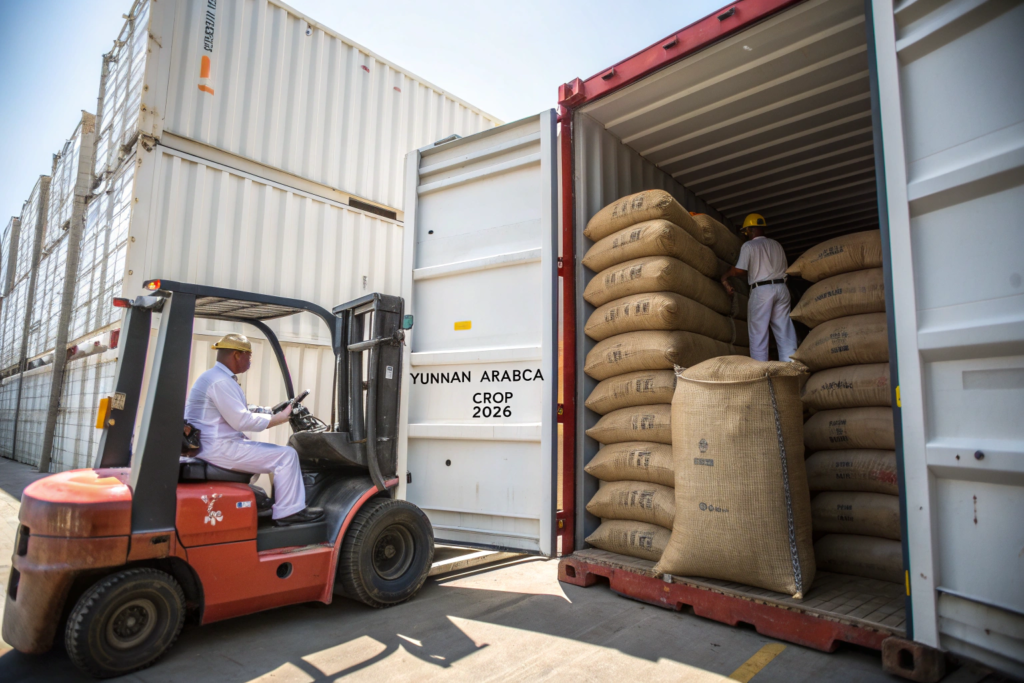
Yunnan green beans are ready for export shipment starting in June, with the peak shipping window running from July through October, as this is the period when the rested parchment has been dry milled, graded, density sorted, and prepared into exportable containers of green coffee.
If you need coffee on your shelf in July, you needed to be sourcing from the previous year's crop or from a supplier who held over inventory. The new crop simply is not physically ready to leave China until mid-year.
Why Is There a Gap Between Harvest and Container Stuffing?
Let me break down the timeline for a coffee cherry picked on December 15th.
| Stage | Activity | Date | Status |
|---|---|---|---|
| 1. Harvest | Cherry Picked | Dec 15 | Raw Cherry |
| 2. Wet Mill | Pulped, Fermented, Washed | Dec 16-18 | Wet Parchment |
| 3. Drying | Sun Dried on Beds | Dec 18 - Jan 5 | Dry Parchment (11% moisture) |
| 4. Reposo | Resting in Warehouse | Jan 5 - Apr 15 | Stabilizing Parchment |
| 5. Dry Milling | Hulling, Grading, Sorting | Apr 15 - May 1 | Green Bean |
| 6. Export Prep | Bagging, Stuffing, Docs | May 1 - June 15 | Ready for Vessel |
That December cherry is not getting on a boat until mid-June at the absolute earliest. If you want coffee in March or April, you must buy Past Crop—coffee from the previous harvest that has been properly stored in GrainPro bags. This is not necessarily bad coffee. If stored correctly, past crop can still be excellent for espresso blends. But you need to know what you are buying.
How Does the Monsoon Season Affect Late Summer Shipments?
Just as the coffee is ready to ship in June and July, Yunnan enters its rainy season. The mountains turn lush and green. The roads get slick. The humidity skyrockets.
This creates two challenges for late summer shipments:
- Mold Risk at the Port: We have to be extra vigilant about container seals. A single pinhole leak in a container roof can let rainwater drip onto the coffee for two weeks at sea. That is a guaranteed mold claim. We double-inspect every container roof before loading during monsoon season.
- Transport Delays: Landslides can occasionally block the highway from Baoshan to the port of Shanghai. We build extra buffer days into our logistics schedule during July and August.
However, this is also why we use GrainPro bags. Even if the external environment is humid, the beans inside the hermetic bag are in their own dry, stable microclimate. They are protected. If you are buying Yunnan coffee, insist on GrainPro liners, especially for shipments that will be in transit during the hot, humid months. You can learn more about proper container loading and moisture prevention from maritime logistics resources like the World Shipping Council.
How Can I Plan My Roastery Inventory Around the Yunnan Coffee Calendar?
You have the calendar. Now you need to translate it into action in your own business. Smart inventory management for Yunnan coffee means planning in reverse from when you need the coffee on your shelf.
To plan roastery inventory around the Yunnan coffee calendar, roasters should place new crop orders between January and March, expect container arrivals at U.S. ports between July and September, and maintain a safety stock of 4-6 weeks of past crop inventory to cover the transition period between old crop depletion and new crop arrival.

When Should I Place My Order to Receive Coffee by September 1st?
Let's run a realistic scenario. You want to launch a new single-origin Yunnan roast for the fall season, hitting shelves on September 1st. Here is the backwards timeline.
- Target Arrival at Roastery: August 15, 2026 (Allows 2 weeks for acclimation and test roasting).
- Vessel Arrival US Port: July 25, 2026 (Allows 3 weeks for customs clearance and trucking).
- Vessel Departure Shanghai: July 1, 2026 (14-18 day transit).
- Container Stuffing Baoshan: June 20, 2026 (Allows for trucking to port).
- Dry Milling Complete: June 1, 2026.
- Contract Signed: February 2026.
If you call me in May and ask for a container to arrive by September 1st, I might be able to do it if I have extra inventory. But you will not get the "pick of the litter" on specific micro-lots. Those are already allocated to the buyers who contracted in February. Planning ahead gives you access to the best quality and the most reliable shipping slots.
At Shanghai Fumao, Cathy manages a booking calendar. She can look at the harvest forecast in January and tell you exactly which vessel departure dates are available for June/July. We want to make your planning easy.
Is It Better to Buy a Full Year's Supply at Once or Split Shipments?
This depends on your storage capacity and cash flow.
- One Full Container (Year's Supply): Advantage: Best price per pound. You lock in the freight rate and the coffee price for the whole year. Disadvantage: You tie up a lot of cash in inventory. You need a cool, dry warehouse to store the coffee for 9-10 months. If you do not have proper storage, the coffee will fade before you use it all.
- Split Shipments (Quarterly): Advantage: Better cash flow. Fresher coffee in the roaster. You can adjust your blend based on how the new crop is tasting. Disadvantage: Slightly higher cost due to multiple freight bookings and LCL (Less than Container Load) rates if you cannot fill a container each time.
My recommendation for most mid-sized roasters is a Hybrid Approach. Contract for a full container's worth of coffee at the beginning of the year to lock in the price. Then, arrange for the supplier to store the coffee in their Yunnan warehouse and ship it to you in two or three tranches throughout the year. We offer this service. The coffee stays in our cool, high-altitude warehouse in GrainPro bags. We ship a pallet every quarter. You pay a small storage fee, but it is almost always cheaper than the cost of lost quality from storing it yourself in a hot warehouse. This gives you the best of both worlds: the volume price and the freshness of just-in-time delivery.
Conclusion
The best time to source coffee from Yunnan is not a single date. It is a understanding of the entire seasonal rhythm. The harvest happens in the winter. The resting happens in the spring. The shipping happens in the summer and fall. If you align your sourcing strategy with this natural calendar, you unlock the full potential of Yunnan Arabica.
You get the benefit of the dry-season harvest, which produces a clean, sweet cup. You get the advantage of contracting early, which secures the best lots. And you get the peace of mind of a well-planned logistics schedule, which avoids the stress of last-minute inventory gaps.
At BeanofCoffee, we want to help you navigate this calendar. We do not just sell you coffee. We help you plan your year around it.
If you want to discuss the upcoming harvest schedule and start planning your 2026-2027 sourcing calendar, let's talk. We can map out your projected volume and find the best shipping windows for your business. Email Cathy Cai. She has the harvest forecast and the shipping schedule ready. Contact Cathy at: cathy@beanofcoffee.com.